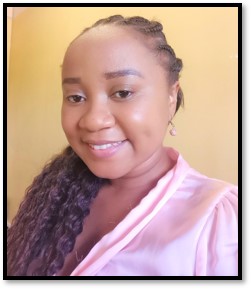
1. What is your academic background and current affiliation?
I am Ms. Ngobese, a public health scientist at the Mental Health, Alcohol, Substance Abuse and Tobacco Research Unit under the South African Medical Research Council. I have a bachelor’s in social science majoring in Anthropology and Psychology, an honors in Psychology and a Masters in Medical Science majoring in Public Health from the University of KwaZulu-Natal. I am currently doing a PhD in public health, doing my last year at the Sefako Makgatho Health Science University. I have been in the tobacco control space for about 4 years now, having worked in various tobacco control research studies.
2. What led you to pursue a career in health disparities research, and tobacco-related disparities in particular?
Tobacco has caused serious detrimental effects in the health of our nation. Due to my country being a low-middle-income country, the cost of tobacco-related diseases adds tremendously onto the already burdened healthcare system. After having the opportunity to work in tobacco control research since my internship days, my understanding of the current state of tobacco use in my country has led me to dig deeper and dedicate my skills and career in raising awareness, advocating, and finding solutions to curb the use of tobacco. My belief is, if we can come up with interventions that are sensitive to our context, we can really assist people struggling with tobacco addiction and those currently affected by secondhand smoking. Therefore, the rate of tobacco-related diseases will decrease, and our country’s health system will be less burdened.
3. What are your current research interests?
I am interested in modern and traditional intercepts of smokeless tobacco. I want to find out how to bridge the gap between tobacco being permitted for cultural uses, at the same time protect those that use it for non-traditional reasons. Knowing that tobacco is a sacred plant and smokeless tobacco in particular plays a very big role in African Traditional Medicine, I am interested in designing an intervention that takes into consideration the modern and traditional reasons for the use of smokeless tobacco in efforts to help those that use it for such reasons.
4. What do you hope your research career will change in the field of tobacco control?
I think it will help in creating culturally sensitive interventions which can be used to assist people that use smokeless tobacco for either traditional or modern reasons. I believe my work will be of help in explaining the various reasons smokeless tobacco is used for while also highlighting the dangers of smokeless tobacco.
5. How has receiving the HEN travel scholarship benefited your work/career?
It has offered me the opportunity to share my work on a global platform, also affording me the opportunity to engage with various experts. This opportunity will definitely lead me to see the different work being done on tobacco control and also inspire me to be innovative, which is a skill that I am yearning to acquire.