UT Energy Bulletin | September 2026 | | | | | |
Harrington Faculty Fellows Advancing Energy Research at UT Austin
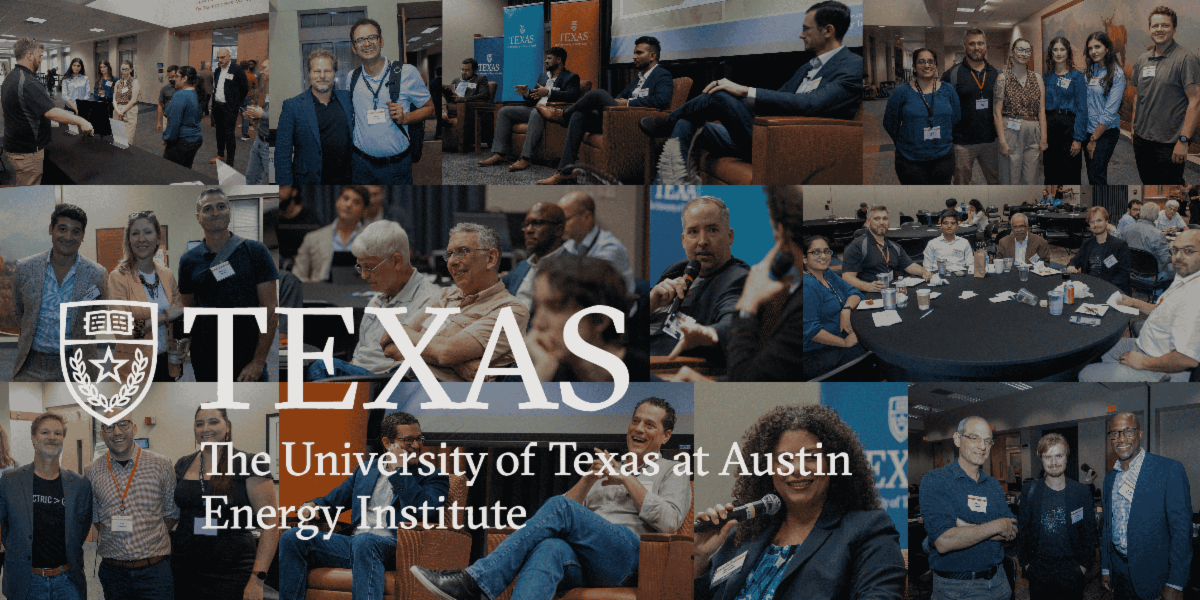
The Energy Institute and Harrington Faculty Fellows Program are hosting five rising stars in energy research and innovation for a year-long residency at UT Austin. The scholars were selected based on their research interest, cross-disciplinary potential, and alignment with the program’s 2026-27 theme of energy technology. The cohort will work across areas of energy infrastructure security, sustainable transportation, industrial decarbonization, advanced battery technology, and energy economics.
Learn More
| | | | |
New Research on Water Resources for AI Data Centers in Texas
Dr. Lucy Ko and colleagues at UT’s Bureau of Economic Geology are conducting research to identify water sources in West Texas and southeast New Mexico that can support the development of large-load AI data centers without increasing pressure on limited freshwater supplies. A new report assesses the viability of the brackish Dockum Aquifer as a potential water source for data centers and other large industrial facilities in water-constrained areas of the region.
Read More
| | | | |
Venezuela Fights to Keep Citgo as U.S. Delays the Sale
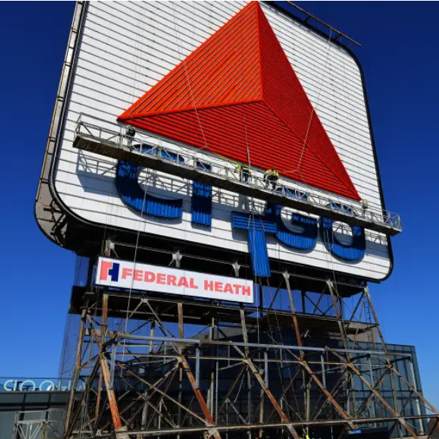
Energy Institute journalism fellow Brandon Mulder reports for Fortune on the evolving geopolitics and competing interests that surround the final decision on the court-ordered sale of Citgo to Elliott Management. The sale was meant to repay Venezuelan creditors but, since the U.S. ouster of Nicolás Maduro in January, the Trump administration has repeatedly delayed the sale. Mulder explains that the stalemate gives the administration leverage over Venezuela’s interim government and may also be part of a strategy to consolidate executive power.
Learn More
| | | | |
UT Austin Researchers Awarded Access to Proprietary Geologic Hydrogen Exploration Data
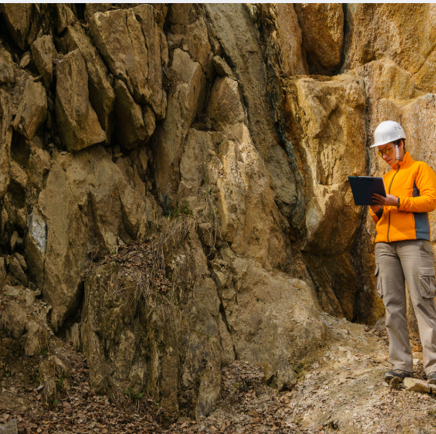
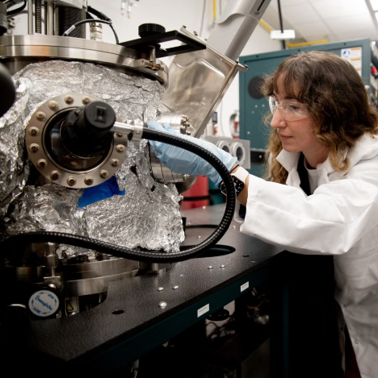
Renaissance Philanthropy’s Chimaera Fund has selected three university teams, including UT Austin, to conduct the first open, publishable research using proprietary geologic hydrogen exploration well data. HyTerra Ltd has granted academic access to newly drilled wells in the U.S. Midcontinent Rift to let researchers investigate which rocks generate hydrogen and at what rates, accelerating progress toward the responsible development of geologic hydrogen resources.
Learn More
| | | | |
Integrating Methane Measurements for Smarter Energy Decisions
UT Austin researchers are helping reshape how the industry approaches methane emissions by enabling a shift toward targeted measurements that meaningfully reduce uncertainty. Arvind Ravikumar’s recent Q&A with JPT highlights how UT’s Energy Emissions Modeling and Data Lab (EEMDL) combines satellites, aircraft, drones, continuous sensors, and operational data to produce reliable, multi-scale methane inventories that support both mitigation and regulatory decisions.
Learn More
| | | | |
Advancing Fusion Innovation at UT
UT Austin is expanding its leadership in fusion energy research through a new seed grant program that connects physicists in the Institute for Fusion Studies with investigators in engineering and computational sciences. The program aims to both accelerate progress toward practical fusion energy and strengthen the workforce that will be needed by this rapidly growing field. The interdisciplinary research teams will develop faster AI‑driven simulations, explore advanced liquid metal alloys, improve magnetic confinement designs, and create next‑generation plasma‑edge modeling.
Learn More
| | | | |
COMPASS Researchers Inform Texas Legislators on Data‑Center Water Use and Infrastructure Implications
The team from COMPASS, a research consortium at the Bureau of Economic Geology at UT Austin, provided testimony before the Texas Senate Committee on Water, Agriculture & Rural Affairs on data center water use and the implications for water, energy, and other infrastructure in Texas. COMPASS presented research findings directly to Texas legislators to help inform policymakers as the state navigates rapid data center growth and evaluates the water and energy implications of different cooling technologies.
View the Recording
| | | | |
Texas Engineers’ Innovation Could Reduce AI’s Energy Demand
Texas Engineers teamed up with Taiwan Semiconductor Manufacturing Company (TSMC) to test SOT-MRAM, a new memory technology that could help mitigate increased energy demand from AI. The team focused on SOT-MRAM because of its ability to retain information through magnetic properties without using power, which allows for faster operation and decreased energy use compared to current standard technology. With Texas projected to lead the U.S. in data centers within the next few years, SOT-MRAM could reduce AI’s energy footprint in the state by increasing efficiency and reducing electricity demand from data centers.
Learn More
| | | | |
Commercializing Emerging Technology Companies at UT Austin
UT Austin’s Discovery to Impact is helping turn campus research into real-world technologies that strengthen U.S. supply chains and manufacturing. Programs that guide faculty and student innovators through the process of commercialization have helped launch startups across areas such as critical minerals, battery materials, robotics, and secure navigation systems. One of these, Nascent Materials, was chosen by the American Energy Society and the Shell Alumni Network as one of a select group of energy and climate startups invited to present at Energy 2026, a global virtual conference.
| | | | |
UT Energy Engineer Michael Webber Wins McGraw Prize in Education
Professor Michael Webber has been named one of three recipients of the Harold W. McGraw, Jr. Prize in Education in recognition of his leadership in education and lifelong learning. Webber, the Sid Richardson Chair in the LBJ School of Public Affairs and Cockrell Family Chair in Engineering #16 at UT Austin, was selected for his work expanding public understanding of energy and environmental issues. Through books, television programs, continuing education courses, and K–12 educational resources, Webber has helped make complex energy topics more accessible to learners around the world.
Learn More
| | | | |
UT/Texas Politics Project Poll Reveals Resistance to Data Centers
A recent poll from UT Austin’s Texas Politics Project examined public opinion on data centers in Texas, finding that most respondents oppose local construction despite recognizing statewide economic benefits. The Second Reading podcast explores these results in depth, highlighting how concerns over energy use, water demand, and infrastructure strain continue to outweigh enthusiasm for technological growth.
Read More and Listen to the Podcast
| | | | |
2026 Texas Defense Research Workshop
UT Austin researchers traveled to Washington, D.C. for the 5th Texas Defense Research Workshop, where they met with government and industry partners to discuss critical materials challenges shaping national security. Across panels and breakout sessions, experts highlighted needs in thermal management, microelectronics, quantum and photonic materials, and advanced manufacturing, emphasizing how UT’s research capabilities can help accelerate reliable, scalable solutions for defense applications.
Learn More
| | |
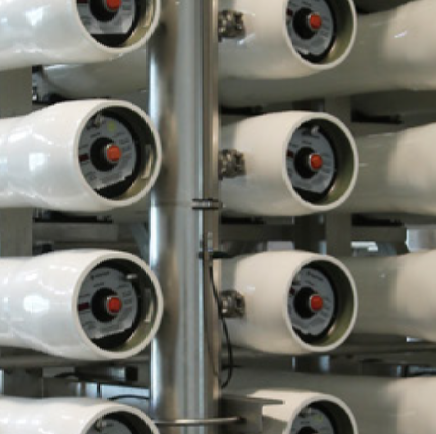
System-Scale Design and Analysis of Desalination Systems for Meeting Water Needs of Data Centers
This study evaluates how desalination technologies—reverse osmosis, mechanical vapor compression, and hybrid systems—can supply reliable cooling water for rapidly growing AI and high‑performance data centers. It compares energy use, cost, and freshwater recovery across different salinity levels and disposal strategies, introducing a new metric to assess how desalination affects local water stress.
COMPASS’s white paper, Water Requirements for Data Centers in Texas provides broader context on the state’s evolving water and energy demands. Together, these reports outline a framework for designing sustainable water systems for digital infrastructure.
This research was funded in part by the Strategic Energy Seed Grant Program administered by the Energy Institute.
|
| |
Phases and Stages Episode 10 (Bonus!):
The Energy Valley of Texas
There’s a stretch of farmland along FM 490 in McCook, Texas, where the wind blows hard. An unincorporated town located just north of Edinburg in the Rio Grande Valley with a population in the hundreds, this historically Polish farming community has all of a sudden become a hotbed of energy development.
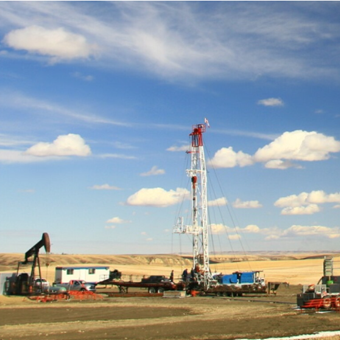
And it’s not just wind in the Rio Grande Valley these days. There’s still a little bit of oil, but now residents are seeing massive solar farms emerge, not to mention a giant liquefied natural gas export facility under construction, along with the first U.S. refinery in 50 years being built at the Port of Brownsville.
We’ll hear from all the interested parties and talk with locals about the future of the energy industry in the Rio Grande Valley and how these new developments are shaping the landscape. Now available on Apple Podcasts, Spotify, Amazon Music, and more!
|
| | |
Energy Institute
Jorge Piñon explains in an interview with The World the key details of a U.S. deal with Venezuela that claims to put approximately 65 billion barrels of oil under U.S. control.
Piñon was also quoted in an editorial in The Dallas Morning News🔒 on how U.S. gasoline may still be reaching Cuba despite the U.S. energy blockade.
Brian Korgel was quoted by Marketplace on Texans’ relationship with solar energy and the continued growth of solar power in the state.
Korgel was also quoted in The Daily Texan, sharing his perspective on increasing strain on energy grids with AI use and its biggest challenges.
Carey King was cited by The Christian Science Monitor in a piece on the effects of all-time high diesel prices.
| | |
Cockrell School of Engineering | Hildebrand Department of Petroleum and Geosystems Engineering
Arvind Ravikumar spoke with the Journal of Petroleum Technology on how the Energy Emissions Modeling and Data Lab is integrating their data into more credible methane accounting for oil and gas systems.
Hugh Daigle shared his thoughts on Marketplace on how a ban on diesel exports might temporarily bring prices down but could have negative long-term effects.
| |
School of Law
David Spence and Randy Erben were cited in a piece in The Daily Texan about the Public Utility Commission of Texas’s plan to audit hundreds of data center projects planned to connect to the Texas power grid.
| | |
Jackson School of Geosciences | Earth and Planetary Sciences
An opinion piece by Dev Niyogi published in Deccan Herald explores how geoscience‑driven, hyperlocal AI models can help communities and businesses anticipate climate risks and strengthen resilience.
| |
Cockrell School of Engineering | Walker Department of Mechanical Engineering
Michael Webber appeared on CBS News to discuss the unprecedented scale of the pipeline for new data centers, emphasizing the importance of responsible development that protects water resources, the power grid, and the environment.
Webber also published opinion pieces in the Houston Chronicle discussing how smart data center regulations🔒 could produce cheaper electricity and lower taxes, and why Texas should build more transmission lines🔒.
Vaibhav Bahadur was quoted in Deceleration about data center water use and the urgent need to identify alternative water sources to cool the systems.
| |
Webber Energy Group | Texas Advanced Computing Center (TACC)
Michael Webber, Joshua Rhodes, and Dan Stanzione spoke with KUT News about Texas’s growing data‑center electricity demand, its effects on energy resources, and Governor Greg Abbott’s “Bring Your Own Power” policy. They also discussed how stronger sustainability practices could reduce environmental and community impacts, as has been done with TACC’s own servers.
| |
Cockrell School of Engineering | Chandra Department of Electrical and Computer Engineering
Jean Anne Incorvia was quoted in The Daily Texan discussing her research team’s progress on developing spin-orbit torque magnetic random access memory (SOT-MRAM) that has the potential to decrease the energy demand of AI.
| |
LBJ School of Public Affairs
Alan J. Kuperman was quoted in The Associated Press offering perspective on the risks of the U.S. Army’s $2B plan to build nuclear microreactors at five bases to meet the increasing demand for reliable baseload power to support military operations.
| |
Cockrell School of Engineering | Department of Civil, Architectural and Environmental Engineering
Kara Kockelman spoke with CBS Austin on Tesla’s Cybercab launch in Austin, comparing its safety features to Waymo and its economic advantage over a manually operated Tesla.
Kockelman was also quoted in International Business Times and CBS Austin on Tesla’s new driverless Cybercab, warning that emergency crews still need reliable ways to manually move the vehicle during crises.
| | | |
Global Solar Power & Energy Storage Forum
October 7, 2026
The University of Texas at Austin
| | | |
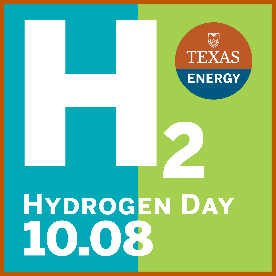
Hydrogen Day 2026
October 8-9, 2026
The University of Texas at Austin
| | | | |
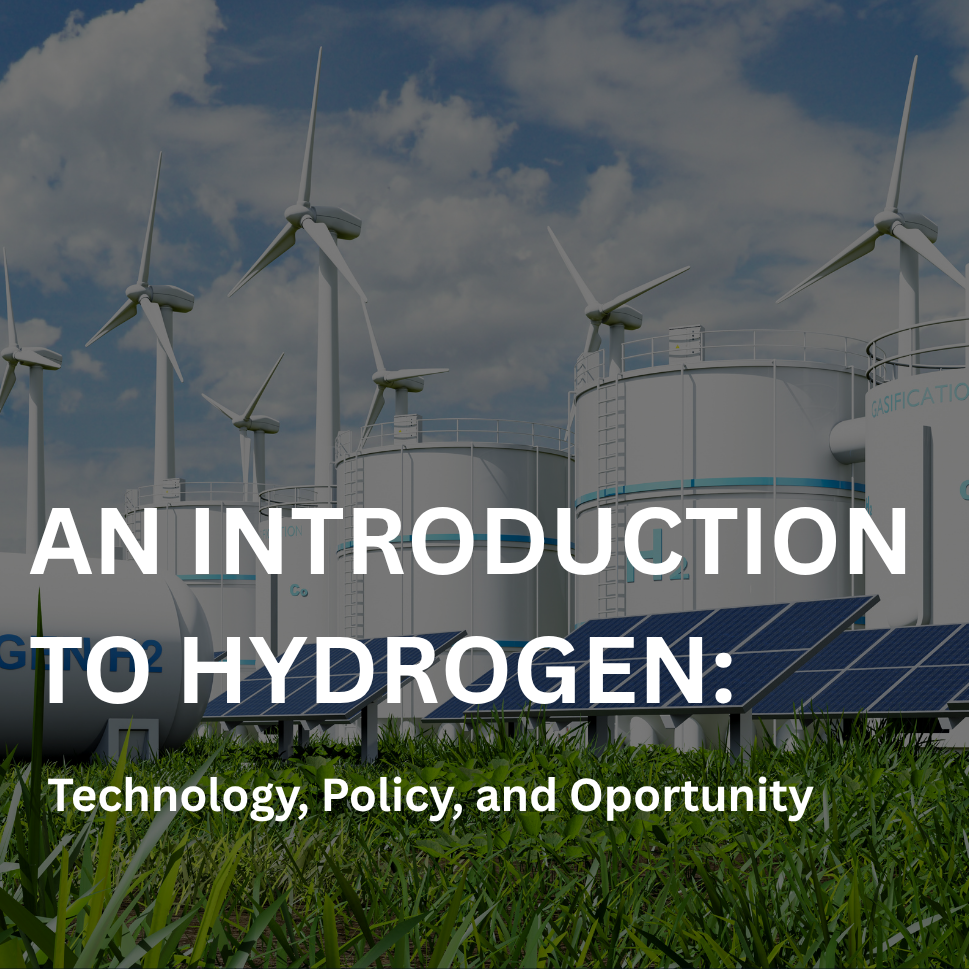
An Introduction to Hydrogen: Technology, Policy, and Opportunity
Start Date: October 8, 2026
The University of Texas at Austin
| | | | |
EEMDL 2026 Annual Event
October 13-15, 2026
The University of Texas at Austin
| | | | |
Executive Program for Energy Leaders
Start Date: October 14, 2026
The University of Texas at Austin
| | | | |
ECE Seminar: "Command, Corrupt, Coordinate: Adversarial and Market-Driven Threats to Grid Security"
Friday, Oct 16, 10-11am
EER 0.806 (Mulva Multipurpose room)
The University of Texas at Austin
Presented by Charalambos Konstantinou, Associate Professor of Electrical and Computer Engineering at KAUST, Saudi Arabia | 2026-2027 Harrington Faculty Fellow at UT Austin
| | | | |
ASES Solar 2026 Conference
October 19-21, 2026
Palmer Events Center | Austin, TX
| | | | |
ASES Solar 2026 Conference Career Fair
October 20, 2026
Palmer Events Center | Austin, TX
| | | |
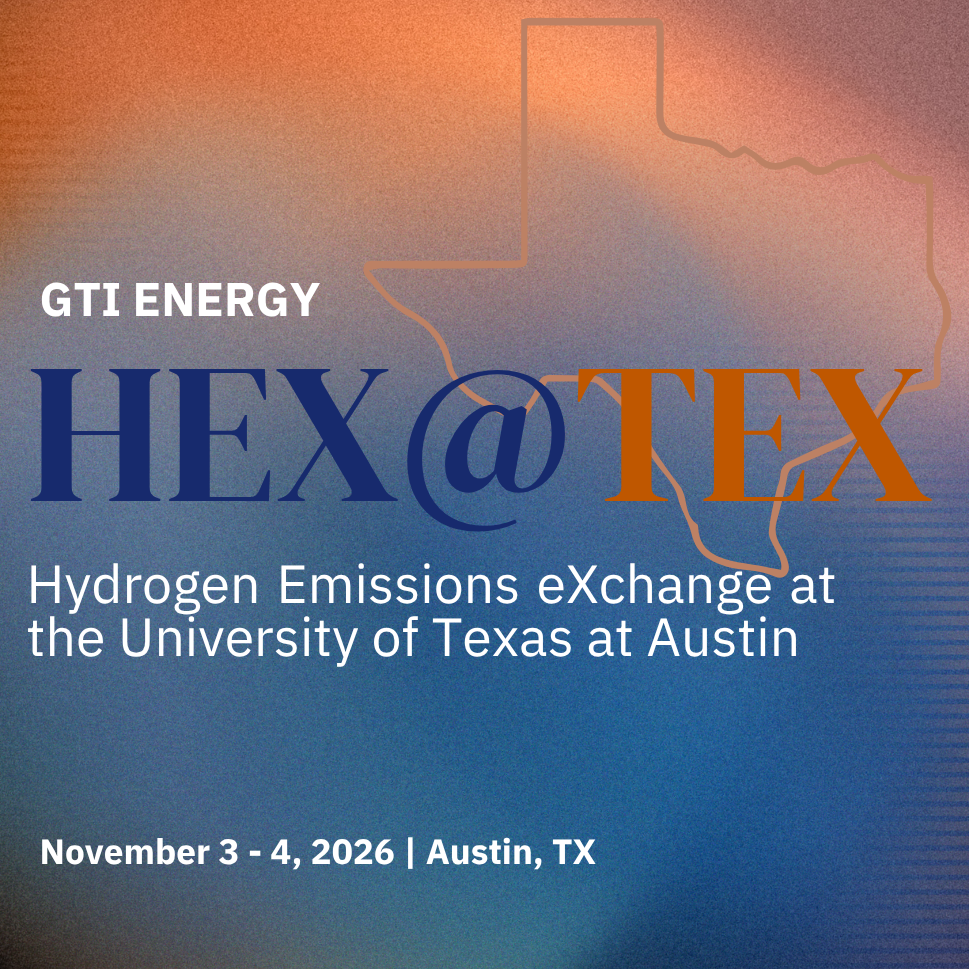
HEX@TEX 2026
November 3-4, 2026
The University of Texas at Austin
| | | |
Environmental and Energy Economics
Nov. 6, Nov. 13 and Dec. 4, 2026
The University of Texas at Austin
| | | |
Powering the AI Buildout: Data Centers, Public Power, and the Municipal Market
November 13, 2026
The University of Texas at Austin
| | | | |
Profitability and Sustainability in the Energy Industry
Start date: February 18, 2027
The University of Texas at Austin
| | | | |
Save The Date:
UT Energy Week 2027
April 5-9, 2027
The University of Texas at Austin
| | Thank you to our partners and sponsors for supporting the UT Energy Institute | |
| | | |