|
Early September Frost Poses a Challenge for Row Crop Production in Western North Dakota.
Crop & Pest Report
2025 Template using Word
Around the State
Southwest ND
Over the last 14 days, precipitation in southwest North Dakota ranged between trace amounts in Dunn and Billings Counties to over one inch in Hettinger, Adams and Morton Counties.
Small grain harvest has progressed steadily with little to no rainfall and cooler temperatures over the last couple of weeks.
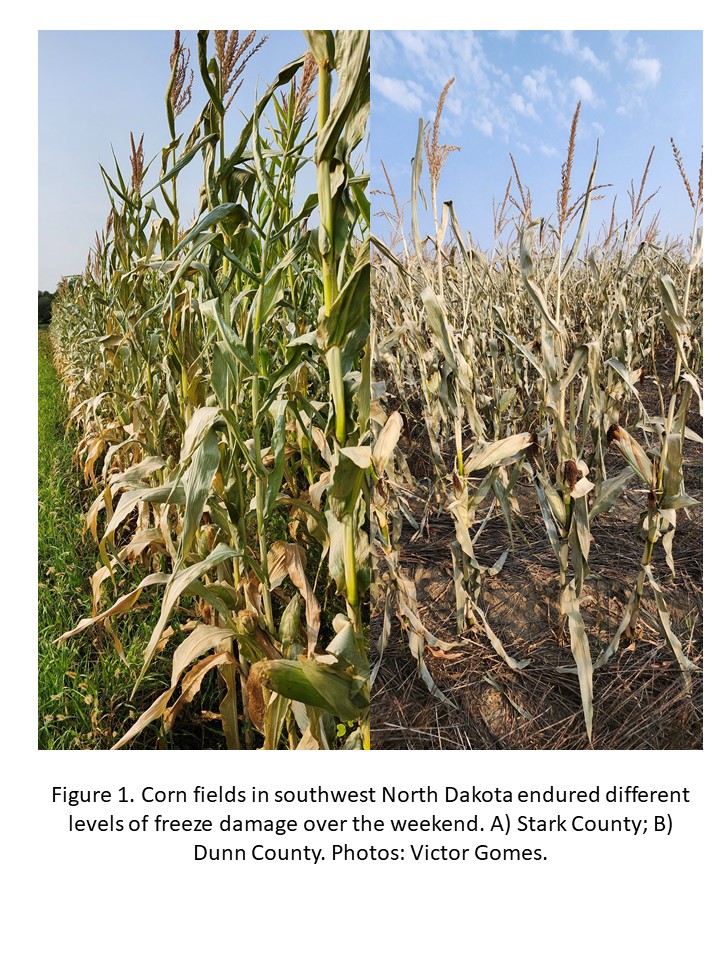
Last weekend’s frost will surely accelerate crop maturity, and many row crops have now entered the senescence and dry-down process. Harvest of these crops will likely begin within the next four-six weeks. However, some late-planted fields may not have completed grain filling successfully before the frost and could face yield and quality penalties. Based on my scouting trips, corn was the most affect crop. A colleague driving from Halliday to Dickinson over the weekend also said he did not see a single field that had not been nicked by frost.
The full extent of the damage caused by this frost will largely depend on two factors:
1. The intensity and duration of the frost, and as a result, how much of the leaf tissue was lost.
2. The crop growth stage.
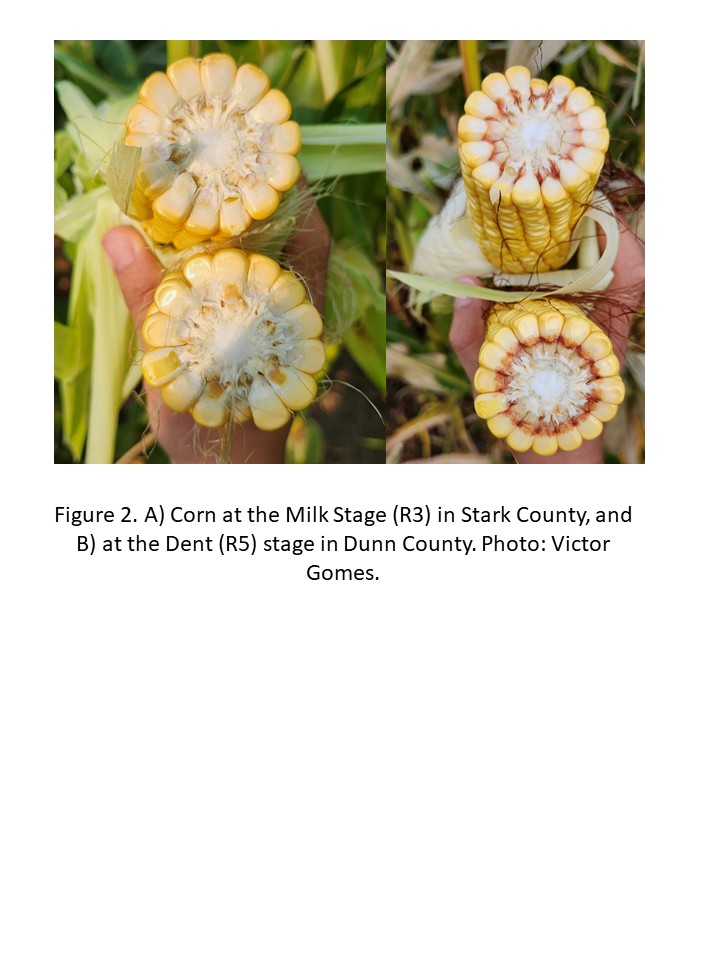
With regards to corn growth stages in southwest North Dakota, it ranges from Milk (R3) (Figure 1A) to dent stage (R5) (Figure 1B). Because it is difficult to distinguish living from dead tissue immediately after a frost event, this assessment should be done 5-7 days after the frost.
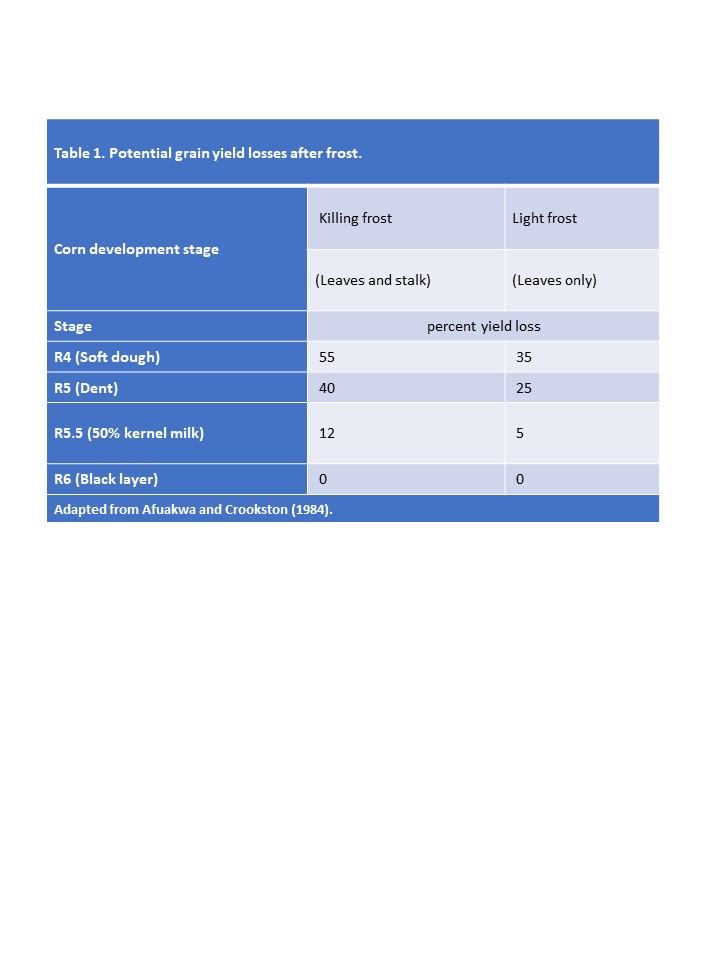
Based on the parameters listed above, corn growers can estimate potential corn yield losses by using the table below:
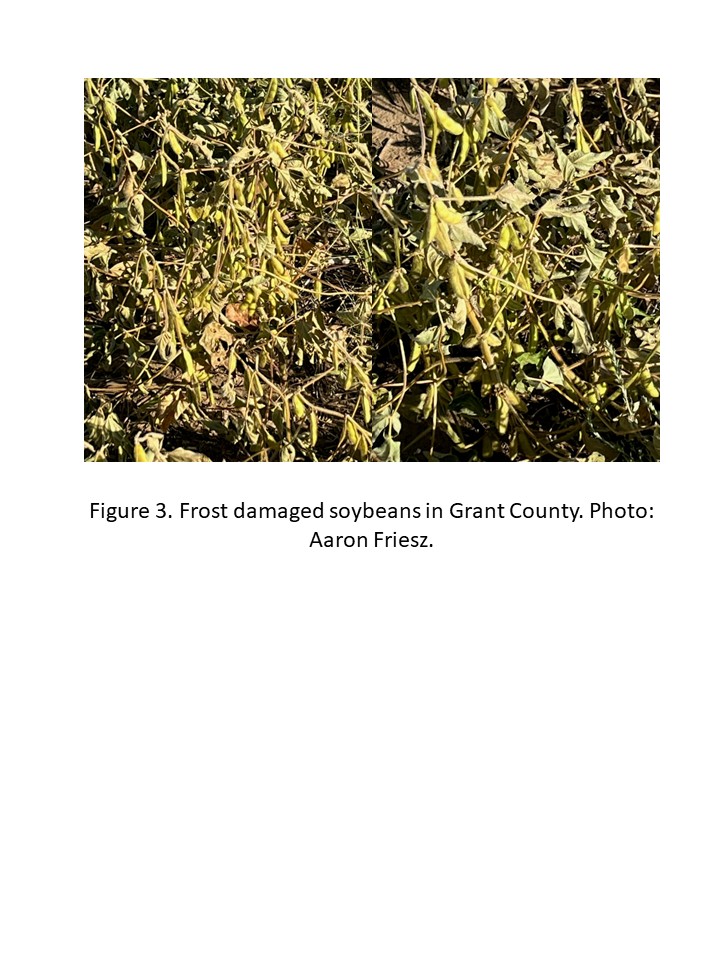
For frost damaged soybeans, first keep in mind that at this point in time, soybean plant tissue is more tolerant of freezing temperatures than corn. However, temperatures below 32F can damage leaves, and temperatures below 30F for an extended period can damage stems, pods and seeds. Similarly, to what was discussed before, the potential yield penalties from frost damage to soybean will be dependent on the intensity of the frost and the crop growth stage. Soybeans in southwest North Dakota are more or less in the same growth stage – around R6.
Research information from Wisconsin indicated that all varieties tested had reduced yields when frost occurred at or before R6 (full seed). The greatest yield losses occurred when frost occurred at stage R5 (beginning of seed development). The number of beans per plant and reduced bean size all contributed to overall yield loss. A frost between R6 and R7 may or may not affect yield depending on the temperature and duration of the freeze. A frost will not hurt soybean yields if the soybean growth stage is beyond R7.
Frost damaged R6 soybeans could experience yield penalties as high as 50%. Recommendations for handling frost-damaged grain coming from the University of Minnesota and Pioneer® include:
· Isolate frost-damaged areas (especially late planted and/or drowned-out areas) and harvest them after the unaffected areas. While this can add logistical challenges for large operations, it could reduce the risks of storing damaged grain and will isolate potential dockages to individual loads rather than whole bins.
· If soybeans have been frosted prior to maturity or have higher than normal moisture at harvest, combine settings may have to be adjusted to minimize harvest losses. Reduce the concave clearance and then begin to increase rotor or cylinder speed if more aggressive threshing is needed for wet, tough soybeans. Check behind the combine and readjust settings as conditions change throughout the day or season.
· Soybeans should be at 16% seed moisture or below for ideal threshing, but with delayed maturity or early frost, some fields may be wetter than this late in the season.
Sunflowers in the area are either in the late R5 stages and mostly in the R6 stage. Once pollination is completed and 10 to 14 days after petal drying occurs, the sunflower plants can withstand frost temperatures as low as 25F and have only minor damage. If hard frosts do occur, many times only the seed in the center of the head (the last to pollinate) will be affected.
To complement my harvest report from two weeks ago, I contacted several grain elevators in the region for updated information on crop yields and quality. Here’s what I gathered:
Hard Red Spring Wheat: Yields are averaging 50–60 bushels per acre with protein levels around 14–15%. Some low-protein wheat (<11%) is still being reported, mainly in counties along the Missouri River valley where growing conditions were wetter than further west. Overall quality remains good, with limited reports of vomitoxin or falling number issues. However, recent rain before harvest increased the occurrence of bleached kernels in some fields.
Barley: Quality has been strong, with yields highly variable—from 44 bushels per acre up to 120. On average, most fields are yielding in the upper 70s to low 80s.
Canola: Yields are generally average to below average, ranging from 1,250 to 1,800 pounds per acre. Seed quality has been excellent, with good seed color and minimal green or heat-damaged seed. The main issue has been high dockage levels, largely due to weed management challenges before harvest.
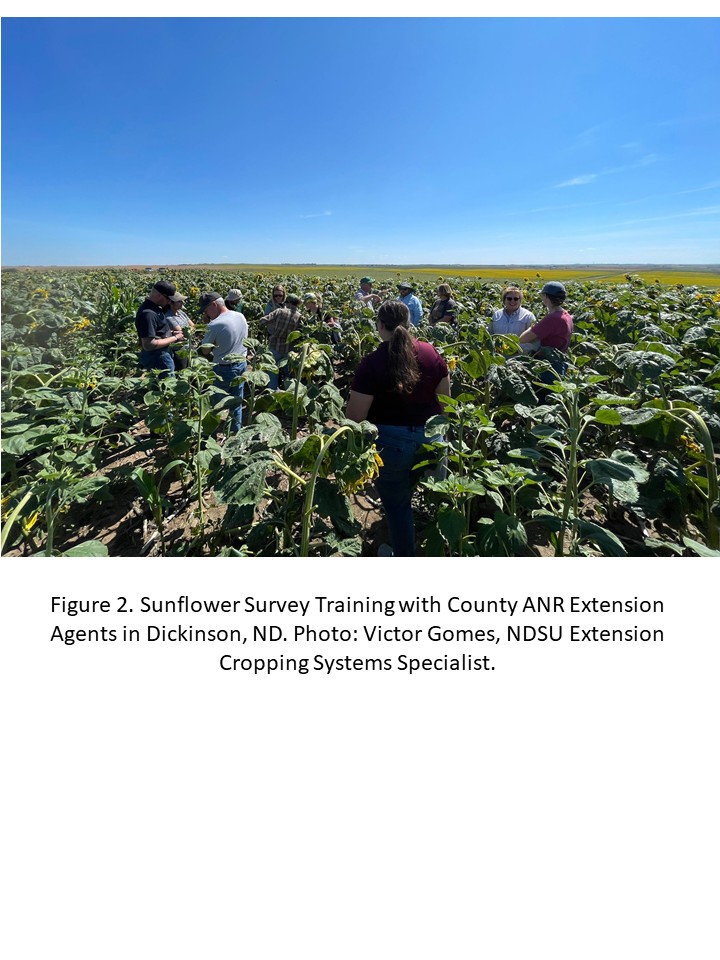
The 2025 National Sunflower Survey will launch in a couple of weeks. The Sunflower Crop Survey is conducted bi-annually prior to harvest. Volunteers from all levels of the sunflower industry visit sunflower fields to survey the crop condition. Teams survey for yield and production practices, weeds, insects, diseases and bird damage. If you are growing sunflowers this year and would like to have your field surveyed, please contact your NDSU County Extension Office.
Victor Gomes
Extension Cropping Systems Specialist
|