|
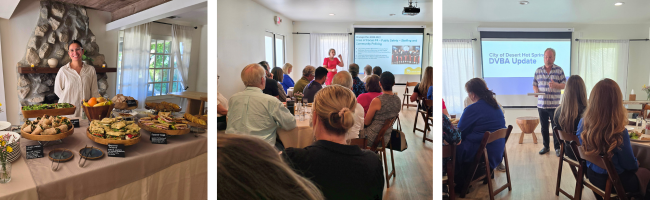
We are a month away from our Builders Forum Dinner at Agua Caliente Casino Resort Spa. We have some extremely excited speakers looking to share their experiences developing and building homes and businesses in the Coachella Valley. The flyers should be sent out by the end of the week.
The Coachella Valley Conservation Commission – Multiple Habitat Conservation Plan/Fee
As many of you know, and from reading last week’s article, the Multiple Species Habitat Conservation Plan and Local Development Mitigation Fee is a complex issue. It was designed to provide the development and construction industry with assurances during development as a one-stop fee mitigation opportunity and to have that fee be equitable across the board. Without the fee program, the industry had to deal with the individual state and federal wildlife services individually and establish its own mitigation as a fee or provide requested habitat. There was no equitability in that process. Builders and developers were at the mercy of these agencies.
There were several disconnects on actual ‘nexus’ in some instances with the new plan. It was supposed to be charged for disturbing previously undisturbed lands, but it was also charged on infill properties that had been previously graded and transformed. This created an uproar. But we had to accept it for the greater good of the industry.
To start, many large transportation projects paid fees far in advance of their planned projects, priming the funding processes of the Plan. There were also agreements for funds being collected in tipping fees. But the largest contributor was going to be the Eagle Mountain waste disposal site. But that project was killed, and the focus became the construction industry to fund the purchase of habitat conservation lands, with monitoring and management of those purchased lands.
The Mitigation Fee Act does not fit well as the piece of legislation to support the construction industry being the primary source of ongoing funding for the habitat reserve.
The Plan is an agreement between the Coachella Valley Conservation Commission (CVCC) and the state and federal wildlife services. The Plan and CVCC essentially promise to purchase approximately 1,500 acres of habitat annually toward a goal of approximately 100,000 acres. But CVCC has been focused on the construction industry to provide that funding. The industry has averaged only about 500 acres annually in development. In a one-to-one proportionality, the industry is falling short by about 1,000 acres annually. The wildlife services are pressuring the CVCC to protect more land, equivalent to ‘find more money.’
In the agreement with the public, the CVCC will only purchase lands from “willing sellers.” There aren’t that many coming forward. So, the CVCC has been purchasing ‘tax default’ properties from the County of Riverside at the rates of the defaults. Things have changed at the County; they now wish to charge assessed values of these tax default properties. Who the assessor is matters, and like any other seller, they want the most money possible. That increases the costs of negotiators, realtors, escrow, and then the costs of the properties. These purchases are made with the limited funds from new construction.
When I started in this industry, it was common knowledge that you do not bond on the promise of collecting the necessary development impact fees. The industry has its ups and downs and is not predictable in any sense. But that is what CVCC has created in its agreements with the wildlife services.
As you have heard, the CVCC staff wishes to increase these fees provided by new construction to make up the losses in funding. What happens if this increase in fees causes the construction industry to back off even farther, to say, only developing on 200 acres a year? Are they again going to increase the rates on new construction?
CVCC Staff and the staff reports have repeatedly stated that if there was not any construction, there would not be a need for a fee. Under the Mitigation Fee Act this would be true. However, CVCC owes the wildlife services new habitat purchases annually and management and monitoring in perpetuity of conserved lands, past, present, and future. It is DVBA’s opinion that this proves that the fees charged for new construction lack the “nexus” requirement of the Mitigation Fee Act.
Stop telling us that this is not a Public interest! It is a specific benefit to new construction. It is a benefit to new construction for equitable permit charges, and to provide an acre of habitat for an acre of disturbance for new housing or business. Under the Mitigation Fee Act there is a ‘rough proportionality’ clause. For the industry, that is one acre of development or disturbance for one acre of habitat conserved. In the original Plan, there were approximately 100,000 acres of each, perpetuating that proportionality. But CVCC wants new construction to make up for the annual loss by increasing the fee. This is no longer ‘rough proportionality’ this is a new ration to support a fee increase.
Management and monitoring have always been a problem for the Mitigation Fee Act. This is consistent with development impact fees for new road construction and then making new construction pay into a fund for police to enforce traffic regulations on that road expansion.
When a fee is not supportable pursuant to the Mitigation Fee Act we get an unlawful tax pursuant to the constitutional amendment Proposition 26, https://law.justia.com/constitution/california/article-xiii-c/section-2/#:~:text=CA Constitution art XIII C %C2%A7 2
At last week’s Coachella Valley Conservation Commission, the members (city council and other agency representatives) requested to table the Item proposing the fee study and fee increases. The proposed increases affect the cities and local agencies as well.
The DVBA will continue to track this issue as it will undoubtedly return for at least discussion. We have repeatedly expressed that the benefits of reserved protected habitat lands benefit the entire region, beyond the benefits provided new construction. There are other fee/financial opportunities to support this cause. None of these alternatives would be easy to initiate. And none can promise consistent funding annually. But a broad base of funding is better than a sole source.
Imperial Irrigation District in the News – Sued over Legitimacy of Rates
Coalition challenges IID rate increases, citing lack of Riverside representation | Local News | thedesertreview.com
|