|
|
Wednesday | March 17, 2021
|
|
|
Abstract
The COVID-19 pandemic has affected the entire world and catapulted the United States into one of the deepest recessions in history. While this pandemic rages, the opioid crisis worsens. During this period, the pandemic has resulted in the decimation of most conventional medical services, including those of chronic pain management, with the exception of virtual care and telehealth. Many chronic pain patients have been impacted in numerous ways, with increases in cardiovascular disease, mental health problems, cognitive dysfunction, and early death. The epidemic has also resulted in severe economic and physiological consequences for providers.
|
|
Interventional pain management techniques in general, facet joint interventions, and epidural interventions, in particular, have been in the news for the past year.
There have been two reports from the Office of Inspector General (OIG) covering the frequency of therapeutic facet joint injections and another report from Noridian with only 49% of the claims meeting appropriateness criteria.
Based on the Cures Act to provide uniformity and transparency, new local coverage determinations (LCDs) have been established. Consequently, a multijurisdictional expert committee had hearings on potential coverages on the future for facet joint interventions in May 2020 and for epidural interventions in February 2021.
|
|
Join the 2021 Annual Meeting in New Orleans, June 24-26, for the FIRST LIVE, MUST-ATTEND Meeting since COVID Shutdowns
|
|
The 23rd annual meeting will be educational (providing much-needed CME credits), exciting, and will offer the long-awaited ability to leave our homes and attend meetings in a safe and responsible manner.
ASIPP is working to make the program highly relevant for our changing healthcare system and environment. We will also bring you cutting-edge lectures on exciting new technology, world-renowned speakers, and much, much more.
Topics will include: COVID-19, economics, burnout, social media, metabolic health, regulatory issues, scientific advances in IPM, and much more!
|
|
Enforcing the False Claims Act can help
Can a patient have and not have diabetes at the same time? According to private insurers participating in the Medicare Advantage program, the answer is yes. The data architecture of Medicare Advantage is vulnerable to fraud perpetrated by the Medicare Advantage Organizations (MAOs) who administer Medicare Advantage plans. These MAOs stand to collect inflated profits if they determine that their beneficiaries have complicating diagnoses for certain purposes but not for others.
|
|
The social media giant's fact-checkers are plucked from a constellation of Twitter stars
In his op-ed, Makary argued that COVID-19 will be mostly gone by April. I want to be clear: I am not interested in litigating Makary's opinion, which is what an op-ed conveys.
|
|
The California Society of Interventional Pain Physicians presents:
Integrating Regenerative
Medicine Into Your
Interventional
Pain Practice
March 27, 2021
|
|
Pain Medicine Case Reports (PMCR) and Editor-in-Chief Alaa Abd-Elsayed, MD, PhD would like to invite you to submit case reports and case series to the PMCR journal. Your article will be published free of charge.
Open access journals are freely available online for immediate worldwide open access to the full text of published articles. There is no subscription fee for open access journals. Open access journals are no different from traditional subscription-based journals: they undergo the same peer-review and quality control as any other scholarly journal.
Interested in becoming a member of the PMCR Editorial Board?
Editorial board members are asked to review 2-6 manuscripts per year. Please submit your most up-to-date CV to sgold@asipp.org for consideration.
For more information or to submit your articles, click here.
|
|
Abstract
BACKGROUND: Stellate ganglion block is an option for refractory ventricular tachyarrhythmia. Approaches include using anatomical landmarks or image-guidance with fluoroscopy, computerized tomography, magnetic resonance imaging, or ultrasonography.
CASE REPORT: We describe a case of a 70-year-old man with multiple comorbidities presenting with sustained ventricular tachycardia (VT) who received a cervical sympathetic chain block at bedside. This resulted in ablation of his refractory VT and return to a paced rhythm, allowing him to be discharged from the intensive care unit.
|
|
In addition to the review of multiple manuscripts in reference to utilization, expenditures, anatomical and pathophysiological considerations, pharmacological and harmful effects of drugs and procedures, for evidence synthesis, we have included 47 systematic reviews and 43 RCTs covering all epidural.
|
|
Abstract
Background: The re-engineered definition of clinical guidelines in 2011 from the IOM (Institute of Medicine) states, "clinical practice guidelines are statements that include recommendations intended to optimize patient care that is informed by a systematic review of evidence and an assessment of the benefit and harms of alternative care options." The revised definition distinguishes between the term "clinical practice guideline" and other forms of clinical guidance derived from widely disparate development processes, such as consensus statements, expert advice, and appropriate use criteria.
Objective: To assess the literature and develop methodology for evidence synthesis and development of comprehensive evidence-based guidelines for interventional techniques in chronic spinal pain.
|
|
Abstract
Background: Corticosteroids have been used for the past 70 years in the treatment of various musculoskeletal conditions. This includes its use for joint pain such as rheumatoid arthritis and osteoarthritis.
Objectives: A narrative review of the literature from its initial discovery to the present day to summarize the research of corticosteroids for joint pain to determine the safety and effectiveness of this commonly used and prescribed medication.
|
|
But jury still out as to whether it prevents severe disease from the variant
AstraZeneca's COVID-19 vaccine was not protective against mild-to-moderate disease from either the so-called South African variant (B.1.351) or the wild type virus, an interim analysis of phase Ib/II data found.
Overall vaccine efficacy against mild-to-moderate COVID-19 in South Africa was 21.9% (95% CI -49.9 to 59.8), and efficacy against B.1.351 was 10.4% (95% CI -76.8 to 54.8), reported Shabir Madhi, PhD, of University of the Witwatersrand in Gauteng, South Africa, and colleagues, in the New England Journal of Medicine.
|
|
At stake: scheduled payment reductions totaling $54 billion
Healthcare groups are applauding efforts being made in Congress to stop two different cuts to the Medicare budget - both of which are due to "sequestration" requirements - before it's too late.
One cut, part of the normal budget process, is a 2% -- or $18 billion -- cut in the projected Medicare budget under a process known as "sequestration." Sequestration allows for prespecified cuts in projected agency budget increases if Congress can't agree on their own cuts. Medicare's budget had been slated for a 2% sequester cut in fiscal year 2020; however, due to the pandemic and the accompanying increased healthcare needs, Congress passed a moratorium on the 2% cut. That moratorium is set to expire on April 1.
|
|
But getting tax hikes through even to support badly needed infrastructure investments will be a Herculean challenge, argues Stifel chief Washington policy strategist Brian Gardner.
"The politics of a tax bill are likely to be more challenging than the politics of passing an emergency spending bill. Most lawmakers like spending money and being seen as caring and empathetic during a health crisis.
|
|
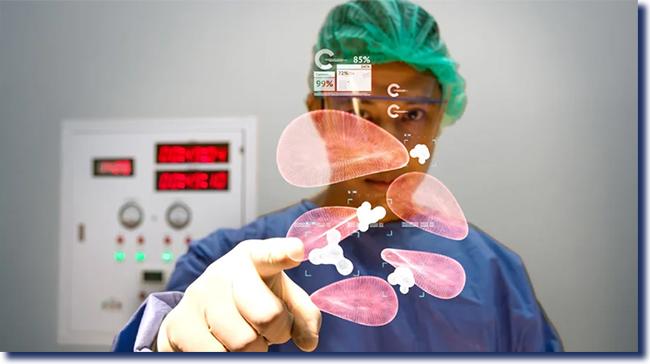
AI in healthcare is growing multifold, from diagnostics to pain management
Artificial Intelligence has been playing a growing role in the world in the last few decades. What most don’t understand is artificial intelligence introduces itself in numerous structures that sway everyday life. Signing in to your social media, email, car ride services, and online shopping platforms, etc. all include artificial intelligence algorithms to improve customer experience. AI in healthcare is growing quickly; explicitly, in diagnostics and treatment management.
As of late, AI applications in healthcare have sent huge waves across medical services, fuelling a conversation of whether AI doctors will in the end supplant human doctors in the future. However, experts believe that human doctors won’t be supplanted by machines soon, yet the use of artificial intelligence in healthcare can help doctors to settle on better clinical choices or even supplant human judgment in certain functional areas of healthcare.
|
|
If you have a question, please email Savannah Gold at sgold@asipp.org or call 270.554.9412, ext 4219.
|
- Selected manuscripts will be presented in an Electronic Poster Presentation
- Top 25 will be published in the Pain Physician journal.
- Top 10 will be selected for the Abstract Presentation at the Annual Meeting
- Top 3 will receive cash prizes.
|
|
Since this malpractice insurance program officially launched in November 2018, ASIPP has signed up hundreds of providers with an average savings of 30%. This is professional liability insurance tailored to our specialty and will stand up for us and defend our practices.
Norcal Mutual is 'A' Rated by AM best and is license in all 50 states. To read a few important points to keep in mind about the program, including discounts, administrative defense, cyber coverage, aggressive claims handling, and complimentary award-winning risk management CME activities, click here.
|
|
ASIPP® has formed a partnership with Henry Schein and PedsPal,
a national GPO that has a successful history of negotiating better prices on medical supplies and creating value added services for the independent physician. Working with MedAssets, PedsPal provides excellent pricing on products like contrast media that alleviate some of the financial pressures you experience today.
|
|
All sessions from the September 2020 meeting are available through June 2021 for a reduced fee. On-demand registration also provides access to all of the great resources available in the exhibit hall.
*Recorded sessions are not eligible for CME credits.
|
|
ASIPP® is now offering our members the benefit of a unique revenue cycle management/ billing service. We have received a tremendous amount of interest in the ASIPP billing and coding program.
Click here to learn more about the negotiated rate for practices and more!
|
|
and LinkedIn for the most up-to-date news
related to you, your practice, and your patients!
|
|
|
|
|
|
|