|
Hello Synapse Spotlight readers,
Welcome to the latest edition of Synapse Spotlight.
At Society of Biological Psychiatry (SOBP), we’re back with fresh neuroscience discoveries and community highlights. Our mission: make neuroscience accessible to all. Share freely.
The next few issues will reflect the theme of our upcoming 82nd Annual Meeting in Chicago next spring: metabolic psychiatry—how the brain and body work together to shape mental health. In this first issue, we'll dig into brain-immune communication in health and disease.
In this issue:
- 🧠 Why the brain-immune connection matters for psychiatric risk
- 🔬 Brain signatures of inflammation that could personalize psychiatric care
- 😴 How sleep loss and the gut stoke anxiety
- ⚡ How early life adversity leaves its mark on cellular energy
- 👤 Member Spotlight: Dr. Dost Öngür, our new SOBP President
- ❓ Around the Brain in MCQs: Test your neuroscience knowledge
Coming up: More breakthroughs–and fresh content from the annual meeting in Chicago.
For more science, explore Biological Psychiatry, Biological Psychiatry: Cognitive Neuroscience and Neuroimaging, and Biological Psychiatry: Global Open Science–and follow us @SOBP.
Happy Reading!
The Synapse Spotlight Team
| | The brain-immune connection | | |
We usually think of the immune system as guarding our physical health, but research shows it also plays a role in mental health. In fact, the immune system has been linked to a wide range of conditions, including depression, PTSD, neurodevelopmental disorders, and schizophrenia. That's the focus of a new Special Issue in Biological Psychiatry.
Some of these links may come down to how stress affects the immune system and how the immune system and brain talk to each other. Studying these connections could help us better understand what causes these disorders. It could also point to new biomarkers, like brain imaging patterns or signals in blood samples, and new kinds of treatments, such as drugs that adjust the immune response. Given the immense public health burden of these conditions and the shortage of effective new treatments, this work is badly needed.
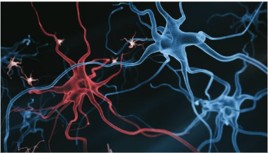
Image: 3D rendered image of a neuron cell network (see electrical pulses), with microglial cells (red)—the prominent immune cells in the brain. Credit: koto_feja from Getty Images Signature
| | Hot Topics in Biological Psychiatry | | |
Brain markers of inflammation can identify biological subtypes of psychiatric disorders
Inflammation has been linked to psychiatric illnesses, such as depression, bipolar disorder, and schizophrenia, but it isn’t the driving force behind these illnesses in every patient. A new study from Dr. Fei Wang’s team looked at brain scans, clinical data, and immune profiles in patients with psychiatric diagnoses and found two different biological groups. One group showed clear signs of immune system imbalance, but the other did not. The researchers also identified patterns of brain connectivity linked to these immune disruptions. In a separate group of participants, they showed that these brain markers could reliably tell apart people with and without immune disruptions. Interestingly, the group with immune disruptions were less likely to respond to treatment.
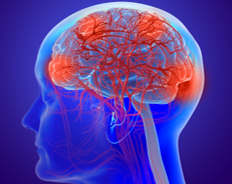
Image: iStock image
| |
Why It Matters: Right now, there’s no dependable way to know which patients might benefit from anti-inflammatory therapies. The brain markers identified here could eventually help guide that decision, moving psychiatric care closer to personalized, precision medicine. | | | | |
Sleep loss, the gut, and anxiety
We know that losing sleep affects mood, but exactly how it leads to anxiety isn't clear. A recent study by Dr. Yan Li and colleagues asked whether the gut plays a part. Working with sleep-deprived mice, the researchers zeroed in on a group of cells in the gut that make much of the body's serotonin, a chemical that helps regulate mood. Sleep loss quieted these cells down. When the researchers shut the cells off completely, the mice became more anxious. When they switched the cells back on, serotonin levels bounced back and the anxiety eased.
The team also found that this gut signal reached the brain by traveling along the vagus nerve, the body's main line between the gut and the brain. Since the study only used male mice, more research is needed to know whether the same thing happens in people, and whether it works differently in females. Still, the findings add to a growing view that mental health is shaped not just by the brain, but also by signals coming from the gut.
Image: https://www.functionalmedicineclinic.in/post/unlocking-the-gut-sleep-connection-how-your-gut-health-impacts-your-sleep
| |
Why It Matters: Sleep loss may affect mental health not only through the brain, but also through gut-to-brain signaling. These pathways could one day become targets for preventing anxiety. | | | | |
Stress leaves a mark: The relationship between early life adversity and mitochondrial functioning
Difficult or traumatic experiences in childhood, known as early life adversity, are known to harm mental and physical health. But we know much less about how they affect the tiny structures inside our cells, especially mitochondria, the cell's "power plants" that produce energy and support the immune system.
A new study from Dr. Jennifer Sumner's team at UCLA looked at trauma-exposed adults and asked how childhood adversity relates to the way their cells produce energy. They measured adversity in two ways: how much someone went through as a child, and what kind—whether it involved threat (like abuse or violence) or deprivation (like neglect).
The two measures painted different pictures. Overall, more childhood adversity was tied to changes in how efficiently cells generated energy. And the type of adversity mattered too: threat-related and deprivation-related experiences were each linked to their own distinct patterns in how cells produced and managed energy.
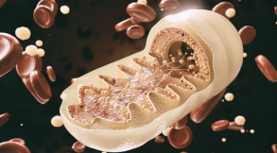
Image: Mitochondria, the body’s tiny little “power plants” that produce energy and support the nervous system. Credit: Crevis
| |
Why It Matters: Stressful early experiences may leave a mark on our biology right down to how cells produce and manage energy. Importantly, different kinds of early stress may affect this cellular machinery in different ways. | | | | SOBP member spotlight:
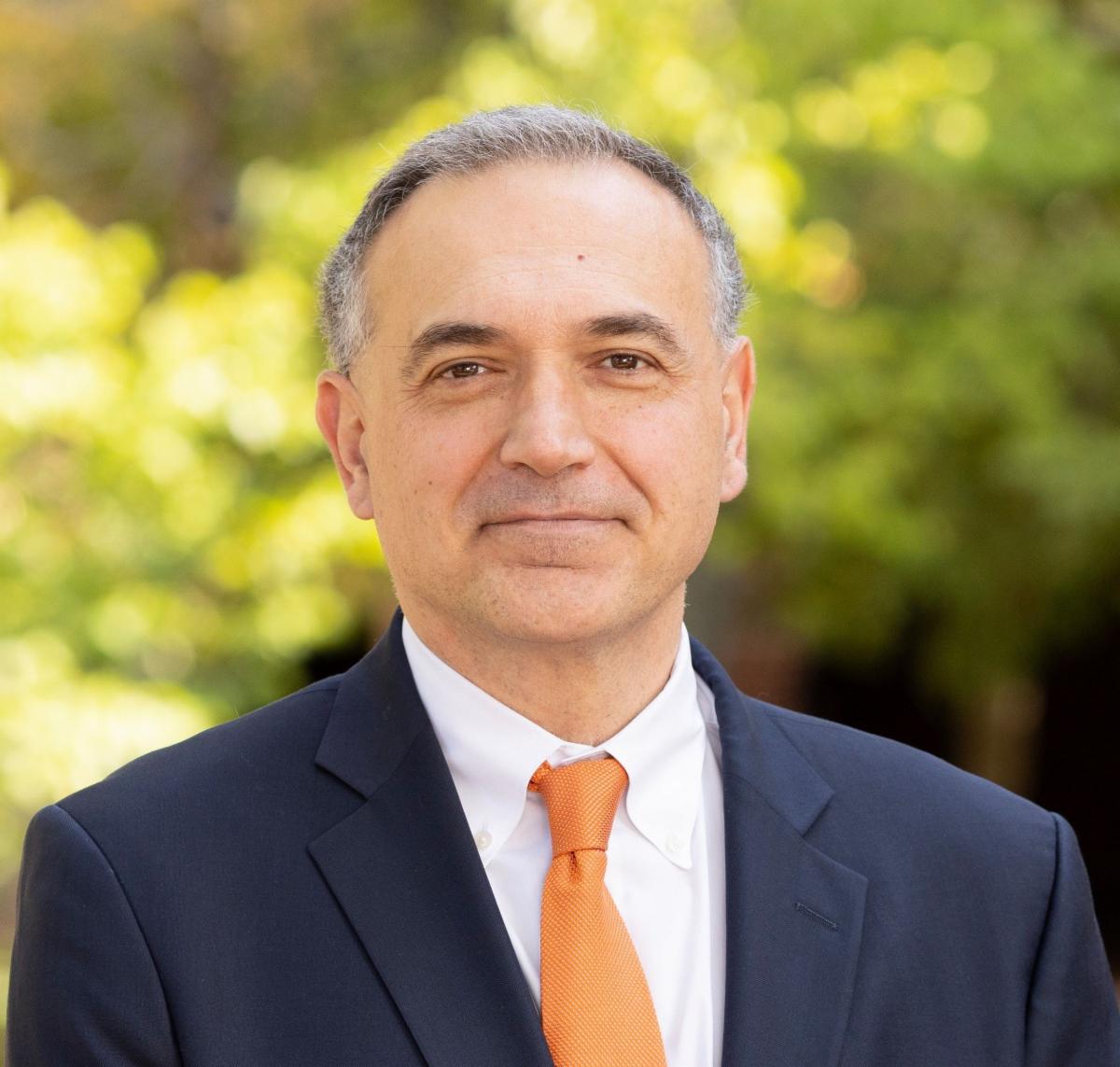
Dost Öngür, MD, PhD, SOBP President | | |
This issue, we're proud to spotlight our new SOBP President: Dost Öngür, MD, PhD. Dr. Öngür is the William P. and Henry B. Test Professor of Psychiatry at Harvard Medical School and Chief of the Division of Psychotic Disorders at McLean Hospital.
A native of Istanbul, Turkey, Dr. Öngür earned his MD/PhD from Washington University in St. Louis and trained in psychiatry at MGH/McLean before joining the faculty. He now leads clinical services for the Division of Psychotic Disorders and directs the Schizophrenia and Bipolar Disorder Research Program at McLean's LEAP Center, which studies the clinical course and neurobiology of psychotic disorders, including a notable finding that ATP synthesis is 22% lower in individuals with schizophrenia than in the general population. He is currently principal investigator of an NIMH P50 Center grant on early psychosis.
Author of more than 300 scientific articles, Dr. Öngür is Editor in Chief of JAMA Psychiatry and has served on the Council for SOBP and other professional organizations (ACNP, SIRS). He has received teaching and mentoring honors from McLean, Harvard Medical School, and the APA's Kempf Award.
We're grateful for his leadership and proud to count him among our members.
| | | Around the brain in MCQs! | | |
How fast can signal travel along some myelinated axons?
A. As fast as Usain Bolt at top speed (~30mph)
B. As fast as a cheetah (~60mph)
C. As fast as the world’s fastest rollercoaster (~150mph)
D. As fast as a Formula 1 car (~250mph)
Scroll to the bottom of the newsletter to find the answer!
| | |
ATP (adenosine triphosphate) — The main energy-carrying molecule that mitochondria produce to power the cell.
Biomarker — A measurable biological signal—such as a brain-imaging pattern or a molecule in the blood—that flags a disease or predicts who will respond to treatment.
Early life adversity — Difficult or traumatic childhood experiences, often grouped into threat (e.g., abuse or violence) and deprivation (e.g., neglect).
Inflammation — The immune system's response to injury, infection, or stress; when persistent, it has been linked to conditions like depression, bipolar disorder, and schizophrenia.
Mitochondria — The cell's "power plants," which produce energy and help support the immune system.
Myelin — A fatty insulating layer wrapped around axons that lets electrical signals travel faster.
Nodes of Ranvier — Gaps in the myelin sheath where nerve signals "jump," a process called saltatory conduction.
Precision medicine — Tailoring treatment to a person's individual biology rather than using a one-size-fits-all approach.
Serotonin — A chemical messenger that helps regulate mood; much of the body's supply is made by cells in the gut.
Vagus nerve — The main communication line linking the gut and the brain.
| | |
To learn more about the Society of Biological Psychiatry (SOBP), or to become a professional member, visit https://sobp.org/
To subscribe to our newsletter, click here: Newsletter sign-up
To reach out to an expert, or for topic suggestions, email sobp@sobp.org
To learn more about SOBP journals, click here: https://sobp.org/publications/journals/
Press releases: https://sobp.org/publications/journal-press-releases/
To learn more about the brain and brain disorders, listen to the BrainSTEM podcast, hosted by SOBP members. Available on Spotify, Apple Podcasts, and more.
| |
How can I get involved?
SOBP is a proud Associate Member of the American Brain Coalition. Visit the website for the American Brain Coalition to learn more about their vision and how together we can advocate for increased support of research that will lead to better treatments for our patients as well as a national commitment towards finding cures for individuals with disabling neurological and psychiatric disorders.
| |
How can I get help?
We can all help prevent suicide. The 988 Lifeline provides 24/7, free and confidential support for people in distress, prevention and crisis resources for you or your loved ones, and best practices for professionals in the United States.
Call or text 988; Llama al 988 (para ayuda en español)
| | |
Find a therapist in your area with the Psychology Today’s Find a Therapist Tool: www.psychologytoday.com
Visit the National Alliance on Mental Illness (NAMI) website
Visit the National Institute of Mental Health (NIMH) website
| |
Brain teaser answer: D! - As fast as a Formula 1 car ✅
Thanks to myelin, a fatty insulating layer wrapped around many axons, electrical signals can travel at up to 120 m/s (about 270 mph). Instead of moving continuously, the signal "jumps" between gaps in the myelin called nodes of Ranvier, a process known as saltatory conduction, making communication in your nervous system incredibly fast and efficient.
| | | | |