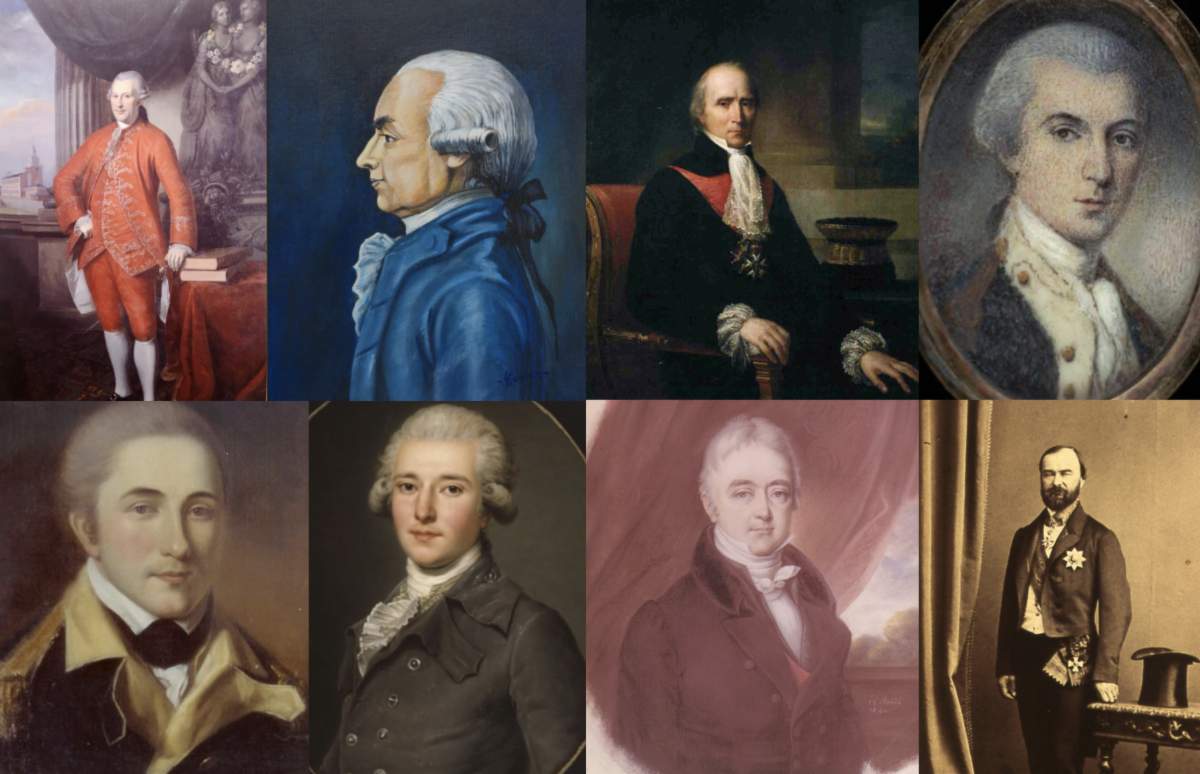
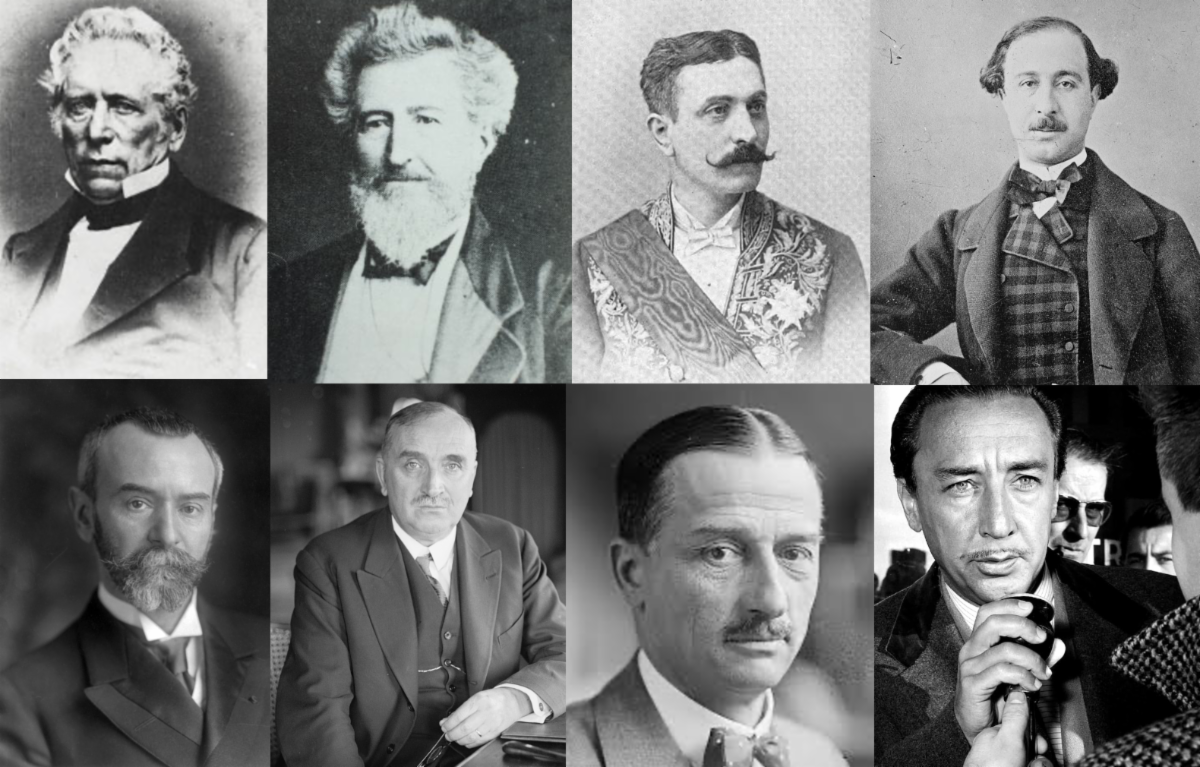
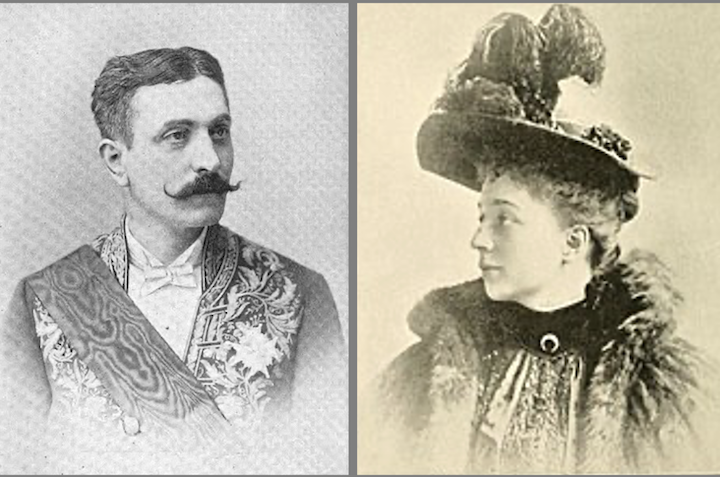
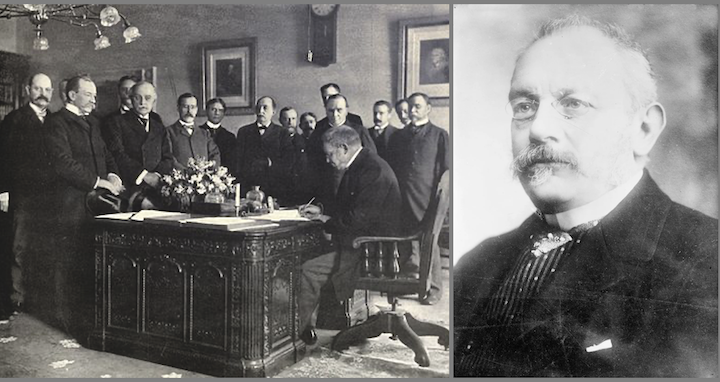
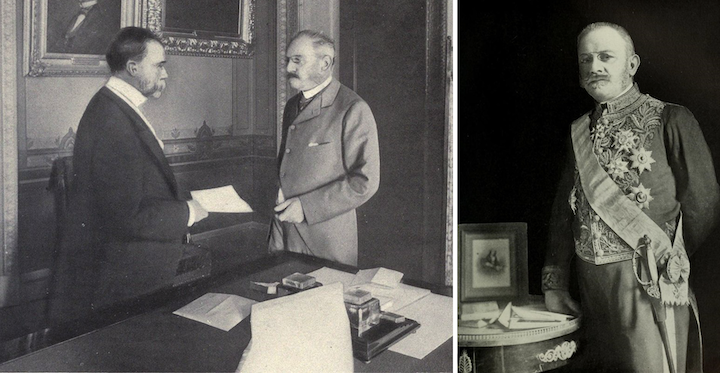
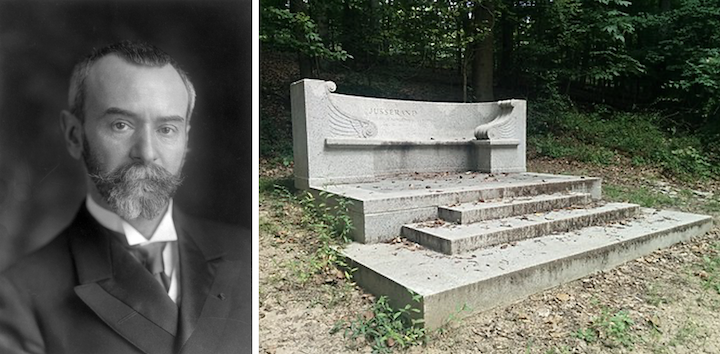
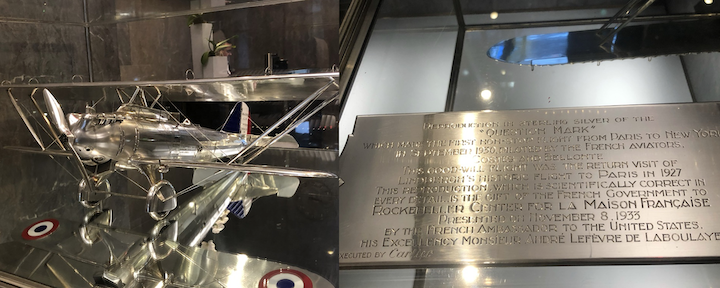
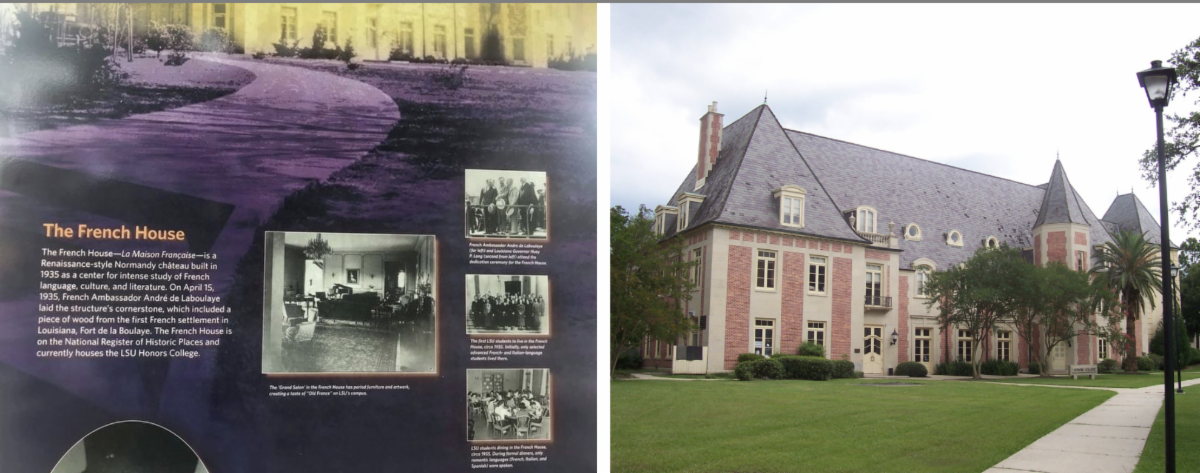
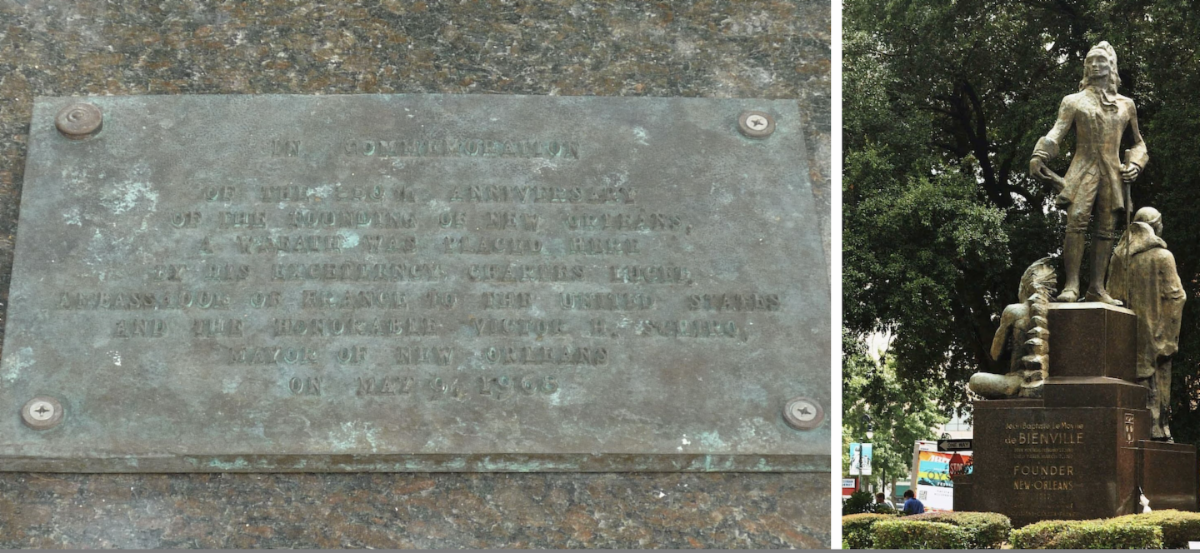
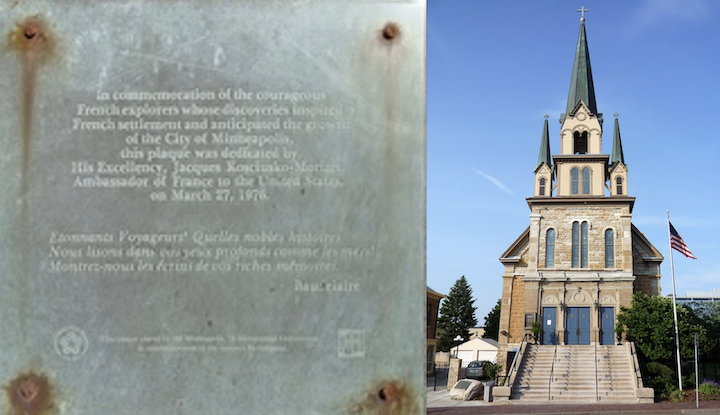
|
The American Society of Le Souvenir Français Inc.
Monthly Bulletin - Vol. V. No 1 - January 2025
| |
|
A chronicle of French
Envoys in the United States
(1778-1938)
| |
|
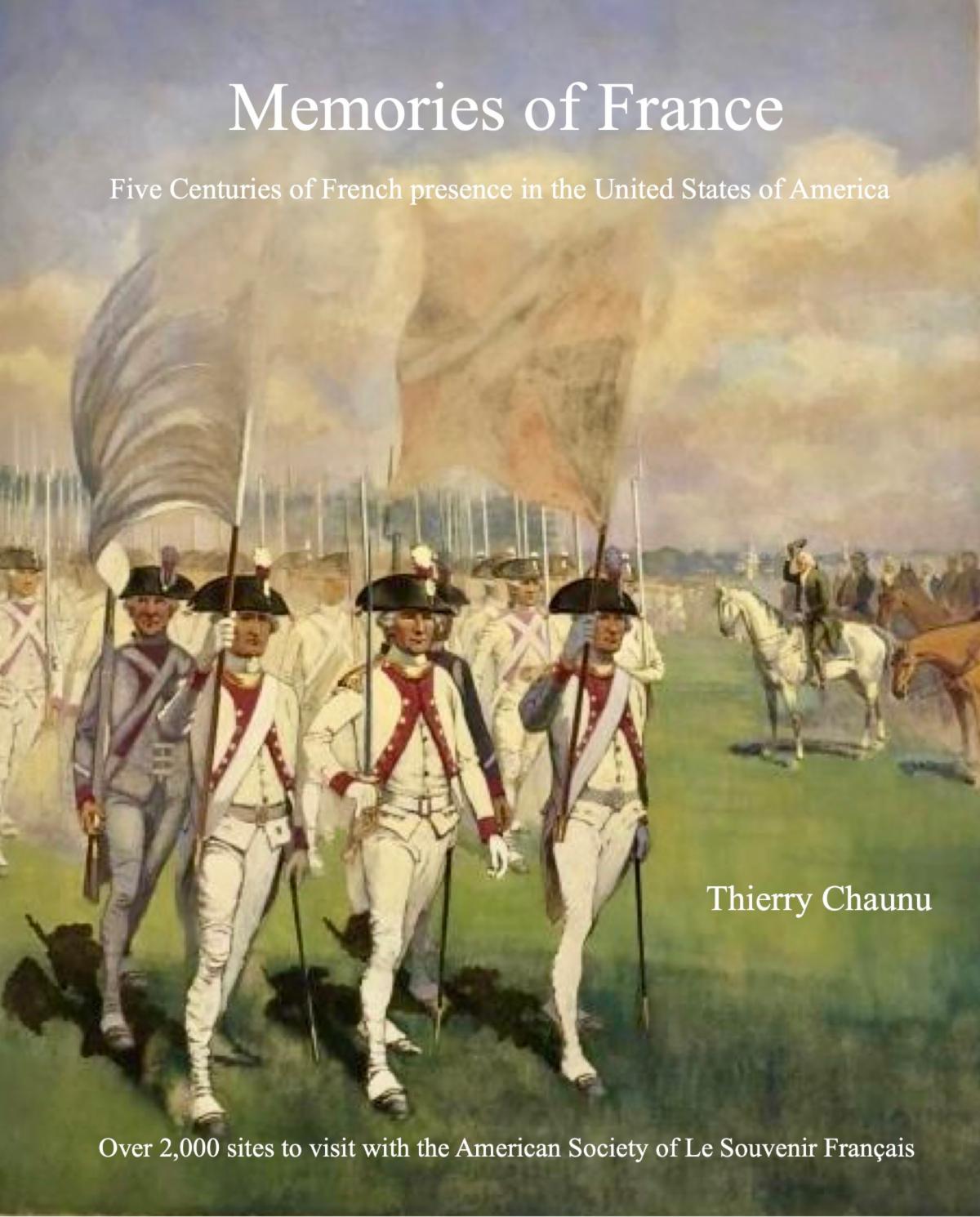
Cover illustration:
Several French envoys to the United States presented in this chronicle.
Scroll down for photo credits and interpretive links.
| |
|
Editorial
This is January and it is the month of good resolutions. As such we pledge to you, dear readers, to continue furthering the missions of our Society throughout the 50 United States: the first one is to pay hommage, everywhere we can, to the French soldiers, sailors and aviators who are buried in the United States.
The second one is to pay tribute to all Frenchmen and women, famous or less famous, who left an imprint in the United States. The third one, to pass the torch of remembrance to the younger generations.
Our overall goal is to highlight the multi-secular bonds between the United and its oldest ally, France, and the enduring friendship between the American and French peoples, by participating in patriotic ceremonies and publishing this free monthly bulletin.
There is so much to tell and to celebrate! We do not write academic historical thesis. We simply recount what our forebears wrote on the thousands of statues, plaques, interpretative markers, and any tangible physical locations, in addition to their articles or letters.
This month, we would like to tell the diverse stories of a few French ambassadors and consuls who left a tangible mark in this country, other than mere diplomatic dispatches.
Does anyone today remember the crucial roles that a Conrad Alexandre Gérard or a Marquis de la Luzerne played in the birth of the United States? Or Moerenhout in California, or Dubois de Saligny in Texas? Or Jusserand, a close friend of Theodore Roosevelt and member of his "tennis cabinet", later a influential actor behind America's entry in World War One?
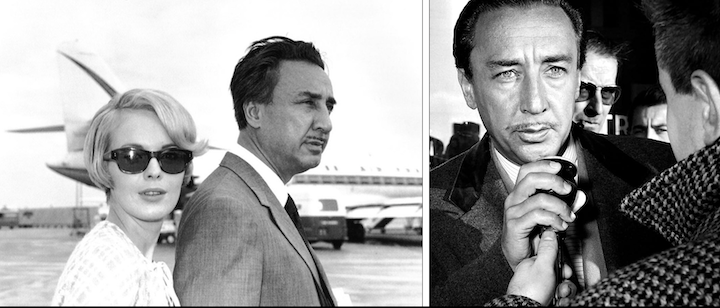
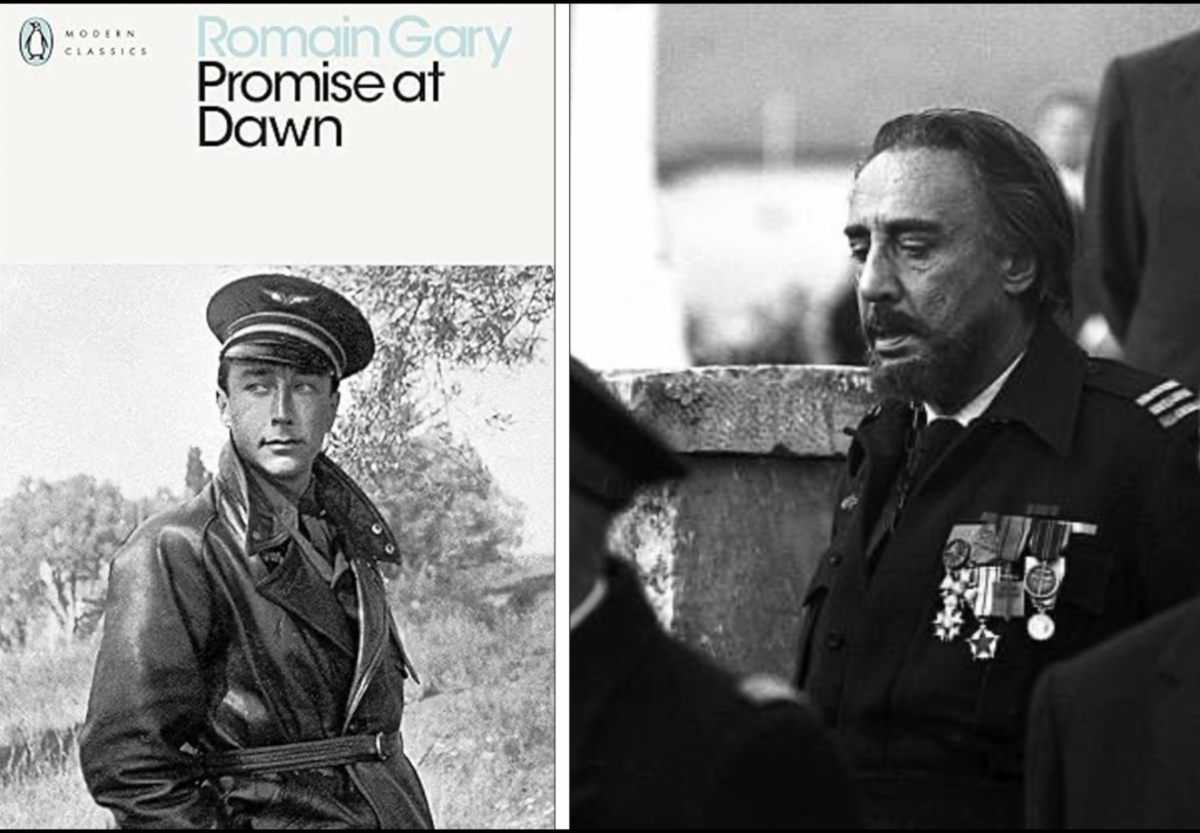
As we do with all our activities, we do not concern ourselves with the contemporary period and will leave this task to our descendants in the 22nd century! We made one exception, however, by including Romain Gary, French Consul in Los Angeles from 1956 till 1960, and the reasons for this will be explained in the pages below.
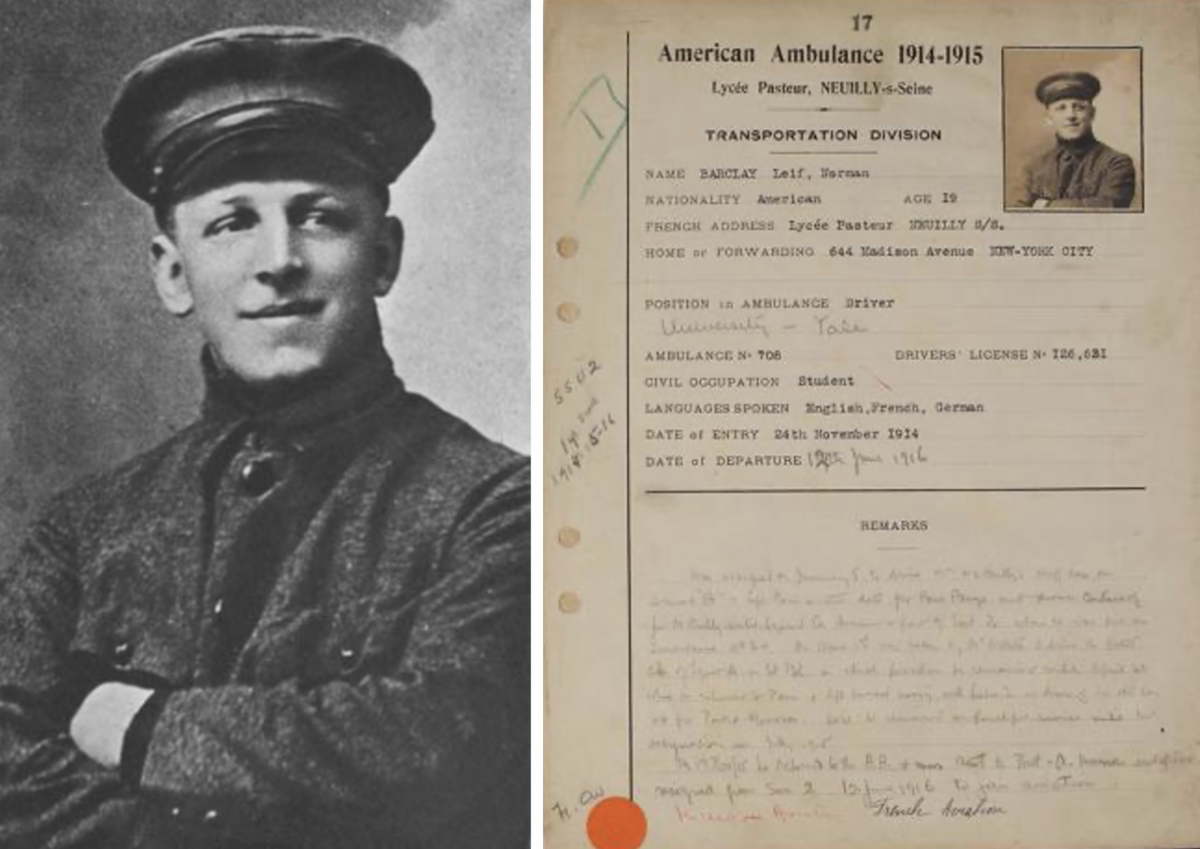
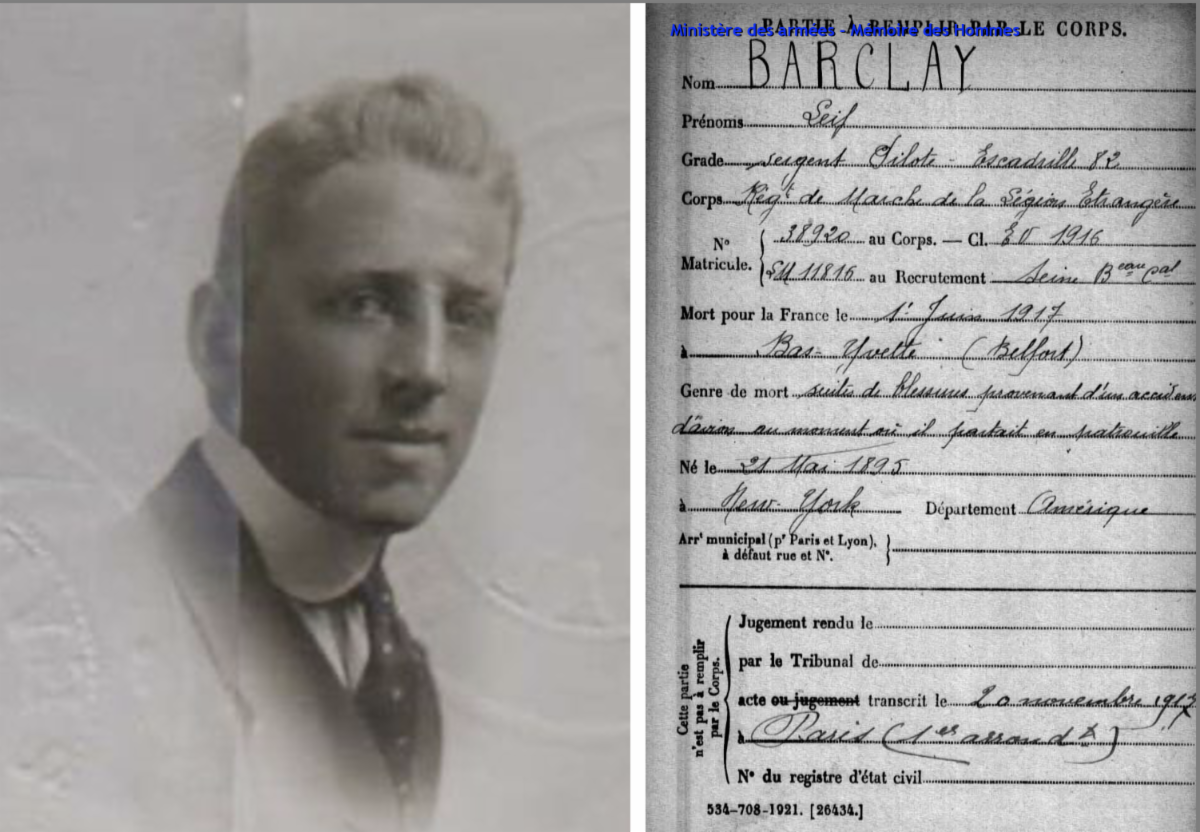
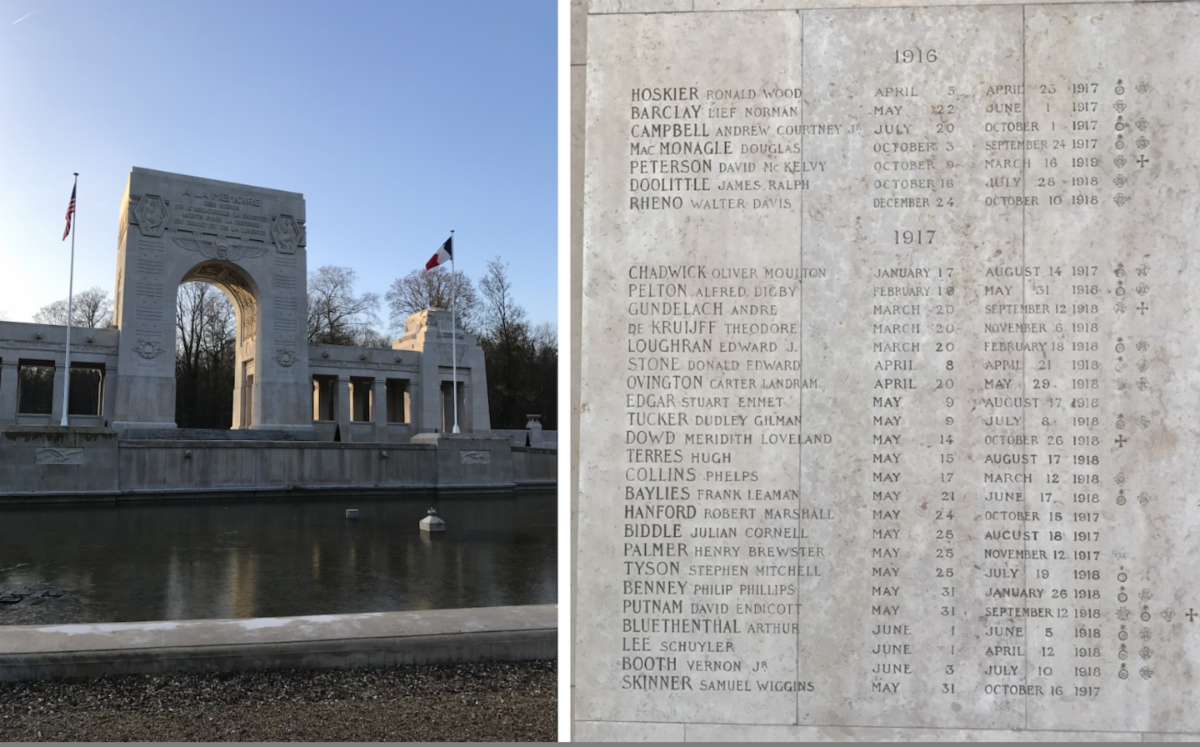
Our second part of our monthly Bulletin, as is now the tradition, will pay homage to another volunteer of the Lafayette Air Corps, Sgt Leif Norman Barclay, who “Died for France" on June 1, 1917, who was also on the the earliest American volunteers to join the French Army in 1914 shortly after the war broke out.
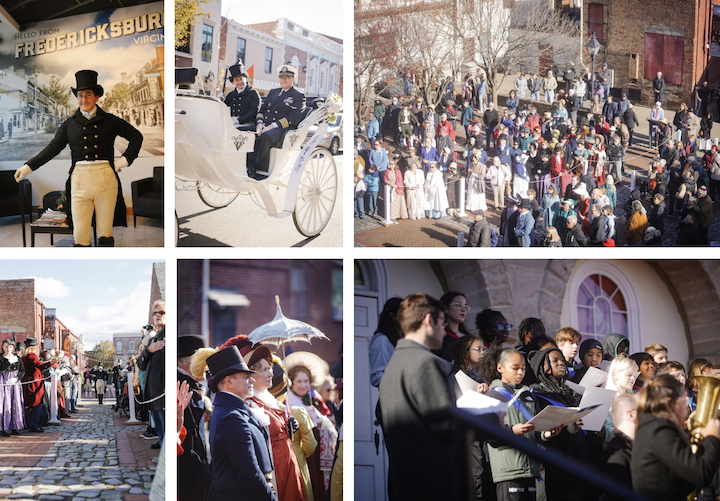
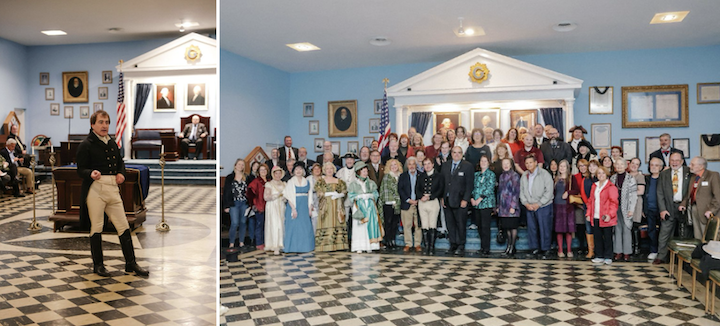
Finally, our third part “News and Save the Dates” will report on events since our last Bulletin, including several commemorations of the ongoing Bicentennial of Lafayette’s Farewell Tour organized by the American Friends of Lafayette.
Your continued support is key. Our 2025 membership dues and donations drive is ongoing. Please join us, so that we can implement the installation of new memorials, markers and plaques! Please, scroll to the end of this Bulletin, no donation is too small.
We will honor our donors at our upcoming General Assembly.
On behalf of the Board of Directors,
Thierry Chaunu
President, American Society of Le Souvenir Français, Inc.
| |
Many ties unite France and the United States | |
|
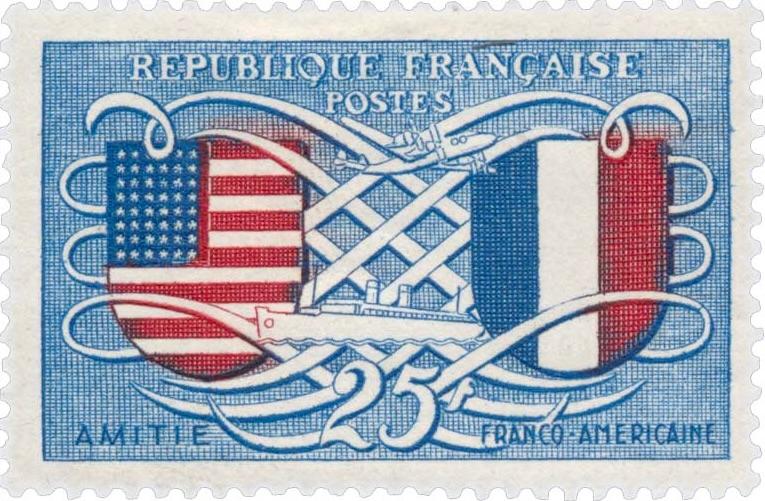
Above: This French Post Office stamp was issued on May 14, 1949 to honor Franco-American friendship. The stamp shows shield-shaped flags of both countries connected by a ribbon. An airplane and a ship are placed between the flags, representing trade between the two nations.
Photo: Postes, République Française, domaine public. There are so many links between France and America, all woven by generations of diplomats, but mostly by French americanophiles and American francophiles.
| |
|
A legion of French diplomats:
The official list of French Ambassadors, provided by the official site of the French Embassy to the United States, does not go back further than the year 1893. Fortunately, a complete list is provided online by Wikipedia with 72 ambassadors and plenipotentiary ministers since 1778, when France became the first nation to recognize the Independence of the United States.
As to the list of French consuls in numerous American cities, not to mention the honorary consuls, it is numbering in the thousands.
Understandably so, only a handful of these official envoys and representatives are honored with physical plaques or monuments in public spaces on US territory or in France.
This Bulletin therefore only mentions a few of them who, in our opinion, went beyond the call of duty to nurture and enhance the very special relationship between the two nations - - or others who made their mark for different reasons, which we will explain below.
| |
|
A note on the expression:
"Oldest Ally"
| |
|
Above:
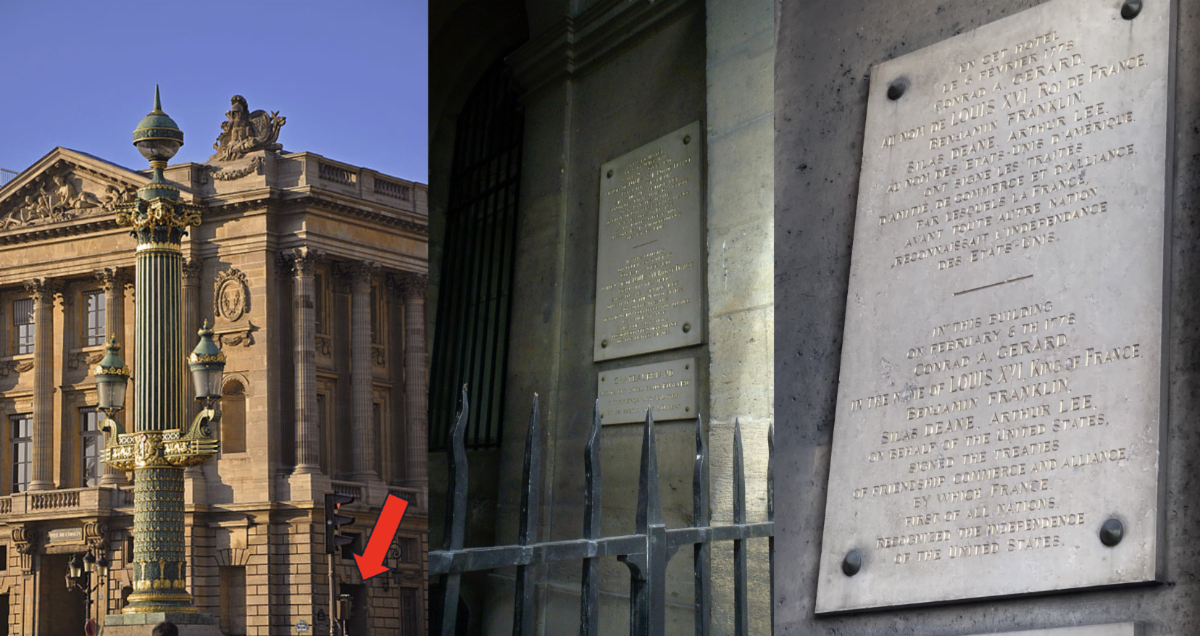
Marble plaque at the Hôtel de Coislin, 4 Place de la Concorde, (angle du 1, rue royale), Paris
GPS: 48.867008, 2.322043
The formal Treaty of Alliance and the Treaty of Amity and Commerce between France and the United States were signed at the Hôtel de Coislin in Paris, February 6, 1778. News of the signature reached the US on May Day, and the treaties were ratified by Congress on May 4, 1778.
| |
|
A plaque located at the corner of Rue Royale and Place de la Concorde in Paris states:
"In this building
On February 6th, 1776
Conrad A. Gerard
In the name of Louis XVI King of France
Benjamin Franklin
Silas Deane, Arthur Lee,
On behalf of the United States
Signed the treaties
Of friendship, commerce and alliance
By which France
First of all nations
Recognized the independence
Of the United States"
We are hearing again, more and more, and happily so, the expression "France, America's oldest Ally" in the public discourse of our elected leaders. This of course is a welcome development, and historically totally accurate.
• The Office of the Historian of the United States Department of State retired its online section “Milestones in the History of U.S. Foreign Relations". In today's State Department website, broken down by countries, one reads that "France is one of the United States oldest allies" presumably to remain...diplomatic, stay inclusive and not offend any other third party. It is quite amazing as well that the internet abounds with posts on social networks making all sorts of tortuous, truncated and outlandish claims.
• Yet, it is a irrefutable historic fact that France was the first sovereign nation to officially recognize the United States of America by Treaty.
King Louis XVI stated that he recognized the sovereignty of the United States on December 6, 1777. Following this, a formal Treaty (actually they were two: the Treaty of Alliance and the Treaty of Amity and Commerce) were signed by his representative Conrad Alexandre Gérard, and Benjamin Franklin, Arthur Lee and Sileas Deane in Paris on February 6, 1778.
• A quick search on the internet point to The Netherlands and Morocco as the earliest nations which recognized the United States de facto, if not de jure.
• The Netherlands became the 2nd country to officially recognize the United States, on April 19, 1782 when it signed the appropriate diplomatic instrument.
However the first acknowledgement of the sovereignty of the United States occurred on November 16, 1776, when an official salute was given to the American flag of the vessel Andrew Doria on the Dutch island of St. Eustatius.
• The 3rd country, after France and The Netherlands to officially recognize the US. was Spain, which entered the war as France’s ally only on June 21, 1779, and didn’t recognize American independence until February 20, 1783, just seven months before Great Britain.
• Morocco is often cited as being the first to recognize the United States, because Sultan Mohammed III signed on June 23, 1777 a decree granting American ships protection and free access to Moroccan ports. This one-sided 'recognition' lacked the requisite treaty and the exchange of ambassadors, consisting solely of the acceptance of American vessels. A formal recognition by treaty would not be signed until 1786, after Sweden, Britain, the Papal States, and Prussia.
For a list with detailed explanations, please refer to :
https://allthingsliberty.com/2018/05/the-first-countries-to-diplomatically-recognize-the-united-states/
• As far as diplomatic representations are concerned, bilateral diplomatic relations began on August 6, 1778, when Gérard presented his credentials to the U.S. Continental Congress as the “Minister-Plenipotentiary and Consul-General” from France. A month later, on September 14, 1778, Congress officially appointed Benjamin Franklin as the “Minister Plenipotentiary from the United States of America at the Court of Versailles.” On March 23, 1779, Franklin presented his credentials to the French court, which accepted them, marking the start of the first diplomatic mission.
Thus started a long lineage of remarkable diplomats on both sides of the Atlantic. One only has to think of Benjamin Franklin, Thomas Jefferson, James Monroe, as Ambassadors to Paris, on the American side. Concentrating only on the French side, we will therefore endeavor to highlight a few envoys in the pages below.
But first, "à tout seigneur tout honneur" (credit where credit is due), it is high time we introduce two diplomats who inspired, articulated, interpreted, implemented, King Louis XVI's foreign policy decisions:
| |
|
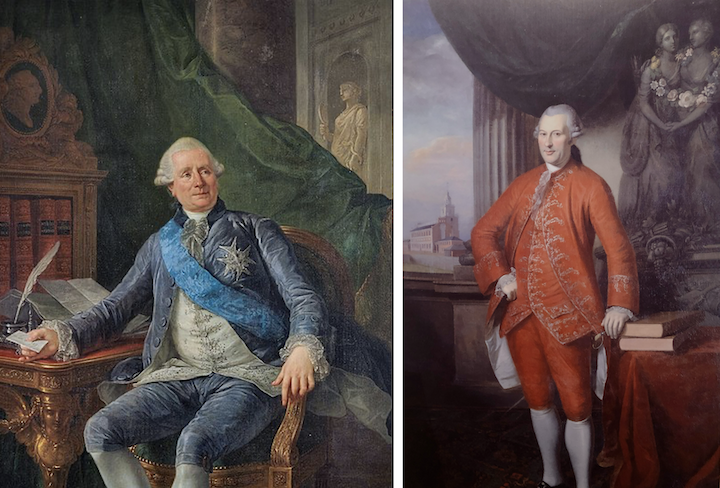
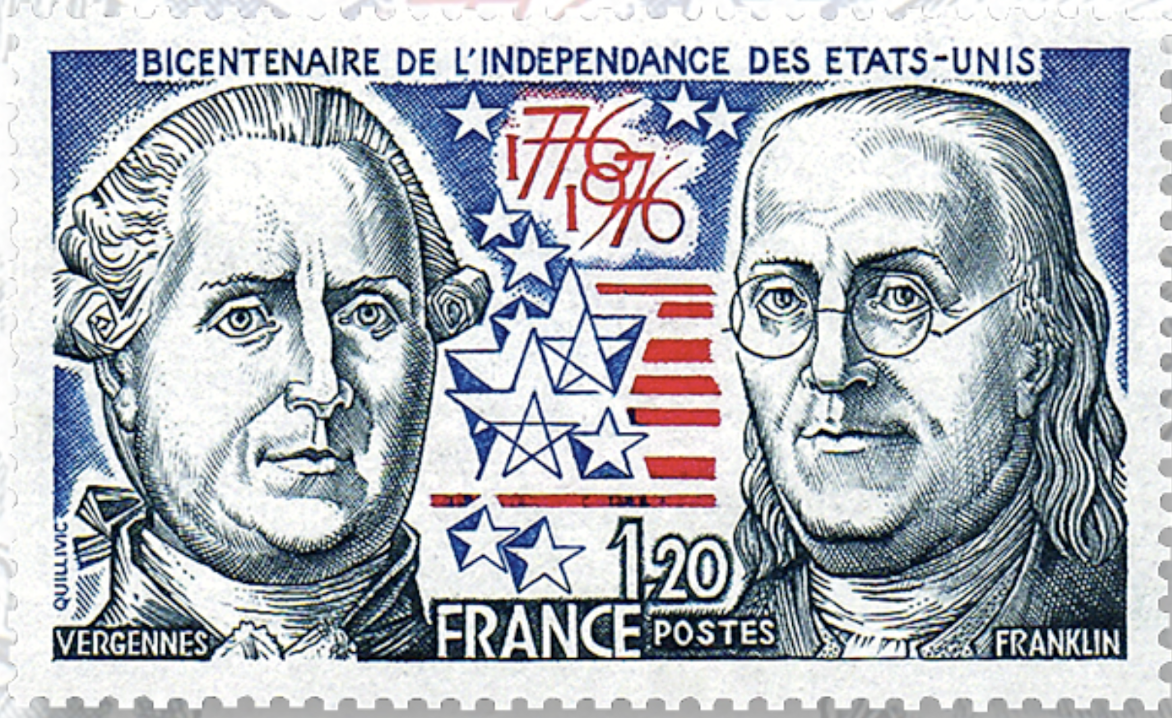
Charles Gravier de Vergennes
Minister of Foreign Affairs, 1774-1787
Conrad Alexandre Gérard
First Minister-Plenipotentiary and
Consul-General to the U.S., 1778-1779
| |
|
Above:
Top Left: Portrait of Count de Vergennes by Antoine-François Callet, Château de Versailles, Domaine public, https://commons.wikimedia.org/w/index.php?curid=72429253
Top Right: Conrad-Alexandre Gérard, by Charles Willson Peale - Independence National Historical Park, Philadelphia, Photo by TC © ASSFI 2021.
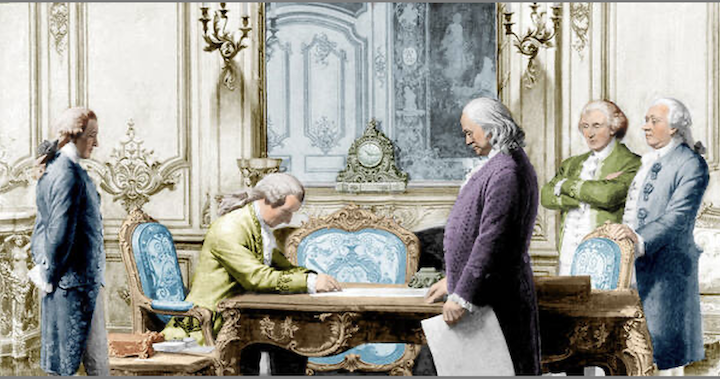
Bottom: Reproduction of a c.1910 painting by Charles Elliott Mills depicting The Signing of the Treaty of Amity and Commerce and the Treaty of Alliance between France and the United States. It was commissioned for the lobby of the Franklin Union Building in Boston - This image is available from the United States Library of Congress's Prints and Photographs division, Public Domain, https://commons.wikimedia.org/w/index.php?curid=45583820
In the center is seated Monsieur Conrad Alexandre Gérard with Benjamin Franklin holding a paper. To the right, Arthur Lee has his arms folded and Silas Deane has his on a chair. At the left is Franklin's grandson, William Temple Franklin.
| |
|
A Foreign Minister for the ages:
• Charles Gravier, comte de Vergennes (29 December 1719 – 13 February 1787), held the position of Foreign Minister from 1774 until his death in 1787. He was born in Dijon and received his education at a Jesuit institution in the area. Vergennes pursued a career in diplomacy, serving in various capacities in Portugal and Bavaria, becoming the ambassador to the Ottoman Empire and then Sweden. Upon the ascension of King Louis XVI in 1774, he was appointed to the role of Foreign Minister.
• Vergennes had foreseen the implications of American independence as early as 1765, predicting that the loss of Canada would encourage American colonists to "strike off their chains." Prior to France's formal involvement in the conflict, he endorsed Pierre Beaumarchais's initiative for covert French support.
• Beginning in early 1776, France provided the American revolutionaries with essential supplies, arms, ammunition, and volunteers. In 1777, Vergennes communicated to the American commissioners that France recognized the United States and expressed a willingness to establish an offensive and defensive alliance with the nascent nation.
• In spite of the immense cost of the war fought around the world, Vergennes made sure that money would be available for the Insurgents.
“Despite the harshness of the circumstances,” wrote Vergennes to (French ambassador) La Luzerne, and the already worrying state of our finances, a “new free subsidy of six million livres tournois” was granted to the Americans. Remittances had already been received by Rochambeau as well, a million and a half in February, with a letter from Necker saying, “Be sure, sir, that all that will be asked of finance for your army will be ready at once.” Seven million arrived shortly afterwards on the Astrée..." - - Jusserand, Jean J.. Rochambeau en Amérique (French Edition) (pp. 61-62).
• And as to the goals pursued by the French, no territorial claim was desired by King Louis XVI, who could have easily asked the return of Canada ceded to the British only 20 years before. Vergennes wrote to the Marquis de Noailles, French ambassador in London: "Our engagements are simple; they are aggressive toward
nobody; we have desired to secure for ourselves no advantage of which other nations might be jealous, and which the Americans themselves might regret, in the course of time, to have granted us." King Louis XVI reitereted his position several times, inlcuding diuring the negotiations leading to the Peace Treaty of Pariis in 1783.
• To alleviate France's financial impasse, he advised the king to convene the Assembly of Notables, but died on February 13, 1787, shortly before the meeting. His castle was destroyed during the French Revolution and his estate confiscated...
Legacy in the United States:
• There are no memorials or markers in his honor in the United States. However, the town of Vergennes, Vermont was named after him, as promulgated by Governor Ethan Allen and suggested by (then Consul Général) Crèvecoeur.
In France, His name remains particularly attached to his function, as foreign ministers are traditionally said to sit in the “Vergennes chair”.
• In his classic book Le Diplomate, Jules Cambon, ambassador of France to Washington (1897-1902), notes: "America and France have erected monuments to La Fayette and Rochambeau, and rightly so; it would have been right for them to honor the memory of Vergennes as well."
... Seconded by an able deputy:
• Conrad Alexandre Gérard de Rayneval (12 December 1729 – 16 April 1790) was a notable French diplomat, originating from Masevaux in the upper Alsace region, currently known as Haut-Rhin. He is primarily recognized for being the signatory of the Treaty of Alliance between the United States and France as well as the inaugural French diplomatic envoy to the United States.
• He studied at the Jesuit college in Colmar, then at the Protestant university in Strasbourg, where, at the age of 20, he was awarded a doctorate in law.
Fluent in English and German, he joined the King's Foreign Office.
• He worked as the secretary for the French legation to the Elector Palatine in Mannheim, which is now in Baden-Würtemberg. He also served as the secretary of the French Embassy in Austria. Later, he was called back to Paris to take on the role of secretary of the Council of State and chief clerk in the Bureau of Foreign Affairs.
• In 1770 Louis XV sent him to welcome the daughter of Maria-Theresa, Empress of Austria, young Princess Marie-Antoinette of Habsburg-Lorraine, future Queen of France, destined to marry his grand-son the future Louis XVI.
• In early 1778, following orders from Vergennes, he led talks with American leaders Benjamin Franklin, Silas Deane, and Arthur Lee. These discussions led to the signing of the Treaty of Alliance and the Treaty of Amity and Commerce with the United States on February 6, 1778.
• In March 1778, he became the first official Minister from France to the United States and traveled there with Silas Deane on the flagship of the comte d'Estaing, the 80-gun Languedoc, which was part of a fleet consisting of 17 ships transporting 4,000 French troops. Congress greeted Gérard on July 14, just one day before starting investigations into allegations against Deane.
• His work in America mainly involved funding writers, with Thomas Paine being the most famous, to promote support for a stronger alliance with France. He also had some questionable connections with different Congress members, who accepted "gifts" from him. Most of his messages to Congress were spoken during their private meetings. While living in America, he was awarded a Doctor of Laws ( LL.D.) degree from Yale.
• Ennobled in 1778 as Count of Munster, a title and name he used only exceptionally, he continued to call himself “Monsieur Gérard”.
• On October 20, 1779, suffering from a bad fever, he returned to France. To thank him, King Louis XVI offered him the position of Royal Praetor of Strasbourg.
• From 1781 to 1789, he held the position of Royal Praetor of Strasbourg. He promoted and encouraged the cultivation of new plants brought from America, such as tobacco. He died in Paris on April 16, 1790.
Legacy:
• Unfortunately, apart from a full-length portrait is in Philadelphia's Museum of Independence, (pictured above), there are no markers or memorials in his honor in the US.
In his native town of Masevaux, a college and an avenue are dedicated to him.
On May 27, 1978, the U.S. ambassador Jamie McCourt unveiled a plaque affixed to his birthplace at 22 Place des Alliés.
| |
|
Anne-César de la Luzerne
Ambassador of France, 1779-1784
Financial backer of Continental Army
| |
|
Above:
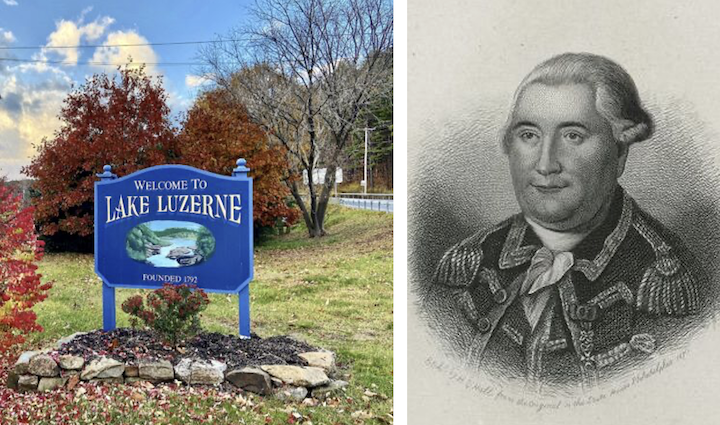
Top Left: Welcome sign, Town of Lake Luzerne, NY, founded in 1792, photo by Trevor W. English,
https://www.townoflakeluzerne.com/
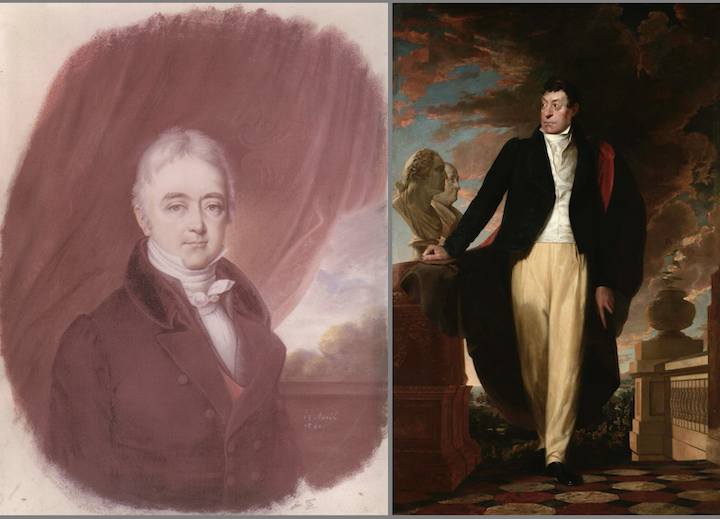
Top Right: S.E. M le marquis de La Luzerne, by Unknown author - NYPL Digital Library, Public Domain, https://commons.wikimedia.org/w/index.php?curid=3422970
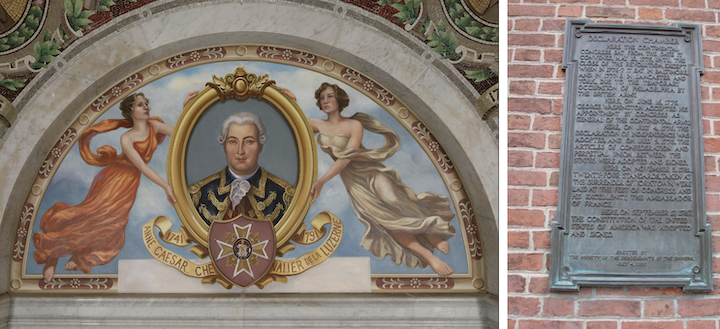
Bottom Left: Mural inside Luzerne County Courthouse, 200 N River St, Wilkes-Barre, PA 18711, https://evergreene.com/projects/luzerne-county-courthouse/
Bottom Right: plaque "Declaration Chamber", Congress Hall, Chestnut Street, Philadelphia, PA 19106
GPS: 39.949050, -75.150533
Photo: https://www.nps.gov/inde/planyourvisit/plaques-and-statues-in-the-park.htm
| |
|
• Anne-César de La Luzerne (born in Paris, 15 July 1741 – died in Southampton, England, 14 September 1791) was an 18th-century French soldier (he was an officer of cavalry) and diplomat who had an influential role to the Continental Congress and new government of the United States of America after it gained independence from Great Britain.
• In 1779 La Luzerne succeeded Conrad Alexandre Gérard de Rayneval as the French Minister to the United States and later served as the official Ambassador of France until 1784. During his time in Philadelphia, established as a base for the Continental Congress, when the British occupied New York City, he never failed to show his sympathy for the young Republic.
• He guaranteed the purchase of food for the troops of the Continental Army in 1780 with a personal loan.
• He kept insisting and advising George Washington and Rochambeau to fight Cornwallis in Virginia instead of attempting to capture New York, and was instrumental in reaching out to admiral de Grasse. We quote a passage from Ambassador Jusserand, who wrote:
“The terms of the problem had been amply discussed in letters and conferences between the chiefs, and the discussion still continued. The one who first made up his mind and ceased to hesitate between the respective advantages or disadvantages of the two projects, and who plainly declared that there was but one good plan, which was to reconquer the South, that one, strange to say, was neither Washington nor Rochambeau, and was not in the United States either as a sailor or a soldier, but as a diplomat, and in drawing attention to the fact I am only performing the most agreeable duty toward a justly admired predecessor. This wise adviser was La Luzerne.
In an unpublished memoir, drawn up by him on the 20th of April and sent to Rochambeau on May 19 with an explanatory letter in which he asked that his statement (a copy of which he also sent to Barras) be placed under the eyes of Washington, he insisted on the necessity of immediate action, and action in the Chesapeake: "It is in the Chesapeake Bay that it seems urgent to convey all the naval forces of the King, with such land forces as the generals will consider appropriate. This change cannot fail to have the most advantageous consequences for the continuation of the campaign," which consequences he points out with singular clear-sightedness, adding: "If the English follow us and can reach the bay only after us, their situation will prove very different from ours; all the coasts and the inland parts of the country are full of their enemies. They have neither the means nor the time to raise, as at New York, the necessary works to protect themselves against the inroads of the American troops and to save themselves from the danger to which the arrival of superior forces would expose them." If the plan submitted by him offers difficulties, others should be formed, but he maintains that "all those which have for their object the relief of the Southern States must be preferred, and that no time should be lost to
put them in execution."
-- With Americans of Past and Present Days, 1912, by Jean J. Jusserand
(Note: modern historians have established that Rochambeau was in favor of that strategy and that Washington rallied to it only in July 1781)
• He was known to entertain lavishly, starting a tradition followed by many of his successors. La Luzerne, "who keeps a state worthy of his sovereign" as a contemporary noted, gave memorable dinners, including one to 180 guests for the celebration of the birth of the Dauphin in 1784.
• In 1783 he was a founding Fellow of the Society of the Cincinnati
• King Louis XVI created him a Marquis in 1785. In 1788, La Luzerne became the Ambassador to the Court of St. James's in London. He passed away on September 14, 1791, in Southampton.
Legacy in the United States:
• Luzerne County in Pennsylvania is named after him.
A marker is located at 200 North River Street, Wilkes Barre, PA 18711
GPS: 41.251563, -75.878172
• Inscription (excerpts):
”Formed September 25, 1786 from Northumberland County.
Named for Chevalier de la Luzerne.
Wilkes-Barre, the county seat, was settled 1769 [...]
Erected 1981 by Pennsylvania Historical and Museum Commission.”
• The town of Lake Luzerne in NY is also named for him (no marker there).
• There is a tablet, titled "Declaration Chamber", located at:
Congress Hall, Chestnut Street, Philadelphia, PA 19106
GPS: 39.949050, -75.150533
• Inscription:
“Here the Continental Congress sat from the date it convened, May 10, 1775, until the close of the Revolution except when in 1776-7 it sat in Baltimore and in 1777-9 in Lancaster and York, due to the temporary occupation of Philadelphia by the British army.
Here on June 16, 1775, George Washington accepted his appointment by Congress as General of the Continental Army.
Here, on July 4, 1776, the Declaration of Independence was adopted, and on July 9, 1778, the Articles of Confederation and Perpetual Union between the States were adopted and signed.
Here, on November 3, 1781, twenty-four standards taken at the surrender of Yorktown were laid at the feet of Congress and His Excellency, the Ambassador of France.
Here, on September 17, 1787, the Constitution of the United States of America was adopted and signed.
Erected 1910 by The Society of the Descendants of the Signers.”
| |
|
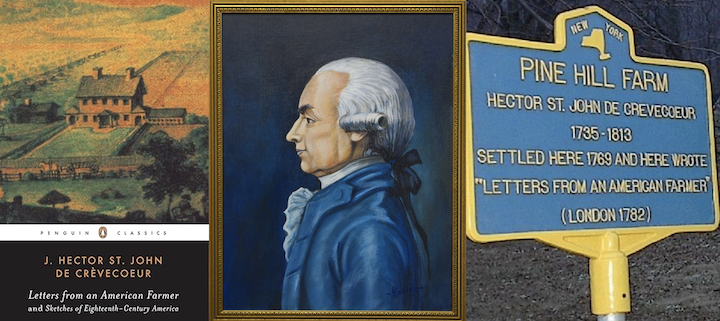
Michel Guillaume Jean de Crèvecoeur
also known as Hector Saint John
Consul General of France in New York, 1783-1789
Famous farmer and best-selling author
| |
|
Above:
Left: book cover of Hector St. John de Crèvecoeur's classic on Amazon
Center: Portrait of Michel Guillaume Jean de Crèvecœur, by Cuchet, Paris, 1784, Public Domain, https://commons.wikimedia.org/w/index.php?curid=1530123
Right: Marker in Chester, NY, Photo by Clifton Patrick, March 3, 2002,
https://www.hmdb.org/m.asp?m=22065
| |
|
Michel Guillaume Jean de Crèvecœur (born in Caen, Normandy, on December 31, 1735 – died in Sarcelles, France, on November 12, 1813), was a Consul of France in New York, covering New Jersey and Connecticut, as well as a famous author and farmer.
• In 1755, he moved to New France. There, he worked as a cartographer in the French colonial militia during the French and Indian War and became a lieutenant. After the British defeated the French in 1759, he relocated to the Province of New York, where he became a citizen, took the English-American name John Hector St. John, and married Mehitable Tippet, the daughter of a New York merchant, in 1770. He purchased a large farm in the Greycourt area of Chester, New York, a small town in Orange County, and named it "Pine Hill." He thrived as a farmer and also traveled as a surveyor. He is known for bringing lima beans, alfalfa, and other new ideas to American farming at his farm.
• The war arrived, and Crèvecoeur opposed it for a cause he did not support, believing it was unnecessary. Furthermore, his wife was a Loyalist. Even in areas that avoided direct conflict, there was no option to remain neutral. He attempted to leave for France due to his father's declining health. He crossed into British-occupied New York City with his son, where he was detained as an American spy for three months without a trial. Eventually, he managed to sail to Britain but was shipwrecked off the coast of Ireland. From there, he traveled to France, where he had a brief reunion with his father.
• In 1782, while in London, he released a collection of essays called Letters from an American Farmer. The book became a big hit in Europe and made Crèvecœur famous. He was the first to tell Europeans about life on the American frontier and to discuss the idea of the American Dream. He dedicated his book to French philosopher Abbé Raynal, who he said "viewed these provinces of North America in their true light, as the asylum of freedom; as the cradle of future nations, and the refuge of distressed Europeans."
• His book's success in France brought him into a powerful group, leading to his appointment as the French consul for New York, which included New Jersey and Connecticut. Crèvecœur returned to New York City as the new French consul in November 1783. Eager to see his family again, he discovered that his farm had been ruined in an Indian attack, his wife had died, and his two younger children were missing. The next spring, he was reunited with his children, who had been rescued in Boston. Throughout most of the 1780s, he resided in New York City.
• A staunch abolitionist, he became a member of the Société des Amis des Noirs (Society of the Friends of the Blacks), which was established in Paris and was elected to the American Philosophical Society in 1789.
• He played an important role in establishing the first Catholic church in New York City, St. Peters on Barclay Street, as we narrated in greater detail in our November 2024 Bulletin dedicated to French missionaries.
• For a long time, European readers associated Crèvecœur with his made-up character, James, the "American farmer," and he was highly regarded by both readers and other writers in Europe.
• In 1789, while in France, he found himself caught in the chaos of the French Revolution. As an aristocrat, he faced danger and went into hiding, seeking a way to escape to the United States. Eventually, the new American ambassador to France, James Monroe, provided him with the necessary documents. Later in life, after the turmoil of the French Revolution receded and Napoléon brought back stability, Crèvecœur returned to France and settled on land he inherited from his father. He passed away on November 12, 1813, in Sarcelles, near Paris.
Legacy in the United States:
• He was made honorary citizen of Vermont. Gov. Ethan Allen and the state legislature named the Vermont town Saint Johnsbury in his honor.
• There is a marker located at: 3310 Rte 94, Chester NY 10918
GPS: 41.377150, -74.244567
• Inscription:
“Hector St. John De Crevecoeur,
1735-1813.
Settled here 1769 and here wrote
"Letters From an American Farmer"
(London 1782)
| |
|
François Barbé-Marbois
Chargé d'Affaires, 1784-1785
Negotiator, Louisiana Purchase, 1803
| |
|
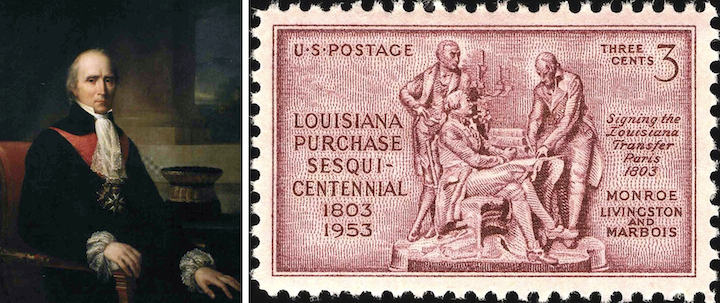
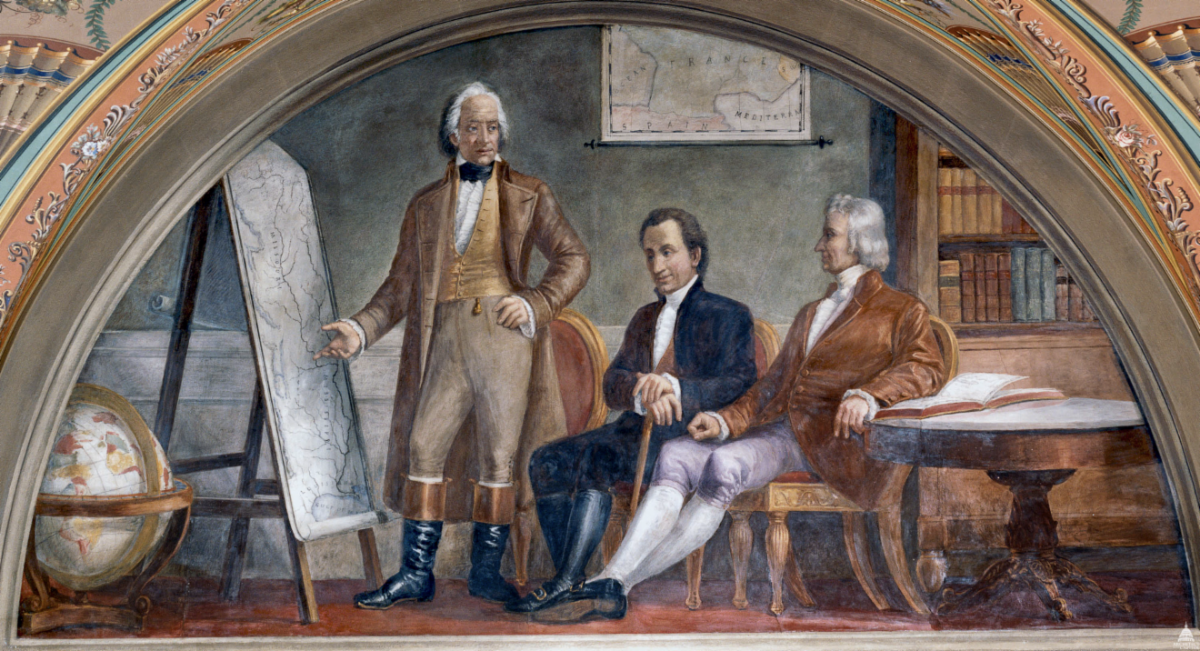
Above:
Top Left: François Barbé-Marbois by Jean François Boisselat, Public Domain, https://commons.wikimedia.org/w/index.php?curid=6604561
Top Right: US postage stamp (c. 1953) commemorating the Louisiana Purchase; Barbé-Marbois is pictured alongside James Monroe and Robert Livingston. By Bureau of Engraving and Printing; Imaging by Gwillhickers - U.S. Post Office; Smithsonian National Postal Museum, Public Domain, https://commons.wikimedia.org/w/index.php?curid=2957315
Bottom: Fresco in the Senate wing of the U.S. Capitol in Washington, D.C. depicting the negotiations for the Louisiana Purchase, painted by Italian artist Constantino Brumidi in 1875. The fresco shows the French government representative, Barbé-Marbois, presenting a map to Livingston and Monroe. The three men had a close relationship that contributed to the success of the Louisiana Purchase.
Photo: https://highland.org/teacher-resources/negotiating-for-louisiana/
| |
|
• François, marquis de Barbé-Marbois (January 31, 1745 – February 12, 1837) was a French diplomat and politician with a very long career.
• He was born in Metz, where his father ran the local mint. He taught the children of the Marquis de Castries (who later became Louis XVI's secretary of the Navy from 1780 until 1789).
• In 1779, he became the secretary for the French legation in the United States. The following year, he sent a questionnaire to the governors of all thirteen former American colonies to gather details about their geography, natural resources, history, and government. Thomas Jefferson, who was wrapping up his last term as governor of Virginia, replied with a manuscript that later turned into his well-known work, Notes on the State of Virginia.
• When Minister Chevalier de la Luzerne came back to France in 1783, Barbé-Marbois stayed in America as chargé d'affaires in 1784. That same year, he married Elizabeth Moore, the daughter of William Moore, who was the former governor of Pennsylvania.
• In 1785, he took on the role of intendant for the colony of Saint-Domingue (today's Haiti). He came back to France in 1789 and managed to survive the French revolution. Suspected of treason, he was deported to French Guiana and freed by the First Consul Napoléon Bonaparte in 1799.
• He became Director of the Treasury in 1801, Senator in 1802, Minister of the Treasury from 1801 to 1807.
• In 1803, he negotiated and signed on behalf of Napoléon Bonaparte the Louisiana Purchase treaty, transferring Louisiana to the United States. Covering 820,000 square miles, sold at roughly 4 cents an acre for $15,000,000 (about $340,000,000 in today's dollars), the largest land deal in the history of the world.
• Barbé-Marbois had a special connection with James Monroe and Robert Linvingston that surely played a key role in the success of the Louisiana Purchase. As Barbé-Marbois recalled in his book, History of Louisiana, “the three negotiators had seen the origin of the American republic, and … had established between them… an intimacy, which does not always exist between foreign envoys.” They approved the sale of the Louisiana Territory for fifteen million dollars on April 29, which Napoleon confirmed on May 1. The same day, Monroe dined with the First Consul at the Louvre, where they discussed Monroe’s journey to France, Franco-American relations, and President Jefferson, "who Monroe spoke highly of..."
• As a reward, the First Consul gave him a gift of 152,000 francs, about $646,000 in today's dollars. He was made Grand Officer of the Legion of Honor and count in 1805, and appointed as the First President of the Cour des Comptes, France's top auditing body, from 1807 to 1814.
• A consummate courtier, he rallied to the Bourbons during the Restoration and was named Peer of France by King Louis XVIII, even Minister of Justice for a brief time, and confirmed as President of the Cour des Comptes by King Charles X and King Louis Philippe until reaching 89 in 1834! He died in 1837 and is buried at the village of Noyers in Normandy.
Legacy in the United States:
• There are no known markers or plaques mentioning him in the United States, even though he was instrumental in doubling the size of the fledgling Republic. • He is, however, immortalized in a fresco in the Senate wing of the US Capitol.
• In 1829, he wrote a book "History of Louisiana and of Its Cession to the United States of Northern America; Preceded by a Discourse on the Constitution and Government of the United States".
| |
|
Louis Guillaume Otto
Chargé d'Affaires ad interim, 1784-1785
| |
|
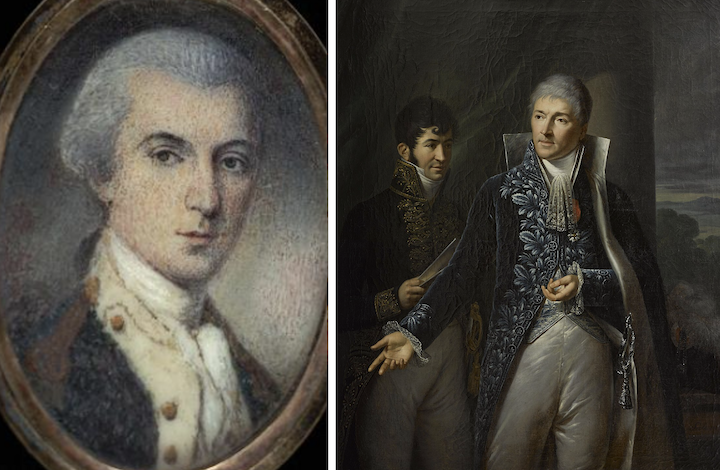
Above:
Left: Louis-Guillaume Otto, watercolor on ivory, 1 3/8 x 1 inch oval, , by Charles Willson Peale, 1822, Smithsonian American Art Museum, Public Domain, https://commons.wikimedia.org/w/index.php?curid=25290231
Right: Le comte Otto de Mosloy et le comte Pelet by Johann Baptist Seele - Musée du château de Versailles, Public Domain, https://commons.wikimedia.org/w/index.php?curid=10695091
| |
|
• Louis-Guillaume Otto, comte de Mosloy (7 August 1754 – 9 November 1817) was a French diplomat. Depending on the source, he was born either in Strasbourg in 1753 or in Kork near Kehl, in the Margraviate of Baden, on August 7, 1754. He graduated in Modern Languages and Law at the University of Strasbourg, after which he joined the Foreign Service as a private secretary to César de La Luzerne, who was stationed in Bavaria at the time.
• In 1779, he was sent on a diplomatic mission to the newly established United States of America. While in Philadelphia, he took over from François Barbé-Marbois as Secretary of the French Legation in May 1785 and served two additional terms as Chargé d'affaires ad interim. He built friendly relations with George Washington and other key figures in Congress. During his time in the U.S., he wrote reports that analyzed the U.S. Constitution and its chances for ratification.
• In March 1787, Otto married Elizabeth, the daughter of Peter Van Brugh Livingston, a Patriot during the American Revolution, a wealthy merchant, and the first New York State Treasurer from 1776 to 1778. but she passed away in December of the same year.
• Otto was elected to the American Philosophical Society in 1787. He returned to France at the end of 1792. Soon after, the Revolutionary Government Committee of Public Safety named him the first Head of the Political Division for Foreign Affairs. However, he was jailed after the Girondins party fell, suspected of not being loyal enough to the Republic. He narrowly escaped the guillotine and then accompanied Abbot Sieyès to Berlin as his Legation Secretary. His next position was in London in 1800, where he was involved in negotiating the short-lived Treaty of Amiens in 1802. This treaty achieved fourteen months of peace in Europe during the French Revolution and the Napoleonic Wars. He was then posted in Bavaria in 1803.
• In 1805, Napoleon I appointed him to the Conseil d'État and honored him as Grand officier of the Légion d'honneur. In 1810, he was sent as the French Ambassador to Vienna, where he negotiated the terms for Napoleon's second marriage to Archduchess Marie-Louise. Napoleon later made Otto comte de Mosloy in late 1810.
• The Count was removed from politics during the First Restoration and chose to retire after the Second Restoration, having served as Under-Secretary for Foreign Affairs from March 24 to June 22 during the Hundred Days.
• Otto died in 1817 and was laid to rest at Cimetière du Père-Lachaise in Paris.
• His views and observations on the fledgling Republic are compiled in: "Considerations Sur La Conduite du Gouvernement Americain Envers La France, Depuis Le Commencement De La Revolution Jusqu'en 1797". Par Louis-Guillaume Otto. Avec une Introduction par Gilbert Chinard. [Petite Bibliothèque Américaine, Institut Français de Washington.] (Princeton: Princeton University Press for Institut Français de Washington. 1945)
| |
|
Jean-Baptiste, chevalier de Ternant
Ambassador of France, 1791-1792
Bearer of a special gift
| |
|
• Jean Baptiste, chevalier de Ternant (December 12, 1751 – November 15, 1833) was a French military officer, diplomat, and served as the French ambassador to the United States from 1791 to 1793.
• He was born in Damvilliers, in the province of Barrois (today department of the Meuse) in 1751 and became a lieutenant in the Royal Corps of Engineers in 1772.
• During the American Revolutionary War, he volunteered at the same time as Lafayette to support the Patriots and enlisted in the Continental Army.
Starting in 1778 at Valley Forge as a major, he was promoted to Lieutenant-Colonel on September 25, 1778, and served as a sub-inspector in the Continental Army. He was captured in Charleston on May 12, 1780 and was freed as part of an exchange of prisoners in 1782. He was promoted to the rank of Colonel on October 13, 1783. His official title was "Inspector General and Advisor to the Commanding Generals of the Southern Forces".
In total, he served in the Continental Army for 5 years.
• In 1780, de Ternant was elected to the American Philosophical Society.
• After the war he returned to France in 1784 where he was promoted to the rank of Colonel. In 1785 he served as colonel in the army of the Dutch Republic (still with the assent of the King of France) and shored up the defenses of Amsterdam against the Prussians. He returned to France to serve as Colonel of the Royal-Liégeois regiment from 1788 until 1791.
• He was sent back to the United States for a short time as a French minister in August 1791, while the French Revolution was underway. He was tempted and asked for a reassignment in the military when France fought back the European Coalition forces, only to think it more prudent to stay in the United States when the
French monarchy was abolished on September 21, 1792. As expected the Girondins removed him from his position on December 30, 1792, and Edmond-Charles Genet took over.
A King at Mount Vernon:
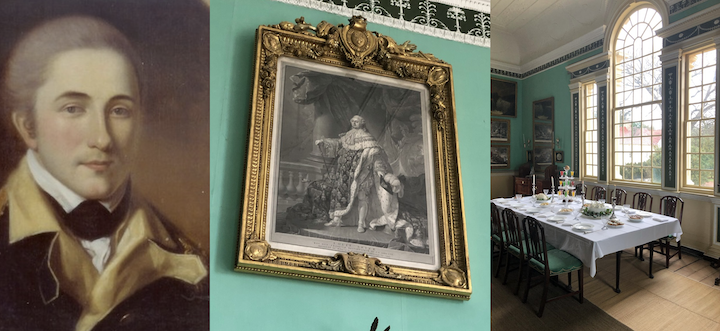
• During his tenure as Ambassador of France to the United States, he is remembered as the one delivering on December 22, 1791 a personal gift of King Louis XVI to General George Washington: a portrait magnificently framed, incrusted with diamonds, which was displayed at his official residence in Philadelphia, and later displayed in 1797 at Mount Vernon in the general's formal dining room, above the entrance door.
The 1790 engraved portrait was created by Charles-Clément Bervic and replicated the original state portrait painted in 1789 by Antoine-François Callet, who was the official portrait artist for the king. Callet’s full-length painting shows Louis XVI dressed in his luxurious state robes from 1779.This original work, titled "Louis Seize, Roi des Français, Restaurateur de la Liberté," is displayed at The Apollo Salon in the Palace of Versailles.
In the accompanying note, de Ternand wrote:
"Permit me to present you with a new print of the king of the French—I shall feel a very great Satisfaction if you will consider that feeble mark of my lively and respectfull attachment for your person, as worthy your kind acceptance."
That same day, Washington replied to de Ternant to express his thanks, writing,
"I accept, with great pleasure, the new and elegant print of the King of the French, which you have been so obliging as to send to me this morning as a mark of your attachment to my person. You will believe me, Sir, when I assure you, that I have a grateful and lively sense of the personal respect and friendship expressed in your favor which accompanied the Print."
• Louis XVI intended it to be a personal gift: the lower corners of the portrait have cartouches with the initials of the president (“G” and “W”) and the Washington family crest in the center. The top corners feature the monogram of the French king (“L” and “XVI”), while the center displays the French royal coat of arms, topped with a pierced crown, and flanked by a Native American headdress on the right and the French cap of liberty on the left. This combination of symbols highlights the strong connection between France and the United States, formed through their alliance during the Revolutionary War.
• Jean-Baptiste de Ternant then chose to live as a private citizen and stayed away from public service, even during Napoleon's rule. He died in Paris in 1833.
| |
|
Edmond-Charles Genêt
Also Known as "Citizen Genêt"
Ambassador of France, 1793-1794
Revolutionary activist who saved his head
| |
|
Above:
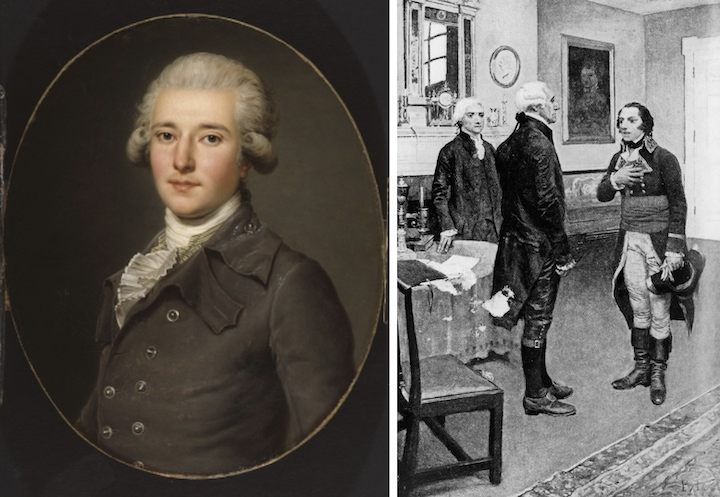
Top Left: Edmond-Charles Genêt, by Adolf Ulrich Wertmuller, ca. 1784, Courtesy Albany Institute of History & Art, https://www.mountvernon.org/library/digitalhistory/digital-encyclopedia/article/edmond-charles-gene
Top Right: Citizen Genêt Affair, Edmond-Charles Genêt (right) meeting George Washington, illustration by Howard Pyle in Harper's Magazine, April 1897, https://www.britannica.com/biography/Edmond-Charles-Genet
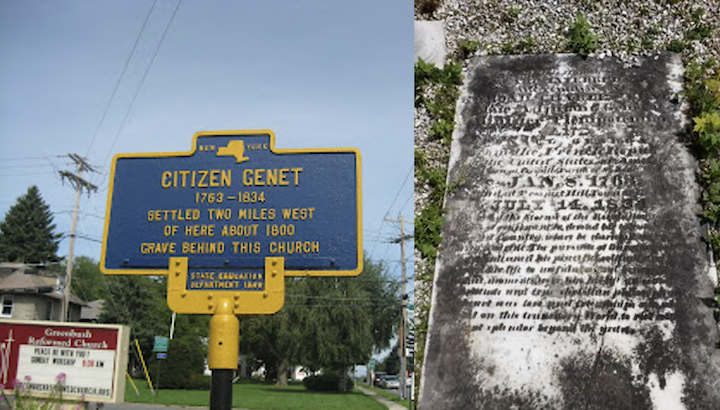
Bottom Left: Marker in Geenbush, NY, https://nyshmsithappenedhere.blogspot.com/2013/02/nyshms-it-happened-here-citizen-genet.html
Bottom Right: tombstone of Citizen Genêt, https://www.findagrave.com/memorial/23891453/edmond-charles-genet#view-photo=215427615
| |
|
• Edmond-Charles Genêt, born on January 8, 1763, and died on July 14, 1834, was a French diplomat later known as Citizen Genêt.
• Genêt was born in Versailles in 1763. His father worked as a chief clerk in the foreign affairs ministry. By the age of 12, Genêt was a remarkable talent, a child prodigy able to read French, English, Italian, Latin, Swedish, Greek, and German! At 18, he became a court translator, and by 1788, at just 25, he was sent to Saint Petersburg as ambassador to Russia.
• Despite his meteoric rise principally based on merit, Genêt grew disillusioned with the old regime. He began to dislike not only the French monarchy but also all monarchies, including Czarist Russia under Catherine the Great. In 1792, Catherine declared him persona non grata, stating that his presence was "not only unnecessary but even intolerable." That same year, the Girondins took power in France and appointed Genêt as the minister to the United States.
• The "Citizen Genêt affair" started in 1793 when he was sent to the United States to gain support for France's conflicts with Spain and Britain.
Genêt reached Charleston, South Carolina, on the French ship Embuscade on April 8. Instead of going to Philadelphia to meet President George Washington, Genêt chose to stay in South Carolina. The people of Charleston welcomed him warmly, hosting several celebrations in his honor. In South Carolina, Genêt aimed to recruit and equip American privateers to assist French missions against the British. He commissioned four privateering ships: the Républicaine, the Anti-George, the Sans-Culotte, and the Citizen Genêt. Collaborating with French consul Michel Ange Bernard Mangourit, Genêt organized American volunteers to combat Spain's allies in Florida. After forming a militia, Genêt set off for Philadelphia, making stops to gather support for the French cause, and arrived on May 16.
• His actions put American neutrality at risk during the conflict between France and Britain, which Washington had clearly stated in his Neutrality Proclamation on April 22. When Genêt met with Washington, he requested a halt to American neutrality to aid France. After being rejected by Secretary of State Thomas Jefferson and told that his actions were not acceptable, Genêt objected. At the same time, Genêt's privateers were seizing British vessels, and his militia was getting ready to act against the Spanish.
• Genêt kept ignoring the United States government's requests, seizing British ships and turning them into privateers. In response, Washington wrote a lengthy complaint letter, following the advice of Jefferson and Hamilton. This was one of the rare times that Federalist Hamilton and Republican Jefferson saw eye to eye. Genêt stubbornly replied to the letter. As a result, President Washington and his Cabinet insisted that France recall Genêt as its Ambassador.
• By January 1794, the radical Mountain faction had taken control from the Girondins in France and issued an arrest warrant for Genêt. Fearing execution by guillotine, Genêt sought asylum from Washington. Hamilton, who was strongly against Genêt, persuaded Washington to allow him to stay safely in the United States. He lived a long life in upstate New York until 1834, living the life of a prosperous gentleman farmer and author, often keen on voicing his opinion on US foreign policy.
Personal Life and Legacy in the United States:
• Genêt married Cornelia Tappen Clinton in 1794. She was the daughter of George Clinton, the Governor of New York. He lived on a farm named Prospect Hill in East Greenbush, New York, which had a view of the Hudson River. As a gentleman farmer, he also wrote a book about inventions and fathered three sons and two daughters.
• His wife Cornelia died in 1810, and on July 31, 1814, Genêt remarried to Martha Brandon Osgood (1787–1853), the daughter of Samuel Osgood, the United States' first Postmaster General. With her he fathered four sons and one daughter.
• His second great-grandson, Edmond Charles Clinton Genet (November 9, 1896 – April 17, 1917) was a volunteeer in the French Foreign Legion in 1915 and later joined the Escadrille Lafayette in January 1917. He died in combat “Mort Pour la France” on April 17, 1917. He is buried at the Escadrille Lafayette Memorial outside of Paris. His final wish was to be buried wrapped in the French flag and have his coffin covered with the French and American flags to "show that I died for the two countries". For more details, read our
Oct. 2023 Bulletin, Tribute to the Lafayette Escadrille: https://conta.cc/3Qz0Xjl
• An elementary school in East Greenbush, New York, is named Citizen Genet Elementary School, formerly Genet Middle School.
• There is also a road marker, located at:
688 Columbia Turnpike, East Greenbush NY 12061
GPS: 42.588533, -73.699517
• Inscription:
“Citizen Genet
1763-1834”
“Settled two miles west
of here about 1800.
Grave behind this church.
Erected 1949 by New York State Education Department"
| |
|
Joseph Alexandre Jacques Durant de Mareuil
Ambassador of France, 1824 - 1830
Witness to Lafayette's triumphal Tour
| |
|
• Joseph Alexandre Jacques Durant, baron de Mareuil (born 6 November 1769 in Paris - died 13 January 1855 in Ay, Marne) was a French career diplomat, who served as French Ambassador to the United States from 1824 to 1830.
• In 1793, he served as an assistant engineer in the Rhine army, taking part in the battles of Wissembourg and Geissberg. By 1794, he started a diplomatic career with posts such as First Secretary of the French Legation in Copenhagen followed by Minister Plenipotentiary in Dresden, Stuttgart, and Naples, and was made Baron d'Empire. In January 1814, he rallied the Bourbon restoration acted as King Louis XVIII's interim Minister of Foreign Affairs.
• He served as ambassador of France to the United States from 1824 to 1830.
As representative of the French monarchy, and now serving the ultra-conservative King Charles X, he had to contend with the immense popularity of Lafayette, who was celebrated as a symbol of Republicanism and Liberty during his triumphal Farewell Tour of 1824-1825.
• A good example of the French government uneasiness is described by Lafayette's secretary, who recounts that during Lafayette's visit to commemorate the victory of Yorktown on October 19, 1824, the officers of the French frigates present on the York river were not allowed to come onshore in uniform to mix with the celebrations : "...does the Restoration spurn the glory because it was acquired to the advantage of Liberty? I know not; but what is certain, is, that while we were celebrating the anniversary of the capture of Yorktown, the French squadron commanded by Admiral —— which was then lying in Hampton roads, where they might hear the acclamations of American gratitude for French benefits, remained coldly strangers to a festival which ought to have been regarded as a family celebration by both nations. However, we are satisfied that this inexplicable indifference or repugnance, was not participated in by a majority of the officers or crews. Of the officers some privately came on shore and in citizen’s dress, were witness to this patriotic scene, in which the Americans would have speedily assigned them a distinguished place, if they had been permitted to present themselves in their proper uniform.When I returned to the headquarters, I found our travelling companions very much occupied with this question, and many of them affirmed that the French admiral would not have acted thus unless he had received instructions on the subject from a superior authority.”
-- Auguste Levasseur, Lafayette in America in 1824 and 1825 - Vol I
• Indeed, the French Consuls throughout the United States resented the welcome reserved to Lafayette. Let us not forget that they were agents of a monarchy. For instance, Guillemin, the French Consul in New Orleans, wrote to Delmas, Minister of Foreign Affairs, upset that Lafayette would bask in such a popularity: " ...So Louis XVI, the whole of France, the millions it has spent, the floods of blood it has spilled for the cause of the United States, its army, its entire navy are nothing: M. de Lafayette is everything!.."
Of course, the real reason was the fear that the liberal ideas embodied by Lafayette would spark another revolution in France.
• In a letter to Paris, Ambassador Mareuil wrote:
"...The honors paid to M. de Lafayette are singularly embarrassing for the King's agents. They are pleased to see that the American people retain a grateful memory of the assistance lent to them by the French general, but they regret at the same time that the tributes are addressed precisely to a man who has placed himself in open opposition to the King's government [and who] persists in [...] professing highly [liberal ideas] to the point of calling [...] for their disastrous application in France. While it was noted in the celebrations given to him that the white flag had constantly flown next to that of the Union and that the memory of the martyred king had always been honored, it was also possible to see too often, in the midst of the wishes expressed in the heat of the political principles which govern this country, a dangerous, and sometimes even offensive spirit of proselytism..."
Two brief encounters:
• Baron de Mareuil chose to be a careful observer, turning down most dinner or party invitations to avoid any unexpected actions from Lafayette. He met Lafayette only two times: the first was a polite visit, which Lafayette remarked on by saying, “It feels nice to be so loved by such a people. [...] The diplomacy of the Holy Alliance had nothing to do with it [...]. I did visit the French Court Minister, who was very courteous and acknowledged our greeting.”
• The second time was... to renew the general's passport, which had been lost in the sinking incident of May 8, 1825 on the Ohio river.
| |
|
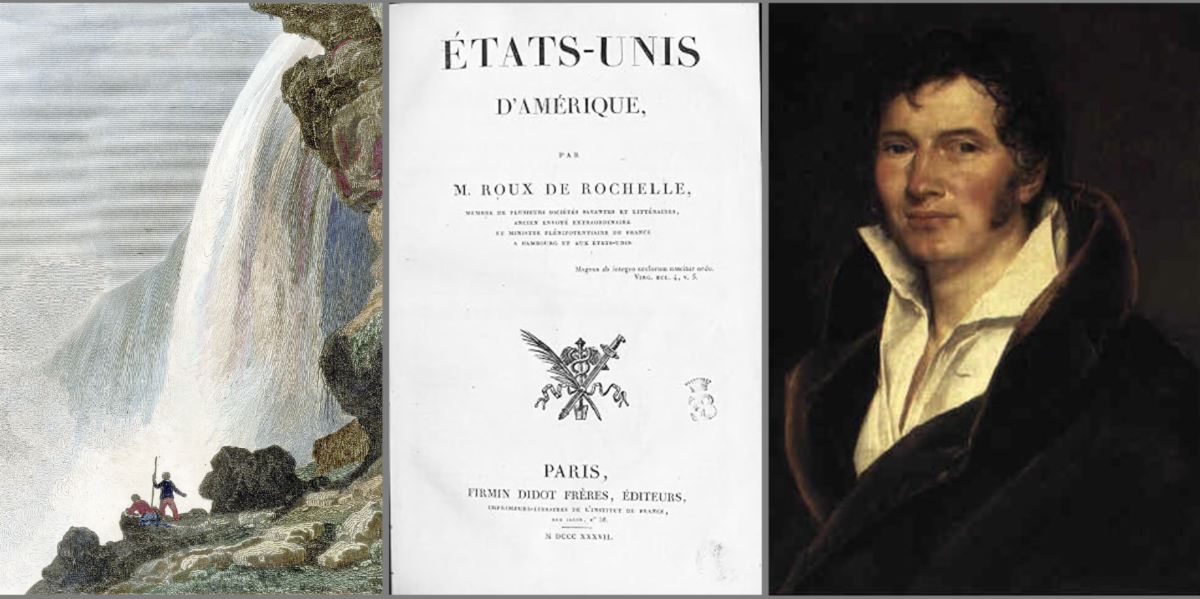
Jean Baptiste Gaspard Roux de Rochelle
Ambassador of France, 1830-1831
A geographer, author, poet...
| |
|
Above:
Top Right: A portrait of Jean Baptiste Gaspard Roux de Rochelle, oil on canvas, by Francis William van Vreeland, https://www.artnet.com/artists/francis-william-van-vreeland/a-portrait-of-jean-baptiste-gaspard-roux-de-oH20NoFsRN0-lxNp02gxSw2
Top Left and Middle: Sous la Chute du Niagara - Niagara Falls - from 1st edition of Jean-Baptiste-Gaspard Roux de Rochelle's Etats-Unis d'Amérique, Firmin Didot Freres, [1837], Drawn by Jacques-Hippolyte van der Burch; engraved by Chollet. Roux de Rochelle, the French Minister to the U.S., included this volume in a large series entitled L'Univers. The American volume included 96 images of the United States and it was first issued in 1837.Public Domain, https://commons.wikimedia.org/w/index.php?curid=60026505
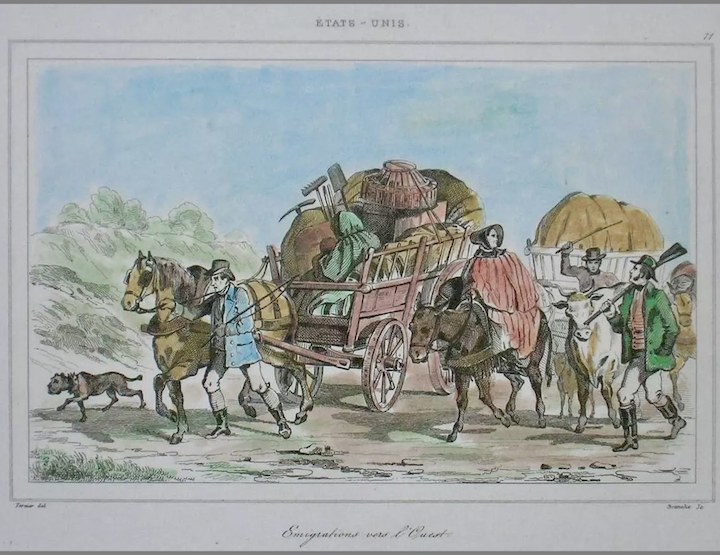
Middle: Print from steel engraving titled "Emigrations vers l'Ouest" ("Immigrants on the way westward") - from 1st edition of Jean B.G. Roux de Rochelle's Etats-Unis d'Amérique. Paris: Firmin Didot Freres, [1837], Drawn by Jacques-Hippolyte van der Burch; engraved by Chollet
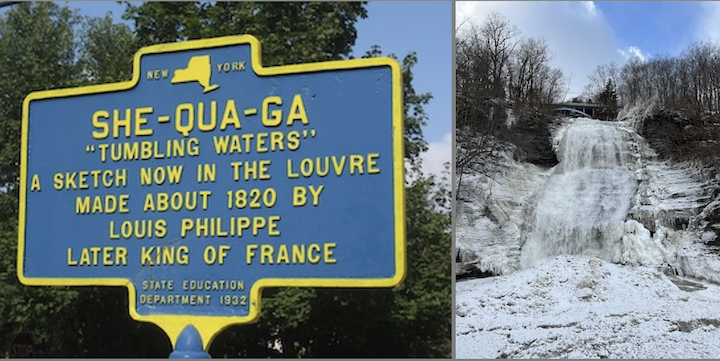
Bottom Right: Shequaga Falls in the Village of Montour Falls, NY, in winter 2022 Photo:By Edwardguo - Own work, CC BY-SA 4.0, https://commons.wikimedia.org/w/index.php?curid=128105403
| |
|
• Jean Baptiste Gaspard Roux de Rochelle (March 26, 1762 – March 1849) was a French geographer, author, poet, and ambassador to the United States.
• He was born in Lons-le-Saunier in the Jura region. Roux de Rochelle served as head of division at the Ministry of Foreign Affairs and was later appointed Minister Plenipotentiary to Hamburg from 1826 to 1830, and then to Washington, D.C. from 1830 to 1831 at the start of the reign of King Louis-Philippe.
• He was involved in various scholarly and literary organizations, including the Société de Géographie, where he served as president of the Central Commission three times, and the Société philotechnique.
• He passed away in Paris at around 87 years old. Roux de Rochelle authored many works, including "Letters of the United States" in 1835, which featured over 90 illustrations.
• We might be straying a bit from the main topic, but since this ambassador served under King Louis Philippe, it is interesting to note that the future "King of the French" had travelled extensively with his siblings, the Duke de Monpensier and the Comte de Beaujolais in the United States while in exile during the French Revolution. And coincidentally, he travelled with a sketchbook, some of the surviving sketches are kept at the Louvre.
• As it happens, there is one marker in upstate New York that brings to mind an illustration in Roux de la Rochelle's "Letters of the United States" :
Marker, “She-Qua-Ga”
Shequaga Falls Park, 109 S Genesee St, Montour Falls, NY 14865
GPS: 42.345117, -76.850000
• Inscription:
“Tumbling Waters”
A sketch now in the Louvre
made about 1820 by
Louis Philippe
later King of France
Erected 1932 by State Education Department."
(*The sketch in question was drawn in 1796, and not 1820 as the marker states)
| |
|
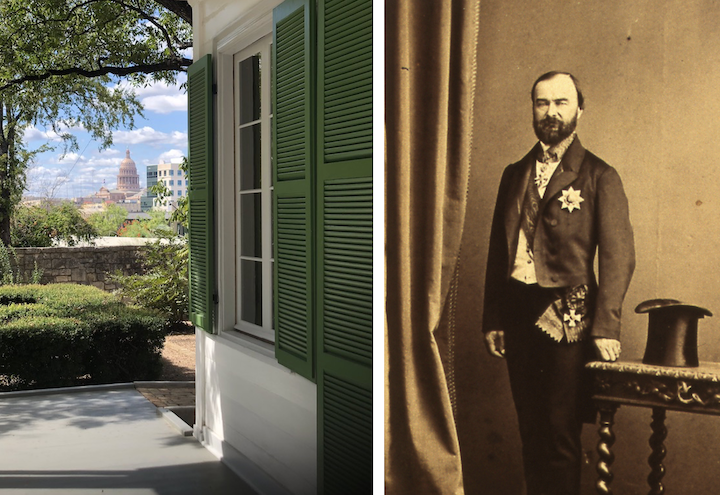
Alphonse Dubois de Saligny
Chargé d'Affaires, 1839-1846
Republic of Texas
| |
|
Above:
Top Right: M. Dubois de Saligny, as ambassador of France to Mexico in 1862, L'Illustration, March 1862, p.145, Public Domain, https://commons.wikimedia.org/w/index.php?curid=29709214.
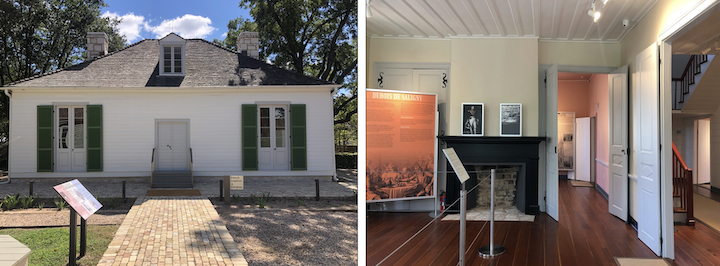
Top Left: French Legation with background view of the dome of the Texas Capitol, Austin, TX, Photo by TC © ASSFI 2022
Middle and bottom: Outside and inside views of the French Legation, now a museum and botanical garden, Photos by TC © ASSFI 2022
| |
|
• Alphonse Dubois de Saligny, by his full name Jean Pierre Isidore Alphonse Dubois de Saligny, born in Caen, Normandy, France, on April 8, 1809, and died in Saint-Martin-du-Vieux-Bellême (Orne) on November 6, 1888, was a French diplomat with a rich career.
• He embarked on a diplomatic career in 1831, subsequently serving as secretary to the French legations in Hanover, Greece,and the United States. While stationed in Washington, he received directives from the French government to travel to Texas to assess the situation and potential of the emerging republic. During his mission in the spring of 1839, he toured Galveston, Houston, and the coastal regions extending to Matagorda. His findings, communicated to the French foreign minister, played a significant role in persuading the French government to acknowledge Texas through a treaty focused on friendship, navigation, and commerce.
• France was thus the first nation to recognize Texas. The Republic of Texas opened its embassy in Paris, in the Hôtel de Vendôme, adjacent to Place Vendôme in the 2nd arrondissement.
• In September 1840, Dubois purchased 22 acres of land with the intention of establishing a Legation, or diplomatic outpost. However, he resided in this new location for merely one month. Following a dispute with a local innkeeper, which became known as the "Pig War," Dubois departed from Austin in April 1841. Subsequently, he sought to garner support for the "Compagnie franco-texienne", an initiative led by two Frenchmen, Jean Pierre Hippolyte Basterrèche and Pierre François de Lassaulx, aimed at settling 8,000 French nationals in Texas. After a series of twists and turns, the project led to the creation of Castroville, named after a Frenchman from Alsace, Henri Castro, its promoter.
Alphonse Dubois de Saligny also brought Abbé Odin from France to reclaim all the Texan churches abandoned by the Mexicans. The future Bishop of Galveston built the modern foundations of the Catholic Church in Texas, as narrated in our November 2024 Bulletin: November 2024 - French Missionaries in America - 1800-1900 (Part 3 of a series): https://conta.cc/3CGH2dT
• From January 1843 to January 1844, Viscount Jules de Cramayel acted as interim ambassador, but Dubois de Saligny returned in 1844 and stayed until the effecve date of the annexation of Texas by the United States on February 19, 1846. He then became ambassador to the Netherlands from 1848 to 1850, and finally, Mexico from 1862 until 1867, after which he retired in Normandy.
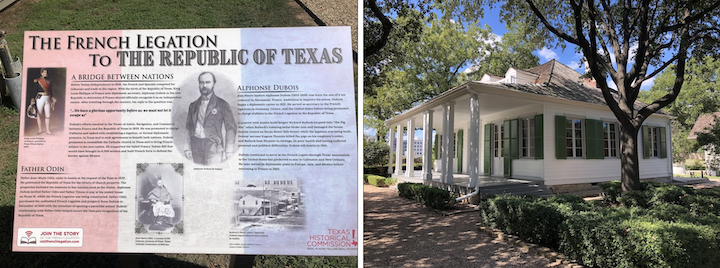
• The different interpretative markers and panels installed on the grounds of the French Legation in Austin, Texas, tell the story:
• Marker, “The French Legation to the Republic of Texas”
French Legation, 802 San Marcos Street, Austin, TX 78702
(There are two identical markers, one by the gate and one inside the gardens)
GPS: 30.267044, -97.732124
• Inscription (excerpts):
“A bridge between Nations: Before Texan Independence in 1836, the French and Spanish competed for influence and trade in the region. With the birth of the Republic of Texas, King Louis-Philippe of France sent diplomatic secretary, Alphonse Dubois to the new Republic to determine if France should officially recognize it as an independent nation. After traveling through the Country, his reply to the question was, “…We have a glorious opportunity before us; we must not let it escape us”. Dubois’s efforts resulted in the Treaty of Amity, Navigation, and Commerce between France and the Republic of Texas in 1839. He was promoted to Chargé d’affaires and tasked with establishing a legation, or formal diplomatic presence, in Texas and to seek agreements to benefit both nations. Dubois promoted to reestablish the Catholic Church in Texas and to bring French settlers to the new nation. He supported the failed Franco-Texian Bill that would have brought in 8,000 settlers and built French forts to defend the border against Mexico.”
[...]
Alphonse Dubois: Jean-Pierre Isadore (sic) Alphonse Dubois (1809-1888) was born the son of a tax collector in Normandy, France. Ambitious to improve his status, Dubois began a diplomatic career in 1831. He served as secretary to the French legations in Germany, Greece, and the United States before being promoted to chargé d’affaires to the French Legation in the Republic of Texas. A quarrel with Austin innkeeper Richard Bullock erupted into “the Pig War” when Bullock’s roaming swine broke into and damaged the house Dubois rented on Pecan Street (6th Street) while the legation was being built. Dubois’ servant Eugene lunette killed the pigs on his employer’s order, and Bullock beat Pluyette in revenge. In poor health and having suffered personal and political difficulties, Dubois left Austin in 1841. Dubois continued to serve as the French Legate through Texas’ annexation to the United States but preferred to stay in Galveston and New Orleans. He later served in diplomatic posts in Europe, Asia, and Mexico before returning to France in 1863.”
Erected by Texas Historical Commission”
• There is a tablet affixed on the wall at the entrance gate:
French Legation Historical Site, 802 San Marcos Street, Austin, TX 78702
GPS: 30.267300, -97.731717
• Inscription:
“French Legation”
“Erected in the year 1841 by Conte (sic) Alphonse Dubois De Saligny, Charge D'Affaires for King Louis Philippe of France, to the Texas Republic. He lived here 1841-1842. House constructed of Bastrop pine, in Louisiana bayou style. Furnishings include several pieces once owned by Saligny. Purchased by State of Texas in 1945. Placed in custody of the Daughters of the Republic of Texas, who restored the house and maintain the property.
Recorded Texas Historic Landmark – 1967”
• Another marker located near the far end of the beautiful gardens explains:
GPS: 30.267044, -97.732124
• Inscription:
“This site, originally purchased by Anson Jones who later became the last President of the Republic of Texas, was sold by Jones on September 15, 1840, to Alphonse de Saligny, Charge D'Affaires of his majesty, Louis Philippe, the King of the French, to the Republic of Texas. Saligny built the house and occupied it until April 1, 1842. the building was later owned by John Mary Odin, first Bishop of the Diocese of Galveston, and by Moseley Baker, hero of the Texas Revolution and Congressman of the Republic. Joseph W. Robertson, who bought the property from Baker in 1848, was responsible for the name Robertson Hill. The home was owned by his heirs until it was purchased by the State of Texas in 1945.”
| |
|
Guillaume Tell Poussin
Ambassador of France - 1848-1849
Officer of the US Army Corps of Engineers
| |
|
Above:
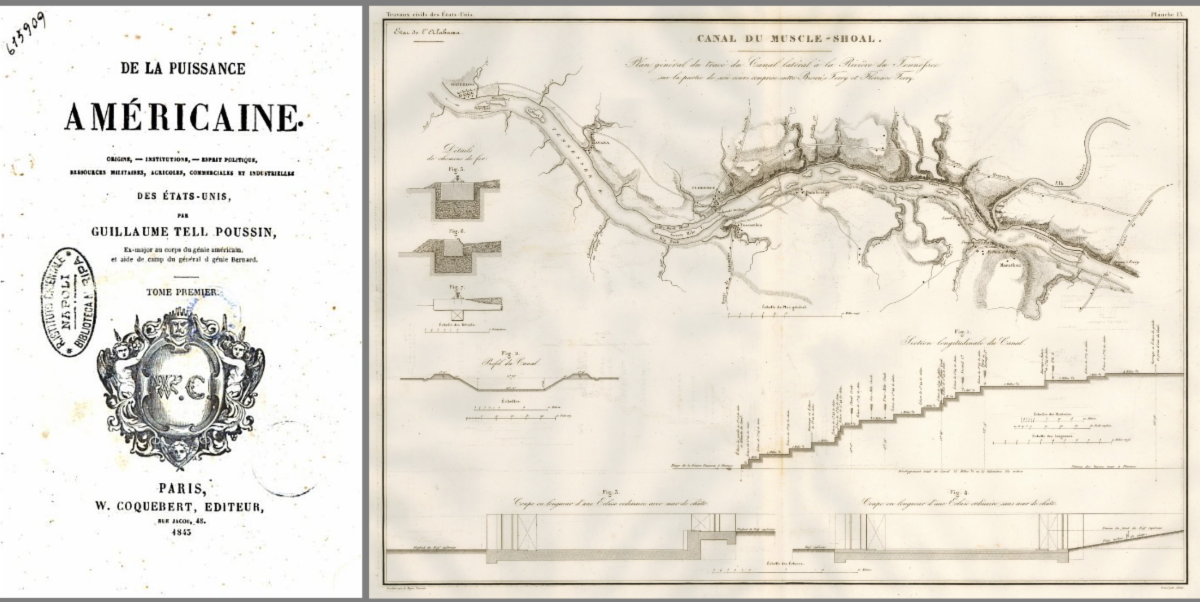
Left: Book "De la Puissance Américaine" (American Power), by Guillaume Tell Poussin, 1843, W. Coquebert, Paris
Right: Map of the Cape Cod Canal from Poussin's Travaux d’améliorations (1834) By Guillaume Tell Poussin - in Travaux d'améliorations intérieures projetés ou exécutés par le Gouvernement Général des États-Unis d'Amérique, de 1824 a 1831, by Guillaume Tell Poussin, Paris : Libraire Anselin, 1834. This image is from the David Rumsey Map Collection, and has been cropped and contrast-enhanced for clarity., Public Domain, https://commons.wikimedia.org/w/index.php?curid=1565100
Unfortunately, no portrait of the ambasssador has been found on the internet.
| |
|
• Guillaume Tell de La Vallée-Poussin was born in Poissy (Yvelines) on February 10, 1794, during the French Revolution and named after the fictional, tyrannicide republican hero William Tell.
• His father, Jean Étienne de La Vallée dit Poussin (1735-1802), was a painter and decorator who won the Prix de Rome in 1759.
In 1814, he enrolled as an architecture student at the Académie des Beaux-Arts in Paris but soon left for the United States.
• Not unlike Major Pierre L'Enfant a half-century before, he served as a captain in the United States Army Corps of Engineers and became aide de camp to French General Simon Bernard, who had been commissioned as a brigadier general in the US Army Corps of Engineers by President James Madison (at the suggestion of Lafayette) in 1815 to build or shore up the fortifications all along the Eastern seaboard.
• He went back to France in 1831 and traveled through England, Belgium, and the Rhineland, focusing on railway development. In 1841, he published Considérations sur le principe démocratique to address what he believed was Alexis de Tocqueville's distorted or incomplete view of American democracy.
• From 1848 to 1849, Poussin was the ambassador of the French Second Republic to the United States, reporting (irony of history) to Tocqueville, who was the French foreign minister at that time. He was recalled after tensions rose due to the harsh language exchanged between him and the US Secretary of State, John M. Clayton, regarding a dispute over a French ship stranded near Veracruz. Poussin died at home in Paris.
Legacy in the United States:
• His contribution to the several forts built in the entire Eastern coastline of the United States is alas not recognized since he was serving under the command of General Simon Bernard.
• He published a book in 1843 with an prescient title: "De la Puissance Américaine. Origine - Institutions - Esprit Politique, Ressources Militaires, Agricoles, Commerciales et Industrielles des États-Unis" (American Power. Origin - Institutions - Political Spirit, Military, Agricultural, Commercial and Industrial Resources of the United States) by W. Coquebert, Paris
| |
|
Charles Fournier de Saint-Amant
French Consul in California, 1851-1852
Chess master, travel writer, wine merchant
| |
|
.• Pierre Charles Fournier de Saint-Amant was born on September 12, 1800, in Monflanquin, a small village in the Lot-et-Garonne region of Southwest France. He became a government clerk in Paris at a young age and later worked as the secretary to the governor of French Guiana from 1819 to 1821. He lost this position after he spoke out against the ongoing slave trade in the colony.
• After returning to Paris, he developed a strong interest in chess, learning from the top players of his time. He frequently played at The Café de la Régence, a key chess hub in Europe during the 18th and 19th centuries, where many famous chess masters gathered. Between 1834 and 1836, he led a Paris team that won a correspondence match against the Westminster Club, England's top chess club. By 1840, he was recognized as the best chess player in France. He also became the editor of Le Palamède, a chess magazine, then dabbled with a short-lived acting career before becoming a successful wine merchant.
• During the 1848 revolution against King Louis Philippe, which installed the Second republic, he served as a captain in the National Guard. For his efforts in protecting the Palais des Tuileries from a mob, he was appointed its Governor for a short time.
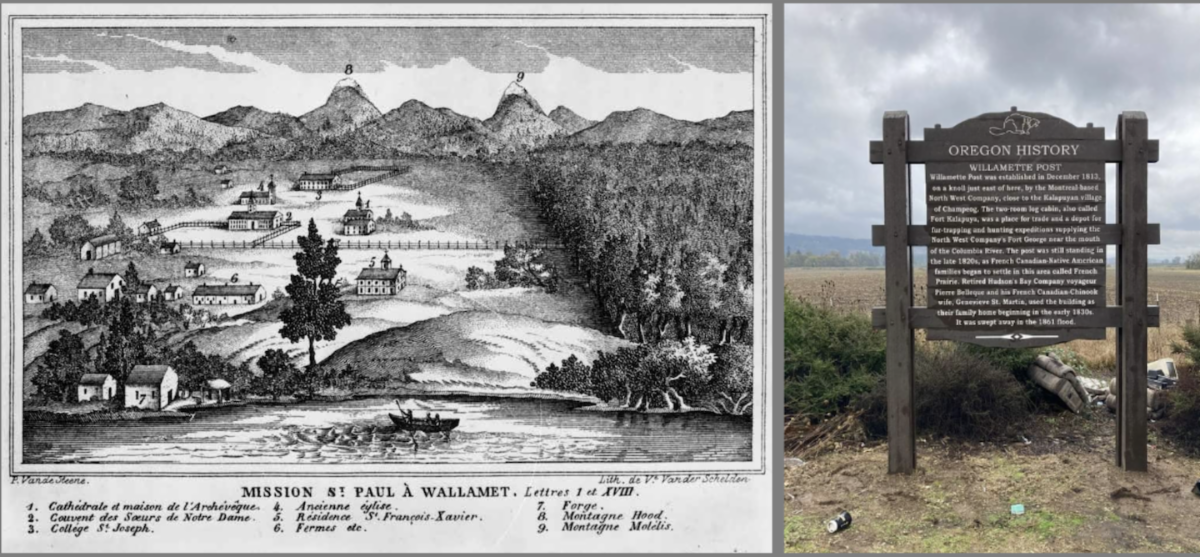
• From 1851 to 1852, he served as the French consul in California. During this time, he traveled to the Oregon Territory, documenting the changes in early settlements and providing one of the few historical accounts of that era.
• After returning to France, he dedicated several years to writing respected works about the French colonies and a treatise on Bordeaux wines. In 1861, he retired to Algeria, where he passed away in 1872 after being thrown from his carriage.
Legacy in the United States:
• "French Prairie" was first documented in the early 1850s when he referred to the area as "les prairies françaises".
French Prairie is situated in the Willamette Valley in Marion County, Oregon, United States. It received its name from the French Canadian/Métis pioneers who were among the earliest settlers in that region of the Oregon Country.
There is a marker that tells the story of this valley.
Marker, « Willamette Post”
River Rd NE, St Paul, OR 97137
GPS: 45.263517, -122.942700
• Inscription:
“Willamette Post was established in December 1813 on a knoll just east of this location by employees of the North West Company, a Montreal based fur-trading company. During the ensuing years the two-room log cabin, also known as Fort Kalapuya, served as a site for trading with the local Indians, the Kalapuyans, It was also a depot for hunting expeditions providing food to Fort George, also known as Fort Astoria, on the Oregon Coast. The Post was still intact in the late 1820's, as French-Indian families began to settle in the French Prairie Champoeg area. Pierre Bellique, a French Canadian fur trapper turned farmer, and his wife, Genevieve, used the vacated building as a residence beginning in the early 1830's.
Erected by Oregon Department of Transportation.”
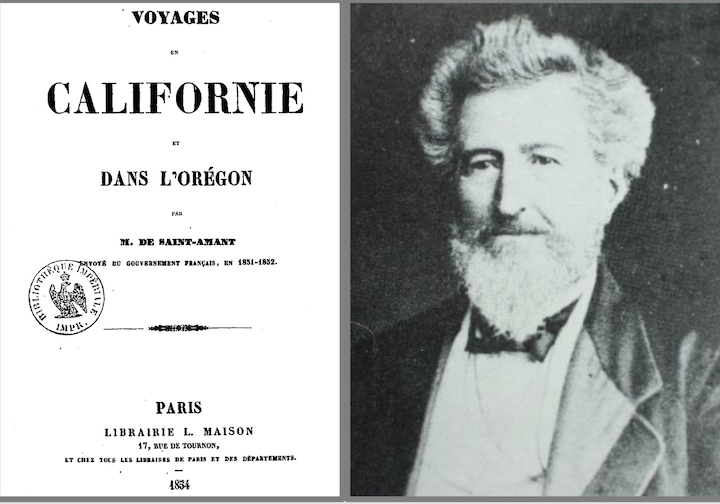
• His book, Voyages en Californie et dans l'Oregon, is among the very earliest travel book describing the settlement of this Northwest Pacific region.
| |
|
Jacques Antoine Moerenhout
Consul of France, Monterey, CA 1843-1850 & 1852-1859
Consul of France, Los Angeles, 1859-1879
Merchant, diplomat, ethnologist, painter, travel writer...
| |
|
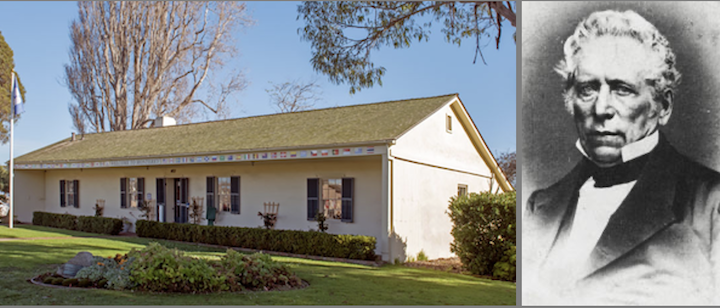
• In 1843, France established a consulate in Monterey, then the capital of Mexican Alta California, to attend to the needs of French immigrants who were mainly merchants, farmers and trappers.
• Jacques-Antoine Moerenhout (born on January 17, 1796, in Echeren—now part of Antwerp, Belgium—died on July 11, 1879, in Los Angeles) was a merchant, adventurer, diplomat, and travel writer. Although he was born in what is now Belgium, Antwerp was French in 1796, and he identified as French throughout his life. In one of his letters, he stated, "for the past fifteen years of my life I have served France…. I have always been French, and a good Frenchman".
• He was conscripted as a soldier in Napoléon's Grande Armée in 1812 and later moved to Paris to study painting. In 1826, he emigrated to Chile and worked as the secretary for the French consul in Valparaíso. However, he quickly started his own business as a merchant.
• Moerenhout made several long trading and research journeys across the Pacific, settling in Tahiti in 1834 where he was eventually appointed French Consul by Admiral Dupetit-Thouars where he befriended everyone on the island (even reportedly becoming an "intimate" friend of Queen Pomare IV) and played a very important role in the establishment of the French presence in Pacific ocean, countering the continuous challenges by Anglican missionaries trying to evince French catholic missionaries throughout Polynesia. During this time he wrote books about his travels in the South Pacific that are still considered classics.
• Moerenhout left Tahiti in 1845 to join his post in Monterey, California, then the capital of Mexican Alta California, where he was appointed as the French consul in 1845, at a salary of 15,000 Francs (approximately $60,000 in today's dollars), succeeding a Mr. Louis Gasquet. There he witnessed the California Gold Rush of 1848 and documented the events in a thorough correspondence called the Moerenhout Documents. What is interesting is that his reports, published in the French press at the time, or other diplomatic correspondence now available from archives, are particularly detailed and unbiaised, as France was the only country with a consular office at the time with no geopolitical interest in California.
• He went back to France for a couple of years to attend family business, during which time the Monterey consulate was overshadowed by the one opened in booming nearby San Francisco and his position in the foreign service rendered uncertain with the change of regime, from the 2nd Republic to the 2nd Empire. He was eventually sent back to Monterrey by Napoleon III in 1852 but as a vice-consul with an appointment of only 6,000 francs. When finally the vice-consulate in Monterey was closed, he was transferred as the first French Consul in Los Angeles in 1859, another booming town, where he stayed a total of 20 years and where he passed away on July 11, 1879.
• He quickly became widely known and respected throughout Southern California. As narrated in our July 2024 Bulletin, French pioneers of the West
https://conta.cc/3W9L44p, 10% of the population in Los Angeles at the time was French-speaking, and the mayors of Los Angeles were French immigrants. He he played an important role in the establishment of the French Benevolent Society of Los Angeles and in the French Hospital. He sent Los Angeles cotton the the Paris World Fair of 1867, his residence was at the heart of the LA social life, and his celebration of the centenary of American Independence in 1876 was remembered by Angelinos for years.
• Due to budget restrictions under the third Republic, his vice consulate was closed in January 30, 1879, but the French government continued to give him a special salary of 8,000 francs above his pension to allow him to retire comfortably until his death on July 11 that same year.
• The French community had to wait many years to have a general consulate again, and wait until 1955 to have with another writer and adventurer at his helm, but let us not anticipate and continue our narrative.
Legacy in the United States:
• A long, low adobe building was called the French Consulate because it was the home of Jacques-Antoine Moerenhout, the French Consul to Mexican California. It now houses the Monterey Visitors Center.
House & Marker, French Consulate, Monterey, CA
401 Camino El Estero, Monterey, CA 93940
GPS: 36.598667, -121.887433
• Inscription:
“Built in the Mexican period. Home of J.A. Moerenhaut (sic), a French Consul to California. Erected by Monterey History & Art Association.”
• His book, Voyages aux îles du Grand Océan, released in 1837, offers a captivating account of the Pacific islands and remains an engaging read today. It has been translated into multiple languages and reprinted many times over the years. It is available on Amazon and the presentation text reads: "Arthur R. Borden's translation of J.A. Moerenhout's Travels to the Islands of the Pacific Ocean has been made from the 1942 reprint of the original 1837 French edition. It is an important anthropological document; Moerenhout was both an excellent reporter and a good artist."
| |
|
Lucien-Anatole Prévost-Paradol
Ambassador of France, 1870
Journalist, member of the Académie Française
| |
|
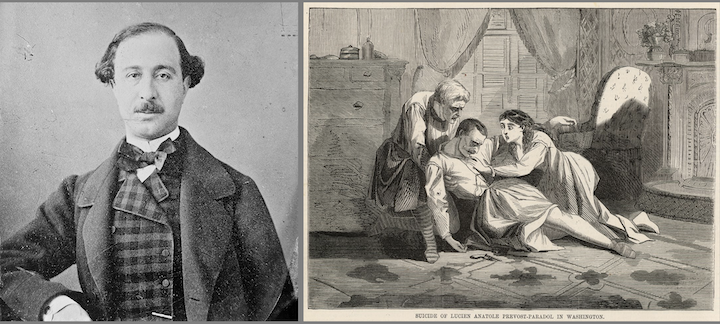
• Lucien-Anatole Prévost-Paradol (August 8, 1829 – July 20, 1870) was a prominent French journalist and essayist. He was born in Paris, the result of a relationship between opera singer Lucinde Paradol and writer Léon Halévy.
• He studied at the College Bourbon and later attended the École Normale. In 1855, he became a professor of French literature at Aix-en-Provence before becoming a leading writer for the Journal des débats. He also contributed to the Courrier du dimanche among other publications.
• He was a key critic of the empire. In politics, he was an Orleanist. As the New York Times said in his obituary, "his ideal of a free government was that of a constitutional monarchy, with ministerial responsability and universal suffrage". He was briefly imprisoned for his writings criticizing the imperial regime.
• In 1865, he was elected at the Académie française, taking over from Jean-Jacques Ampère. His selection stirred controversy due to his youth and the perceived lack of strength in his writing, which mainly included his Essais de politique et de littérature (three volumes, 1859-1866) and Études sur les moralistes français (1864). In his book La France Nouvelle he advocates the expansion of the colonization of Algeria (a town there was later named after him and the rest of Africa.
• In February 1869, he lost his wife, aged 42.
• When Emperor Napoléon III appointed Émile Ollivier as prime minister in January 1870, Prévost-Paradol believed in a liberal evolution of the Empire, rallied the regime, and accepted the post of French Minister Plenipotentiary to the United States, which earned him violent attacks from the Republican party.
• No sooner had he taken up his post than the Franco-Prussian war of 1870 broke out on July 19. It was the war he had predicted and dreaded in his book La France nouvelle.
However shortly after his arrival in Washington D.C. he committed suicide in his bedroom by gunshot on 20 July 1870 presumably on account of the Franco-Prussian War, or, more likely, the effect of a long depression following his wife's premature death. Other newspaper reports from the time attributed his dramatic gesture to burnout, disorientation, even the stiffling heat of the nation's capital.
"The French Minister, Provost-Paradol, committed suicide at one o'clock on the morning of July 20th, at Washington, by shooting himself through the heart with a pistol. He had been quite unwell for several days, though able to attend to his duties. Yesterday evening the great heat added to his prostration, and it is now believed that he has been partially deranged for three or four days, as strange expressions made at various times since Sunday are now recalled by those who have been about him.
[...]
Yesterday morning, in company with a friend, he stopped in a store and purchased a single barreled pistol, saying he wanted a good serviceable weapon. In the evening he called and bought another, as he said, to complete the pair.
He retired early, and about one o'clock his servant heard a shot which he supposed to be in an adjoining house, and at the same time the Minister called out to him. At a second call the servant entered the room of Paradol, and found him standing in the middle of the floor, as the servant thought, alarmed at the firing at the next door. Almost immediately however, he fell on the floor in a partial swoon. The servant went for the housekeeper, and together they returned with a remedy for a fainting fit. On raising him up they found blood, and at once ascertained he had shot himself through the heart. He died in a few moments, and without speaking.
[...]
News of the impending war, which reached him on landing in New York, proved a great shock to him, from which he did not recover. He was to have dined, by invitation, with Secretary Fish this evening.
He is a widower, with three children. A daughter of sixteen and a son of eleven years were sent to Newport a few days since. A third child, of fourteen, was left in France."
-- The Tiffin Tribune, Tiffin, Ohio, July 28, 1870 page 2
We will give the last word to the obituary of the New York Times, July 21, 1870:
"We sympathize with all in France who mourn over the loss of a man who would have done honor to the literature of any country".
| |
|
Alexandre Gilbert
Honorary Consul of France in Oregon
Founder & Mayor of Seaside, Oregon
| |
|
Above:
Middle: Founder-Mayor of Seaside, Oregon, and Consul of France, by Barry Swackhamer, September 23, 2017, https://www.hmdb.org/PhotoFullSize.asp?PhotoID=416110
Left & Right: Gilbert Inn, still in operation, photos by Barry Swackhamer, September 23, 2017, https://www.hmdb.org/m.asp?m=113870
| |
|
• If many ambassadors of France have left a significant mark and are memorialized with their names inscribed on plaques or other monuments, fewer Consuls are remembered, and even much less the many Honorary Consuls of France which dot the map of the United States. Since Honorary Consuls can be American citizens with a separate independent professional activity, it is likely that several are mentioned in markers here and there, without their benevolent activity (and their strong attachment to France as a corollary) being mentioned, and therefore not recognized by our Society. We hope to account for more of them in the future and pay tribute to their deeds in their local communities.
• One notable exception is Alexandre Gilbert, a key figure in the founding of Seaside, a noted resort Oregon, was born on April 16, 1845, in La Rochelle, France.
At twenty-four, just before the Franco-Prussian War (1870-71), he married Emma Loncol, and after the war in 1871, the Gilbert family moved to San Francisco, California. There, Alexandre honed his skills as a carpenter and cabinet maker and built the Gilbert House, which served as a hotel and boarding house, still in existence today.
Legacy in the United States:
A marker located at the Gilbert Inn tells the story:
« Historic Home of Alexandre Gilbert”
341 Beach Drive, Seaside OR 97138
GPS: 45.992200, -123.929100
• Inscription (excerpts):
“Alexandre Gilbert, one of the founding fathers of Seaside, was born in the coastal town of LaRochelle, France on April 16, 1845 [...]. At the age of twenty-four and just prior to the Franco-Prussian war (1870-71), Alexandre married Emma Loncol in Paris [...] In 1871, after the war, the Gilberts immigrated to San Francisco, California. In San Francisco, Alexandre developed his skills as a carpenter and cabinet maker. He also built and established the Gilbert House, a hotel and boarding house;
Learning in 1881 that land was "cheap" in Oregon, the Gilberts move north to Astoria.
Struck by the rugged beauty of the Oregon coast and the resemblance to his native France, he saw great potential and spent the next 54 years helping to develop businesses, property, and communities in the area. One of his greatest achievements was the 1 1/2 mile Promenade. Alexandre wanted the beach to remain open to the public, so he acquired the property and then donated it to the city. He also developed the downtown business district called the Gilbert Block. He was Mayor of Seaside during the 1912 fire that burned most of the city [...] In his life, Alexandre worked as a soldier, carpenter, hotel and boarding house operator, saloon operator, insurance and real estate salesman, Port of Astoria commissioner, French consul, and Mayor of Seaside. It has been said of Alexandre that he was "a fine representative of the solid and sustainable business men of Clatsop County" and "a man of great enterprise and forethought," "...a citizen of affluence and influence.” His family simply says, "He was loved.”
Erected by City of Seaside.”
| |
|
Jules Patenôtre des Noyers
Ambassador of France, 1891-1897
A notable high-society wedding
| |
|
• Jules Patenôtre des Noyers (April 20, 1845 – December 26, 1925) was a French diplomat. He was born in Baye, Marne, on April 20, 1845.
• He studied at the École Normale Supérieure and taught at a lycée in Algiers for several years before starting his diplomatic career in 1871.
• He served in Persia from 1873 to 1876, then became the minister plenipotentiary in Stockholm, Sweden in 1880. In September 1883, he was appointed as the French minister to China, where he undertook a significant mission in 1884 to establish French control in Indochina. On June 6, 1884, the imperial Chinese seal, which represented Annam's vassal status, was melted down, and the Treaty of Huế, also known as the "Patenôtre Treaty" was signed, by which France established protectorates over Tonkin and Annam. He was then assigned to the Sultanate of Morocco from 1888 tuntil 1891, when he was appointed Minister Plenipotentiary to the United States.
• In December 1891, Patenôtre arrived in Washington, D.C. to present his credentials as the French Minister to the United States, taking over from Théodore Roustan, who was reassigned in Madrid, a position Patenôtre would later hold himself.
• In 1893, two years after his arrival, he was elevated to the rank of Ambassador. He remained in his role as Ambassador until December 1897, when he was reassigned to Spain and submitted his letters of recall to President William McKinley. Jules Cambon, a former governor-general of Algeria, succeeded him. After his post in Spain, Patenôtre comfortably retired in Menton, nudged between Monaco and the Italian border, where he died in 1925.
• We chose to include him in this chronicle, in order to bring a little bit of levity, especially after narrating the tragic end of Ambassador Prévost-Paradol.
On March 27, 1894, Patenôtre married Eleanor Louise "Nellie" Elverson (1870–1953) at her father's home located at 2024 Walnut Street in Philadelphia, Pennsylvania. She was the daughter of publisher James Elverson, Sr. and his wife, Sallie Duvall, who were all part owners of The Philadelphia Inquirer.
• Also interestingly, the ceremony was witnessed by Sir Julian Pauncefote, the British Ambassador, and Prince Cantacuzino, the Russian Ambassador. The Dual Alliance of 1894 between France and Russia, followed by the Entente Cordiale between France and the United Kingdom of 1904, which, combined, would be called the Triple Alliance before World War One, was, in some ways, prefigured with this American high-society wedding!
| |
|
Jules Cambon
Ambassador of France, 1897-1902
Author of "Le Diplomate"
Member of the Académie Française
| |
|
Above:
Top Right: : Jules Cambon, Library of Congress Prints and Photographs Division, Public Domain, https://www.loc.gov/item/2014699534/
Top Left: Jules Cambon signs Treaty of Paris (1898), by Frances Benjamin Johnston - Public Domain, https://commons.wikimedia.org/w/index.php?curid=4250376
The Treaty ended the war between Spain and the United States, and was brokered partly by France.
Bottom Left: John Hay, US Secretary of State, handing to Jules Cambon, the French Ambassador, the $20,000,000 due to Spain under the Treaty of Peace, at the State Department, from p. 434 of Harper's Pictorial History of the War with Spain, Vol. II, 1899, by Wilbert Melville, Public Domain, https://commons.wikimedia.org/w/index.php?curid=4250363
Bottom Right: Jules Cambon in full regalia, By Frances B. Johnston - The World's Work, 1902, Public Domain, https://commons.wikimedia.org/w/index.php?curid=26807867
| |
|
• Jules-Martin Cambon (5 April 1845 – 19 September 1935), not to be confused with his brother Paul Cambon (also a Diplomat, and ambassador to London for twenty years) had an equally long and distinguished career in French civil service.
• He started his career as a lawyer in 1866, fought in the Franco-Prussian War, and joined the civil service in 1871. He was the prefect of Nord in 1882 and of Rhône from 1887 to 1891. In 1891, he became the governor-general of Algeria.
• He was appointed as the French ambassador to Washington, DC, in 1897. In this role, he worked on the initial peace talks for the Spanish government following the war with the United States. He held the position during the War of 1898 and played a key role in the peace discussions between Spain and the United States, helping to shape the final Treaty of Paris in 1898.
• While his name is not memorialized on the pedestal, he unveiled the statue of Rochambeau at Lafayette Square, across from the White House, in 1902.
• He became the ambassador to Spain in 1902 and then to Germany in 1907, holding that position until World War I began in 1914. He nurtured the Entente Cordiale with Britain and oversaw secret talks about the future of Palestine and the Middle East, leading to the Sykes-Picot agreements (signed by his brother Paul) that established two areas of influence in the region for both countries, while he served at the cabinet of the minister of Foreign Affairs during World War I.
• Often overlooked by commentators, the Cambon Letter recognized Jewish rights in Palestine, was issued on June 4, 1917, prior to the Balfour Declaration of November 2 of the same year.
• He was elected to the Académie Française in 1918, and died in 1935.
• In 1928, he released a well-known treaty on diplomacy, which became. a classic, Le Diplomate. It was translated into English, Spanish, German, and Russian. In this book, he stated, "The main thing that sets a diplomat apart from ordinary people is his seeming lack of emotions; he must maintain a level of professional distance that can be hard to understand."
| |
|
Jean Jules Jusserand
Ambassador of France, 1902-1924
Pulitzer-Prize winner, and winner of American hearts
| |
|
Above, from top to bottom, left to right:
• Jules Jusserand, Ambassador from France and a close friend of President Theodore Roosevelt, portrait by Harris & Ewing, Public domain, https://commons.wikimedia.org/w/index.php?curid=25054019
• Memorial bench to Ambassador Jusserand, Washington D.C., inaugurated in 1936 by President Franklin D. Roosevelt, by Taylordw - Own work, CC BY-SA 4.0, https://commons.wikimedia.org/w/index.php?curid=42795591
• Interpretative marker placed by the American Society of the Legion of Honor on the jogging path, with the distant view of the bench across the parkway, photos: TC © ASSFI 2021
• French Prime Minister Georges Clemenceau and ambassador Jusserand, tour of 1922, historic print available, of all places, at: Walmart.com
• Book cover, An American By Degrees: The Extraordinary Lives of French Ambassador Jules Jusserand, 2009, by Robert J. Young, available at: Amazon.com
• Three monuments which owe their existence to Ambassador Jusserand:
Left: the French Soldiers Monument in Annapolis, MD,
Middle: Major Pierre L'Enfant mausoleum in Arlington National Cemetery, (both inaugurated in the company of President William Howard Taft). Note the interpretative marker of Major L'Enfant in the foreground, installed by our Society and the D.A.R. on June 14, 2022.
Right: Statue of Joan of Arc in Riverside, Manhattan, Photos: TC © ASSFI 2020, 2022.
| |
|
• Jean Adrien Antoine Jules Jusserand (Lyon, 18 February 1855 – 18 July 1932) was a French author and diplomat. He was the French Ambassador to the United States from 1902 until 1925 and played a major diplomatic role during World War I.
• He came from a wealthy family in Lyon. He grew up in the small village of Saint-Haon-le-Châtel in the Loire Department and attended a boarding school and the university in Lyon where he obtained a law degree and a Ph.D. in history.
• His career began in 1878 when he took the entrance exam for the French Foreign Service at 23 years old. After being accepted, he started as a student-consul in London, where he excelled. In 1880, he helped Paul Cambon in Tunisia, and by 1882, he was responsible for organizing the administration of the protectorate. He gained a reputation as a respected diplomat for his efforts in improving conditions in the protectorate.
• In 1884, he helped create the Alliance Française, which promotes French culture around the world and which is today one of the largest Non-Government Organization in the world, with more than 1,000 French schools and cultural institutes in more than 130 countries.
• In 1887, Jusserand returned to the Quai d’Orsay, the French Ministry of Foreign Affairs. In 1898, he was assigned to the Holy See in Rome and later became the Minister of France in Copenhagen. Finally, in 1902, he was appointed Ambassador to the United States.
• This is where Jusserand deployed his considerable diplomatic talent and a profound, sincere attachment for America and its people. He quickly became a close friend of Teddy Roosevelt, walking together in the parks, and part of his "tennis Cabinet". Over 22 years, Jusserand represented France alongside five U.S. presidents: Roosevelt, Taft, Wilson, Harding, and Coolidge. Notably, he was the Dean of the Diplomatic Corps from May 1913 to January 1925.
• In 1914, he worked hard to persuade the U.S. to support France. This was a tough time for Jusserand, as American public opinion was divided. Jusserand, who spoke English well, was married to an American and visited many American universities. He skillfully built support for France among Americans. It took over three years for the U.S. to enter the war, which happened after Germany started its submarine campaign. On April 6, 1917, the United States entered the war on the side of the Allies.
• As Ambassador of France, he became a close friend of President Theodore Roosevelt, and became part of his inner circle known as the “Tennis Cabinet”, frequently walking in his company in Rock Creek Park. He was highly regarded for his diplomatic skills, and became the trusted confident of no less than 5 American presidents.
• After the Treaty.of Versailles, where he accompanied President Wilson, he remained ambassador for another 5 years and worked with Presidents Harding and Collidge. During that time, he wrote published many books in English and in French.
• In 1924, he created the American Society of the Legion of Honor, the highest French distinction, of which he was Grand Cross.
• That year, he retired from the French foreign service at the age of 70 and died in 1932. His national funerals were held at the Cathedral Notre-Dame in Paris.
| |
|
Above: Photograph shows President Theodore Roosevelt with his "Tennis Cabinet" on the White House lawn on March 1, 1909, when a farewell luncheon was held for the group. Jusserand, a close friend and only foreigner, is near the center, under the red arrow. Library of Congress, Copyright 1909, https://lccn.loc.gov/2013650863
Legacy in the United States:
• Almost forgotten in a park frequented by joggers in the middle of Washington D.C. sits a granite bench with the name "JUSSERAND" engraved. To access it, one has to brave the traffic of a busy parkway with no pedestrian crossing.
3550 Williamsburg Lane Northwest, Washington DC 20008
GPS: 38.937797, -77.051319
The monument, inaugurated by President Franklin D. Roosevelt on November 7, 1936, consist of a bench of pink granite, semi-circular with 4 steps and is 10 feet long. Erected by the Jusserand Memorial Committee at cost of $5,461 under an Act of Congress approved June 17, 1935 (49 Stat. 386) without expense to the United States. It is the first memorial erected on Federal property to a foreign diplomat.
• On the other side of the parkway, along a jogging path, an interpretative marker is installed.
Its GPS location is: 38.937797, -77.051319 and it reads:
• Inscription (excerpts):
“The granite bench before you commemorates the scholarship, wisdom and skilled diplomacy of Jean Jules Jusserand, French Ambassador to the United States from 1902 to 1925. The memorial's inscription, "Personal Tribute of Esteem and Affection" reflects the admiration felt for him locally, nationally and internationally. Jusserand loved Rock Creek Park and frequently walked here with family and friends...” “...Born in Lyon in 1855, Jean Jules Juserrand was ambassador to the United States from 1902 to 1925. In 1924, he created the American Society of the Legion of Honor, the highest French distinction, of which he was Grand Cross. His American friends erected this bench in his memory near his death in Paris in 1932”...
“...The bench marks the place where the Ambassador and President Theodore Roosevelt, who had a great friendship with him, rested during their walk in Rock Creek Park. Created by Joseph Friedhandler, this bench was dedicated on November 7, 1936 by President Franklin Delano Roosevelt with his dedication”......”Jusserand's writings earned him recognition at home and abroad. He won the first Pulitzer Prize in History for With Americans of Past and Present Days, a book recounting the key contributions of many Frenchmen to the history of the United States, including Pierre Charles l'Enfant, designer of the city of Washington”......"Almost we can say--that he was a great American as well as a great Frenchman. We shall link Mr. Jusserand's name forever with the names of Lafayette and Rochambeau and De Grasse and the other valiant Frenchmen whose services in this country entitle them for all time to the grateful remembrance of all Americans."
—Franklin Delano Roosevelt at the Jusserand Memorial dedication, November 7, 1936.
Erected by: The City of Lyon; The American Society of the French Legion of Honor; The Touraine Litteraire, Inc.; Rock Creek Park, National Park Service, U.S. Department of the Interior.”
• Another monument has his quote and name engraved:
The French Soldiers Monument
St Johns Street & College Avenue, Annapolis, MD 21401
GPS: 38.984095, -76.49360
• Inscription:
“This monument honors unknown French soldiers and sailors
who gave their lives in the American War of Independence
and were buried near here.
Dedicated by President William Howard Taft, April 18, 1911
"Our soldiers rest in hallowed ground in a friendly country.
To the Sons of the Revolution I beg to express the gratitude of France."
- Jean Jules Jusserand, Ambassador of France
The memory of their deeds will live forever.
Erected 1911 by The General Society, Sons of the Revolution."
• Jusserand's writings earned him recognition at home and abroad. Jusserand was a dedicated scholar of English literature and wrote dozens clear and lively books on lesser-known topics.
His masterpiece is probably With Americans of Past and Present Days, a book he wrote in 1916, which earned the Pulitzer Prize (the first for History) a book recounting the key contributions of several Frenchmen to the history of the United States, such as Rochambeau and Lafayette, Pierre Charles l'Enfant, designer of the city of Washington. It is available on Amazon.com in e-book Kindle formats, paperback and hardcover, a must-read for anyone interested in American History.
| |
|
Paul Claudel
Ambassador of France, 1926 - 1933
| |
|
Above:
Top Left: Paul Claudel, French poet, playwright, and diplomat, By Unknown author - United States Library of Congress's Prints and Photographs division. Public Domain, https://commons.wikimedia.org/w/index.php?curid=2859686
Top Right: Cover of Time Magazine (21 March 1927) by Samuel Johnson Woolf - Public Domain, https://commons.wikimedia.org/w/index.php?curid=5142128
Bottom Left: Paul Claudel at Tomb of Unknown, March 28, 1927, Arlington National Cemetery, by National Photo Company Collection - Library of Congress, Public Domain, https://commons.wikimedia.org/w/index.php?curid=67524047
Bottom Right: Paul Claudel’s Five Great Odes constitutes one of the great twentieth-century achievements in lyric poetry.
| |
|
• Paul Claudel (August 6, 1868 – February 23, 1955) was a French poet, playwright, and diplomat, known as the younger brother of sculptor Camille Claudel. He gained recognition for his verse plays that often reflect his strong Catholic faith.
• Born in Villeneuve-sur-Fère (Aisne) to a family of farmers and officials, he spent his early years in Champagne. After his family moved to Paris, he attended the lycée in Bar-le-Duc and later the Lycée Louis-le-Grand in 1881.
• At the age of 18, on Christmas Day 1886, Claudel had a spiritual awakening while listening to a choir at Notre-Dame de Paris: "In an instant, my heart was touched, and I believed." He remained committed to his Catholic faith throughout his life. Claudel studied at the Paris Institute of Political Studies, now known as Sciences Po.
• The young Claudel thought about joining a monastery but chose a different path in the French diplomatic service, where he worked from 1893 to 1936.
• He started as vice-consul in New York in April 1893 and then moved to Boston in December of the same year. From 1895 to 1909, he served as the French consul in China, spending time in Shanghai starting in June 1895, then in Fuzhou from October 1900, and finally in Tianjin from 1906 to 1909.
• Claudel was part of a group of writers supported by Philippe Berthelot from the Foreign Ministry, who became a close friend. Other members included Jean Giraudoux, Paul Morand, and Saint-John Perse. Due to his diplomatic role, Claudel often published his work anonymously or under a pseudonym, as he needed permission from the Ministry of Foreign Affairs to publish.
• He was in Rome from 1915 to 1916, then served as ministre plénipotentiaire in Rio de Janeiro from 1917 to 1918. While in Brazil he managed the supply of food from South America to France. His secretaries during this time included Darius Milhaud, who composed music for several of Claudel's plays.
• After the war he was sent to Copenhagen in 1920. He became ambassador in Tokyo from 1921 to 1927, then in Washington, D.C. from 1928 to 1933, where he was Dean of the Diplomatic Corps in 1933.
• As an ambassador in Washington at the end of the Coolidge administration and during the Hoover administration, he observed first hand the start of the Big Depression and made several observations in his diplomatic dispatches that are interesting to read. For instance, regarding the Custom Tariffs, he wrote: “ Here’s the situation. A people whose population represent six percent of the planet own fifty two percent of the earth’s resources. And this people’s ideal is to close their borders to the rest of the universe and to sell them everything without buying anything from them..." (June 2nd, 1929).
Regarding foreign wars, he wrote:
"The average American doesn’t like adventures abroad. They hate them instinctively". (October 9, 1928)
• His final post was in Brussels from 1933 to 1936 before retiring from civil service. As a Catholic he didn't not regret the abolition of the anti clerical Third republic in 1940 and supported Marshal Petain. However he became critical of the treatment of jews during the Nazi Occupation of France, the Vichy regime reacted by searching Claudel's home and monitoring him closely.
• Claudel was elected to the Académie française on 4 April 1946 and nominated 6 times for the Nobel Prize in Literature.
• Legacy in the United States:
His name is mentioned on a bronze plaque in Savanna, with an oblique reference to his demonstrative practice of catholicism:
| |
|
Above: Tomb of Cpt Denis Cottineau, Savannah, photos TC © ASSFI 2023
Captain Denis Cottineau De Kerloguen was a French naval officer born in Nantes, France. He joined the early Continental Navy and served the American cause with honor. He received praise from Benjamin Franklin, was awarded the Cross of St. Louis. He was also a member of The Society of the Cincinnati in Georgia.
Marker & Tomb, “Capt. Denis N. Cottineau (1745-1808)”
Colonial Park Cemetery, 218 Abercorn St, Savannah, GA 31401
GPS: 32.075100, -81.090917
• Inscription (excerpts):
“[....] Denis Nicolas Cottineau de Kerloguen received a commission in the Continental Navy during the American Revolution. Commanding the slow sailing “Pallas” during the famous naval engagement of September 23, 1779, Capt. Cottineau, by skillful seamanship, forced H.M.S. “Countess of Scarborough” to strike her colors. He was subsequently wounded in a duel with another officer, Pierre Landais, against whom Commodore Jones made serious charges after the battle.
Cottineau later settled in the French West Indies. During the slave insurrection in San Domingo he fled to Pennsylvania where he joined several fellow French refugees in establishing a colony. Suffering from a “lingering illness,” he came to Savannah early in 1808. Capt. Cottineau died here, Nov. 29 of that year, at the residence of Abbé Carles. Cottineau’s widow was the sister of the Marquis de Montalet who once owned the Hermitage plantation near Savannah.
In 1928 Ambassador Paul Claudel of France knelt in homage here at the grave of the gallant Frenchman who helped establish the prestige of the infant American Navy.
Erected 1957 by Georgia Historical Commission”
| |
|
André Lefebvre de Laboulaye
Ambassador of France, 1933-1937
| |
|
Above:
Top Left:: André Lefebvre de Laboulaye, By National Photo Company - United States Library of Congress, Public Domain, https://commons.wikimedia.org/w/index.php?curid=2867880
Top Right: LaFayette honored by President Roosevelt with Ambassador in Capitol in memorial ceremony, May 20, 1934, Harris & Ewing, photographer, United States Library of Congress's Prints and Photographs, Public Domain, https://www.loc.gov/pictures/resource/hec.47016/
Middle: Tribute Costes & Bellonte , Rockefeller Center, New York City, photos TC © ASSFI 2022
Bottom Left: Close up of Marker, Maison Française, Louisiana State University, Photo by Photographed by Cajun Scrambler, December 16, 2017, https://www.hmdb.org/PhotoFullSize.asp?PhotoID=408670
Bottom Right: Maison Française à Louisiana State University, By Jsmi128 - Own work, Public Domain, https://commons.wikimedia.org/w/index.php?curid=2828933
| |
|
• André Lefebvre de La Boulaye (January 22, 1876 – August 17, 1966) was the French Ambassador to the United States from 1933 to 1937.
• La Boulaye was born in Paris the son of a Parisian lawyer, and the grandson of the jurist, poet, author and anti-slavery activist Édouard René de Laboulaye (who first conceived of the idea of the Statue of Liberty as a gift from the French people to America).
• The La Boulaye family has included many French diplomats. André Lefebvre de La Boulaye was French Ambassador to the United States from 1933 to 1937.
• One of the high points of his ambassadorship was when the 100th anniversary of the death of Lafayette was commemorated in Congress, on May 20, 1934, with President Franklin Delano Roosevelt.
The photo above comes with this caption: "Roosevelt pays Lafayette glowing tribute. President Roosevelt as he led the nation yesterday in paying tribute to marquis de Lafayette at the ceremony marking the Frenchman's death 100 years ago. The president, addressing a joint session of Congress is shown with the French ambassador de Laboulaye. In the rear are vice president Garner and Speaker Rainey”.
One can see the plaster bust of Lafayette prominently displayed in front of the speakers, as well of course as the two portraits of Washington and Lafayette on each side, and the chamber packed as if it was a State of the Union speech...
Legacy in the United States:
Ambassador André Lefebvre de Laboulaye left his name on two plaques, one in New Orleans and one in New York City.
• Marker, “La Maison Française & The Honors House”
Louisiana State University, 101 French House, Baton Rouge, LA 70803
GPS: 30.411467, -91.175983
• Inscription:
The French House
“The French House--La Maison Française--is a Renaissance-style Normandy château built in 1935 as a center for intense study of French language, culture and literature. On April 15, 1935, French Ambassador André de Laboulaye laid the structure's cornerstone, which included a piece of wood from the first French settlement in Louisiana, Fort de la Boulaye. The French House is on the National Register of Historic Places and currently houses the LSU Honors College.”
Erected by Louisiana State University."
• Tribute to French Aviators Costes & Bellonte
Rockefeller Center, Maison Française
610 Fifth Avenue & 49th Street, New York, NY 10020
GPS: 40.758117, -73.977640
• Inscription:
“Reproduction in sterling silver of the “Question Mark” which made the first non-stop flight from Paris to New York in September 1930, piloted by the French aviators
Costes and Bellonte this good-will flight was the return visit o Lindbergh's historic flight to Paris in 1927 this reproduction, which is scientifically correct in every detail, is the gift of the French government to Rockefeller center for la Maison française
presented on November 8, 1933 by the French ambassador to the United States his excellency monsieur André Lefèvre (sic) de Laboulaye.
Executed by Cartier”
• To note, as it could be considered as another sort of legacy...his son François (1917-1997) was appointed ambassador to Washington by président Valéry Giscard d'Estaing, from 1977 until 1981.
Stanislas Lefebvre de Laboulaye, son of François, born in 1946, was the French Ambassador to the Holy See, and was formerly the French Ambassador to both the United States and Russia.
| |
|
Post World War II
French Ambassadors
mentioned on US monuments and markers
| |
|
Above:
Top Left: Bronze plaque on the south side of the statue, Photographed by Richard E. Miller, July 14, 2009, https://www.hmdb.org/PhotoFullSize.asp?PhotoID=82994
Top Right: statue of Bienville, New Orleans, photo By Pierre5018 - Own work, CC BY-SA 4.0, https://commons.wikimedia.org/w/index.php?curid=35105222
Bottom Left: Plaque at Our Lady of Lourdes, Minneapolis, MN Photo by McGhiever,
https://www.hmdb.org/m.asp?m=238142
Bottom Right: Eglise Catholique Notre Dame de Lourdes, Photo by Bobak Ha'Eri - Own work, CC BY 3.0, https://commons.wikimedia.org/w/index.php?curid=4338062
| |
|
As mentioned in the introduction, we will leave to our successors at the American Society of Le Souvenir Français in the 22nd Century the task to narrate the good deeds of contemporary diplomats...
• However, it is within our mission to present monuments and plaques that were dedicated in the years 1950-1970 in the United States by French diplomats, whose names are explicitly engraved.
• Charles Lucet was ambassador of France in Washington from 1965 until 1972, under the presidency of Charles de Gaulle and Georges Pompidou. His name is mentioned on one site in New Orleans (To note, Charles de Gaulle offered the equestrian statue of Joan of Arc following his tour in 1960, but his name is not mentioned on the pedestal)
Statue “Jean-Baptiste Le Moyne de Bienville”, Founder of New Orleans
French Quarter at the south end of Bienville Place & Decatur St., New Orleans, LA 70116
GPS: 29.954419, -90.064733
Plaque on the south side of the statue with the inscription:
“In commemoration of the 250th anniversary of the founding of New Orleans, a wreath was placed here by his excellency, Charles Lucet ambassador of France to the United States and the honorable Victor H. Schiro, Mayor of New Orleans, on May 9, 1968.”
• Finally, and more recently, ambassador Jacques Kosiuscko-Morizet (in post from 1972 until 1977), has his name engraved on the following bronze plaque in Minneapolis, MN.
Marker, “In commemoration of the courageous French explorers“
Next to the stairs of the Church of Our Lady of Lourdes, 1 Lourdes Pl, Minneapolis, MN 55414
GPS: 44.986650, -93.257833
• Inscription
“In commemoration of the courageous French explorers whose discoveries inspired French settlement and anticipated the growth of the City of Minneapolis, this plaque was dedicated by His Excellency, Jacques Kosciusko-Morizet, Ambassador of France to the United States, on March 27, 1976.
Etonnants Voyageurs! Quelles nobles histoires
Nous lisons dans vos yeux profonds comme les mers!
Montrez-nous les écrins de vos riches mémoires.
Baudelaire
This plaque placed by the Minneapolis '76 Bicentennial Commission in commemoration of the nation's Bicentennial.
Erected 1976 by Minneapolis '76 Bicentennial Commission.”
Note: the original text in French is an excerpt from the poem “Le Voyage” by Charles Baudelaire, and a translation in English is as follows:
“Astounding travellers! What histories
we read in your eyes, deeper than the ocean there!
Show us the treasures of your rich memories"
Again, we only mention the sites where the names of French ambassadors are explicitly engraved on a plaque. Needless to say, all the ambassadors and consuls of France in the United States have inaugurated or re-dedicated dozens of memorials, statues and monuments and laid countless wreaths. Wherever possible, our Society mentions them in the compilation "Memories. of France, more than 2,000 sites of French presence in the United States".
To conclude, and as we announced in our editorial, we will depart from our self-imposed guidelines to end this selective chronicle with a 1960's figure who left his mark in Hollywood and in the "Universal Republic of Letters": the unforgettable Romain Gary, who would be deserving of a statue in front of the French Consulate...
| |
|
Romain Gary
Consul of France in Los Angeles, 1955-1960
a Free French WWII hero and writer in Hollywood
| |
|
Above:
Top Left: : Romain Gary and his wife Jean Seberg, Photo Air France Sur la Passerelle
Top Right : Romain Gary, spokesperson of the French mission to the UN - AFP
Bottom Left: Promise at Dawn by Romain Gary, Paperback – International Edition, Amazon.com
Bottom Right: Photograph by Romain Gary at General de Gaulle's funeral, Nov. 12, 1970 at Colombey les Deux Eglises, France. Photo: Memorial Charles de Gaulle.
"I don't have a drop of French blood, but France runs through my veins"
| |
|
• French diplomat and author Roman Kacew, who is better known as Romain Gary, was born on May 21, 1914, in Vilna, part of the Russian Empire (now Vilnius, Lithuania), and committed suicide on December 2, 1980, in Paris. Throughout his life, he took on many roles, including aviator, soldier, Resistance fighter, screenwriter, and film director.
• He shared various stories about his parents' backgrounds, jobs, and his childhood in his books and interviews. One fact is clear: his mother, Mina Owczyńska, was a Jewish actress. When Gary was fourteen, he and his mother moved illegally to Nice, France. He studied law in Aix-en-Provence and later in Paris. He also learned to fly with the French Air Force in Salon-de-Provence and at Avord Air Base near Bourges.
• On June 13, 1940, during the Battle of France he was slightly injured in his airplane, a Bloch MB.210. After hearing General de Gaulle's radio message, he chose to go to England. He became an adjutant in the Free French forces and flew Bristol Blenheims, participating in missions across Africa, where he was promoted to second lieutenant. Back to England as a bombardier-observer in the Groupe de bombardement Lorraine (No. 342 Squadron RAF), he completed over 25 successful missions. During this period, he adopted the name Romain Gary. He was honored for his courage in the war, receiving numerous medals, including Compagnon de la Libération and commander of the Légion d'honneur.
• In 1945, he released his first novel, Éducation européenne. After the war, he worked in the French diplomatic service in Bulgaria and Switzerland. In 1952, he became the secretary of the French Delegation to the United Nations. By 1956, he was appointed Consul General of France in Los Angeles.
• His link to Hollywood was significant and important. His time in Los Angeles as a diplomat started a long partnership with the film industry, where he met his second wife, the beloved art-film star and tragic figure Jean Seberg. Gary directed two movies, wrote five screenplays, and eleven of his novels were turned into films.
• Gary became one of the most famous and productive writers in France, creating over 30 novels, essays, and memoirs, some under a different name.
He is the only person to win the Prix Goncourt twice (the first time for his novel Les Racines du Ciel, adapted into a film by John Huston, the second time he duped the jury by writing La Vie devant soi under the pseudonym of Emile Ajar).
• Although he had left the French Foreign Service in 1960, Romain Gary wrote an essay in English, Ode to the Man Who Was France, published in Time Magazine upon the funerals of Charles de Gaulle, which attempted to explain to the American public his place in French history.
• Besides his achievements as a novelist, he co-wrote the screenplay for the film The Longest Day and co-wrote and directed Kill! (1971), which featured his then-wife, Jean Seberg.
After discovering that Jean Seberg had an affair with Clint Eastwood, Gary confronted him to a duel, but Eastwood refused.
• On December 2, 1980, Gary took his own life with a gunshot in Paris. He left a note explaining that his death was not connected to Seberg's suicide from the year before. In the note, he also claimed to be Émile Ajar.
• His bibliography and filmography made him a giant of French literature of the 20th Century and there are calls to have him honored at the Panthéon ( his ashes were dispersed in the Mediterranean).
| |
|
Epilogue
To be continued...
| |
|
Thus concludes our chronicle of French envoys to the United States during the first 150 years, and it is only a short list. We will likely include others from that same time frame in future Bulletins, however, as we wrote earlier, we will leave to future generations the task to narrate our contemporaries.
A couple of observations: one is struck that so many of them were also writers, poets, travelers, and wrote interesting books beyond technical diplomatic dispatches.
Judging from the individuals selected in this Bulletin, it is clear they all shared a fascination for the United States. As keen observers of the political and economic arenas, they surely reported on the inexorable rise of a world superpower. They successfully navigated the unavoidable disputes that occasionally arose between these two sister republics.
What is more, diplomats on both sides upheld the values of liberty and democracy and nurture the alliance and friendship between the two nations, and one can say that they succeeded to this day, 246 years later.
As Henry Kissinger remarked, there is no other example in the history of nations of two countries who have never declared war at each other and have always remained allies through thick and skin.
For this, diplomats on both sides of the Atlantic deserve our gratitude.
| |
|
Tribute to the American Volunteers
who joined the Lafayette Flying Corps:
We continue our series started in October 2023 with individual tributes to members of the Escadrille Lafayette, later part of the Lafayette Flying Corps. To access our Bulletin dedicated to the Escadrille Lafayette, visit:
https://conta.cc/3Qz0Xjl (original version in English)
https://conta.cc/3QCRqYM (version en français)
This month we are paying tribute to one of the earliest American volunteers to join the French Army, soon after the war broke out in 1914:
Sgt Leif Norman Barclay
"Mort Pour la France"
June 1, 1917
Évette-Salbert - Bas Evette, 90 - Territoire de Belfort, France
Note*: "Mort pour la France" meaning "Died for France," is a legal term in France. It is an honor given to those who lost their lives in conflicts while serving the country. This phrase appears on their death certificates. Both French citizens and foreign volunteers can receive this recognition.
| |
|
• Leif Norman Barclay was born on May 21 1889, in New York, United States and died on June 1 1917, at age 28 in Chaux, Territoire de Belfort, France.
• He was raised in East Elmhurst, New York, and attended public schools there. When Germany declared war to France on August 3, 1914, Leif Norman Barclay was in Norway, exploring his ancestral roots. However he also felt a strong attachment for France and its republican values of "Liberté-Egalité-Fraternité."
• He joined the American Ambulance Field Service on November 24, 1914, serving in Section Two until August 1915, making him one of the first American volunteers to serve in the French Army. At the end of his initial contract, he took a three-month leave in America before re-enlisting in November 1915, remaining with Section Two until June 12, 1916.
• He then enlisted in the French Aviation on June 26, 1916, and trained at Buc, Avord, Cazeau, Pau, and Plessis-Belleville. He received his pilot brevet on October 6, 1916, and was assigned to Escadrille N-82 on April 12, 1917.
• He was promoted to Sergent on May 31, 1917, and awarded the Croix de Guerre with palm. Tragically, he died in a plane crash on June 1, 1917, near Chaux, north of Belfort. His French service record entry states:
“As a result of injuries sustained in an airplane accident as he was about to begin his patrol”.
He was initially buried in Chaux, Territoire de Belfort, at the American Cemetery in Belleau Wood, before being transferred at the Escadrille Lafayette Memorial.
• Harold Buckley Willis, the first member of the Lafayette Escadrille to be captured, and Leif's comrade in both Field Service and aviation school days, gives this striking account of him and his worth:
"The surviving poilus of the 1915 Bois-Le-Prêtre offensive of the 76th Division will certainly remember the genial 'blond' of 'les américains,' our comrade, Leif Barclay, long after the rest of us are forgotten. His cheery faculty of quickly putting himself on a footing of friendly intimacy with those bearded warriors was such that eventually he was known throughout the length and breadth of our eight mile front as 'Mon pote.’
"Leif shared with Vivian DuBouchet the distinction of being both one of the earliest and youngest volunteers for the American Ambulance Service, for he joined Section Two in the winter of 1914 at the age of nineteen. Newcomers to the section and later to the aviation schools and squadrons to which he was attached will always have a kindly remembrance of Leif for the trouble he took to help them learn the ropes and to teach them how to make themselves comfortable. At Buc, Avord, and Pau, Barclay did more than any of us to lend friendly aid to newly-arrived compatriots.
"Leif was one of the first Americans to be assigned to an entirely French pursuit squadron. This was no hardship, for his genial good-nature caused him to be welcomed with open arms into the French pilots' mess. The courage and audacity which had carried him, grinning, through smoke and éclats on bombarded roads did not fail him now. His eagerness to volunteer for special patrols early won the affection of his fellows and the respect of his superiors. His lieutenant stated that Leif was more pleased by an opportunity to make an extra sortie, than by a permission to Paris --- a feeling hardly typical of aviators in general.
"A pitiful accident over his home field, due to a structural fault in his plane, caused his death and prevented his making that great name for himself in the air which such fearless energy as his must otherwise ultimately have won."
• The Tribute from Memorial Volume of the American Field Service, 1921 ends with the following statement:
"Leif was one of those adventurous spirits for whom no other end could have been more fitting or inevitable---in the air, on duty, as he might have wished.
"He had proved his metal."
| |
|
NEWS, ANNOUNCEMENTS & SAVE THE DATES
Photo Album
Bicentennial Lafayette's Farewell Tour
November & December Events
For a complete recap of all 2024 events on video:
https://www.facebook.com/watch?v=8651422631623327
Saturday, November 23 - Sunday, November 24, 2024
Major General Lafayette in Fredericksburg, Virginia!
| |
|
As was the case 200 years ago, Lafayette spent two days in Fredericksburg during which: he attended a ball at Farmer’s Hotel, stayed at the house of James Ross on Caroline Street (sadly, the dwelling was demolished in 1909) and visited the Fredericksburg Masonic Lodge No. 4, one of the oldest Masonic lodges in the US, with records of meetings go back to 1752. Former members include George Washington, and others who served under him in the Continental Army. Lafayette was made an honorary member of the lodge during his visit. Lafayette met guests at the Town Hall and dined at Mr. Gray’s Tavern (site Marriott Hotel at 620 Caroline.) French Vice-Consul Mathieu Esnault joined the evening. He was presented to a delegation from Fréjus, sister city of Fredericksburg since 1980. https://www.fxbgadvance.com/.../lafayette-received-in...
Photos by Aunt Maggs Photography
https://auntmaggsphotography.pixieset.com/lafayettecommem...
| |
|
Lafayette returns to the US Capitol
A historic day
Tuesday, December 10, 2024
| |
And at the Ambassador's residence | |
|
Watch the entire ceremony here:
https://www.c-span.org/.../house-speaker-mike.../653016
You can see each one of the 3 videos clips above by clicking at:
https://www.facebook.com/reel/1279956293123117
https://www.facebook.com/reel/900237508920670
https://www.facebook.com/reel/561575883252734
“My obligations to the United States far exceed any merit I might claim; they date from the time when I have had the happiness to be adopted as a favored son of America.”
200 years ago, during a Farewell Tour of the United States that took him everywhere from New York to Yorktown to Louisiana to South Carolina, the Marquis de Lafayette was invited to address a joint session of Congress, the first foreign dignitary to have that honor.
Thank you to Speaker Mike Johnson, the United States Capitol Police Ceremonial Unit, Ms. Laura Heydt and Ms. Kate Zahradnik, Dr. Margaret Grun Kibben, Dr. Benjamin Francis-Fallon, Representative Joe Wilson, Senator Chris Coons, Representative Hakeem Jeffries, Mr. Chuck Schwam, Mr. Mark Schneider and Dr. Barry C. Black., Mr. Laurent Bili, Ambassador of France, Mme Caroline Monvoisin, Consul General of France in Washington, D.C. and the personnel of the French Embassy for this truly memorable event.
| |
|
Annapolis, Maryland
Friday, December 13 - Sunday, December 15, 2024
| |
|
In celebration of Lafayette’s visit, his likeness appeared everywhere — from banners to gloves, plates to pitchers. When Lafayette entered Annapolis, he was greeted by massive cheering crowds and was honored throughout his four-day visit at festivities including parades, balls, and elegant dinners — all part of the community’s tributes celebrating the nation’s upcoming 50th birthday in 1826.
In 2025, activities including exhibits, walking tours, children’s activities, a grand ball and a free concert at the Maryland State House. Visitors to the Museum of Historic Annapolis at 99 Main Street on Saturday saw a Lafayette commemorative pitcher and met James Armistead Lafayette, an enslaved man who served as a spy in the American Revolution and whose freedom Lafayette helped to gain for his remarkable service. Lafayette himself greeted visitors throughout the weekend at the many events offered all over the city.
| |
|
Lafayette in Frederick, Maryland
Friday, December 27, 2024
| |
|
Lafayette 200 - Arrival and Welcome Ceremony Recap
On December 27, 2024, the Lafayette 200 weekend kicked off in Frederick, Maryland, with a vibrant Arrival and Welcome Ceremony hosted by the Lafayette in Frederick Committee. Lafayette was portrayed by renowned living historian Mark Schneider of Colonial Williamsburg.
The town was abuzz with preparations to welcome the distinguished guest. Buildings were adorned with French and American flags, triumphal arches were built at the entrances to town to welcome the aging hero, while streets were lined with excited spectators. All demonstrated the deep affection and respect held for Lafayette.
• On the day of his arrival, the air was filled with the sound of music and cheers as Lafayette made his way through the town, as a crowd estimated at between 6-8,000 people cheered him on. His presence was a living bridge to the Revolutionary War, allowing a new generation to connect with their nation's formative struggles and triumphs.
• During Lafayette’s time in Frederick, he stayed at the impressive home of Colonel John McPherson on Council Street. The home survives today overlooking Frederick's City Hall.
• As part of his visit, Lafayette participated in a presentation at a Masonic lodge and at a public dinner at a tavern in Frederick, where Lafayette drank and enjoyed some of the region’s best-known specialties, Maryland Rye Whiskey.
• But the grand ball at the McPherson home on Courthouse Square on the night of December 30, 1824, is what is most remembered.
• "This ball was perhaps the most famous that ever took place in Frederick County. The Misses Creble, two fashionable milliners [dress makers].., were busy day and night for weeks making ball dresses for their customers. They had some French flowers which had been presented to them and which they cultivated with great care... These were worked into headdresses."
• "The costumes... 'were of the gayest yet of the most republican character, the music was soul inspiring, the dancing was good, and refreshments seem to have been ample... all the delicacies that the palate could crave or the appetite enjoy, were served at intervals in great profusion."
| |
|
SAVE THE DATES - February, 2025
Bicentennial Lafayette's Farewell Tour
| |
|
Marquis Monday Virtual Speaker Series - Free!
Monday, February 3, 2025 at 7:00PM
Author Bruce Mowdday
| |
|
Join us for a special Marquis Monday event celebrating Lafayette's 200th anniversary!
We are thrilled to have Author Bruce Mowday as our featured speaker for this exciting program!
Mr. Mowday will be sharing insights into his books "Lafayette at Brandywine: The Making of an American Hero" and "Lafayette: America’s Young Hero and Guest," with a discussion highlighting Lafayette’s revered role in America’s fight for freedom and the historical importance of the battle of Brandywine.
This event will take place online, so you can join from the comfort of your own home. Don't miss this unique opportunity to learn and engage with fellow history enthusiasts!
Register (Free - Online event): click HERE
(Event organized by the Lafayette 200 Bicentennial Committee)
| |
|
Suffolk, Virginia, welcomes Lafayette
February 23-25, 2025
| |
Welcome ceremony
February 23rd 1:00 pm - 4:00 pm
Free and Open to the Public
Venue: Suffolk Visitor Center, 524 North Main Street, Suffolk, Virginia
The Suffolk Visitor Center will welcome General Lafayette at the former site of the Nansemond County Courthouse, where he arrived in 1825. Lafayette will travel down Main Street in a horse-drawn carriage along the same route into town that he traveled 200 years ago. The Southside Community Band will entertain with music that Lafayette knew and loved. The Mayor or his representative will formally welcome Lafayette and read the proclamation of Lafayette Days in Suffolk and Somerton. Lafayette will recall the adventures of his encampment at Sleepy Hole at the beginning of the Virginia Campaign in March 1781. Suffolk Masonic Lodge No. 30 and 7th Virginia Regiment will also join us.This free, family-friendly event includes activities for children too, both under the pavilion and next door at Riddick’s Folly.
Dress: Casual. Period attire admired but not required.
RSVP: By February 15. Registration is preferred.
Lafayette Bicentennial Banquet
February 25, 2025, 6:00 pm - 9:00 pm
Enjoy a festive evening at the Hilton Garden Inn Suffolk Riverfront as we commemorate the return of General Lafayette to Suffolk. This event will echo the banquet at which Lafayette was entertained on February 25, 1825.
Lafayette, portrayed by Colonial Williamsburg's Mark Schneider, will be the guest of honor. He will be formally welcomed during the opening reception, where the Mayor of Suffolk's Proclamation of Lafayette Days will be read.
The dinner begins with the same thirteen toasts given 200 years ago! Music of the Regiment will perform with the instruments and repertoire that Lafayette himself knew. American Friends of Lafayette Vice President Robert Kelly, Director of the Gloucester Museum of History, will deliver the keynote address. Don't miss this unique opportunity to relive history, celebrate the enduring friendship between France and the United States, and meet Lafayette.
Attendees are kindly requested to wear period dress or cocktail/business attire. The presenting sponsor for the evening is TowneBank. Tickets are $75 each, available by cash or check at the Suffolk Visitor Center or the website below.
Please RSVP by January 25, 2025
To register, please click HERE
February 26, 2025 - 11:00 AM - 12:00 PM
Free and Open to the Public
General Lafayette will be welcomed to Historic Somerton, Virginia, with a free reception on the grounds of the Washington Smith Ordinary, the only building still standing in Suffolk where he dined in 1825. Lafayette and his entourage will be escorted to the site by a bagpiper. A city representative will formally welcome Lafayette and read the Mayor’s proclamation of Lafayette Days in Suffolk and Somerton. Lafayette will share stories about his return to the United States, his recent welcome in the town of Suffolk, and the significance of the southern portion of the Farewell Tour. Lafayette will be introduced to members of the Committee of Arrangements from Murfreesboro, North Carolina, just as he was in 1825. Local ladies will provide refreshments to the attendees, who will have the opportunity to meet Lafayette. As Lafayette and his escorts depart for Murfreesboro, the bagpiper will play “Auld Lang Syne.”
Attendees are cordially invited to continue to Murfreesboro to join in celebrating Lafayette’s arrival in North Carolina at the Murfreesboro Town Hall, 105 East Broad Street at 5:00 pm, followed immediately by a reception at Hertford Academy, 200 East Broad Street.
Dress: Casual. Period attire admired but not required. This event will be held outdoors.
Registration is preferred, by February 19th, by clicking HERE
(Events organized by the Lafayette 200 Bicentennial Committee)
| |
News from the "Merci Train" | |
|
"Merci train" story: click above or: https://vimeo.com/18495973
• Our November 2022 Bulletin narrated the incredible story and ongoing legacy of the "Train de la Reconnaissance Française", affectionately called "The Merci Train" (November 2022: "The Merci Train, 49 boxcars of French gifts"
https://conta.cc/3OLtgJ3 (original version in English)
https://conta.cc/3VpKzRP (version en français)
• The Merci Train, the 40&8 National Box Car Association and many other local organizations, custodians of the various "Merci train" boxcars in several States are planning various events throughout the year. We invite you to check their respective websites and follow them on social networks. We express our admiration for the fantastic work they are doing and we are honored to help get the word out.
| |
|
Sunday, February 2, 2025
Dedication of the restored Hawai'i boxcar
Ewa Beach (Honolulu)
| |
|
Above: The Hawai'i boxcar, renovated by Mr. Jeff Livingston, Historian, 40 & 8 Project Manager and many volunteers. You can see the state of disrepair this historical relic was just a few months ago by comparing it with the photo below.
Hawaiian Railway Society, 91-1001 Renton Rd. Ewa Beach, Hawaii 96706
GPS: 21.331976, -158.046023
| |
|
Book Launch News
The Untold True Story of Friendship, Hawaiian Tradition, and a Heroic Little Boxcar
“The little French boxcar stood in the middle of a hot, dusty train yard in Hawai`i, far apart from the other train cars and locomotives.
Sometimes people glanced at the boxcar, then they’d walk away. No one knew that the boxcar had done amazing things most boxcars don’t do.
No one knew that, a long time ago, the little French boxcar had been a hero.”
Sign up HERE to receive release date and other information about the book.
| |
News from the Kentucky Boxcar | |
|
A post from the Kentucky Railway Museum:
"In honor of the 75th anniversary of The Merci Train, Kentucky's Forty & Eight boxcar received a refurbishment this year, thanks in part to a grant from the Honorable Order of Kentucky Colonels.
The story of the Merci Train, also known as the Gratitude Train dates back to 1949 when France sent 48 of these WWI boxcars to the United States showing their gratitude for war assistance. These boxcars were sent filled with gifts ranging from books, dolls, wedding dresses, art and beyond. Each state was gifted a car with District of Columbia and Hawaii sharing one.
Prior to becoming gifts for America and its people, these Forty & Eight boxcars were used to transport the American "Doughboys" of WWI. The name Forty & Eight came from the fact that the cars held 40 men or 8 horses.
We are proud to be the home of the state of Kentucky's Merci boxcar. You can find the locations of other remaining boxcars at www.mercitrain.org. Just as France was thankful for America's assistance in war time, we at Kentucky Railway Museum are thankful for all veterans and their sacrifices for our country. Thank you Veterans for your bravery! "
Kentucky Railway Museum, 136 Main Street New Haven, KY 40051
GPS: 37.657261, -85.593542
http://www.kyrail.org/
| |
|
Announcement from the
Battle of Rhode Island Association (BoRIA)
| |
|
Washington-Rochambeau Revolutionary Route
National Historic Trail Signs
Installed throughout Rhode Island
A request from the Battle of Rhode Island Association in the fall of 2022 to replace 5 old W3R-US (W3R) signs in Portsmouth became a 2-year effort by the RI Department of Transportation (RIDOT) to replace all these signs in RI.
In November 2023, the Rhode Island Department of Transportation (RIDOT) initiated a comprehensive effort to replace and install approximately 126 signs marking the Washington-Rochambeau Revolutionary Route National Historic Trail (WARO) across Rhode Island. This project, led by RIDOT's Sean Raymond and Ted Coleman, spans multiple towns and cities including Coventry, Scituate, Cranston, Providence, East Providence, Barrington, Warren, Bristol, Portsmouth, Middletown, and Newport
The new signs feature a 24x24 inch brown background with the WARO logo and white lettering reading "Washington Rochambeau," accompanied by directional arrows.
This initiative builds upon earlier signage efforts that began in 2005 by W3R. W3R, a non-profit organization formed in 2001, has been instrumental in preserving and promoting this historical trail that was part of a broader initiative to commemorate the 225th anniversary of the American Revolution.
In May 2006, Rhode Island installed about 140 route markers along the W3R route and a gateway sign was placed on Route 14 at the Connecticut border in 2010.
The Washington-Rochambeau Revolutionary Route National Historic Trail (WARO), established by Congress as a National Park Service unit in 2009, commemorates the alliance between French and Continental armies during the American Revolution. It covers more than 700 miles across nine states and Washington D.C., following the route taken by Generals Washington and Rochambeau from Newport, RI to Yorktown, VA. Johnny Carawan, based near Philadelphia, serves as the Trail Administrator for WARO, overseeing its development and partnerships with local organizations and historical sites. Information on WARO can be found at https://nps.gov/waro/index.htm.
Photo above: The blue W3R signs on the left have been replaced with brown NPS signs.
| |
Publications In the News
French Officers at the Battle of Rhode Island
By Prof. Norman Desmarais
Professor Emeritus, Rhode Island College
| |
|
Comte Jean Baptiste Charles Henri Hector d’Estaing (1729–1794) held positions as admiral in the French navy and major general in the French army. Five weeks after King Louis XVI signed the Treaty of Amity and Commerce, in February 1778, whereby France sided with the Americans in their war of independence, the admiral left France with 12 ships of the line (equivalent to today’s battleships), 3 frigates and a number of transports, all bringing some 4,000 French soldiers to America. By the end of July, the powerful French fleet had made its way to Narragansett Bay, where d’Estaing planned to cooperate with an American army under the command of Major General John Sullivan to capture Newport, as well as the rest of Aquidneck Island, from a British occupying force.
Read this article published in the Online Review of Rhode Island History on Dec 14, 2024 by clicking on the button below. Prof. Norman Desmarais is also our Society's Regional Delegate for New England.
Illustration above: The comte d’Estaing commanded the French Fleet and French Army during the Rhode Island Campaign in August 1778, By Jean-Baptiste-Pierre Le Brun - Chateau de Versailles, rmn.fr, Public Domain, https://commons.wikimedia.org/w/index.php?curid=11269014
| |
|
2025: Tricentennial of Rochambeau
Born July 1st, 1725
| |
|
Just as we are in the midst of celebrating the 200th anniversary of General Lafayette's Farewell Tour, it is also high time that we pay proper tributes to Jean-Baptiste-Donatien de Vimeur, comte de Rochambeau, who played a major and decisive role in the war of American Independence.
July 1st, 2025 will be the 300th anniversary of his birth, and our Society will continue, more than ever, to celebrate this great general, commander of the Expédition Particulière sent by King Louis XVI to come to the rescue of a beleaguered Continental Army. An excellent general, beloved by his troops, a keen diplomat who developed a close friendship with General George Washington, Rochambeau (along with Admiral de Grasse) deserve much more attention in history books.
Stay tuned, as we will announce in future Bulletins specific events commemorating this illustrious Frenchman, from Newport, R.I. to Yorktown, VA. and notably in Westchester County, such as the increasingly popular Tribute weekend to Rochambeau and encampment of the French Army in Yorktown, NY spearheaded by Lynn Briggs, Chairman, Yorktown Heritage Preservation Commission / Yorktown 250 and Chair, New York State Washington Rochambeau Revolutionary Route Organization
To kick off the year this January we are pleased to share the latest news from Odell House - Rochambeau Headquarters which is entering the last phase of its transformation into a museum.
News from OHRH
Odell House - Rochambeau Headquarters
| |
|
Congratulations to Susan Seal!
OHRH president Susan Seal has been appointed to the rank of Knight in France’s National Order of Merit. This is the second highest award given to civilians by the French Government after the Legion of Honor. In making the announcement Cédrik Fouriscot, French Consul General in New York, said “This honor celebrates your friendship with our country and your leadership in the effort to restore Odell House, a poignant symbol of the Franco-American alliance. By working with the Town of Greenburgh to turn the ancient home into a museum, you are helping to preserve the memory of our common history and to share it with future generations.” President Seal added to the announcement that she shared it with all the many people working to create the museum.
Our Society congratulates Susan Seal and her husband David for the years of commitment and their indefatigable work to make their vision a reality.
Public Presentation of the OHRH Museum Plans
Amaze Design will present the schematic design plan for the Odell Rochambeau museum to the Greenburgh Town Board at a public meeting at Greenburgh Town Hall, 177 Hillside Ave, White Plains, NY on January 22. The meeting will be called to order at 7:30 p.m. and this presentation is currently first on the agenda. The final agenda will be published on the Town website on Friday, January 17.
To watch the presentation remotely click HERE on the evening of the 22nd. Greenburgh residents can also watch the meeting through the local cable channels: 35 for Verizon or 76 for Optimum.
The funding for our exhibits is not included in the restoration budget, so we need to raise funds to create a compelling, interactive museum within the house. The more we raise, the more exciting and informative the exhibits will be.
Please give what you can—and let us know if you have connections to organizations or individuals who could make major donations. Thank you for your support!
Click HERE to donate
Our Memorial to the 4 soldiers of the Royal Deux-Ponts Regiment who were buried in the vicinity will be installed on the museum grounds. Stay tuned for more details!
Illustrations and photos above:
Jean-Baptiste Donatien de Vimeur, comte de Rochambeau, by Charles-Philippe Larivière, Château de Versailles, Public Domain - Video and photos of Susan Seal and future museum, courtesy Friends of Odell House-Rochambeau Headquarters.
| |
|
Our Hermione Fund raising appeal continues!
| |
|
OUR PAST MONTHLY BULLETINS
OUR AIM: To turn the spotlight on a famous, or less famous, episode or historical figure during the long shared history between France and the United States, with illustrations and anecdotes.
You can have access to our past monthly Bulletins
(in English and French) at: www.SouvenirFrancaisUSA.org
Click on each photo for further access to sources and references
| |
|
Discover more than 2,000 sites of French presence in today's United States, spanning 5 centuries, and in all 50 States!
This e-book is a unique compilation of statues, monuments, memorials, markers, plaques, tablets, in all 50 States, from 1524 to the turn of the 20th century, as well as a gallery of portraits of famous and less famous Frenchmen who contributed to the exploration and the development of the United States - - many of whom will surprise you.
This comprehensive reference work, grounded entirely in factual information and accompanied by photographs, details 2,230 distinct locations (the first edition in 2022 consisted of "only" 950 sites).
Each site is provided with a precise address, GPS coordinates, a succinct contextual description, and links to further resources.
It stands as the sole publication of its nature.
It is a tribute to French explorers, missionaries, soldiers, adventurers, pioneers, illustrious or unknown, who left their mark in the United States and are recognized, whose memory is honored.
"Kindle" e-book versions can be easily read on any smart phones, tablets and desktops. Click on cover photo above to learn more.
The French version "Mémoires de France" (20 euros) is available both at Amazon.com for US residents and at Amazon.fr for residents in France.
Buy yours today! Or offer it as a gift!
Price is $19.50 per copy.
Royalties support the activities of the American Society of Le Souvenir Français, Inc.
| |
|
Book Cover :
"Scenes from the American Revolution: The French "Soissonnais" Regiment Being Reviewed at Philadelphia by President Washington and Congress, 1781" By Charles MacKubin Lefferts (American, 1873 – 1923) ca. 1916. Watercolor, gouache, black ink, and graphite on board.
New York Historical Society Museum, Gift of the Estate of Charles M. Lefferts 1923.120 - Reproduced with permission of the New York Historical Society Museum.
| |
OUR MISSIONS:
• To preserve the memory of the French soldiers, sailors and airmen who gave their lives for freedom, and who are buried in the United States.
• To honor French Citizens who did great deeds in the United States, or with a strong connection with the United States,
• To promote the appreciation for French culture and heritage in the United States, and the ideals that unite our two nations, in order to pass the torch of memory to younger generations.
• To strengthen the long-standing traditional bonds of friendship between the American and French peoples, and to this end: erect or maintain memorials and monuments and encourage historical research, public presentations and publications in the media.
The American Society of Le Souvenir Français, Inc. is an independent American corporation, apolitical, established in 1993 in NY, with 501 (c) 3 non-profit status.
| |
Board of Directors
American Society of Le Souvenir Français, Inc.
Members (2024):
Françoise Cestac, Honorary President • Thierry Chaunu, President, and General Delegate, Le Souvenir Français in the United States • Yves de Ternay, Treasurer • Patrick du Tertre, 1st Vice President • Henri Dubarry • Francis Dubois • Alain Dupuis, 2nd Vice President & Deputy General Delegate, Le Souvenir Français in the United States • Daniel Falgerho, General Secretary • Clément Mbom, Education Advisor • Jean-Hugues Monier, Auditor • Harriet Saxon • Nicole Yancey
Regional Delegates:
Jacques Besnainou, Great Lakes and Midwest • Bruno Cateni, South
Prof. Norman Desmarais, New England • Alain Leca, Washington D.C. •
Marc Onetto, West Coast • Brigitte Van den Hove – Smith, Southeast • Nicole Yancey, Yorktown & Virginia, former Honorary Consul of France in Virginia
| |
|
Call for 2025 annual membership and donations!
Help us implement several historic commemorative projects!
Your contribution is essential to our activities!
- $ 25 for Veterans and Students
- $ 50 for a membership ($80 for a couple)
- $100 for a Supporting Level membership
- $150 for a Benefactor Level membership
- We are an IRS-qualified 501(c)3 non-profit organization. Donations are tax deductible.
You can send your donation via PayPal by clicking on:
https://souvenirfrancaisusa.org/donate/
(100% secure - no need to have an account with PayPal - major credit cards accepted)
or
By check, payable to "American Society of Le Souvenir Français, Inc"
Mailing address:
Yves de Ternay, Treasurer
5650 Netherland Avenue #4G Bronx NY 10471
| |
|
The American Society of Le Souvenir Français, Inc. is a registered NY State non-profit corporation and has full IRS tax exempt 501(c)3 status. All donations are tax deductible.
Copyright © 2025 The American Society of Le Souvenir Français, Inc.
All Rights Reserved
Merci de nous contacter si vous souhaitez recevoir ce bulletin dans sa version traduite en français.
Contact: Thierry Chaunu, President
Email: tchaunu@SouvenirFrancaisUSA.org
| | | | |