|
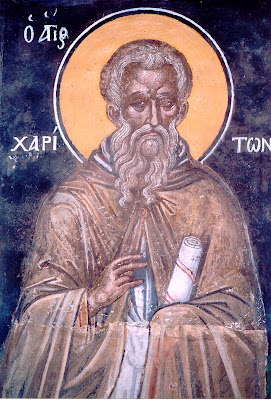
Saint Chariton was born in the city of Iconium during the reign of Aurelian, about the year 274. He was arrested, tortured, and condemned to death because of his Christian Faith, but finally set free by imperial edict. He came to Palestine, where he took up the ascetic life. He also brought many Jews and pagans to the Faith. Having dwelt in the desert of Judea for many years, and established several monasteries throughout the region, he reposed in peace.
| |  | |
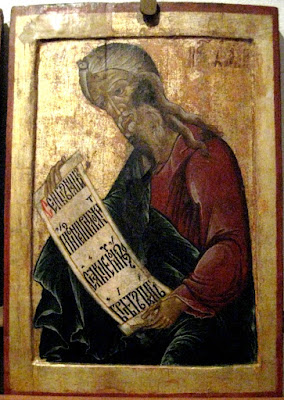
The Prophet Baruch was the son of Nerias, and the disciple of the Prophet Jeremias ( Jer. 39:12; 43:4 LXX). The extant prophetical book that he wrote is divided into five chapters; it was composed in the fifth year of the Babylonian Captivity of the Jews during the years of Sedekias, 583 B.C. The prophetic lection that is read on the eve of the Feast of Christ's Nativity, which bears Jeremias' name, is taken from the prophecy of Baruch (Bar. 3:35-4:4). His name means "blessed."
| | |
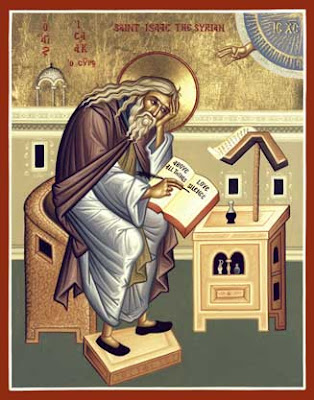
| |  | St. Isaac came from Syria, and flourished in the eighth century after the incarnation by economy. He was struck with divine eros from a young age, and abandoned the world, taking up the light yoke of the Lord with the brethren, and in the monastery he was garbed with the monastic schema, exercising there all virtue, subjugation and self-control. He withdrew from there and settled in a desert area, in extreme quietude and seized with longing, renouncing all material things, and arriving at the heights of theoria, full of intangible brightness, becoming an angel in the flesh. Whence by divine calling, he was raised to the throne of the hierarchy, and elected as the bishop and shepherd of the holy Church of Nineveh. But disheartened and vexed at the loss of beautiful quietude there, and seeing the disdain for the commandments of the Gospel, he abandoned everything and returned with joyous feet to his beloved quietude. There he completed his life, and having arrived at the possibilities of human perfection, he departed rejoicing, at a ripe old age, to his longed for Christ, receiving the compensation for his toils.
This God-seeing man, who was richly given grace from God, has been appointed a teacher of monastics, and a practical guide in Christ of the venerable and blessed life and conduct, with discourses full of divine wisdom, and a collection of holy teachings, providing the sweetness of grace, leading the monastic order towards the perfection of virtue.
| | |
Virtual Tour of our St. George
We ask all members of our Parish Family to share this virtual tour (18 minutes) which explains everything one may see inside our Cathedral of St. George.
CLICK HERE TO WATCH THE TOUR
| | |
Light a Virtual Candle
Did you know that you can light a Virtual Candle from your computer?
YOU CAN!!!
Simply click on the picture and you will be taken to our website where you can light virtual candles. There are 3 easy steps:
- Take your computer mouse over the candles on the table.
- Click on a candle to pick it up and bring it the the virtual flame.
- Light your candle and hover over the candlestand until the base is highlighted, click on your mouse and the candle will be placed in the virtual sand!
We thank the Library/Museum Committee for overseeing the setup of the online program and of course the Internet Ministries Department of the Archdiocese who is able to make this happen!
| | | AXIOS Vasili Panagopoulos | | |
Sept 14:
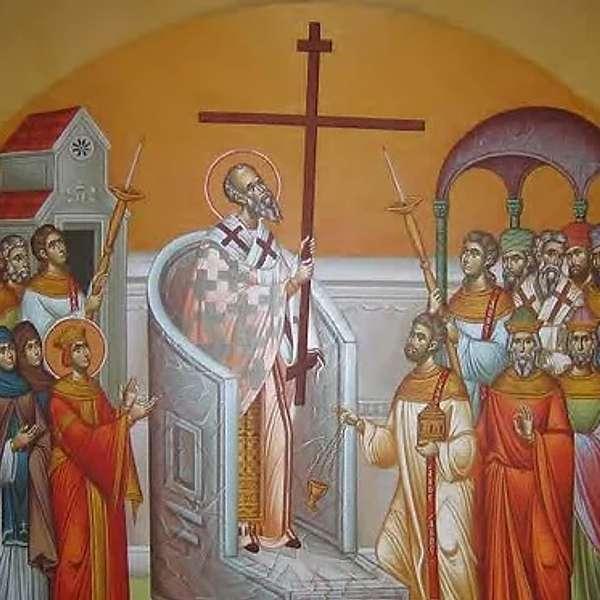
The Holy Cross is the Source Against all evil
Having again been face to face with evil and terror from the events of the assassination of Charlie Kirk and the senseless acts of violence in the world, we may feel numb, grief-stricken, horrified, in pai or full of anger.
We must remember that when evil and hatred are shown, we have the greatest power a believer has against all the powers of the evil one, that being...
The Holy Cross!
Click here to listen or download
| | |
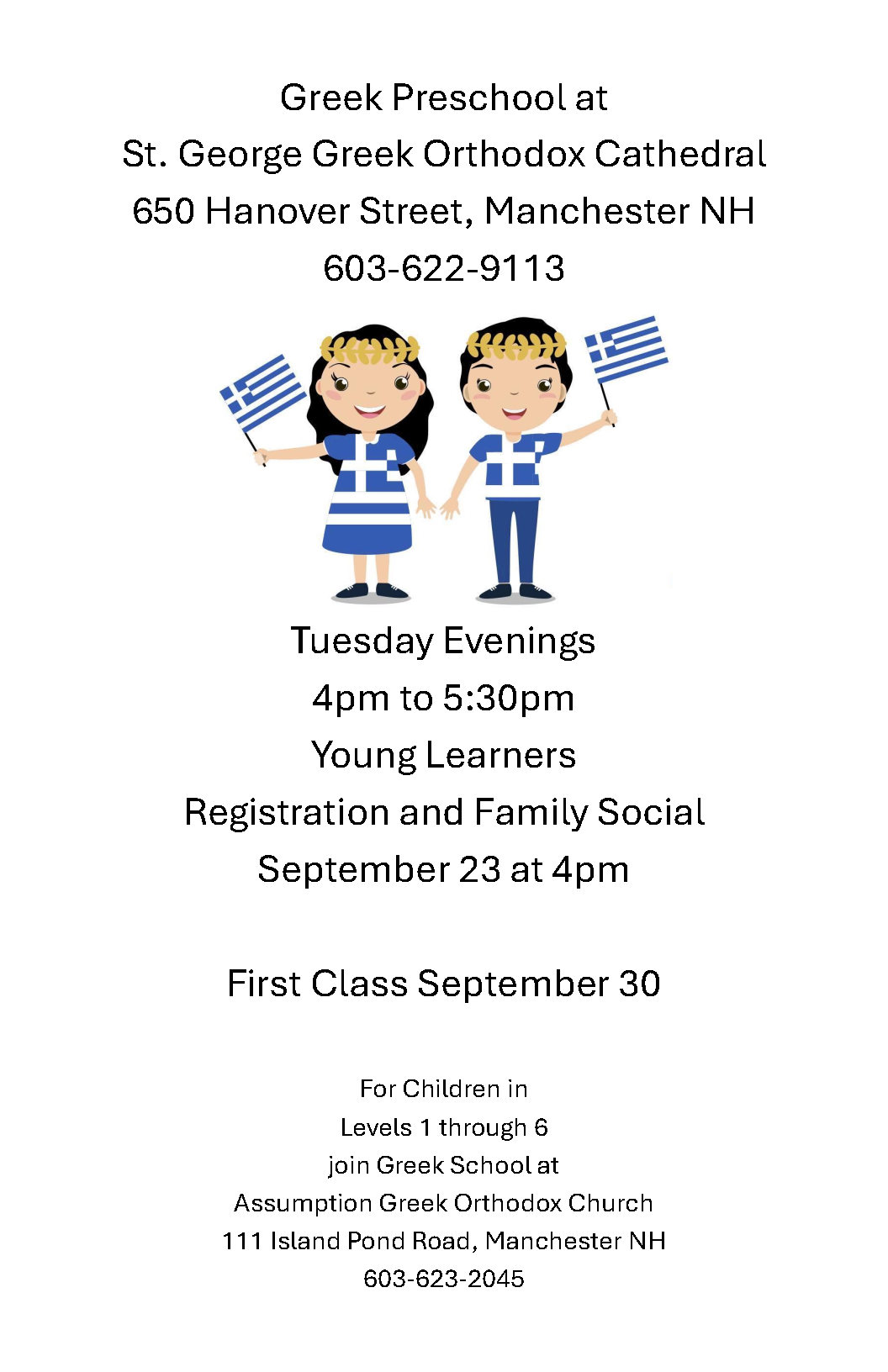
SUNDAY SCHOOL INFO
Click on the registration image to register online
| | |
Bread has been the emblem of God’s providence for us, throughout humanity’s history. Both physical (bread as food) and spiritual - the επιούσιον (epiousion) or “supersubstantial” bread of the Lord’s prayer, the bread of Holy Communion.
In the Orthodox Christian church, the pinnacle of our worship is union with Christ, both spiritually but also physically, by consuming the Body and Blood of our Lord Jesus Christ.
Since the Last Supper, before every Divine Liturgy, one or more of the faithful prepare and bring bread to church to be used as the Body of Christ in the Eucharist. The Orthodox church is liturgical. For those of us who bake prosphoro, the liturgy begins as we prepare to bake!
Prosphoro is an offering to God, made from His material gifts to us, and prepared lovingly and prayerfully.
A special website is available to share with the faithful this ‘proper’ method of preparation of the holy gift according to the Greek Orthodox tradition. Please click here to learn how to bake this beautiful offering.
| | | | |