The Centerline

The newsletter of San Carlos Flight Center


July 2026


In This Issue


SCFC News


Safety


Community


Adventure

Welcome New Members


Moira G.

Brandon S.


Member Achievements


Jessica Grayek

Private Pilot

CFI Jesse Silver


Yulin Zheng

Private Pilot

CFI Herb Patten


Michael Lauren

Private Pilot

CFI Jesse Silver


Vincent Chen

First Solo

CFI Nathaniel Green


Nico Schembri

First Solo

CFI Jesse Silver

Pop Quiz

A Fun Monthly Test of Aviation Knowledge

Theme: Night Flying


1) When can you log time as night?

a) between sunset and sunrise

b) 30 minutes prior to moon rise

c) After evening civil twilight and prior to morning civil twilight


2) When do you need to turn on the position lights?

a) between sunset and sunrise

b) 30 minutes prior to moon rise

c) After evening civil twilight and prior to morning civil twilight


3) What should you remember to do after a night flight?

a) shine a white flashlight in your eye to reacquire day vision

b) turn off or down the airplane interior lights

c) log all the hours as day unless you do only full stop landings


(answers are at the bottom)

Upcoming Events

4-Day Pacific Northwest & Canada 2026

July 16 - July 19


Real Mechanic Explanation of Airworthiness Directive (AD)

July 22 (Wed) 7pm


Women in Aviation @ SCFC July Meeting

July 25 (Sat) 11am


Full Moon Flyers and Upwind Dinner

Jul 29 (Wed) 6:30pm

Member Rates


C152

N111RK - $142/hr

N530CA - $146/hr

N65613 - $142/hr


C172R 

N2370F - $185/hr


C172S

N106RA - $195/hr

N137ME - $195/hr

N21591 - $195/hr

N236SP - $195/hr

N410BS - $195/hr

N458SP - $195/hr

N5210A - $195/hr

N54JA - $195/hr


C172S - G1000

N63251 - $210/hr

N6198N - $210/hr

N646DW - $202/hr


C182 - Analog

N9894E - $233/hr


C182 - TAA

N1483L - $278/hr

N182EE - $274/hr


T206 - G1000

N466CC - $385/hr


Piper Archer

N6848J - $195/hr

N7645F - $195/hr


Piper Dakota

N4355D - $235/hr


Simulators

GTX G1000 - $85/hr

Xwind Sim - $280/session

Contact Us 


Front Desk

(650) 946-1700


SCFC Maintenance

(650) 946-1701


Email Us 

info@sancarlosflight.com


SCFC Club Address

800 Skyway Rd

San Carlos, CA 94070   

Answers to Pop Quiz

  1. c
  2. a
  3. b
SCFC News

Welcome Back Triple One!

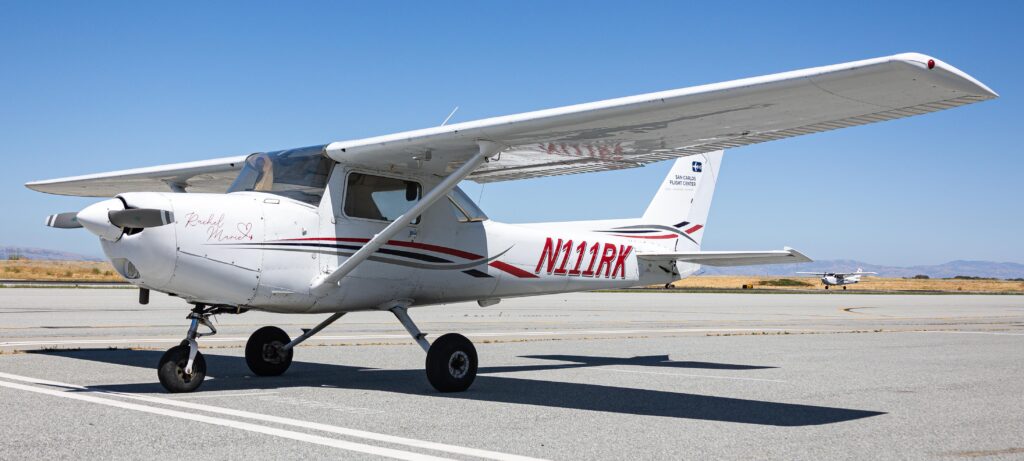
N111RK is coming back online to join the fleet of 152s. This 152 has been the mainstay of student pilots that learned to fly in the 152s. Many past Upwind students received much of their training in N111RK as well as flew it on their practical test.


Last fall it had come time to give N111RK an engine overhaul to allow it to continue to provide great service to future student pilots. The dedicated maintenance team at San Carlos was used to overhaul of the engine. This approach took a bit longer but it allowed the maintenance team to oversee each step of the overhaul process.

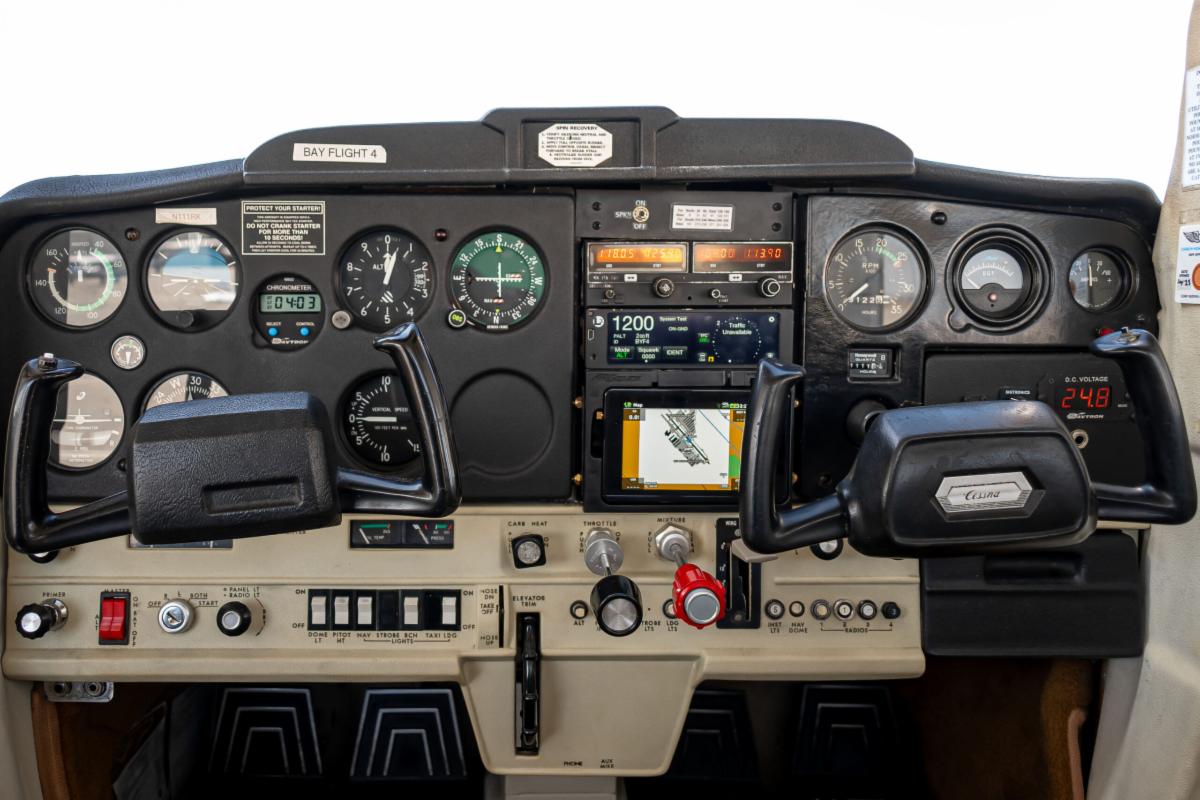
During this time, the plane also received some additional upgrades. These upgrades included new fuel gauges and fuel senders. The fuel “senders” are the components in the fuel tank that sense the quantity of fuel. The new fuel senders are more accurate and less error-prone. A new volt/ammeter was added along with upgrading the ELT to the newer model 406MHz ELT.


It will be available for members to fly shortly so now is a good time to make a reservation to get reacquainted with this gem of the fleet.

Women in Aviation @ SCFC July Meeting

Join SCFC Women in Aviation for a presentation about the demands of air ambulance flying. On Saturday, July 25th we invited Adele Dobler, a helicopter air ambulance pilot, to come and discuss how she manages the demands of flying helicopters in challenging environments.


Adele has 17 years of experience flying in some of the most demanding environments in the world. Adele has flown across Canada, Africa, and now with London’s Air Ambulance, where every shift means making clear decisions under pressure on someone’s worst day. She’s also the author of Free to Fly, a powerful memoir about fear, responsibility, and learning to build confidence through action, not waiting for it to magically appear. Any and all are welcome!


Click here to learn more and register

Safety

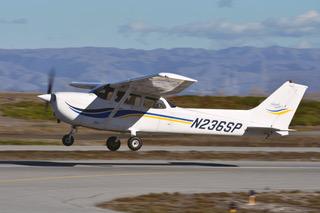
Landing Tip - Try Not to Land

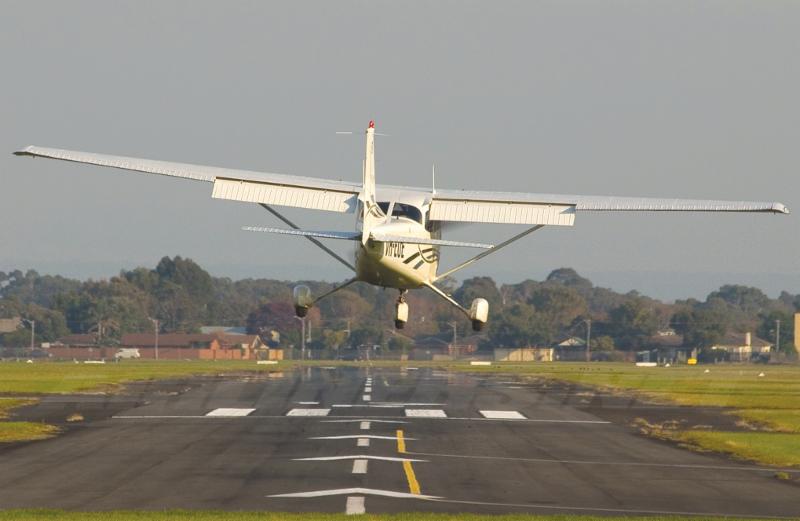
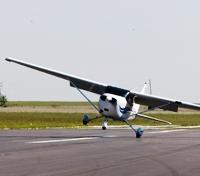
The landing flare and touchdown require all the flight controls to be actively managed by the pilot at the same time - rudders to keep the plane parallel, bank to hold the plane over the centerline, pitch to keep the nose wheel up and protected, and sometimes power to extend the flare and cushion the touchdown.


Here’s a quick way to improve your landings - Try not to land! Smoothly enter the flare, begin a smooth steady pitch up of the nose until it reaches a safe landing attitude, and use rudders and bank to maintain the airplane parallel over the centerline. Then stay there as long as you can. Try to hang there, in the perfect landing attitude, forever.

San Carlos Flight Center members who learned to fly here know there’s a difference between the pilot’s job and the airplane’s job. As pilot’s, our job is landing attitude. The plane’s job is setting down. We flare to a landing attitude, the plane decides when to land.


The pilot is responsible for putting the plane over the runway in perfect landing attitude at about 6 inches above the runway. Then, when the plane has slowed enough to lose lift it will lower itself to the runway.

Many of the landing hazards the FAA identifies in the Airplane Flying Handbook share one thing in common - a plane that still has the airspeed to fly, being forced onto the ground by an impatient pilot. Porpoising, wheelbarrowing, ground looping, and nose gear damage all result from a pilot forcing a flaying plane into contact with the ground.


Your job is to be in perfect position at 6 inches AGL. The plane will take it from there.

Slipping - A Safe Powerful Tool for Pilots

Private Pilots are required by the FAA to understand and demonstrate slipping flight. For some, that’s the extent of the intentional slipping they’ll do. We encourage you to dust off your slipping skills and renew your use of this very useful tool for pilots.


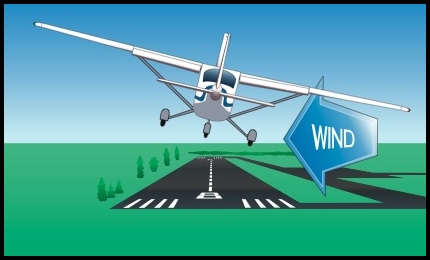
Let’s set aside the sideslip used to get parallel and over the centerline on landing. Many pilots know to do it, but the intent is wheel alignment and the only way to do that is in a sideslip. They may not even think of it as a slip, but the intent it not to create drag but to get parallel.

This article is about using slipping flight to create drag. The two intentional drag-inducing slips are forward slips used on final to keep moving forward to the runway, and turning slips used to add a bit of extra drag while continuing a turn. Both are initiated the same way, by the pilot pulling the nose to one side and adding aileron and bank to maintain the direction of flight. A forward slip can often be slipped either way. In a turning slip, outside rudder is used to pull the nose back and outside the turn.

Slips create additional drag used to descend steeply to the runway without picking up excess speed, or to shorten the final approach glide. If removing all the throttle doesn’t shorten your glide to the numbers enough, brief use of intentional slips can help. Flaps can add drag too, but be careful of the time they take to extend and what happens if you use too much flaps. On short final, once you’ve extended flaps, you shouldn’t retract them because of the associated loss of lift. In contrast, pilots can slip on, and slip off at will. 


If it’s been a while since you experienced the PIC wonder of a forward slip or turning slip, talk to an SCFC instructor. We’d be happy to remind you of how easy and powerful this tool can be.


Community

SCFC Member Profile: Joshua Gunardi

SCFC: What inspired you to start flight training?


JG: Taking a discovery flight and flying over the bay area was what inspired me to start flight training. Being able to see famous tourist attractions like the Golden Gate Bridge and Angel Island was a really unique experience and sparked my passion for aviation.

SCFC: Congratulations on receiving the Upwind Scholarship. What has been your favorite part of the program so far?


JG: My favorite part of the Upwind Scholarship is the community. Meeting other people my age who share the same interests as me and the flight center staff has made it a great experience.

SCFC: What has been the most challenging but rewarding part of flight training so far?


JG: The most challenging part so far for me is landings due to the different things you have to juggle. At the same time, landings are the most rewarding because once youŕe able to do it consistently, youĺl be able to fly as a safer pilot.

SCFC: What are you most looking forward to throughout the rest of the program?


JG: The thing I am most looking forward to is the solo cross-country flight and flying at night. The cross country is important to me because it shows that I was able to prove myself as a reliable pilot. During the night flight I'll be able to bring family along to show them how much the program has taught me as a pilot.

Adventure

Full Moon Flyers and Upwind Dinner

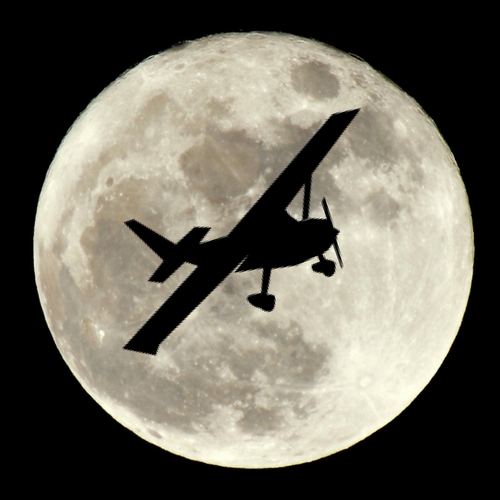
Join FOG on their most popular fly-out dinner event on Wednesday July 29th where we will fly to Santa Rosa Airport (STS) to continue our yearly tradition of celebrating the Upwind Class of 2026. We invite all pilots to showcase the fantastic General Aviation community to high-school students and their families. Please park around 6:30 PM at the Sonoma Jet Center FBO. Exit through the pedestrian gate and plan to meet up no later than 7:00 PM at Sonoma Flying Ace restaurant inside the passenger terminal. Afterward, enjoy the twilight flight home. The restaurant has asked for each table to pay as a group instead of individual checks, please plan accordingly.

Upwind students will fly with their instructors, but FOG pilots who are able to will often allow the students’ families to ride along in their aircraft. This is a great way to introduce the families to the aviation community and the incredible people behind it.

Due to the popularity of this event and the coordination of rides, please make sure to RSVP and book your plane early! Also, when you register, please let us know where you are departing from and if you are able to accept passengers. For those that are willing to take parents and family members, FOG and Upwind will be in contact with you to coordinate the logistics.


Click here to learn more and register

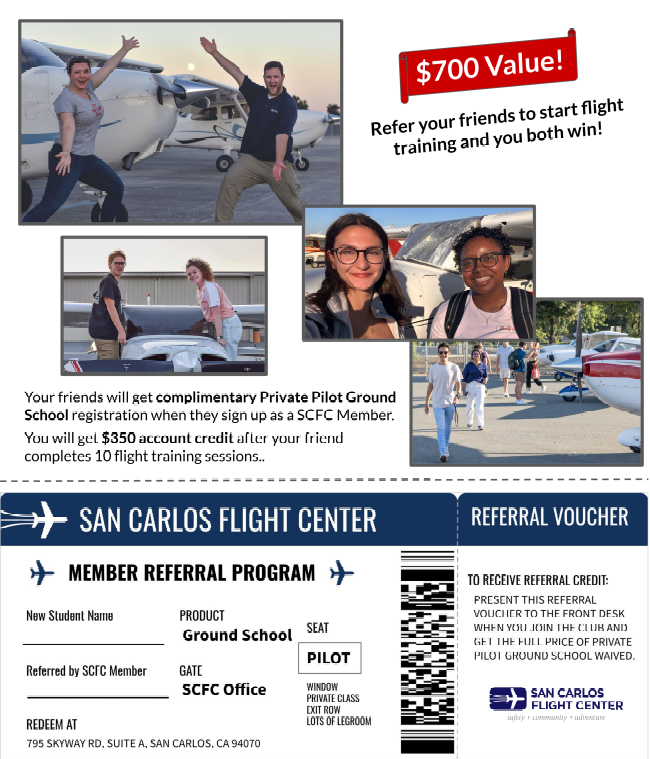
Get Your Friends Flying!


SCFC Members can now share the fun of flying with friends who might want to start training on their own.


SCFC's Member Referral Program allows you to refer your friend for membership and give them free ground school training ($350 value). After they complete 10 flight lessons, we'll credit you $350 onto your FSP account.


They can start with a Demo Flight, or if they want more information about the process, contact the San Carlos Flight Center.


Share the fun of flying and everyone wins!