|
SEPTEMBER 2024 - ISSUE 9
IN THIS ISSUE
-
NATIONAL SPINAL CORD INJURY AWARENESS MONTH: Each year, some 17,810 new cases of spinal cord injury are reported, many of them preventable.
-
TRUCK ACCIDENTS IN GEORGIA: Common causes and legal options.
-
THE ONGOING TRAGEDY OF SCHOOL SHOOTINGS HITS HOME: Can public schools be held liable for deliberate acts of violence?
-
SHODDY MECHANICAL WORK: Legal recourse when a mechanic's mistakes cause accidents and injuries.
-
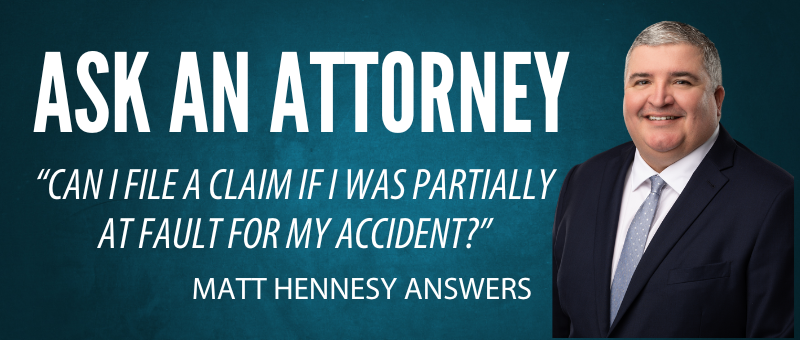
ASK AN ATTORNEY: "Can I file a claim if I was partially at fault for my accident?"
-
WHAT CLIENTS ARE SAYING: "Made me feel at ease immediately!"
-
GIVING BACK: Youth athletics builds more than healthy bodies - It builds strong communities, too.
| |
SPINAL CORD INJURY AWARENESS MONTH
Spinal cord injuries are among the most severe, often leading to lifelong disabilities. According to the National Spinal Cord Injury Statistical Center (NSCISC), some 17,810 new cases are reported each year. These injuries are not only physically debilitating but also financially and emotionally devastating for victims and their families.
| |
| | |
|
TRUCK ACCIDENTS IN GEORGIA
According to the Federal Motor Carrier Safety Administration (FMCSA), Georgia consistently ranks among the top states for fatal truck accidents. In 2022, there were over 5,000 crashes involving large trucks in our state, resulting in nearly 200 fatalities and countless injuries. Who or what is to blame and how can you get justice?
| | |
|
In accidents involving commercial vehicles, particularly large trucks, improper maintenance is one of the most critical factors in determining liability and securing fair compensation for injured victims. But what about your personal vehicle? If you're hurt in an automobile accident caused by a mechanic's faulty work, can you file claim against your mechanic? The answer is a resounding "yes!" But such a case must be handled carefully.
A mechanic can be sued for an incorrect or insufficient repair on your car under several legal theories, primarily based on negligence, breach of contract or violation of consumer protection laws. Car owners entrust mechanics with ensuring their vehicles are safe to drive, and when a mechanic fails to meet professional standards, it can lead to dangerous consequences. But legal recourse may be available.
Negligence Claims
Negligence is the most common claim in lawsuits against mechanics for improper repairs. To succeed in a negligence lawsuit, the car owner must show that the mechanic owed them a duty of care, breached that duty and as a result, caused damage or injury. Mechanics have a duty to perform repairs with the skill and care expected of a reasonably competent professional. If they fail to do so—whether by using substandard parts, performing inadequate repairs or overlooking critical issues—they may be liable.
For example, if a mechanic fails to properly fix the brakes and this oversight causes a car accident, the mechanic could be held liable for any injuries or property damage that occur as a result. In such cases, the plaintiff would need to demonstrate that the mechanic's negligence directly led to the accident, which can often be proven through expert testimony and documentation of the repair work.
Breach of Contract
Mechanics can also be sued for breach of contract if they fail to perform the repairs as agreed. When a car owner brings their vehicle in for repairs, an implied contract is formed between them and the mechanic. The mechanic agrees to perform the necessary repairs in exchange for payment. If the mechanic does not fix the car to a reasonable standard or does not perform the repairs specified in the agreement, the car owner may have grounds to sue for breach of contract.
For instance, if you paid a mechanic to replace your vehicle’s transmission, but they instead performed minor adjustments or ignored the core issue, you may sue for breach of contract. In these cases, the car owner may seek damages for the cost of additional repairs and any further damage caused by the mechanic’s inadequate work.
Violation of Consumer Protection Laws
Many states have consumer protection laws that safeguard individuals from deceptive or unfair business practices. Georgia is one of them. If a mechanic misrepresents the scope of the repair, overcharges for services or knowingly performs shoddy work, they may be in violation of these laws. In such cases, the car owner may be able to seek compensation for damages, including medical treatment of injuries, repair costs, rental car fees or the diminished value of the vehicle.
If you or your loved one was injured in an accident that you believe may be the fault of a mechanic's incorrect or insufficient repairs on your car, Farrar, Hennesy and Tanner can help. Depending on the specifics of your situation, you may be able to file a negligence claim, sue for breach of contract or take action under consumer protection laws. But quick action is critical. Contact us at 912-384-2287 or request a free case review online.
| |
|
It's a story that's becoming all too common - Kids killing kids, along with teachers and others when a troubled student gets hold of a gun and opens fire on school grounds. This time, it happened here in Georgia. Earlier this month, two students and two teachers lost their lives and nine others were injured in a shooting at Apalachee High School in Winder. The young suspect, 14-year-old Colt Gray, faces four counts of murder and life in prison if convicted. In a controversial but growing trend, Colt's father, Colin Gray, was arrested, too. He's charged with four counts of involuntary manslaughter, two counts of second-degree murder and eight counts of cruelty to children, according to the Georgia Bureau of Investigation - crimes punishable by up to 180 years in prison.
Beyond the criminal trials, public schools also can potentially be held liable for personal injury claims in a school shooting, depending upon factors, including the specifics of the case and the applicable state laws. Generally, public schools are government entities, which means they may have certain protections under "sovereign immunity" doctrines that limit or prevent lawsuits. However, there are exceptions to this rule.
Here are some scenarios where a school might be held liable:
-
Negligence: If it can be proven that the school was negligent in preventing the shooting, they could be held responsible. This might include failure to provide adequate security, ignoring warning signs of potential violence or failing to properly train staff to handle threats.
-
Foreseeability: Schools may be liable if the shooting was deemed foreseeable, and the school failed to take appropriate action to prevent it. For example, if a student had made threats or displayed violent tendencies and the school did not act, liability may arise.
-
Failure to follow safety protocols: If the school did not follow established safety protocols, such as conducting lockdown drills or addressing security vulnerabilities, they might be held responsible for not taking reasonable precautions.
-
Inadequate response: If a school’s response to an active shooter situation was inadequate (e.g., failing to follow emergency plans), it could also face liability claims.
However, each case is highly fact-specific, and defenses like government immunity often make these claims complex. Many states have laws that provide schools with some level of immunity from certain types of lawsuits, though this is not absolute..
If your child or loved one is injured or lost to another's deliberate act on a public or private property that lacked reasonable and adequate protection, Hennesy and Tanner can help. For compassionate and experienced legal support, contact us at 912-384-2287 or schedule a free case review online.
Our hearts break for the victims, their families and the Winder community as we pray for comfort, healing, safety and justice.
| |
|
Yes, you can file a claim even if you were partially at fault for your accident, but your ability to recover damages and the amount recoverable may be affected. Georgia follows a modified comparative negligence rule, which allows you to recover damages as long as you were less than 50 percent at fault for the accident. If you are found to be 50 percent or more at fault, you cannot recover any damages. If you are partially at fault but less than 50 percent, your compensation will be reduced by your percentage of fault.
For example, if you were found to be 20 percent at fault for an accident and your total damages amount to $100,000, your compensation would be reduced by 20 percent, meaning you would receive $80,000. This rule is designed to allocate damages based on each party’s level of responsibility for the accident.
Determining fault in an accident can be complex and you can bet that insurance companies will try to assign a higher percentage of fault to the injured party in an attempt to reduce their liability. That's is why it’s crucial to gather as much evidence as possible and as quickly as possible to support your case. This can include photos of the accident scene, witness statements and any available video footage. Does your vehicle have a dashcam? It could help bolster your case. In more complex cases, accident reconstruction experts may be needed to establish how the accident occurred and who was at fault.
If you believe you may be partially at fault for an accident, it’s essential to consult with an attorney who can help you navigate the claims process. An experienced attorney can advocate on your behalf, ensuring that fault is fairly assessed and that you receive the compensation you deserve, even if you share some of the blame for the accident. Call us at 912-384-2287 or visit our website to schedule a free case review.
| |
|
“Ms. Debi and Kirk are the best. They make you feel comfortable immediately and you have nothing to worry about because they will take care of everything for you. I was terrified when I first called but they made me feel at ease immediately. I will ALWAYS recommend them to everyone I know.
-Nicole K.
"Best people around for [legal] advice or counsel!"
-Malinda C.
"Thanks, Fararr, Hennesy and Tanner, for all you did for me and my family."
-Martin J.T.
| |
|
GIVING BACK
COFFEE COUNTY ATHLETICS BOOSTERS
| |
Athletic participation, whether on a team or in individual sports, offers significant benefits for kids and teens beyond just physical health. Studies show that students involved in sports tend to have higher GPAs and better school attendance rates. Regular physical activity can improve memory and concentration, leading to better academic performance. Participation in sports also helps reduce risky behaviors, with student-athletes being less likely to engage in drug use or criminal activity. Plus, sports involvement fosters important life skills like teamwork, leadership and discipline. It's about much more than a healthy body. It's also a strong foundation for success in school and life. That's why Farrar, Hennesy and Tanner are proud supporters of Coffee County's athletic boosters. Click here get involved. | |
|
|
|
- Graduate, Kennesaw State College, Bachelor's in Finance, 1991
- Graduate, John Marshall Law School, 1997, Juris Doctorate
- Member, Georgia Trial Lawyers' Association
- Member, Workers' Compensation Section of State Bar of Georgia
- Member, Executive Committee of Workers' Compensation Claimants' Lawyers
- Elected to serve as board member for the Ware County District for the State Bar of Georgia (2008-present)
- Board Member, Loan Committee Member, Technology Committee Member, Risk Management Committee Member for First National Bank of Coffee County (2005-present)
- Member, GracePointe Church
| | | |
|
|
- Graduate, University of Georgia, School of Public and International Affairs, 2000, Bachelor's in Political Science
- Graduate, John Marshall Law School, 2004, Juris Doctorate
- Nominated to serve on the Moot Court Honors Board during his final year of law school
- Member, State Bar of Georgia
- Member and Past President, Douglas Bar Association
- Member, Georgia Trial Lawyers Association
- Member, Coffee County Chamber of Commerce Young Professionals Network
- Member, First Presbyterian Church of Douglas, Georgia
| | | |
|
|
- Graduate, U.S. Naval Academy, 1986
- U.S. Naval Aviator, 1986-1994
- Graduate, University of Georgia School of Law, 1997 Juris Doctorate
- Board Member, General Practice and Trial Section
- Member, Workers' Compensation Section of the State Bar of Georgia
- Member, Georgia Trial Lawyers' Association
- Member, Workers' Compensation Claimants' Lawyers Association
- Past President, Douglas Bar Association
- Member, Saint Andrew's Anglican Church
- Volunteer coach for children's football, baseball and wrestling
| | | | | | |