|
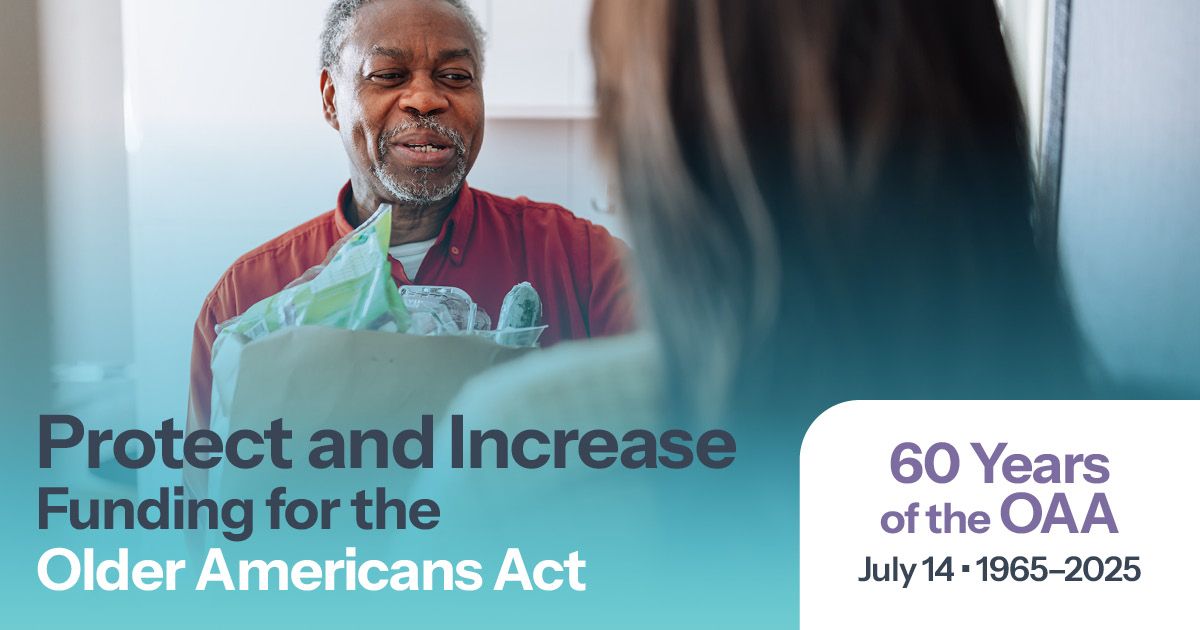
On Monday, July 14, we joined our national partners at the National Association of Nutrition and Aging Services Programs (NANASP), Meals on Wheels America and USAging in celebrating the 60th anniversary of the Older Americans Act (OAA) — a landmark law that has connected us to vital services that help us age with health and dignity in our own homes and communities for six decades.
As a federally designated Area Agency on Aging, Elder Services of Cape Cod and the Islands enables the local delivery of those vital services. The Older Americans Act was signed into law in 1965 with the goal of providing older adults with home and community-based social services to support independent living as long as possible. Unlike Medicaid, the Older Americans Act does not have explicit income criteria used to determine who can qualify to receive services funded under the Act. Instead, the law aims to support people age 60 and better with the greatest economic or social need, including older adults with limited English proficiency and older individuals at risk for institutional placement.
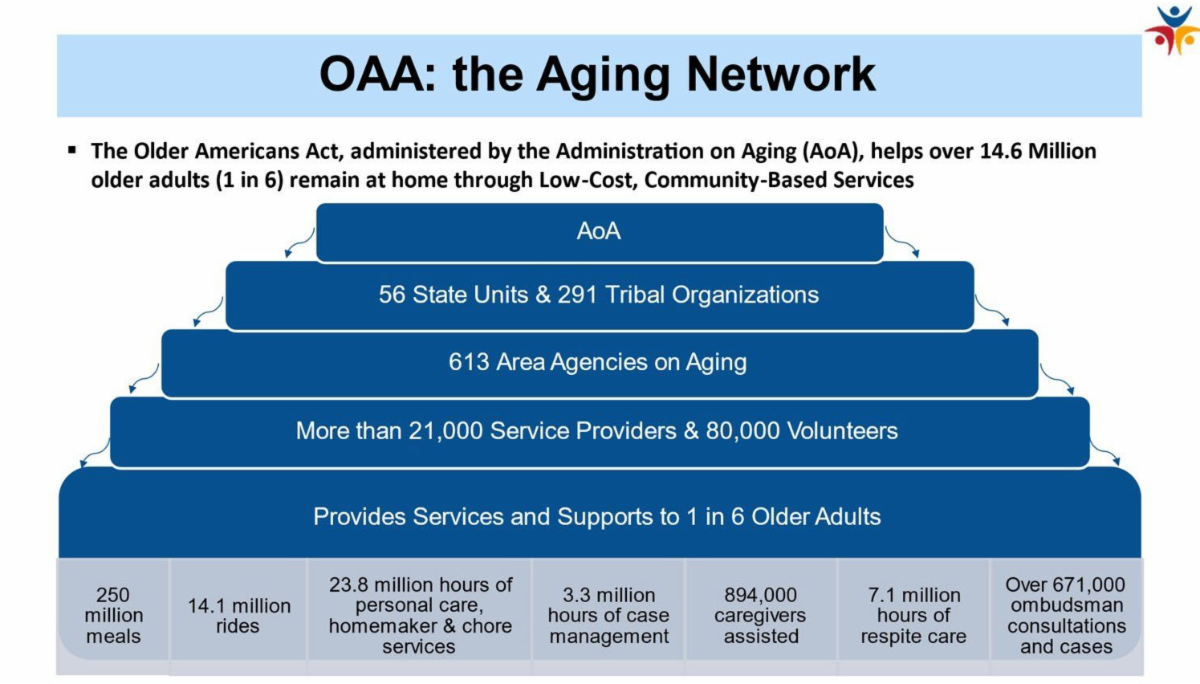
The OAA established a foundation for delivering comprehensive services to older adults through a nationwide aging network. To this day, it continues to fund critical programs administered by the U.S. Department of Health and Human Services (HHS) with grants to the states which are then distributed to community-based organizations, like Elder Services, and municipal agencies for the actual delivery of services and programming.
The scope of Older Americans Act programs has been expanded over time and now includes home-delivered and congregate nutrition services, transportation services, state Long-Term Care Ombudsman programs, elder abuse prevention, caregiver support, elder rights and legal assistance, employment training, chronic disease prevention, and several other activities. As an Area Agency on Aging, ESCCI contracts with the Massachusetts Executive Office of Aging & Independence (AGE) to deliver these federally funded programs.
“The OAA has met all the criteria of a successful law, proving its value through cost savings, and appreciation by the millions of older Americans it serves daily. It has been a great return on investment, saving the federal government untold billions of dollars in Medicare and Medicaid hospital and long-term care costs by preventing costly admissions and providing lower-cost community and home-based services,” writes Elder Services' board member Bob Blancato in Aging in America News. “This should have been a year of celebration, marking 60 years of success, but instead, it is a moment of consternation. It began with the OAA in limbo. Congress failed to renew the law before it expired in September 2024, and even though the Senate passed a bipartisan extension, the House failed to act.”
New efforts toward re-authorization are now underway. In late June, Senators Cassidy (R-LA and Sanders (I-VT) introduced the Older Americans Act Re-authorization Act of 2025, which closely mirrors the legislation left unfinished at the end of last year. If passed, it will extend authorization through 2029 with an 18$ increase in funding authorization over the four years.
You can track this legislation as it makes its way through Congress here. We encourage you to let your elected representatives know that you support re-authorization and, if you can, let them know how the programs and services funded under the OAA have impacted your life.
|