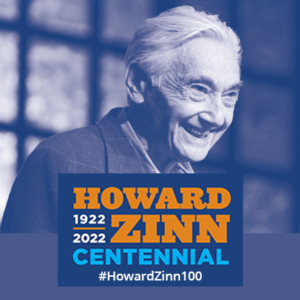
Highlights from
Howard Zinn at 100 Events
SENT BY TEACHING FOR CHANGE ON BEHALF OF THE HOWARD ZINN TRUST
|
|
“Once I push back my tears, I will continue to be inspired not just by Howard Zinn, but by the infinite web of hope we all continue to share. Thanks to all those whose work makes moments like tonight possible.
I can breathe deeply again.”
“OMG! The breadth of his work, the beauty of his words, the phenomenal capacity of his humanity. And a truly amazing roster of speakers and guests.”
“You filled my soul this evening.”
Participant comments on the power of the "You Can't Be Neutral on a Moving Train" event
|
|
Hundreds of people joined us online during the week of the 100th anniversary of Howard Zinn’s birth (Aug. 24, 1922) for three memorable events: a celebration with noted artists and historians who shared stories about Zinn’s life and legacy; a workshop on teaching about the Red Scare in light of today’s attacks on teaching people’s history; and a forum on “radicalizing the archives” to ensure that people’s history is archived and made accessible.
We are pleased to share a few highlights and recent news. All videos, transcripts, and related resources are also available online.
|
|
Celebration With Historians and Artists
On Howard Zinn’s actual 100th birthday, we held a celebration with noted speakers: Martín Espada, Kidada E. Williams, Myla Kabat-Zinn, Imani Perry, Alice Walker, Lauren Cooper, Bill Bigelow, and Anthony Arnove. Sports historian Dave Zirin and Teaching for Black Lives co-editor Jesse Hagopian were the MC’s.
|
|
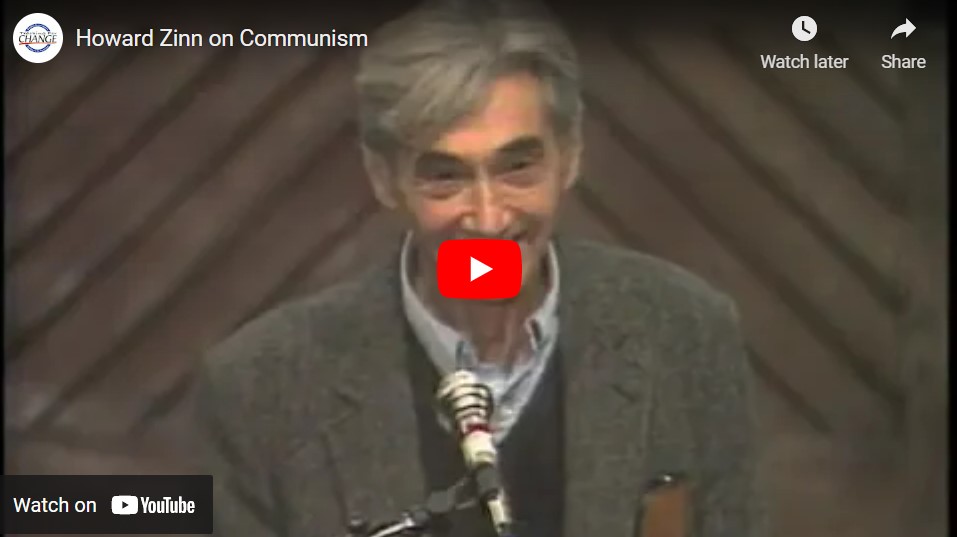
The program was interspersed with clips of Howard Zinn speaking, including the example below of his skillful use of comedy to expose the absurdity of unjust practices and policies. |
|
The event's theme was based on Zinn’s autobiography, You Can’t Be Neutral on a Moving Train, and was co-sponsored by the Howard Zinn Trust, Tamiment Library at New York University, and Busboys and Poets.
|
|
Teaching About the Red Scare Workshop
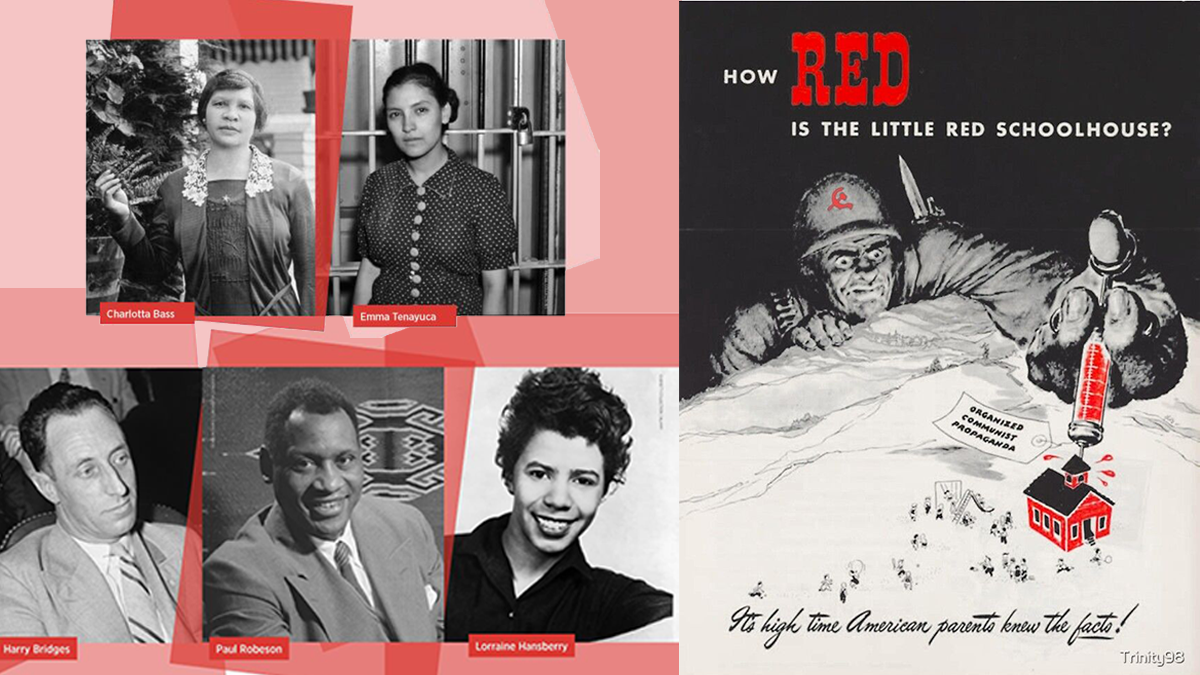
Teachers from around the country joined us for a workshop on the Red Scare. This session began with a critical examination of a U.S. history textbook as an example of the misinformation students receive from the standard curriculum and the narrative that the anti-CRT bills are designed to enforce.
Teachers were then introduced to a mixer lesson about McCarthyism, facilitated by Ursula Wolfe-Rocca and Cierra Kaler-Jones of the Zinn Education Project, and introduced to primary documents by Michael Koncewicz of Tamiment Library.
|
|
Radicalizing the Archives Panel
Panelists shared examples of community-based archives and some of the difficulties to archiving the history traditionally marginalized by institutions. In breakout rooms, participants comprised of historians, archivists, librarians, educators, authors, documentarians, and activists discussed opportunities and challenges they experience in their research and work.
Participants’ comments highlight some of the points made, including:
“I learned that archives are not apolitical and that archives
are intentionally curated. More specifically, archives and
archivists have the power to either prove and preserve the
existence of certain individuals, groups, communities, ideas,
etc., or participate in the silencing and erasure of said
individuals, groups, communities, ideas.”
|
|
2022 Howard Zinn Memorial Lecture Series
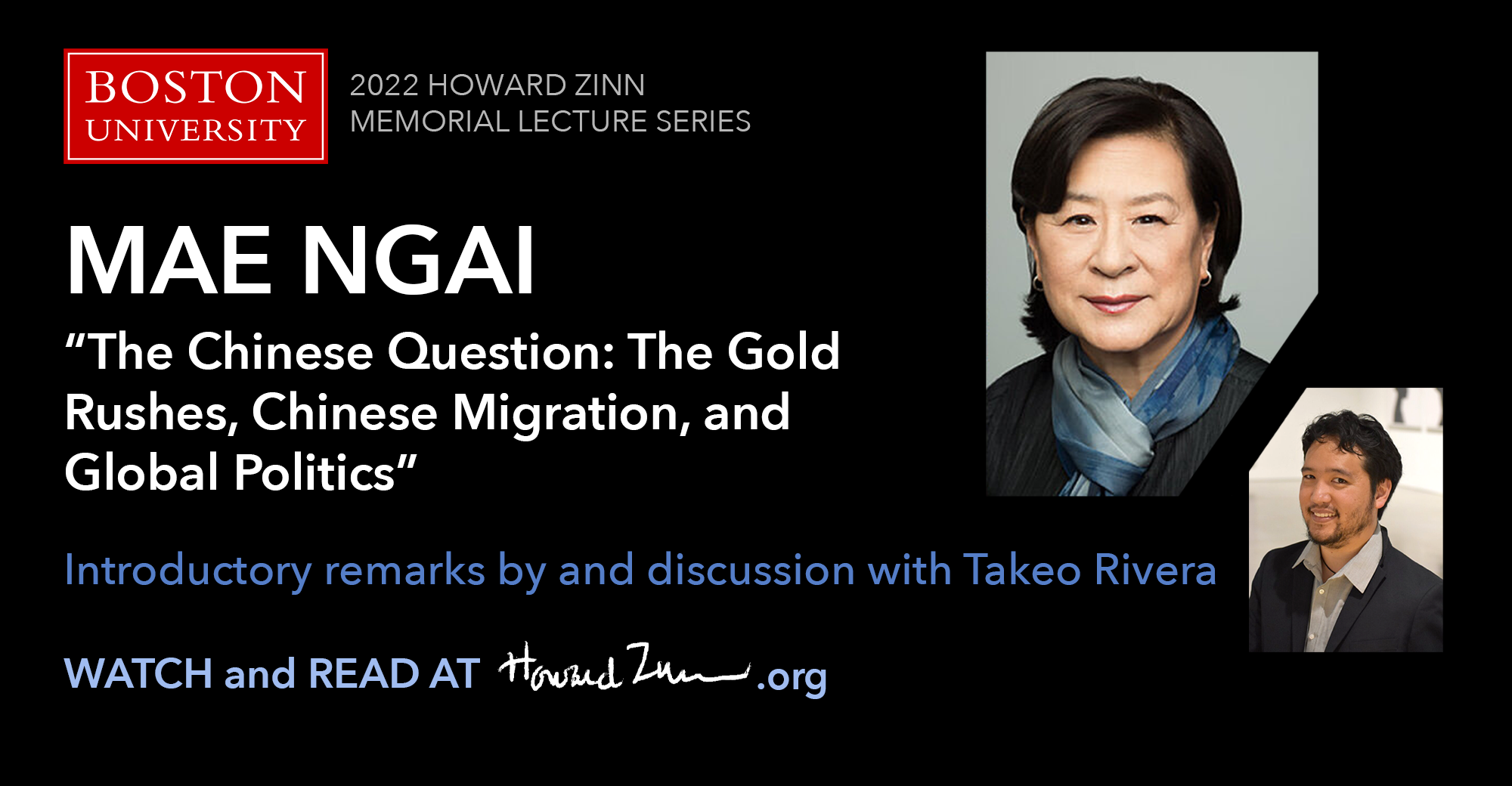
On Sept. 29, Dr. Mae Ngai was the featured speaker of the 2022 Howard Zinn Lecture Series at Boston University. The event was phenomenal, from the introduction by Dr. Takeo Rivera to Dr. Ngai’s talk titled “The Chinese Question: The Gold Rushes, Chinese Migration, and Global Politics,” to the joint conversation. The recording and transcript are published with permission.
|
|
In Memory, SNCC Veteran Charles Sherrod |
|
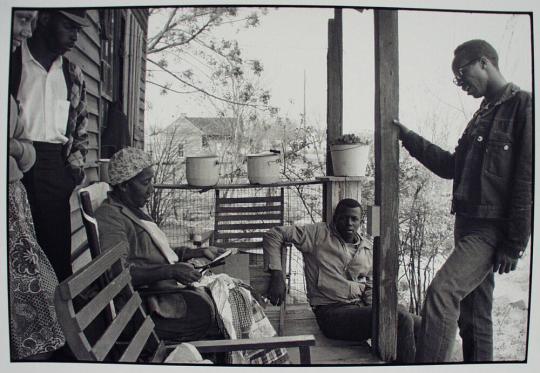
IMAGE: SNCC Field Secretary Charles Sherrod (standing on right) and Randy Battle (sitting) visit a supporter in the countryside. Image: Danny Lyon via The Museum of Fine Arts Houston. |
|
|
|
“If history is to be creative, to anticipate a possible future without denying the past, it should, I believe, emphasize new possibilities by disclosing those hidden episodes of the past when, even if in brief flashes, people showed their ability to resist, to join together, and occasionally to win.”
|
|
|
|
|
|
|