|
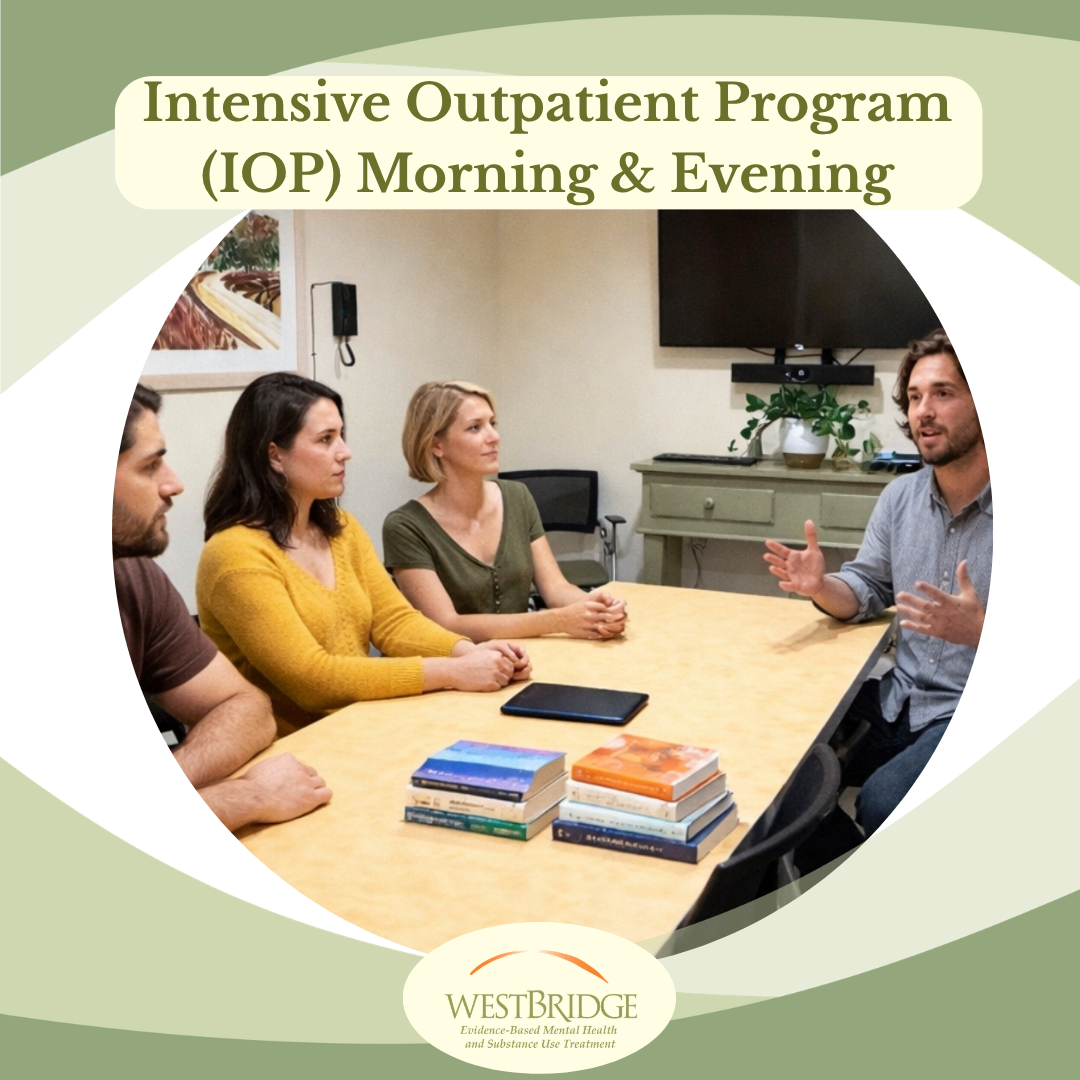
WestBridge is now offering an evening
Intensive Outpatient Program (IOP) in addition to our current morning track!
Both tracks are hybrid where individuals can join in person or virtually (must be physically located in NH to join virtually).
| | |
Why AI and Chatbots
Are Not a Substitute for Therapy
| | |
At the end of March, the New York Times published Your Chatbot Isn't a Therapist, by Divya Saini and Natasha Bailen. Dr. Saini is a psychiatrist, and Dr. Bailen is a psychologist at Massachusetts General Hospital.
The Times article explores the fact that while AI chatbots can feel supportive, they are not therapists and may actually reinforce unhealthy thought patterns rather than challenging them. The authors, who are clinicians themselves, warn that chatbots often provide excessive validation and can unintentionally increase anxiety, intrusive thoughts, delusions, or other distorted beliefs because they tend to mirror the user’s perspective. The authors encourage people to use AI cautiously, recognize when conversations become repetitive emotional loops, and continue to rely on human relationships and qualified mental health professionals for genuine support and treatment.
People are using AI platforms and chatbots with ever-increasing frequency, asking them for advice, for feedback, and becoming emotionally attached to them. As people begin to view AI as a friend, a confidant, or an authority figure, the risk of getting feedback and advice that is inaccurate or lacks good judgment increases. Read more about this topic on our blog.
| | Some Tips if You DO use a Chatbot | | |
How to use it better:
Treat AI as a thinking partner, not an authority. Use it for journaling prompts, organizing thoughts, brainstorming, learning coping strategies, prepping questions for a therapist, or rehearsing hard conversations.
Instead of asking "What should I do?" Try "What are several possible approaches, with pros and cons?" It builds your own judgment instead of dependence.
AI can help you think, question, and explore, but it doesn't truly know you, doesn't care the way a person does, and can't replace professional care or real relationships. Use it as a tool, and keep trusting people and professionals with what matters most.
| | Staff Spotlight - Michael Lambert, MS, LCMHC WestBridge Clinical Manager | | |
Michael Lambert is a Licensed Clinical Mental Health Counselor (LCMHC) and the Clinical Manager of the Community Integration Program at WestBridge. He received his Master’s in Clinical Mental Health Counseling degree from New England College after obtaining a dual bachelors in Criminal Justice and Psychology from Husson University. Michael has over 10 years’ experience in the field and has spent a majority of his professional career working in the Assertive Community Treatment population, specializing in intensive services for individuals with severe and persistent mental illnesses such as schizophrenia, schizoaffective disorder and bipolar disorder.
Michael’s clinical approach makes use of multiple intervention styles, including CBT, DBT, Motivational Interviewing and mindfulness approaches. Michael values the role of family in the course of treatment providing coaching and psychoeducation support to families as well as staff that are working with families through his role as the agencies trainer in Family Education and Support. In addition Michael serves as the Chair of WestBridge’s Training and Education Committee and primary trainer in Non-Violent Crisis Prevention, Suicide Prevention and Dementia Care Considerations.
| | Chef Bradley’s Seared Halloumi Salad | | |
Recipe courtesy of WestBridge's Chef: Bradley Labarre, CEC, CCA, AAC
Ingredients:
- 2 Tbsp. chopped fresh dill
- 2 Tbsp. chopped fresh mint
- 2 Tbsp. fresh lemon juice
- 1/4 c. plus 2 tbsp. extra-virgin olive oil, divided
- Kosher salt
- Freshly ground black pepper
- 1 small bulb fennel, fronds removed, cored, and thinly sliced
- 1 c. canned chickpeas, drained, and rinsed
- 1 oz. green olives, pitted, coarsely chopped
- 8 oz. Halloumi, cut into 1/4" slices
- 1 whole-grain pita, torn into bite size pieces
- 2 c. loosely packed arugula
- 1 medium navel orange, peeled, and cut into segments
- 1/2 avocado, sliced
- Pinch of crushed red pepper flakes
Method:
- In a large bowl, whisk dill, mint, lemon juice, and ¼ cup of the olive oil; season with salt and black pepper.
- Add fennel, chickpeas, and olives and toss to combine.
- In a large skillet over medium heat, heat 1 tbsp. oil.
- Add Halloumi and cook, turning occasionally, until charred and golden on both sides, 4 to 6 minutes.
- Transfer to a large plate lined with a paper towel.
- In the same skillet over medium heat, heat remaining 1 tbsp. olive oil. Add pita and toast, turning halfway through, until golden and crisp, about 4 minutes.
- Transfer to a plate with Halloumi.
- Add arugula, orange, avocado, Halloumi, and pita to bowl with fennel mixture and toss to combine; season with salt, black pepper, and crushed red pepper flake.
Printable Recipe
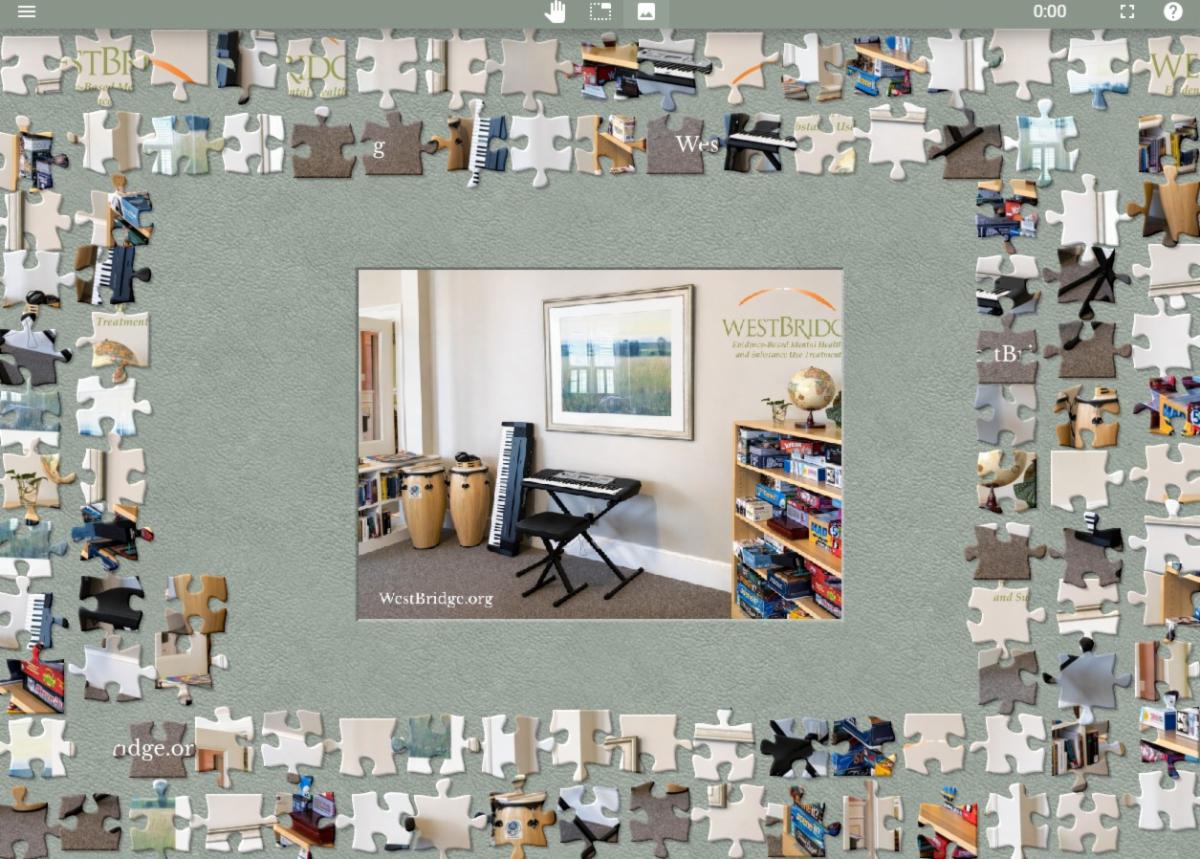
| | This Month's WestBridge Puzzle | | This month's puzzle was created from one of our own photos of the WestBridge Common's living room. Take a short break, reset your focus, and enjoy a few minutes of low-pressure problem-solving before jumping back into your day. | | |
Direct admissions are available in all programs.
Levels of care include:
Residential treatment at WestBridge provides a structured, 24/7 supportive environment for adults who need more stability than outpatient care can offer. At The Commons, a 12-bed, home-like setting, participants receive individualized care for mental health challenges, with or without co-occurring substance use. With consistent clinical support and a therapeutic community model, individuals can step away from daily pressures and focus fully on recovery, building the foundation for long-term stability.
WestBridge’s Partial Hospitalization Program (PHP) provides structured, intensive mental health and substance use treatment in a supportive outpatient setting, five hours per day, five days per week for 4 – 6 weeks. Designed for individuals experiencing moderate to severe psychiatric symptoms, emotional distress or substance use disorders that interfere with daily functioning, and who require a higher level of care than traditional outpatient therapy but do not need 24-hour inpatient hospitalization. As such, PHP can serve as a step-down from inpatient care or a step-up from lower levels of outpatient support.
WestBridge offers two Intensive Outpatient Programs, a morning IOP and an evening IOP. Individuals are able to attend programming in-person or virtually via Zoom.
For more information: Call our admissions team at 1-877-461-7711, email inquiry@westbridge.org or connect with us at https://www.westbridge.org/admissions/.
| | |
WestBridge started our Building Bridges Newsletter last September,
if you would to catch up with past issues, please click here.
If you have a friend or loved one who you think might be interested
in this newsletter, please pass along our
email signup link for the newsletter.
| | | | |