Wednesday Weblog for October 29, 2025 | | “Halloween is right around the corner. You can tell because all the stores are decked out for Christmas.” -Stephen Colbert | | Leading Off: Start Noticing Again | | |
This is the second to last time of the year where we say 'Can you believe it is ____' already? We do this at the end of school or the start of summer, Labor Day, Halloween, and Thanksgiving.
We don't do it at Christmas because we know the year is almost over and ads about the holiday have been running for months to prepare us.
When I was a kid, a single summer seemed endless. Days stretched out like wide open roads, full of firsts — first bike rides, first baseball games. Everything was new, so everything felt big.
Now, I blink and another year has gone by. Christmas decorations come down, and before I know it, they’re back up again. The question that sneaks up on all of us eventually is: Why does time seem to move faster the older we get?
It turns out, there’s a real answer. When you’re five years old, one year is twenty percent of your life. When you’re fifty, it’s only two percent.
| | |
Each year becomes a smaller slice of the pie. That’s part of it. But it’s not just math — it’s memory.
When you are younger, your brain is busy — noticing, recording, sorting, learning, storing. You remember those years in high definition because everything was unfamiliar. As we age, routines take over. The brain stops needing to “record” every detail, because we’ve seen it all before. Fewer new memories mean fewer markers in time, and when we look back, the years seem to blur together.
But time can slow down again when we do something new. When we travel somewhere unfamiliar, start a hobby, take a risk, meet new people — our brains start paying attention again. We feel life instead of coasting through it.
Maybe the trick to stretching time isn’t trying to hold onto it, but to fill it with moments that make us look twice. The calendar will keep turning either way, but how full those days feel is up to us.
The secret isn’t that time speeds up — it’s that we slow down. So the cure is simple: start noticing again.
| | When Halloween Became More Than Candy | | |
Before we had our son, Halloween was just another day to us. When we lived in apartment buildings, only the kids down the hall would knock on the door that night. When we finally had a house, our son was a couple of years old and Halloween was the time when Mom dressed him up in something cute.
But once he was old enough to grasp the concept, for several years Halloween was a bigger holiday that Christmas. I think the decorations, the visitors, the pumpkin stuff everywhere: it was a major, major event in the calendar.
We’ve since morphed to that old couple who shuts OFF the porch light on October 31st so kids in the neighborhood WON’T stop by.
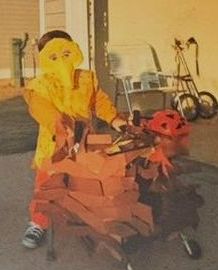
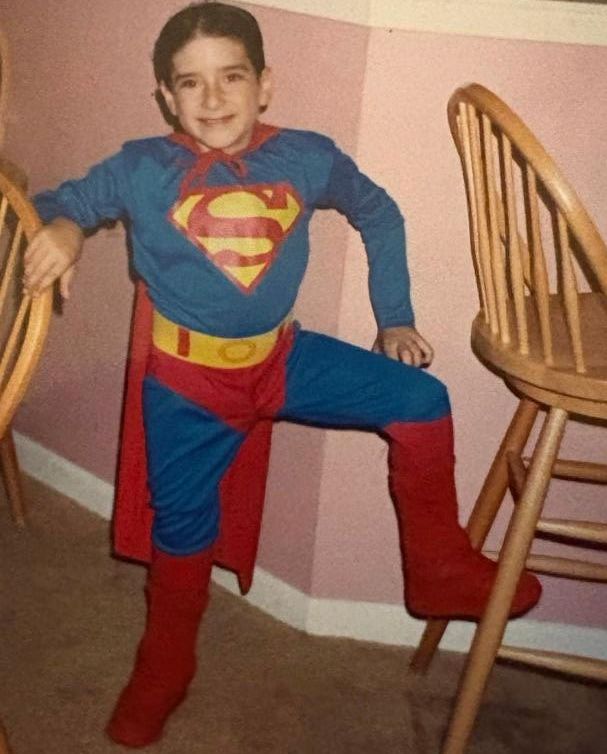
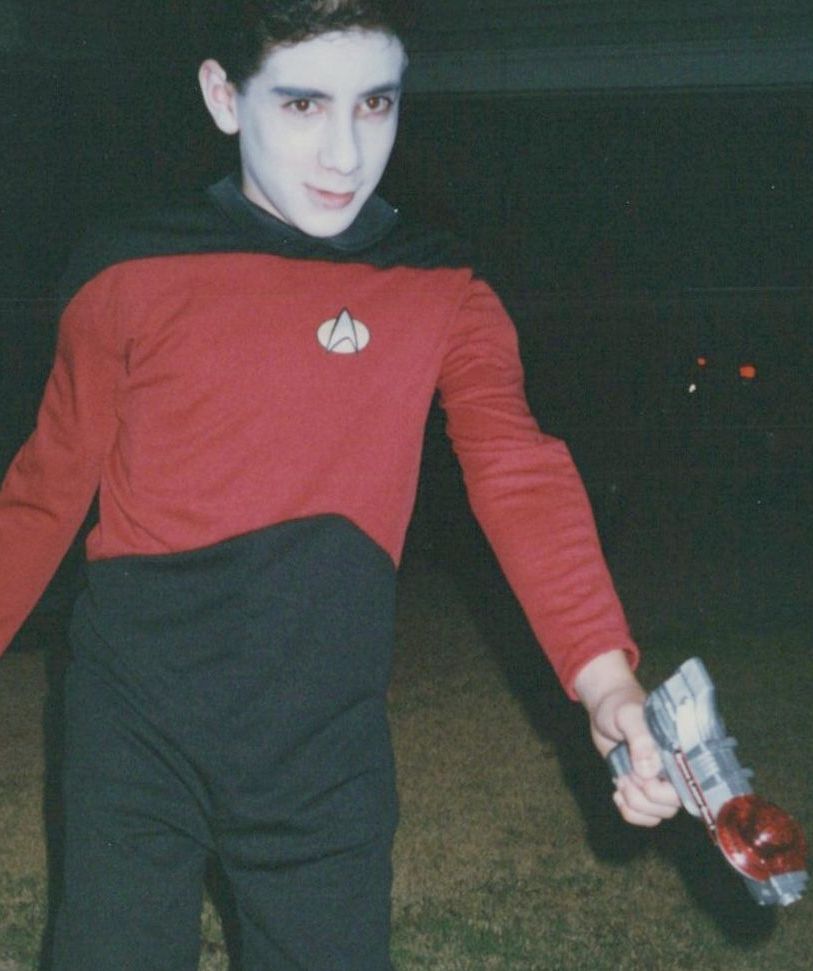
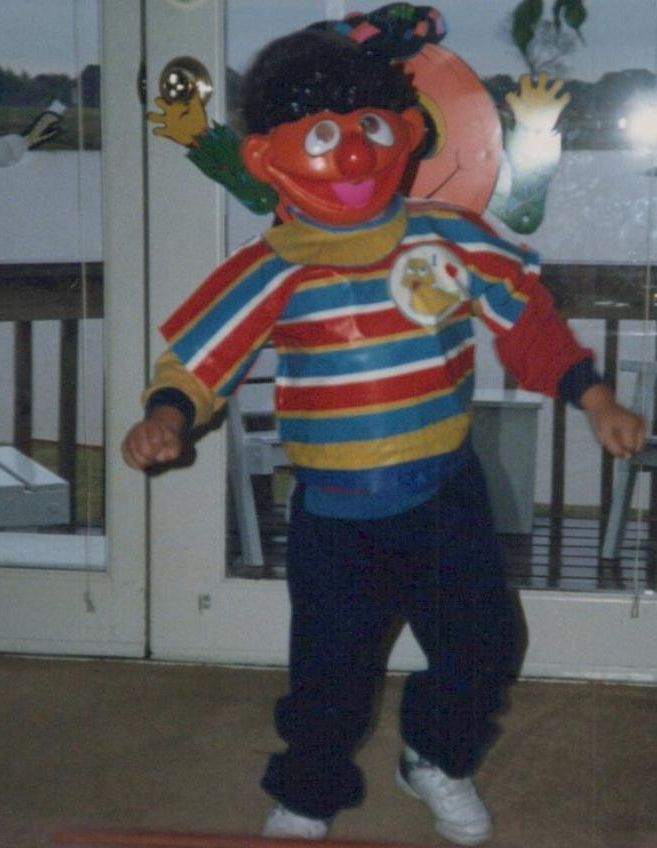
In between the time when our son was a kid, and when he became an adult, he never lost the attachment to the holiday. He almost always had some type of costume.
| | |
This is a story about creativity, adaptability, and includes Big Bird, a penalty box, and a drum set, among other things.
But first, as I am prone to do, let’s set the backdrop for this holiday and perhaps provide some nuggets of information you can use to impress your friends and family.
You may be surprised to see a shamrock as the first symbol in this brief history, instead of a pumpkin, but the roots of Halloween are in Ireland. Here’s the reason:
| | |
Behind the modern swirl of pumpkins, candy, and spooky decorations lies a story that reaches back more than 2,000 years, to an ancient Celtic festival known as Samhain (pronounced “sow-in”).
For the Celts of Ireland, Scotland, and parts of northern France, Samhain marked the end of the harvest season and the beginning of winter, a time associated with darkness, uncertainty, and the thinning of the veil between the worlds of the living and the dead.
They believed that on the night of October 31, spirits could return to roam the earth. To protect themselves, people built large bonfires, wore costumes and masks made from animal hides, and left offerings of food to appease wandering souls.
As Christianity spread across Europe, Church leaders sought to replace pagan festivals with Christian observances. In the 8th century, Pope Gregory III designated November 1 as All Saints’ Day, or All Hallows’ Day, to honor saints and martyrs. The night before became known as All Hallows’ Eve, which, over time, shortened into Halloween.
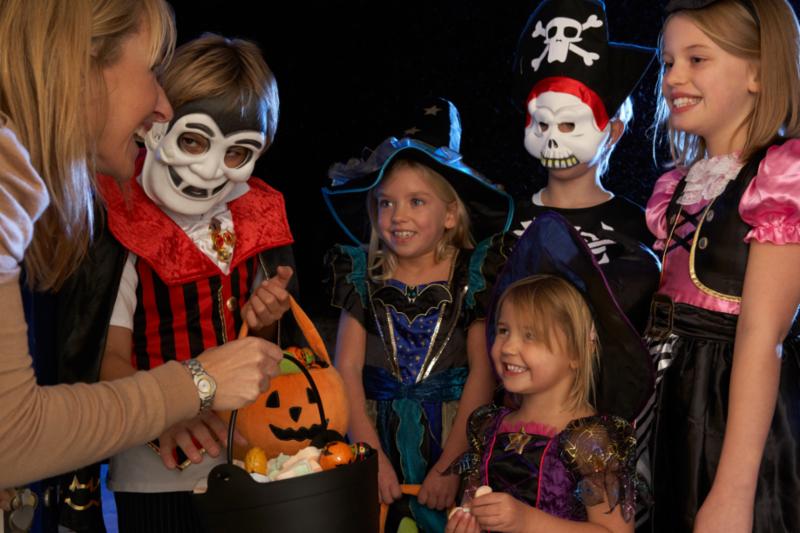
Immigrants from Ireland and Scotland brought these customs to America in the 1800s, where the traditions blended with regional folklore and Native American harvest celebrations. Pumpkins — native to North America — replaced turnips for carving “jack-o’-lanterns.” Communities began hosting autumn gatherings, hayrides, and costume parties, while children went door to door for treats, evolving into today’s “trick-or-treat” tradition.
By the 20th century, Halloween had transformed from a night of superstition into one of fun and imagination. Movie monsters, superheroes, and pop culture icons joined ghosts and goblins in the costume lineup. Neighborhoods became stages for creativity, laughter, and belonging — a uniquely American celebration that soon spread around the world.
| | |
When my siblings and I were kids, my mom took our candy hoard, gave us a couple of pieces, and more or less hid the rest and metered the candy out day by day. Of course in those days, we got full candy bars instead of chocolate nuggets and other small things.
Most years, we used a pillowcase to collect, instead of a little plastic pumpkin.
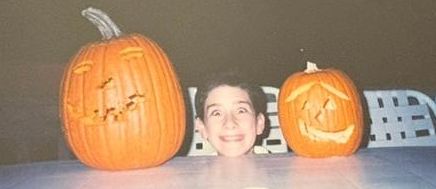
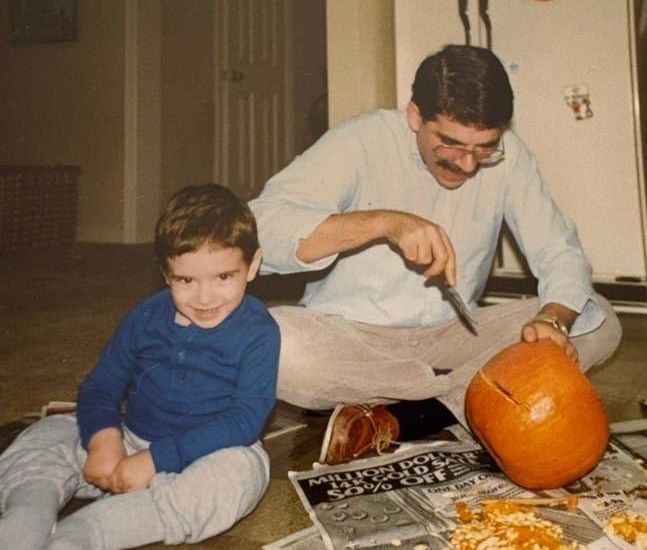
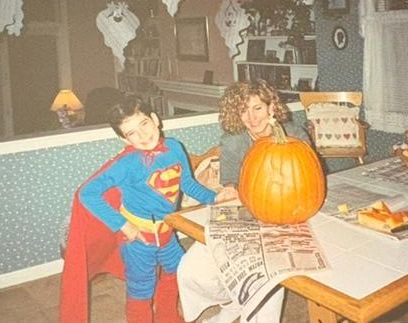
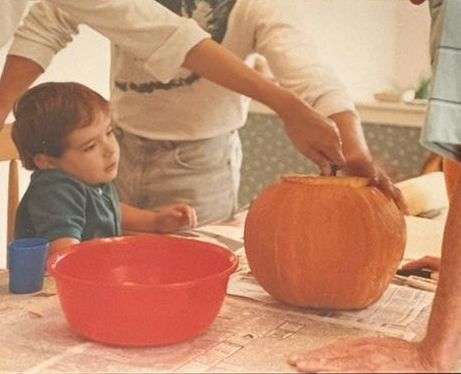
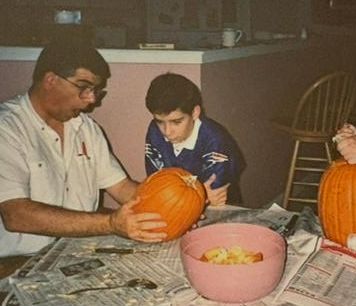
But we always carved pumpkins and the tradition continued with our son.
| | |
One of the first, and perhaps the most creative costume our son wore, came when he used a walker to get around any distance.
Of course he was a big Sesame Street fan, and one thing led to another, and my wife turned his walker into a nest.
It was a great Halloween in Memphis with the best costume on the street that I'm sure helped him feel included.
Over the years, Joe had the normal kinds of costumes that kids have, some ‘store bought’ some designed by the artistic parent, my wife Betty.
| | |
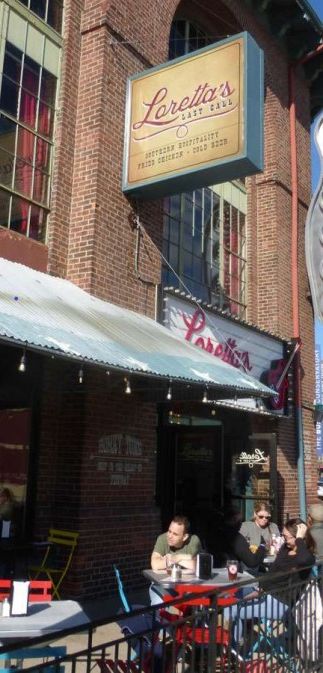
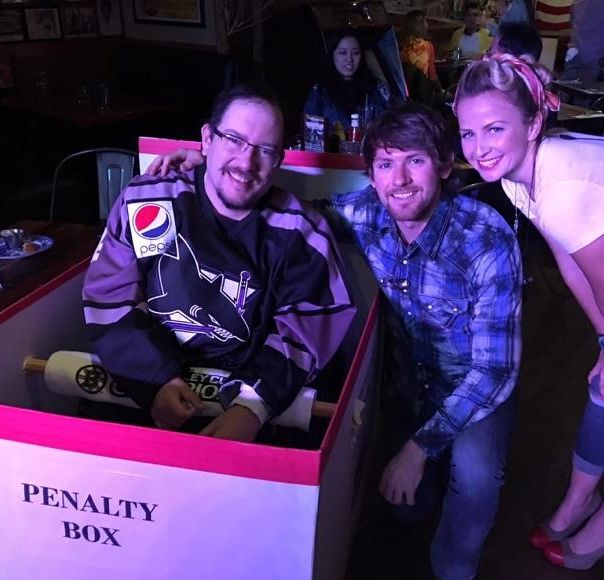
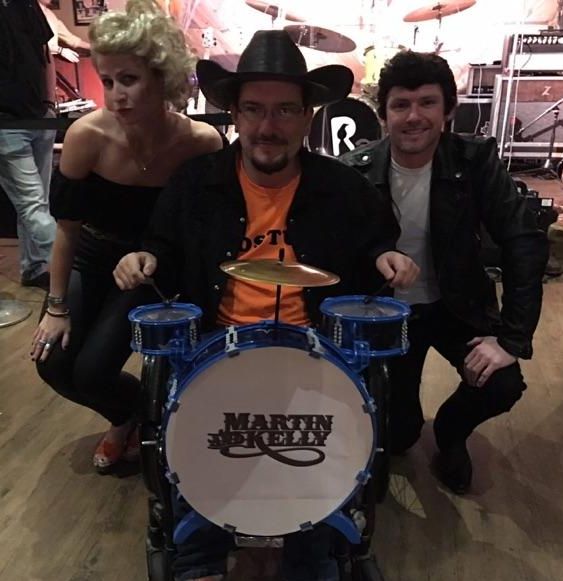
That creative spirit returned with two memorable costumes when our son reached adulthood and spent his Halloween evenings at Loretta’s Last Call, the county bar and restaurant behind Fenway Park’s left field wall, listening to the Martin and Kelly Band.
Designing costumes that are ideal for wheelchair users is not a typical activity, and in fact, there are no books on the subject.
That didn’t stop my wife and son from a couple of really creative results. The costumes were attached to the chair and moved around with my son, once again fostering inclusion in the holiday.
| | |
So, over the years, the costumes may have changed, but the meaning behind them has not.
Each Halloween still reminds us that creativity can turn challenges into celebrations and that joy often comes from the act of making something special together.
What began with a Big Bird nest on a walker resulted in lots of smiles, creativity, and challenges overcome.
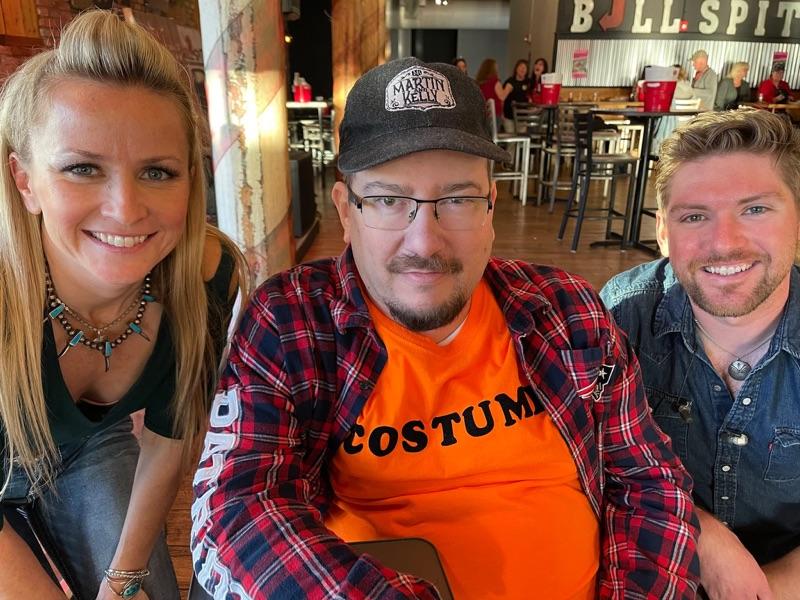
Now his costume is an orange t-shirt with the word 'costume' on it. An easy way to continue the tradition because Halloween can mean more than candy.
| |
Surprise Photo at the End:
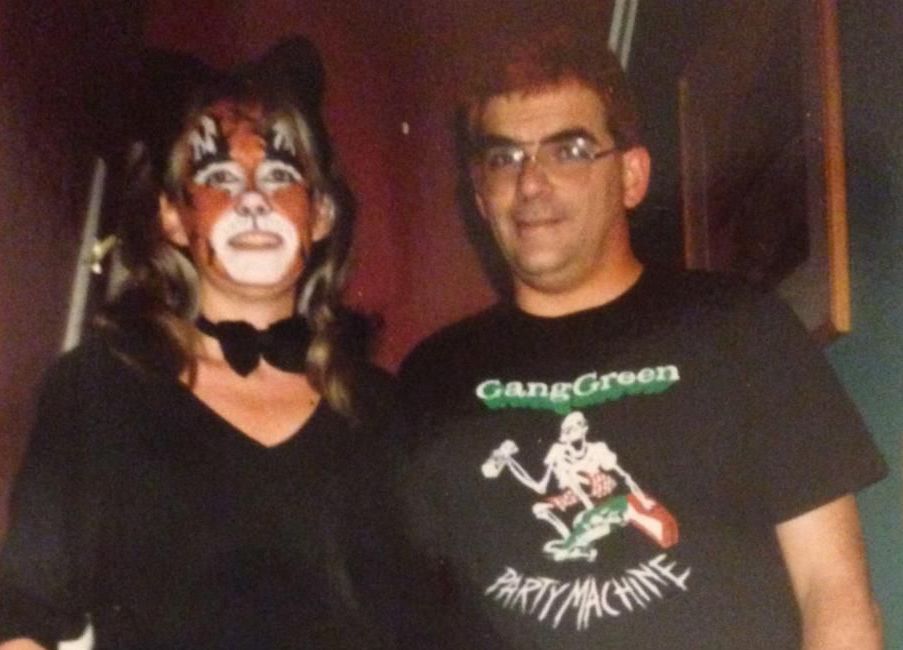
The Last Time We Dressed Up
| | Joe's Positive Post of the Week | | Join the Smart Subscribers | | If you are reading this on a social media platform, click below and you'll automatically receive a 'different' story every week on Wednesday. | | |
The Roll Call of states and countries where readers reside: Arizona, California, Colorado, Connecticut, Delaware, Florida, Georgia, Hawaii, Illinois, Indiana, Iowa, Kansas, Kentucky, Louisiana, Maine, Massachusetts, Michigan, Mississippi, Missouri, Montana, New Hampshire, New Jersey, New Mexico, New York, North Carolina, North Dakota, Ohio, Pennsylvania, Puerto Rico, Rhode Island, South Carolina, South Dakota, Tennessee, Texas, Vermont, Virginia, Washington and Washington DC, Wisconsin plus Canada, Conch Republic, Australia and the United Kingdom.
| | Refer a friend to Sign Up for the Wednesday Weblog | | |
Ed Doherty
774-479-8831
www.ambroselanden.com
ed-doherty@outlook.com
Forgive any typos please.
| | | | | |