Weekly News From Los Alamos County
November 18, 2022
|
|
Inside this newsletter, you will find...
The Epidemiology Corner - COVID-19 Update, Facts About Flu and Chronic Conditions, 5 Unusual COVID Symptoms, Health Officials Predict COVID Surge Through the Holidays, Weekly Survey, COVID-19 data, and more.
|
|
|
|
COVID-19 Update:
Variants BQ.1/BQ.1.1 Continue Gaining in US as CDC Lowers County Back to Low Risk Despite Known Case Underreporting...
|
|
COVID-19 and Early Spike in Influenza and RSV Challenging US and New Mexico Hospitals
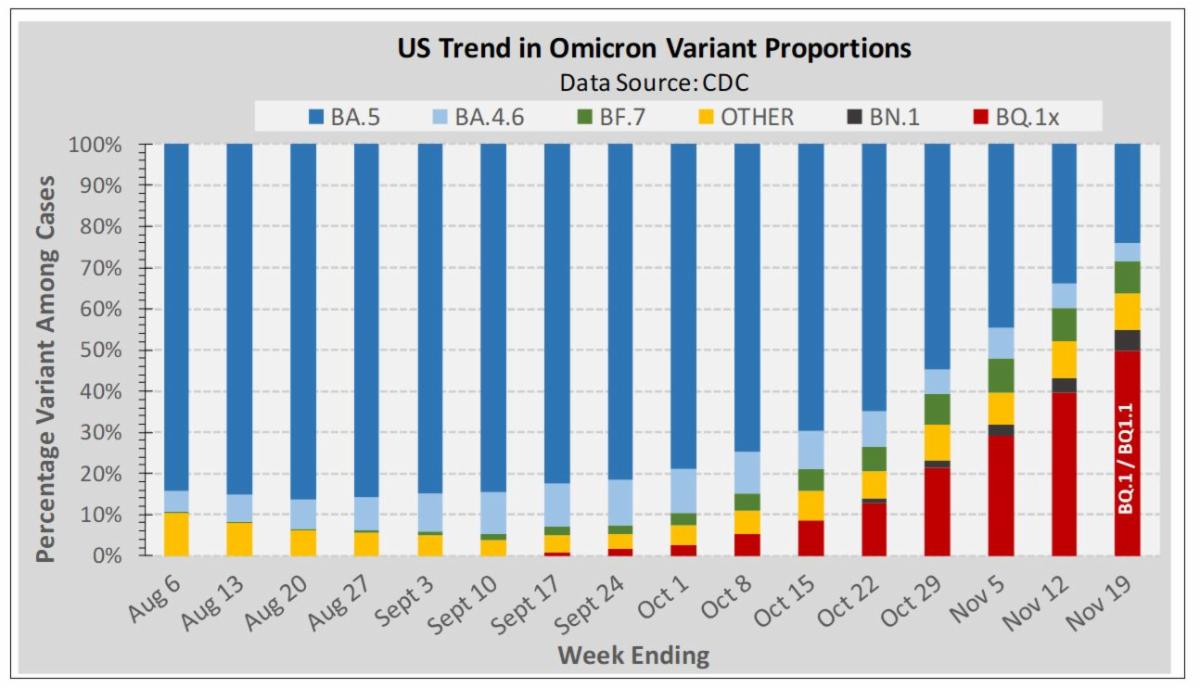
CDC reports that Omicron variants BQ.1 and BQ.1.1 (BQ.1x) now dominate in the US, accounting for half of all cases nationwide, and up to 65% of cases in the northeast US, including New York City. CDC is also tracking the BN.1 variant, which has been quickly gaining ground over the past 4 weeks. All other variants circulating in the US appear to be stable or descending in prevalence. See HERE Nationwide, hospitalization rates for COVID-19 have remained persistently elevated over the fall season, which has health authorities concerned as the holiday season approaches and more indoor congregant settings will likely increase case transmission. Furthermore, the holidays are occurring this year as an early spike in seasonal influenza and Respiratory Syncytial Virus (RSV) is challenging hospitals nationwide. At their recent November 17 news conference, representatives of the New Mexico Department of Health (NMDOH) warned of a “triple threat” associated with COVID-19, influenza, and RSV, which combined are now placing significant stressors on hospitals, particularly pediatric units. NMDOH officials recommend that parents and children who are symptomatic with any respiratory illness stay at home in order to protect others, especially the very young and the elderly. See HERE
|
|
COVID-19 in the County: CDC Returns Community Level to LOW Risk
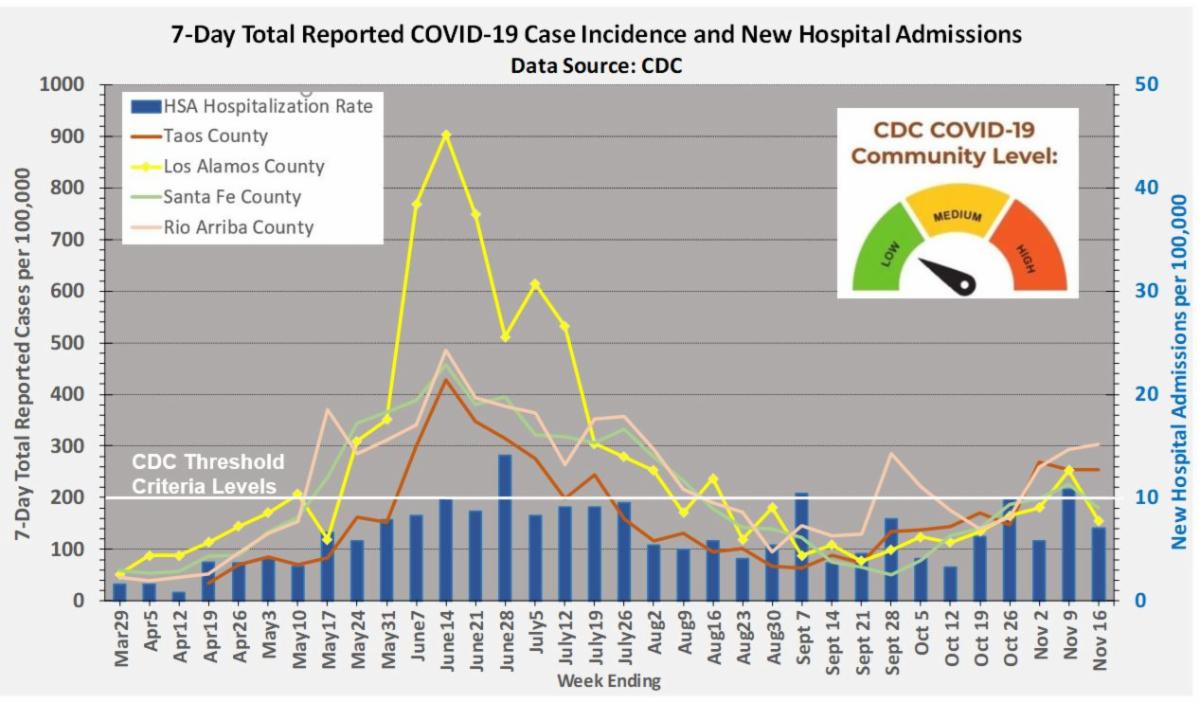
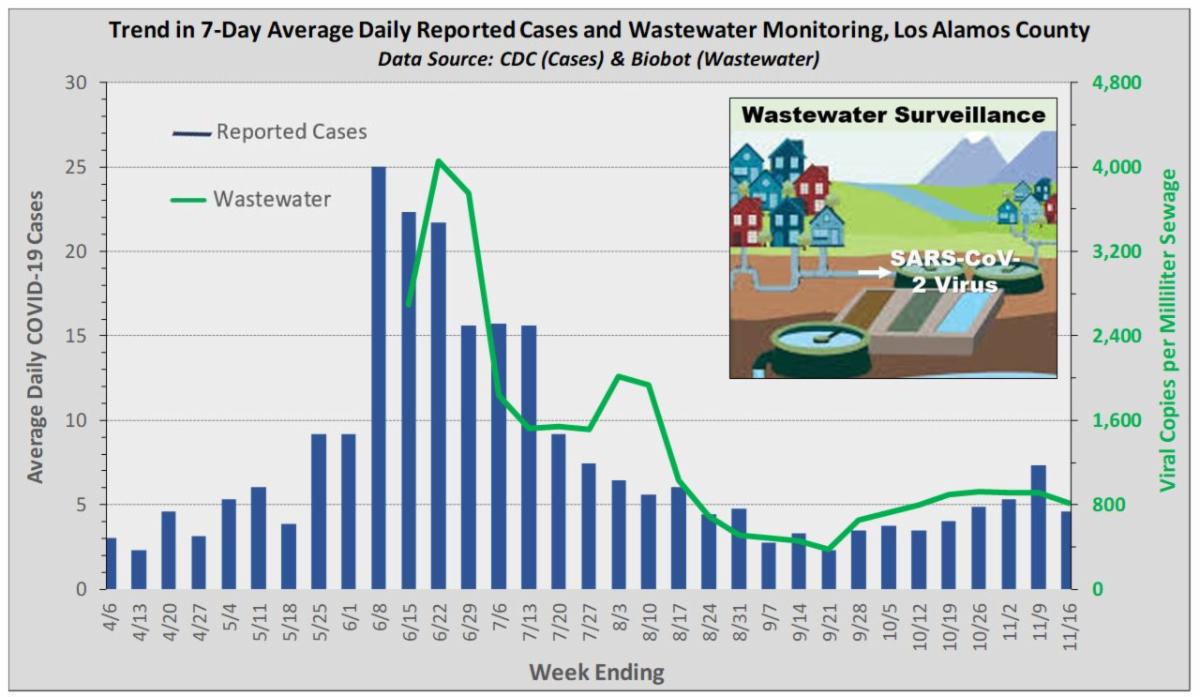
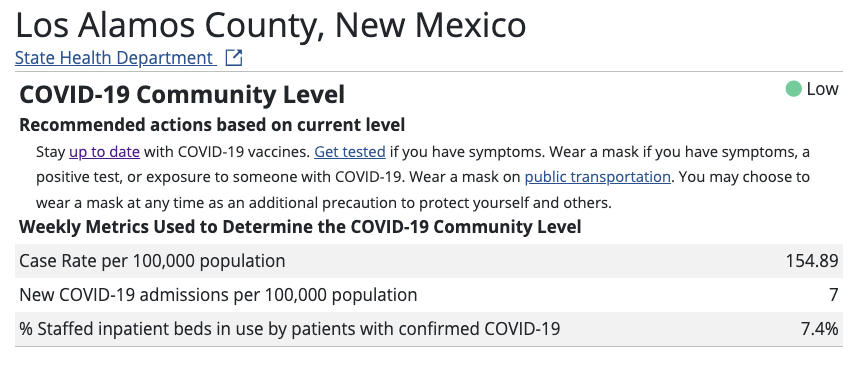
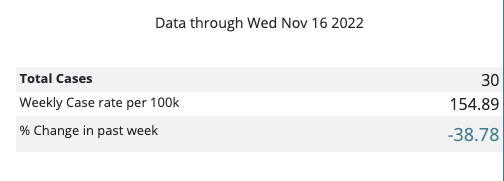
The Community Level for Los Alamos County was returned to LOW risk for the week ending November 16 due to a decline in officially reported cases in the county coupled with a decline in hospitalization within the four-county Health Services Area (HSA). The declines placed both transmission (155 per 100,00) and hospitalization (7 per 100,000) below the CDC criteria thresholds, however, the burden of COVID-19 in the county remains persistently elevated and historically high compared to prior time periods. Over the past month, three county residents were hospitalized for COVID-19, which translates to a weekly hospitalization rate of roughly 4 new admissions per 100,000. Furthermore, official reporting statistics based on cases positive by PCR test considerably underestimate actual levels of case transmission, as evidenced below using age-specific analysis.
|
|
Modest Decline in NMDOH Reported Emergency Department Visits in County Residents
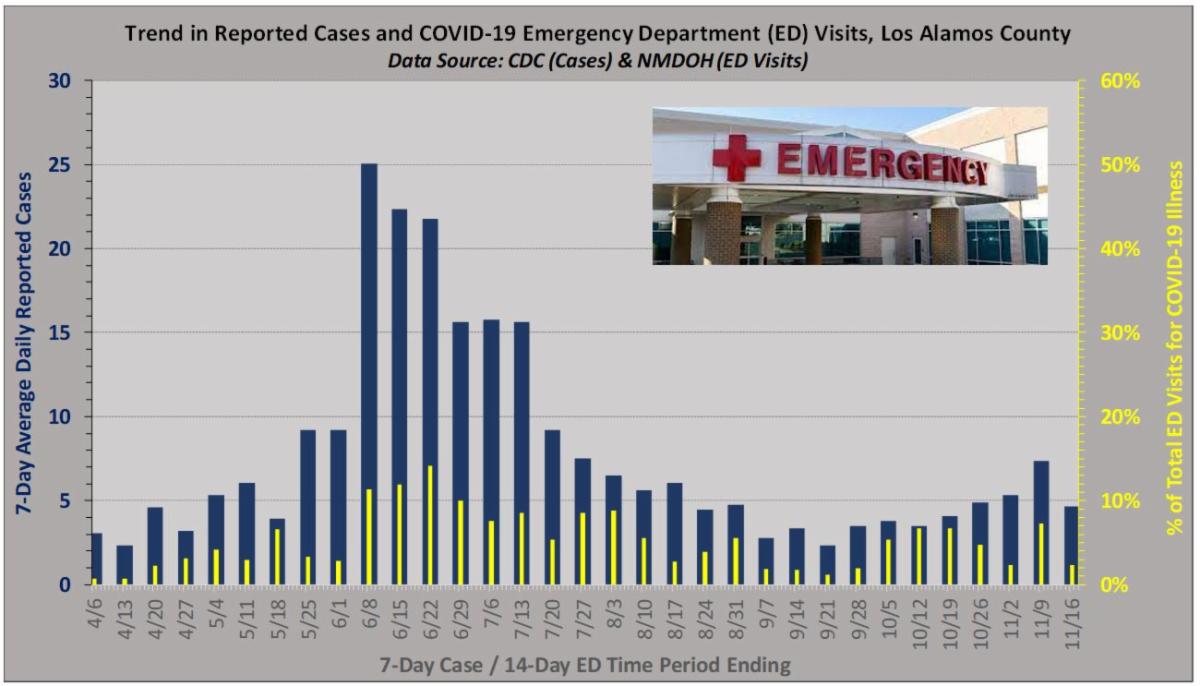
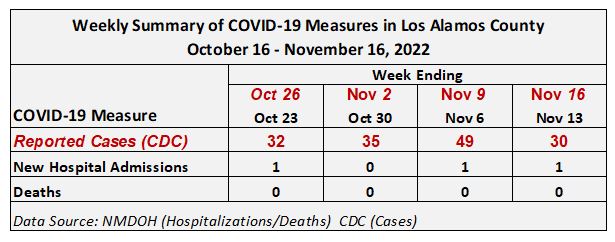
An average of 4.3 cases per day were reported for the week ending November 16 compared to 7 cases per day for the immediately preceding week. According to the NMDOH, the percentage of ED visits in county residents for COVID-like symptoms was 2.3% for the two-week period ending November 16. See HERE NMDOH reported one new hospital admission for COVID-19 in county residents during the week ending November 13.
|
|
Wastewater Surveillance Shows Persistent Case Transmission in the County
SARS-CoV-2 virus continues to be detected in county municipal wastewater at a sustained elevated level consistent with an endemic pattern of disease. See https://biobot.io/data/
|
|
Reported Case Transmission Remains Stable, and Likely Incomplete, Across All Age Groups
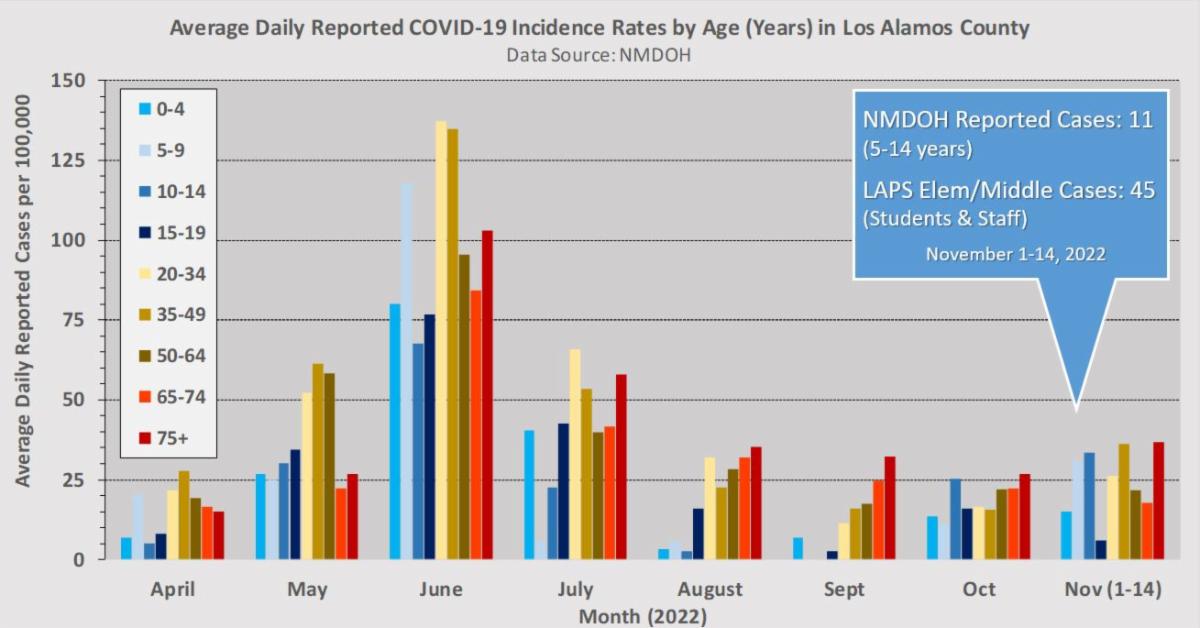
Age-specific case incidence rates based on official reporting show persistent transmission across all age groups in the county, with near-term elevations continuing into November among young children. For the two-week time period November 1-14, the officially reported case counts in children 5-14 years was 11 cases compared to 45 cases reported through the Los Alamos Public Schools COVID-19 case reporting system for students and staff at elementary and middle schools. These data suggest the use of rapid at-home antigen testing for identifying COVID-19 cases may result in a several-fold undercount of actual cases. Furthermore, asymptomatic infections are prevalent, and contribute to the undercount of actual case transmission. Some health experts have suggested community COVID-19 infection risk is better gauged through a personal accounting of cases among friends and family rather than official data. See HERE This may be particularly important as new, ever-more immune-evasive variants, like BQ.1/BQ.1.1, continue to emerge and uncertainty exists over levels of protection afforded by previous infection or immunization. Furthermore, recent studies have suggested that repeat COVID-19 infections place patients at higher risk of severe disease and death, as well as so-called “Long COVID”. See HERE
|
|
New Mexicans Encouraged to use NM Notify app to Report Positive COVID-19 Home Tests
To assist with more complete case monitoring in New Mexico, NMDOH encourages residents to download the NM Notify app and to report positive COVID-19 home tests on the app. See the NMDOH press release HERE. NMDOH has retired the online self-reporting tool for COVID-19 rapid home tests formerly available on its website. The NMDOH/CDC COVID-19 incidence data reviewed here are based on PCR-confirmed testing results and do not include data on positive at-home antigen tests. As such, case counts are incomplete and underestimated, but by how much cannot be determined precisely at any given time point.
|
|
Facts to Know about Flu and Chronic Conditions
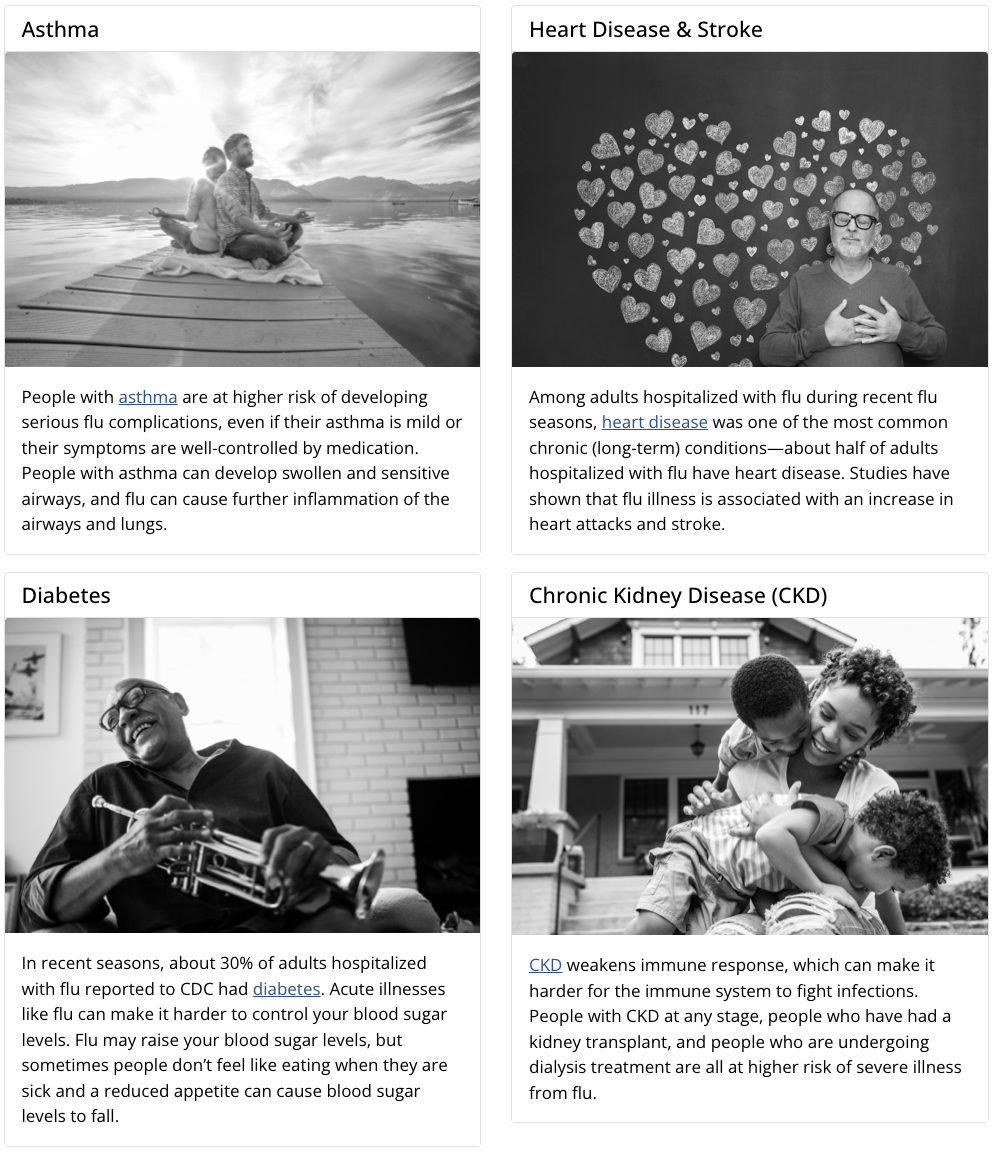
People with asthma, heart disease, diabetes, and a number of other chronic health conditions are at higher risk of developing potentially serious flu complications that can result in hospitalization or even death.
In fact, during recent flu seasons, 9 out of 10 people hospitalized with flu had at least one underlying health condition – that’s why getting an annual flu vaccine is especially important for people with certain chronic health conditions.
A flu vaccine reduces the risk of getting sick with flu. For people with certain chronic health conditions a flu vaccine has been shown to reduce the risk of flu-related worsening of chronic conditions and prevent flu-associated hospitalization. Learn more HERE.
Top Three CDC Recommendations this Flu Season:
Click HERE to learn more!
|
|
5 Unusual Covid Symptoms — and What to Do About Them
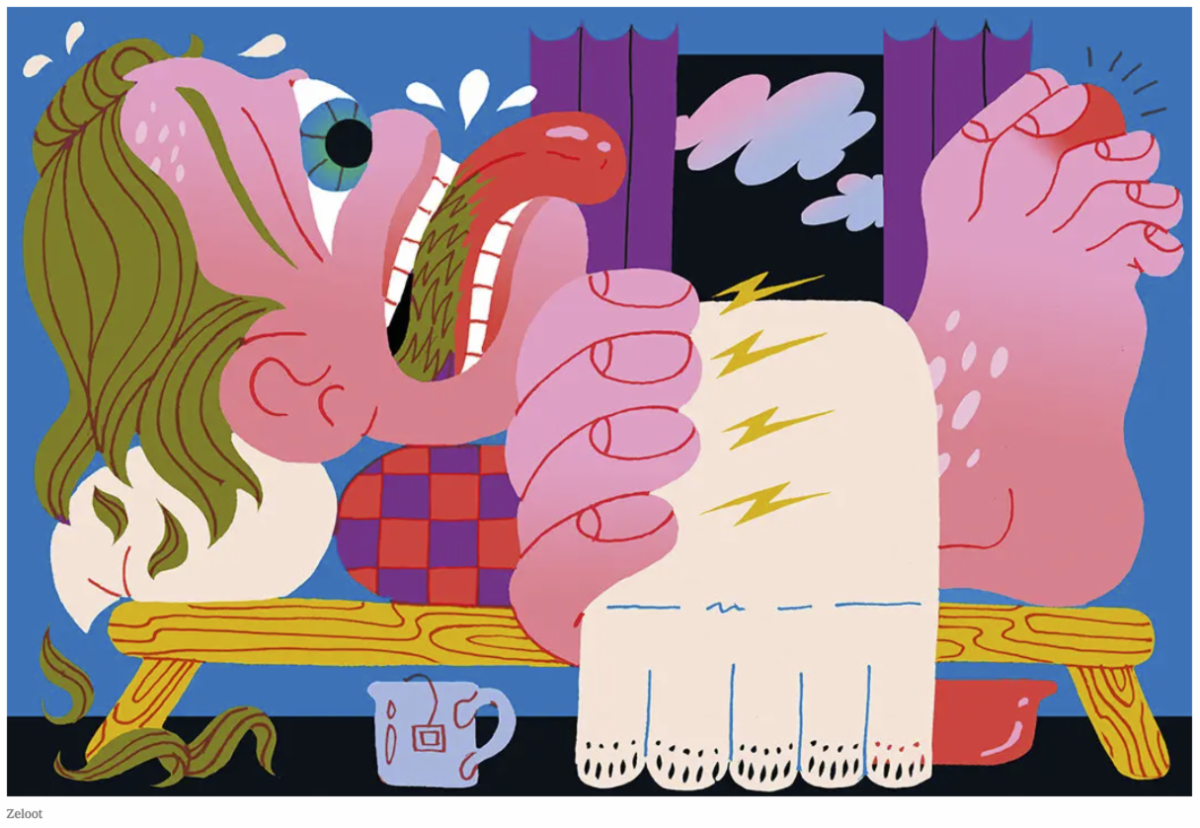
“Hairy tongue,” pins and needles and Covid toe are just a few unnerving yet real manifestations of the coronavirus.
By this point in the long slog of the pandemic, many people know the telltale symptoms of a Covid-19 infection: a ragged ache in your throat, a pernicious cough, congestion, fever and full-body exhaustion. But a tiny subset of people also develop less common symptoms, ones that can sound like hexes from a children’s story: hairy tongues, purple toes, welts that sprout on their faces.
Confounding symptoms have been a component of Covid since the start of the pandemic — the loss of taste and smell has become a disturbing sign of the disease. Covid also has the potential to disrupt menstrual cycles, a side effect some women also reported after vaccination.
A study of over 60,000 people who tested positive for Covid and reported their symptoms found that a small percentage experienced ringing in their ears, sore eyes, rashes, red welts on their faces or lips, hair loss and unusual joint pains. A larger analysis of more than 600,000 people in Britain showed that a fraction of those with Covid also developed purple sores and blisters on their feet and numbness across their bodies, among other maladies.
Antiviral treatments like Paxlovid may potentially alleviate symptoms like a Covid-related rash, perhaps because they can reduce the amount of virus in your blood, said Dr. Kelly Gebo, an infectious disease specialist at Johns Hopkins Medicine. But it’s unclear whether these symptoms are directly caused by the virus, or by the body’s response to it.
Here’s what else we know about the causes of — and potential treatments for — some of these symptoms.
Hairy tongue
Healthy tongue cells rapidly replace themselves, Dr. Chin-Hong said, but if older cells linger and build on top of one another, it forms a dark, thick, fuzzy overgrowth, often called hairy tongue. Even before Covid, doctors saw patients with hairy tongue related to viral infections, smoking, antibiotic use and poor hygiene.
People with hairy tongue can use a tongue scraper or toothbrush to scratch away those tongue cells, and they can make sure to practice good oral hygiene to prevent additional buildup.
In rare cases, people with Covid may also develop thrush, otherwise known as oral candidiasis, which occurs when a fungus infects your mouth. Doctors typically diagnose thrush by examining the white lesions that can sprout on your cheek, tongue or mouth; the treatment is usually 10 to 14 days of an antifungal medication.
Tingling nerves
When people develop the sensation of pins and needles on their skin, it may be because their nerves are inflamed by immune cells as they fight off infection, Dr. Chin-Hong said. It’s also possible that the virus itself could damage peripheral nerves, like those that go to your hands and feet, Dr. Gebo said; this also occurs with the shingles infection.
For many people, that tingling sensation goes away in a matter of days, Dr. Gebo said. If patients are in pain, she added, they should consult their doctors, who may recommend taking Tylenol or Motrin.
People with persistent nerve pain, even after they recover from the virus, should consult their doctors, said Dr. Marc Sala, co-director of the Northwestern Medicine Comprehensive Covid-19 Center.
Rashes
It’s well-established that viruses can induce rashes, Dr. Sala said, and he noted that he has seen a wide variety of skin afflictions in patients with Covid. The American Academy of Dermatology Association cites itchy bumps, chickenpox-like blisters, rashes that form lacy patterns on the skin and raised bumps as potential skin conditions linked to Covid. If you develop a rash that lingers after you recover from Covid, Dr. Sala recommends consulting a dermatologist.
Hair loss
Any type of physical or emotional distress can cause your hair to fall out, said Dr. Shilpi Khetarpal, a dermatologist at Cleveland Clinic. It’s not totally clear whether an infection with Covid itself, or the stress related to it, leads some people to experience hair loss, she said. If you find yourself among those who lose some hair during or after a Covid infection, don’t panic, she said, adding: “It’s not scarring — it comes back. It just needs time.”
Covid toe
Scientists are still conflicted about what causes “Covid toe,” the frostbite-like rash and blisters that form on some people’s feet and fingers after they become infected, causing toes and the tips of fingers to become swollen and purple. One theory is that people with Covid may experience microvascular clots, which occur in the smallest blood vessels in your body and block the blood supply, causing that discoloration, Dr. Sala said.
Patients who develop Covid toe usually do so during the acute phase of an infection, he added, and the symptoms tend to resolve soon after. The American Academy of Dermatology Association recommends using a hydrocortisone cream to treat it. Like most rare Covid symptoms, as unnerving as it might be, the swelling typically resolves on its own — for reasons doctors aren’t entirely sure of.
“We’re still learning about Covid,” Dr. Mulligan said. “We don’t understand everything.”
To read the full article, click HERE.
|
|
Health officials predict COVID-19 surge to last through holiday season
Call it the season of fruitcake and face masks.
New Mexico health officials on Thursday urged state residents to dust off their masks and don them at large gatherings and travel centers as they head into yet another stretch of coronavirus-heavy holidays.
The state is about four weeks into a projected eight-week peak in new COVID-19 cases, officials said at a virtual news conference, although they are uncertain just how long the surge will last.
To complicate matters, an unexpected early rise in RSV and influenza cases has put a strain on health systems.
“Hospitalizations have doubled in the last month,” said Dr. David Scrase, New Mexico’s acting heath secretary. Three percent of hospitalized COVID-19 patients are now on ventilators, Scrase said; he noted the state has made progress compared with the 20 percent of patients on ventilators in 2020.
“Right now we’re on an upward trend with COVID cases in New Mexico, but since many have switched over to home testing, we cannot collect the data we need,” he added. “We know case counts are two to three times higher than what is being reported. Since mask wearing has dropped, we’re really seeing an uptick.”
Medical experts agree the proven tools of masking, social distancing and vaccinations work.
“You’re more than twice as likely to become infected if you’re not vaccinated,” Scrase said. “But the real reason to get vaccinated is the dramatic reduction in hospitalization and death.”
New Mexico is one of the top states receiving the bivalent booster, he said, with 230,000 New Mexicans vaccinated against omicron.
Scrase recommends getting both the flu vaccination and the bivalent booster, which can be taken together. “I’ve already gotten my booster, and I encourage you to do that, especially if you have a significant risk factor, are older or if you live with someone who has a significant risk factor,” he said.
“As we go into the holidays, the best gift you can give yourself is to get vaccinated,” said Dr. Laura Parajon, deputy secretary of the Department of Health.
Parajon said she recently battled COVID-19, although she is immunized. “I think because of the booster, I got much less sick than I would have,” she said, adding she didn’t test positive until her third day of symptoms.
Holiday travelers should mask up in airports, on planes and in large gatherings, she said. She also recommends those who feel sick stay away from family members during the holidays, especially those who are elderly or at high risk of severe infection.
Because vaccinations come with possible side effects such as fever, chills, nausea and headache, people may shy away from them, but Scrase said facing 24 hours of side effects is far better than weeks of acute illness: “Having a night of chills, fever and difficulty sleeping is a [smaller] price to pay than ending up in the ICU on a vent.”
Dr. Anna Duran, the University of New Mexico Children’s Hospital associate medical officer, said the rise in RSV has filled children’s beds at her hospital. “Historically, RSV starts mid-December, so we’re about six weeks before that. It usually peaks at the end of January and reduces by end of March.”
“We’re making sure we have enough physicians to care for the larger influx of pediatric patients, and we continue to be impacted by staffing,” she said. “We’re working very hard to make sure our patient-nurse ratios are safe. The other impact we want to start making is community education — when to stay home, when to seek pediatric care, urgent care or emergency room care.”
To read the full article, click HERE.
|
|
|
Are you wearing a mask on a daily basis?
|
|
Yes. When I am around at-risk people.
|
|
|
|
|
Yes. When in a large gathering of people.
|
|
|
|
|
Yes. Any time I am indoors.
|
|
|
|
|
Yes. Always - indoors and outdoors.
|
|
|
|
|
No. I carry on like normal and don't worry about it.
|
|
|
|
|
|
|
Will Covid Boosters Prevent Another Wave? Scientists Aren’t So Sure.
The shots may help vulnerable Americans dodge serious illness or death. But some experts believe boosters must be improved and are calling for a new strategy.
As winter looms and Americans increasingly gather indoors without masks or social distancing, a medley of new coronavirus variants is seeding a rise in cases and hospitalizations in counties across the nation.
The Biden administration’s plan for preventing a national surge depends heavily on persuading Americans to get updated booster shots of the Pfizer-BioNTech and Moderna vaccines. Now some scientists are raising doubts about this strategy.
Older adults, immunocompromised people and pregnant women should get the booster shots, because they offer extra protection against severe disease and death, said John Moore, a virologist at Weill Cornell Medicine in New York.
But the picture is less clear for healthy Americans who are middle-aged and younger. They are rarely at risk of severe illness or death from Covid, and at this point most have built immunity through multiple vaccine doses, infections or both.
The newer variants, called BQ.1 and BQ.1.1, are spreading quickly, and boosters seem to do little to prevent infections with these viruses, as they are excellent evaders of immunity.
“If you’re at medical risk, you should get boosted, or if you’re at psychological risk and worrying yourself to death, go and get boosted,” Dr. Moore said. “But don’t believe that will give you some kind of amazing protection against infection, and then go out and party like there’s no tomorrow.”
The most recent boosters are “bivalent,” targeting both the original version of the coronavirus and the Omicron variants circulating earlier this year, BA.4 and BA.5. Only about 12 percent of adults have opted for the latest shot.
Recently, Pfizer-BioNTech and Moderna reported that their bivalent shots yielded antibody levels in study participants that were four to six times higher than those produced by the original vaccine.
But the companies were measuring antibodies against BA.4 and BA.5, not the rapidly accelerating BQ.1 and BQ.1.1 variants. A spate of preliminary research suggests that the updated boosters, introduced in September, are only marginally better than the original vaccines at protecting against the newer variants — if at all.
The studies are small, based on laboratory tests, and have not yet been vetted for publication in a scientific journal. But results from several teams generally agree.
Designing a vaccine for an evolving virus is a formidable challenge. Pfizer, Moderna and federal regulators had to choose which coronavirus variants to target earlier this year, so enough vaccine could be manufactured by the fall.
By now, most Americans have some degree of immunity to the coronavirus, and it does not surprise scientists that the variant that best evades the body’s immune response is likely to outrun its rivals.
The new bivalent booster increases antibody levels, as any booster would be expected to do.
But the fact that the dose is bivalent may not mean much. In August, a modeling study by immunologists in Australia suggested that any booster at all would confer additional protection, but that a variant-specific shot was unlikely to be more effective than the original vaccine.
“The bulk of the benefit is from the provision of a booster dose, irrespective of whether it is a monovalent or bivalent vaccine,” the World Health Organization cautioned last month.
Studies have shown that most of the antibodies elicited by a vaccine targeting BA.5, for example, still recognize only the original virus.
That’s because of a phenomenon called “immune imprinting,” in which the body preferentially repeats its immune response to the first variant it encountered, despite being alerted to a newer variant.
There may be ways to circumvent immune imprinting — perhaps with a second dose of a bivalent vaccine that builds on the immune response after the first, much as the second dose of the initial vaccine series cemented protection.
The F.D.A. authorized the boosters for use at least two months after a previous dose or infection. But boosting again so soon may backfire, some studies suggest. Lengthening the interval between boosts to five or six months may be more effective, giving the immune system more time to refine its response.
Whatever the timing, adding yet another shot to the regimen seems unlikely to motivate Americans to opt for the immunization.
“Each new booster we roll out is going to have a lower and lower uptake, and we’re already pretty close to the floor,” said Gretchen Chapman, an expert in health behavior at Carnegie Mellon University in Pittsburgh.
The Biden administration may have no choice but to promote boosters given the lifting of other precautions, Dr. Chapman said. But most people make decisions based on what others in their social network do, or what their political and community leaders recommend, not on esoteric scientific data, she noted.
To read the full article, click HERE.
|
|
Los Alamos Vaccine & Booster Information |
|
How do I know if I'm eligible for a vaccine or booster?
Follow these links to review the CDC eligibility guidelines:
Where can I get my COVID-19 Vaccine or Omicron booster?
In addition to the clinics that use the NMDOH scheduling site, Los Alamos has other options available. Click below on the vaccine/booster resources website for more information.
|
|
Los Alamos County COVID Vaccine/Booster Resources
Visit the County COVID Page for information regarding vaccinations/boosters, click below:
|
|
CDC COVID Data Tracker - November 18, 2022
To get today's break down of positive case data, demographics information, vaccine status and more for Los Alamos County or other counties across the United States, click HERE
|
|
NMDOH Epidemiology Reports - Daily and Weekly Data
As part of the COVID-19 pandemic response, NMDOH collects and analyzes statewide data for COVID-19 positive cases, hospitalizations, and deaths. The reports reflect these critical data and are updated weekly - click HERE
|
|
We are listening to you!
Your feedback is helping to shape future newsletters, inform decisions regarding services, and make Los Alamos County healthier and safer. Make sure to participate each week to be heard!
|
|
Remember, we appreciate your questions! We always try to respond in a timely manner, and if appropriate, we will include those Q&As in future newsletters. |
|
Have a question? Email us. |
|
Los Alamos Testing Information |
|
Los Alamos County COVID Testing Resources
Visit the County COVID Page for information regarding testing, click below:
|
|
Los Alamos Treatment Information |
|
Los Alamos County COVID Treatment Resources
Visit the County COVID Page for information regarding treatments, click below:
|
|
What else would you like to see in this newsletter?
Click below to email us your feedback and questions!
|
|
|
|
|
|
|