|
CMS Releases Guidance on Work Requirements
The Centers for Medicare and Medicaid Services (CMS) has issued an interim final rule (IFR) that will guide how states implement the work reporting requirements for the Medicaid expansion population. While the guidance is largely what states expected, the definition of medical frailty is more restrictive than previous direction from the Administration. Medical conditions must “significantly impair” the member's ability to meet the requirement, language that is not in the OB3 statute itself. The rule cites, as examples, that those with HIV/AIDS, cancer, or end-stage renal disease would not be exempt from reporting unless the condition is serious enough to make them unable to work or volunteer.
States like Nebraska, who started their work reporting program on May 1, were expecting to be able to determine medical frailty through claims data and disease code. This additional factor will make it harder to do ex parte medical frailty determinations by matching data to medical records. This puts more pressure on beneficiaries to prove they qualify for the exemption.
The Family and Social Services Administration (FSSA) will use this guidance and SEA 1 (2026) to create the work reporting requirements for Indiana HIP members.
| |
HHS Secretary Fires Preventive Health Panel Leaders
Last week, HHS Secretary Robert F. Kennedy Jr. fired the co-chairs of the U.S. Preventive Services Task Force, an expert panel that recommends which health services insurers must cover at no cost to patients under the Affordable Care Act. HHS has postponed the last several meetings of this group, which medical experts say has delayed updates to screening guidelines for cancer, heart disease, and other conditions.
| | SCHOOLS & EARLY CHILDHOOD | | | | |
|
Unable to Attend the 2026 ISHN Conference?
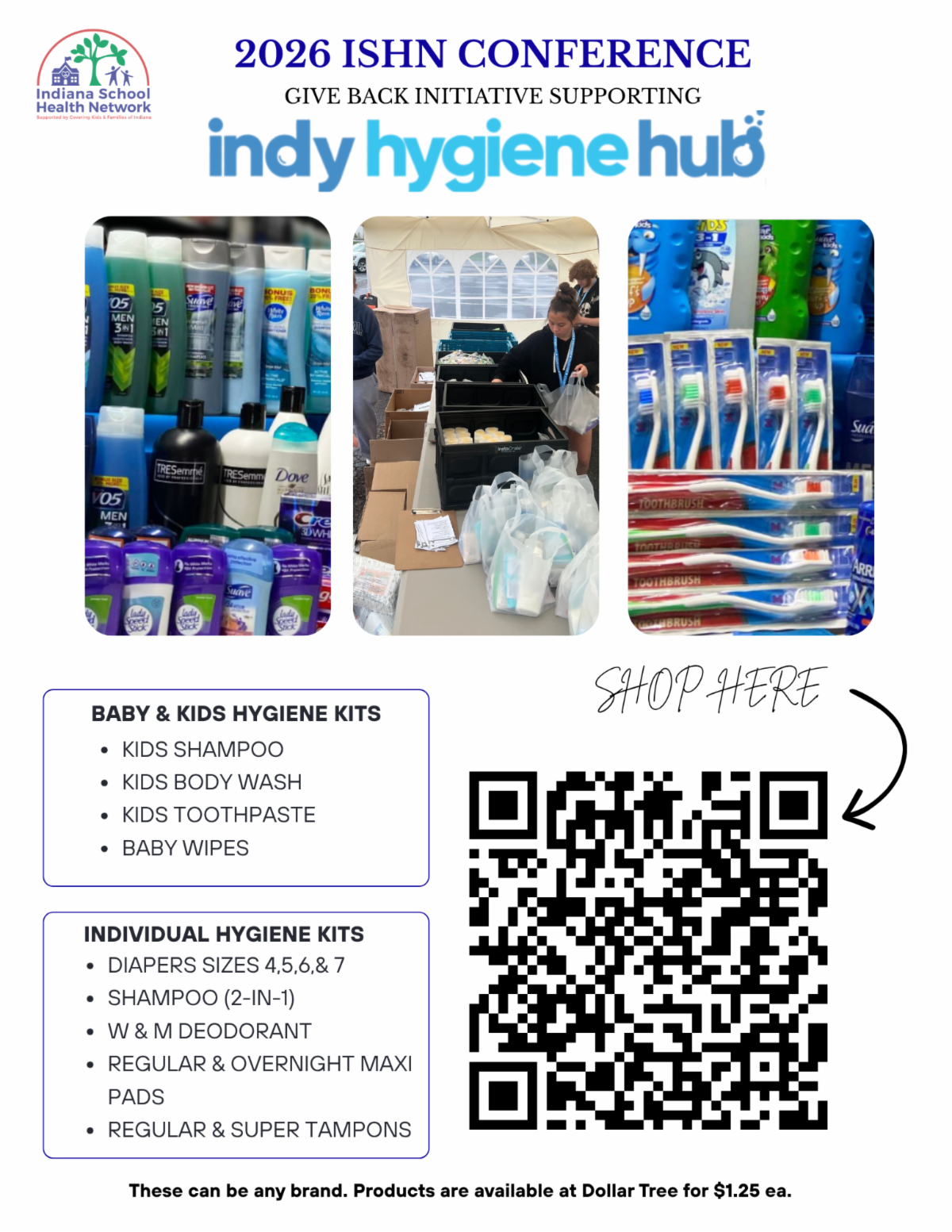
You can still support the Give Back Initiative! This year's initiative is collecting personal care and hygiene items for individuals and families in need for the Indy Hygiene Hub. Essential items such as toothpaste, toothbrushes, soap, shampoo, deodorant, and other hygiene products can make a meaningful difference in someone's daily life. Your contribution helps provide dignity, comfort, and care to members of the community. If you cannot join in person, you can still participate by donating items and supporting this important effort. Scan the QR code below to donate.
| | |
Non-ACA Plans
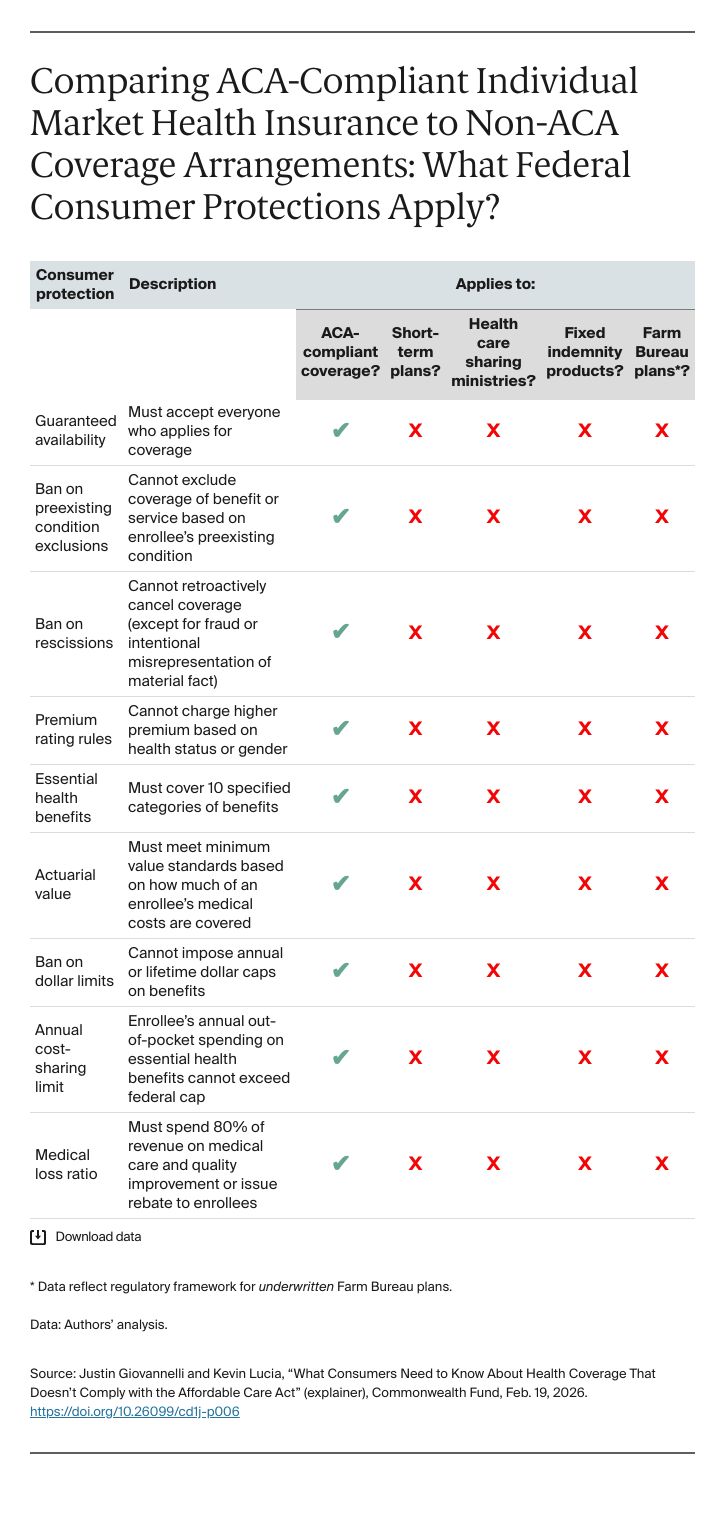
The Commonwealth Fund released an explainer in February, What Consumers Need to Know About Health Coverage That Doesn’t Comply with the Affordable Care Act (ACA).
Unregulated health coverage products are expected to become more prevalent as ACA plans become more expensive and consumers face more barriers to coverage. These products include short-term plans, healthcare sharing ministries, fixed indemnity insurance, and medically underwritten coverage offered by Farm Bureau. While these products may have relatively low upfront costs that make them appealing, they offer limited financial protection creating significant risks that may not be clear to people when they sign up.
In contrast, ACA compliant health insurance must abide by regulations designed to protect consumers. ACA-compliant plans:
- Cannot deny coverage or charge a higher premium to people with a preexisting health condition.
- Must cover 10 categories of essential health benefits.
- Must cover certain high-value preventive services without cost sharing.
- Cannot impose annual or lifetime limits on these essential benefits.
Consumers should be careful when shopping for insurance. Non- ACA plans may be marketed in ways that can be confusing.
| |
|
Pathways Dual Care
On January 1, 2026, the Indiana Family and Social Services Administration (FSSA) launched the Indiana PathWays for Aging (PathWays) Dual Care program. This specialized program is for Hoosiers who are:
- dually eligible for Medicare and Medicaid
- 60 or older
- currently receiving their Medicaid benefits from one of the PathWays managed care organizations (MCOs)
This program integrates Medicare and Medicaid into one program. Anthem, Humana, and United Healthcare are the MCOs contracted with Indiana and the Centers for Medicare & Medicaid Services (CMS) for PathWays Dual Care members. Eligible PathWays members will be automatically enrolled upon qualification for Medicare.
| | |
Rural Hospitals at Risk of Closing
Seven hundred and twenty rural hospitals across the U.S. — representing about one-third of all rural facilities nationwide — are at risk of closing due to severe financial problems, according to the Center for Healthcare Quality and Payment Reform’s most recent analysis.
In Indiana, there are nine rural hospitals facing the risk of closing within six to seven years and eight hospitals at immediate risk of shutting down in the next two to three years. See full CHQPR report here.
| |
Healthcare Cost and Spending
Policymakers and business leaders have been sounding the alarm on healthcare spending for more than half a century. In 1971, for example, Sen. Edward Kennedy (D-Mass) led a series of public hearings on the topic. “The reality of this crisis, which affects almost every citizen, is no longer denied,” he said during a congressional hearing.
But despite the cost curve bending relative to GDP from 2010 to 2024, prices remain higher and less regulated than in similarly advanced nations, and expenses continue to soar for every player in the healthcare system.
Healthcare services historically were mostly paid on a fee-for-service basis, which has been shown to create incentives for higher prices and greater volume. Capitated payments, bundled reimbursements, risk-sharing arrangements, accountable care organizations and other value-based care initiatives have been deployed across the system for more than two decades to transition the industry from fee-for-service, change incentives and bring down spending. These efforts have borne some fruit, but haven’t bent the cost curve in a holistic way.
Healthcare is also overwhelmingly consolidated among insurers and providers, which presents more fundamental challenges than can likely be remedied by any individual payment model.
*Source article behind a paywall at Modern Health
| | |
Monday, June 29 at 2pm ET
The Bureau of Disabilities Services will be hosting a virtual webinar for individuals and families to have the opportunity to learn more about the upcoming changes to waiver case management.
Click here to attend.
| | |
Thursday, September 24 from 9am - 4:15pm ET
Indiana Family to Family's Heart to Heart Conference is fully virtual and completely free! (There is a small fee for those interested in a certificate of completion). Join families and other professionals for a day of learning, connection, and real support.
Register here.
| | TOBACCO PREVENTION & CESSATION | | |
‘Nicotine-Free Generation’ Policies
The United Kingdom recently adopted a tobacco-free generation law. Retailers can still sell tobacco to existing customers, but they will never be permitted to sell it to anyone born after January 1, 2009. In Massachusetts, 24 communities use a similar “nicotine free generation” (NFG) birthdate phaseout of tobacco sales, including cigarettes, vapes, and pouches.
| | |
Addiction, Anxiety, and the Attention Economy
A recent article in Fast Company explores the connection between nicotine addiction, anxiety, and the modern "attention economy”. The authors contend that many of the tactics used by social media and technology companies to capture attention mirror the mechanisms that drive nicotine dependence. The article highlights how young people are increasingly exposed to environments designed to encourage constant engagement and instant gratification, which can contribute to stress, anxiety, and addictive behaviors. It suggests that effective nicotine prevention and cessation efforts should address not only the physical addiction to nicotine but also the broader mental health challenges and behavioral patterns that make individuals more vulnerable to addiction. The importance of building resilience, improving mental well-being, and creating healthier environments to support youth in managing stress without relying on nicotine or other addictive products is key.
| | | |
|
IHCP Membership
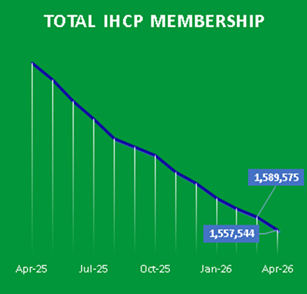
Total Membership decreased in April.
With 1,557,544 members, there were 32,031, or 2%, less members in April 2026 than in March 2026. Membership is dropping at a rate of over 1,000 members per day.
If this rate of disenrollment and coverage loss continued, there would be no IHCP members in about 4 years.
| | | | | |