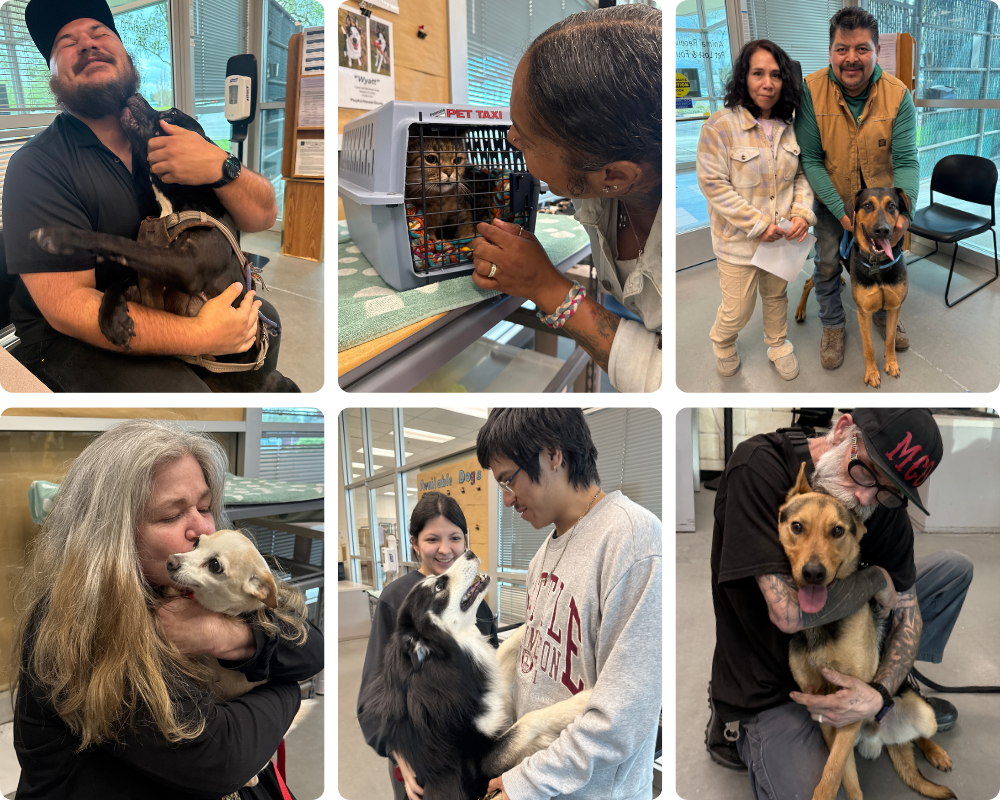
Reunited and it feels so good | | In this month’s newsletter, you’ll find details about scams targeting pet owners, ways to prepare your animals for the summer season, a reminder to update the information connected to your dog's license, and more. But first… | | Pictured clockwise from top left are Oden, Mia, Sargento, Barlow, Gavilan and Poncho. Our team reunited these pets with their families at our shelter after the animals got lost. | | Getting stray pets back to the people who know and love them is a top priority for us. Sometimes this is an Animal Services Officer providing a wayward pup with an immediate ride home after seeing their dog license tag or scanning them and finding a registered microchip. Other times, an animal shelter technician might spend time searching through lost pet reports and social media posts to connect an injured stray cat or dog with the family desperately searching for it. No stone goes unturned when it comes to helping a lost pet get back home. | | Plan ahead for your own happy reunion | | |
You can help your pet get back home if it’s ever lost by placing a collar with ID on them, microchipping cats and dogs, licensing your dog, and checking regularly to make sure your contact information is up to date on all of your pet’s identification. You can also help prevent a missing pet by routinely inspecting your fence and gates for possible escape routes for a curious dog.
And if you ever need it, you can find lost and found pet resources on our website.
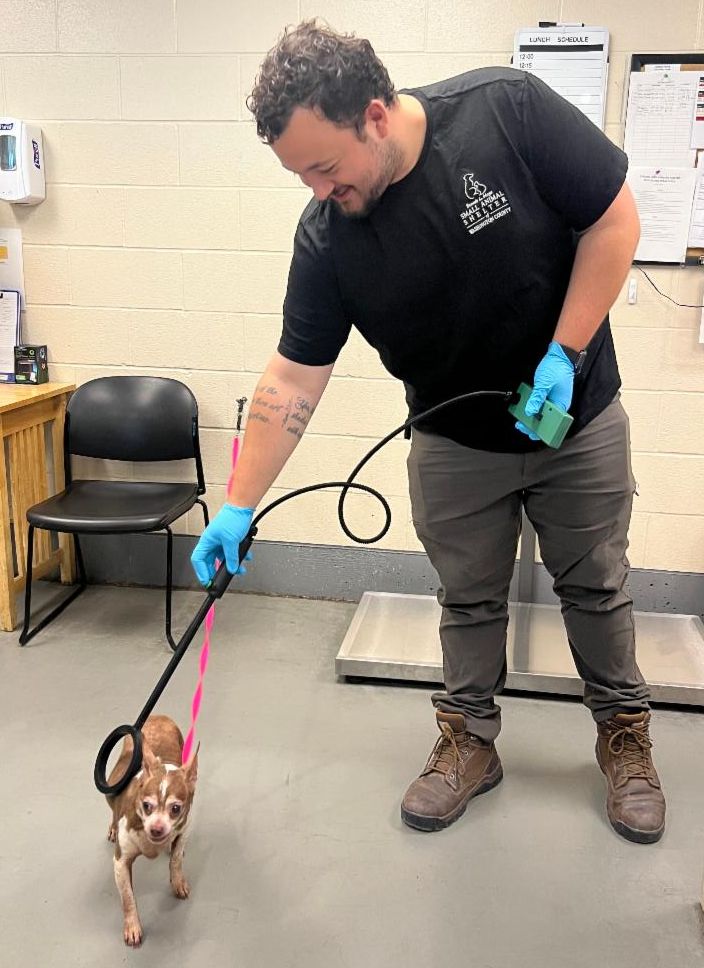
Pictured here: We check all stray pets at our shelter for microchips. When detected by a scanner, a microchip provides a series of numbers that can be used to look up who a pet belongs to. Learn how to update the information associated with your pet's microchip by visiting the Lost Pet Resources page on our website.
| | |
Donate in honor of the animal-loving grad in your life
Consider making a tax-deductible gift to the Bonnie Hays Animal Shelter in honor of a friend or family member’s educational milestone this graduation season! Donations help us investigate animal abuse and neglect, as well as provide individualized veterinary care for animals under our care.
| | | | Popeye, pictured here fully recovered and lounging in his new home, was one of 30 cats and two birds we rescued from a serious neglect situation last summer. Donations from community members like you helped us provide the initial medical exams to document the neglect these animals suffered. You can read more about this neglect case in the November 2025 edition of Animal Tales. | | | Thank you for your support! It means a lot to us and to the people and pets we serve. | | |
Help us keep your dog’s record current. Have you moved, changed phone numbers or gotten a new email address since licensing your dog? Has your dog’s license expired and it’s time to renew it? Do you have a microchip number to add to your pet’s account? Send an email to animal_services@washingtoncountyor.gov or call us at 503-846-7041 to make updates.
Having current and correct information will help us get your pet back to you if it is brought to our shelter or found by a community member while wearing a Washington County dog license tag.
Please also let us know if your dog has passed away or if you have rehomed them. We know it can be upsetting to receive a notice to renew a license for a dog you no longer have.
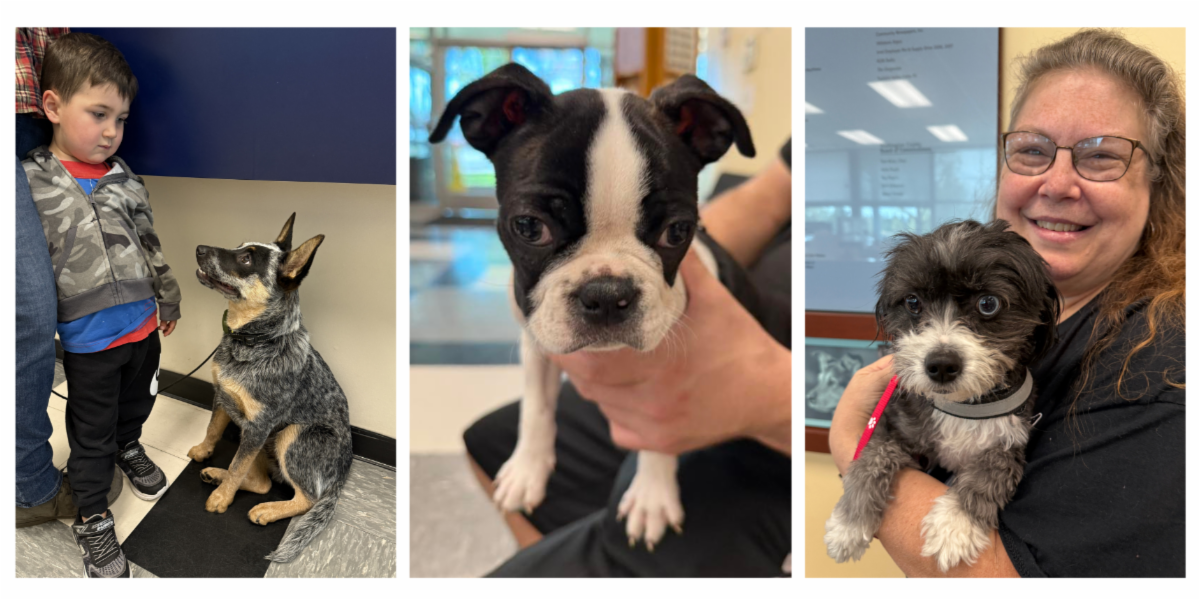
| | Blue, Bruno and Davinci all stopped by the shelter recently for licensing. Visit our website to learn more about licensing your dog online, over the phone, by mail or in person. | | Protect yourself from lost pet scams | | |
Scammers are targeting people looking for their lost pets. Animal Services Manager Randy Covey spoke with KPTV last month about these awful scams after we received a report from a community member who said someone reached out pretending to be a member of our staff.
Although the scams can take many forms, here are five signs someone who claims to have found your lost pet might be trying to con you:
-
They require money upfront to return your lost pet to you, hold on to the animal, or pay for veterinary care. If your pet were actually at an animal shelter or a veterinary clinic that charges fees, you can arrange payment when you pick up your pet.
-
You’re asked to purchase gift cards or use other hard-to-trace methods to pay fees.
-
A caller or texter asks for a verification code that has been sent to your phone or email. This is an attempt to gain access to an online account.
-
The finder refuses to meet in person, is unable to provide clear photos or videos of your pet in their care, refuses to tell you where they found your pet, or cannot provide other specifics about your animal.
-
There is an unusual sense of urgency for you to send money or provide information quickly. The scammer may even make threats regarding your animal to create that sense of urgency.
If you receive a suspicious call or text about your lost pet, search for the phone number of the organization they claim to be with. If it is a shelter or veterinary clinic, you can then call them directly to ask if they have information about your lost pet.
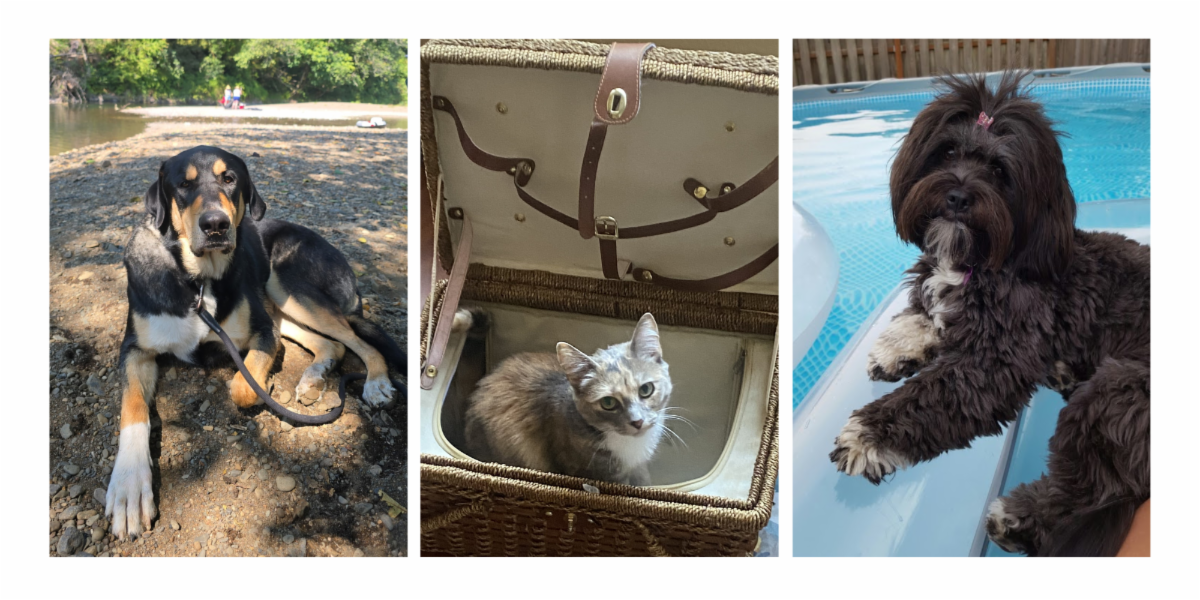
| | Preparing pets for the summer season | | Titus, Marble and Moxie are prepared for summer! All three of these cuties were adopted from the Bonnie Hays Animal Shelter and are thriving in their homes. | | |
It’s time to think about how you’ll keep the animals you care for safe and comfortable as the weather warms up.
A few things to keep in mind as we head into summer:
-
If you haven’t already, talk with your veterinarian about recommended vaccines and parasite control, including fleas and ticks. This is especially important if you plan to include your animal companion in outdoor summer adventures, such as hiking or camping.
-
Learn the symptoms of overheating. Excessive panting, difficulty breathing, increased heart and respiratory rates, and weakness can be some of the first signs of trouble. Overheating can also cause seizures, bloody diarrhea and vomiting. Contact your veterinarian or an emergency veterinary hospital immediately if you think your pet may be overheating. And never leave your pet in a car on a hot summer day, even for a few minutes.
-
Make a plan to keep your dog safe around bodies of water. Take time now to learn more about where there might be dangerous algae blooms, contaminated water, rip currents, or other potential hazards like wildlife or garbage that could harm your pet. If you anticipate taking your pet on a boat with you this summer, get them a brightly colored life vest now.
-
Refresh your emergency preparedness plans and supplies as we enter wildfire season. Visit our website for preparedness tips and ideas for people with pets and livestock.
- The Fourth of July may feel far away, but now is the time to call your veterinarian to discuss medication or other options for reducing your pet’s fear if you think they might find loud noises upsetting. The earlier you have this conversation, the better.
We hope you and your pet have a safe and comfortable summer!
| | Washington County Animal Services and the Bonnie Hays Animal Shelter | Visit Our Website |
| | | |