"America’s farmers, ranchers, and forest landowners have an important role to play in combating the climate crisis and reducing greenhouse gas emissions, by sequestering carbon in soils, grasses, trees, and other vegetation and sourcing sustainable bioproducts and fuels." J.R. Biden, Executive Order Jan 27, 2021
- - - - - - - -
|
|
US Biochar Initiative Newsletter
April 2021
|
|
Farmers, Foresters, and Politicians are Optimistic About Biochar
By Tom Miles, Executive Director
There is nothing more convincing than seeing results in the forest or in the field. Farmers and foresters attending the Biochar Opportunities in the Southwest online workshop last week saw many examples of how biochar can be made and deployed. Attendees reacted enthusiastically to the forum hosted by the extension services in the four corner states of Utah, Arizona, New Mexico, and Colorado. Networking was in full swing throughout the three days of the workshop. We look forward to increased biochar use in the region.
USBI has been been busy supplying technical information to congressional committees to support biochar legislation. The change in administration has given us opportunities to educate lawmakers on both sides of the aisle. Contact your US senators and representatives to support biochar in the bipartisan Trillion Trees Act introduced by the Natural Resources committee. Help congress learn the positive impacts of biochar on agriculture, energy, and climate change. It is Safe, Stable and Shovel-ready!
Suppliers report that farm sales are increasing as growers begin to make a profit from biochar. Consistent quality, reliable delivery, and reasonable prices drive sales. Contact USBI with your suggestions for how we can help build biochar markets.
|
|
|
|
As you can see, our USBI network is buzzing with activity on many fronts, but without your support, this momentum can't be sustained. Please give generously. |
|
|
MEET A BIOCHAR PRACTITIONER
Mark Highland
President, Organic Mechanics
|
|
Q How did you get into the soil business and biochar?
A I started with a degree in horticulture from the University of Florida. Then I worked for a while on an organic farm in Oregon where I spent all my free time researching soil at the Oregon State University library. I was very interested in the health of ecosystems and how to grow nutrient-dense food. Soil is the driver of health, both in the environment and our bodies. In 2006, I started my business of making quality potting soil. The 2013 USBI conference in Amherst, MA is where I absorbed enough information from the biochar research community to convince me that biochar had the potential to be a game-changer. I started doing my own experiments and growth trials...
|
|
NEW BIOCHAR LEARNING RESOURCE CENTER (BLC) RESOURCES
The USBI Education Committee has been reviewing and adding new resources which are all searchable by topic. This month's features include:
-
Dwelling on Drawdown - Carbon Walls - Follow USBI Board Member Kathleen Draper's biochar home-building project to learn more about how she has stashed carbon in every nook and cranny of her new home!
-
Leading the Soil Carbon Revolution - This informative article featuring Cornell University biochar researcher Johannes Lehman explains the condundrum of soil carbon: Why don't microbes eat up all the carbon in soils?
|
|
Microsoft's $1 Billion Dollar Climate Innovation Funding Available Over Next Four Years
Microsoft's Climate Innovation grants are designed specifically to help support new, early-stage ventures in carbon removal and generate more supply. In 2020, the IT giant received proposals from 79 applicants representing 189 projects and over 40 countries. Of the fifteen finalists announced earlier this year, three were biochar businesses - Carbo Cycle in Germany, Carbofex in Finland, and ECHO2 in Australia.
|
|
RECENT BIOCHAR-US.ORG ENHANCEMENTS |
|
ANNOUNCEMENTS AND OPPORTUNITIES |
|
----- CAL FIRE Announces Up to $317 Million in Grants -----
Due 5/19/21
|
|
CAL FIRE funds projects through the Forest Health Grant Program that restore forest health to reduce greenhouse gases and protect upper watersheds where California’s water supply originates, promote the long-term storage of carbon in forest trees and soils, and minimize the loss of forest carbon from large, and intense wildfires. Get grant information here.
|
|
----- State Conservation Innovation Grants Available -----
Due May/June 2021
|
|
Check here to see if there are Conservation Innovation Grants available in your state and get contact information. Grant size ranges from $100K TO $317M.
|
|
----- USBI Seeking Biochar Roundtable Participants -----
|
|
A Biochar Roundtable is forming. Roundtable participants will discuss common needs and issues such as current and future products, markets, quality standards, specifications, policy, safety, etc. If interested in participating, email USBI Board Member Jeff Waldon.
|
|
----- New, Enhanced USBI North American Biochar Directory -----
|
|
Join the Directory - Get your free biochar listing now!
● Help customers find your business.
● Find out who needs your services.
● Discover organizations that are working on biochar solutions.
Join the directory and use it to connect with the North American biochar network.
Make it easier for others to find out about your biochar company or project. Be sure to fill out as much as you can about your sector, products, applications, technology, and the scale of your operations.
Together we are putting the world's carbon budget back in the black and building the most comprehensive biochar directory for the US market!
Once you enter your information, you will be taken to a donation page. We ask for a suggested contribution of $25 annually for your directory listing. Please give more if you can afford it. Your contribution helps to keep the USBI website alive and growing!
Add your USBI listing - HERE. After review, your listing will be published in the USBI Biochar Directory.
|
|
ROLLING OUT THE GREEN CARPET FOR NEW USBI DIRECTORY MEMBERS
Welcome to the new directory members below - we are glad to have your listings in our USBI Directory!
|
|
|
|
Bioforcetech
Organic Mechanics Soil
|
|
|
BIOCHAR EVENTS CALENDAR
Send your events to cgribley@biochar-us.org.
|
|
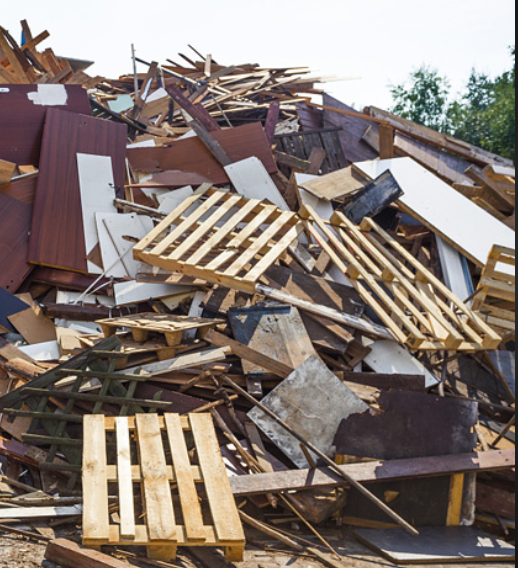
➤ Biochar Startup from the Cornhusker State Gets Going. Once they have the process down to a science and can scale production, Brian Kurth said Vital Ag will be one of the few biochar retail producers in Nebraska. The company will produce biochar from waste, such as wood pallets, at Barcel Mill and Lumber Company, an existing sawmill business.
|
|
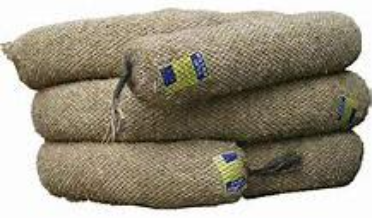
➤ Biochar Socks It to ‘Em! The [Re]Verse Pitch Competition continues to help reduce waste in the Austin, TX business community by connecting businesses that have waste with entrepreneurs who can use it. One of the winners is Locoal. The company plans to create ‘wattle socks,’ which help prevent soil erosion and capture toxins from storm-water runoff, using spent grain from Fierce Whiskers Distillery and used wood pallets.
➤ Can Soil Carbon Fast Forward the Transition to Organic Farming? It’s well known that increasing soil carbon improves soil health in terms of water holding, nutrient processing, and microbial activity. But soil carbon is especially difficult to stabilize in sandy soil, like those in Eastern North Carolina. Researchers are investigating biochar as a carbon kickstarter.
|
|
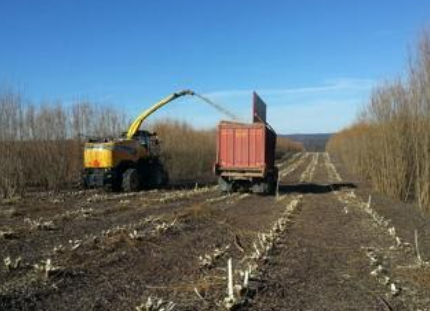
➤ Make Room for Shrub Willow. Shrub willow is a quick-growing woody crop that can be an excellent source of renewable bioenergy. The crop is harvested and turned into wood chips, which can be used for heat, mulch, animal bedding, biochar and biofuel. Researchers are learning the best ways to grow and harvest it. Shrub willow can store a significant amount of carbon in the unharvested roots and plant crowns (lower stems) left behind after the harvest and resprouts vigorously from these crowns.
|
|
The answer is neither just burning, because it releases carbon back into the atmosphere, or just chipping, because it acts as kindling for wildfire, unless you compost it for years before spreading it again. Biochar can be redistributed to the forest floor, increasing fertility and sequestration. Still, how do you make biochar from the chipping of 16,520 trees? The logistics are daunting, but landowners are looking to NRCS for help.
|
|
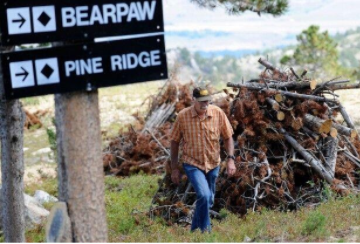
➤ Montana Forests Get Help. Money from leftover state firefighting funds not spent last year will fund forest health projects on thousands of acres. At Red Lodge Mountain, help includes logging, prescribed fire, and a biochar demonstration project.
«Red Lodge Mountain Manager Jeff Schmidt walks past rows of slash piles stacked after trees were removed between ski runs during fuels reduction work in 2013.
|
|
--------------------- promotional section ---------------------
|
|
Proceeds go to the International Biochar Initiative
|
|
|
|
|
|
|