|
Clinical toxicity and evaluation
Early or mild methanol toxicity typically manifests with nonspecific symptoms, including abdominal pain, nausea, vomiting and central nervous system depression. As toxicity progresses, patients may develop high AGMA, tachycardia, hypotension, seizures, and coma. Visual disturbances ranging from blurred vision to complete and potentially irreversible blindness are a hallmark feature and may be delayed (Barceloux et al., 2002).
Methanol toxicity may present with a broad and evolving clinical spectrum, rendering diagnosis challenging in the absence of a reliable exposure history. The onset of clinical manifestations may be delayed up to 24 hours, particularly in cases of co-ingestion with alcohol dehydrogenase inhibitors such as ethanol or certain antiretroviral agents (e.g., abacavir), which can prolong the metabolism of methanol to its toxic metabolites (Kraut, 2016).
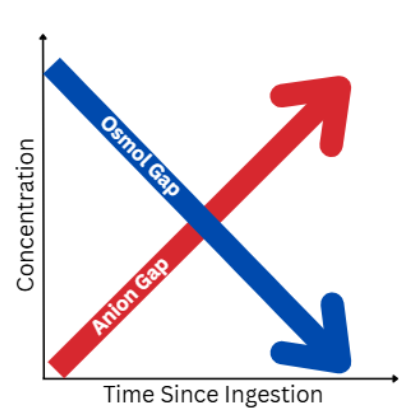
The diagnostic gold standard for methanol poisoning is direct measurement of the serum or plasma methanol concentration. However, this test is not always rapidly available and does not reliably correlate with clinical severity. In Ohio, several laboratories can perform methanol testing, and clinicians should promptly contact their regional poison control center for assistance to locate them. Every effort should be made to obtain a level as quickly as possible. In situations where assay availability is limited or delayed, the serum methanol concentration may be estimated using the osmolar gap, applying a correction factor of approximately 3.2. As hepatic metabolism proceeds, the osmolar gap declines while the anion gap increases, reflecting the accumulation of formic acid. Interpretation of the osmolar gap requires adjustment in the presence of co-ingested ethanol, as elevated ethanol concentrations contribute to serum osmolality and may confound estimation.
Treatment
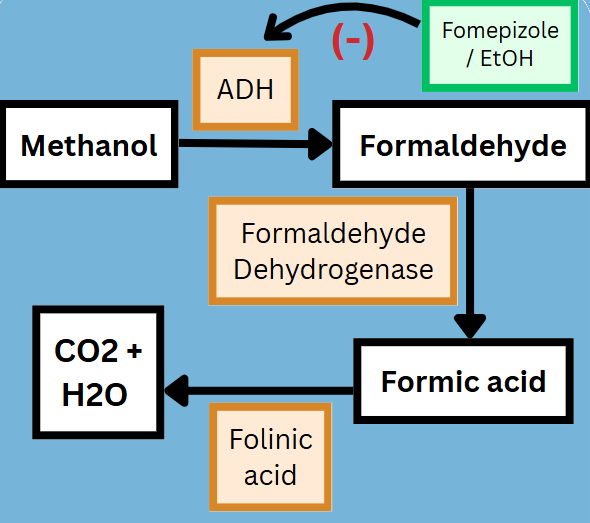
In methanol poisoning, inhibition of alcohol dehydrogenase should be initiated when serum methanol concentrations exceed 20 mg/dL and continued until levels decline below this threshold. Both fomepizole and ethanol are effective antidotal agents that prevent the formation of the toxic metabolite, formic acid.
Fomepizole is the preferred agent due to its predictable pharmacokinetics and lack of additional central nervous system depression. Ethanol may be used as an alternative; however, its administration requires close monitoring.
Hemodialysis provides rapid and efficient clearance of both methanol and formic acid and should be strongly considered in cases with markedly elevated methanol concentration (eg. > 70 mg/dL), or severe toxicity, including those with significant metabolic acidosis, visual disturbances, or end-organ dysfunction. Intermittent hemodialysis is generally favored over continuous renal replacement modalities (Roberts et al., 2015). Adjunctive therapy with leucovorin (folic or folinic acid) is recommended, as it may enhance the metabolism of formic acid to carbon dioxide and water (Kraut, 2016).
|