|
Now is a moment ripe for change
The killing of UnitedHealthcare executive Brian Thompson sent shockwaves through the medical community, Wall Street, and social media. The motive behind the killing appears to be obvious: the bullets were reportedly inscribed with the words "deny," "defend," and "depose," phrases that refer to insurers' common practices of denying care, defending their positions in court, and deposing those who challenge them.
Some social media commentators embraced the murderer's rallying cry. I was sickened by those comments suggesting Thompson deserved his fate. Let me be clear: this killing was abominable. No one deserves to lose their life because of a business decision.
That said, many of the decisions insurers like UnitedHealthcare have made are, themselves, abominable. They do deserve our outrage. We can simultaneously be outraged at both Thompson's killing and the immoral actions of insurance companies.
Read More
| |
Registration is open for
ASIPP's 2025 Annual Meeting
We would love it if you would register and join us in Orlando!
| |
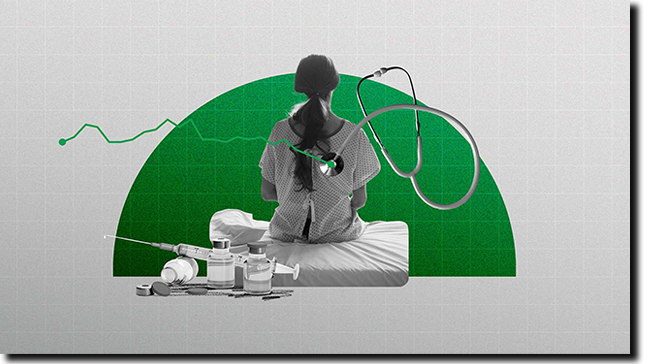
Americans' rating of U.S. healthcare coverage is below average; most say the system has major problems
Americans' positive rating of the quality of healthcare in the U.S. is now at its lowest point in Gallup’s trend dating back to 2001.
The current 44% of U.S. adults who say the quality of healthcare is excellent (11%) or good (33%) is down by a total of 10 percentage points since 2020 after steadily eroding each year. Between 2001 and 2020, majorities ranging from 52% to 62% rated U.S. healthcare quality positively; now, 54% say it is only fair (38%) or poor (16%).
As has been the case throughout the 24-year trend, Americans rate healthcare coverage in the U.S. even more negatively than they rate quality. Just 28% say coverage is excellent or good, four points lower than the average since 2001 and well below the 41% high point in 2012.
Read More
| |
Mark Your Calendar for These
Upcoming ASIPP Webinars!
Agendas coming soon
| |
|
Independent experts found unacceptable safety risk
The British government on Wednesday indefinitely banned puberty blockers for children with gender dysphoria after independent experts found there was an unacceptable safety risk in prescribing the medication.
The decision, which will be revisited in 2027, effectively bans a common approach to medical gender transitions for youths. It also goes against standards held by medical groups elsewhere, including the European and World Professional Associations for Transgender Health, as well as the American Medical Association and the American Academy of Pediatrics.
The ban will prevent prescribing medications that can suppress or pause puberty in children with gender dysphoria, providing more time to consider options that could include gender reassignment.
Read More
| |
|
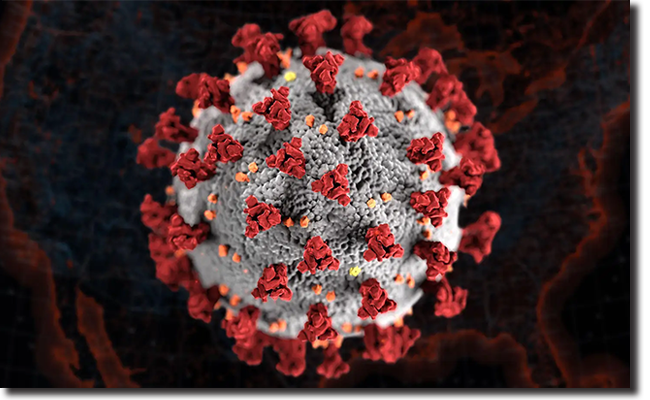
Analysis suggests long-term monitoring, especially for severe COVID cases and the unvaccinated
A large systematic review and meta-analysis found an increased risk of various autoimmune and autoinflammatory connective tissue disorders among patients who had COVID-19 infection.
The analysis appears in JAMA Dermatology. According to the investigators, results indicate that dermatologists should monitor patients over the long term following COVID-19 infection.
First author Yeon-Woo Heo, MD, is a dermatologist and researcher with Yonsei University Wonju College of Medicine in South Korea. Heo's discussion of study findings with the Reading Room has been edited for length and clarity.
Read More
| |
|
New 2025 Dates
Mark your calendars!
January 25, February 15,
March 1, and March 29
Four (4) hour virtual exam
- ABIPP Path – Combined CCPM/ CSM Exam
For those with subspecialty in Pain Medicine
Two (2) hour virtual exam
- ABIPP Competency Exam in IPM
For those without primary board certification
Two (2) hour virtual exam
- ABIPP Competency Exam in Regenerative Medicine
Two (2) hour virtual exam
- Controlled Substance Management Competency Exam
Two (2) hour virtual exam
- Documentation, Coding, Compliance, Practice Management Competency Exam
Two (2) hour virtual exam
| |
|
Jessica Borelli, PhD, a psychology professor at the University of California, Irvine, has found joy in blending the traditions of Hanukkah and Christmas with her Catholic husband of 18 years. While growing up, she often felt like an outsider when admiring Christmas lights and decorations. Now, lights have become central to her family’s celebrations, symbolizing the warmth and unity of both holidays and illuminating the unique rituals they’ve created together.
“In the beginning, I felt like these [Christmas decorations] didn’t belong in my home, this isn’t how I create a holiday,” she said. “But now it is, and we’ve crafted our own unique ways to celebrate both holidays with our children.”
It’s true that mental health issues, such as depression and substance use, often peak during the holidays, when family stress and financial pressures, as well as shorter days, may give many the blues. But on the other hand, research has shown that just looking at twinkling lights outside of people’s homes evokes feelings of friendliness and warmth.
Read More
| |
Abstract submissions are open for
ASIPP's 2025 Annual Meeting!
The abstract submission deadline is March 10, 2025.
Don't miss this opportunity to share your insights
and help shape the future of pain management.
| |
|
More Americans are living with pain now, CDC data show
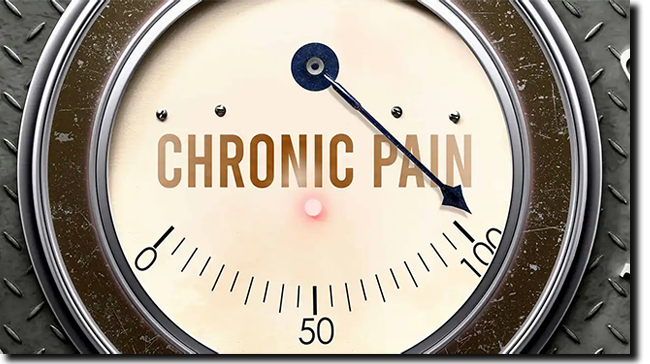
A new CDC report indicated that the percentage of Americans with chronic pain rose considerably in recent years, and it's not clear why.
In 2023, 24.3% of U.S. adults had chronic pain lasting 3 months or longer. In 2016, that figure was 20.4% , and in 2021, it was 20.9% .
The numbers came from the National Health Interview Survey (NHIS), a cross-sectional poll conducted annually by the CDC's National Center for Health Statistics. The NHIS methodology and questions have not changed, the CDC said.
Read More
| |
- ASIPP Members Only Site Information - | |
-
To log in for the first time you will need to click “forgot password” at the bottom of the login window.
- Check your email and then log in as directed.
-
If you have problems logging into your account, click here.
| |
|
A discredited study that set off a flurry of interest in using an antimalarial drug to treat COVID-19 has now been formally withdrawn.
A scientific journal on Tuesday retracted the March 2020 study that introduced the world to hydroxychloroquine early in the COVID-19 pandemic – and confirmed that the attention was undeserved from the start.
The antimalarial drug was briefly touted as a possible treatment for the novel coronavirus at a time when little else was available. This early study was published just as countries were shutting down and hospital wards and morgues were filling up. It offered a glimmer of hope when doctors has few treatments available for the newly emerged virus with as it killed tens of thousands of people in its first wave.
Read More
| | |
|  |
REGISTRATION
COMING SOON!
| | |
|
For people with obesity or type 2 diabetes, glucagon-like peptide 1 (GLP-1) agonists (including Mounjaro, Wegovy, and Ozempic) have been labeled miracle drugs. But they aren’t miraculous for everyone. Research indicates a significant portion of people discontinue using them within a year.
The main problems with GLP-1 agonists are that they are expensive and have a fairly high rate of side effects — such as nausea, vomiting, diarrhea, or constipation. Another big one is muscle loss.
A new study, published in Nature, shows a potential alternative to GLP-1 agonists with fewer side effects, at least in mice and nonhuman primates.
Read More
| |
|
Pain Medicine Case Reports (PMCR) and Editor-in-Chief Alaa Abd-Elsayed, MD, PhD would like to invite you to submit case reports and case series to the PMCR journal. Your article will be published free of charge.
Open access journals are freely available online for immediate worldwide open access to the full text of published articles. There is no subscription fee for open access journals. Open access journals are no different from traditional subscription-based journals: they undergo the same peer review and quality control as any other scholarly journal.
Interested in becoming a member of the PMCR Editorial Board?
Editorial board members are asked to review 2-6 manuscripts per year. Please submit your most up-to-date CV to sgold@asipp.org for consideration.
For more information or to submit your articles, click here.
| |
|
Casey Scott Butler, MD
Abstract
BACKGROUND: Post-COVID-19 neuropathic pain is a difficult-to-treat condition seen in approximately one-third of patients with long COVID. It has been shown to be resistant to many first-line therapies as well as over-the-counter and prescription medications.
CASE REPORT: We present the case of a 27-year-old man who developed bilateral upper extremity neuropathic pain in conjunction with a severe COVID-19 infection. He failed occupational therapy, multiple medications, and a stellate ganglion block. A dorsal column stimulator was placed and provided the patient with both pain relief and improved functionality.
CONCLUSIONS: Given the results of this case and the history of neuromodulation in effectively treating neuropathic pain, we submit that neuromodulation is a viable option for patients with refractory post-COVID-19 neuropathic pain.
KEY WORDS: Neuromodulation, neuropathic pain, post-COVID-19 syndrome, dorsal column stimulation, case report
Read More
| |
|
Laxmaiah Manchikanti, MD, Alaa Abd-Elsayed, MD, Alan D. Kaye, MD, PhD, Vidyasagar Pampati, MSc, Mahendra R. Sanapati, MD, Devi E. Nampiaparampil, MD, Nebojsa Nick Knezevic, MD, PhD, Amol Soin, MD, Christopher G. Gharibo, MD, and Joshua A. Hirsch, MD
Abstract
BACKGROUND: The use of facet joint interventions for spinal pain management experienced rapid growth between 2000 and 2010, with an annual increase of 14.2%. However, this trend slowed significantly from 2010 to 2019, with a reduced growth rate of just 2.9% annually. A more recent analysis highlighted a steep decline in facet joint interventions and sacroiliac joint injections, with an overall decrease of 33.2% and an annual decline rate of 12% per 100,000 Medicare beneficiaries between 2019 and 2022.
OBJECTIVE: This study aims to update and analyze utilization patterns of facet joint interventions for chronic pain management in the U.S. Medicare population over three periods: 2000–2010, 2010–2019, and 2019–2022.
STUDY DESIGN: A retrospective cohort study analyzing utilization trends and influencing factors for facet joint interventions in the FFS Medicare population in the United States from 2000 to 2022.
METHODS: Data were obtained from the Centers for Medicare & Medicaid Services (CMS) physician/supplier procedure summary database (2000–2022). Utilization rates were calculated based on Medicare beneficiaries for each year and expressed as procedures per 100,000 beneficiaries. Episodes or procedural visits included only primary codes, while services encompassed all procedure levels, including add-on codes.
RESULTS: Utilization patterns showed substantial fluctuations. From 2000 to 2010, facet joint intervention rates grew at 14.4% annually, slowing to 2.2% from 2010 to 2019. The COVID-19 pandemic led to a 19.3% decline in episodes.
From 2019 to 2022, episodes of facet joint interventions decreased by 21.2% per 100,000 beneficiaries, while the rate of services dropped by 37%, with an annual decrease of 14.3%. Specific declines included lumbar and cervical facet joint injections (38.8% and 40.2%, respectively) and lumbosacral and cervicothoracic facet joint neurolysis (33.6% and 30.8%, respectively). The reduction in facet joint injections and nerve blocks was greater than that observed for neurolytic procedures.
LIMITATIONS: Data were limited to the FFS Medicare population and were available only through 2022, excluding patterns for Medicare Advantage Plans, which covered nearly half of Medicare enrollees in 2022. Additionally, this study shares the common limitations of retrospective claims-based reviews.
CONCLUSION: This retrospective analysis reveals a substantial decline in facet joint intervention episodes, with an overall decrease of 21.2% per 100,000 Medicare beneficiaries and an annual decline rate of 7.6% for episodes from 2019 to 2022.
KEY WORDS: Facet joint interventions, facet joint nerve blocks, facet joint neurolysis, interventional techniques, economic decline, Affordable Care Act (ACA)
Read More
| |
|
Laxmaiah Manchikanti, MD, Mahendra R. Sanapati, MD, Vidyasagar Pampati, MSc, Alan D. Kaye, MD, PhD, Alaa Abd-Elsayed, MD, Amol Soin, MD, Devi E. Nampiaparampil, MD, Nebojsa Nick Knezevic, MD, PhD, Christopher G. Gharibo, MD, and Joshua A. Hirsch, MD
Abstract
BACKGROUND: The analysis of epidural procedure utilization has revealed several notable trends over recent years. Utilization increased significantly until 2004, then rose minimally until 2011, followed by gradual declines up to 2019 in the Medicare population. The COVID-19 pandemic led to a marked 19% decline in usage from 2019 to 2020. Additionally, recent studies of interventional pain management techniques showed a 28.9% reduction in use from 2019 to 2022, leading to an average annual decline of 10.9%.
OBJECTIVE: The present investigation aims to provide an updated evaluation of epidural procedure usage for chronic pain management in the U.S. Medicare population.
STUDY DESIGN: A retrospective cohort study examining utilization patterns and variables for epidural injections in the fee-for-service (FFS) Medicare population in the U.S. from 2000 to 2022.
METHODS: Data was obtained from the Centers for Medicare & Medicaid Services (CMS) master database, specifically using the physician/supplier procedure summary for 2000–2022. Episodes or procedure visits were defined as one per region using primary codes only, while services included all procedure levels and any add-on codes.
RESULTS: Between 2000 and 2010, epidural episodes rose by 6.7% annually but then declined by 3% each year from 2010 to 2019. The COVID-19 pandemic led to a 19.3% reduction in procedures from 2019 to 2020, followed by a partial recovery of 5.5% in 2021, then another 10.9% drop in 2022. During 2019–2022, lumbar interlaminar and caudal procedures decreased by 26.9%, while cervical/thoracic interlaminar procedures declined by 24.2%. By 2022, transforaminal procedures surpassed interlaminar procedures, reversing the trend from 2000.
LIMITATIONS: This analysis includes data only through 2022 and is limited to the FFS Medicare population; it does not account for Medicare Advantage Plan enrollees, who made up nearly half of Medicare participants by 2022. Additionally, the study is subject to limitations inherent in retrospective claims data analysis.
CONCLUSION: This two-decade analysis indicates significant shifts in epidural procedure utilization, with steady increases until 2010, followed by a general decline affected by COVID-19 and other contributing factors. An approximate 24% decline in epidural procedure visits for chronic spinal pain management was noted from 2019 to 2022.
KEY WORDS: Chronic spinal pain, interventional techniques, interlaminar epidural injections, caudal epidural injections, transforaminal epidural injections, utilization patterns, COVID-19 pandemic, economic decline, Affordable Care Act (ACA)
Read More
| |
|
ASIPP is now in collaboration with Curi Medical Liability Program
Since this malpractice insurance program officially launched in November 2018, ASIPP has signed up hundreds of providers with an average savings of 30%. This is professional liability insurance tailored to our specialty and will stand up for us and defend our practices.
Curi is a full-service advisory firm that serves physicians and their practices. Their valued advice is grounded in your priorities and elevated in your outcomes. They are driven by a deep understanding of your specific circumstances in medicine, business, and life. To read a few important points to keep in mind about the program, including discounts, administrative defense, cyber coverage, aggressive claims handling, and complimentary risk management CME activities, visit our website.
| | |
|
Group Purchasing Organization Offer Better Pricing and Creates Added Value
ASIPP has formed a partnership with Henry Schein and PedsPal, a national GPO that has a successful history of negotiating better prices on medical supplies and creating value-added services for independent physicians. Working with MedAssets, PedsPal provides excellent pricing on products like contrast media that alleviate some of the financial pressures you experience today.
Learn More
| | |
|
ASIPP, Fedora Healthcare Solutions Partnership
ASIPP offers our members the benefit of a unique revenue cycle management/ billing service.
We have received a tremendous amount of interest in the ASIPP billing and coding program.
Click here to learn more about the negotiated rate for practices and more!
| |
|
Like and follow ASIPP® on Facebook, X, and LinkedIn for the most
up-to-date news related to you, your practice, and your patients!
| | | | |