|
BAN, Environmental Investigation Agency (EIA), and Global Alliance for Incinerator Alternatives (GAIA) are joined by over 70 civil society groups in calling on Basel Parties to adopt reasonable new measures to combat the serious harms of textile waste exports to developing countries. These measures are: 1) an Annex II listing to establish Prior Informed Consent (PIC) as a baseline control mechanism, 2) a targeted update to Annex VIII to address hazardous textile waste, and 3) a new narrowly defined Annex IX entry to allow trade in clearly defined non-hazardous natural fibres waste streams destined for proven environmentally sound management (ESM).
Growing waste stream
The global trade in used textiles and textile waste has expanded rapidly over the past two decades, as textile production and consumption in fast-fashion supply chains have increased significantly, fueled by artificially cheap synthetic polymer-based feedstocks. Textile production has more than doubled since 2000, while the average number of uses per garment has declined. This has resulted in an estimated 92 million tonnes of textile waste generated annually, projected to rise significantly if current trends continue. Despite the scale, end-of-life solutions remain extremely limited. Less than 1 per cent of textile waste is recycled into new textiles, and most materials, particularly synthetics and blends, lack viable recovery pathways.
Waste mislabelled as reusable garments
In practice, trade is characterised by a fundamental misalignment between how shipments are described and what they contain. Large volumes of used clothing are exported each year under the premise of reuse, often framed as supporting circularity and second-hand markets in importing countries. Yet, a significant share of these consists of low-quality, damaged or unsellable items that are, in reality, waste. These materials are routinely traded under the label of reuse, masking the transfer of disposal burdens across borders.
Offshoring harm
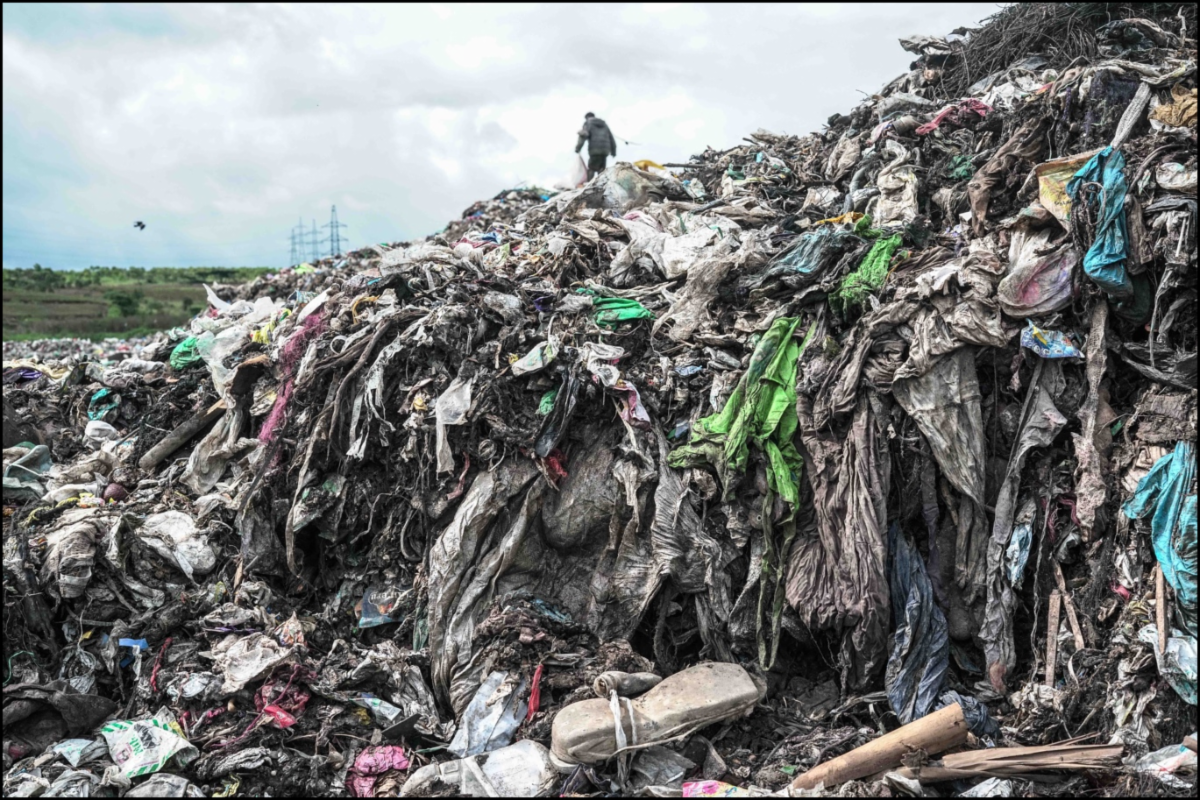
The impacts of this dynamic have created growing environmental, economic and social pressures in receiving regions. Imported textiles frequently exceed local reuse capacity, saturating markets and imposing financial losses on second-hand traders and informal sectors, while undermining domestic textile and garment economies, including local production, repair and reuse systems. As a result, municipalities are left to manage large volumes of residual waste. Unusable textiles are commonly dumped, openly burned or landfilled, generating pollution that harms the environment, human health and local livelihoods. In some cases, materials are re-exported, creating complex multi-stage trade routes that further obscure responsibility and complicate enforcement.
Material problem
Harms are compounded by the material characteristics of textiles. Modern textiles are predominantly synthetic and therefore plastic-based, making them a significant and growing source of microplastic pollution. Throughout a garment’s lifecycle, including during disposal and recycling, textiles shed plastic microfibres that can persist for centuries. A gram of textile fibres can contain millions of individual microplastics, and their elongated shape is particularly harmful. Due to their size, chemical composition and fibrous shape, these particles exhibit distinct environmental behaviour: they are readily ingested, can accumulate in biological tissues and are difficult to remove from the environment.
Toxic goods
Textiles also contain complex chemical mixtures. Additives such as dyes, flame retardants and water- or stain-resistant coatings, including PFAS and other hazardous substances, are widely used in textile production. These substances can be persistent, bioaccumulative, and toxic, and may be present at concentrations that raise concerns for ESM. As a result, many textile waste streams exhibit characteristics consistent with hazardous or other wastes under the Basel Convention.
The core governance gap
Despite these harms, the transboundary movement of textile waste remains largely outside of Basel controls. Unlike other plastic waste, which is now subject to strengthened oversight under the Plastic Waste Amendments, textile waste is not consistently subject to PIC procedures. Exporters are therefore often not required to obtain consent from importing countries before shipping textile waste, creating a regulatory gap that enables unregulated trade, misclassification and weak oversight that has led to prolific mismanagement and harm.
This regulatory gap is compounded by the absence of clear, enforceable criteria to distinguish reusable textiles from waste or to verify the existence of viable reuse markets. In practice, this enables systematic misclassification, whereby shipments declared as second-hand goods contain substantial volumes of non- reusable textiles that require disposal. The framework not only fails to prevent this outcome; it also structurally enables it.
At the same time, the limited recycling capacity for textile waste calls into question ESM. There is no proven capacity in any country to recycle textiles at scale without causing vast pollution; the volume of waste that can be legitimately traded for recovery should therefore be none.
Taken together, these factors create a system in which the costs of waste management are externalised through trade. Textile waste can cross borders with fewer controls than other waste streams that pose comparable environmental and health risks, undermining the Convention’s core objectives of protecting human health and the environment and ensuring ESM.
A proposal for Parties to the Basel Convention
As the Basel Convention’s fifteenth meeting of the Open-ended Working Group (OEWG-15) considers options to address used textiles and textile waste within its work programme, there is a clear opportunity to take action to close this gap. Recent amendments on plastic waste demonstrate how the Convention can respond to emerging waste streams by clarifying classifications and introducing appropriate controls. A similar approach should now be applied to textile waste.
Additional controls for textiles
At its core, the proposal is straightforward: textile waste should be subject to the same baseline level of oversight as other highly polluting and often hazardous waste streams.
At a minimum, textile waste should be treated as “other waste” under Annex II of the Convention and therefore subject to the PIC procedure.
This approach does not restrict legitimate reuse. Rather, it ensures that waste cannot move across borders without transparency, consent and a verifiable pathway for reuse or recovery.
The proposal, therefore, combines:
1. An Annex II listing to establish PIC as a baseline control mechanism
2. Targeted update to Annex VIII to address hazardous textile waste
3. A new narrowly defined Annex IX entry to allow trade in clearly defined non- hazardous natural fibres waste streams destined for proven ESM
Lessons from the Plastic Waste Amendments demonstrate that Annex IX exemptions must be narrowly defined to create a presumption of PIC, and that robust enforcement is required to prevent misdeclaration and ensure such waste does not evade control.
This structure preserves legitimate reuse and recycling markets while ensuring that mixed, contaminated or low-quality textile waste is properly controlled. Clean, sorted and material-pure textiles can continue to circulate. Textile waste is brought under clearer oversight.
Annex VIII controls for hazardous textiles
Textile waste streams containing persistent, bioaccumulative or toxic substances should be captured under Annex VIII, consistent with existing Basel entries. This is not an expansion of scope, but the application of established hazard-based controls to a waste stream that demonstrably meets those thresholds.
In practice, the absence of Annex VIII coverage creates a regulatory blind spot. Textile waste is rarely segregated by chemical content, and exporters are not required to characterise or declare hazardous constituents prior to shipment. This prevents competent authorities from determining whether waste is destined for ESM, thereby undermining the functioning of the Convention’s control system.
Bringing hazardous textile waste under Annex VIII would close this gap by establishing a clear obligation to identify and control such wastes at source, ensuring that transboundary movements are subject to the highest level of scrutiny where risks are greatest. It would also align textile waste with comparable waste streams already regulated under the Convention, reinforcing consistency, legal certainty and enforceability across the framework.
Benefits of strengthened oversight
Introducing clearer international rules for textile waste trade would deliver several benefits.
-
First, it would improve transparency. Requiring notification and consent procedures would create clearer documentation of trade flows and responsibilities.
-
Second, it would strengthen national control. Importing countries would be able to accept, reject or condition shipments based on their capacity to manage them safely.
-
Third, it would reduce harm to the environment and health. Ensuring that exports occur only where ESM is possible would help reduce pollution and protect vulnerable communities.
- Fourth, it would create upstream incentives. If exporters are required to manage textile waste responsibly, this can drive improvements in product design, durability, reuse and recycling systems.
Next steps for Parties at OEWG-15
|