News and information to help journalists serve the public and stay safe.
May 7, 2020
Americans support government relief funds for local news
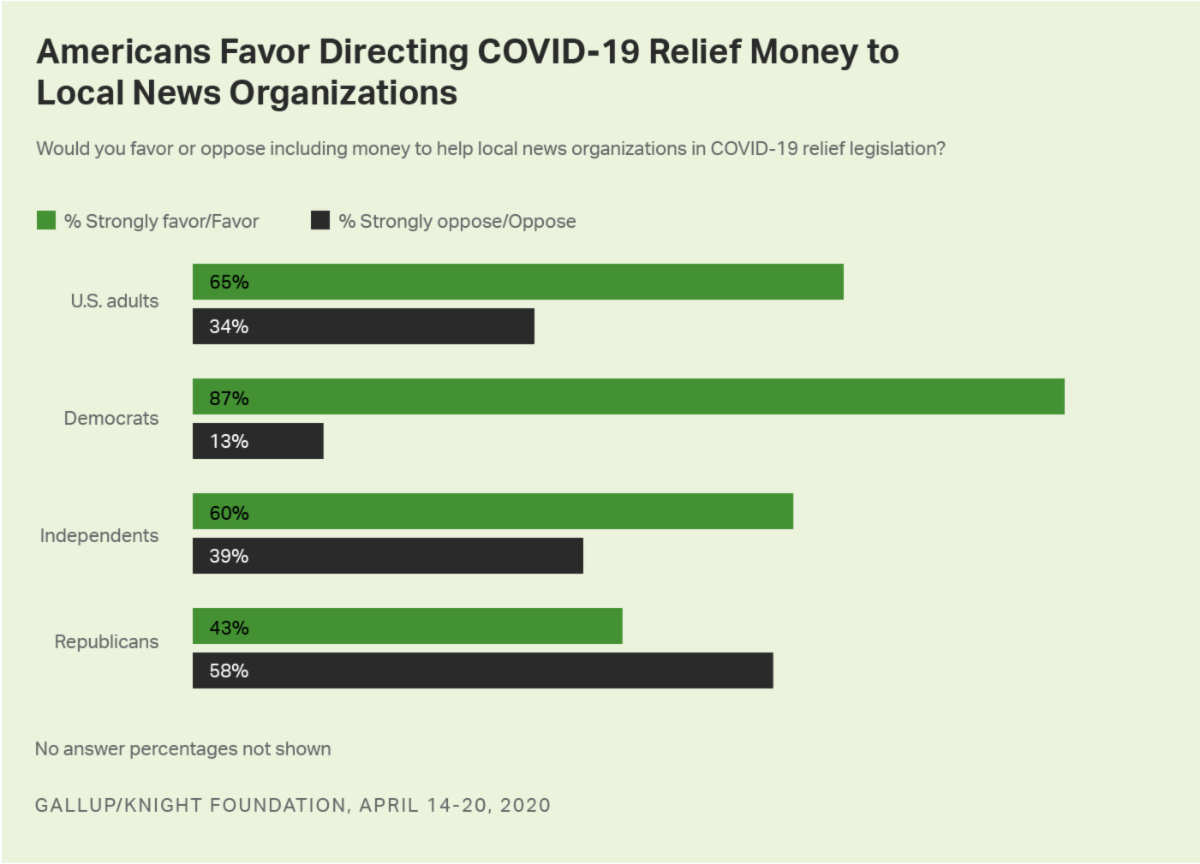
Sixty-five percent of U.S. adults say they support the government providing financial relief to local news organizations as part of COVID-19 recovery plans, according to a new Gallup/Knight survey.
About half of Americans are concerned that financial challenges due to the pandemic will have a negative impact on media organizations, but that has not made them more likely to pay for local news , according to the interviews, conducted April 14-20. Local TV news continues to see a bump in viewership and remains the best-rated source of news on COVID-19, survey results show. Confidence in news organizations is up 5 percentage points since last year. 
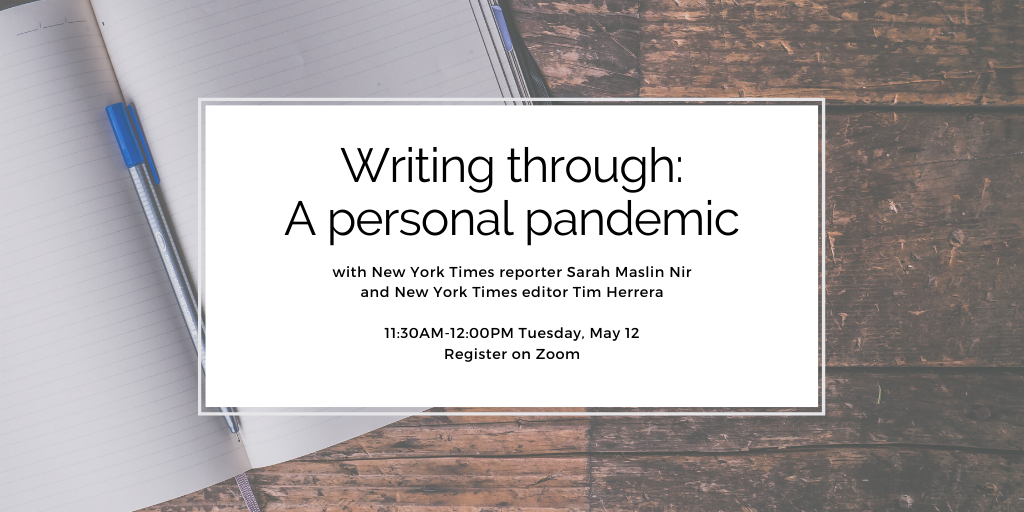
New York Times reporter Sarah Maslin Nir was reporting on coronavirus in New Rochelle when  she lost her sense of smell  and tested positive for COVID-19. New York Times editor  Tim Herrera experienced symptoms  that same week and struggled with testing.

The first part of this Zoom webinar on May 12 will be a 15-minute conversation with Sarah and Tim about writing through a personal pandemic. The second part of the program will be a 15-minute Q&A with participants. Registration is open .

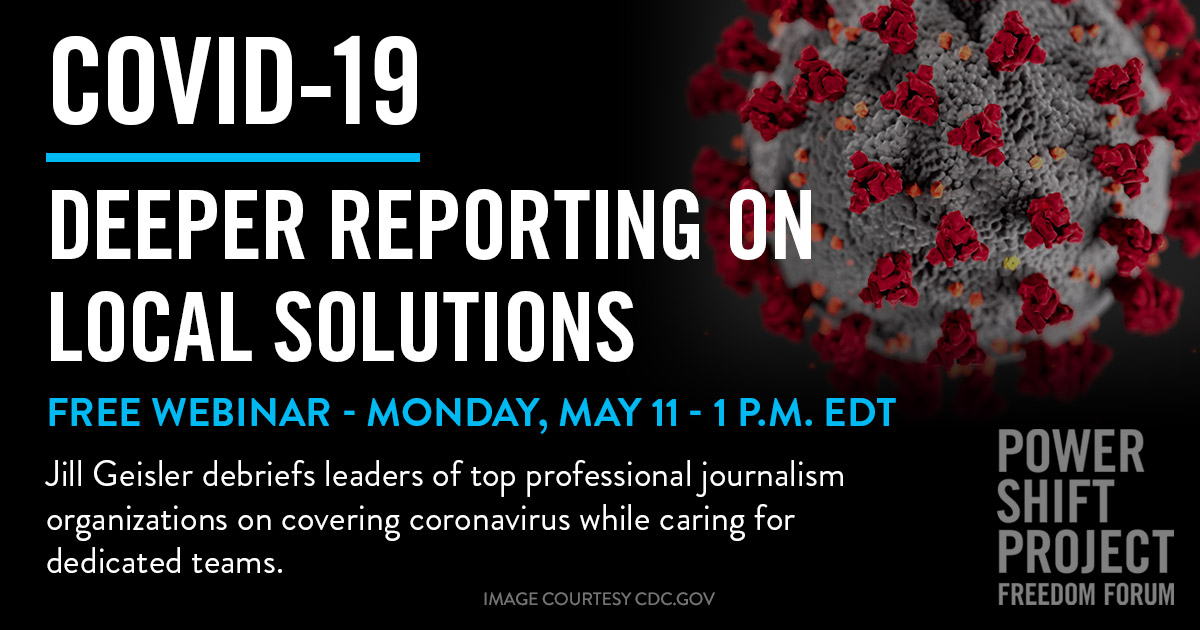
Advice from  Jill Geisler ,
Bill Plante Chair in Leadership & Media Integrity, Loyola University Chicago
Freedom Forum Fellow in Women’s Leadership

We interrupt this program for an encouraging word.

Journalists are nothing if not resourceful. They adapt to new tools and technology. They endure staff and budget cuts and still produce quality. They find information people want to hide. 

And now, whether at home, in eerily-underpopulated newsrooms, or from safe-as-we-can-make-them field assignments, they are delivering essential information during a pandemic.

While doing this work, every one of these professionals is also affected personally by COVID-19’s threat or its real manifestation in their lives.

We must never lose sight of that.

Resourcefulness and resilience are the driving forces behind every good story, photo, video, graphic, newscast, program, podcast, interview, documentary, and community service project that we’re seeing and hearing today.

Those qualities - resourcefulness and resilience - need to be supported with empathy, appreciation and respect. We can share that from the inside, as co-workers and managers.

It can come from the outside, too. Messages of support from readers, listeners and viewers provide a lift , so it’s important to circulate and celebrate those. They are an antidote to stress, politically-driven scorn, and the fatigue that can affect any one of us on any given day.

The best leaders understand the importance of encouragement - and know that even small gestures can go a long way.

A news director friend asked if I’d help him with one of those moments this week. His email said: “The staff is doing pretty good, but I am trying to find great inspirational things for them to see and hear as they continue to work through this crisis day by day.” He asked me to drop in to his morning Zoom news meeting as a surprise guest, adding, “I hope you can reinforce that their work is so critical right now and that their work has true meaning and purpose.”

So, I “Zoom-bombed” them. I stole just a few minutes of their busy agenda to talk about the road ahead, the reporting challenges they will face, and the people whose lives depend on their commitment. It was a combination reality check and rally.

If you’re in a position to invite a surprise cheerleader whose words would be meaningful for your team, go for it. If you’re the invited guest, please accept. 

Resourcefulness and resilience grow stronger with respect.

Editor’s note: We asked Jill if she’d drop in to some team meetings of our newsletter subscribers. She’s game. Send us your request here and we’ll choose one each week. 

Whether you planned to or not, you’ve built a pandemic routine.

It’s natural: Humans crave the comfort of routines , which can promote physical, mental and emotional well being. Think consistent meal times , sleep patterns , or exercise routines .  

As journalists’ work to cover the pandemic wears on, now is a good time to take stock of the routine you’re in and correct course as you’d like. 

Use this checklist and note whether you are getting too much, just enough, or too little of the activities. Based on your responses, make changes where you see fit:
 
  • Professional screen time 
  • Personal screen time 
  • Consecutive sleeping 
  • Naps
  • Exercise
  • Focused eating 
  • Snacking 
  • Alcohol consumption and drug use
  • Time with children/family
  • Time with friends 
  • Reading 
  • Creative activities
  • Unplanned time
  • Other activities you participate in

Read on for more self-care tips, or share your own .
RESOURCES
This newsletter is written & edited by the National Press Club Journalism Institute staff: Beth Francesco, Holly Butcher Grant, Jim Kuhnhenn, and Julie Moos. Send us your questions and suggestions for topics to cover.

Get this from a friend? Subscribe , and view the archives .
SUPPORT THE INSTITUTE
The National Press Club Journalism Institute promotes an engaged global citizenry through an independent and free press, and equips journalists with skills and standards to inform the public in ways that inspire civic engagement. Support our important work with a tax-deductible contribution today.