Dear Ones,
As we hunker down in winter's embrace, we see the stunning visual alignment of Jupiter and Saturn as a guiding star of light to get us through whatever darkness lies ahead. In this newsletter issue, we discuss play , something we should partake in each day, along with cozy cuddling. Play can help us recover from advserse experiences and bring joy to any moment. May your home fires stay bright and guide you through any challenges.
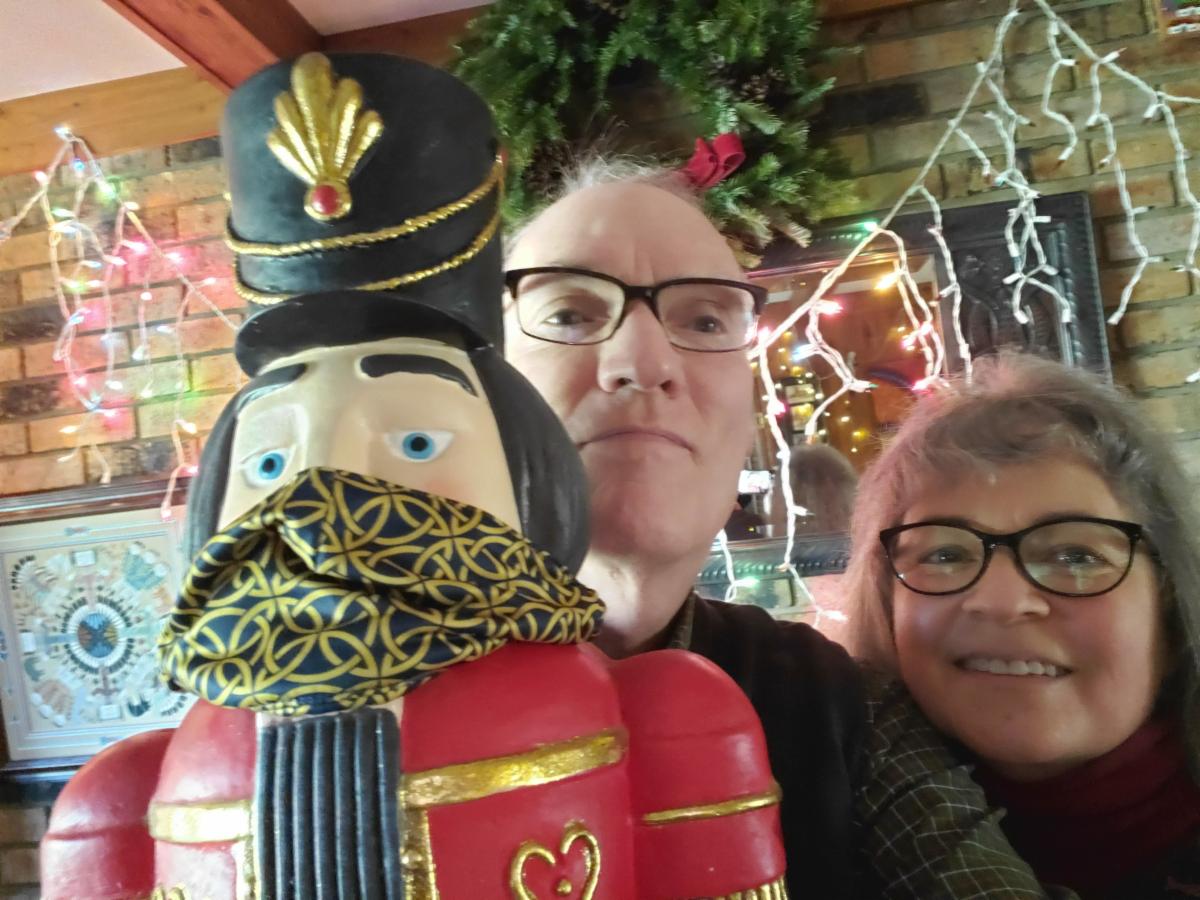
My beloved, Dan, and I play every day – in the photo with a gifted (masked) nutcracker.
Darcia Narvaez, PhD
Evolved Nest, Founder
|
|
|
The feeling appropriate to an infant in arms is his feeling of rightness, or essential goodness. The only positive identity he can know, being the animal he is, is based on the premise that he is right, good, and welcome. … the premise that he is right, good, and welcome. Without that conviction, a human being of any age is crippled by a lack of confidence, a full sense of self, of spontaneity, of grace.
|
|
The Evolved Nest's Child Care Checklist |
|
|
|
The Evolved Nest's Child Care Checklist |
We are excited to unveil Evolved Nest’s Child Care Center Checklist. The Checklist has been created to help parents and guardians determine how well a child care center matches up with the components of the Evolved Nest. The checklist is intended to be supplemental to the other protocols a center has (e.g., infection prevention, abuse prevention, diaper change frequency).
NOTE: This updated version contains music and arts sections!
Please share widely.
|
|
|
|
The Evolved Nest Explained |
|
|
|
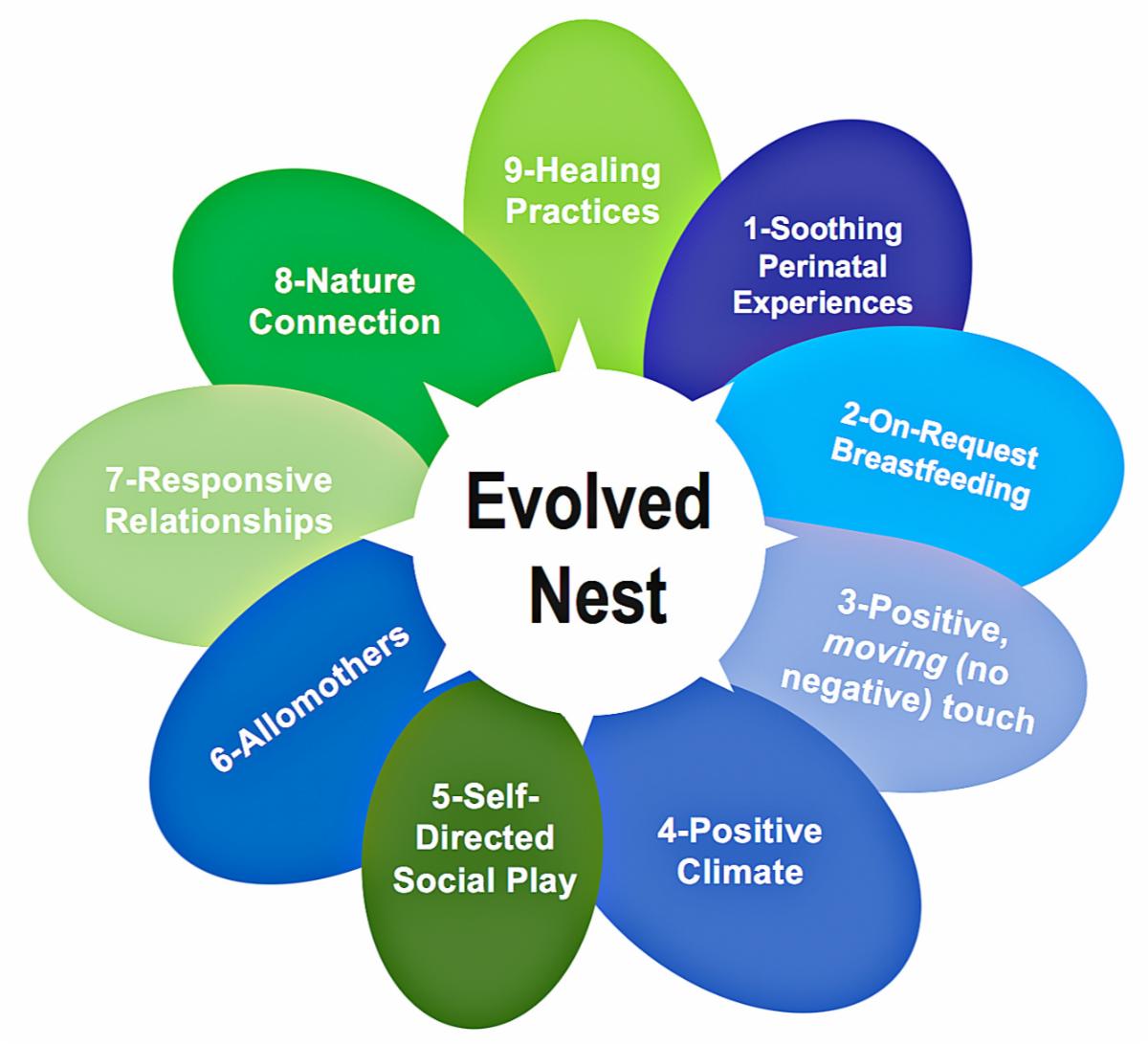
The Evolved Nest Explained: Self-Directed Social Play |
Darcia Narvaez and Mary Tarsha discuss one of the nine components of the Evolved Nest: self-directed social play.
SELF-DIRECTED SOCIAL PLAY is free social play with multiple-aged playmates.
|
|
|
|
|
|
The EEA Rough-and-Tumble Play, and the Selection of Restraint in Human Aggression |
Douglas P. Fry is an American anthropologist. He has written extensively on aggression, conflict, and conflict resolution in his own books and in journals such as "Science" and "American Anthropologist." His work frequently engages the debate surrounding the origins of war, arguing against claims that war or lethal aggression is rooted in human evolution. This presentation is from the 2010 Notre Dame Symposium to Address Early Human Experience2010 Notre Dame Symposium to Address Early Human Experience.
|
|
|
|
Comparing Childhood Trauma with Childhood Nesting on Adult Sociality |
By M.S. Tarsha, Katherine Tarvestad, Christian Pham, Darcia Narvaez, poster presented at the Association for Psychological Science, May 2020
ABSTRACT: Increasingly, psychologists are attending to the longterm effects of childhood experience on adult wellbeing. Research on Adverse Childhood Experiences (ACES) shows that adversity experienced during childhood (e.g., sexual abuse, violence in the home) predicts poor mental and physical health outcomes in adulthood (Felitti & Anda, 2005). Contrastingly, greater childhood history of the evolved developmental niche (EDN-H; supportive childhood; positive/negative home climate; family togetherness, free play, positive touch) relates to better mental health and sociomoral capacities (e.g., perspective taking; Narvaez, Cheng & Wang, 2016).
Here we compared the statistical influence of ACES versus EDN-H on prosociality (perspective taking; Davis, 1983) and self-protective sociality (social dominance; Pratto, Sidanius, Stallworth & Malle, 1994).
|
|
|
|
|
|
Maternal Gift Economy: Breaking Through
with Vandana Shiva (India), Darcia Narvaez (USA), Heide Goettner-Abendroth (Germany), Sherri Mitchell (Penobscot Nation), Mary Condren (Ireland), and Genevieve Vaughan (USA/Italy). Moderated by Letecia Layson (USA)
In this time of crisis and systemic upheaval, the model of the Maternal Gift Economy on which our survival depends at the beginning of life, is being revealed and celebrated. The interdependence of all living beings can now be made visible and honored. Mother Earth provides the model of an economy based on gifting that we receive as young children from our nurturers—before we are alienated into market exchange. We must make the transition from the exploitive Euro-American patriarchal/dominating and capitalistic ideology to a gift-based economy and culture grounded in the values of nurturing and care rather than competition and greed.
|
|
|
|
Early Partnership Childhood Care: What Should Centers Provide? |
The Evolved Nest is a proud partner of the Center for Partnership Studies. The mission of the Center for Partnership Studies is to catalyze movement towards partnership systems on all levels of society through research, education, grassroots empowerment, and policy initiatives. CPS’s programs focus on promoting human rights and nonviolence, gender and racial equity, childhood development, and new metrics that demonstrate the financial contribution of the work of caregiving.
CPS was founded in 1987 in response to the demand of readers of Riane Eisler’s The Chalice and The Blade: Our History, Our Future, hailed by Princeton anthropologist Ashley Montagu as "the most important book since Darwin's Origin of Species." A U.S. bestseller, The Chalice and The Blade is now in 26 foreign editions (including Chinese, Japanese, Korean, Hebrew, Arabic, Urdu, and most European languages), and used in universities worldwide.
We've shared our new Child Care Checklist and blog post on CPS' website this month.
|
|
|
|
FRESH EYES: Young People's Take On The Nest |
|
ACES in Chandler's (Friends) Background |
By Ariel Niforatos
Research demonstrates that children who come from dysfunctional families such as Chandler’s often have permanent consequences to their personalities, including, but not limited to, various insecurities, and they must often resort to specific methods to cope with this stress. Adequate attention and nurturing from a primary caregiver(s) is essential for a child’s emotional, social, and physiological development and well-being.
|
|
|
|
|
Why Learn Self-Calming?
Why is it important to be calm and learning self-calming away from fear, panic, anxiety or anger? Fear, panic, anxiety and anger are survival-oriented emotions that we are born with but can take over our personality, making it hard to get along with others or even feel well. They are distressing emotions and can put us in mindsets that leave us vulnerable to harmful attitudes and behaviors toward ourselves or others. They are also not good for physical health as they promote inflammation, an underlying cause of many diseases.
These daily practices are intended to give you ways to calm yourself down. You may find that some work better than others. These are ones that you should continue to do.
|
|
|
|
|
|
Cycles of Cooperative Companionship |
Why are some people cooperative and others are not? The Evolved Nest sheds light on how we can grow and raise people of cooperation and build thriving communities.
Listen to Mary Tarsha and Darcia Narvaez discuss the Cycles of Cooperative Companionship in this audio download or from the Evolved Nest's YouTube channel.
This podcast is part two of the 24 part Evolved Nest Introduction and Podcast Series.
Listen to the podcast here.
|
|
|
|
|
|
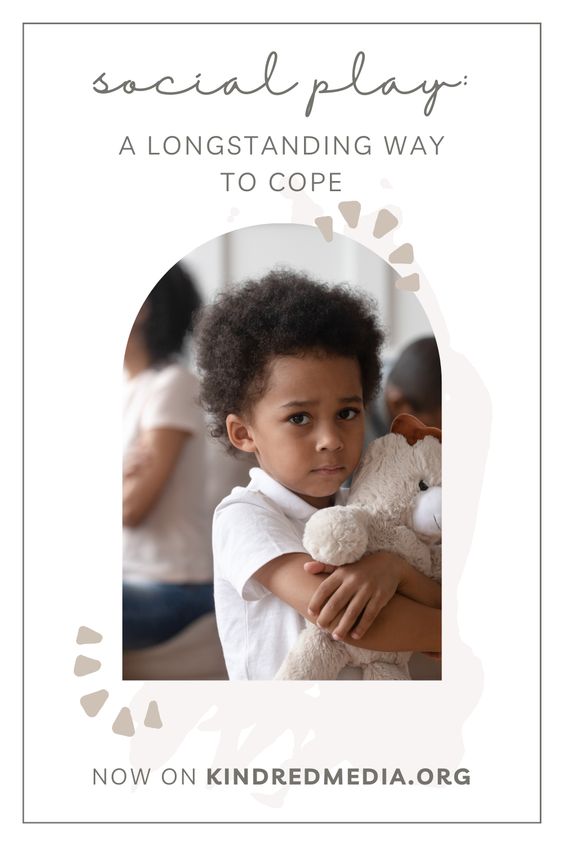
Social Play: A Longstanding Way To Cope |
Why do so many adults resist social play?
One of the most obvious traits mammals typically share is playfulness (Burghardt, 2013). Self-directed free play with others is the gold standard for play. Among those living in our ancestral environment, nomadic foraging groups, the whole group plays, making play a multi-age experience (Gray, 2014). There, playfulness contributes to bonding and peaceful cooperation.
In animal studies, the benefits are enormous to brain development, turning on many genes and releasing growth factors in the cortex, increasing socioemotional intelligence and the ability to cope with stress (Pellis & Pellis, 2009). In fact, lack of sufficient play leads to social incompetence.
If playing is so beneficial, why do so many adults resist it?
|
|
|
|
|
|
Find The Evolved Nest on Kindred |
Kindred has served as the platform international New Story of Childhood, Parenthood, and the Human Family since 2002.
You can now find all of the Evolved Nest's posts on Kindred on its own dedicated page. Many of these posts, podcasts, and interviews are not found elsewhere.
See the Evolved Nest's reviews and support our nonprofit work with your tax-deductible donation below.
|
|
|
|
Moral Landscapes Blog from Psychology Today |
I write typically about research findings related to moral functioning and living a good life. Sometimes I muse on things that I puzzle about (politics). I am very concerned about how much our society doesn't seem to know about how to raise good, healthy and happy children, so I spend a great deal of time on parenting. I also write about things that I am working on myself--the endless quest for virtue! This is an opinion blog, not a set of research articles, intended for the public not scientists. For more nuanced and highly referenced work, look at my academic work.
For each of us to have been born, our ancestors had to be smart and good. What does that look like?
Social play promotes health throughout life. How can adults learn to play?
Free social play is one of the best ways to grow flexibility and creativity. Why are so many adults reluctant to play?
Free social play is one of the best ways to grow flexibility and creativity. Why are so many adults reluctant to play?
|
|
|
|
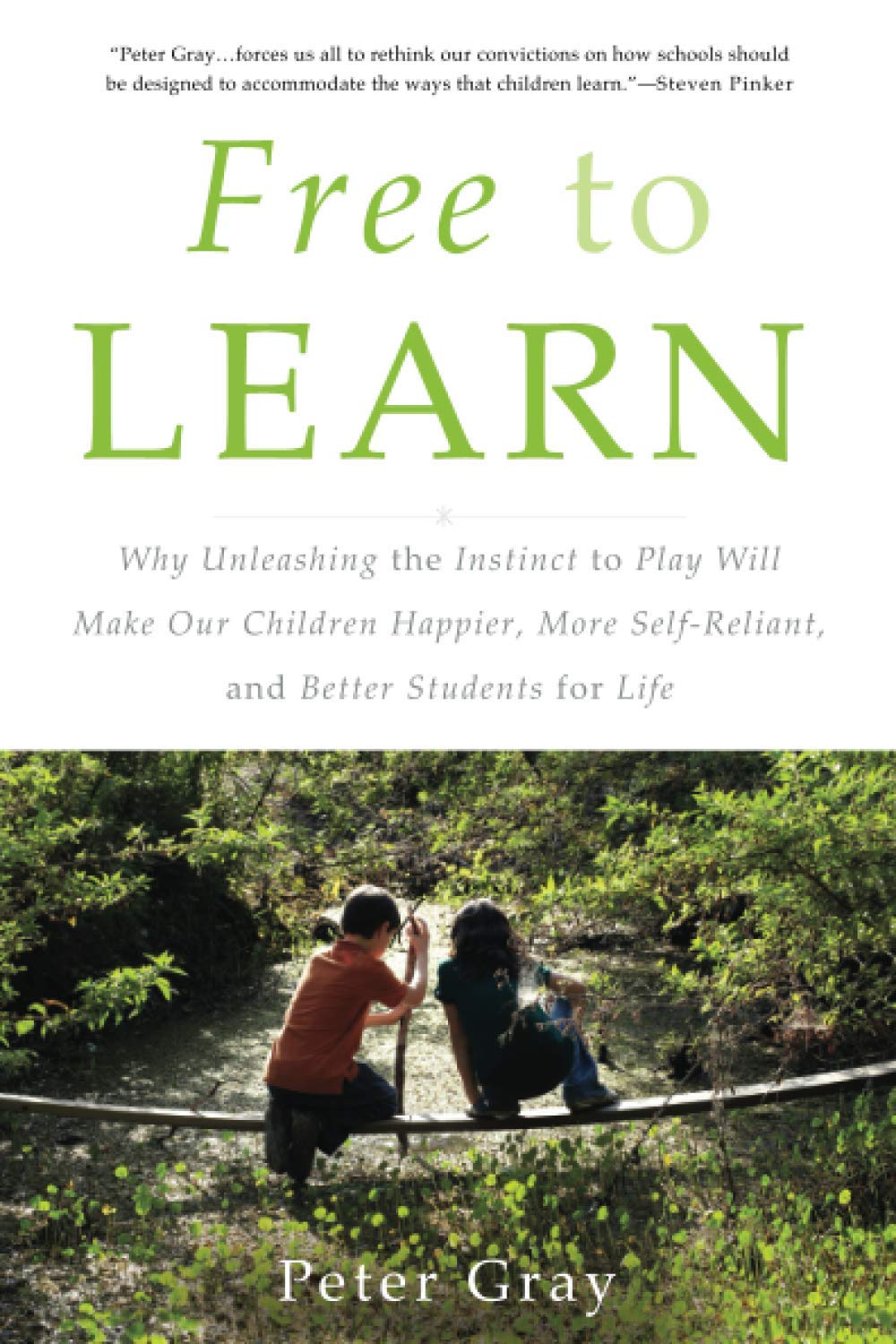
Free to Learn: Why Unleashing the Instinct to Play Will Make Our Children Happier, More Self-Reliant |
By Peter Gray
Our children spend their days being passively instructed and made to sit still and take tests, often against their will. We call this imprisonment schooling yet wonder why kids become bored and misbehave. Even outside of school children today seldom play and explore without adult supervision and are afforded few opportunities to control their own lives. The result: anxious, unfocused children who see schooling and life as a series of hoops to struggle through.
In Free to Learn, developmental psychologist Peter Gray argues that our children, if free to pursue their own interests through play, will not only learn all they need to know but will do so with energy and passion. Children come into this world burning to learn, equipped with the curiosity, playfulness, and sociability to direct their own education. Yet we have squelched such instincts in a school model originally developed to indoctrinate, not to promote intellectual growth.
|
|
|
|
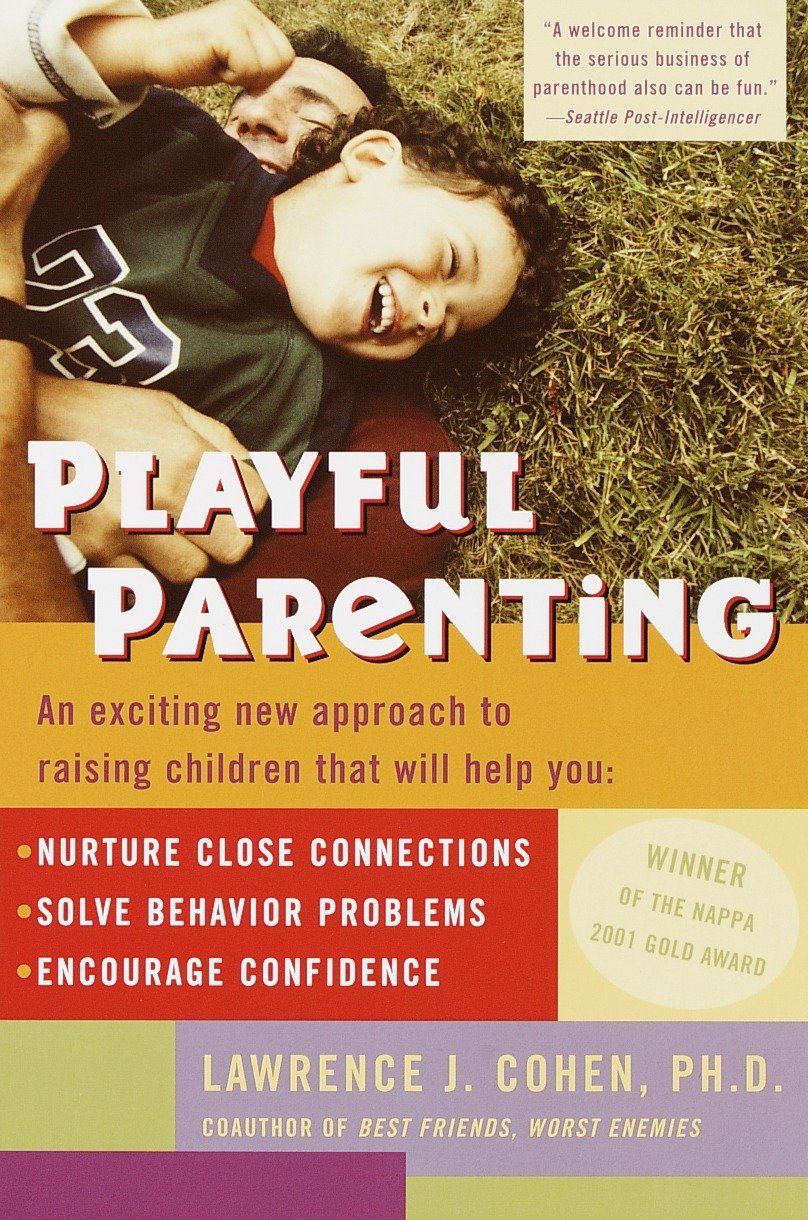
Playful Parenting: An Exciting New Approach to Raising Children That Will Help You Nurture Close Connections, Solve Behavior Problems, and Encourage Confidence |
By Lawrence J. Cohen
Have you ever stepped back to watch what really goes on when your children play? As psychologist Lawrence J. Cohen points out, play is children’s way of exploring the world, communicating deep feelings, getting close to those they care about, working through stressful situations, and simply blowing off steam. That’s why “playful parenting” is so important and so successful in building strong, close bonds between parents and children. Through play we join our kids in their world–and help them to
• Express and understand complex emotions
• Break through shyness, anger, and fear
• Empower themselves and respect diversity
• Play their way through sibling rivalry
• Cooperate without power struggles
|
|
|
|
We Won Great Nonprofit's Top-Rated Award, Again! |
Thank you to everyone who has supported The Evolved Nest's work over these past two years. Read our reviews and support our ongoing nonprofit work with your tax-deductible donation at our Great Nonprofits page.
"Kindred World helps bridge the vast gap between scientific research and practice, what is happening within the culture that often cuts against scientific evidence regarding ways to promote human thriving and flourishing. Parents and families deserve to know the best ways to raise healthy, happy, socio-emotionally developed, loving children and this is exactly what Kindred provides!" - Mary Tarsha
|
|
|
The Evolved Nest - www.EvolvedNest.org |
|
|
|
|
|
|
|