What’s the news: Momentum to fix prior authorization is building in the wake of a Department of Health and Human Services Office of Inspector General (OIG) report showing that Medicare Advantage plans delayed and denied patients’ access to medically necessary treatment. They also denied payments to physicians and other health professionals for services that met both coverage and billing rules.
OIG found that 13% of the prior-authorization requests that were denied by Medicare Advantage plans met the clinical coverage rules of traditional Medicare. And of the claim-payment denials in the study sample, 18% met Medicare coverage rules and Medicare Advantage plan billing rules.
|
|
Why You Should Have a Specialty Designation of 09 for Interventional Pain Physicians
Specialty codes are used by CMS for programmatic and claims processing purposes. Medicare and commercial payers use the primary specialty designation in processing claims. Physicians in a group of the same specialty must bill and be paid as if they were one physician. Appropriate use of specialty codes helps reduce inappropriate suspensions and improves the quality of utilization data.
Physicians should monitor their specialty status to ensure that they are enrolled in the specialty type that most accurately represents their practice. This is particularly important as physicians change the focus of their practice and become more specialized. Failure to notify Medicare of specialty changes can affect reimbursement. If you are performing interventional pain procedures but your primary designation is Anesthesiology (5) or Pain Management (72) this will negatively affect the reimbursement for pain procedures. Interventional pain physicians’ primary designation should be 09 – Interventional Pain Management, a designation that ASIPP fought for and gained to assure more representation and reimbursement.
You may check your current specialty designation and/or to change it to Interventional Pain Management (09) on the following CMS website: https://nppes.cms.hhs.gov/#/please
Before doing so, CLICK HERE for a step-by-step instructional guide created by ASIPP member Dr. Rohit Choudhary to assist members in this process.
|
|
NEXT EXAM DATES:
Part I
June 18, July 30, August 27, September 17, October 22, November 19 & December 17
Part II
September 23
|
|
The American Society of Interventional Pain Physicians (ASIPP) and Louisiana Society of Interventional Pain Physicians (LSIPP) actively opposed Louisiana HB 941 which would restrict access to minimally invasive spine procedures performed by appropriately trained interventional pain management physicians.
The bill would restrict access to care, prevent new minimally invasive techniques from being accessed in LA which are currently readily available across the country, and ultimately harm patient care by forcing patients to have much larger and more invasive procedures completed by surgical specialists who only seek to protect their financial well-being by restricting access only to themselves to complete more invasive procedures.
It was to be acted upon two weeks ago, Tuesday, May 2, but because of the ASIPP/LSIPP lobbying and opposition, this onerous bill has been tabled at this time. LSIPP Executive Director and President, Paul Hubbell, was set to testify our opposition when the bill was tabled in the final hour. We must keep this issue in our sights as it may be reintroduced with edits in the future.
Please keep in mind that bills such as these can occur in all states, and often are introduced quietly without much notice. This is an example of the importance of the ASIPP affiliate state societies! If you are not a member of your state society, please consider joining today. https://asipp.org/join-us-renew-2/
Click here to see ASIPP/LSIPP letter to the Louisiana House of Representatives, Health and Welfare Committee.
|
|
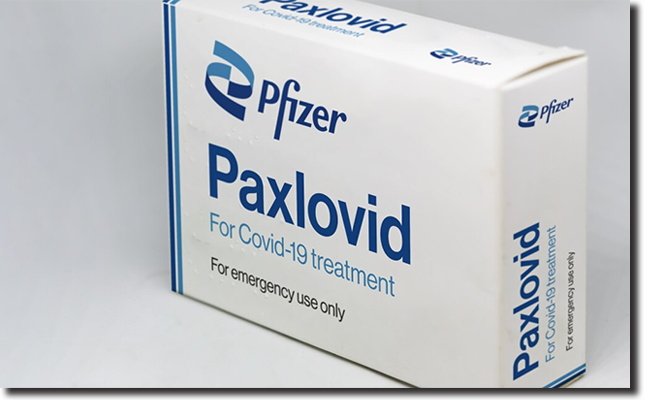
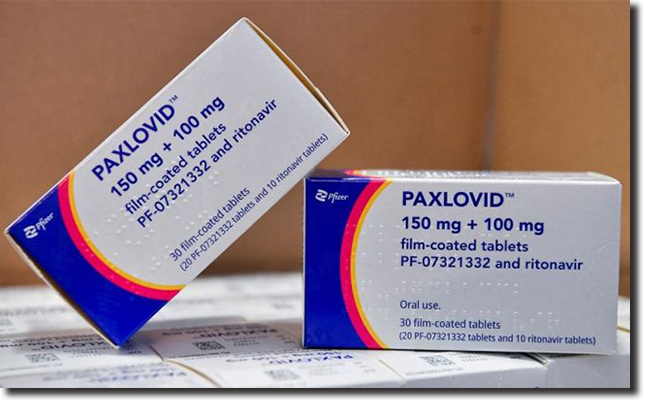
The Centers for Disease Control and Prevention (CDC) is issuing this Health Alert Network (HAN) Health Advisory to update healthcare providers, public health departments, and the public on the potential for recurrence of COVID-19 or “COVID-19 rebound.” Paxlovid continues to be recommended for early-stage treatment of mild to moderate COVID-19 among persons at high risk for progression to severe disease. Paxlovid treatment helps prevent hospitalization and death due to COVID-19. COVID-19 rebound has been reported to occur between 2 and 8 days after initial recovery and is characterized by a recurrence of COVID-19 symptoms or a new positive viral test after having tested negative. A brief return of symptoms may be part of the natural history of SARS-CoV-2 (the virus that causes COVID-19) infection in some persons, independent of treatment with Paxlovid and regardless of vaccination status. Limited information currently available from case reports suggests that persons treated with Paxlovid who experience COVID-19 rebound have had mild illness; there are no reports of severe disease. There is currently no evidence that additional treatment is needed with Paxlovid or other anti-SARS-CoV-2 therapies in cases where COVID-19 rebound is suspected.
Regardless of whether the patient has been treated with an antiviral agent, risk of transmission during COVID-19 rebound can be managed by following CDC’s guidance on isolation, including taking other precautions such as masking.
Staying up to date with COVID-19 vaccination lowers the risk of getting COVID-19 and helps prevent serious outcomes of COVID-19, such as severe illness, hospitalization, and death.
|
|
Infection is likely headed toward seasonality, but it's not there yet
COVID-19 may indeed become a seasonal illness with predictable patterns of infection -- but it's not there yet, epidemiologists and infectious disease experts say.
While the virus has had some element of seasonality since it first came into the world more than 2 years ago, other factors -- including variant evolution, population immunity, and behavioral changes -- have made seasonality less apparent.
The disease may fall into a more predictable rhythm once the population has more immunity and as people go back to their pre-pandemic lives, but this will likely take a few years, most experts agreed.
|
|
Use of Pfizer Inc's (PFE.N) COVID-19 antiviral Paxlovid spiked this week, but some doctors are reconsidering the pills for lower-risk patients after a U.S. public health agency warned that symptoms can recur after people complete a course of the drug, and that they should then isolate a second time.
More quarantine time "is not a crowd-pleaser," Dr. Sandra Kemmerly, an infectious disease specialist at Ochsner Health in New Orleans, told Reuters. "For those people who really aren't at risk ... I would recommend that they not take it."
Use of Pfizer's Paxlovid, authorized to treat newly infected, at-risk people in order to prevent severe illness, has soared as infections have risen. More than 162,000 courses were dispensed last week - compared with an average of 33,000 a week since the drug was launched late last year, according to government data. Biden administration officials have pushed for wide use of Paxlovid, which the government purchased and provides free.
|
|
It happened nine times.
Sometimes it would be after spotting someone shooting up heroin and suddenly losing consciousness. In others, it would be after shouts in the dead of night that someone was dying of an overdose.
Each time, Fredrick Mitchel, 58, pulled out Narcan, the medicine that can undo an opioid overdose, and tried to save a life.
“I’ve watched the breath of life return to people,” said Mitchel, who has struggled with drug use himself. “People don’t realize what is happening and sometimes it feels like the world doesn’t care. It’s traumatic.”
|
|
REGISTRATION BEGINS OCTOBER 2022 |
|
- ASIPP Members Only Site Information - |
|
-
To log in for the first time you will need to click “forgot password” at the bottom of the login window.
- Check your email and then log in as directed.
-
If you have problems logging into your account, click here.
|
|
Pain Medicine Case Reports (PMCR) and Editor-in-Chief Alaa Abd-Elsayed, MD, PhD would like to invite you to submit case reports and case series to the PMCR journal. Your article will be published free of charge.
Open access journals are freely available online for immediate worldwide open access to the full text of published articles. There is no subscription fee for open access journals. Open access journals are no different from traditional subscription-based journals: they undergo the same peer-review and quality control as any other scholarly journal.
Interested in becoming a member of the PMCR Editorial Board?
Editorial board members are asked to review 2-6 manuscripts per year. Please submit your most up-to-date CV to sgold@asipp.org for consideration.
For more information or to submit your articles, click here.
|
|
| CASE REPORT |
Akash Jindal, DO, Nicholas K. Donohue, MD, and Gwynne Kirchen, MD
Abstract
BACKGROUND: For decades, spinal cord stimulation (SCS) has been used for the treatment of chronic pain. While the complications of SCS have been well documented in the literature, less of a focus has been placed on neurological complications.
CASE REPORT: While SCS is commonly used for the treatment of complex regional pain syndrome (CRPS), this case details acute CRPS that is believed to be caused by a spinal cord stimulator trial. The patient was treated with early physical therapy and lumbar sympathetic nerve blocks which provided symptomatic relief.
CONCLUSION: Although rare, SCS can lead to long-term complications. Unexpected complications may occur during an SCS trial. Early diagnosis and treatment provide the patient with the best opportunity to achieve a good outcome.
KEY WORDS: Case report, complex regional pain syndrome, spinal cord stimulator
|
|
| PROSPECTIVE STUDY |
Sairam Atluri, MD, Matthew B. Murphy, PhD, Ryan Dregalla, PhD, Jessica Herrera, BS, Kwadwo Boachie-Adjei, BS, CPH, Sachi Bhati, Vivek Manocha, MD, Navneet Boddu, MD, Pavan Yerramsetty, MD, Zaid Syed, Meghana Ganjam, Divit Jain, Zaynab Syed, Nikhil Grandhi, and Laxmaiah Manchikanti, MD
Abstract
Background: Regenerative medicine interventions are applied to assist in the repair, and to potentially replace or restore damaged tissue through the use of autologous/allogenic biologics and it continues to expand. The anti-inflammatory, immunomodulatory, and regenerative properties of bone marrow mesenchymal stem cells (BM-MSCs), and investigation into their therapeutic efficacy and safety in patients with severe chronic low back pain, have not been demonstrated in controlled studies. Multiple pain generators have been hypothesized to be responsible in severe spinal degeneration and it is difficult to identify a single pain generator; consequently, resulting in inadequate therapeutic results.
Objectives: The study was undertaken to evaluate the effectiveness of autologous bone marrow MSCs in the treatment of chronic low back pain due to severe lumbar spinal degeneration with involvement of multiple structures.
Study design: Prospective, open-label, nonrandomized, parallel-controlled, 2-arm exploratory study.
Setting: A private, specialized, interventional pain management and regenerative medicine clinic.
Methods: The treatment group patients received a one-time bone marrow concentrate injection into spinal structures (i.e., discs, facets, spinal nerves, and sacroiliac joints), along with conventional treatment, whereas, the control group received conventional treatment with nonsteroid anti-inflammatory drugs, over-the-counter drugs, structured exercise programs, physical therapy, spinal injections and opioids, etc., as indicated.
Outcomes assessment: Outcomes were assessed utilizing multiple instruments, including the Oswestry Disability Index (ODI), Numeric Rating Scale (NRS-11), EuroQOL 5-Dimensional Questionnaire (EQ-5D-3L), Global Mental Health (GMH), and Global Physical Health (GPH). Multiple outcomes were assessed with primary outcomes being minimal clinically important differences (MCID) in ODI scores between the groups and/or a 2-point reduction in pain scores. In the study group, total nucleated cells, colony forming units-fibroblast, CD34-positive cell numbers and platelets were also recorded, along with post-procedure magnetic resonance imaging changes. Outcomes were assessed at 1, 3, 6, and 12 months.
Results: Significant improvement was achieved in functional status measured by ODI, pain relief measured by NRS-11, and other parameters measured by EQ-5D-3L, GMH, and GPH, in the study group relative to the control group at all time periods. The results showed significant improvements at 12-month follow-up with 67% of the patients in the study group achieving MCID utilizing ODI when compared to 8% in the control group. Greater than 2-point pain reduction was seen in 74% of the patients at 3 months, 66% of the patients at 6 months, and 56% of the patients at 12 months. Both MCID and pain relief of 2 points were significantly different compared to the control group. Opioid use decreased in the investigational group, whereas, there was a slight increase in the control group. Age, gender, opioid use, and body mass index did not affect the outcomes in the stem cell group.
Limitations: Single center, nonrandomized study.
Conclusions: The first available controlled study utilizing BM-MSCs in severe degenerative spinal disease with interventions into multiple structures simultaneously, including disc, facet joints, nerve roots, and sacroiliac joint based on symptomatology, showed promising results.
Keywords: autologous; bone marrow mesenchymal stem cells; disc; facet joint; regenerative medicine; sacroiliac joint; spinal degeneration; Low back pain.
|
|
| ONLINE SURVEY |
Christopher Yih, DO, Krupali Chokshi, MD, Christopher Kyriakides, DO, Kyle Seko, DO, Sayed Wahezi, MD, Naum Shaparin, MD, Amaresh Vydyanathan, MD, Jean Carlo Gallardo, MD, Lisa Morrow, NP, Kevin Sperber, MD, and Jacob R. Hascalovici, MD, PhD
Abstract
Background: Chronic pain is a leading cause of disease burden and disability globally. The COVID-19 pandemic catalyzed a major paradigm shift in health care delivery with the universal adoption of telemedicine. Telehealth physical examination is particularly challenging and little guidance is available on this topic.
Objectives: We attempt to describe the Point To the Area of Pain (PTAP) test and establish a consensus regarding its utility for musculoskeletal examination (MSK) via telehealth.
Study design: The authors drafted an online survey.
Setting: The survey was sent to physicians and nurse practitioners within the authors' respective departments and institutions who routinely use telemedicine to treat pain METHODS: Respondents (n = 61) were asked about their primary specialty, comfort level in evaluating patients in pain, use of the PTAP test and its perceived clinical relevance to patient management, and other relevant questions.
Results: Respondents were predominantly trained in Physiatry (47.5%), Anesthesiology (23%), Neurology (13.1%) and Family Medicine (11.5%); 67.2% of providers treat pain related diseases > 75% of the time; 50.8% of respondents were "somewhat comfortable" at performing a virtual MSK exam and 29.5% were "not comfortable"; 65.5% utilize the PTAP test and 88.5% agree or strongly agree that this test provides extrinsic clinically relevant information.
Limitations: The relatively small number of respondents.
Conclusion: PTAP tests should not replace the standard accepted in-person or virtual physical examination in practice, but in the absence of a hands-on exam, the PTAP test is a clear and concise test that can easily be performed in conjunction with other techniques via telehealth, and in the context of assessing pain provides useful clinical information that can help guide medical decision making.
Keywords: COVID-19; digital health; physical examination; telemedicine; Chronic pain.
|
|
Since this malpractice insurance program officially launched in November 2018, ASIPP has signed up hundreds of providers with an average savings of 30%. This is professional liability insurance tailored to our specialty and will stand up for us and defend our practices.
Norcal Mutual is A-Rated by AM best and is licensed in all 50 states. To read a few important points to keep in mind about the program, including discounts, administrative defense, cyber coverage, aggressive claims handling, and complimentary award-winning risk management CME activities, click here.
|
|
ASIPP® has formed a partnership with Henry Schein and PedsPal, a national GPO that has a successful history of negotiating better prices on medical supplies and creating value-added services for independent physicians. Working with MedAssets, PedsPal provides excellent pricing on products like contrast media that alleviate some of the financial pressures you experience today.
|
|
ASIPP® is now offering our members the benefit of a unique revenue cycle management/ billing service.
We have received a tremendous amount of interest in the ASIPP® billing and coding program.
Click here to learn more about the negotiated rate for practices and more!
|
|
|
up-to-date news related to you, your practice, and your patients!
|
|
|
|
|
|
|