Wednesday Weblog for July 16, 2025 | | The purpose of coaching is to close the gap between potential and performance. --Keith Webb | | Leading Off: Elijiah and Me | | |
This week, again, and for the next four weeks, I am leading off with an update about the Falmouth Road Race, taking place on Sunday, August 17th. As a runner for the Cystic Fibrosis Foundation, for the fourth year, I have come to know quite a bit about the condition, the Foundation, and the results.
To me, the best part of the effort is that the parents I know always say how the latest developments are 'life changing.' I think that is really everyone's goal when trying to make a difference. I know my effort is tiny compared to others, but I also know that thousands of tiny efforts do make a difference.
Running seven miles in the heat and humidity of August is easier for some than others. This year may be the hardest compared to the other ten times I've run this race. My conditioning, physical issues, and other things seem to be catching up with me.
That being said, I know I have one more race in me, and on August 17th when I cross that finish line, I will have a tear in my eye for two reasons: I did it, but more importantly, the Cystic Fibrosis Foundation did it and will keep doing it.
| | |
Several years ago, I learned about the ’10,000-Hour Rule.’ It is a theory popularized by author Malcolm Gladwell that suggests that it takes about 10,000 hours of deliberate practice to achieve mastery in a field. The idea was based on research done by psychologist K. Anders Ericsson, who studied expert performance in domains like music and chess.
- Ericsson’s research emphasized deliberate practice, meaning focused, goal-oriented practice with feedback—not just any 10,000 hours of doing an activity.
- The 10,000-hour number is an average or ballpark, not a precise threshold. Different fields, individuals, and contexts require different amounts of practice.
- Later research has shown that talent, coaching quality, and other factors also play huge roles.
So, while the 10,000-Hour Rule has become a cultural shorthand for “it takes a long time to get really good at something,” it’s more nuanced in practice.
| | |
I started thinking about the areas where I might have achieved the 10,000-hour threshold.
-
Driving: I have certainly driven for more than 10,000 hours, maybe even achieving that total in four different states: Massachusetts, Ohio, Tennessee and California.
-
Washing Dishes: As a former restauranteur who would jump in when needed, and as a husband for 51 years, I have easily passed the 10,000-hour mark. I am an expert, although a little sloppy in the kitchen at home.
-
Watching Football: I am certainly an expert and obviously know what to do on third and short, depending on the team and field position.
-
Watching Baseball: You can reach 10,000 hours in fewer games than most sports, but I would consider myself an expert on when to bunt and when to steal and when to change the pitcher.
-
Eating in a Restaurant: Both as an executive and as a customer, I know how to eat in a restaurant, I know how to identify one I will never go back to, and I know what a well-run operation looks like and feels like.
-
Ice Machines: Now I do not have 10,000 hours fiddling with ice machines, but when I have ice in my drink at a restaurant, I know by the shape of the cube whether it is a Scotsman, a Kold Draft, or a Manitowic: I can’t help myself.
-
Running: I think in the last 15 years, I may be close to an expert, but it didn’t take me 10,000 hours for a reason. So, even though I am an expert on foot pain, leg pain, hip pain, back pain, breathing, and sweat, my running expertise is not based on hours, but something else.
| |
Included in the theory of the hours needed to reach expert status, is the caveat (love using that in a sentence) that "talent, coaching quality and other factors" also play huge roles.
That means that you might not need 10,000 hours to master a skill. You might need a lot less based on your talent, the quality of your coaching or other factors, like luck.
Let’s look at those three areas:
| |
Luck:
How do you get better with luck? A whole bunch of ways. You could be placed in a role where your talent is maximized rather than minimized.
I can’t sing, so my talent would be minimized if I had a job singing, however, I have been known to dance on a stage or two. So if I had a job dancing, by chance, it might contribute to my expertise. When you start a job or a career or a college education, you really don’t know exactly what the plan is.
Have you ever heard of a college student changing their major? Me, too, and I did. Sometimes circumstances impact the direction you go. You may have had a law enforcement officer in your family or another occupation impact you somehow, and you go into that field. Or you may have read a book about this or that that influenced you.
You may have had or seen a personal tragedy and you decide to work to prevent others from the experience. The point is, there is a randomness to many factors in our lives that impact the things we become an expert in.
| |
Talent:
You can’t teach height. Once that card, and other talent cards, were dealt before you were born, they are yours.
If you are foot taller than me, you can probably dunk a basketball like an expert. I cannot.
Some people can pick up languages easily, others can bake or sew or handle a wrench or sing or dance or hit a baseball or a three-pointer more naturally than others.
If you are Larry Bird, even though I'm sure he spent 10,000 hours shooting threes, he probably didn’t’ need all those hours to become an expert.
The point is that some things are more natural and easier to become an expert at or in than others for almost everyone.
| |
Coaching:
So, as you probably figured if you’ve read a Weblog or two, this is the focus point of this one.
If, in fact, if it does takes 10,000 hours to master something on your own, doesn’t it make sense that quality coaching could also significantly reduce that time to reach excellence?
Doesn’t it make sense that what someone else learned in 10,000 hours could be passed along and take a lot less time? It does to me. Here’s an example.
| |
It’s a running story, but not really.
When I got off the couch at my wife’s urging and started walking on a daily basis, I began the 10,000 hour quest to master movement and conditioning at the age of 60 years old.
One day, for no special reason, I jogged a hundred yards and didn’t collapse. A week later, out of curiosity, I jogged a mile and didn’t collapse.
I was off, literally, to the races.
I entered the Canal Diggers 5K road race in Worcester and was so thrilled to run and even more thrilled to finish, I officially launched my running career. Shortly thereafter, I hurt my knee running. I was not an expert yet.
| |
I started going to physical therapy for the knee, with Sarah Rheault as my therapist, and got better. After a couple of months, she left the PT practice she was with and ventured out on her own. And while she didn’t accept my insurance, she accepted me, and became my trainer.
From that point on she guided almost every single muscle and running movement I took for many years.
She provided me with winter training exercises, running stretches, heart rate running goal targets, and all kinds of tips and feedback.
She approved all my plans and strategies. She was accelerating my expertise at a rate that even the two of us couldn’t understand what was happening. She has a PhD in her field, and I was the beneficiary of her 10,000-hour expertise.
| |
After a couple of years under Sarah's tutelage, I wondered about running the ‘Finish at the 50’ 10K with my younger brother Paul Doherty in Foxboro where the Patriots play and she put together a plan and ‘coached’ me to finish.
| |
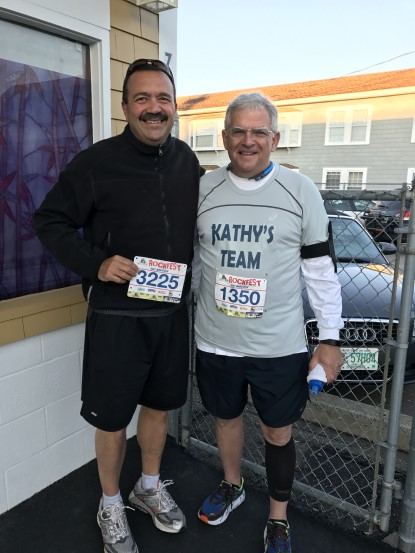
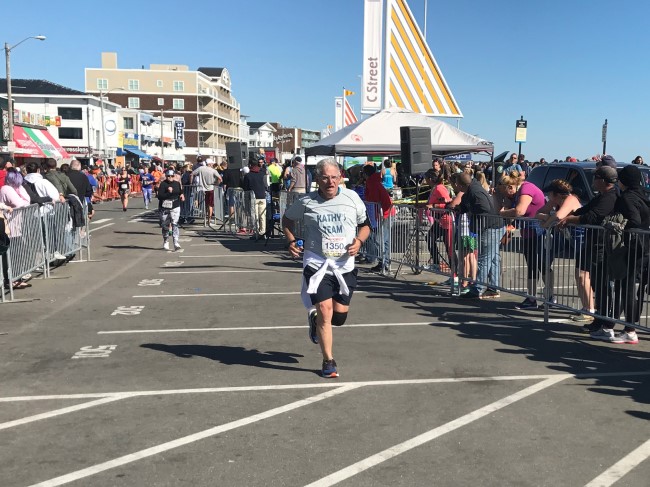
A few years later, I wondered about running a half-marathon in Hampton Beach, New Hampshire, urged on by a friend, Rick Martino and she put together a plan and ‘coached’ me to finish.
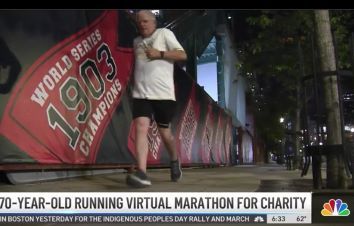
A few years later, after I ran four additional half-marathons, I decided to run the Boston Marathon at the age of 70. She put together a plan and ‘coached’ me to finish.
| |
Stop and think about that. Would you want to coach a 70-year-old to run a marathon? How did a 70-year-old actually run a marathon?
Well, based on what I know, he was able to do it because he converted the feedback and coaching from Sarah into maybe 5,000 fewer hours that if he didn’t have her as a coach.
| |
Because I have not spent 10,000 hours running and personally don’t meet that standard, with the coaching from Sarah, I guess running a marathon at the age I did it, says “knows what he’s doing.”
Think about it: without Sarah in charge, I might not have run a marathon until I reached 80 years old.
| |
So, there are four factors impacting your expertise level. 10,000 hours of deliberate practice or dedication to an area, plus luck, talent, and coaching.
- Putting in the time and effort is essential.
- Luck can make a difference.
- Talent obviously makes a difference.
- Coaching can be the biggest difference maker of all.
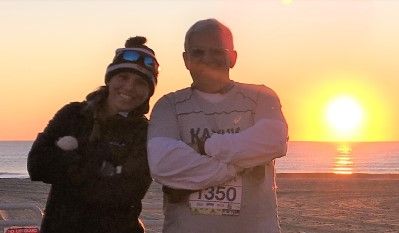
| | Surprise Photo at the End: Sunrise at Hampton Beach | | |
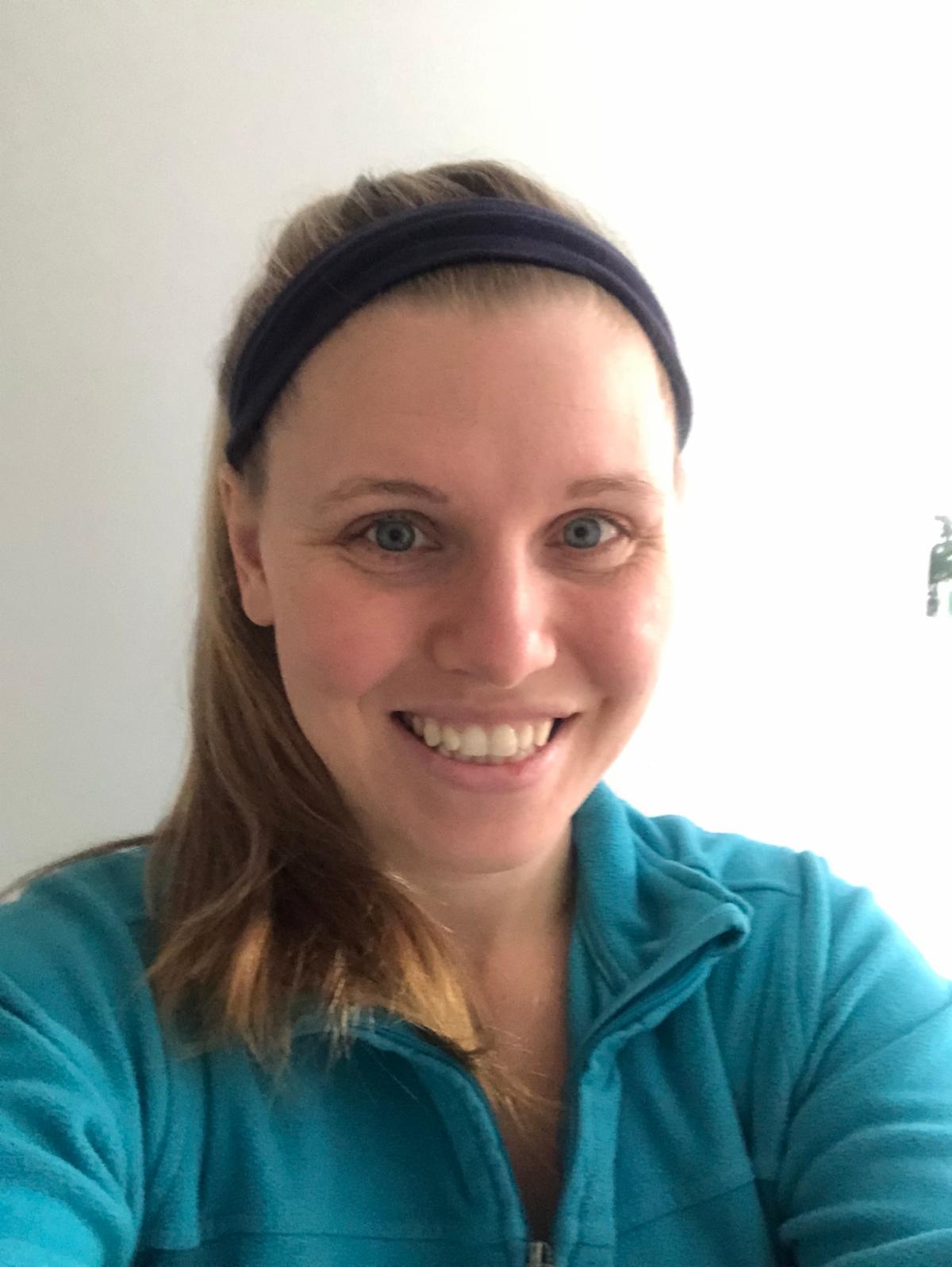
True Story: I was terrified before running my first half-marathon, it was a distance that was almost overwhelming to me at the time. I actually couldn't believe I was really going to try.
I got to Hampton Beach before sunrise to get a parking space because I was warned the traffic got very, very, bad the closer to the 9:00 AM start you arrived. I sat in my car in the dark for a while, and then as the sunrise started to happen, I hopped out and stood by the seawall to watch it.
Without any coordination beforehand, and no prior conversation about meeting up, shortly before the sun came up, Sarah walked up with her future husband and said something like "I figured you'd be here; you got this."
Thanks to you Sarah, I did.
| | Joe's Positive Post of the Week | | Join the Smart Subscribers | | If you are reading this on a social media platform, click below and you'll automatically receive a 'different' story every week on Wednesday. | | |
The Roll Call of states and countries where readers reside: Arizona, California, Colorado, Connecticut, Delaware, Florida, Georgia, Hawaii, Illinois, Indiana, Iowa, Kansas, Kentucky, Louisiana, Maine, Massachusetts, Michigan, Mississippi, Missouri, Montana, New Hampshire, New Jersey, New Mexico, New York, North Carolina, North Dakota, Ohio, Pennsylvania, Puerto Rico, Rhode Island, South Carolina, South Dakota, Tennessee, Texas, Vermont, Virginia, Washington and Washington DC, Wisconsin plus Canada, Conch Republic, Australia and the United Kingdom.
| | Refer a friend to Sign Up for the Wednesday Weblog | | |
Ed Doherty
774-479-8831
www.ambroselanden.com
ed-doherty@outlook.com
Forgive any typos please.
| | | | | |