Coyote Breeding Season is Taking Place Now | |
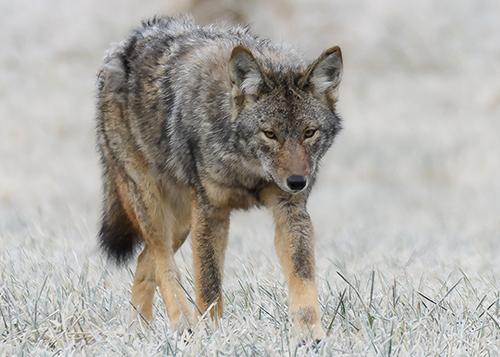
In Connecticut, the breeding season for the eastern coyote is from January to March. During this time, you are more likely to hear and see coyotes. Contrary to popular belief, coyotes do not call to announce a kill. Instead, coyotes use a variety of vocalizations to communicate with family members, warn non-family members to stay out of their territory, and advertise for a mate.
As coyotes have become more common, public concerns about coyotes attacking people, especially children, have increased. Although some coyotes may exhibit bold behavior near people, the risk of a coyote attacking a person is LOW. This risk can increase if coyotes are intentionally fed and then learn to associate people with food, or if a person is walking with a dog, especially one that is not leashed, near a coyote den or territory during the denning and pup rearing seasons.
Here are a few important tips for preventing conflicts with coyotes:
-
Do not allow pets to run free! Keep cats indoors, particularly at night, and keep dogs on a leash or under close supervision at all times.
-
Never feed coyotes! It is illegal to intentionally feed coyotes and other potentially dangerous wildlife (P.A. 23-77). Clean up bird seed below feeders, pet foods, and fallen fruit. Secure garbage and compost in animal-proof containers.
-
Always walk dogs on a leash. If approached by a coyote while walking your dog, keep the dog under control and calmly leave the area. Do not run or turn your back. Coyotes are territorial and many reports of bold coyotes visiting yards, howling, or threatening larger dogs can often be attributed to this territorial behavior.
Photo courtesy of John Clery.
More on Living with Coyotes . . .
| DEEP Master Wildlife Conservationist Program Coming Soon! | |
|
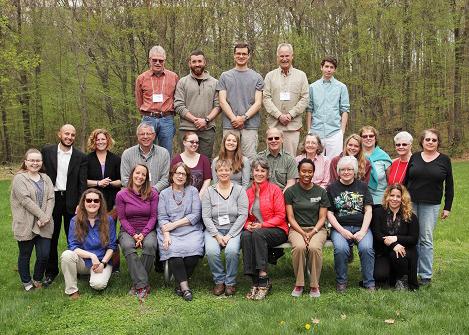
The Master Wildlife Conservationist Program (MWCP) is administered by the Connecticut DEEP Wildlife Division. The program provides adults with education and training on the natural history, biology, conservation, management, and interpretation of Connecticut’s wildlife.
Participants receive approximately 40 hours of intensive classroom and field training. After completing the course, each participant provides at least 40 hours of volunteer service within the first 18 months to remain certified as a Master Wildlife Conservationist (MWC). Volunteer service will primarily include public outreach and may also include assisting Wildlife Division staff with projects and fieldwork.
The 2024 training session will occur from June through August and meet once to twice a week for 14 weeks. Most classes will occur on weeknights (6 PM – 9 PM), with some field-based classes on weekends (9 AM – 2:30 PM). Classes will primarily occur at Sessions Woods Wildlife Management Area in Burlington, Connecticut, but will include other locations throughout the state.
The Master Wildlife Conservationist Program is very popular, and only 20 applicants are selected to participate in each training session. Each applicant must submit a completed application form and one to two letters of reference.
Applications will be opening soon! Please use the link below to check for updates.
More on the MWC Program . . .
| |
Winter Is Time for Bald Eagles to Prepare their Nest | |
|
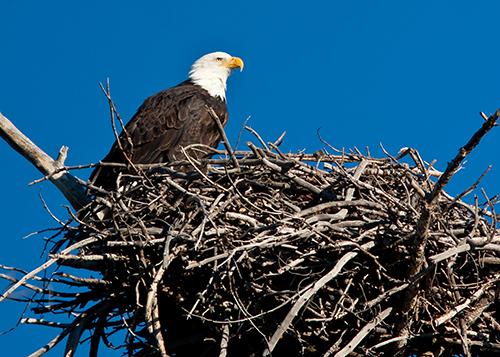
It has been roughly 30 years since Connecticut documented its first successful pair of nesting bald eagles. From the 1950s up until 1992, bald eagles were not nesting in Connecticut due to poisoning caused by the pesticide DDT. Since DDT was banned, the recovery of bald eagles has been remarkable. In the past decade alone, the number of bald eagle nesting territories in Connecticut has more than tripled!
This time of year, bald eagle pairs begin the process of fixing and enlarging their nests. Nest construction and joint defense of the nesting territory helps strengthen the pair's bond prior to egg laying.
More on bald eagles in Connecticut . . .
| |
Where Do Black Bears Den for the Winter? | |
|
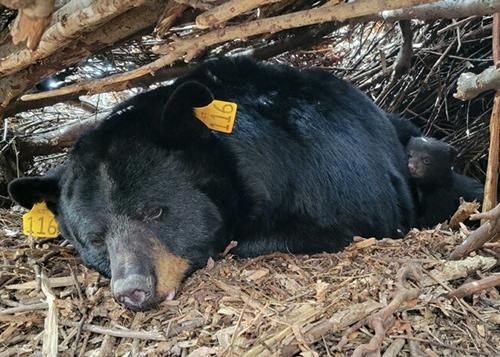
Black bear dens come in all shapes and sizes, and some of the most common dens include brush piles, slash piles, or fallen trees. Bears may also take advantage of rock crevasses, rock ledges, and hollow trees as places to spend the winter.
In some cases, a black bear may even decide that its “den” is simply resting at the foot of a tree. These ground nests are usually just a sparse mat of leaves and twigs and are typically located in thick vegetation, such as mountain laurel. On occasion, bears will even den under decks and sheds in people’s backyards.
While denning straight through most of winter is necessary for pregnant female bears, other bears can remain active, especially when temperatures are mild and food is available. Even if you do not live in an area with regular bear activity, you should "Be Bear Aware" year-round.
More on Living with Black Bears . . .
| |
Great Meadows Marsh Restoration Shows Promise | |
|
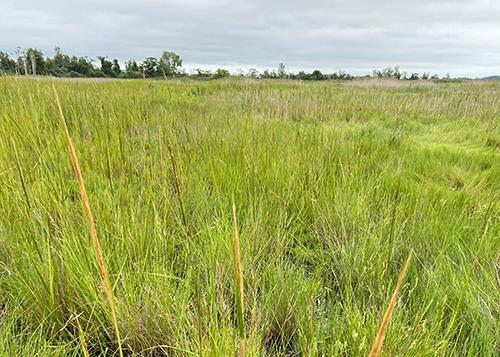
Nearly two years ago, work began to restore Great Meadows Marsh in Stratford, a part of the Stewart B. McKinney National Wildlife Refuge. This marsh is home to many state-listed species, including saltmarsh sparrows, snowy egrets, and the marsh pink—a beautiful flowering plant. In addition to U.S. Fish and Wildlife, many conservation partners are involved with this effort, including Connecticut DEEP, National Oceanic and Atmospheric Administration (NOAA), Audubon Connecticut, Beardsley Zoo, and not to mention many, many volunteers.
Great Meadows Marsh is showing promising signs of recovery and regeneration. The marsh is more resilient to sea-level rise and climate change and has renewed potential to support rare plants and animals for years to come.
More on Great Meadows Marsh restoration . . .
| |
Winter Waterfowl Banding Efforts | |
|
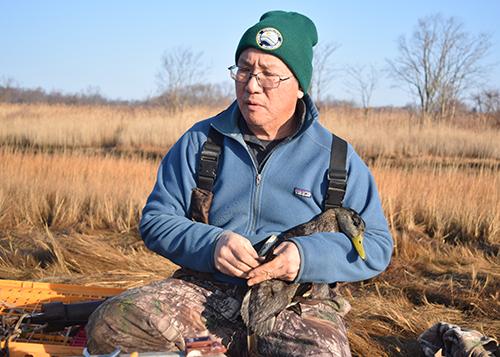
For roughly 18 years, the DEEP Wildlife Division has participated in winter banding of waterfowl, most notably mallards and black ducks. Banding waterfowl provides biologists with important information on dispersal, lifespan, survival rates, and much more. More recently, DEEP migratory bird biologists began testing wild ducks for avian influenza to monitor the prevalence of the disease, which appeared in North America about two years ago.
As part of a larger regional effort, Wildlife Division staff are further studying black ducks by affixing select individuals with lightweight radio transmitters. Data gathered by the transmitters provide critical information on black duck nesting habitat use and reproductive success rates from their breeding grounds in the boreal forest region of Canada.
| |
Watchable Wildlife - Piebald White-tailed Deer | |
|
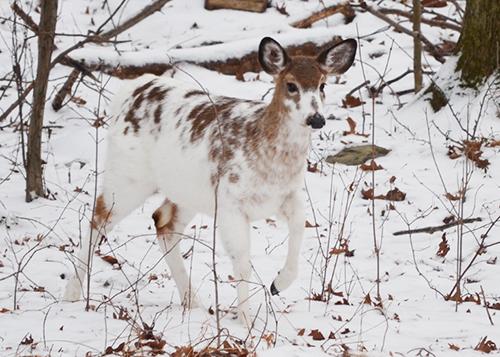
White-tailed deer with varying amounts of white hair in their coat are known as “piebald deer”. The piebald condition is a rare genetic anomaly that is inherited. Piebalds often have other distinct physical conditions, including bowing of the nose, short legs, curvature of the spine, short mandibles, and malformations of organs.
Piebaldism is different than albinism. A true albino deer would have pink eyes and completely white hair.
An astute wildlife watcher recently captured this great photo! Do you have a Watchable Wildlife photo you would like to share? Email us your photo(s) at DEEP.CTWildlife@ct.gov.
| |
Species Spotlight: Canada Goose | |
|
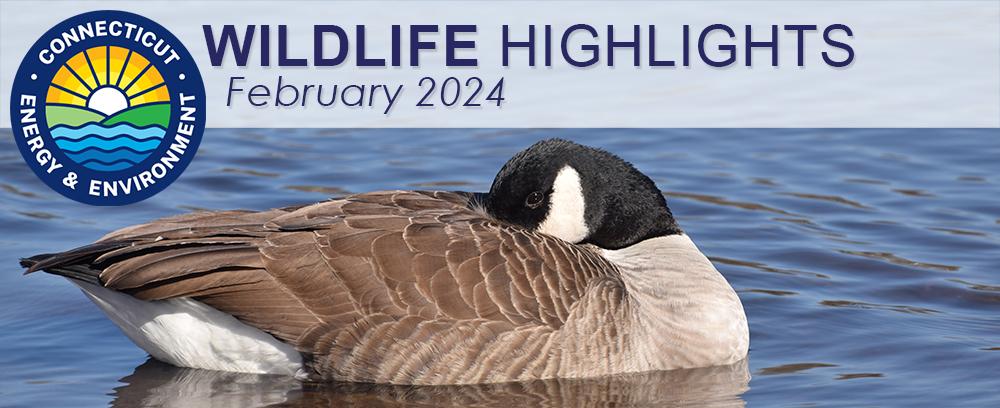
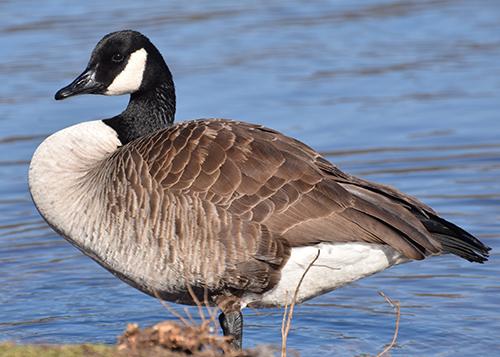
The Canada goose is Connecticut’s largest native waterfowl species, weighing between 6 and 13 pounds!
It is easily recognized by its black head, bill, and neck that contrast strikingly with a pale gray breast. The distinct white cheek patch, or chinstrap, that covers the throat is a characteristic field mark.
Year-round resident geese that breed in the state are distinct from migratory populations that nest in the northern Canadian provinces. Most migrant geese that occur in Connecticut breed in Labrador, Newfoundland, and northern Quebec, arriving in Connecticut in early October. Migration continues through November with another peak of migrants arriving in mid-December. Most migrant geese leave the state by mid-January to continue further south. However, in some years with mild winters, substantial numbers of migrant geese have remained in Connecticut the entire winter.
More on the Canada goose . . .
| |
|
Stay Connected!
Follow us on Social Media
| |
|
-- Quick Links --
Your Feedback Is Important to Us!
Send your comments or suggestions to deep.ctwildlife@ct.gov
|  | |
The Connecticut Department of Energy and Environmental Protection is an Affirmative Action/Equal Opportunity Employer that is committed to complying with the requirements of the Americans with Disabilities Act. If you are seeking a communication aid or service, have limited proficiency in English, wish to file an ADA or Title VI discrimination complaint, or require some other accommodation, including equipment to facilitate virtual participation, please contact the DEEP Office of Diversity and Equity at 860-418-5910 or by email at deep.accommodations@ct.gov. Any person needing an accommodation for hearing impairment may call the State of Connecticut relay number - 711. In order to facilitate efforts to provide an accommodation, please request all accommodations as soon as possible following notice of any agency hearing, meeting, program or event.
This program receives Federal financial assistance from the U.S. Fish and Wildlife Service.
Under Title VI of the 1964 Civil Rights Act, Section 504 of the Rehabilitation Act of 1973, Title II of the Americans with Disabilities Act of 1990, the Age Discrimination Act of 1975, and Title IX of the Education Amendments of 1972, the U.S. Department of the Interior prohibits discrimination on the basis of race, color, national origin, age, sex, or disability. If you believe that you have been discriminated against in any program, activity, or facility, or if you need more information, please write to:
Office of Diversity, Inclusion and Civil Rights
U.S. Department of the Interior 1849 C Street, NW
Washington, D.C. 20240
| | | | |