|
Fall is Here!
Time for Football and the Holidays!
| | |
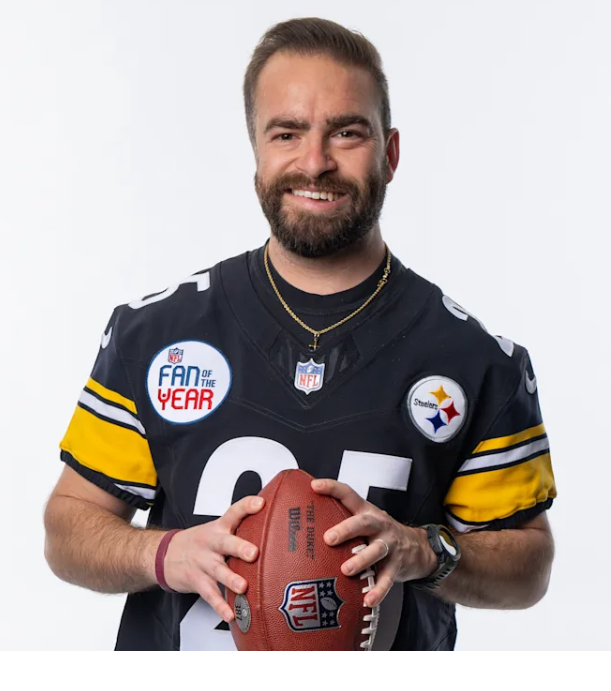
Team USA Footballer Named Pittsburgh
Steelers Fan of the Year
Hayden Shock, a goalie on Team USA's soccer team, has been named "Fan of the Year" by the Pittsburgh Steelers.
The honor, announced by the Steelers at their November 2 game against the Indianapolis Colts, took Hayden, a lifelong Steelers fan, completely by surprise, as he did not know that he had been nominated. "I wasn't just shocked. It was profound gratitude," he said. "To be chosen to represent the Steelers organization and its fandom, it means everything. In that moment, the noise of the stadium faded, and all I could see were my wife and my parents. To share something so deeply personal, so meaningful, with the people I love most in the world it made the blessing feel complete. I felt incredibly grateful and blessed. It was an experience that will be etched in my soul forever."
| | |
Hayden Shock leads Team USA onto the field celebrating a victory in the
2024 Transplant Football World Cup in Cervia Italy.
As a transplant athlete, this honor is especially significant, as it provides Hayden with another opportunity to promote organ donation. His story is one of perserverance and strength. He was born with Goldenhar Syndrome, which affects his organ growth and robbed him of his hearing since birth. He also had to have a kidney transplant in his 20s, after being dialyzed for a number of years. He could have easily been discouraged by all he went through in life, but instead he used the hand he was dealt to inspire others.
| | |
Shock participated in the Transplant Games of America in 2022 and 2024, where he competed alongside his living donor, Audrey Hardwick, in 2024, when they both earned medals. He plans on participating in the games in 2026 as well. He also was a key part of Team USA's first ever team at the 2024 Transplant Football World Cup in Cervia Italy.
"My motivation to participate in the Transplant Games comes from a place of deep competitive passion and profound gratitude," said Shock. "The Games fulfill a fundamental desire of the pure, thrilling joy of competition. As an athlete, it's the ultimate chance to step onto a stage and show my talent, validating all the rigorous training I've put in. It genuinely feels like living out the dream of being an Olympian, proving what my body can do post-transplant.
"The meaning of the Games, however, goes far beyond the medal count. They are a monument to resilience. Being surrounded by a community of people who have shared the darkness of dialysis and the miracle of a kidney transplant creates an instantaneous, powerful connection. We are a family of fighters, creating unforgettable moments that collectively declare a victory over hardship.
"The Games are a powerful, tangible statement that we can still do many things after a transplant, and in doing so, we are the most passionate advocates, successfully spreading awareness of organ donation to the world."
Hayden needs the support of the transplant community in the voting for the NFL Fan of the Year, which will be announced at the Super Bowl in San Francisco on February 8, 2026. You can vote for him by clicking below.
| | |
From Nephrology News and Issues
Sex Inequities Exist for Women in Kidney
Transplantation, Wait-listing
Women with kidney failure received transplants or were wait-listed less frequently than men, despite improvements over several decades, according to data published in the American Journal of Kidney Diseases.
Sex disparities in kidney transplantation affect clinical outcomes, with women reportedly 10% to 20% less likely to be wait-listed or receive a kidney transplant compared with men, according to Jessica L. Harding, PhD, associate professor in the division of transplantation at Emory University School of Medicine, and colleagues.
“Little awareness of sex disparities exists, and few studies have examined whether this has changed over time,” said Harding.
To address this gap in research, Harding and colleagues analyzed data from 2.3 million adults in the U.S. Renal Data System from 1997 to 2020. The researchers divided patients into groups based on era, encompassing 4-year intervals, starting from 1997-2000 (144,658 women; 167,340 men) until 2017-2020 (189,703 women; 267,462 men). Placement on the kidney transplant waitlist and receipt of a living or deceased donor kidney served as the primary outcomes.
“Women are still 14% less likely to be wait-listed than men, even after accounting for differences in age, comorbidities and some social factors,” Harding said.
In addition, women were less likely to receive a living donor kidney compared with men.
Notably, the reverse trend was observed for recent deceased donor kidney transplants, with women more likely to receive one in 2017-2020.
“The implementation of the kidney allocation system in 2014 may have affected this outcome,” Harding said.
Overall, disparities between men and women in kidney transplantation remain despite improvements to the allocation system. As for why these issues persist, Harding said unconscious bias may be a factor.
“Women may be judged more harshly than men for the same set of comorbid conditions, such as obesity,” she said. “Women may also lack support systems, and that might be deemed more problematic for them. Nephrologists should be aware that sex inequities exist and consider the role that unconscious bias may play in their decision to refer or not to refer.”
Future research should focus on studying the underlying causes of these disparities in more depth, Harding said. “Designing and testing intervention or policies designed to mitigates sex inequities should be an ongoing effort,” she said.
For more details on this study, please visit the Healio website here.
Lucas Laboy, Healio
| | |
From JAMA Dermatology
Targeted Screening After Transplant Improves
Skin Cancer Detection Rates
- Solid organ transplant recipients are 7.8 times more likely to develop skin cancer.
- Risk-stratified surveillance after transplant can improve early skin cancer detection rates and save health care resources.
| |
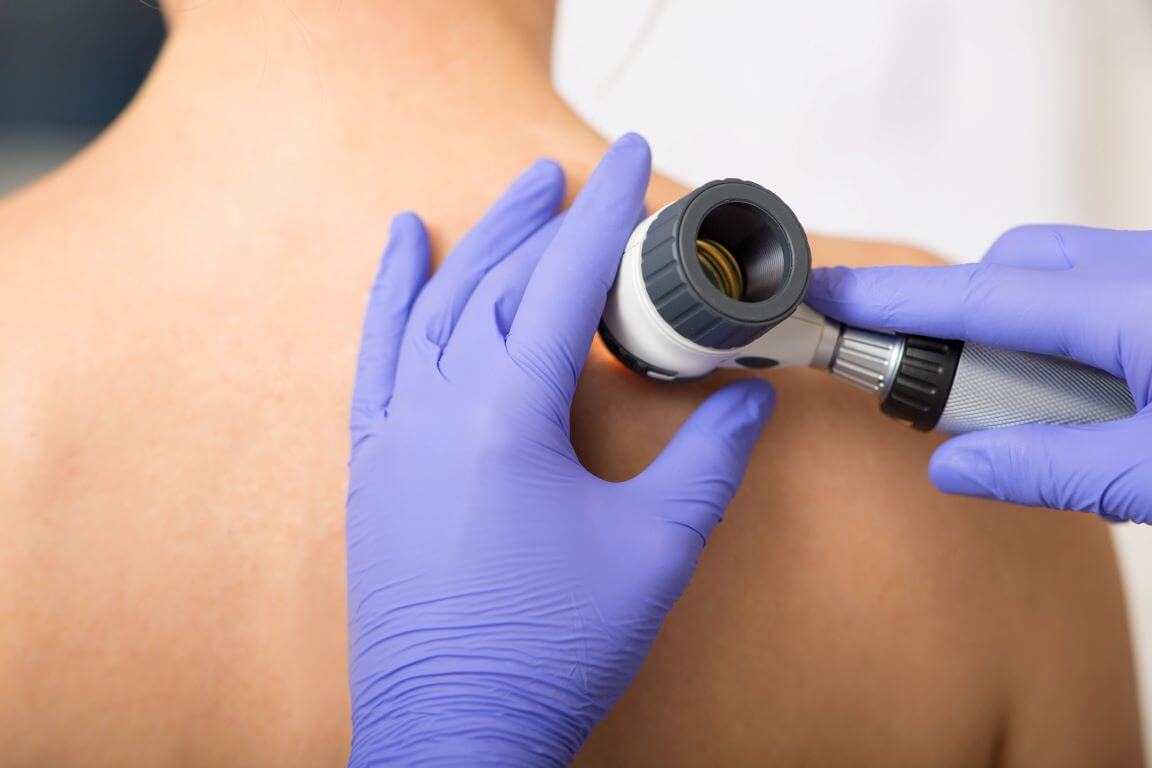
photo courtesy U.S. Dermatology Partners
An electronic health record-integrated tool improved skin cancer screening and detection rates among solid organ transplant recipients without increasing health care resource utilization, according to a study published in JAMA Dermatology.
“Transplant patients take lifelong immunosuppressive medications to prevent rejection of their transplanted organ,” David S. Lee, Md, FAAD, a dermatologist at Kaiser Permanente Northern California, told Healio. “Over time, these medications weaken the immune system’s ability to detect and destroy early cancer cells and can make the skin more sensitive to ultraviolet light, which damages DNA.”
As a result, transplant recipients face an up to 65-fold higher risk for squamous cell carcinoma and an up to tenfold risk for basal cell carcinoma compared with nonrecipients, according to Lee. These cancers can grow quickly, recur more often and become life-threatening if not treated, Lee said, making screening an essential part of care.
“Solid organ transplant recipients are among the highest-risk patients for developing skin cancer, but in everyday practice across the health care industry, screening is often inconsistent and difficult to coordinate,” Lee said. “We wanted to see if a structured, risk-based approach could help us identify and follow those at highest risk more effectively.”
For the retrospective study, Lee and colleagues adapted an existing tool called the Skin and Ultraviolet Neoplasia Transplant Risk Assessment Calculator (SUNTRAC) to create a modified version: the Kaiser Permanente Northern California (KP)-SUNTRAC surveillance program. Using EHR records, the KP-SUNTRAC automatically stratifies solid organ transplant recipients into risk categories based on their likelihood of developing skin cancer, with those classified as high-risk receiving timely screenings.
“This helps care teams identify high-risk patients who are due for screening and reach out directly to schedule dermatology visits,” Lee said. “Our study showed that this active surveillance approach improved early cancer detection without straining health care resources.”
Researchers found that 2,083 solid organ transplant recipients were 7.8 times more likely to develop skin cancer compared with 26,199 nonrecipients (95% CI, 5.97-10.1).
KP-SUNTRAC’s approach could serve as a model for other transplant centers that want to improve skin cancer surveillance among their patients, according to Lee.
“Applying risk-based, targeted outreach to other aspects of transplant medicine could also help clinicians identify high-risk patients earlier and improve overall outcomes,” Lee told Healio.
For more information on this study, visit the Healio website by clicking here.
Gabrielle M. Grasso, Healio
| |
Giving Tuesday Will Soon Be Here!
On November 28, millions of people around the world will work and donate on behalf of the global community and the organizations working to make life better for all. Please consider supporting TRIO during the upcoming holiday giving season!
| | October Public Policy Report | | |
Members of the Public Policy Committee continue with their activities that affect our community. While there aren’t any significant developments at this time, the Committee still monitors the national scene to provide up-to-date information to our membership.
One example of our involvement is our continuing relationship with the Partnership for Part D Access, the community of patients who are in a group called the 6 Protected Classes. The following report was recently sent out by the Partnership:
THE PARTNERSHIP FOR PART D ACCESS
Recent indications from the Washington Administration have made the Partnership aware that there may be activities in the near term that affect prescription drugs and prescription drug access:
Hill Update
The federal government remains shut down for a second week with no clear path to reopening, as both parties believe they have the stronger public message. The White House and Office of Management and Budget (OMB) are exploring funding workarounds for the military, federal law enforcement, and nutrition programs. At the same time, Democrats push for negotiations on Affordable Care Act premium credits before open-enrollment begins on November 1. Despite workforce reductions, some of which are not publicly disclosed, the administration continues advancing regulatory actions.
Regulatory Developments
The Centers for Medicare and Medicaid Studies (CMS) announced slightly lower Part D and Medicare Advantage (MA) premiums for 2026, emphasizing that plan offerings will remain strong. However, some stakeholders are concerned about rejected bids potentially reducing available services. Reports from the patient advocacy groups indicate inconsistent coverage, with some areas, such as Alaska, lacking plan options despite national coverage claims. Additionally, following meetings with CMS staff in Summer 2024, it is encouraging to see the agency's progress in making Plan Finder more patient-centered and easier to use, including an AI tool to simplify access to pricing information. Finally, Pfizer and AstraZeneca have agreed with the White House to offer Americans Most-Favored-Nation (MFN) prices, and more manufacturers are expected to follow. At the same time, the Center for Medicare and Medicaid Innovation's (CMMI) unified agenda for 2026 lists two pricing models and a voluntary Part D MFN option currently under consideration at OMB. There are growing concerns that shared savings arrangements could restrict access to 6PC.
Coalition Activities
Interviews continue to educate officials regarding 6PC policy. The team is also developing an educational patient journey map highlighting the benefits of the 6PC policy at each stage of care.
The Public Policy Committee is planning a review of the activities with OPTN modernization that it will share with the membership in the January e-newsletter.
| | |
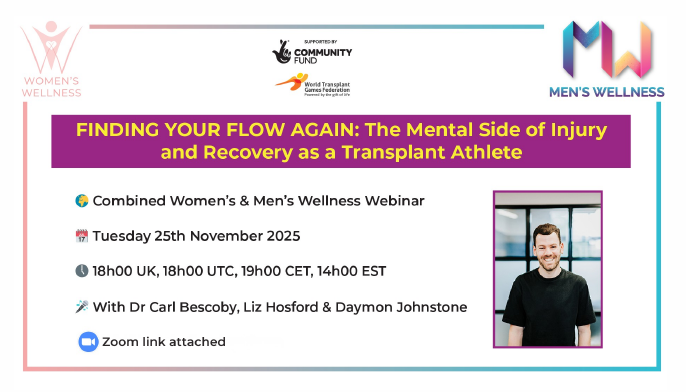
WTGF Wellness Webinar: "Finding Your Flow Again: The Mental Side of Injury and Recovery as a Transplant Athlete"
The next WTGF Wellness Webinar which will deal with recovering from injury will be on Tuesday, November 25th at 2:00 PM Eastern. This highly successful series has covered many diverse topics and has provided opportunities for transplant athletes around the world to increase their fitness and their level of performance.
| | |
The next webinar will deal with the mental aspects of recovering from injury and will feature Dr. Carl Bescoby and transplant athletes Liz Hosford and Daymon Johnstone.
Advance registration is required to attend. When you register, you will receive an email with a link for you to attend. Register by clicking on the link below.
The webinar is free but registration is required. To register for this November 25 webinar, click on the photo above or here.
| | |
Happy Thanksgiving!
All of us at TRIO wish for you a Happy Thanksgiving and a wonderful Holiday Season!
| | TRIO Peer to Peer Program | | |
TRIO's Peer to Peer support program meets online twice each week, on Tuesdays and Thursdays every month at 7:30 PM Eastern time. There are planned topics but discussions range freely over a variety of subjects. To learn more, click on the image.
To join any of these free sessions, click on the Zoom link: https://zoom.us/join
and use the following login information:
Meeting ID: 916-2033-4133
Password: 85044
| | |
TRIO Care Partners, our program for the families and caregivers of recipients, meets the first and third Wednesday of each month at 7:30 PM Eastern time. To learn more, click on the image.
To join Care Partners meetings, click on the Zoom link and use the following meeting information:
https://zoom.us/join
Meeting ID: 826 9024 1864
Password: 85044
| | Additional information on the Peer to Peer program and its companion program for Care Partners can be found on the TRIO web site here. | | |
Chapter Chatter
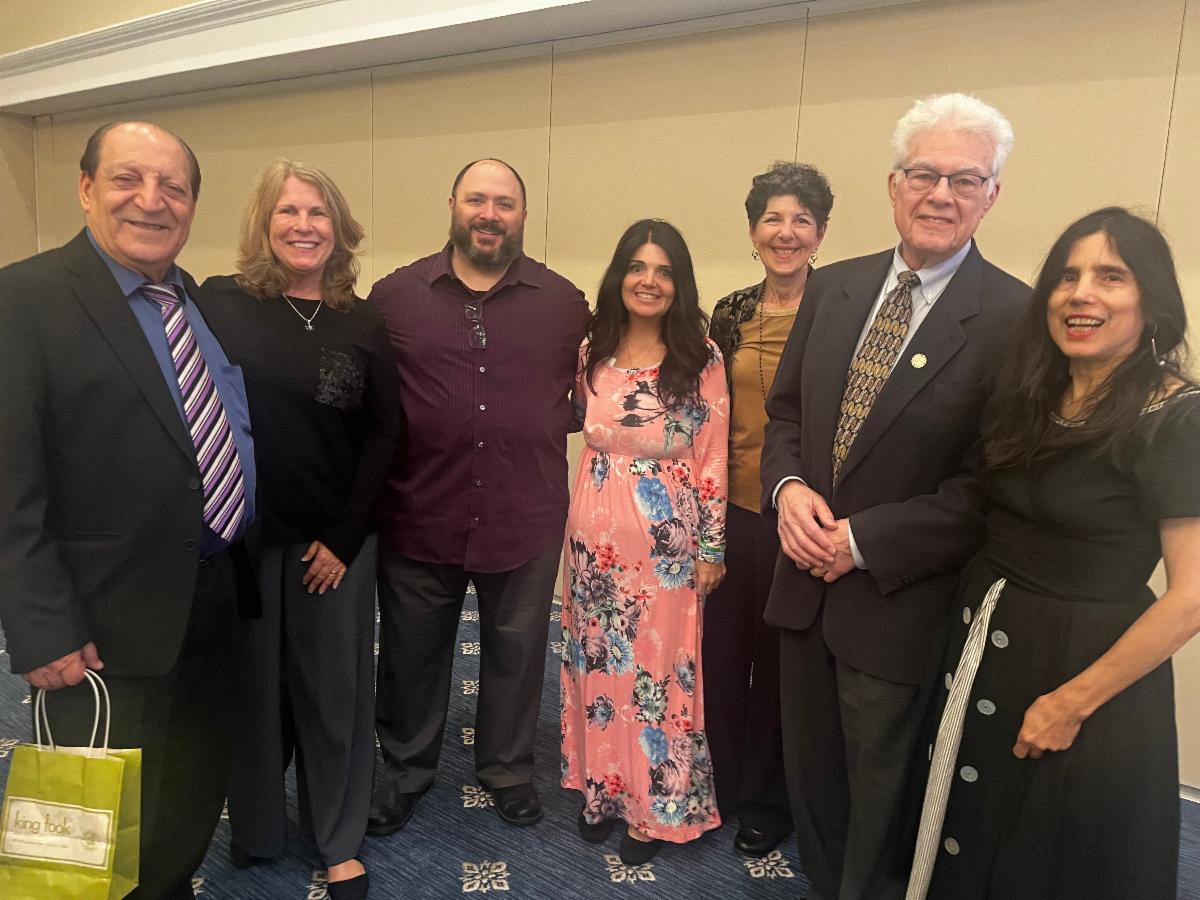
TRIO was privileged to attend the Celebration of the Season event hosted by Long Island-TRIO on Wednesday, October 22, 2025. A wonderful turnout for this event created a very festive evening. LI-TRIO received a citation of achievement from the Nassau County Executive, Bruce Blakeman. Along with Mr. Blakeman, transplant surgeons and doctors from several local transplant centers attended the event as well as LI-TRIO’s regular members and families.
LI-TRIO is also known for its Rose Garden Ceremony honoring donation and transplantation held every year at Eisenhower Park in Nassau County, New York. This year, the event occurred in September. Volunteers from LI-TRIO spend a great deal of their time during the year maintaining the Rose Garden located on the premises of the Park.
LI-TRIO also holds regular monthly meetings featuring a variety of speakers on topics of interest to its transplant community. LI-TRIO is pleased to welcome people across Long Island, from Queens and Brooklyn in New York City all the way out to the end in Suffolk County. These meetings are open to anyone with an interest in the transplant community.
For more information about this chapter, check out its website: https://www.litrio.org//.
| |
Long Island TRIO Celebration of the Season: l to r, Sotos Georghiou, Amanda Vesey Askey (Eye Bank), Ron Cassella, Jen Lentini (heart recipient), Cindy Fink (heart recipient), Ira Copperman, Joy Oppedisano (President – LI TRIO)
In other chapter news, TRIO hosted the first of its educational webinars on October 25, 2025; the topic was the 6 Protected Classes provisions under Medicare Part D Prescription Drug plans. We had a good turnout of TRIO chapter members as well as people who are not members of TRIO.
TRIO has plans to schedule more of these webinars in the upcoming months. And we’re always looking for topics that are of interest to our community, recipients, family, or friends. Please send on your ideas to irajay2004@trioweb.org.
| | TRIO Transplantation Library | | TRIO's Transplant Presentation Library is one of TRIO's most important programs of information and assistance to transplant patients and their families. There are almost 200 programs now available that address almost any imaginable topic of interest to the transplant community. Whether you're looking for food advice, how to deal with stress, the latest science regarding transplantation, or just for a great movie, the Transplant Presentation LIbrary will meet your interests. Click on the button below for the full library index: | | | | |