Weekly Digest Number 47 - November 22nd, 2022 |
|
Welcome to the RWU Rail & Labor News! This news bulletin is produced and emailed out each Tuesday morning. We hope you find each week's news and information useful. If so, please share with co-workers, friends, and colleagues. If you like, you can sign them up to get all the news from RWU HERE. Or forward them the link. Note: If you read over this news bulletin each week, you will be sure to never miss the important news of what is going on in the railroad world from a worker's perspective!
|
|
(Editor's Note: The membership of SMART-TD - the largest rail union - now joins with the ranks of three other unions - BRS, BMWED and IBBO - that have voted to rejects the Tentative Agreement. Together, these four unions represent roughly 55.5% of rail labor. Unless and until agreement can be reach with the rail carriers by December 9th, a national rail shutdown is still a distinct possibility.) |
|
Railroad Operating Crafts Vote Results Mixed:
National Strike Still Possible
A Majority of Rail Labor Now Officially Opposes the Tentative Contract
|
|
The votes have been counted, and the operating crafts unions split on the decision. BLET membership narrowly ratified the tentative agreement (TA), while SMART-TD membership narrowly rejected it, joining the Maintenance-of-Way, Signal Maintainers, and Boilermakers workers who rejected their respective contracts. Railroad Workers United stands behind members of these crafts who are still fighting for the contract they deserve. It is clear the dissatisfaction among rank & file railroad workers of ALL crafts and unions is at an all-time high.
With votes now tabulated from every rail union, unions representing over half of rail labor have rejected their proposed contracts. And in practically all votes, the margin of separation has been slim. Clearly, there is no consensus on the question of the Tentative Agreement in this round of bargaining.
Thousands of railroad workers have not had a raise in three years and face record inflation but have continued to hold out for what they believe they deserve. According to RWU Co-Chair Gabe Christenson, “Despite being straight-jacketed by the Railroad Labor Act (RLA), being starved into submission, and facing intense political and economic pressure to accept the contract and move on, more than half of railroad workers have had the strength to reject the contract.” Railroad Workers United applauds all fellow workers who have had the fortitude to stand firm and fight for what they believe they deserve. We believe organizing this core opposition to the current tentative agreement is critical in achieving future contract victories.
RWU has urged a NO vote on the contract since shortly after the recommendations of PEB #250 were made public. According to RWU General Secretary Jason Doering, “The PEB did not address any quality of work-life issues important to many workers of the various crafts.” As a result, “RWU consistently stated that unless and until these issues are adequately addressed in a Tentative Agreement (TA), then the organization cannot support it."
“Thanks to deep cuts in the workforce exacerbated by the widespread adoption of “Precision Scheduled Railroading” in recent years, inadequate staffing levels are at the root of this rank & file rebellion,” according to RWU Co-Chair Ross Grooters. “Railroad workers are not just fighting for quality of life; we’re fighting for the future of freight railroads.”
Class I rail carriers are making record profits and harming the long-term health of the freight rail system. Workers are being forced to do more work with fewer people, according to Hugh Sawyer, RWU Treasurer. “Quality of life has suffered because of operating choices Class I railroads have made which embargo traffic, gouge customers, and cut the workforce.” The result is long-term harm to the health of our freight rail system and the supply chain. “This agreement does not address those underlying issues and, through yet-to-be-negotiated articles in the contract, it could exacerbate supply chain issues. Unless the labor issues are addressed, railroads will continue to be unable to move freight, and rail carriers will continue to profit at the expense of passengers, shippers, workers, and our national economy.”
Without a better contract for all railroad crafts, service will continue to suffer as rail carriers extract wealth and buy back their shares at the expense of the economy as a whole - their systems, which were primarily built on public investment, no longer work for the benefit of the people. If rail carriers are fixated on paying out more for stock buybacks than they are for worker benefits, we will continue to see attrition as a once-stable career is turned into a revolving-door job.
|
|
(Editor's Note: As the title of this article states, yes we are ready to use our power ... but we are hampered by an archaic and fractured union structure that mitigates against the solidarity and unity we need. Imagine an ironclad alliance of railroad workers, longshore workers, truck drivers, and warehouse workers. Think what we could achieve then, if we had One Big Union of all, brothers and sisters!) |
|
Supply-Chain Workers Have the Power - and They’re Ready to Use It
Rail, port, and parcel delivery workers are fighting for better contracts, and this time they have leverage.
|
|
Supply-chain workers are fed up. Many of them told me that they’re forced to work overtime even when they’re exhausted, that they can’t truly relax because they must be ready to work at a moment’s notice, that they’re forced to miss doctor’s appointments, and that they’re afraid of losing their jobs.
Unions representing rail, port, and parcel delivery workers across the country are either negotiating contracts or will be soon. In the past, workers have buckled in the face of management threats, making major concessions. But workers and labor experts told me that this time is different. The supply chain is more fragile, and the world increasingly relies on deliveries. This has given workers leverage, and they’re not afraid to use it.
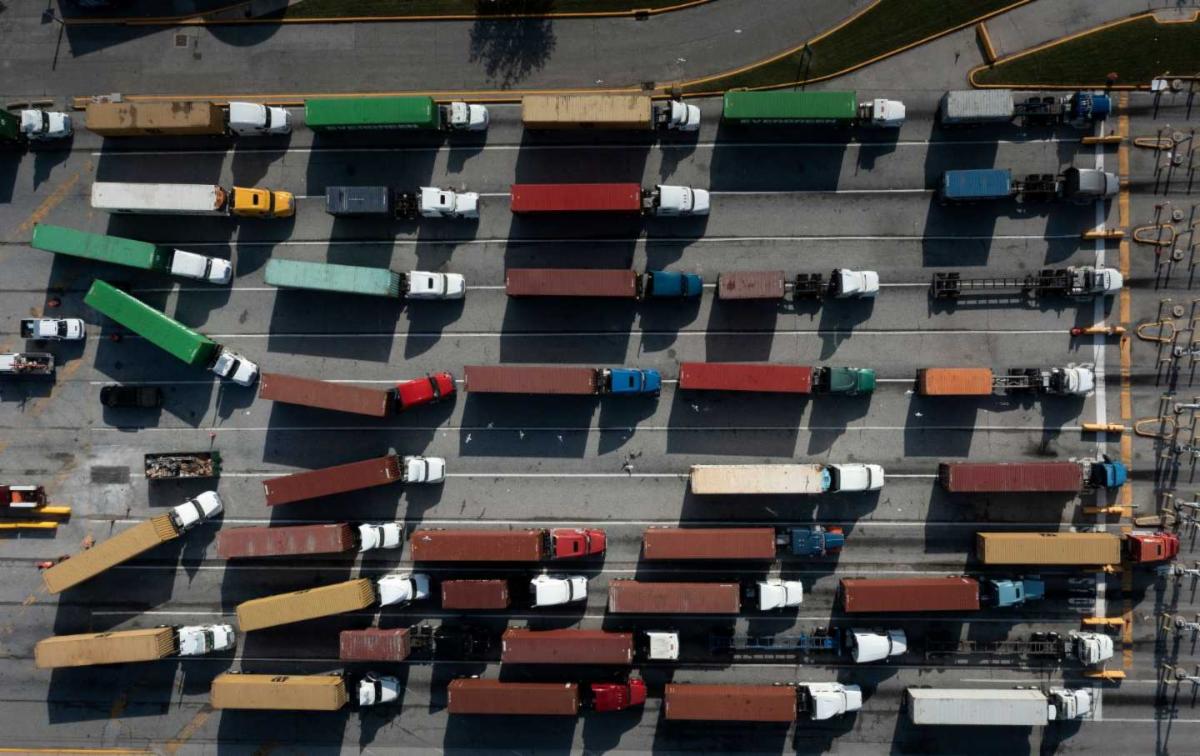
The International Longshore and Warehouse Union (ILWU), which represents more than 22,000 dockworkers on the West Coast, has been negotiating a new contract with port terminals and carriers since May. The 29 ports that line Washington, Oregon, and California make up nearly 9 percent of the country’s GDP. The ports of Long Beach and Los Angeles account for 31 percent of all container sea cargo brought into the United States. And for four weeks at the end of the summer, workers at the Port of Los Angeles refused to work at the automated part of a terminal run by shipping giant A.P. Moeller-Maersk A/S.
Rail-yard workers, who help transport everything from crude oil to lumber—about 28 percent of US freight—could strike later this year. All 12 rail unions representing nearly 120,000 workers have to agree on the contract to prevent a work stoppage, and three unions have already rejected one tentative agreement reached in September. Two of the country’s largest rail unions—the Sheet Metal, Air, Rail, Transportation union that represents conductors, and the Brotherhood of Locomotive Engineers and Trainmen that represents engineers—will finish voting on November 21.
Meanwhile, 350,000 unionized workers at UPS, the ubiquitous courier that carries about 6 percent of the country’s GDP, are gearing up for a possible walkout next year. The Teamsters are fighting a feisty public campaign against UPS management ahead of contract negotiations. And Sean O’Brien, the Teamsters’ new general president, has emphasized their ability to strike. “We are sending a message to UPS that the days of concessions and walking all over our members are over,” O’Brien said in a statement earlier this year. “Our message to UPS is that it’s time our contract reflects the essential work of our members.”
|
|
(Editor's Note: Below are excerpts from an NPR article that largely focus on Machinist Reece Murtagh. Like a number of fellow rail workers in recent months, he plans a challenge for the leadership of his union.) |
|
As Holidays Near, a Nationwide Rail Strike is Still on the Table. Here's the Latest |
|
The tentative agreement brokered in Washington disappointed many rail workers ....
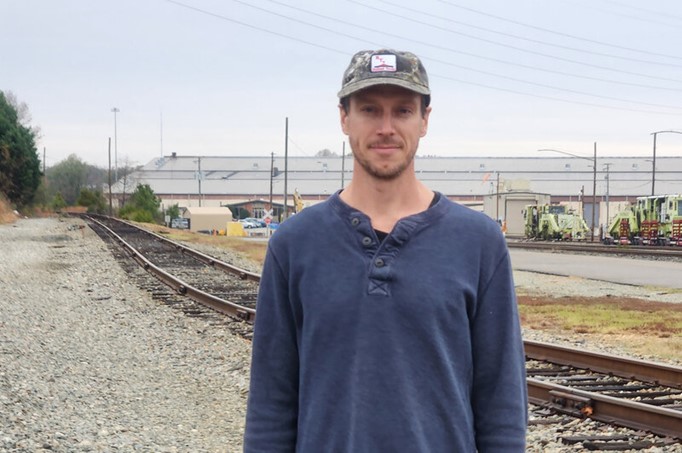
In Richmond, Virginia, roadway mechanic Reece Murtagh would gladly join a picket line. His union - the International Association of Machinists and Aerospace Workers District Lodge 19 - was on the verge of a strike in September after members rejected an earlier version of the contract and voted overwhelmingly to strike.
"We were ready to go," Murtagh says. "There was excitement in the air."
Instead, the union leadership extended the strike deadline as negotiations with other unions played out in Washington. Then in a second vote in early November, his union ratified what union leaders presented as an enhanced agreement. Murtagh was among the 48% who remained opposed.
He's unhappy not just with the rail company whose heavy equipment he maintains and repairs, but also with his union leadership for not fighting harder. "You're more or less treading water. You're not really gaining a whole lot," he says of the agreement.
Like many rail workers, he expected better, in part because of what he'd been hearing from the White House. President Biden has repeatedly talked of being the most pro-union administration in American history. He appointed former union leader Marty Walsh as Secretary of Labor. If anyone would go to bat for rail workers, it would be this president and this labor secretary, Murtagh believed. "It was like, this is our time," he says.
He was stunned when Biden's Presidential Emergency Board released its recommendations, which became the framework for the tentative agreement. The unions had requested 15 paid sick days, up from zero. The board responded by recommending just one additional personal day.
"We carried a railroad on our backs through a pandemic," says Murtagh, who was on a team repairing rail in the Berkshires in the spring of 2020 when everything around them was closed. "We were surviving off Gatorade and peanuts. Everyone in the team got COVID. We never skipped a beat."
.... On the road, Murtagh has felt the effects of a smaller workforce. Until late last year, he was a traveling mechanic, routinely working 14-hour days on a team tasked with replacing sections of rail. "We never have enough people to fill the positions," he says. "The manpower that we have is having to do the work of an extra person, or work an extra five hours. It's a hard lifestyle."
He's considered quitting and taking his skills somewhere else, maybe John Deere. But the latest contract fight has lit a fire under him. He's now running for president of his union. "People want change," he says. "I'm going to be the person to bring that change."
|
|
(Editor's Note: RWU encourages railroad workers to get behind this campaign to bring the railroad infrastructure under public control. Perhaps the conservative rail union officials - who in fact once supported this idea 100 years ago - could see fit to offer support.) |
|
Rail Workers Want Tracks Publicly Owned. Is That So Radical? |
|
Last month, Railroad Workers United (RWU), an umbrella advocacy group for rail-industry union workers, did something it’s talked about doing for 10 years: It called for the sprawling network of rail infrastructure in North America to be publicly owned.
The reasons why, according to a resolution adopted by RWU’s international steering committee, include the railroad companies’ hostility to workers’ unions, steady reductions of workforce over the years, disinvestment in railway infrastructure and an obsessive focus on profits over service.
The resolution was approved at a time of unusual public attention on the U.S. supply chain and its reliance on freight rail service, and on the negotiations between railroad workers and the handful of freight companies that currently own most of the tracks in the country. Earlier this fall, the Biden administration helped broker a tentative agreement between unions and management, averting a much-feared rail strike. But two months later, the threat of a strike still looms, with lingering conflicts over rail companies’ uncommonly meager sick-leave policies.
Rail workers say a host of problems — exhausting conditions for workers, perennial threats to the supply chain and the economy, the diminished state of U.S. passenger rail — stem from freight companies’ growing fixation on cost-cutting. They point out that the public ownership of rail infrastructure in other countries, and of roadway, waterway and air travel infrastructure in the U.S., shows it doesn’t have to be that way.
“Since the North American private rail industry has shown itself incapable of doing the job, it is time for this invaluable transportation infrastructure — like the other transport modes — to be brought under public ownership,” the group said in a press release.
Workers Say Railroads Are Profit-Obsessed
At the root of many of RWU’s complaints is something called precision scheduled railroading, or PSR, a model of operating that prioritizes moving freight cars in ways that are most efficient and cost-effective for the major railroad companies. The model was developed by E. Hunter Harrison, a legendary, controversial executive who led four of the biggest railroad companies in North America at various points in his career. At the time of his death in 2017, Harrison had come out of retirement to serve as CEO of CSX, which dominates the eastern U.S.
|
|
(Editor's Note: Board Chair Oberman continues to beat the drum, chastising the Class One's for their self-inflicted wounds, questioning just how much their antics have hurt the US economy and rail industry. Is anyone in Congress even listening?) |
|
STB Chair Doesn’t Hold Back at RailTrends, Blasts Railroads for Deep Personnel Cuts
Oberman: While railroads are warning about a lockout or strike, their deep reductions in staff have brought about a mini-shutdown
|
|
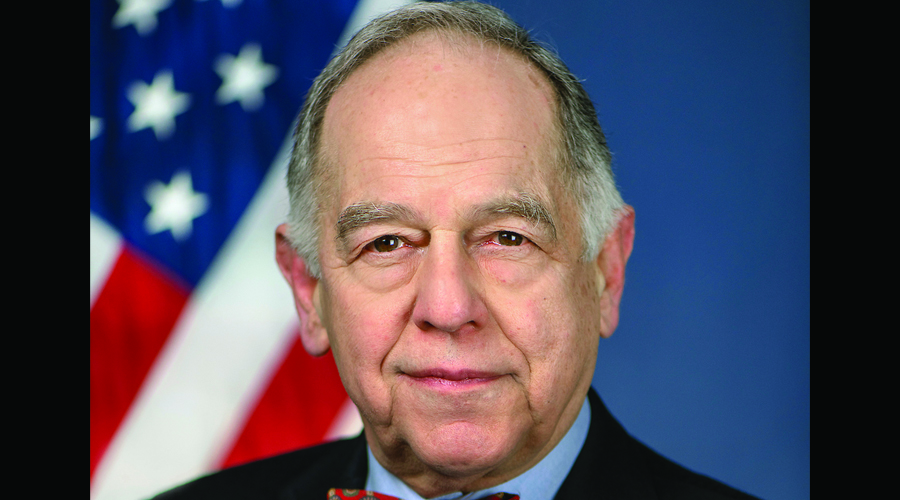
New York — The chairman of the federal Surface Transportation Board got up Wednesday in front of a room full of railroad executives, analysts and customers and ripped the industry to shreds.
At the RailTrends conference sponsored by Progressive Railroading, after hearing presentations on the first day and into the second day about the need for growth, Martin Oberman offered his verdict on why that growth isn’t there: The industry cut too many workers and now is desperately trying to hire more.
“I’ve heard from shippers that they have traffic to offer them and they can’t get a salesperson on the phone,” Oberman said during a post-speech question-and-answer period. The STB is the chief regulator of business activity on the railroads. It is an independent agency, unlike the Federal Railway Administration, which is part of the Department of Transportation.
Right from the start of his address, Oberman referred to the “Class I service meltdown,” which he then referred to as a “service crisis.” The service issues led to STB hearings on them last spring.
He said it had been “brewing long before the pandemic, but it really came to a head” during the COVID crisis “and it is not close to being resolved.”
Oberman also got specific: The problems are coming out of “the big four” — Union Pacific (NYSE: UNP), BNSF (owned by Berkshire Hathaway (NYSE: BRK.A), Norfolk Southern (NYSE: NSC) and CSX (NYSE: CSX). The other Class I railroads in North America — CN (NYSE: CNI), Canadian Pacific (NYSE: CP) and Kansas City Southern, which is now part of CP but is awaiting final approval from the STB for the merger to be complete — “have not presented anywhere near these kinds of problems,” he said.
Oberman referred to estimates by the Association of American Railroads that a strike or lockout of railway workers, which remains a possibility as ratification of a September labor agreement continues, would cost the U.S. economy $2 billion per day. But he said the industry itself had implemented what amounts to a “partial lockout” by reducing their workforces more than 10% since the start of the pandemic.
And it didn’t just begin with the pandemic, Oberman said. Between January 2016 and February 2020, Class I railroads reduced their workforces by 29,000 workers, according to STB data cited by Oberman. The data is for all railroad employees under the BLS rail classification, not just the Class 1 railroads referenced by Oberman. With that reduction, Oberman said, “the railroads have lost most if not all of their cushion and resilience to respond to the inevitable disruptions.”
After citing those numbers, Oberman came to the heart of his issue with the railroads’ business practices in recent years. “When railroads try to excuse their failures by pointing to labor shortages at other businesses, those other businesses did not enter the pandemic having stripped themselves of nearly 20% of the workforce in recent years,” he said. Oberman also said that some major rail users, like grain producers, “made the very difficult decision to play the long game and keep their employees even if it meant a temporary hit to their profit.”
|
|
(Editor's Note: Surprise, surprise! The Boilermakers - with just 300 railroad workers party to the national freight agreement - have joined other much larger unions in rejecting the Tentative Contract. Together these unions represent some 55% of rail labor. See lead article.) |
|
Boilermakers’ Union Becomes Third to Reject Tentative Contract Deal |
|
ARLINGTON, Va. — The boilermakers’ union that represents 300 railroad workers has rejected their tentative agreement with the U.S. Class I systems, becoming the third labor organization to give a new contract a thumbs down.
The union announced today that its members rejected the contract that had been based on the recommendations of the Presidential Emergency Board convened this summer after railroads and the unions failed to reach a contract deal.
The two sides now will enter a cooling-off period that will run through at least Dec. 9.
“We are disappointed that the International Brotherhood of Boilermakers (IBB), which represents approximately 300 rail employees out of the more than 100,000 involved in this bargaining round, has failed to ratify its recent tentative agreement with the nation’s freight railroads,” the National Carriers Conference Committee, the negotiating arm of the Class I systems, said in a statement. “This result will delay the benefits of the tentative agreement for IBB-represented employees, including an immediate 14.1% wage increase and substantial retroactive and lump sum payouts.
|
|
(Editor's Note: What was once a tool used to mitigate rail congestion in the event of natural disasters has now become routine practice for Class One railroads to employ when the railroad itself is responsible for the congestion through mismanagement.) |
|
Union Pacific Asks Customers to Meter Traffic or Face Embargoes
Surface Transportation Board chairman critical of increased use of embargoes amid layoffs, subsequent crew shortages
|
|
OMAHA, Neb. — Union Pacific once again will meter traffic to limit congestion if certain customers don’t voluntarily reduce the number of private freight cars operating on the railroad.
UP informed shippers last week, Trains News Wire has learned.
“Union Pacific regularly reviews our network to monitor for elevated inventory,” UP spokeswoman Robynn Tysver says. “We are currently experiencing higher than normal rail car inventory, which has resulted in congestion on our network. We reached out to some of our customers and asked them to voluntarily take steps to reduce car inventory on our network.
“It is our hope, that by working proactively together, we can reduce the congestion, speed up operations and deliver a more reliable service product. If we do not see a voluntary decline in their inventory levels, we will notify impacted customers of a temporary embargo,” she says.
UP made a similar move in April, when it also was facing congestion due to the impact of crew shortages. As a railroad slows down, and shippers see transit times go up, they typically use more freight cars to ensure their supply chains are not interrupted. But that only exacerbates congestion.
Surface Transportation Board Chairman Martin J. Oberman today was critical of railroads’ increasing use of embargoes over the past five years, a period when they dramatically cut the number of train and engine employees.
“The number of embargoes has skyrocketed in recent years,” Oberman told the RailTrends conference in New York. “It used to be that railroads implemented embargoes due to unforeseen natural disasters — bridge washouts, forest fires, polar vortexes. But no more. For some Class I [carriers], embargoes now are being used as a routine part of their operating plans.”
In 2017, the seven Class I railroads issued a combined total of 140 embargoes, a figure that jumped to 631 in 2019, Oberman says. Through Sept. 30 of this year, the total stands at 1,115, he says.
“The vast percentage of these embargoes, over 80%, are the result of what the railroads call congestion — a railroad euphemism for ‘we don’t have enough crews to move our trains and keep our network fluid,’ ” Oberman says.
Oberman singled out UP for its use of embargoes, which leads the industry with 886 this year, or 79% of the total. BNSF is second, with 104 embargoes.
|
|
(Editor's Note: The rail industry is too busy blaming workers for accidents and injuries than to enlist in a program that actually pinpoints and identifies structural hazards.) |
|
Small Fraction of Railroads Participate in Safety System |
|
Only a small fraction of the nation’s railroads participate in a voluntary, confidential system designed to improve railroad safety by collecting reports from employees that describe unsafe conditions, says a U.S. Government Accountability Office Report issued Wednesday.
The report says just 23 of the nearly 800 railroads in the U.S. participate in the Confidential Close Call Reporting System referred to as C3RS.
According to the Federal Railroad Administration, which administers the C3RS program in partnership with the National Aeronautics and Space Administration, errors in human factors accounted for nearly 40% of train and rail equipment accidents on average between 2002 and 2021.
Railroads that participate in the program cited as its primary benefits increased safety information to implement corrective actions, and an improved safety culture.
They said challenges in copying with the program are a lack of important deals in the reports they receive and an insufficient total number of reports.
The report says selected railroads cited as reasons for not participating their having similar internal safety-reporting systems and concerns about the program’s confidentiality.
The GAO recommends the FRA, in collaboration with NASA, make C3RS safety information, including broader safety trends, more accessible to the wider railroad industry, and that the FRA ensure that the program’s success stories are effectively communicated and shared with the wider industry.
C3RS was established as a pilot program in 2007, and fully implemented in 2014. The GAO conducted its audit of the program from June 2021 to November.
|
|
(Editor's Note: Finally, the monster train is coming under attack. Hopefully it will be completely discredited soon, along with all of the other short-sighted cost-cutting hallmarks of PSR.) |
|
Railroads Have a Shortsighted Attraction to Extremely Long Trains: Analysis
Why 'no-fitters' make no sense
|
|
Railroads are attracted to extremely long trains like a moth to a flame. And sometimes they get burned from this unhealthy obsession.
A case in point: In October CSX Transportation ran two overlength merchandise trains at each other on its single-track mainline between Savannah and Augusta, Ga. The plan was to do a double saw-by — a maneuver as complicated and time-consuming as you can imagine — to get the no-fitters past each other. But that plan went out the window when the 12,000-footer tripped a hot box detector. While the conductor hit the ground to find the problem, the crew of the 11,000-footer was instructed to leave half of its train in a siding, then proceed to the next siding to await the 12,000-footer. Once it passed, the 11,000-footer had to retrace its steps and put its train back together before heading back in the right direction.
The idea behind long trains is as simple as it is old. Move your tonnage on fewer but longer trains and you save crew, locomotive, and fuel costs.
The savings can be illusory, though, if you take the concept to the extreme. In the CSX example, both manifest trains had to be recrewed. So did two locals caught up in the mess. Amtrak’s Silver Star was delayed 45 minutes. And, most importantly, the customers’ freight was delayed almost 5 hours.
It’s fair to ask: Is this any way to run a railroad?
|
|
(Editor's Note: Note that nowhere in these professional recommendations does she say anything about ripping out hump yards, building longer trains, reducing crew size, confronting the rail unions, furloughing employees, or any of the other short-sighted hallmarks of PSR.) |
|
The Four Things Railroads Must do to Win the Battle with Trucks
“We need to go where the industry has not gone before,” Oliver Wyman consultant tells RailTrends conference
|
|
NEW YORK – Railroads will not regain market share lost to trucks unless they shift to traffic growth mode, transform their operations, and provide service that’s far more reliable than ever.
That’s the view of Oliver Wyman partner Adriene Bailey, who this week outlined four big steps railroads must take in order to deliver the consistent, predictable service that shippers want. “We need to go where the industry has not gone before,” the railroad consultant says.
At the RailTrends conference, Bailey said she was encouraged by recent service and growth comments from Norfolk Southern CEO Alan Shaw, CSX Transportation CEO Joe Hinrichs, and Canadian National CEO Tracy Robinson.“It’s clear the aspiration for growth is there – and we at Oliver Wyman continue to believe the freight is there to be had by the railroads and there is capacity to serve that freight – but it won’t convert from truck to rail until and unless the service product is there to meet shipper needs,” Bailey says.
As the big four U.S. railroads hire conductors to fill their depleted crew ranks, they’re focusing on improving the velocity of their networks. “Railroads have been clawing their way out of this death spiral for a year now,” she says.
But Bailey says fluidity does not equal reliability – and that a return to pre-pandemic service levels won’t be nearly enough to help railroads divert freight from highways. Railroads, she says, need to aim higher.
Shippers say they would shift freight to rail if the railroads showed that, over the long term, they could meet service requirements that include visibility, reliability, and capacity.
How can railroads get there? Bailey says the railroads need to do four things.
First, CEO’s need to admit the need for an operational transformation that would take several years. Railroads will need to publish customer-centric performance metrics, improve interline service, and close other service gaps compared to trucks. An encouraging sign, Bailey says, was CN Chief Operating Officer Rob Reilly declare last month that the railway’s 90% on-time departure rate was not high enough. “That was a moment of a bright, shining light,” Bailey says.
Second, if traffic continues to decline due to an economic downturn next year, it’s a good opportunity to improve service and figure out how to maintain it when volume returns. If railroads resort to furloughs and “blind cost-cutting” to hit short-term financial goals, they’ll jeopardize the long-term future of the industry. “This may be our last chance,” Bailey says. “Let’s not blow it.”
|
|
(Editor's Note: After half a century of more of deferred maintenance, the premier rail corridor in the U.S. may be about to get a long overdue facelift. This is an important step forward for passenger rail in this country.) |
|
FRA Publishes Northeast Corridor Project Inventory, Laying Out Priorities for Intercity Passenger Rail Development on the NEC
Inventory promotes transparency on Federal priorities for an integrated and ambitious vision for the Northeast Corridor
|
|
WASHINGTON, D.C. – The Federal Railroad Administration (FRA) issued a list of priority projects in the Northeast Corridor, a railroad line that spans from Boston to Washington, D.C. This list will advance a systematic approach for the improvement and development of the commuter and intercity passenger rail backbone of the region’s rail network. Specifically, the Project Inventory creates a project pipeline to assist Amtrak, States, and the public with long-term planning that will improve service. It will guide up to $24 billion in funding that FRA is investing in NEC intercity passenger rail service through the Federal-State Partnership for Intercity Passenger Rail Program (Partnership Program).
The NEC is critical to the American economy. It is America’s busiest intercity passenger rail corridor, serving 800,000 passengers daily pre-pandemic and spanning an area that accounts for 20% of the national GDP. The first NEC Project Inventory includes a total of 68 projects divided into 15 Major Backlog Projects and 53 Capital Renewal, Stations, and Improvement Projects. These projects will reverse a decades-long underinvestment in the country’s infrastructure by replacing and rehabilitating vital rail assets while also planning for major rail station upgrades and expansions. By increasing the reliability, frequency, and quality of passenger rail services, these investments will improve the rider experience and provide customers with even more flexible transportation options.
“Modernizing and expanding the NEC through a transparent and well-organized approach will mean faster trips, fewer disruptions, improved safety, and an overall better experience for the hundreds of thousands of riders who depend on the corridor daily,” said FRA Administrator Amit Bose. “The NEC Project Inventory will allow FRA, States, and stakeholders to fully capitalize on the transformative opportunities afforded by the Bipartisan Infrastructure Law by clearly defining our rail development goals and targeting investments where they are most needed.”
Further information about the Partnership Program is available on FRA’s website here.
|
|
(Editor's Note: As STB Chief Oberman states above, all of the hype in the industry this year was about "growth"... but the carriers continue in their failure to deliver.) |
|
U.S. Carload, Intermodal Volumes Fell in Week 45 |
|
U.S. railroads logged 490,350 carloads and intermodal units, down 2.5% for the week ending Nov. 12 compared with traffic during the same week a year ago, according to Association of American Railroads.
Total carloads fell 0.2% to 235,474 units, while intermodal volumes slumped 4.5% to 254,876 containers and trailers.
Four of the 10 carload commodity groups posted increases. They included motor vehicles and parts, up 2,142 carloads to 14,829; nonmetallic minerals, up 1,676 carloads to 32,706; and farm products excluding grain and food, up 742 carloads to 17,242.
Commodity groups that posted decreases included grain, down 1,366 carloads to 23,932; chemicals, down 1,360 carloads to 32,168; and metallic ores and metals, down 915 carloads to 19,346.
Also during the week, Canadian railroads logged 78,840 carloads, up 0.8%, and 66,417 intermodal units, down 5.4%. Mexican railroads posted 20,417 carloads for the week, down 11.1%, and 14,656 intermodal units, down 9.6%.
|
|
|
|
|
|
|