Welcome to the University of Oklahoma Carceral Studies Consortium Newsletter. The Carceral Studies Consortium strives to build a community for intellectual exploration that includes faculty, staff, graduate students, community members, practitioners, and organizers.
Carceral Studies is concerned with the independent function and nexus of the political and social systems that organize, shape, sustain, and entrench practices of punishment, surveillance, incarceration, and harm.
|
|
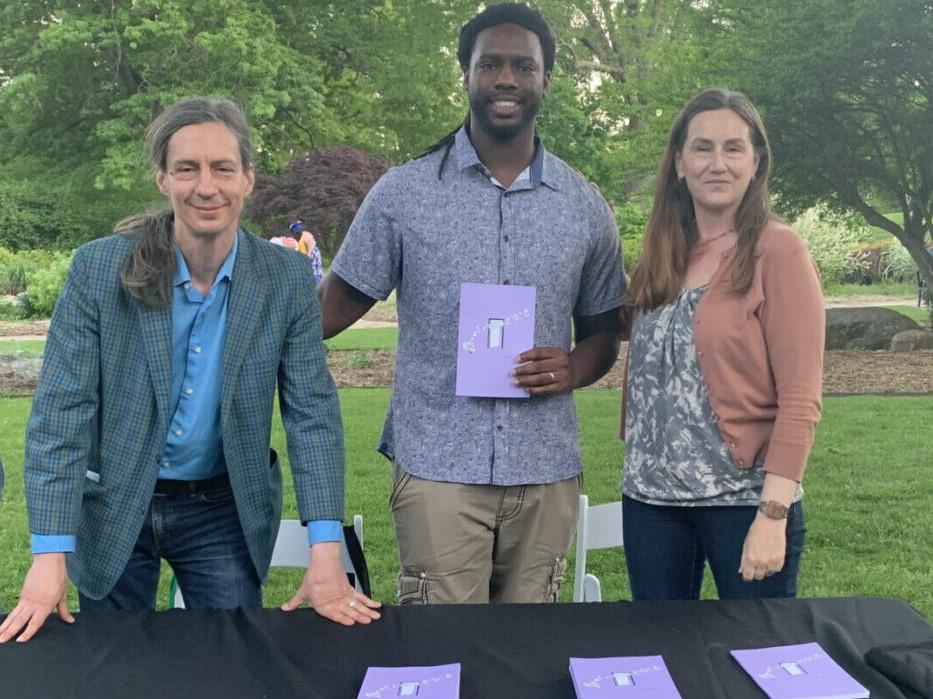
Spring 2021 Carceral Studies Consortium micro-grant recipients, Catherine Mintler, Nick LoLordo, and Timothy Bradford, have begun the process of re-establishing their connection to the Writers Guild and have revived their monthly in-person writing workshops. Read on for an update and statement from Bradford, Mintler, and LoLordo on the recent progress of their project (Mar. 2022).
|
|
Telesis, the Gibbs College of Architecture's award-winning student journal, is releasing its third edition in Spring 2022. This edition, "Isolation", serves as a platform to discuss the systemic change required – at both the infrastructure and social level – to dismantle systemic injustice and inequality. According to the publication, "Isolation as otherness is a lens through which we understand our obligation to tear out the roots of structures of prejudice and injustice. It lays bare the systems and institutions whose foundations need not be salvaged as they were built on the sands of division, oppression, and supremacy. It asks not only that we reconcile where we have been, but more importantly that we have the courage to imagine where we must go next."
This edition of Telesis was coordinated by instructor Evan Sack, with support from Prof. Marjorie Callahan, Dr. Angela Person, and Ben Decuyper.
|
|
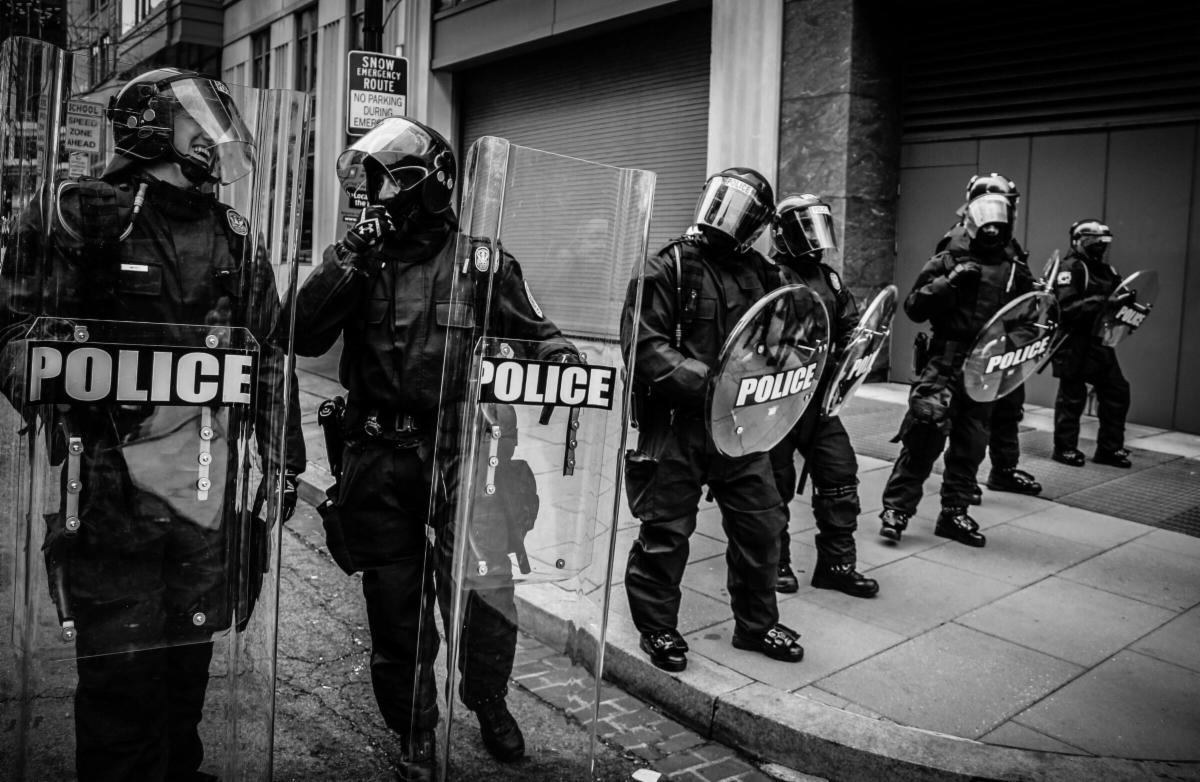
According to Brian Dolinar, nearly $350 billion in funds from the American Rescue Plan Act (ARPA) could be sent to law enforcement agencies. The use of these federal COVID relief aids to fund police, prisons, and jails runs counter to the recent calls to defund these institutions. The ARPA funds and a proposal from President Biden to commit an additional $32.2 billion to "put more officers on the beat", represents more than a backlash to the "defund the police" movement. Branco Maretic, a writer for Jacobin, tweeted that it is "profoundly dispiriting [that] the largest civil rights movement in U.S. history produced a policy response *against* its demands, and at the urging of a supposedly liberal president." Maretic is referring to a speech by President Biden where he encouraged communities to use the funds "to keep our communities safe by hiring more police officers for community policing and paying police overtime.". Although the ARPA funds may already have a set destination, optimistic reporters like Dolinar believe that these funds could be redirected towards communities with the hope that they will "fundamentally realign their approach to public health" by "investing in infrastructure that supports and uplifts, rather than punishes and destabilizes".
|
|
Dia Dipasupil / Getty Images |
|
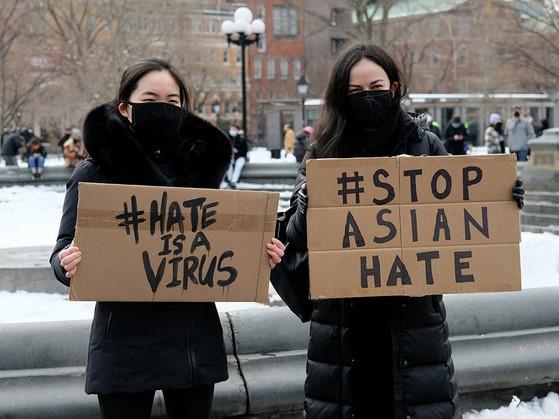
Erin Durkin reports that "hate crimes against Asian New Yorkers quadrupled last year and many other attacks went unreported – or simply weren't classified as a hate crime." Indeed, according to NYPD statistics, hate crimes targeting Asians in New York rose from one in 2019 to one hundred thirty-one in 2021. Newly-elected New York mayor Eric Adams responded to the spike in hate crimes by replacing the leadership of the hate crime unit and "beef[ing] up our hate crime unit to have our undercover officers in the community so we can zero in on those who are committing these crimes". Durkin stated that the consensus of Asian American community leaders seems "cautiously optimistic that the shake-up will signal a new approach." Conversely, a recent article from the New York Times addresses the fear of some New York City residents that Adams' policies might edge too closely towards a return to "'90s Era Policing" such as stop-and-frisk or a broken windows approach.
|
|
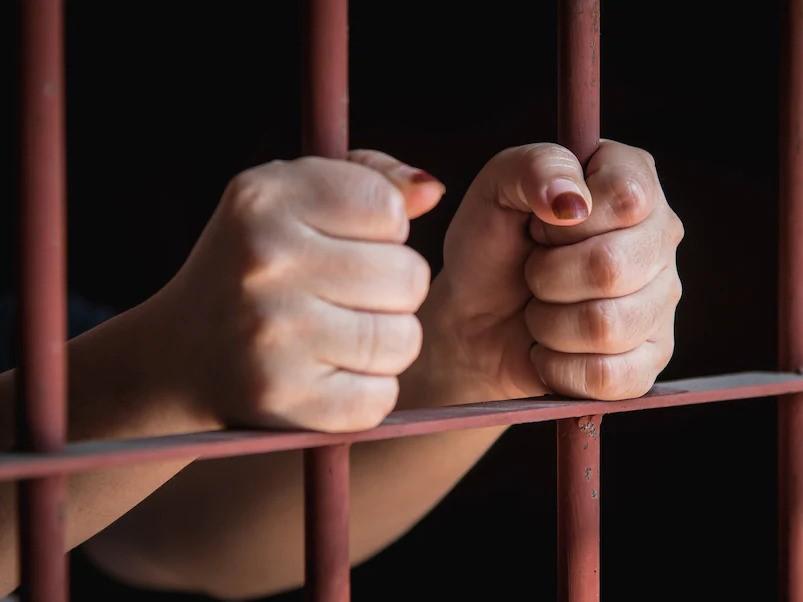
Gabrielle Perry, a formerly incarcerated woman and the leader of The Thurman Perry Foundation, which seeks to help women who have experienced incarceration, states that the lack of reasonable access to menstrual products greatly harms incarcerated women. When these products are not available, through scarcity or the lack of commissary funds for the incarcerated person, Perry says it is common for "women in prison to resort to using mattress stuffing, ripped bed sheets, socks, toilet paper and soiled, days old tampons". Additionally, the American Civil Liberties Union has remarked that "incarcerated individuals and those caught in the criminal justice system often beg or bargain with staff for basic hygiene needs, part of a degrading and dehumanizing power imbalance." Perry believes that these cases are often described as "rarities or one-offs," but the reality is that this abuse is regular and usually sexual. While the responsibility for these issues rests at the feet of these institutions and the government, Perry describes how the public can help mitigate these issues. First, she recommends donating to nonprofit organizations such as The Therman Perry Foundation, the Pad Project or Love Your Menses. Second, she encourages the public to "urge legislators in your state to support the Federal Menstrual Equity for All Act".
|
|
In the United Kingdom, legislation titled The Prison Rules dictates that prison food should be "wholesome, nutritious, well prepared and served, reasonably varied and sufficient in quantity". Kimberley Wilson, a nutritionist and chartered psychologist, posits that there is a correlation between the food served in prison and prison violence. Citing five international nutrition trials in prisons, Wilson found that trials “averaged a thirty percent reduction in violence when prisoner nutrition was improved". On the other hand, the UK government provided recent figures that displayed an increase of assaults on staff by fourteen percent alongside other troubling increases in acts of self-harm. Wilson adds that there is a growing scientific consensus on the "importance of good nutrition for mental wellbeing", including the lowering of aggression. Concluding on the five prison studies results, Wilson argues that a "potential 30 per cent reduction in violence, enhanced physical and mental health, fewer riots and better staff retention, improved nutrition would seem like a worthwhile investment".
|
|
Please share recent research you would like to see featured, including your own!
Send it to carceralstudies@ou.edu
|
|
ABSTRACT: This article explores left critiques of neoliberalism in light of the Black Lives Matter movement's (BLM) recourse to the notion of 'racial capitalism' in their analyses of anti-Black oppression. Taking a cue from BLM, I argue for a critical theory of racial capitalism that historicizes neoliberalism within a longue durée framework, surfacing racialized continuities in capitalism's violence. I begin by revealing how neo-Marxist and neo-Foucaultian approaches to neoliberalism, particularly that of David Harvey and Wendy Brown, respectively, partition race from the workings of contemporary capitalism. Such analyses obscure neoliberalism's differential impact on nonwhite racialized populations, while simultaneously casting anti-racist struggles as divisive. In contrast, I then trace how the Movement for Black Lives policy platform invokes Cedric Robinson's work on racial capitalism, investigating the utility of this framework for the movement's demands. Building on BLM's turn to the concept of racial capitalism, I finally offer an outline of a critical theory of racial capitalism to better theorize neoliberalism. By historicizing neoliberalism within racial capitalism's historical arc, such a theory unravels the qualitatively different mechanisms through which racialized populations are pressed into circuits of capital accumulation. It also paves the way to move past the entrenched class-versus-identity debate on the American left.
|
|
ABSTRACT: Native American women are at an especially high risk of lifetime violence, including childhood abuse, intimate partner violence (IPV), and sexual assault, and are overrepresented in the criminal justice system. Yet few studies have examined how the long-term effects of child maltreatment and other adverse childhood experiences (ACEs) affect Native American women prisoners' perpetration of physical violence in adult intimate relationships. This is surprising because ample research illustrates that childhood adverse events, particularly childhood abuse and neglect, have far-reaching effects across the life course and that these experiences are especially apparent in the lives of women involved in the criminal justice system. Using data from a stratified random sample of Native American (n = 92) and non-Native American (n = 264) women prisoners in Oklahoma, we explore the relationships between individual, cumulative, and clusters of ACEs as they relate to the use of physical violence in adult intimate relationships. Utilizing a feminist life course theoretical framework, our findings indicate that ACEs are not only critical to understanding adult IPV but also that the mechanisms and processes underlying the relationships between ACEs and the perpetration of physical violence in adult intimate relationships differ for Native American and non-Native American women. The findings of the current study demonstrate that it is imperative that prison programming includes trauma-informed and trauma-specific interventions targeting Native Americans.
|
|
ABSTRACT: Policymakers and advocates make contradictory claims about the effects of providing military equipment to local law enforcement, but this intervention is not well understood because of severe data limitations and inferential challenges. I use 3.8 million archived inventory records to estimate the magnitude of sources of bias in existing studies of the 1033 Program. I show that most variation in militarization comes from previously unobserved sources, which implies that studies that show crime-reduction benefits are unreliable. I then leverage recent policy changes to evaluate the effect of military equipment: the Obama Administration recalled property under Executive Order 13688, which resulted in a forced demilitarization of several hundred departments. Difference-in-difference estimates of agencies that retained similar equipment show negligible or undetectable impacts on violent crime or officer safety. These findings do not suggest that similar scale federal reforms designed to demilitarize police would have the downside risks proposed by proponents of military transfers.
|
|
ABSTRACT: APPROACH - There is limited global data on numbers of incarcerated transgender people, an identified vulnerable prison group. There are inherent difficulties for prison authorities regarding placement, security aspects and management of transgender persons. While the concerns apply to all transgender prisoners, the current literature focuses mainly on transgender women and this commentary reflects this present bias. A socio-legal approach describes and evaluates international human rights' conventions and human rights' law, soft law instruments mandating non-discriminatory provisions in the prison setting, and relevant European and domestic case law. PURPOSE - The incarceration of transgender people is described as a "double punishment" based on lack of gender recognition and ability to gender affirm, and with their experiences and conditions in prison tantamount to torture. The purpose of this Viewpoint is to, illustrate the continued "double punishment" of incarcerated transgender people (in particular trans-women) and identify and describe breaches in human and gender rights and minimum standards of care. FINDINGS - Transgender prisoners experience amplification of trauma underpinned by lack of legal gender recognition, inability to gender-affirm, discrimination, transphobia, gender maltreatment and violence by other prisoners and prison staff. Despite obligations and recommendations in international human rights' instruments, and standard operational procedures at the prison level, very few countries are able to fully uphold the human rights of and meet the needs of transgender people in prison. ORIGINALITY - This Viewpoint is important as it highlights the dearth of knowledge exploring human rights discourses and concerns related to the phenomenon of incarcerated transgender persons. It uniquely focusses on European and domestic law and illustrates the inherent tensions between human rights, sexual orientation and gender identity rights and security considerations regarding transgender issues in 2 prisons. Rights assurances centre on the principles of equality, dignity, freedom of expression, dignified detention and the prohibition of inhumane treatment or punishment.
|
|
Updates, Events & Opportunities |
|
Carceral Studies Graduate Student Fellowship
The Carceral Studies Consortium offers an outstanding graduate student with an interest in advancing Carceral Studies a 12-month, .20 FTE position (8 hours per week). This CSC Graduate Student Fellow serves as the student representative on the Carceral Studies Board of Directors, as well as provides critical support for CSC initiatives throughout each academic year (July 1 to June 30). Applications are due by May 6, 2022.
|
|
|
Artificial Intelligence in Law Practice Panel
The Data Institute for Societal Challenges and the University of Oklahoma College of Law are hosting "four expert-led panel discussions of modern innovations in artificial intelligence and how they are transforming the practice of law." Panelists will include Jacqueline Schafer (Founder and CEO of Clearbrief AI), Jim Chiang (Founder and CEO of My Legal Einstein), James Lee (Co-Founder and CEO of LegalMation), and Dan Ivstan (Chief Product Officer of Gavelytics). The event will be held in person and virtually on April 22 from 1 pm to 5 pm (CST).
|
|
|
Students of any Level Invited to Apply for Zoom Study Group, "Reimagining Educational Work for Collective Freedom: The Labor Strike as a Portal"
The inclusive student-focused study group "will convene across eight months, punctuated by three public symposia that take up complex questions of labor and freedom. These interrelated projects will take shape around the question of the strike: What can it teach us about the possibilities for radical educational praxis?" Those that are interested should apply by April 6th, 2022.
|
|
|
2021-2022 Carceral Studies Consortium Student Work Prize
The Carceral Studies Consortium is inviting original student essays or creative works developed as part of any course in any discipline during the 2021-2022 academic year that engages the topic of Carceral Studies, broadly conceived. Submissions are not limited to essays, but may be in any creative or scholarly format, including but not limited to art in any medium, story maps, and more.
|
|
|
Russell Sage Foundation Race, Ethnicity, and Immigration Grant
The Race, Ethnicity, and Immigration grant is offering individual funding up to $175,000 for research that addresses the “severe consequences of the Covid19-pandemic, including its economic disruptions, and the recent mass protests to combat systemic racial inequality in policing and other institutions have reaffirmed the importance of social science research examining economic, political, racial, ethnic, generational, and social inequalities relevant to public policy and social change.”
|
|
|
OU Libraries and Carceral Studies Consortium Assemble “Racial Capitalism” Library Guide
In a collaborative effort between OU Libraries and the Carceral Studies Consortium, a library guide on “Racial Capitalism” is now available for all students, staff, and faculty. Racial capitalism contends that racist oppression is central to how capitalism operates. Racial subjugation is not one specific manifestation of a larger capitalist system, but rather, capitalism itself is a racial system. The guide includes resources (written, audiovisual, and contacts) for information about the carceral state, crimmigration, and race and labor.
|
|
|
ABOUT
The Consortium Newsletter will offer a roundup of a few selected articles that reflect today’s news, organizing, and thinking related to the carceral state. We understand that freedom work is built on education and engagement. Education requires an understanding of contemporary issues informed by their historical context. We hope that these curated articles will help you analyze the issues that we face and understand the community that we strive to construct.
Join the conversation!
We encourage feedback, suggestions, and article suggestions. Please reach out to carceralstudies@ou.edu with any ideas, thoughts, or recommendations.
If anyone you know is interested in receiving this newsletter and other information from the Carceral Studies Consortium, please forward them this email and they may click this link to subscribe.
|
|
Land Acknowledgment
The University of Oklahoma is on the traditional lands of the Caddo Nation and the Wichita & Affiliated Tribes. This land was also once part of the Muscogee Creek and Seminole nations. It also served as a hunting ground, trade exchange point, and migration route for the Apache, Cheyenne, Comanche, Kiowa, and Osage nations. Today, 39 federally-recognized Tribal nations dwell in what is now the State of Oklahoma as a result of settler colonial policies designed to confine and forcefully assimilate Indigenous peoples.
|
|
The University of Oklahoma is an equal opportunity institution. ou.edu/eoo |
|
|
|
|
|
|