MAY 18, 2026

Facebook  X  Instagram  Email  Web

Judge Blaney Sides with Heap Again - What about the Purcell Principal


The ongoing legal battle between the Maricopa County Board of Supervisors and Recorder Justin Heap has now entered dangerous territory that could further damage voter confidence in Arizona elections. Judge Scott Blaney’s decision to deny the Board’s request for a stay raises serious concerns about whether the court is giving proper consideration to one of the most important principles in election law — the Purcell Principle.


The Purcell Principle comes from the 2006 U.S. Supreme Court case Purcell v. Gonzalez. Ironically, the case originated in Arizona and is named after former Maricopa County Recorder Helen Purcell, who served our county for nearly three decades and oversaw countless elections. The Supreme Court’s warning in that case was simple but incredibly important: courts should avoid making major election-related changes too close to an election because doing so can confuse voters, disrupt election administration, and undermine public trust in the system.

That warning matters now more than ever.


Election confidence is already fragile in Arizona. Regardless of political affiliation, most voters simply want elections to be smooth, organized, transparent, and trustworthy. When courts order major structural changes involving election administration, staffing, IT systems, or authority disputes close to an election cycle, voters naturally begin to worry whether the system is stable.


The Board of Supervisors argued exactly that in requesting the stay. County officials warned that election systems are already integrated and operatonal. Forcing significant administrative changes now, while appeals are still pending, risks confusion and instability at a time when election preparation is already underway. Their argument was not simply about politics or power. It was about avoiding disruption to election operations and preserving public confidence.


Judge Blaney clearly saw the matter differently. He appears to believe the Recorder’s legal authority under Arizona law outweighs concerns about operational disruption and that continuing the current arrangement would allow an unlawful structure to remain in place. While reasonable people can debate the legal merits of that position, it does not erase the very real concerns tied to the Purcell Principle.


The principle exists for a reason.


Voters should never feel like election rules, systems, or control structures are constantly shifting in the months leading up to an election. Even if the changes are administrative rather than voter-facing, instability behind the scenes can quickly become instability in the public mind. Once trust erodes, voter participation can suffer. Some voters may question whether elections are being properly administered. Others may simply disengage altogether because they no longer trust the process.


That is why the Purcell Principle has become one of the most influential doctrines in election law nationwide. Stability matters. Predictability matters. Public confidence matters.


Helen Purcell herself spent years administering elections in Maricopa County and understood firsthand how important consistency and voter confidence are to a functioning democracy. It is worth remembering that the principle bearing her name was designed specifically to prevent courts from unintentionally creating confusion and uncertainty during election season.


Whether one supports the Board of Supervisors or Recorder Heap, every Arizonan should want the same thing: elections that voters trust. Decisions that create uncertainty during an already tense political climate risk doing long-term damage to public confidence and turnout — consequences that may outlast this particular legal battle.

The David Marshall Controversy


Election administration controversies continue to dominate headlines across Arizona, and Maricopa County Board of Supervisors is not alone in facing growing legal and political disputes surrounding election offices. Now, Navajo County has found itself at the center of its own election controversy involving newly appointed Recorder David Marshall.


Marshall was appointed Navajo County Recorder after resigning from his seat in the Arizona Legislature and ending his campaign for the Arizona Corporation Commission. However, almost immediately after his appointment, legal questions emerged regarding whether he is constitutionally eligible to serve in the position.


At the center of the dispute is a provision in the Arizona Constitution stating that “no member of the legislature” may hold another elected office or government job “during the term for which he shall have been elected.”


The legal disagreement revolves around how that language should be interpreted.

One interpretation holds that a legislator simply must resign before taking another office, which Marshall did. The opposing interpretation argues that once elected to the Legislature, a person cannot hold another office until the entire legislative term expires, regardless of resignation. Under that interpretation, Marshall would be barred from serving as recorder until January 2027.

The issue is now headed to the courts.


One of Marshall’s Republican rivals for the appointment, Suzanne Hudspeth, has filed suit challenging his eligibility. Adding even more political intrigue to the case, Arizona Attorney General Kris Mayes has pursued legal action as well.


The situation has created an unusual political alliance. Hudspeth, like Marshall, is a Republican, and she is represented by conservative attorney Tim La Sota, who has long been associated with many of Marshall’s former political allies. Meanwhile, Mayes, a Democrat preparing for reelection, has frequently clashed politically with conservatives aligned with the Freedom Caucus — a group Marshall openly belonged to during his time in the Legislature.


Marshall built a reputation as a strong conservative voice on election issues. During his time in office, he supported legislation aimed at banning vote centers, restricting mail voting, and requiring hand counting of ballots in local elections. Supporters viewed him as focused on election integrity, while critics argued his proposals would complicate voting administration.

Regardless of political motivations, the legal questions being raised are serious and will likely require clarification from Arizona’s courts.


The controversy also highlights a broader issue facing Arizona: public confidence in election administration continues to erode as disputes surrounding recorders’ offices, election authority, and voting systems become increasingly politicized.


In recent months, Maricopa County has been embroiled in highly public legal disputes involving Recorder Justin Heap and the Board of Supervisors over control of election administration systems and staffing. Now Navajo County faces its own battle over who can legally serve as recorder in the first place.


For voters, the growing number of courtroom fights involving election officials may only deepen concerns about stability and trust in Arizona’s election system. Regardless of political affiliation, most Arizonans simply want elections that are lawful, transparent, organized, and trusted by the public.


As the Marshall case moves forward, it could have significant implications not only for Navajo County, but also for how Arizona interprets constitutional restrictions on lawmakers holding multiple offices in the future.

Suicidal Empathy - A Book Review


I recently read Suicidal Empathy by Gad Saad, and I have to share this very interesting concept because it explains so much of what we are witnessing in society today. The book explores the idea that empathy, while normally a positive and necessary human trait, can become harmful when it overrides logic, accountability, common sense, and even self-preservation. According to Saad, many of today’s cultural and political movements are driven by emotion to the point that people are expected to accept everything and everyone without question, even when the consequences may negatively impact communities, public safety, education, or societal stability. Whether you agree with all of his conclusions or not, the concept provides a fascinating lens through which to view many of the debates currently dividing America.


The book Suicidal Empathy has sparked intense debate because it challenges one of the defining characteristics of modern progressive politics: the belief that compassion should override nearly every other concern. Whether discussing gender, immigration, crime, education, or cultural issues, many conservatives argue that the political left often demands acceptance of every idea, behavior, and policy — even when the long-term consequences may be harmful to society itself.


In the book, Gad Saad argues that empathy becomes dangerous when it is detached from logic, accountability, and common sense. He calls this “suicidal empathy” because it can lead societies to undermine their own values, security, and stability in the name of appearing compassionate.

Many Americans see this dynamic playing out every day.


We are told we must accept illegal immigration without discussing the strain on schools, hospitals, housing, and public safety. We are told questioning policies related to crime, gender ideology, or education makes someone hateful or intolerant. Increasingly, disagreement itself is treated as a moral failure rather than a healthy part of democracy.


The modern left often promotes the idea that every lifestyle, belief system, and behavior deserves equal affirmation. The problem is that not every idea produces equal outcomes. A society cannot function if it loses the ability to distinguish between healthy and unhealthy behavior, lawful and unlawful conduct, or productive and destructive policies.


Compassion is important. Conservatives are compassionate people too. But compassion without boundaries is not wisdom. Parents understand this concept well. Truly loving someone sometimes means saying “no,” enforcing standards, expecting accountability, and recognizing consequences.


The left’s version of empathy frequently removes accountability from the equation. Criminals become victims of society. Border enforcement becomes “inhumane.” Academic standards are lowered in the name of equity. Merit is replaced with identity politics. And increasingly, Americans are expected to remain silent rather than risk offending someone.


This cultural shift has consequences.


Communities become divided. Public trust erodes. Schools focus more on activism than academics. Citizens begin to feel like they must walk on eggshells in everyday conversation. Meanwhile, those who raise legitimate concerns are often labeled extremists simply for defending traditional values, national sovereignty, or common sense.


One of the most important points in Suicidal Empathy is that empathy should complement reason — not replace it. A nation must balance compassion with law, order, responsibility, and self-preservation. Without that balance, society risks sacrificing stability in pursuit of endless emotional validation.


America has always been a compassionate nation. But it also became strong because it valued personal responsibility, secure borders, free speech, merit, faith, family, and accountability. Those principles built the most successful nation in history.


The challenge facing America today is not whether we should care about people. Of course we should. The real question is whether compassion can survive if society abandons truth, standards, and common sense in the process.

Train Heists - Not Just In the Movies


The recent wave of train heists across Arizona is not the work of old-fashioned bandits romanticized in movies. According to law enforcement, these crimes are being carried out by sophisticated cartel-linked criminal networks targeting cargo trains transporting high-value merchandise through the Southwest. For communities in the West Valley — especially Wittmann — this raises serious concerns about the proposed massive BNSF intermodal facility and logistics hub.


Authorities say these organized crime groups carefully study train schedules, cargo manifests, and remote stopping points before striking. Chief Deputy Jeff Newnum of the Yavapai County Sheriff’s Office described the operations as highly coordinated criminal enterprises that know “the right place and the right time to make these hits.” Their preferred targets are trains carrying expensive consumer goods, particularly shipments leaving California headed east through Arizona.


The thefts typically occur in areas where trains are forced to stop or slow down to allow other rail traffic to pass. Criminal crews then move in with cargo vans and rapidly unload valuable merchandise from railcars before disappearing. Workers who encounter these crimes can find themselves in dangerous situations, facing organized groups willing to operate boldly and openly.


The concern should not be dismissed as fearmongering. The problem has already escalated beyond rail thefts alone. In April, authorities connected the same criminal network to the theft of cargo from a semitruck in Ash Fork near Interstate 40 while the driver was resting. According to law enforcement, the suspects acted brazenly in a busy truck stop filled with witnesses and surveillance cameras, demonstrating a disturbing level of confidence and disregard for public safety.


This matters greatly when discussing the proposed BNSF logistics hub in Wittmann.

BNSF has repeatedly stated that it has its own police force. However, nationwide BNSF reportedly employs only about 150 railroad police officers, with only two assigned to all of Maricopa County. That reality raises serious questions about enforcement capacity if a massive intermodal facility is eventually built in Wittmann.


Unlike incorporated cities, Wittmann does not have its own municipal police department. The community relies on the Maricopa County Sheriff's Office for law enforcement coverage across a vast area. Deputies are already stretched thin responding to growth pressures, traffic issues, and public safety demands throughout the county.


Residents opposing the proposed BNSF intermodal project have repeatedly warned about infrastructure, traffic, and quality-of-life concerns. The issue of organized cargo theft and cartel-linked criminal activity adds yet another serious public safety dimension to the debate.

Supporters of the project often focus on economic development and construction jobs. But communities must also ask difficult questions about the long-term consequences of creating one of the largest rail logistics operations in the region in an unincorporated rural area without a dedicated local police force.


Arizona is already experiencing the consequences of organized rail cargo theft along major freight corridors. The West Valley should not ignore those warning signs.


The latest incident further illustrates the reality of how these situations are handled. In the Williams Police Department press release dated May 13, 2026, officials stated that BNSF Railway Police advised Williams Police Dispatch that multiple individuals were observed in the area and believed to be connected with the incident. That detail raises an important question: if BNSF’s own railroad police primarily alert local dispatchers and then rely on local agencies to respond, who ultimately bears the burden of policing a massive future logistics operation in Wittmann?


According to the release, the Williams Police Department, the Sheriff’s Department, and Homeland Security all responded to the situation. This demonstrates that despite BNSF maintaining its own police force, local taxpayers and federal agencies still appear to provide much of the frontline law enforcement response when these incidents occur.


To better understand railroad employee procedures during these dangerous incidents, I spoke with Dominic Reale, a former BNSF conductor, regarding company policies for conductors and engineers during robberies and cargo thefts.


According to Reale, train crews are specifically instructed not to confront suspects. Employees are trained to treat cargo theft incidents as dangerous criminal situations and avoid attempting to physically stop robbers themselves.


Instead, crews are instructed to immediately report suspected or active thefts to the BNSF Resource Operations Center (ROCC), which coordinates with BNSF police and local law enforcement agencies.


Reale explained that BNSF operates under a strong “safety-first” culture where the protection of train crews takes priority over protecting cargo. In practical terms, that means employees are expected to prioritize their own safety and avoid escalation rather than intervene directly.

BNSF does employ fully certified, state-commissioned railroad police officers with law enforcement authority. The company also utilizes proactive security technologies including cameras, drones, surveillance systems, and undercover monitoring at intermodal facilities and along higher-risk routes.


However, even with those measures in place, the reality remains that local law enforcement agencies are still heavily involved whenever major incidents occur.


That reality becomes particularly important in rural, unincorporated communities like Wittmann, where there is no city police department and where sheriff’s deputies already cover enormous geographic areas with limited staffing.


The people of Wittmann and surrounding communities deserve honest answers about how public safety would be protected, who would pay for increased law enforcement demands, and whether county resources are truly equipped to handle the risks associated with a project of this magnitude.

How Do Utilities Get to Raise Rates - It's a Process


There has been significant public discussion surrounding the proposed APS rate increase request, especially since two members of the Arizona Corporation Commission — Kevin Thompson and Nick Myers — are currently up for re-election. Utility rate increases directly impact household budgets, businesses, and the overall cost of living in Arizona, making these cases some of the most closely watched actions taken by the Commission. While many residents focus on the size of the proposed increase, the actual process behind approving or denying a rate case is lengthy, highly regulated, and governed by both Arizona law and formal Commission procedures.


The Corporation Commission does not simply approve rate increases based on politics or public pressure. The Commission operates under Arizona constitutional authority and state statutes that outline how regulated utilities may recover costs and earn an approved rate of return. Commissioners are legally required to review evidence, testimony, financial data, and recommendations from professional staff before voting on any rate request. State law also establishes public hearing requirements, consumer protections, and procedures utilities must follow throughout the process.


Here are the steps the Corporaton Commission follows for a rate case. Thsi can take a year.


1. The Utility Files a Rate Case

The utility formally asks the ACC for permission to raise rates.

This filing usually includes:

  • How much more money they want
  • Why they say they need it
  • Financial records
  • Infrastructure costs
  • Power plant costs
  • Future growth projections
  • Operating expenses

Utilities usually argue the increase is needed for things like:

  • New power plants
  • Transmission lines
  • Grid upgrades
  • Inflation
  • Employee costs
  • Reliability improvements

2. ACC Staff Reviews Everything

Professional ACC staff, economists, accountants, engineers, and attorneys review the request.

They look for:

  • Wasteful spending
  • Unnecessary projects
  • Overestimated costs
  • Whether customers are being treated fairly

The ACC staff often recommends a smaller increase than the utility requested.

3. Intervenors Join the Case

Other groups are allowed to participate.

These can include:

  • Consumer groups
  • Large businesses
  • Cities
  • Industrial users
  • Environmental groups
  • Residential customer advocates

These groups can challenge the utility’s claims and present their own experts.

4. Public Hearings Are Held

This is where the public can speak.

Customers can:

  • Support the increase
  • Oppose the increase
  • Complain about bills
  • Discuss reliability issues

These hearings are often emotional because rate increases directly affect household budgets.

5. An Administrative Law Judge Reviews the Evidence

A judge at the ACC oversees the case.

The judge:

  • Reviews testimony
  • Examines evidence
  • Holds hearings
  • Questions witnesses

This process can take many months.

6. A Recommended Decision Is Written

The judge issues a recommendation to the five elected ACC commissioners.

This recommendation may:

  • Approve the full increase
  • Reduce it
  • Reject parts of it
  • Change rate structures

7. The ACC Commissioners Vote

The five elected commissioners hold a public meeting and vote.

They can:

  • Approve
  • Modify
  • Reject the recommendation

At least 3 commissioners must agree for it to pass.

8. New Rates Take Effect

If approved:

  • Utilities update customer bills
  • New rates begin on a set date

Sometimes increases are phased in over time.

Important Things to Know

Utilities Are Guaranteed a Chance to Recover Costs

Arizona utilities are regulated monopolies.

Because customers usually cannot choose another provider, the ACC regulates:

  • Prices
  • Profits
  • Reliability

Utilities are generally allowed to recover “reasonable” costs plus a profit approved by regulators.

The ACC Also Decides:

  • How much profit utilities can earn
  • Solar policies
  • Grid reliability standards
  • Renewable energy requirements
  • Large customer rate structures
  • Data center power issues

Why Rate Cases Matter Right Now

Arizona’s rapid growth, especially in the West Valley, is creating major pressure on:

  • Power generation
  • Transmission systems
  • Water systems
  • Infrastructur

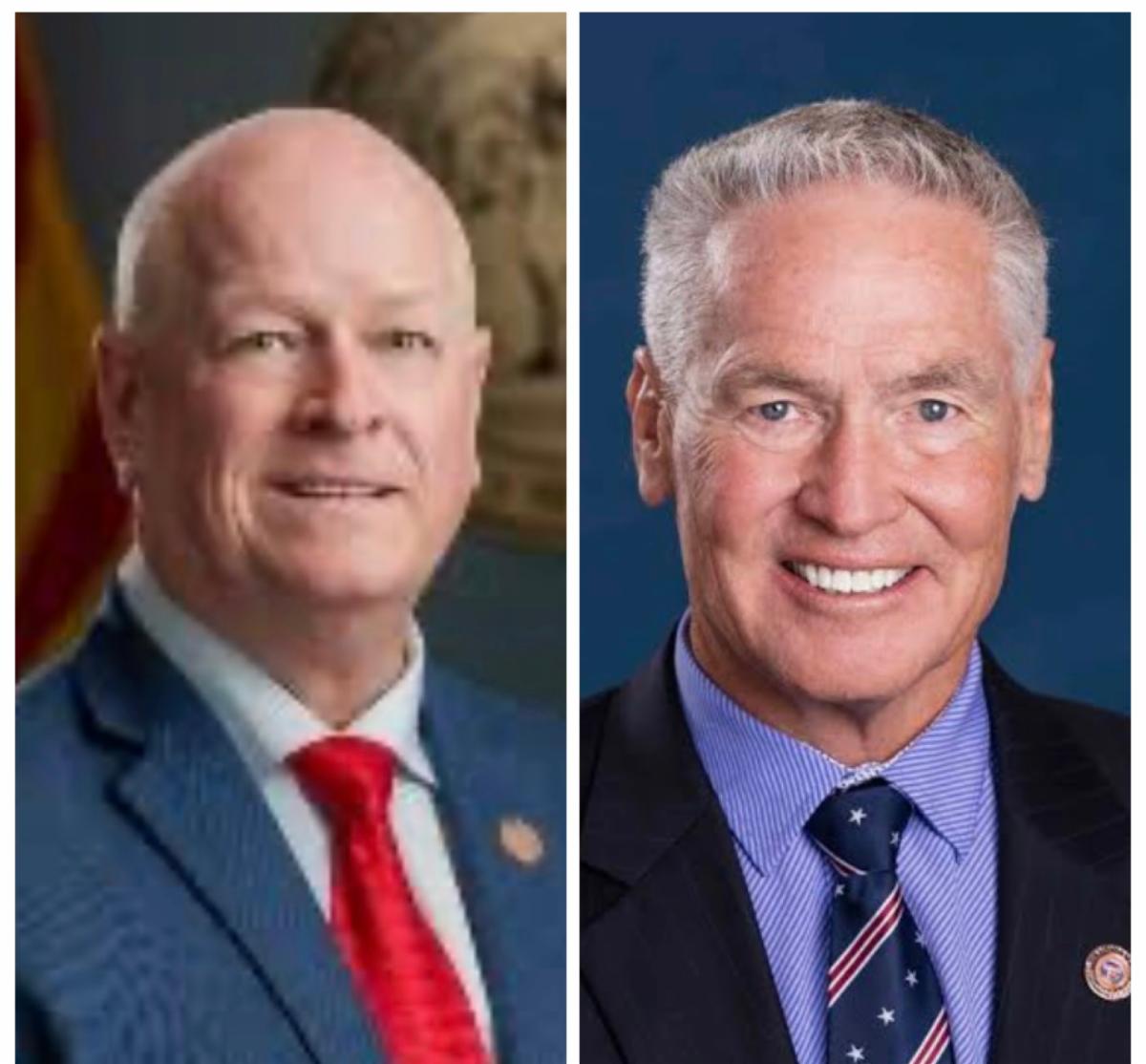
Debate Between Kevin Thompson and Ralph Heap candidates for the Arizona Corporation Commission


Last week I attended a debate between current Arizona Corporation Commissioner Kevin Thompson and Representative Ralph Heap, who is running for the Corporation Commission as well. The debate highlighted very different approaches to the role of the Commission and what its responsibilities are under Arizona law.


First, I still cannot understand why Arizona Free Enterprise Club recruited Ralph Heap and David Marshall to challenge two sitting commissioners when conservatives already have what many consider to be two strong incumbents in Nick Myers and Kevin Thompson. Marshall has since dropped out of the race to accept the Recorder position in Navajo County. That move raises legitimate questions about how committed he truly was to the Corporation Commission campaign in the first place.


It is no secret that I strongly support Thompson and Myers. From my perspective, they have consistently voted as conservatively as possible while still operating within the framework of Arizona statutes and the legal authority of the Commission.


During the debate, Thompson did an excellent job explaining how the current Commission has moved away from many of the policies associated with the Green New Deal agenda. He also explained something many voters do not fully understand about utility rate cases. Utilities often request large increases, but the Commission does not simply rubber-stamp those requests. Instead, the requests go through a lengthy legal and financial review process, and increases are often reduced because the utilities cannot fully justify everything they requested.


Representative Heap took a much more hardline position, stating that he would simply vote no on requests involving projects such asbattery, wind or solar energy development. Thompson responded by pointing out that property owners have rights and that the Commission is bound by state law and established statutes. Heap indicated he would vote no anyway and deal with lawsuits later.


That exchange stood out to me because it demonstrated the difference between campaigning and governing. Thompson repeatedly emphasized that the Corporation Commission is not simply a political body — it is a constitutional regulatory agency with legal responsibilities that extend beyond energy policy alone. He reminded the audience that the Commission also oversees water utilities and even has responsibilities involving railroad safety inspections.


At the end of the debate, nothing Representative Heap said changed my mind. I continue to believe Kevin Thompson and Nick Myers are the right choice for the Arizona Corporation Commission because they understand both conservative principles and the legal realities of the office they hold.


I will be supporting Thompson and Myers, and I encourage voters to carefully research the candidates and pay close attention to the actual responsibilities of the Arizona Corporation Commission before casting their ballots.

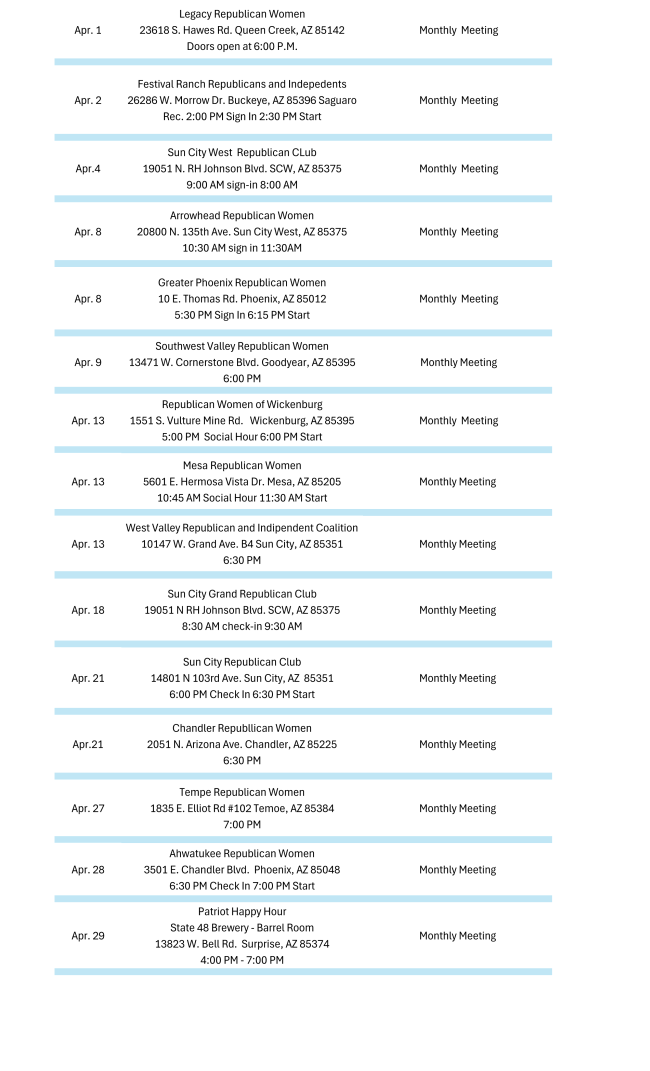
PATRIOT HAPPY HOUR WITH FELLOW REPUBLICANS!


Join Us for Another Great Evening!


Due to overwhelming demand, we’re bringing back our Patriot Happy Hour at State 48 in Surprise! Last month’s gathering was a fantastic success, with great food, drinks, and, most importantly, meaningful conversations with fellow conservatives. Let’s do it again!


 Where: State 48 Brewery - 13823 West Bell Road, Surprise, AZ 85374

 When: Wednesday, 27, 2026

 Time: 4:00 PM – 7:00 PM


This is the perfect opportunity to connect with like-minded individuals, get to know fellow PATRIOTS, and strengthen our local Republican community. Whether you're a seasoned PC, new to our LD, or simply want to make new friends everyone is welcome!


Bring a friend and join us for an evening of camaraderie, networking, and fun. Let’s keep the momentum going!


Patriot Happy Hour is always the last Wednesday of the month.

IF YOU WOULD LIKE YOUR CLUB LISTED PLEASE CONTACT ME

Thank you,

Lisa Everett


www.patriotnheels.com


Follow me on:

X - @patriotnheels

Facebook - @patriotnheels

Instagram - @patriotnheels