October 20, 2026

Falling Into Autumn and Winter 

As we head into November and December, the Invasive Warriors will be hunkering down to go after invasive vines which stay green long into colder months. We will also be treating invasive trees and shrubs as they go dormant for winter. It is easier to treat these plants during the coming months, as there are no ticks, and it is easier to walk in the woods as foliage dies back.

Upcoming Workday Days in November and December


Meet at the Club at 9am prior to going to the site

Saturday November 7th at 9:00 AM


Work on removing Chinese Silver Grass from around Glen Lochen pond and sewing native flower seeds for Spring


Additional Workdays: 

Tuesday November 17th, Saturday December 5th

and Tuesday December 15th


We hope you can help us to keep Glenmore’s common areas beautiful and healthy. 

GGES Newsletter: 


We hope you enjoy the monthly newsletter. We will be sunsetting for the Holiday months but will resume in the Spring. 


Look for it in February/March!

Do This Not That!

Give our Woods a Healthy Edge


Many of us own property adjacent to the wooded common areas in Glenmore. The Invasive Warriors often work in these areas and would like to share best practices for how to care for these buffer zones. If we all follow these guidelines, all life (human, animal and plant) in Glenmore will benefit.

Do This:

Care of the Area at the Edge of the Woods  

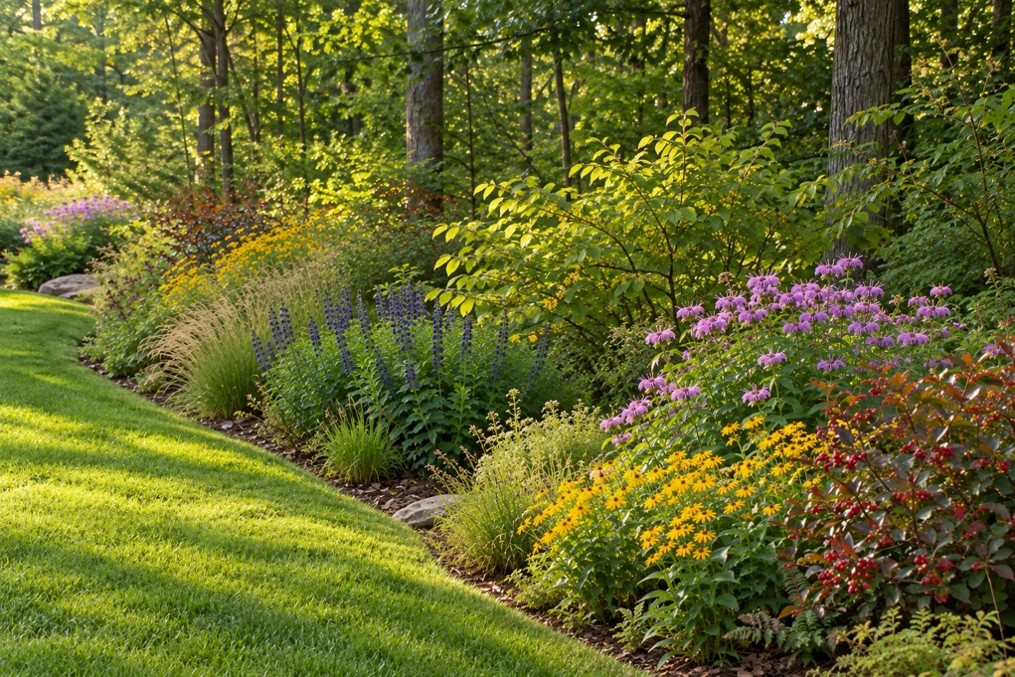
A) Create a Soft Transition Zone


  • Stop mowing right along the edge: Allow a 5-to-10-foot border of the woods to grow naturally instead of cutting grass right up to the tree trunks.
  • Protect tree trunks: Keep lawn mowers and string trimmers away from tree bark to prevent fatal wounds that invite disease and fungi.
  • Use natural mulch: Lay a 2-to-3-inch layer of shredded hardwood mulch or leaf litter in a band along the edge, keeping the mulch several inches away from the actual tree trunks.


B) Manage Invasive Species


  • Spot invasive plants: Watch for aggressive non-native plants common in Glenmore like Japanese stiltgrass or Lespedeza, which grow along the edge of the woods, and other invasive plants like, olive shrubs, Japanese barberry, privet. .
  • Pull or treat carefully: Ask your sector leader (see chart below) for advice about identifying and how best to treat invasive plants
  • Consider weed whacking certain invasive plants like Japanese Stiltgrass and Lespedeza 10 feet into the common area ONLY from mid-August to mid-September. Doing so will help control these pervasive plants and protect your yard. 
  • Limit chemical runoff: Avoid spraying broad-spectrum herbicides or heavy lawn fertilizers near the tree line, as runoff harms native woodland understory plants and tree root systems.


C) Enrich the Soil and Handle Leaves in Fall


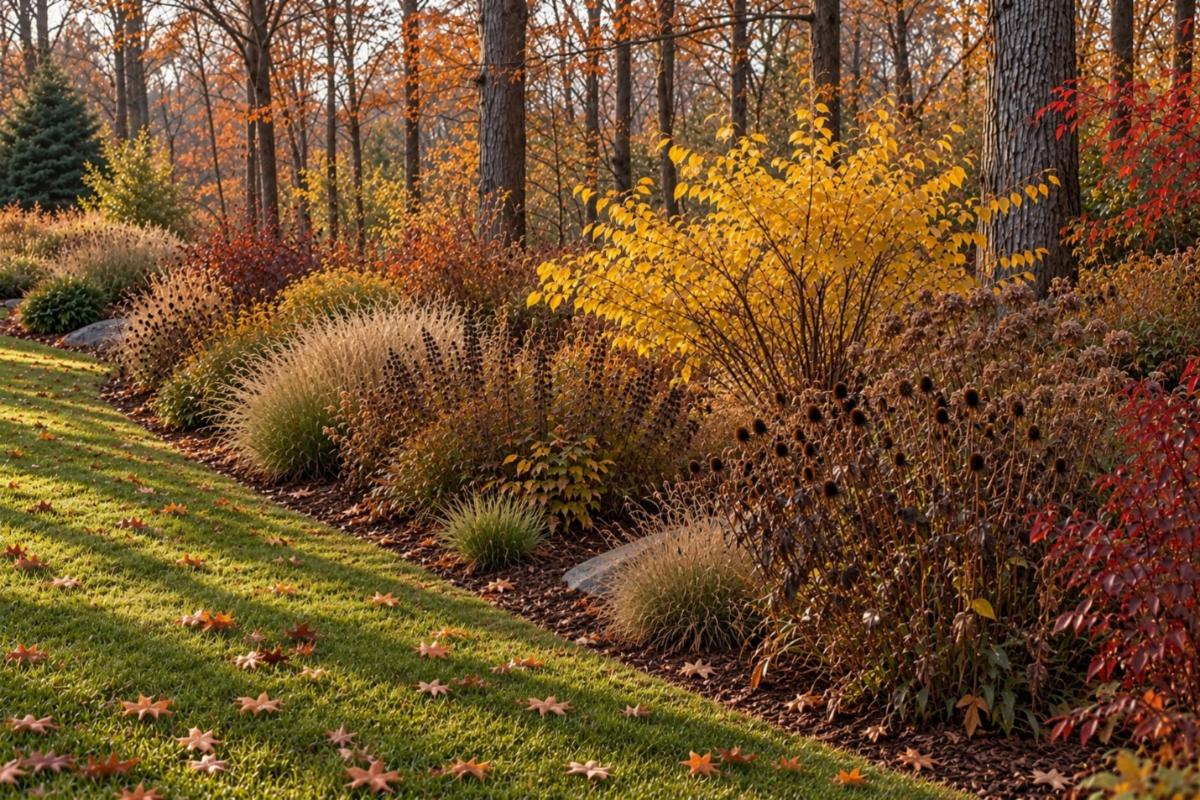
  • Leave the leaves: Rake or blow SOME lawn leaves up under the trees from which they fell, and SOME of them into the edge of the woods or have your landscaper shred them with your mower and let them decompose naturally to feed the forest floor. Many butterflies lay eggs on these leaves near their host plant
  • Leave stems and seedheads on some flowers, like coreopsis, or monarda in fall to feed the birds in fall before cutting back to 8 inches in December.
  • Plant native understory: Check with your sector leader first regarding species, but consider filling bare spots in the shaded transition zone with NATIVE deer-resistant Virginia shrubs like spice bush, red chokeberry sweet pepperbush, or native ferns.


D) Take Advantage of Glenmore’s Leaf & Stick Clean Up


  • Look in the Community News and Notes to find dates for Late Fall Leaf Clean Up and Spring Stick Clean Up is usually in March

Not That:

Do Not Discard Vegetation, Branches or Trash in the Common Area

A)  Don’t Discard Dead Vegetation


  • Do not toss your dead house or garden plants in the common area. They may attract unwanted wildlife, or go to seed and escape cultivation. They may be the next invasive species in the woodland!
  • Do not discard your Christmas trees. Look for scheduled Christmas tree pick up in January
  •  Although we recommend blowing excess leaves onto the EDGE of the woods, too much of a good thing is not good. 2-3” deep is recommended.

B)  Don’t dispose of Trash


  • The Warriors have found broken flowerpots, water bottles, glass bottles, doggie doo bags, metal objects and other discarded items in the woods These are trash and belong in the trash. They are unsafe for us humans, animals and plants.
  • Check your property for materials left after construction projects like, chunks of concrete, orange or black woven retention fabric, pressure treated lumber, and hardscape materials.


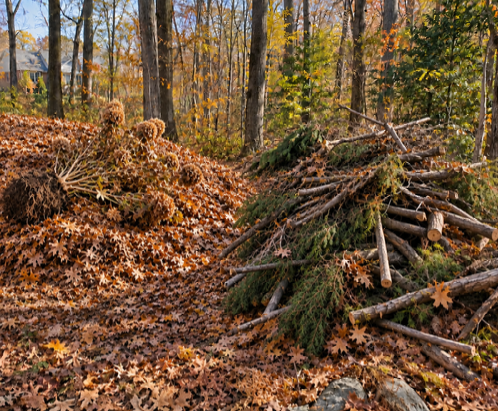
C)    Don’t stack tree branches


  • Or limbs in piles from your yard in the common area. While naturally fallen trees and logs are important to the forest as they hold water, and their decomposition improves soil health, large piles of branches and brush create a potential fire hazard. Dispose of this refuse on GCA limb pickup day on November 2nd; pickup starts at 7 am.  


Bestselling Author of Nature’s Best Hope and How Can I Help?, Douglas Tallamy, says “along with owning a piece of the earth comes the responsibility of being a good steward of the piece.”

The GCA Branch and Limb Pick-up Starts

Monday, November 2nd, at 7:00AM

Please place ONLY your branches and Limbs from your yard at the curb

by 7:00AM on November 2rd with the cut end toward the street.


Please Remember: Pick Up is for Branches and Limbs ONLY

Invasive Species Warrior Contacts in your Neighborhood


Liza Moorman: Team Leader. Sandown Lane and Sandown Park- liza.moorman@gmail.com

Liz Burns: Scottish Homes- lburns1117@gmail.com

Cathy Skelly: Highlands, Carroll Creek area- cathy.skelly@yahoo.com

Nancy Canavan: S section, Glenlochan pond- nancanavan@aol.com

Diana Ferguson: Darby West- dianasfergy@gmail.com

Bob Cox: Bremerton Cottages- robertwcox855@gmail.com

Anne Poland: Piper West- lauren.poland@att.net