Rail & Labor News from RWU
| |
Weekly Digest Number #48 - November 26th, 2024 | |
Welcome to the RWU Rail & Labor News! This news bulletin is produced and emailed out each Tuesday morning. We hope you find each week's news and information useful. If so, please share with co-workers, friends, and colleagues. If you like, you can sign them up to get all the news from RWU HERE. Or forward them the link. Got a hot tip? Please forward the article and a link to raillabornews@gmail.com. Note: If you read over this news bulletin each week, you will be sure to never miss the important news of what is going on in the railroad world from a worker's perspective! | |
|
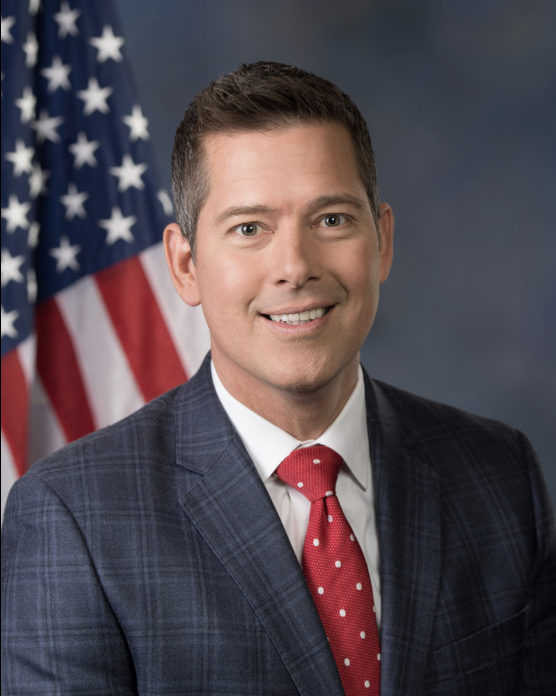
Editor's Note: Sean Duffy’s nomination as U.S. transportation secretary raises significant concerns for rail labor. During his tenure in Congress from 2011 to 2019, Duffy consistently opposed measures beneficial to labor rights and worker protections. His voting record includes opposition to increasing the federal minimum wage, enhancing workplace safety regulations, and expanding collective bargaining rights.
Duffy’s alignment with corporate interests over worker welfare suggests a potential continuation of policies that may undermine the rights and well-being of rail workers. His lack of direct experience in transportation policy further exacerbates concerns about his ability to effectively address the complex challenges facing the rail industry.
As rail labor advocates, it is imperative to remain vigilant and proactive in safeguarding the hard-earned rights and protections of workers. The appointment of a transportation secretary with a history of opposing labor-friendly legislation necessitates a unified and steadfast response to ensure that the voices of rail workers are heard and their interests are prioritized in the corridors of power.
| |
Trump nominates former U.S. Rep & Fox News Contributor, Sean Duffy, to head the USDOT | |
Progressive Railroading / November 19th, 2024
President-elect Donald Trump has chosen Sean Duffy, a Fox News contributor and former congressman from Wisconsin, to lead the U.S. Department of Transportation. In a statement on his social media site Truth Social, Trump yesterday said Duffy as U.S. transportation secretary "will use his experience and the relationships he has built over many years in Congress to maintain and rebuild our nation's infrastructure and fulfill our mission of ushering in the golden age of travel, focusing on safety, efficiency and innovation." A Republican, Duffy represented Wisconsin's 7th congressional district from 2011 to 2019.
| |
Editor's Note: The push by Canadian railways to align labor laws with the U.S. Railway Labor Act is a thinly veiled attempt to weaken workers’ leverage and stifle collective action. Binding arbitration and government intervention erode fundamental labor rights, turning strikes into little more than symbolic gestures. The Teamsters Rail Canada Conference is right to call this a dangerous precedent, one that could strip workers of the power to negotiate fair contracts. Rail labor must remain united and focused, recognizing that this struggle extends beyond Canada—it’s a fight to preserve the very foundation of workers’ rights across borders. | |
Trains Magazine / November 19th, 2024
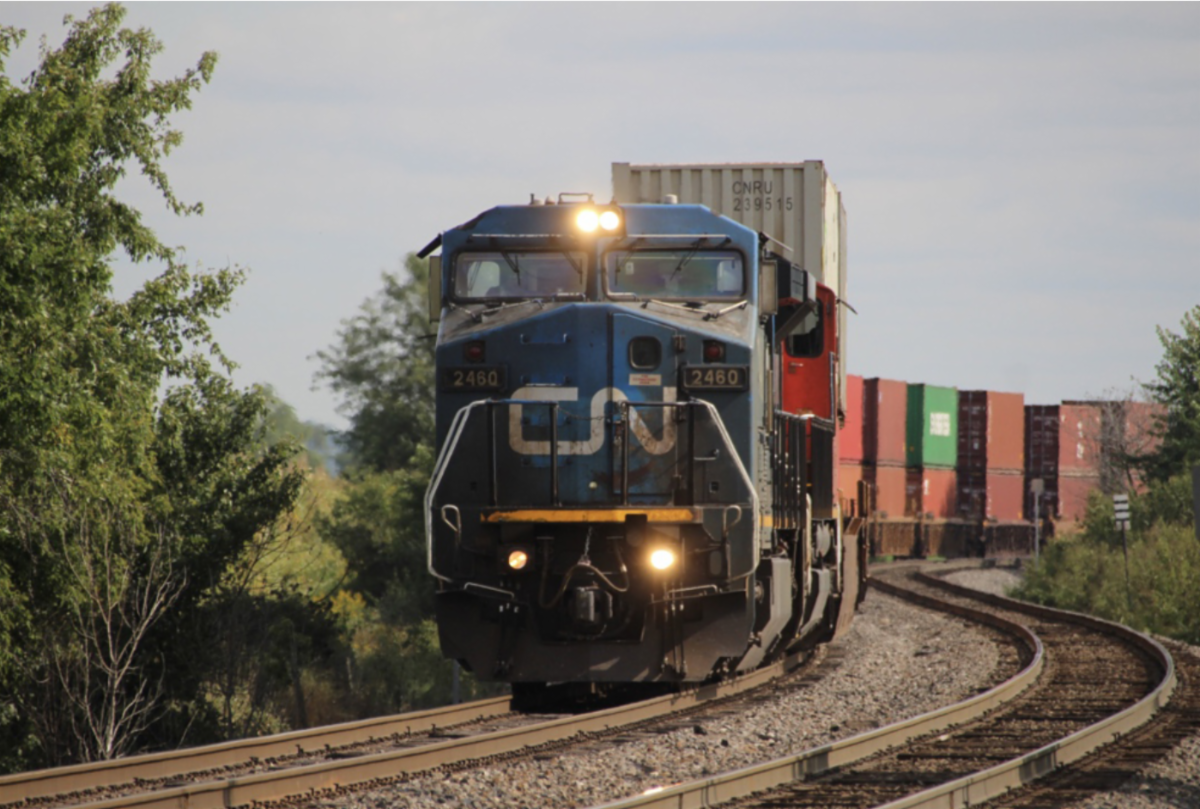
Canadian railways are advocating for changes in Canadian labor law that would mirror the U.S. Railway Labor Act, which seeks to avoid strikes by sending unions and railroads to binding arbitration or mediation when contract talks are deadlocked.
“We are trying to get the federal government to align perhaps more closely with the U.S. Railway Labor Act because you do have levers here that your president can pull that our prime minister can’t,” Marc Brazeau, CEO of the Railway Association of Canada, said at RailTrends.
The Teamsters Rail Canada Conference, which represents train crews on CN and CPKC, is bitterly opposed to any changes to existing labor regulations. The union was highly critical of the labor minister’s August decision to order the Canada Industrial Relations Board to intervene, which ended the railways’ 17-hour lockout of their employees and ultimately sent contract negotiations to binding arbitration.
“The government’s actions are viewed as an attack on fundamental labor rights and appear to have set a dangerous precedent for how unions are treated in Canada,” union officials said in a statement. “The TCRC is determined to resist this erosion of workers’ rights and calls for a united front from organized labor to combat these measures. A coordinated response from all labor organizations is essential to defend against this threat and protect workers' rights. The TCRC urges everyone to recognize the importance of this struggle, which will shape the future of labor rights in Canada.”
Brazeau says the railways respect workers’ right to strike but notes that a relatively small number of unionized workers should not be able to shut down the country’s economy.
| |
Editor's Note: The tentative agreement between SMART Local 1594 and SEPTA is a victory for transit workers who refused to compromise on safety and fair wages. By addressing critical issues like security measures and worker protection, the union demonstrated the power of collective action to achieve meaningful change. This deal reminds us that when workers stand firm in defense of their rights and safety, even powerful institutions must listen. Rail and transit labor should take note: solidarity and resolve can deliver real results. | |
NBC10 Philidelphia / November 20th, 2024
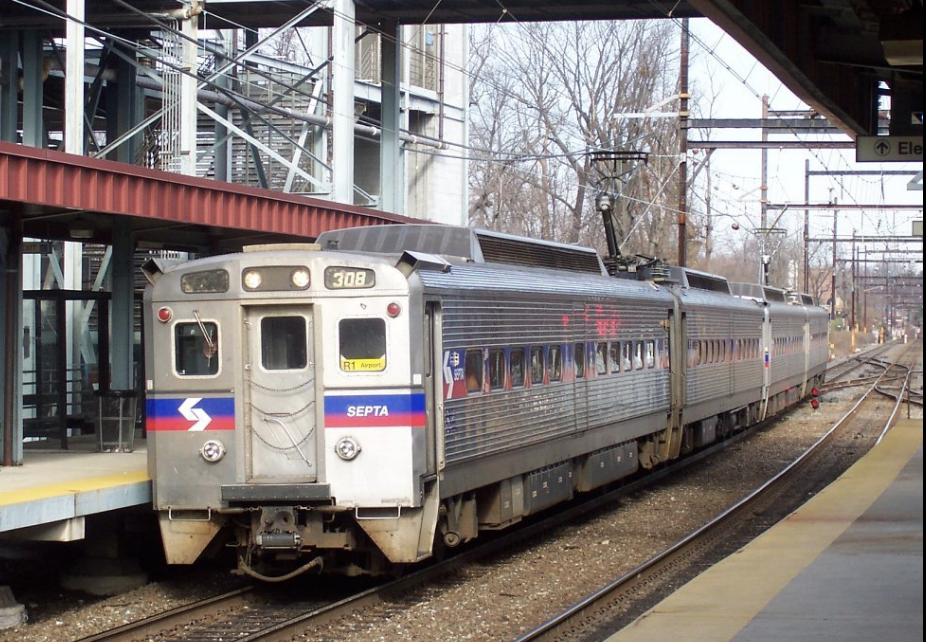
SMART Local 1594, the union representing SEPTA workers in Chester, Delaware, and Montgomery counties, has reached a tentative agreement with the transit agency, avoiding a strike. The union said the deal includes critical safety improvements and a wage increase, addressing longstanding concerns raised by the union over worker protection and security measures for transit operators.
“When SEPTA told us they had no budget for bulletproof glass enclosures, de-escalation training for our members, or to increase security and police presence on our buses and trolleys, that wasn’t just an insult—it was a direct threat to the safety of my union family,” said Anthony Petty, General Chairperson and SMART-TD Alternate Vice President of the Bus Department and led the negotiations for Local 1594. “You might get away with that somewhere else, but not in Philadelphia. We won’t stand for it, and today’s agreement is a testament to that.”
Roughly 350 workers who keep buses and trolleys rolling in the suburbs and the Norristown High-Speed Line on track had "overwhelmingly" authorized a strike on Saturday, November 16. Local 1594’s contract officially expired at the end of Nov. 18, 2024.
|
|
Editor's Note: The newly ratified agreement between BNSF and the International Brotherhood of Boilermakers highlights yet another incremental step forward in collective bargaining. While modest wage increases and improved vacation benefits are welcome, the real test lies in how these enhancements address the long-term challenges faced by rail labor. Agreements like this remind us that rail workers must continue to demand more than incremental progress—they must push for transformative change that reflects the essential role they play in keeping the industry moving. Let this be a reminder: the fight for fairness is far from over. | |
BNSF Railway / November 19th, 2024
BNSF Railway, in partnership with The International Brotherhood of Boilermakers (IBB), announced today members of the labor union have voted to ratify a new five-year, collective bargaining agreement with the Class I railroad. The agreement covers employee enhancements to their pay, health care, and vacation. The tentative agreement provides a 3.5-percent average wage increase per year over the next five years. It also offers railroaders more vacation earlier in their career and meaningful enhancements to an already robust suite of health care benefits.
| |
Editor's Note: The appointment of conciliation officers in the CN-IBEW negotiations reflects the growing urgency to secure a fair agreement before the contract’s expiration. While CN emphasizes workforce stability and safety, rail labor must remain steadfast in ensuring that these negotiations deliver real protections and benefits for workers. This is a reminder that true progress comes not from press releases but from the power of solidarity at the bargaining table. | |
Trains Magazine / November 18th, 2024
Canada’s labor minister, Steven MacKinnon, has appointed three conciliation officers to assist in negotiations between Canadian National and the International Brotherhood of Electrical Workers, CN said on Friday. The IBEW, which represents about CN 750 signal and communication workers across Canada, filed a notice of dispute on Oct. 29, indicating that the union considers the negotiations that began Sept. 24 to be at an impasse. The union’s current contract expires Dec. 31. The first conciliation meetings are scheduled for Nov. 20-22.
“While we are disappointed by the early filing of a Notice of dispute by the union, we remain committed to reaching a fair agreement that is good for our employees, customers, and the overall economy,” CN said in a press release. “Our main focus during these talks is to prioritize improvements that will help develop and stabilize our workforce while ensuring everyone’s safety, and preventing any work stoppage.
| |
Editor's Note: Gov. Hochul’s challenge to Amtrak’s proposed service reductions underscores the importance of balancing infrastructure repairs with the needs of riders, workers, and public safety. While the East River Tunnel project is essential for long-term reliability, disproportionately cutting Empire Service schedules jeopardizes not only access but also the safety of an already overburdened system. Rail labor must advocate for solutions that maintain service levels, safeguard jobs, and prioritize safe operations during this critical project. Repairing infrastructure must enhance—not diminish—the safety and accessibility of rail for all. | |
Mass Transit Magazine / November 14th, 2024
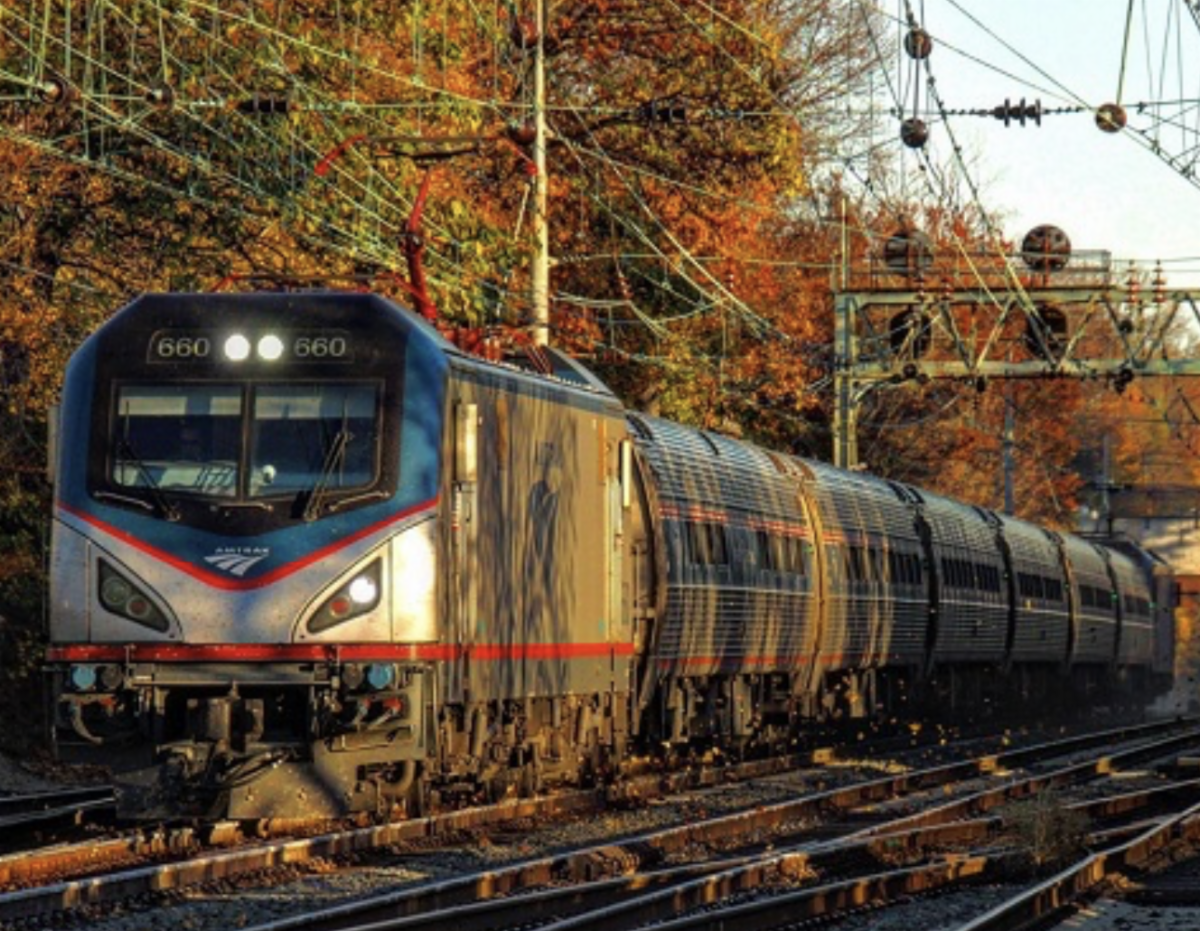
Gov. Kathy Hochul has asked Amtrak's leaders to rethink their plans to reduce trips between Albany, the Hudson Valley, and New York City as well as other scheduling modifications that the corporation is proposing while it undertakes a massive rehabilitation project of the East River Tunnel.
The scheduling changes have Amtrak losing three daily round trips between the Capital Region and New York City. And travelers heading north to Montreal are expected to face long layovers of 90 minutes or more, according to Steve Strauss, executive director of the Empire State Passengers Association. The multi-year construction project is expected to limit the number of Amtrak passenger trains that can travel from the maintenance/overnight yards in Queens to the Moynihan Train Hall at Penn Station Manhattan, Strauss said.
In a letter to Amtrak's board Chairman Anthony Coscia and CEO Stephen J. Gardner, the governor said that while her administration supports the project and its intent to address repair backlogs in the Northeast Corridor, "Empire Service trains are receiving a disproportionate share of impacts to schedules and it is critical that you maximally restore service and protect New York's riding public while the project progresses."
The Empire Service is a 460-mile rail system that runs between New York City and Niagara Falls and is supported by the State Department of Transportation. Those trains have carried more than 2 million passengers during the current federal fiscal year, setting records for ridership and revenue, according to the governor's office.
| |
Editor's Note: Michael Miller’s vision for the future of railroading highlights a critical truth: the industry must embrace change to remain competitive. However, true progress demands more than just technology and ecosystem optimization—it requires a commitment to the workers who make the system function. Rail labor must not be treated as an afterthought in this push for modernization. If the industry wants to thrive, it must ensure that innovation goes hand in hand with investing in its people—because a resilient railroad is only as strong as the workforce that drives it forward. | |
Freight Waves / November 19th, 2024
The largest operator of shortline railroads has a clear message about the future of the industry. “It’s time to get off our asses,” declared Michael Miller, chief executive of Genesee & Wyoming, at the annual RailTrends conference last week. While G&W is celebrating its 125th anniversary, Miller said in a presentation to executives, suppliers, and investors, “What got us here won’t get us there,” meaning a profitable future. He warned railroads must commit to their core principles while embracing technology that’s reshaping transportation.
Shortline and regional railroads are considered the scrappy, hustling entrepreneurs of railroading. Their networks range in scope from a few to hundreds of miles of track handling dozens to tens of thousands of carloads annually. Short lines account for the “first mile-final mile” car movements that the Class 1 linehaul railroads depend on for carload traffic but have winnowed from their operating models.
Miller held up Uber as a paradigm of the evolving technology company. From 2018-2021, the ride-hailing provider posted billions in losses before turning a profit in 2022. In that time, Miller said, Uber expanded the business to include delivery of food, groceries, and parcels, and started brokerage Uber Freight, all at the touch of a mobile app. Uber provides a staggering 28 million rides per day, backed by 10 million peak pricing predictions per second, with 20,000 AI models trained per month. The result: Adjusted operating profit soared to $6 billion in those five years.
The must-do takeaways going forward for G&W and the rail industry, according to Miller:
- Maintain timeless principles of being the safest and most respected transportation service provider in the world.
- Do more than provide safe and reliable service — “that’s table stakes today.”
- Tailor service in the form of a partnership, not a transaction (customers, not shippers).
- Have the courage to embrace change, but more importantly, the will to enact change at a much faster pace.
- Focus more on [railroadings’] ecosystem creating more value for all participants, so the ecosystem grows, thrives, and becomes more resilient.
| |
Editor's Note: This account underscores the dangers and inefficiencies of operating trains with minimal crews, a practice that disregards the realities of fieldwork and the safety of rail workers. Engineers cannot manage train separations, equipment failures, or emergency repairs alone. Railroad Workers United has been at the forefront of the fight for two-person crews from the beginning and will remain steadfast in this battle. Safety and efficiency demand nothing less—profit should never come at the expense of lives. | |
RT&S / November 20th, 2024
I have operated a locomotive on a short line under all conditions: engineer-only, conductor and engineer in the cab, and engineer with conductor following the train in a vehicle. Why is it that railroad management almost always never asks those doing the work how it should be done? Operating by yourself creates a prayerful state of mind: You pray nothing goes wrong.
One night I was operating totally by myself. I had a “kicker” (a car that causes the train to go into emergency when some air is set) on my train. The second time this happened, the train air wouldn’t pump back up. This necessitated me leaving the cab and walking back to inspect the train, which had either come apart or had a car leaking air. About 20 cars back and just in front of where there was a bridge that would require negotiation of barbed wire to get around, I found a car blowing air. I cut (disabled) the car’s air system and returned to the cab. I was able to complete the run without further incident. A conductor would have made this a quicker repair.
Another time my conductor was following my train in a vehicle. My train went into an emergency. I notified the conductor by radio. He began searching for the problem because my train air would not pump up. He reported that the train had come apart. He closed the angle cock, and we put the train back together. After he opened the angle cock, the train still didn’t pump up. “Must be leaking somewhere,” I told my conductor. Sure enough, he found another break a few cars behind the first. We completed another coupling. Still, the same problem existed. A few cars behind the last break, my conductor found yet another break and the cause for our problems. A tree branch had fallen next to the tracks, and the perfect placement of the branch enabled it to lift the cut lever as the cars brushed against the branch.
The point of this illustration is that engineers can’t fix train separation problems on their own. Also, an engineer can’t replace a knuckle alone.
| |
Editor's Note: Rep. Seth Moulton’s defense of California High-Speed Rail and his push for the American High-Speed Rail Act are reminders of the vision needed to transform U.S. transportation. While political and financial challenges loom large, the fight for fast, efficient rail systems should not be abandoned. Rail labor, long an advocate for passenger rail expansion, must seize this moment to champion high-speed rail as a job creator and a sustainable alternative to highway and air travel. True progress will require bipartisan support and a commitment to building a 21st-century rail network that prioritizes workers and passengers alike. | |
Trains Magazine / November 18th, 2024
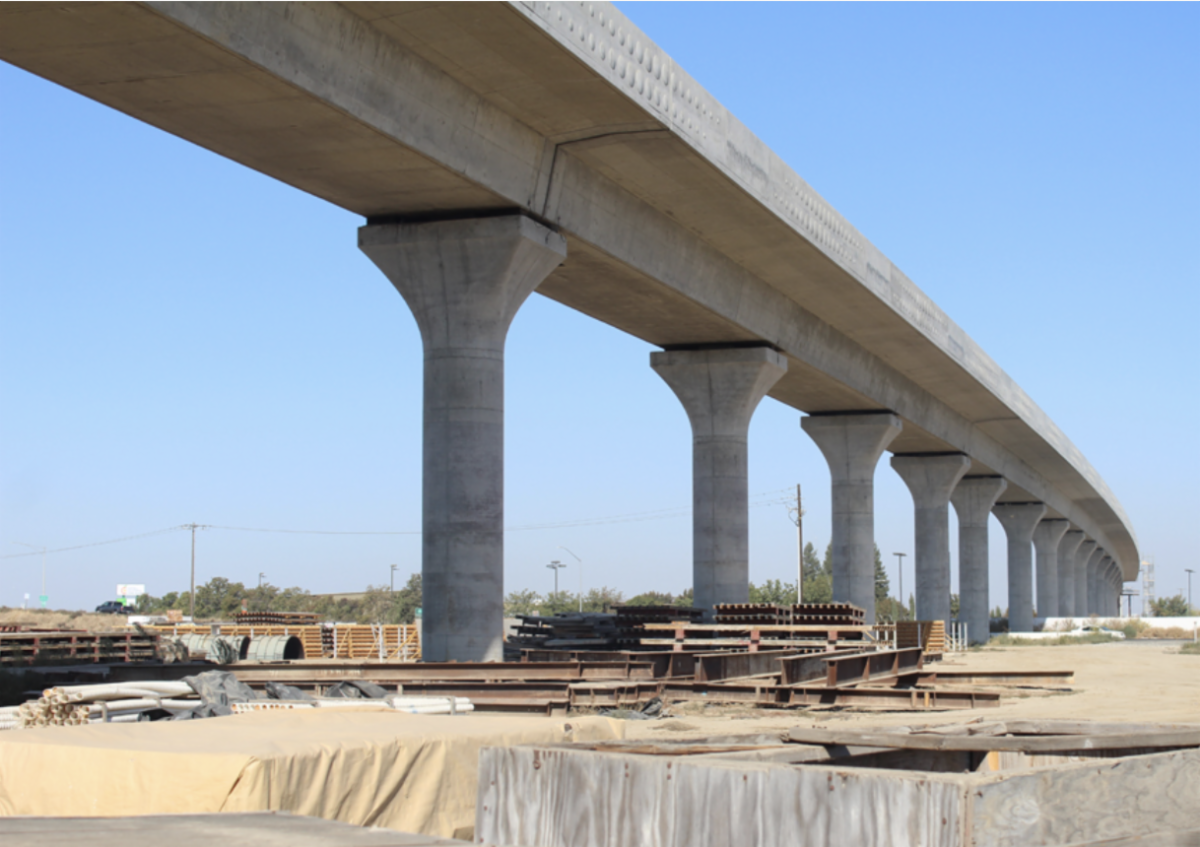
Although the California High-Speed Rail Authority faces stiff financial headwinds with Republicans capturing the presidency and both houses of Congress, U.S. Rep. Seth Moulton (D-Mass.) told High-Speed Rail Alliance webinar participants this week, “I’m not afraid to defend California High Speed Rail.” U.S. Rep. Seth Moulton (D-Mass.) discusses high-speed rail during a webinar. Screenshot from High-Speed Rail Alliance video. Moulton, along with U.S. Rep Suzan DelBene (D-Wash.), introduced the American High-Speed Rail Act in March. It proposes spending $205 billion over five years in fostering the growth of projects throughout the country. The bill, which had 45 co-sponsors — all Democrats — has no chance of being enacted as standalone legislation. Nevertheless, it keeps fast trains in transportation mix discussions while suggesting national standards and ground rules for investment.
“It’s imperative we build high-speed rail support [among Republicans],” Moulton says. He was managing director of Texas Central in 2011-2012, well before land acquisition attempts had begun. He thinks many members of the party in the state believe 90-minute travel times between Dallas and Houston “would be transformative to the Texas economy. We can turn Republicans into vocal supporters by having a rail line they can champion that everyone loves to ride. The economics make sense, and all of a sudden it could become a bipartisan effort.”
Moulton argues a necessary first step is attempting to upgrade routes to 200 mph rather than shooting only for what he calls “1930s speeds.” He calls it “insane,” for example, that North Carolina and Virginia S-Line tracks in the engineering phase right now are being planned for only 125 mph operation between Raleigh, N.C., and Petersburg, Va. “It’s like buying a DC-3 or building an Interstate for 30-mph cars.
The French built their TGV system to run high-speed trains on conventional tracks at slower speeds until the new rights-of-ways were ready.” A public-private partnership financed the expensive expansion — about $9 billion in U.S. dollars — that attracts about 3.8 million passengers annually. Spending that kind of money on a dedicated right-of-way to get similar results is what Moulton is looking to achieve. Securing the funding and building the tracks — not to mention trainsets that can operate over them — is, however, a tall order in the current U.S. political and economic environment.
| |
Editor's Note: North Carolina’s investment in short lines and port rail operations demonstrates the importance of public-private partnerships in strengthening freight rail infrastructure. Upgrading rail corridors, bridges, and port facilities not only boosts efficiency but also enhances safety and creates opportunities for growth. Rail labor should ensure that these improvements benefit the workers on the ground, emphasizing the need for sustainable jobs alongside infrastructure development. Investments like this are a step forward, but labor’s voice must remain central to the conversation. | |
Progressive Railroading / November 18th, 2024
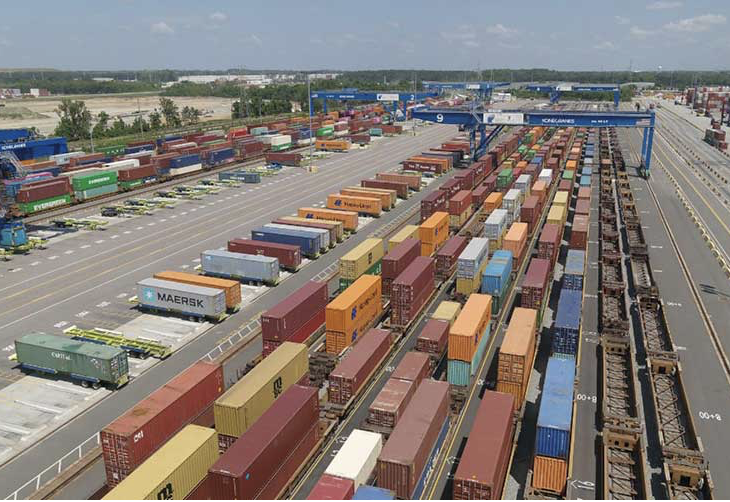
The North Carolina Department of Transportation's Rail Division has announced it will invest $12.9 million to improve rail infrastructure on 11 short lines and to the state ports in Morehead City and Wilmington. The funds will be provided through the state's Freight Rail and Rail Crossing Safety Improvement program, which was established in 2014 to support statewide freight-rail infrastructure while establishing partnerships to effectively meet the growing demand for rail service. The state's contribution will match equal investments for each project from participating railroad companies and the North Carolina Ports Authority. A total of $25.8 million will be invested into the statewide freight-rail network through these projects, NCDOT officials said in a press release. The projects will upgrade over 10 miles of railroad corridor, improve 16 railroad bridges, and enhance port rail operations.
| |
Editor's Note: The Transportation Trades Department’s call to halt waivers for unproven automation technology reflects a critical stand for rail labor. Automation may promise efficiency, but it often sidelines safety and the livelihoods of workers who ensure railroads operate smoothly. As Class I railroads push for automation under the guise of innovation, labor must remain steadfast in opposing any technology that diminishes safety or erodes jobs. True progress doesn’t come from cutting corners but from investing in the people who keep the industry running. | |
Trains Magazine / November 21st, 2024
The Transportation Trades Department of the AFL-CIO, the umbrella group that includes all railroad labor unions, urged Congress and federal regulators to protect workers whose jobs are affected by the rollout of automated and autonomous railroad technology.
In a broadside against technological advances — including automated track and train inspection systems, automated train dispatching software, the use of remote control locomotives on mainline trackage, virtual block signal systems, automated locomotive smart cruise control, and Parallel Systems’ autonomous, battery-electric intermodal cars — the TTD said the Federal Railroad Administration should deny all railroad safety waiver requests that would permit the testing of “unproven technology.”
Waivers, which suspend certain FRA regulations to permit testing in conjunction with reduced inspection frequencies, have long been used to advance safety. For example, a track inspection waiver granted to the Long Island Railroad in 1975, is still in force. In recent years, Class I railroads have used track and train inspection waivers to test automated equipment and scaled back visual inspections by railroaders. Under the Biden administration, the FRA has consistently denied or ignored requests for extensions of existing waivers or requests for new ones when organized labor has opposed them.
| |
Editor's Note: The FRA’s $1.5 billion in grants for Northeast Corridor projects is a significant investment in the nation’s passenger rail infrastructure. Replacing outdated catenary systems, upgrading signals, and addressing the state-of-good-repair backlog are steps toward safer, more efficient service. However, rail labor must ensure these improvements include a focus on maintaining and creating union jobs. Modernization should not come at the expense of the workforce that keeps the rail system running safely and reliably. | |
|
AASHTO Journal / November 22nd, 2024
The Federal Railroad Administration recently issued nearly $1.5 billion in passenger rail grants to 19 projects along the Northeast Corridor or NEC via its Federal-State Partnership for Intercity Passenger Rail or “Fed-State NEC” program.
Projects funded by this round of grants will replace aging catenary structures susceptible to failures that contribute to travel delays; improve several signal systems necessary to increase capacity, operating speeds, and safety; and support planning activities to expand Washington Union Station in the nation’s capital, among other endeavors, to further reduce the state-of-good-repair backlog on the corridor.
This most recent tranche of NEC-focused funding builds on more than $16.4 billion in Fed-State NEC grants issued in 2023 for projects along the corridor, such as the Gateway Program Hudson River Tunnel Project in New York and New Jersey; the Susquehanna River Bridge Replacement Program in Maryland; the Walk Bridge Replacement in Connecticut: and New York Penn Station Access Project.
| |
Rail Passengers Association / November 19th, 2024
We’re gearing up for a big year of advocacy in 2025, and we want your stories to help us connect to elected officials, government agencies, and local advocates on why passenger rail matters. We want you to tell us what passenger rail means to you and your community. Whether it helps you commute to work, see family and friends, get services you need, or anything else, please tell us.
| |
NEWS FROM AROUND THE LABOR MOVEMENT | |
|
Economic Policy Institute / November 18th, 2024
U.S. employers have tremendous power over worker conduct. For decades, federal law has allowed employers to require workers to attend “captive audience” meetings—and force employees to listen to political, religious, or anti-union employer views—on work time.
Last week, the National Labor Relations Board (NLRB) ruled that anti-union captive audience meetings are illegal because they interfere with workers’ right to freely form or join a union. The NLRB ruling is game-changing because while workers’ right to organize without employer interference is spelled out clearly in federal labor law, employers have long used captive audience meetings and other tactics to violate these rights.
Analysis of NLRB elections documents shows that 89% of all employers conduct captive audience meetings in response to unionization efforts. Employers spend over $400 million per year on “union-avoidance” consultants, who specialize in using captive audience meetings to intimidate, threaten, and instill fear in workers to coerce them to oppose unionization. The NLRB ruling makes these egregious, widespread abuses of employer power illegal in the context of worker organizing.
| |
Radish Research / November 18th, 2024
The new administration is indeed preparing major attacks against workers and the labor movement. And many union leaders will assume that the most we can hope for over the next four years is to survive through purely defensive struggles. But unions are still well-positioned to continue their organizing and bargaining momentum. Labor’s decades-long tendency to defensively hunker down is one of the major factors that has led our movement — and the country — into crisis. Turning things around will depend on pivoting to a new approach.
The strongest case for labor to scale up ambitious organizing efforts and disruptive strike action is not just that it’s possible, but that it’s necessary. Without increased initiatives to expand our base and to polarize the country around our issues, union density is sure to keep dropping. Organized labor’s last islands of strength — from K-12 public education and the federal government to UPS and Midwest auto — will become extremely vulnerable to attack. And unions will be forced to fight entirely on the political terrain chosen by Republicans, who will paint them as a narrow interest group of privileged employees beholden to “union bosses,” Democratic leaders, and “woke” ideology.
Sometimes going on the offense is also the best form of defense. The best way to expose Trump’s faux populism is by waging large-scale workplace battles that force all politicians to show which side they’re on.
| |
Progressive Railroading / November 19th, 2024
Labor contract talks between the International Longshoremen's Association (ILA) and the United States Maritime Alliance (USMX) stalled last week after the ILA announced a breakdown in negotiations over the topic of automated technology.
The two sides came to the bargaining table last week, but after a day and a half, talks ceased when USMX negotiators introduced their intent to implement semi-automation, ILA leaders said in a bargaining update on the union's website. By raising the topic of semi-automation, the USMX negotiators contradicted their opening statement in which they "assured us that neither full nor semi-automation would be on the table," ILA leaders said.
The breakdown in talks comes with about two months before ILA members at East and Gulf Coast ports may begin a new strike. On Oct. 3, the ILA and USMX reached a tentative agreement on wages and have agreed to extend the master contract until Jan. 15, 2025, to return to the bargaining table to negotiate all other outstanding issues.
| |
WEEKLY DERAILMENT DEPARTMENT | | | | |