June 19th, 2025

Time to Read: 5 Minutes


CAM Joke of the Week

CAM Programmer’s Mantra:

Accept the prints you can’t change.

Optimize the ones you can.

And when in doubt...blame the designer.

Industry Intel


J.J. Spaun Wins First Major with CNC-Machined L.A.B. Golf Putter at U.S. Open - J.J. Spaun captured his first major victory at the U.S. Open using a precision CNC-milled, zero-torque L.A.B. Golf putter, marking a milestone for both his career and innovative putter design.

May 2025 Sees Industrial Manufacturing Surge with 146 New Capital Projects - In May 2025, North American industrial manufacturing rebounded strongly with 146 planned capital projects—just one shy of March’s peak—and highlighted robust facility expansions, upgrades, and groundbreaking investments, including a major $6 billion Eli Lilly campus in Houston

GM Investing $4 Billion to Boost U.S. Manufacturing and Vehicle Production - General Motors is committing $4 billion to expand its U.S. operations, increasing production of both gas-powered and electric vehicles across key facilities, strengthening American manufacturing and supply chain resilience.

Industry Growth (Open Jobs)

A few hot openings across the industry this week:


CNC Machinist (Milling) 1st Shift - EPTAM Precision - Lakeville, MN


CNC Swiss Machinist (1st Shift) - EPTAM Precision - Lakeville, MN


Machinist - Twin City Fan Companies LTD - Mitchell, SD


CNC Machinist - United Machine Company - Wichita, KS


NC Programmer - Orizon Aerostructures LLC - Remote from Kansas


CNC Machinist/Programmer - MetalQuest Unlimited, Inc. - Hebron, NE

CAM TIP OF THE WEEK (Powered by GibbsCAM)


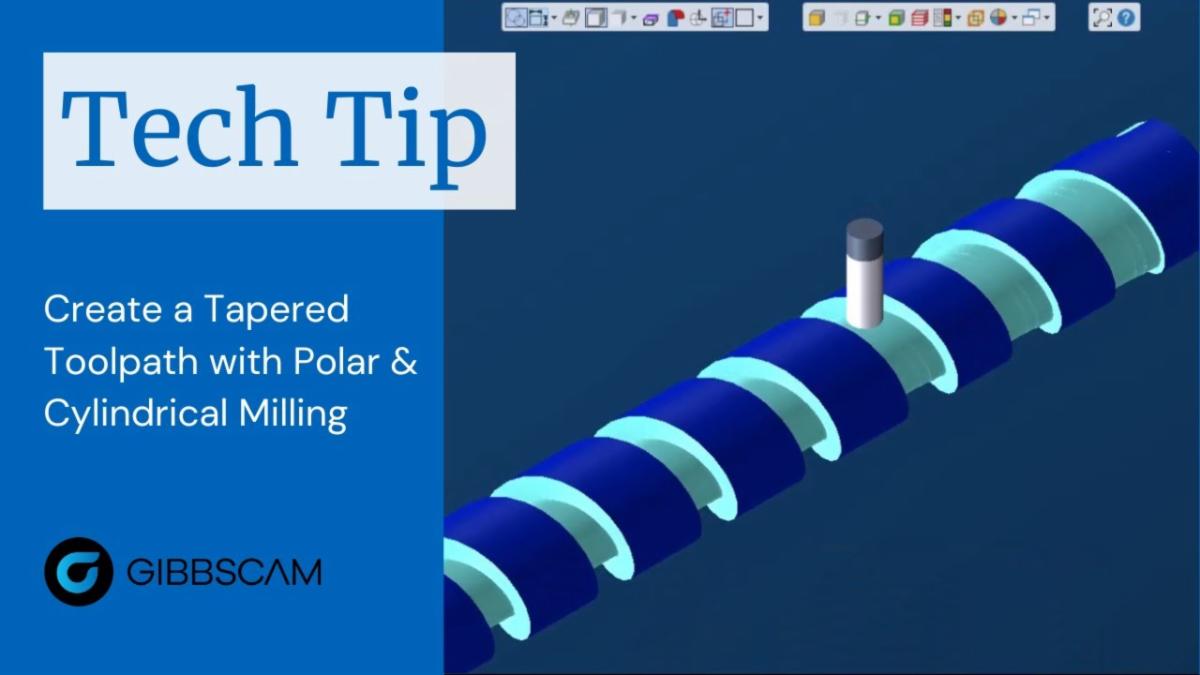
🛠️ Tech Tip: Projecting Rotary Toolpaths Onto Solids (Without 5-Axis!)

Think you need a 5-axis module to create tapered or variable-depth rotary toolpaths? Think again.


In this week’s GibbsCAM Tech Tip, we’re diving into how to project polar and cylindrical toolpaths onto a solid, giving you precise control over depth, tapers, and contours using just a standard 2-axis rotary setup.


Here’s what you’ll learn:

🔹 How to wrap and unwrap geometry for rotary milling

🔹 How to use solid projection to simulate compression screws, ribs, or variable-depth pockets

🔹 How to eliminate setup changes and extra modeling work

🔹 Why the correct solid makes or breaks your toolpath


This is a must-watch for anyone programming on a 4-axis mill or C-axis lathe, and looking to push their current setup further without adding cost.


Featured Trainings and Events


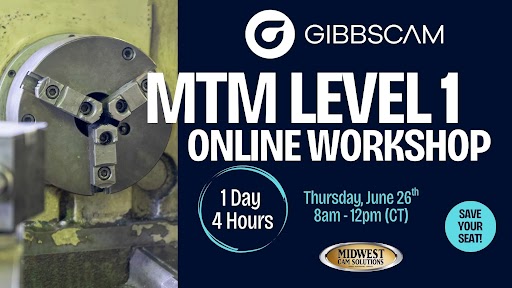
Live, Online GibbsCAM MTM Level 1 Coure

Date: Thursday, June 26th - 8am to 12pm (CST)

Learning Objectives:

By the end of the workshop, participants will be able to:

  • Understand the basics of MTM and how GibbsCAM handles multi-flow operations
  • Set up a two-spindle, single-turret machine environment in GibbsCAM
  • Program basic turning and milling operations
  • Perform a part transfer from main to sub spindle
  • Simulate and verify the full machining process using built-in tools


Trade Show & Event Radar

Date

Show

Location

Aug 6-7, 2025

Advanced Manufacturing Expo

Grand Rapids, MI

Sept 8-11, 2025

Fabtech

Chicago, IL

Oct 7-9, 2025

Westec

Anaheim, CA

Oct 19-21, 2025

Wichita Industrial Trade Show

Wichita, KS

Oct 21-22, 2025

MD&M Midwest - Advanced Manufacturing Minneapolis

Minneapolis, MN

Ask a CAM Pro

Q: What are the guidelines for tool stick-out length?

Philip Bryans

Applications Engineer

Stick-out length matters more than most people think. It affects rigidity, vibration, surface finish, tool wear, and even part tolerance. If you’re getting chatter, poor finishes, or inconsistent dimensions, too much stick-out is often the culprit.


As a general rule, aim for no more than 3× the tool diameter exposed from the collet or holder. So with a ½" tool, that’s a max of 1.5" sticking out. But that’s just a guideline. The real number depends on your material, holder type, spindle speed, and depth of cut.


Here’s a more practical breakdown:


For finishing passes in aluminum with light tool pressure, you might push to 4–5× diameter if your holder is solid and the cut is gentle.

For steel or roughing cuts, keep it closer to 2–2.5× diameter, especially if you're using aggressive stepdowns.


Long-reach tools or tools with necked shanks are better suited for deep cavities, but they require significant feedrate reductions and reduced stepovers to avoid deflection.


Simulate your program with accurate tool and holder models to avoid surprises at the machine. 


And here’s something often overlooked: your holder style makes a huge difference. ER collets, for example, can allow more tool movement than shrink-fit or hydraulic holders. That tiny bit of flex can amplify if your stick-out is too long.

In short, calculate based on your cut, material, and tooling, but always try to keep it tight. A shorter stick-out is one of the easiest ways to improve tool life and cut quality.


Have a programming question? Send it in for the next edition of Ask a CAM Pro!


CAMedy Central