Product Stewardship Updates | | COST, CONSISTENCY, AND COLLABORATION: STATES CONFRONT PACKAGING EPR GROWING PAINS | | |
A new Waste Dive analysis spotlights how extended producer responsibility (EPR) for packaging is evolving as early adopters—including Oregon, Colorado, and California—work to balance cost recovery, recycled-content verification, and cross-state alignment.
The report highlights how regulatory agencies like Oregon DEQ, CalRecycle, and the Colorado Department of Public Health and Environment are refining program rules to prevent misleading post-consumer recycled (PCR) content claims and to ensure that producer fees reflect real system costs. Trade groups such as the Sustainable Packaging Coalition (SPC) and the Northeast Recycling Council (NERC) are also convening multi-stakeholder discussions on metrics and data transparency—issues central to PSI’s own harmonization work.
At the Product Stewardship Institute (PSI), these debates underscore why our Packaging EPR Harmonization Task Force was created: to help governments, producers, and recyclers navigate differing definitions, timelines, and reporting requirements before they become compliance barriers. PSI’s model policy and facilitation services are already helping states translate lessons from the first generation of packaging EPR laws into more coordinated, cost-effective frameworks.
Read the full Waste Dive article here, and learn how PSI is supporting states through facilitation, policy design, and implementation assistance at productstewardship.us or reach out to us at info@productstewardship.us.
| | TURNING A PROBLEM INTO A SOLUTION: REWORLD UNVEILS VAPE WASTE STRATEGY | | (Tatiana Kutina / Canva Teams) | | |
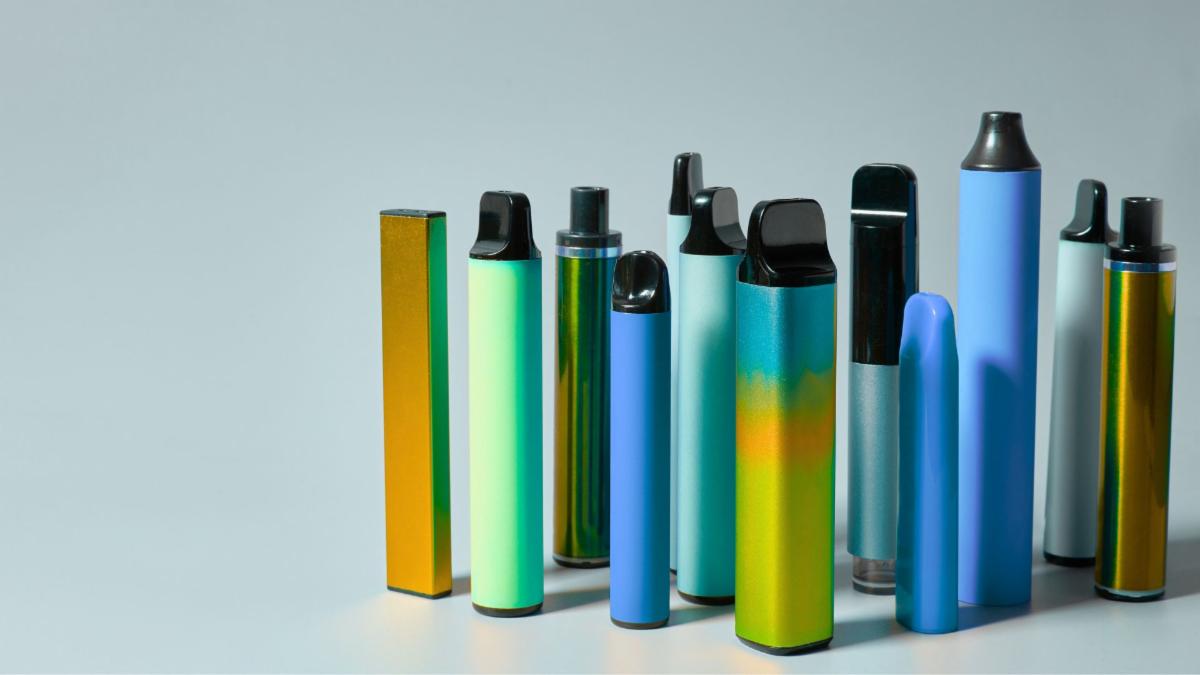
PSI’s Champion partner Reworld has announced a solution for managing vape waste that prioritizes recovery of batteries and nicotine for recycling and reuse. This development marks a significant step forward in addressing one of the fastest-growing and most problematic waste streams.
Reworld’s approach combines multiple strategies:
- Recovering lithium-ion and other batteries for safe recycling.
- Reclaiming nicotine and other hazardous or valuable chemical constituents for reuse.
- Converting the remaining, non-recyclable materials into energy through waste-to-energy facilities.
Vape products are complex, toxic, and widespread—and until now, few practical solutions existed for managing them safely. Reworld’s integrated system provides a tangible model for tackling vape waste at scale, offering both environmental protection and resource recovery.
PSI looks forward to working with Reworld and others to expand access to convenient, safe vape-waste management programs through pilot collection programs that demonstrate technical and logistical feasibility, and through national workgroups to develop supporting policy that will allow those solutions to scale—just as we did for drug take-back. Together, these efforts are laying the groundwork for producer responsibility for vape product waste, ensuring that health, safety, and sustainability are prioritized as this waste stream continues to grow. Stay tuned for more information and updates on developing pilot programs.
| | TEXTILE RENEWAL ALLIANCE LAUNCHES TO SUPPORT CALIFORNIA’S NEW TEXTILE EPR LAW | Textile Renewal Alliance, a new 501(c)(3) prospective Producer Responsibility Organization (PRO), has unveiled its brand and launched its website to support producer compliance with California’s Responsible Textile Recovery Act of 2024 (SB 707) if it is selected as California’s PRO. The organization has also opened applications for its California Implementation Working Group, which will bring together diverse voices across the textile value chain to advise the Board on the design, implementation, and continuous improvement of the state’s textile EPR program. | | PARTNER HIGHLIGHT: STERICYCLE | | |
As healthcare increasingly shifts from hospitals to homes, Stericycle—a PSI Champion Partner and leader in regulated medical waste management—is helping communities and policymakers manage the resulting surge in sharps and pharmaceuticals in the residential waste stream.
In a recent Waste360 interview, Kristin Aldred, Director of Government Affairs – North America at Stericycle (and formerly PSI’s Director of Policy & Programs), noted that while care settings have changed, “the regulatory, infrastructure, and educational systems haven’t always kept pace,” underscoring the need for updated solutions. Stericycle helps close those gaps through mail-back sharps kits, medication take-back programs, and ongoing education for patients, caregivers, and providers, while advocating for consistent regulation and shared responsibility across the healthcare and waste sectors. Partnerships with implementation experts like Stericycle strengthen product stewardship efforts by helping governments, businesses, and service providers design practical, effective systems for managing health- and safety-related materials.
Organizations interested in shaping the future of product stewardship—across healthcare, manufacturing, retail, or waste management—can learn more about PSI’s partnership network at productstewardship.us or by contacting info@productstewardship.us.
| | |
EPR IN THE GREAT LAKES REGION:
A TWO-PART WEBINAR SERIES
The Council of the Great Lakes Region (CGLR) and the Product Stewardship Institute (PSI) are partnering to help stakeholders across the region—including Illinois, Indiana, Michigan, Minnesota, New York, Ohio, Pennsylvania, Wisconsin, and Ontario—build a strong foundation for effective EPR policies. While designed for Great Lakes audiences, both sessions are open to all who want to learn about the basics of EPR and how it is implemented, as well as about the region’s progress and challenges.
RECORDING NOW AVAILABLE: Laying the Groundwork — The Basics of EPR
November 13, 2025 | 11:00 AM ET
EPR is gaining momentum across North America, and the Great Lakes region is no exception. As policymakers, governments, companies, nonprofits, and other stakeholders prepare to engage in stewardship policy discussions, it’s critical to begin with a shared foundation of knowledge. This introductory webinar provided a clear overview of EPR principles, why they matter, and how they’re being applied in the U.S. and Canada. Speakers will explain the mechanics of EPR—shifting financial and operational responsibility for waste management from governments to producers—and highlight the environmental, economic, and equity benefits that drive adoption.
| |
REGISTRATION OPEN: Beyond the Basics — Advancing EPR in the Great Lakes Region
December 10, 2025 | 1:00 PM ET
Across the Great Lakes region, conversations around EPR are moving beyond the basics toward detailed program design and implementation. This advanced session is tailored for policymakers, regulators, and stakeholders with prior exposure to EPR who are seeking deeper insights into next steps for their states and provinces.
Building on recent legislative progress in the U.S. and Canada, panelists will examine emerging best practices and critical decision points in program development. Topics will include governance models, oversight structures, eco-modulated fee schedules, data and reporting systems, and the evolving roles of municipalities and producer responsibility organizations (PROs). The session will also explore harmonization opportunities across jurisdictions, drawing lessons from Ontario’s oversight framework and U.S. packaging EPR laws already in motion.
| | (StudioThreeDots / Canva Teams) | |
-
Florida AG opens antitrust investigation into climate and packaging groups. State attorneys general are investigating whether several climate-focused coalitions violated antitrust laws, raising new questions about how environmental collaborations — including those linked to packaging and plastics — can coordinate producer action without legal risk; stay tuned as PSI analyzes this and other current challenges to EPR. Read more
-
WRI highlights EPR as a key tool for EV battery waste. A new analysis explains how extended producer responsibility could make automakers and battery producers responsible for safe collection, reuse, and recycling of EV batteries, reducing fire risks and recovering critical materials. Read more
-
GFL’s record margins show early financial “tailwinds” from EPR contracts. In its Q3 2025 earnings call, GFL Environmental reported its highest-ever adjusted EBITDA margin and pointed to Canadian packaging EPR contracts as a major driver, underscoring how EPR is reshaping hauler and MRF business models. Read more
-
New “Diversion Dynamics” column calls for policy to power vape recycling. Resource Recycling’s latest piece argues that, without EPR or a similar policy, most disposable vapes — and their embedded lithium-ion batteries — continue to be landfilled or incinerated, fueling fires and environmental risks, and makes the case for producer-funded collection systems. Read more
| | The Product Stewardship Institute is a policy expert and consulting nonprofit that pioneered product stewardship in the United States. Since 2000, PSI has helped enact 146 extended producer responsibility (EPR) laws across 21 product categories in 34 states and D.C. — the bedrock on which the circular economy is built. We work with businesses, nonprofits, academia, and governments to ensure that products are responsibly managed from design to end of life. Join us at www.productstewardship.us. | | |
The Product Stewardship Institute, Inc. is an equal opportunity employer and provider. Persons with disabilities who require alternatively formatted materials to ensure effective communication should contact Amanda Nicholson at info@productstewardship.us or 617.236.4855.
| | | | |