|
More Than a Month, More Than One Story
Whose stories do our students hear when they learn about Wisconsin? Whose voices shape their understanding of American history? And what might they discover if we look more closely at the histories of the places we call home?
November is Native American Heritage Month, a time to celebrate the histories, cultures, languages, and contributions of Indigenous peoples. For Wisconsin educators, it is also a chance to revisit familiar lessons, discover new resources, and consider how we represent Indigenous peoples throughout our social studies curriculum.
Celebrating Wisconsin's Native Nations
Wisconsin is home to 12 Native Nations and communities, each with its own history, cultural traditions, and identity:
- Bad River Band of Lake Superior Chippewa
- Brothertown Indian Nation
- Forest County Potawatomi Community
- Ho-Chunk Nation
- Lac Courte Oreilles Band of Lake Superior Chippewa
- Lac du Flambeau Band of Lake Superior Chippewa
- Menominee Indian Tribe of Wisconsin
- Oneida Nation
- Red Cliff Band of Lake Superior Chippewa
- Sokaogon Chippewa Community (Mole Lake)
- St. Croix Chippewa Indians of Wisconsin
- Stockbridge-Munsee Community Band of Mohican Indians
These nations and communities are part of Wisconsin's past, present, and future. Their histories are connected to the land beneath our schools, the communities where our students live, and the larger story of our state.
Five Questions Worth Asking About Our Teaching
Wisconsin Act 31 calls on schools to teach the histories, cultures, and tribal sovereignty of Wisconsin's American Indian Nations. But even with our best intentions, familiar lessons and inherited curriculum can leave students with incomplete understandings of Indigenous peoples.
Here are five questions worth bringing into our planning, conversations with colleagues, and classroom practice.
1. Where do Native peoples appear in our curriculum, and where do they disappear?
Think about when students encounter Indigenous peoples in their learning. Are they primarily present during exploration, colonization, treaties, or westward expansion? Do they also encounter contemporary Native authors, artists, governments, community leaders, and young people? Indigenous histories continue into the present, and our curriculum should reflect that.
2. What changes when we tell a familiar story from a different perspective?
Consider a lesson about the American Revolution, Wisconsin statehood, or westward expansion. Whose experiences usually guide the narrative? How might the story change when we examine the same events through Indigenous accounts, treaties, and oral histories? Students benefit from recognizing that historical events carried different meanings and consequences for different peoples.
3. How well do our students know the Native Nations connected to their own communities?
Place matters. Beyond identifying Native Nations on a map, students can investigate the histories of the land where they live and learn. What treaties shaped their region? What relationships have Native Nations maintained with these places? How do sovereignty, treaty rights, and tribal governments continue to shape Wisconsin today?
4. Whose voices are students learning from?
A lesson can include accurate historical information and still leave out Indigenous perspectives. Look at who authored your classroom books, whose accounts appear in your primary sources, and who speaks in the videos you share. Resources developed by Native educators, historians, and communities can help students encounter histories through the people whose experiences they represent.
5. What is one familiar lesson we might reconsider?
Sometimes a lesson we've taught for years begins to feel incomplete. We notice a missing perspective, a problematic description, or a story that seems too simple. Recognizing those moments is important, even when we don't immediately know how to address them. Revisiting our materials, asking questions, and learning with colleagues and Indigenous communities are valuable parts of improving our practice.
Join Us! A Special WCSS and PBS Wisconsin Workshop
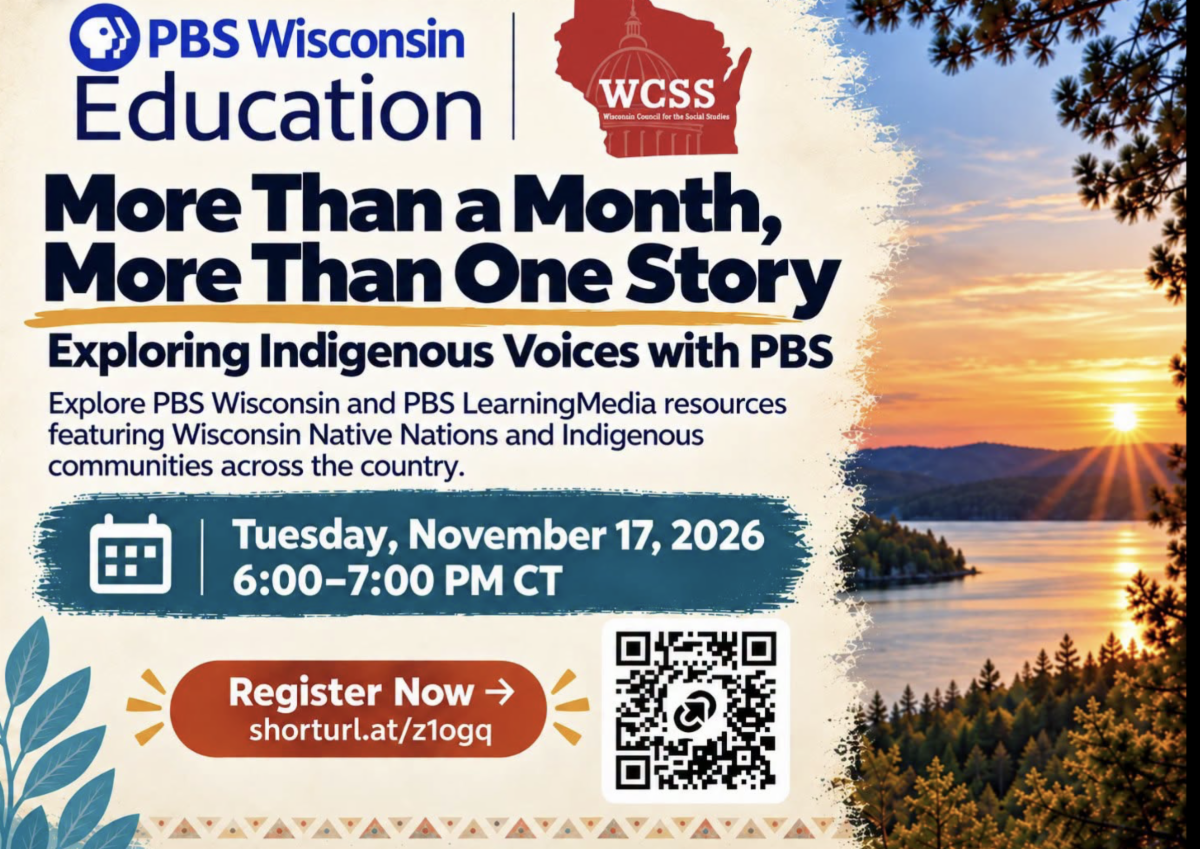
Looking for new ways to bring Indigenous voices into your classroom? Join WCSS and PBS Wisconsin Education for an engaging virtual workshop exploring videos, historical sources, and classroom-ready resources from PBS Wisconsin and PBS LearningMedia.
We'll explore ways to connect national history with Wisconsin's local stories, highlight contemporary Indigenous experiences, and share resources you can use with your students throughout the school year.
|