Product Design | Audio Electronics | Acoustics | DIY | Audio Innovations
|
|
COMSOL Announces Multiphysics Version 6.0 with Valuable New Features in the Acoustics Module |
With the latest release of COMSOL Multiphysics 6, users of the Acoustics Module will benefit from many new and highly requested features that reflect the software's increasing use in the audio industry. Expanding the level of detail and applicability of multiphysics simulation to every area of development, COMSOL Multiphysics V6 introduces a new platform feature for model management, uncertainty quantification analysis, and important updates and performance enhancements to all modules. Read More
|
|
|
|
|
Knowles Partners with Ole Wolff to Offer Compact Hybrid Driver for TWS Earphones |
Knowles Corp. and Ole Wolff, the Danish manufacturer of high quality speakers, receivers, and provider of acoustic system integration, announced the result of their cooperation to improve the comfort and performance of True Wireless Stereo (TWS) earphones with high-definition audio and active noise cancellation (ANC). The two companies have announced an innovative dynamic driver matched to a new balanced armature tweeter that meets the premium sound, high-performance ANC, and hearing personalization in a smaller size. Read More
|
|
Martin Audio Awarded Patent for XE Monitor Waveguide |
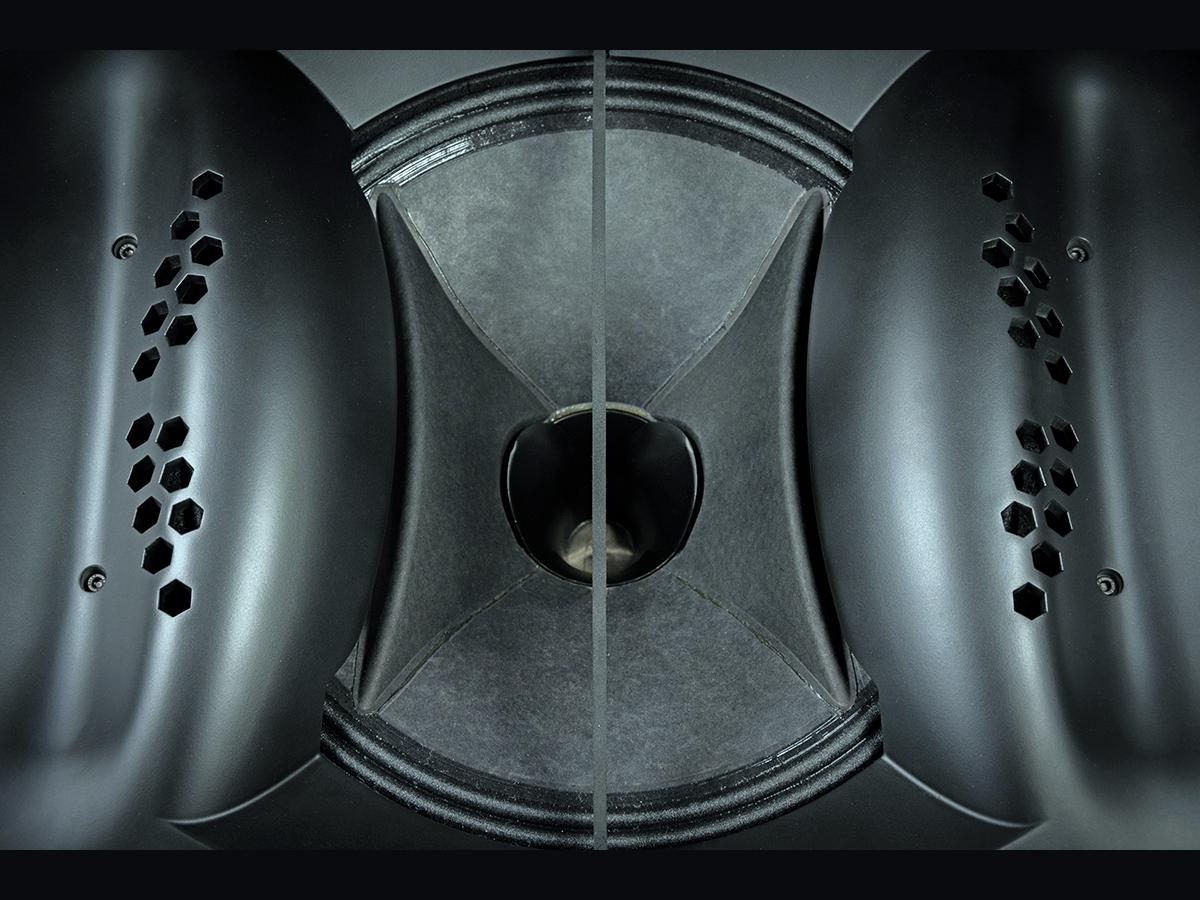
Martin Audio has extended its list of notable patents with the addition of a United Kingdom Patent for its XE stage monitor waveguide. The patent covers the use of Martin Audio’s differential dispersion coaxial drive units and the continuation of their waveguide shape to form the baffle, as seen in the XE monitors to achieve the desired high-frequency coverage. The geometry of the static high-frequency horn, the low-frequency cone/moving waveguides and the static baffle combine to form a single high-frequency horn. Read More
|
|
|
|
|
Audyssey Announces Updated MultEQ-X Software with New Room Equalization Capabilities for Home Theater and Listening Rooms |
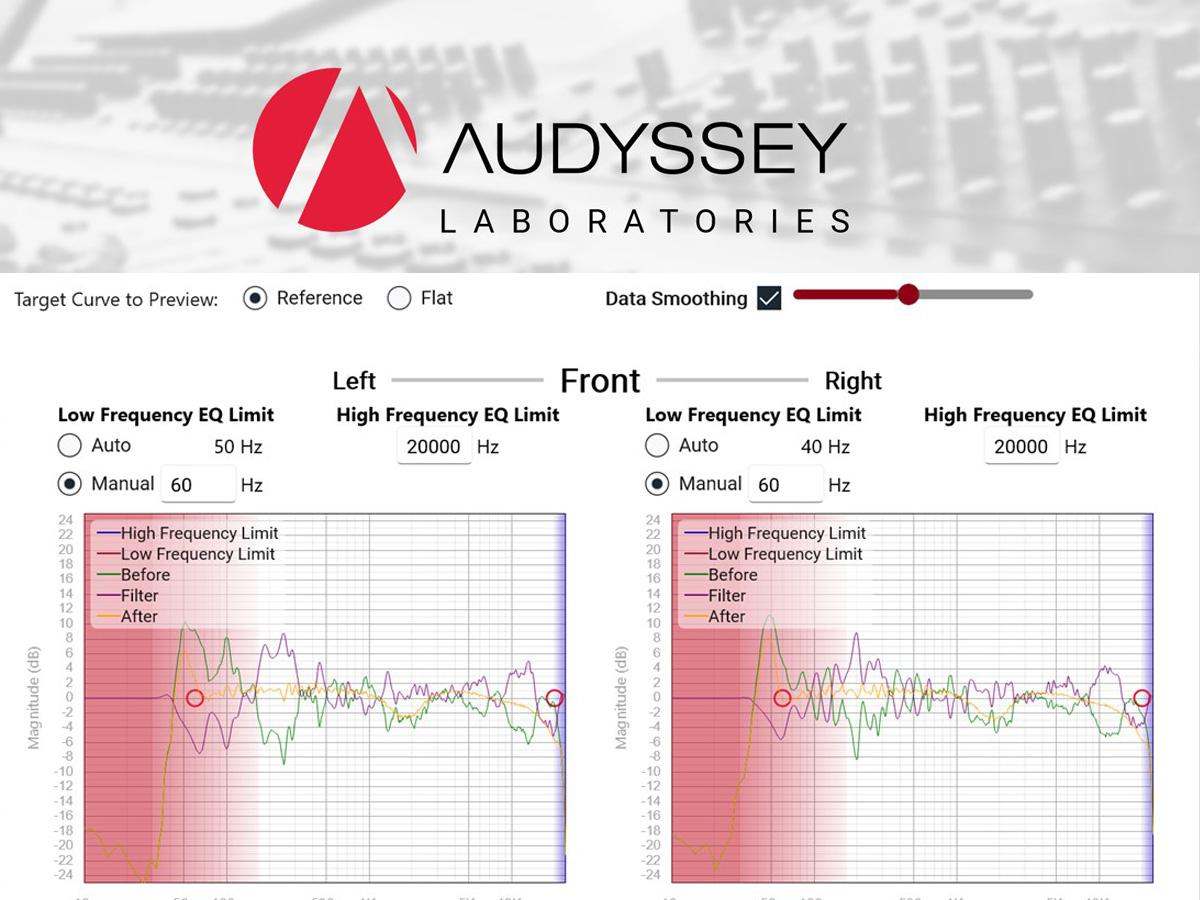
Audyssey, the California company created in 2002 by Prof. Chris Kyriakakis and Prof. Tomlinson Holman, and the pioneer of in-room correction as an integrated solution in AVRs and pre-processors, announced that it has released MultEQ-X, a powerful new software application for calibrating home theater audio visual receivers (AVRs) that have Audyssey’s MultEQ room equalization technology built-in. The new software offers greater control and new MultEQ features. Read More
|
|
Parso Wireless Wearable Unidirectional Speaker Delivers Personal Sound |
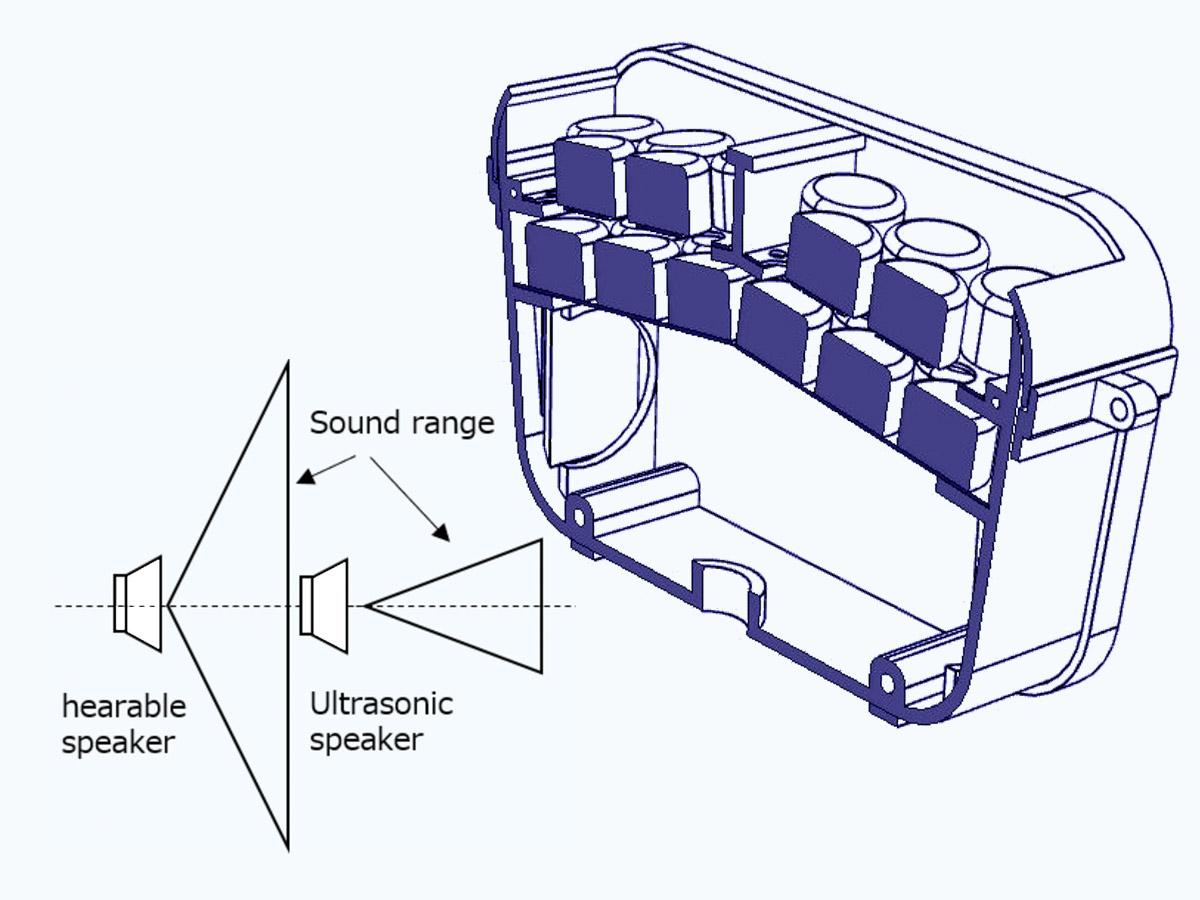
Japanese company AFUR has announced the launch of Parso, a wireless, wearable, unidirectional speaker design that "only you can hear." The highly directional speaker uses ultrasonic elements to achieve its narrow directivity for personal listening. The new Wearable Parametric Speaker (Patent Pending) design is scheduled to enter production in mid-2022, but the company is promoting the concept to evaluate market interest in new application areas. Read More
|
|
|
|
|
Lyngdorf Audio Introduces Custom Installation Speakers |
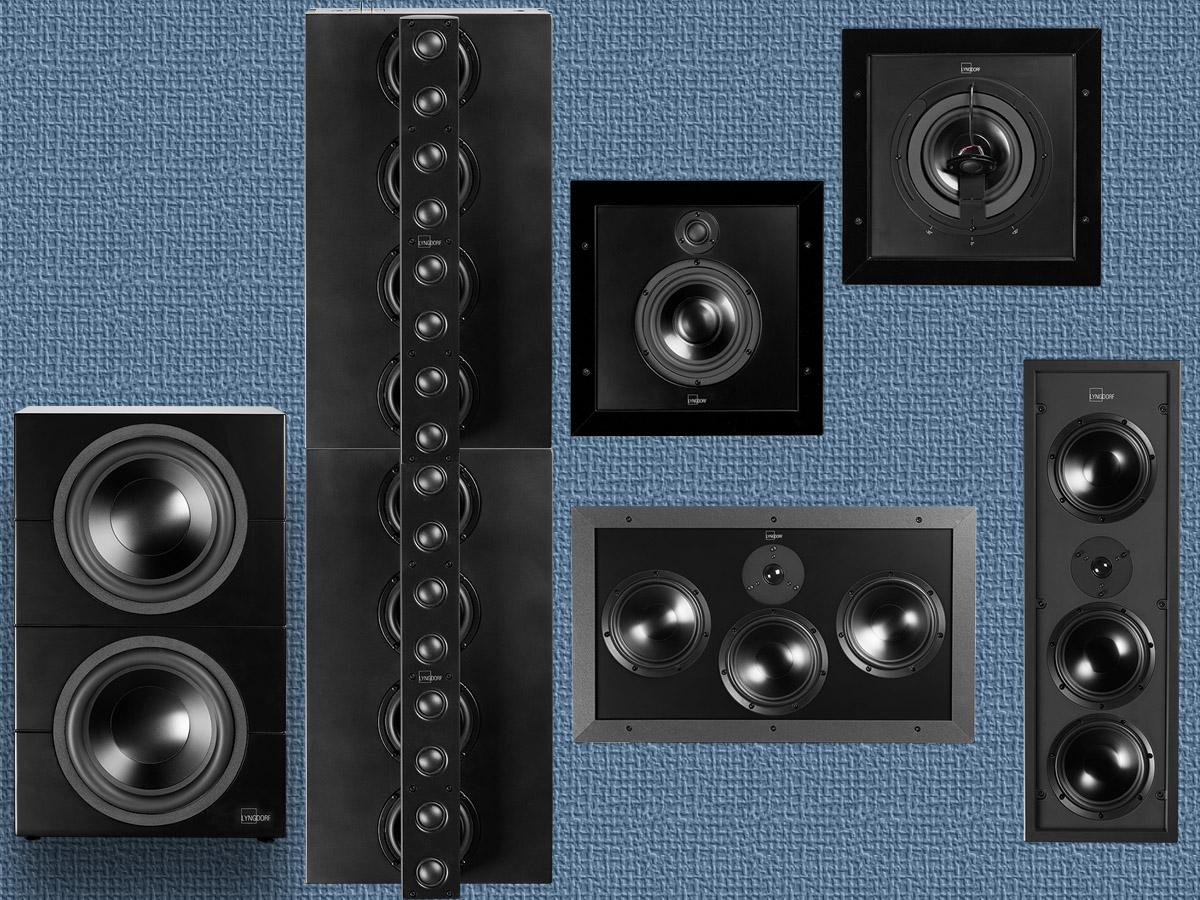
Danish loudspeaker innovator Lyngdorf Audio announced the launch of the new Lyngdorf Custom Installation speakers. The new range includes the LS-1000, D-500, D-5, and BW-20 base models, each one bringing a unique concept of its own, as the company founded by Peter Lyngdorf brings its expertise in home cinema and loudspeakers to custom installation speakers. A total of eight models to suit different installations, from a modern living room with in-wall speakers next to the TV up to the largest home theater with a big screen and immersive audio. Read More
|
|
CEVA Partners with Mimi Hearing Technologies to Offer Assistive Hearing on True Wireless Earbuds |
CEVA and Mimi Hearing Technologies have announced a partnership to enable new assistive hearing capabilities in consumer true wireless earbuds. The collaboration combines Mimi Sound Personalization technology and advanced hearing IP with CEVA's Bluebud wireless audio platform to enhance the hearing experience of every individual. With its flexible architecture, the Bluebud platform allows a high level of software customization and add-ons, supporting such advanced implementations. Read More
|
|
|
|
|
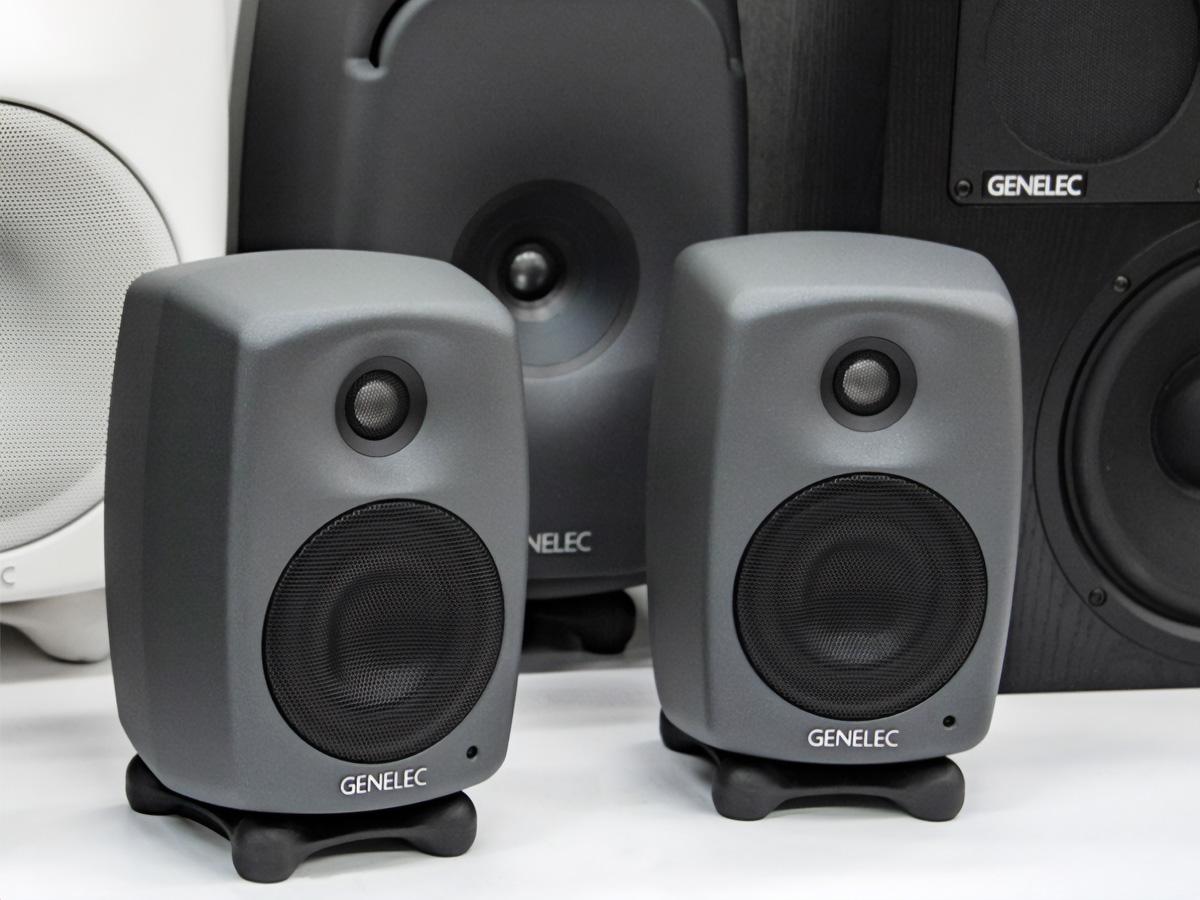
Genelec Promotes Circular Economy with Certified Pre-Owned Loudspeakers |
Owners of Genelec loudspeakers, some dating back to the early days of the company founded in 1978, recognize how robust and great sounding these active speakers remain through the years. Genelec also kept servicing all its discontinued models, something that contributed highly to creating renewed confidence in the company and the brand. Starting in 2022, Genelec will start offering factory serviced, Genelec Certified Pre-Owned loudspeakers . Read More
|
|
McIntosh Announces New Direct Streaming RS150 and RS250 Wireless Speakers |
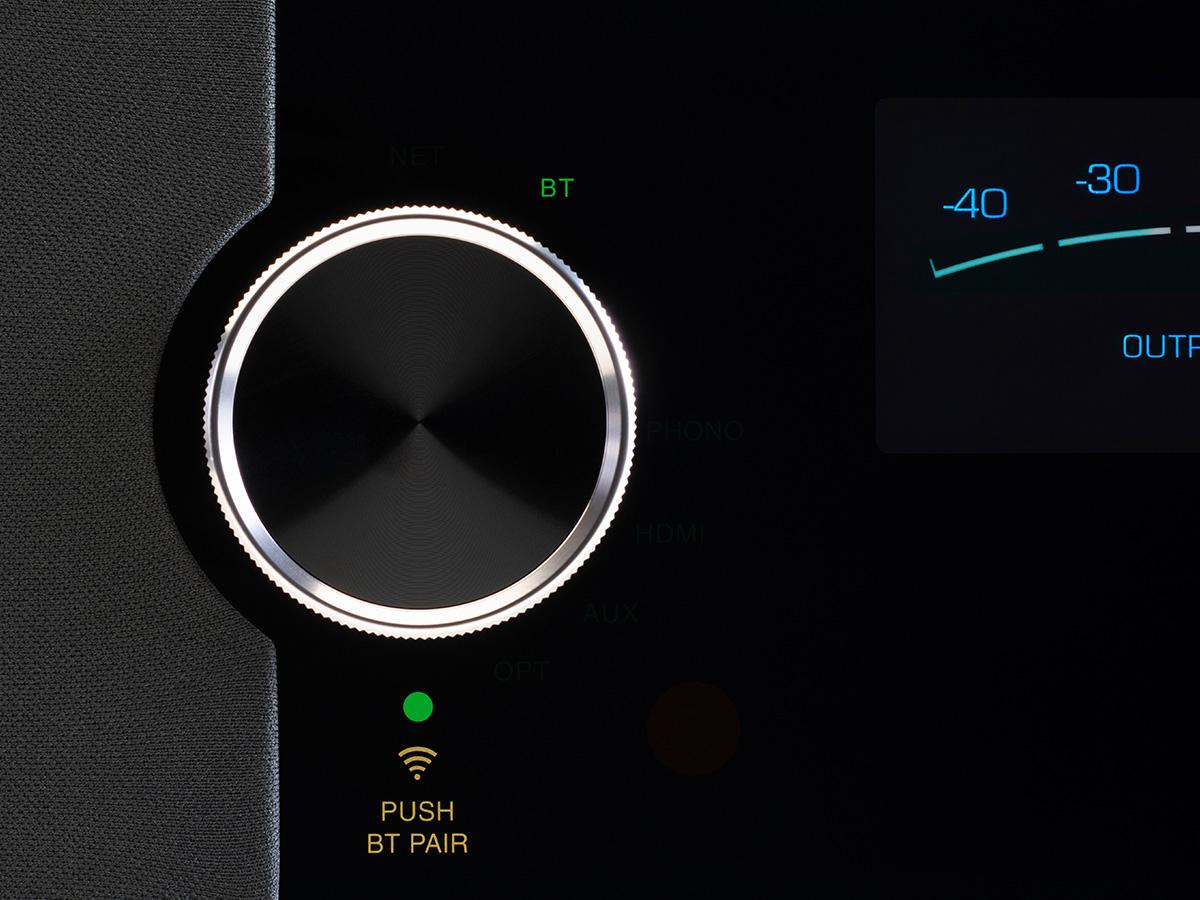
McIntosh is expanding the streaming options for modern listening with its iconic designs, now in the form of the new RS150 Wireless Loudspeaker, a more compact, vertical speaker, and the RS250 Wireless Loudspeaker System, a larger tabletop integrated system. The RS150 is intended to be a user-friendly and versatile wireless speaker, while the RS250 is introduced as McIntosh's most advanced and powerful home audio wireless speaker system to date. Both models offer the most recent technologies for wireless streaming . Read More
|
|
|
Editor's Desk
J. Martins
(Editor-In-Chief)
|
Price Fluctuations and Supply Constraints
A Global Perspective Index
|
|
|
If you think attending CES 2022 is a risky gamble, made exponentially more unpredictable this year by a new "curveball" virus variant, I guess navigating the global technology market in 2022 and beyond is not going to be less risky or unpredictable. Some companies are looking ahead and preparing suitable strategies to deal with highly volatile and fragmented global markets.
While audioXpress continues to work on the agenda for a very unusual edition of CES 2022 - navigating all the health safety precautions and proof of vaccination requirements, on top of the usual NDAs for earlier access, and meeting confirmations in suites that are not even confirmed - I thought I should highlight a research study that we received, throwing an interesting perspective on existing presumptions about technology and price policies.
“The Electronics Price Index 2021” is a timely report that compares the prices of popular electronics around the world in the context of ongoing shortages and global supply chain issues. As we approach the festive season, the study shines a light on how current disruptions to supply chains, currency volatility, and chip shortages are affecting the cost and availability of popular electronics.
The study was promoted by Berlin, Germany-based Grover.com, the fast-expanding consumer electronics rental company, which is based on a business model that I believe has great potential when executed properly (a topic for a future article on circular economy and sustainability actually driving product strategy, instead of conditioning it).
|
|
"As first-hand observers of global electronics shortages since the pandemic, we decided to investigate further by using data to analyze how global supply chain bottlenecks and import tariffs have affected the availability and cost of electronics around the world," Grover explains in the introduction to the “Electronics Price Index 2021”. |
|
Founded in 2015, Grover is the European leader in consumer electronics rental commerce, offering access to the latest technology in a flexible, monthly subscription model. The company's platform allows both consumers and businesses to choose from more than 3,000 products - from smartphones and laptops to gaming, VR, and smart home gadgets.
Grover's service allows its users to keep, change, buy, or return products according to their individual needs. Grover currently rents products in Germany, Austria, Spain, the Netherlands, and the US via its own platform (grover.com) and - in Germany - via a broad online and offline partner network, which includes Europe's leading electronics retail group MediaMarktSaturn (Germany's version of BestBuy with heavier discounts).
Grover's vision is based on promoting the circular economy, expanding access to technology to multiple users throughout the product lifecycle, enabling them to extract maximum value from each product, and reducing e-waste (something that manufacturers increasingly are being expected to incorporate in their cost structure, and consequently could become a great incentive for re-usability and recycling).
Grover has already circulated a total of around 500,000 devices, is a well-funded operation and is hiring fast to expand globally. I believe that, for many technology companies, Grover can quickly become a welcome business expansion. But more important, its business model serves to show how consumers perceive the real value of products overtime - a valuable perspective for brands and product managers, who can gain an accurate index of how products are perceived by users/consumers.
This perspective is already visible in the “Electronics Price Index 2021” study (prices in USD, compiled for Grover by Sweet Spot), starting with the choice of products that were selected for the comparative research. The company's Global Price Index compares the cost of the most in-demand consumer electronics items, in light of unprecedented retail industry supply chain shortages, as well as currency fluctuations, leaving many customers either unable to find seasonal items, such as gaming consoles, or paying far more for their items. |
|
Which products are perceived by consumers as "must-own," "nice-to-have," or "need-to-use"? The renting model supported by the Grover platform shows an interesting perspective on technology. |
|
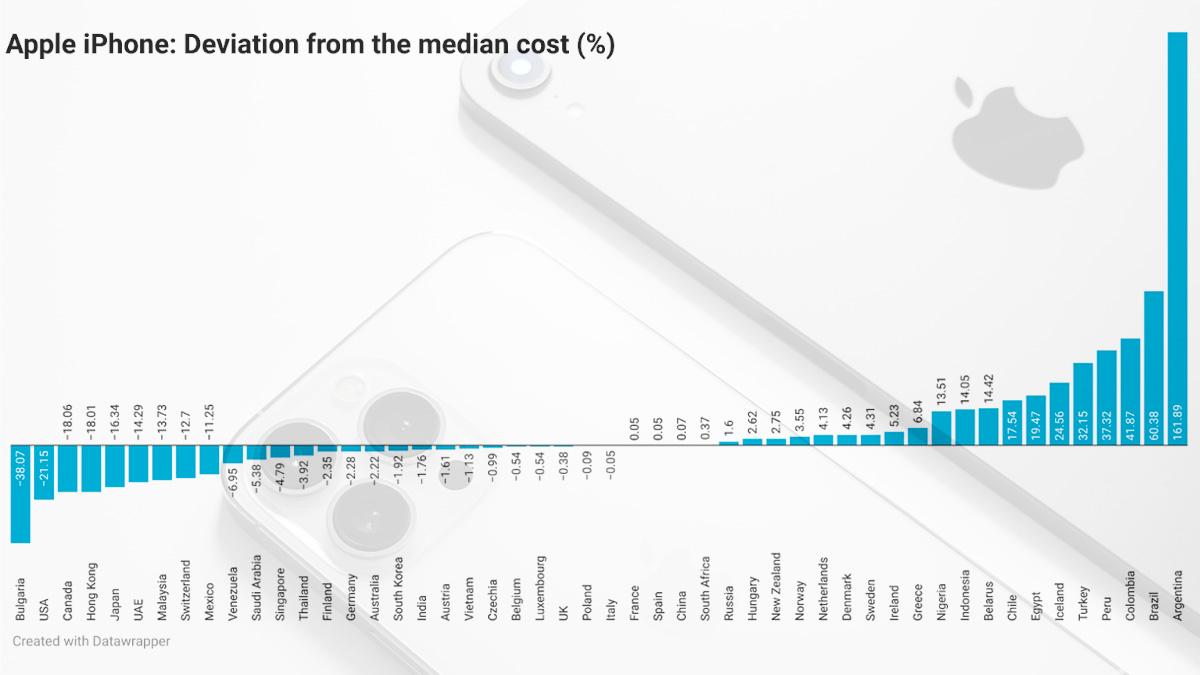
Out of the 50 countries in the study, the United States has the #49 most expensive electronics. The study found that, on average, Argentina is the most expensive country to purchase electronics in the index, with a total deviation of 67.34% above the average cost of common electronic goods (>160% for Apple products). But the currency devaluation and political instability problems in Argentina help to explain it. More interesting is the fact that Brazil, a larger and theoretically more stable economy, is the second most expensive country in that perspective - with the price of an entry-level iPhone 12 in Brazil reaching an average of $1,624, compared to $811 in the US.
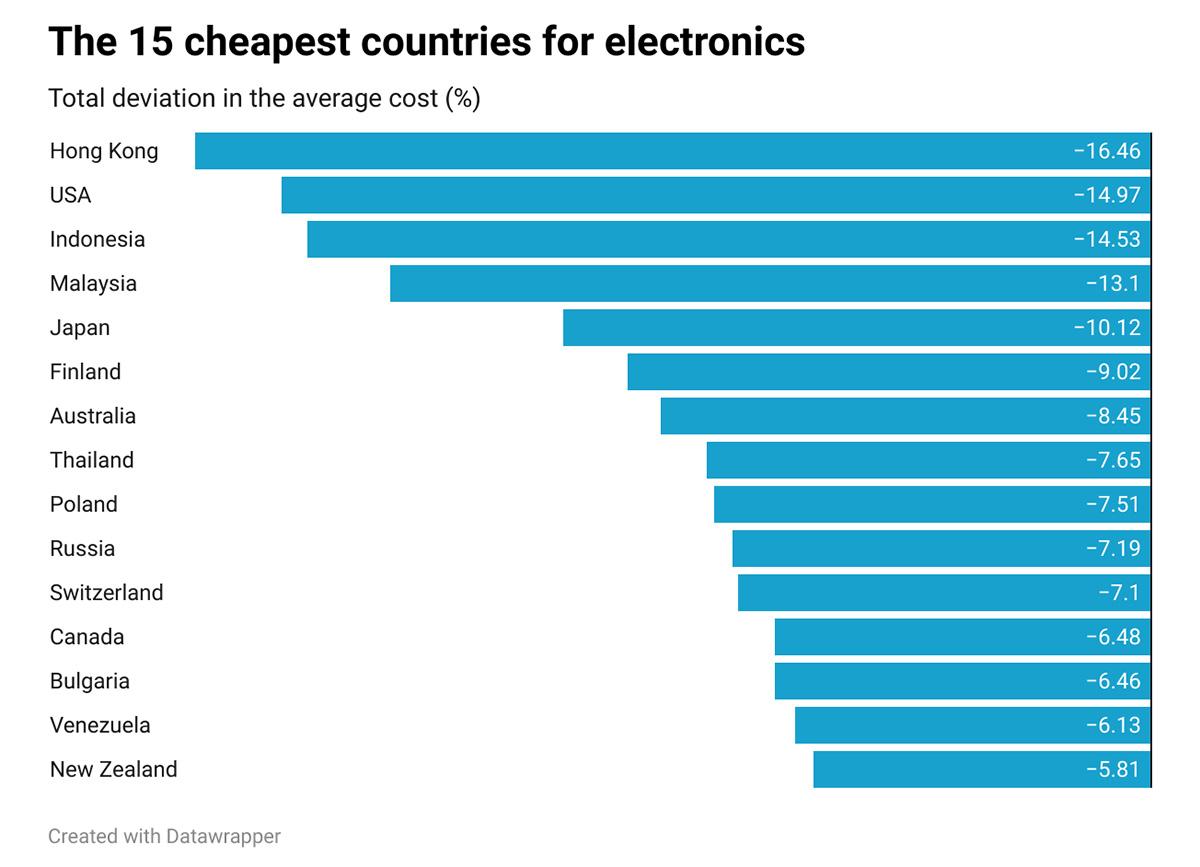
Finding that Hong Kong offers the cheapest electronic items, with costs averaging at 16.46% below the median, followed by the US and Indonesia is neither a surprise or very relevant. Probably one of the most interesting finds in the study is seeing how most in-demand products, such as game consoles or iPhone 13s, are sold-out and not even yet available in most countries. How much price deviations exist globally for a certain recently launched product is an interesting reason to look at the study in detail.
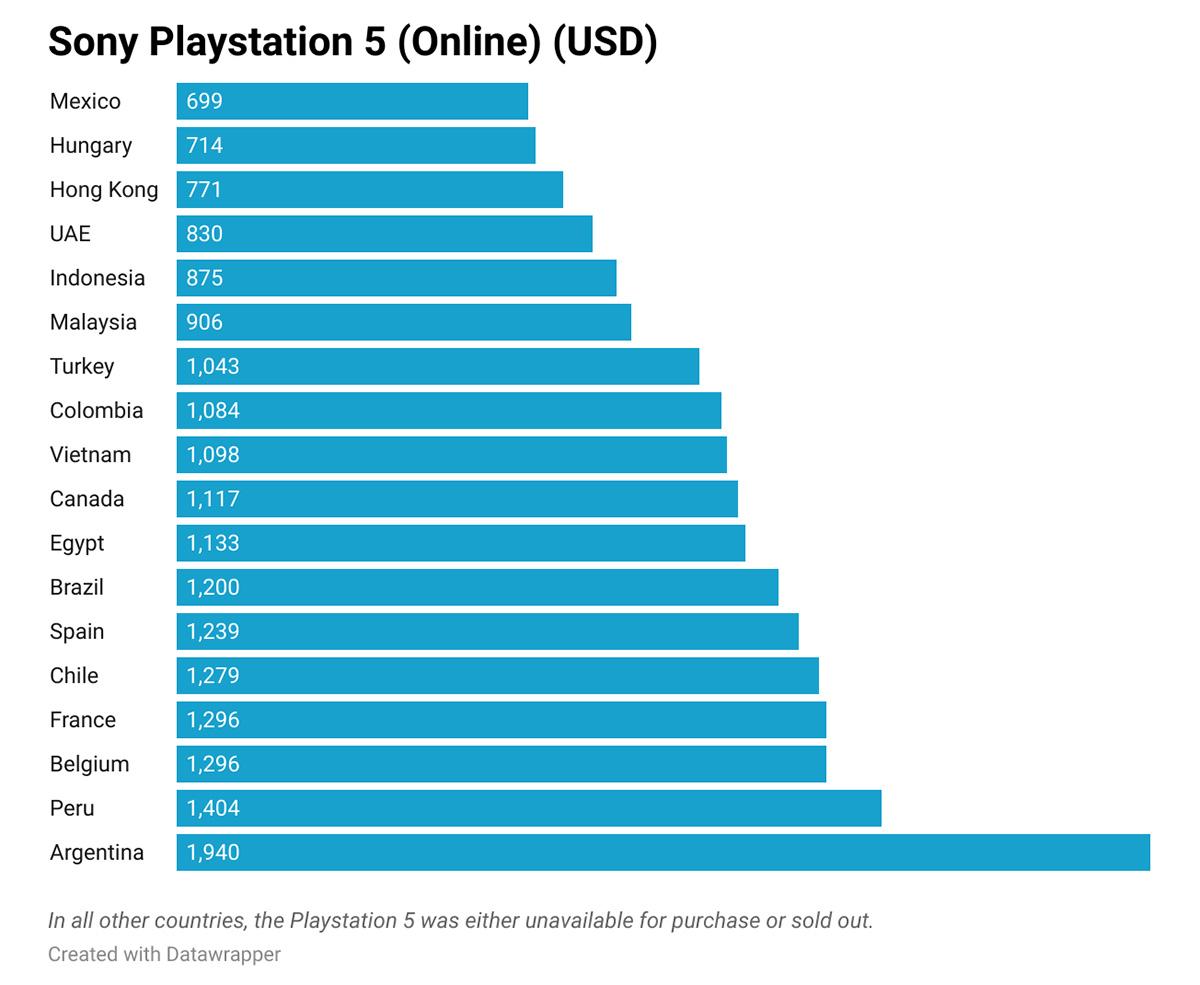
Mainly due to the rise of the cryptocurrency industry, graphics cards record the highest deviation above the median price of any item, at 166.84% above average. Of all the electronic goods in the study, the Playstation 5 is the worst impacted by global supply shortages, with availability in only 12 out of 50 countries in brick-and-mortar stores and 18 out of 50 on e-commerce platforms.
|
|
The overall findings of the index allow for a direct comparison between the price of electronics in 50 countries around the world. The study also reveals which countries have been most affected by supply chain shortages and import tariffs. The Sony Playstation 5 is unavailable for purchase or sold out in most countries. Where available, price fluctuations also reflect the desirability. |
|
"At Grover, we’ve witnessed the impact supply chain disruptions have had on the availability and affordability of electronic goods. Though we took proactive measures to maintain our own stock, the severity of supply chain disruption had market-wide ramifications," says Giacomo Dalle Vedove, Grover’s VP International and Growth. "Technology is ubiquitous within the modern world and will only increase in importance as further advances are made. We decided to conduct this study to draw attention to the fragility of current supply chains and in the hope that these issues do not become commonplace."
This research also serves to show that most "global" tech companies are not truly multinational and most have relied too much on fragile partnerships with online marketplaces, and global "mercenary" box movers. While consumers are increasingly Internet-savvy and aware of the latest devices and technologies, Amazon is not yet doing business in many European countries, Apple doesn't have stores everywhere, and many giant retailers in the consumer electronics space are still betting on heavily discounted "third-choice" and house brands. The result of these disparities creates an interesting set of conditions under the currently uncertain economic circumstances, particularly with currency fluctuations and inflation pressures.
|
|
The cheapest countries for electronics in 2021. Deviations show a combination of factors, starting with currency value, proximity to supply chain, and tax policies. Traveling to New Zealand to obtain a 5% discount is not even worth it, but going to Switzerland for a 7% discount might be attractive for consumers from surrounding EU countries with heavy VAT taxes. |
|
Knowing how Apple keeps a tight control over global prices for all its products, this iPhone price deviation from median cost is still surprising. In this case, it mostly reflects constraints between supply and demand. |
|
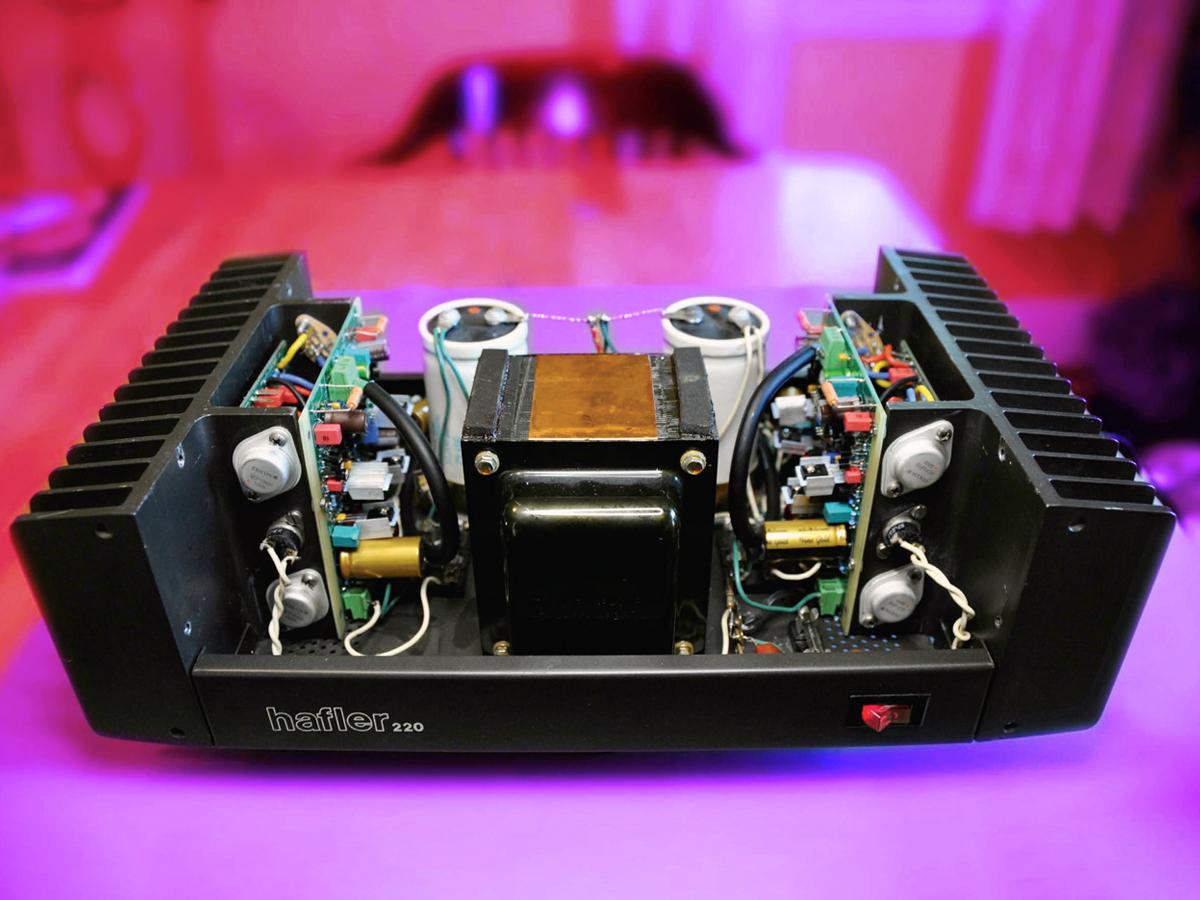
The DH-220C MOSFET Power Amplifier - Part 2 Construction and Testing Instructions
By Bob Cordell and Rick Savas
|
|
This reference DIY project details of an upgrade construction for the legendary Hafler DH-220 lateral MOSFET power amplifier, which can also be used to upgrade other Hafler models or even inspire new designs. The design is implemented on two PCBs, one as a drop-in replacement for the original Hafler circuit board and another board that consolidates all of the output stage wiring and components within the heatsink and under the main PCB. After the authors detailed the design and performance of the DH-220C upgrade amplifier, in this second part of the article, Bob Cordell and Rick Savas discuss the construction and testing. This article was originally published in audioXpress, August 2021. Read the Full Article Now Available Here
|
|
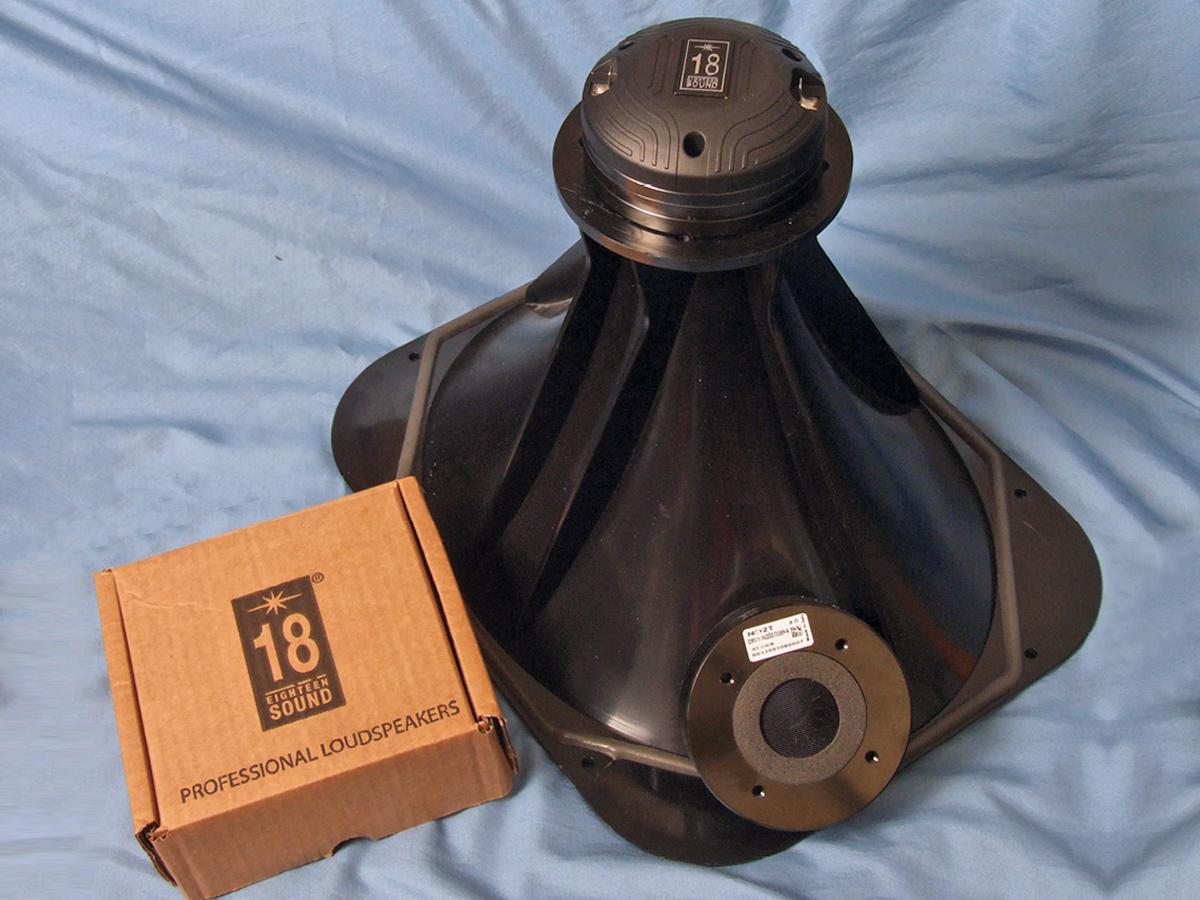
The ND2T 1.25” Neodymium Compression Driver from Eighteen Sound
By Vance Dickason
|
|
This Test Bench focuses on Eighteen Sound’s latest ND2T, a 1.4” neodymium compression driver, combined for characterization with the XT1464 elliptical-shaped horn, also from Eighteen Sound. This ultra-compact compression driver features a 2.4” diameter edge-wound voice coil wound with aluminum wire on a non-conducting Nomex former with a proprietary treatment. This assembly drives a field-replaceable pure titanium diaphragm and proprietary tangerine radial phase plug design. This article was originally published in Voice Coil, October 2021. Read the Full Article Now Available Here
|
|
Audio Product Design | DIY Audio Projects | Audio Electronics | Audio Show Reports | Interviews | And More
Don't Have a Subscription?
|
|
Industry News & Developments | Products & Services | Test Bench | Acoustic Patents | Industry Watch | And More
|
|
Advancing the Evolution
of Audio Technology
audioXpress features great articles, projects, tips, and techniques for the best in quality audio. It connects manufacturers and distributors with audio engineers and enthusiasts eager for innovative solutions in sound, acoustic, and electronics.
Voice Coil, the periodical for the loudspeaker industry, delivers product reviews, company profiles, industry news, and design tips straight to professional audio engineers and manufacturers who have the authority to make powerful purchasing decisions.
The Loudspeaker Industry Sourcebook is the most comprehensive collection of listings on loudspeaker material in the industry. Purchasers and decision makers refer to the guide for an entire year when making selections on drivers, finished systems, adhesives, domes, crossovers, voice coils, and everything in between.
© 2021 KCK Media Corp. All Rights Reserved.
|
|
|
|
|
|
|