|
JNIM’s Coordinated Offensive in Western Mali and the Targeting of Foreign Nationals
On 01 July 2025, Jama’at Nusrat al-Islam wa al-Muslimin (JNIM) militants launched a string of well-coordinated armed assaults across Mali’s Kayes Region, with the most intense fighting reported in the border town of Diboli, near Senegal. In the early hours, JNIM fighters attacked gendarmerie posts and civilian residences in the village of Biboli. The group later claimed responsibility for the operations, asserting that its forces had overrun three military bases and dozens of checkpoints operated by the Malian Armed Forces (FAMA).
These attacks were part of a broader, synchronised offensive spanning several towns, namely Niono, Molodo, Sandare, Nioro du Sahel, Gogui, and Kayes, demonstrating JNIM’s increasing operational capacity and geographical spread. Notably, Diboli, located on the Mauritania-Senegal-Mali tri-border region, was the epicentre of violence, suggesting the group’s growing interest in expanding its foothold beyond Mali’s borders. This ambition to project power into Senegalese territory signals a strategic pivot, especially given JNIM’s long-term objective of regional jihadist consolidation.
Although JNIM touted the attacks as a significant success, subsequent reports revealed a more contested outcome. Reinforcements from the Africa Corps intervened swiftly in Kayes, neutralising dozens of JNIM militants, seizing motorcycles and two armed pickup trucks. Concurrently, Malian forces claimed to have killed several JNIM militants near Nioro, where video evidence circulated online depicted bodies of said militants lying beside rows of confiscated motorcycles.
In a significant development, JNIM abducted multiple foreign nationals during the 01 July operations, three Indian citizens and one Chinese national, all linked to infrastructure and development projects in the region. This follows a similar incident on 24 May 2025, in which JNIM kidnapped Chinese workers and destroyed heavy equipment. A video released on 07 July 2025 confirmed the capture of a Chinese national associated with a Koulikoro-based project, emphasising that foreign workers remain high-value targets.
TRAC assesses that these abductions are not solely financially motivated, although ransom demands are likely. More strategically, JNIM’s targeting of foreign nationals, particularly those affiliated with international development or mining operations, serves to disrupt economic activity, deter foreign investment, and undermine the Malian government’s ability to guarantee security for key infrastructure projects. This economic disruption aligns with JNIM’s broader objective of destabilising the state and forcing international actors to withdraw, thereby clearing the way for jihadist territorial consolidation.
| | | TRAC Incident Report: Authorities Arrest Anthony Tyler Mitchell for Destroying the Power Supply to News 9’s NextGen Live Weather Radar in Northeast Oklahoma City, Oklahoma, United States | | |
On 06 July 2025, at approximately 1:30 p.m. local time, police arrested Anthony Tyler Mitchell, 39, after surveillance footage captured him intentionally disabling the News 9 NextGen Live Radar system in northeast Oklahoma City. The targeted radar is a vital tool used for real-time weather tracking and severe storm alerts, particularly critical during tornado and flood seasons in the region. Mitchell was seen on camera tampering with and destroying the radar's power supply and security systems, temporarily taking the life-saving tool offline on the same night. Services were later restored.
This seemingly isolated act of sabotage is now understood to be part of a broader anti-government conspiracy theory that accuses the U.S. government of manipulating weather patterns using so-called “weather weapons.” This belief surged following the catastrophic floods in Texas, which conspiracy theorists claimed were caused by “cloud seeding” or “directed energy weapons” (DEWs) intentionally deployed to target and depopulate specific communities.
The NextGen Live Radar, like other Doppler radar systems, became a symbolic target in this conspiracy ecosystem, falsely blamed for emitting harmful signals or being a tool of weather warfare. According to TRAC analysis, the attack was not just an isolated vandalism incident. Still, it was encouraged and anticipated by followers of an extremist movement called “Operation Lone Wolf,” which itself is a subset of a broader campaign known as ‘Operation Leaning Tower.’
One of the key instigators is Michael Meyer, also known by the alias Lewis Arthur, the founder of the anti-government extremist group ‘Veterans on Patrol’, which had 6,593 subscribers on Telegram at the time of this writing. Meyer had posted a warning just days before the Oklahoma City incident, declaring that “weather weapons” deployed by the military had murdered children in Texas, and vowing to “escalate efforts to eliminate this military treason.” He directly called for attacks on media and meteorological infrastructure, including radars and satellite systems involved in tracking rainfall, wind, and storm formations. Meyer’s rhetoric has escalated beyond incitement. He claimed that “50 additional targets” would soon be made public for followers willing to participate in the campaign. GPS coordinates and satellite images of these locations are being distributed in proprietary Telegram channels, likely increasing the threat of future coordinated sabotage across the U.S.
Meyer’s public statements further underscore the group’s strategic calculation; he urged followers not to target cell towers, despite blaming them for “radiation poisoning,” because such attacks could alienate public opinion and lead to more intense media scrutiny. Instead, weather radars were framed as acceptable and urgent targets, tied to the fantastical claim that they are part of a clandestine military project aimed at manipulating the climate.
It is worth noting that Meyer personally filed a report with the Oklahoma City Police Department, attempting to present his weather weapon theory as a credible threat and presumably hoping law enforcement would validate his delusions. A video of his visit has since circulated online and garnered over 3,000 views at the time of writing, further fueling recruitment and radicalisation within the movement.
TRAC assesses that the sabotage of weather infrastructure represents a dangerous intersection of conspiracy-driven extremism and lone-wolf domestic terrorism. The fusion of anti-government ideology, pseudoscientific claims, and calls to violence against public infrastructure mirrors the tactics and narratives seen in prior far-right and eco-anarchist movements, though in this case, driven by fringe populist paranoia and anti-science sentiment. This should be considered as more than a one-off event. Coordinated threats against national weather systems, particularly during high-risk seasons, pose not only a threat to public safety but also to emergency response capabilities.
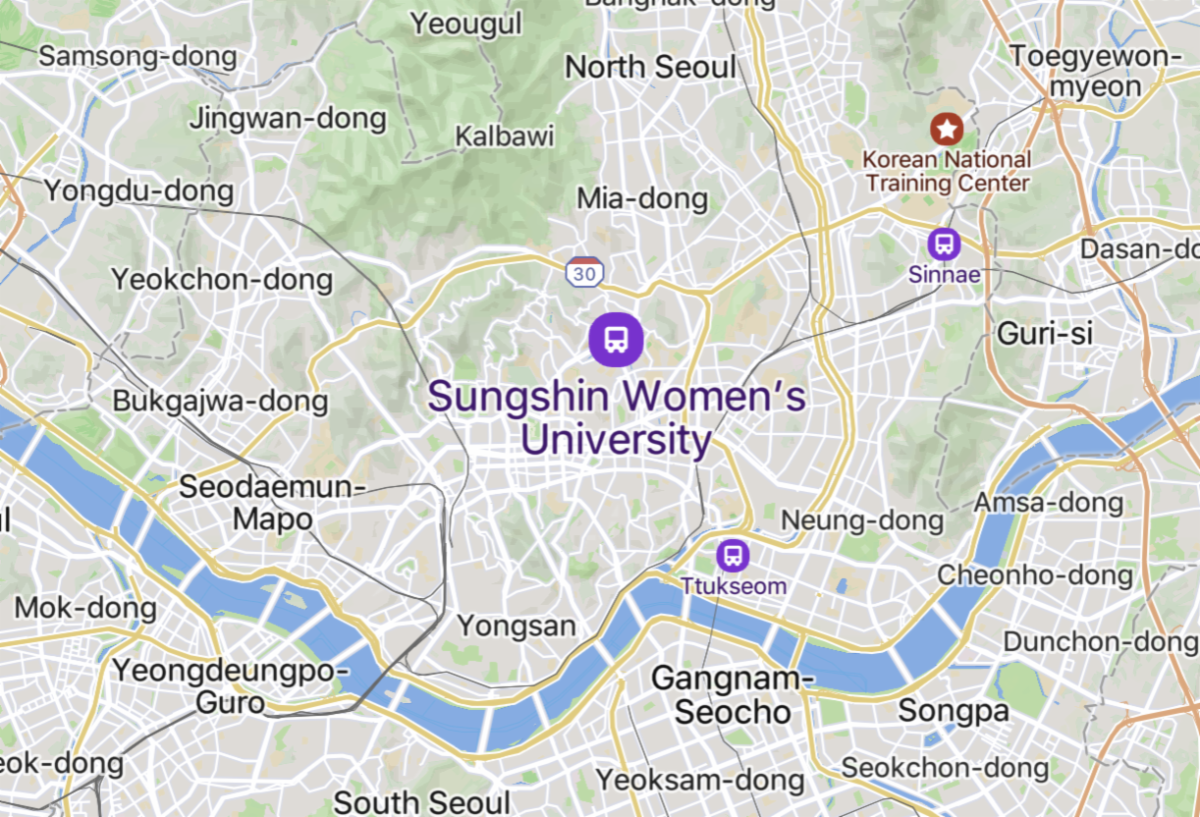
| | TRAC Incident Report: Suspected Incel Threatens Attacks & Claims to have Planted Explosives at Sungshin Women’s University (Seoul) & Gwangju Women’s University, South Korea | | |
On 7 July 2025, authorities conducted an extensive search operation at Sungshin Women’s University in Seongbuk-gu, Seoul, following the receipt of a threatening email claiming that explosives had been planted on campus. The email was sent on July 4 to the university’s official account, prompting an emergency response involving police, bomb-sniffing dogs, and fire services. Students and staff were barred from entering the campus during the operation. No explosives were found, but the threat was taken seriously due to its nature and timing.
Later reports revealed that Gwangju Women’s University received a similar threatening email. In both cases, the sender claimed to have planted explosives and identified himself as a member of “Men’s Solidarity,” a controversial misogynistic group known for extremist rhetoric. The email reportedly included the statement: “Women don’t need academics.” This strongly suggests a gender-based ideological motive, targeting institutions symbolically associated with female empowerment and education.
This wave of email threats is part of a current global trend of digitally-enabled gender-based extremism. The fact that both targets were women’s universities and that the perpetrator explicitly cited misogynistic ideology points to organised/inspired far-right, anti-feminist sentiment, make TRAC certain that the perpetrator was an Incel.
Furthermore, the mention of “Men’s Solidarity” group, a group that has made headlines in South Korea for opposing feminist movements and women’s rights, suggests an Incel motivation behind the threat. Incels (Involuntarily Celibate) refers to a subculture of individuals, primarily men, who harbor feelings of anger, frustration, and resentment due to their perceived inability to find romantic or sexual partners. This community has gained attention for its often misogynistic and sometimes violent ideologies. While the majority of members are not necessarily violent, a minority justify attacks to take revenge on women who “refuse” them. TRAC is witnessing Incels increasingly crossing from online hate speech into real-world threats, with educational institutions becoming symbolic battlegrounds.
Although no explosives were found, the psychological and social damage inflicted is significant. The disruption of academic life, fear among female students and faculty, and the targeting of women’s spaces are hallmarks of ideological intimidation. This incident may also embolden copycats or others within misogynist circles who seek to gain attention or make political statements through threats of violence.
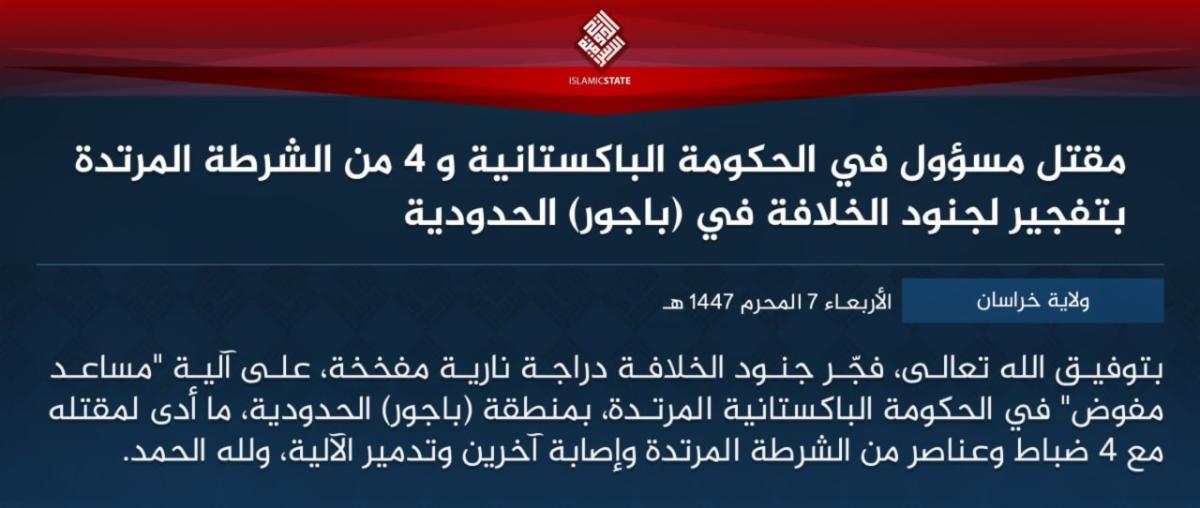
| | TRAC Incident Report: Islamic State Khurasan Pakistan (ISKP) Remote-Controlled Motorcycle Improvised Explosive Device (VBIED)Targets Pakistani Army Vehicle on the Nawagai [Nawaji] Road, Bajaur Agency, Khyber Pakhtunkhwa, Pakistan | | |
On 2 June 2025, Islamic State Khurasan (ISKP) militants detonated an explosives-laden motorcycle targeting a Pakistani government convoy on Nawaji Road in the Bajaur Agency, Khyber Pakhtunkhwa. The bombing destroyed the official vehicle, killing all occupants on board. Confirmed fatalities include the Assistant Commissioner of Nawaji, the Mayor of Khar, and four accompanying police officers. Seventeen others were injured, including bystanders caught in the blast radius.
This high-profile attack comes amid Pakistan’s heightened counterterrorism operations targeting ISKP infrastructure and facilitators in Khyber Pakhtunkhwa and the adjoining tribal belt. In response, ISKP has not only escalated its retaliatory campaign but has also declared this region, particularly Bajaur, Mohmand, and Khyber, as active battle zones in its war against the Pakistani state.
The use of a motorcycle-borne improvised explosive device (VBIED) is of note. Specifically, what stands out in this attack is its precision timing, suggesting the presence of a remote observer or spotter. The explosion occurred exactly as the targeted vehicle passed, which implies the detonation was triggered manually in real-time rather than via a basic timer or pressure plate. This level of coordination requires live visual confirmation and real-time communication, indicating that the militants were operating nearby and had intimate knowledge of the convoy's movements.
The geography of the Bajaur-Kunar corridor remains a key operational artery for ISKP. Cross-border infiltration from ISKP strongholds in eastern Afghanistan, particularly in Kunar and Nangarhar Provinces, has become increasingly fluid, facilitated by sympathetic tribal elements, familial ties, and the group's ability to mobilise ideological support. This terrain has enabled ISKP to embed itself within local communities, eluding detection while planning precision attacks.
This bombing is emblematic of ISKP’s broader strategy of institutional decapitation, systematically targeting mid- to senior-level civil and security officials to erode local governance structures and instil fear among public servants and tribal leaders. By striking at public officials with symbolic value and community influence, ISKP aims to disrupt administrative continuity, paralyse development efforts, and delegitimise the state in the eyes of local populations. Furthermore, this incident reinforces the emerging dynamic of a hyper-competitive militant ecosystem in northwest Pakistan. ISKP is now engaged in a deadly rivalry with Tehrik-e-Taliban Pakistan (TTP) and the Hafiz Gul Bahadur Group, each vying for dominance in overlapping territories. In this asymmetric arms race, groups are escalating violence not just against the state, but also to outbid each other for local legitimacy, recruits, and operational space. This convergence of ambitions among competing jihadist factions is rapidly destabilising the already fragile tribal districts and rendering Islamabad’s counterinsurgency efforts increasingly complex.
TRAC assesses that ISKP’s operational posture will continue to favour attacks on symbolic state targets using portable, difficult-to-detect VBIEDs and suicide operatives. As government convoys, checkpoints, and development personnel remain predictable and exposed in these high-risk zones, similar bombings are to be expected.
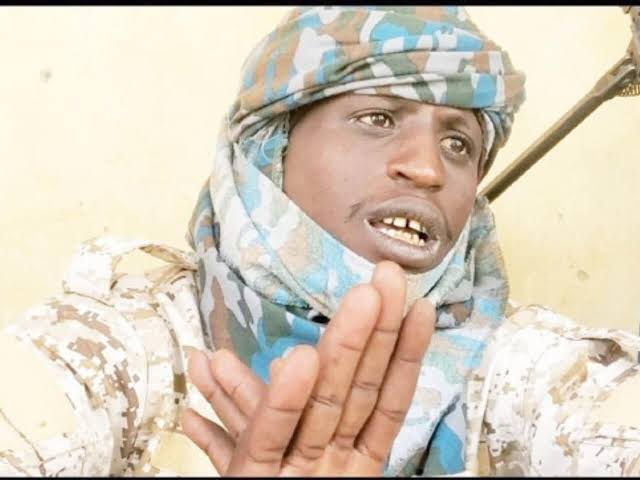
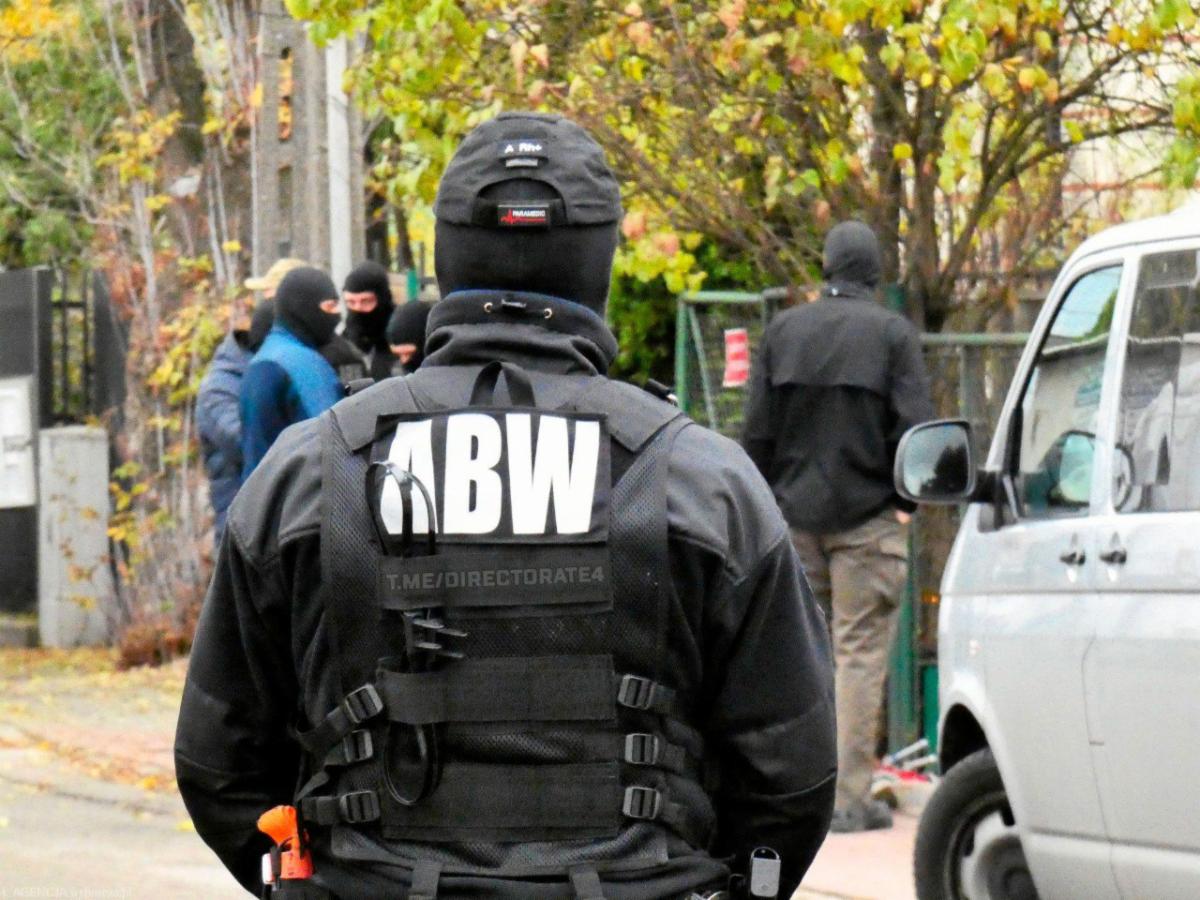
| | (Chatter) Bandit Kingpin Bello Turji Reaches Out To Other Bandits for Peace After Death of Top Commander Kachalla Yellow Danbokolo | | Polish Intelligence Service Agencja Bezpieczeństwa Wewnętrznego (ABW) Detained an Islamic State (IS) Linked Teenager Preparing an IED Attack on a School in Tarnobrzeg, Poland | | TRAC Incident Report: La Chapiza (CDS/CH) and La Mayiza (CDS/MZ) Sicarios Clash in Cosalá, Sinaloa, México | | | | |