e-Newsletter | January 2, 2026 | | |
Auld Lang Feline: Happy New Year!
by Bethany Groff Dorau
| | |
Happy New Year to you all from us here at the Museum of Old Newbury! We have been on our annual break for over a week, and so I am sending this, a day late, from the comfort of my living room.
Of course, time off for me means time to focus on our farm. As you may imagine, or may know from your own experience, this means lots of work. The Poore Farm, where my family has lived and worked for over two centuries, is home to dozens of animals, all living a very different life than the furry and feathered residents of the past. Today, the animals here, including a horse, sheep, two big pigs, and a wide variety of farm birds, are in sanctuary, lifetime residents whose only job is to be good citizens of the pasture and coop (and eat our money).
Where there are herbivores, there is grain, and where there is grain, even if carefully managed, there are rodents. We have been fortunate that over the years, the owls, hawks, foxes, and coyotes have kept the rodent population at bay, but recently the balance has tipped, and the rodents have gained the upper hand.
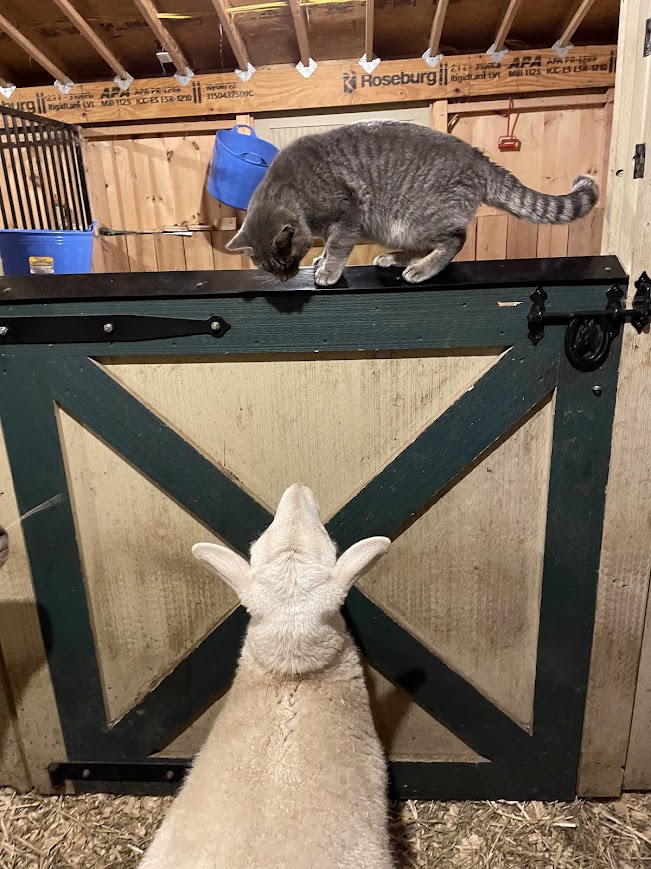
For all the reasons with which you are likely familiar, I have been reluctant to add outdoor cats to our menagerie. Studies have shown that they live dramatically shorter lives than their indoor counterparts, and wreak havoc on wild birds. I am also loathe to kill anything if I can help it, rats included. After all of the other options failed, however, (I even tried rodent birth control), we worked with two shelters to offer space to formerly stray cats who could not be placed in any other situation, with mitigation strategies in place to minimize their threat to birds.
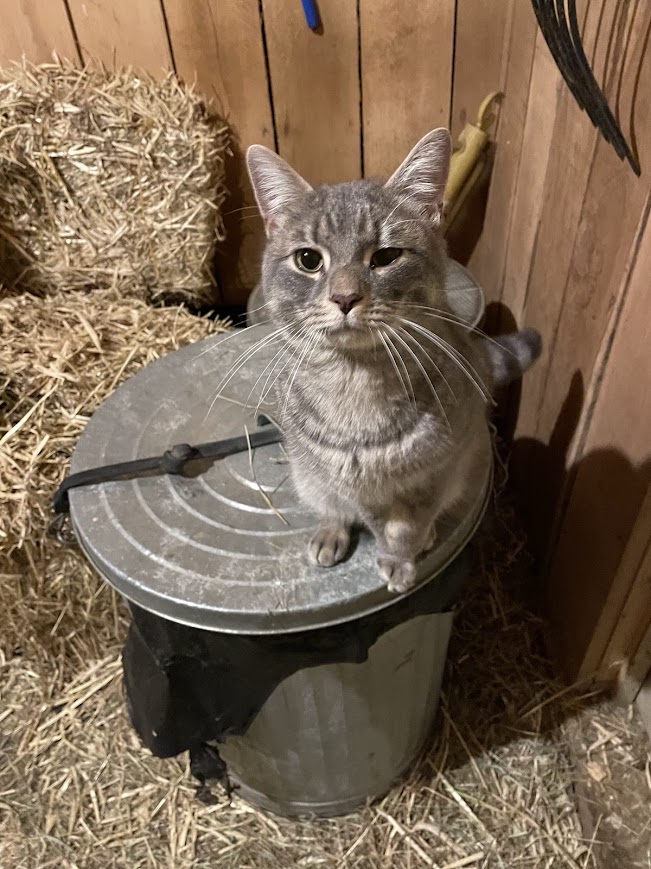
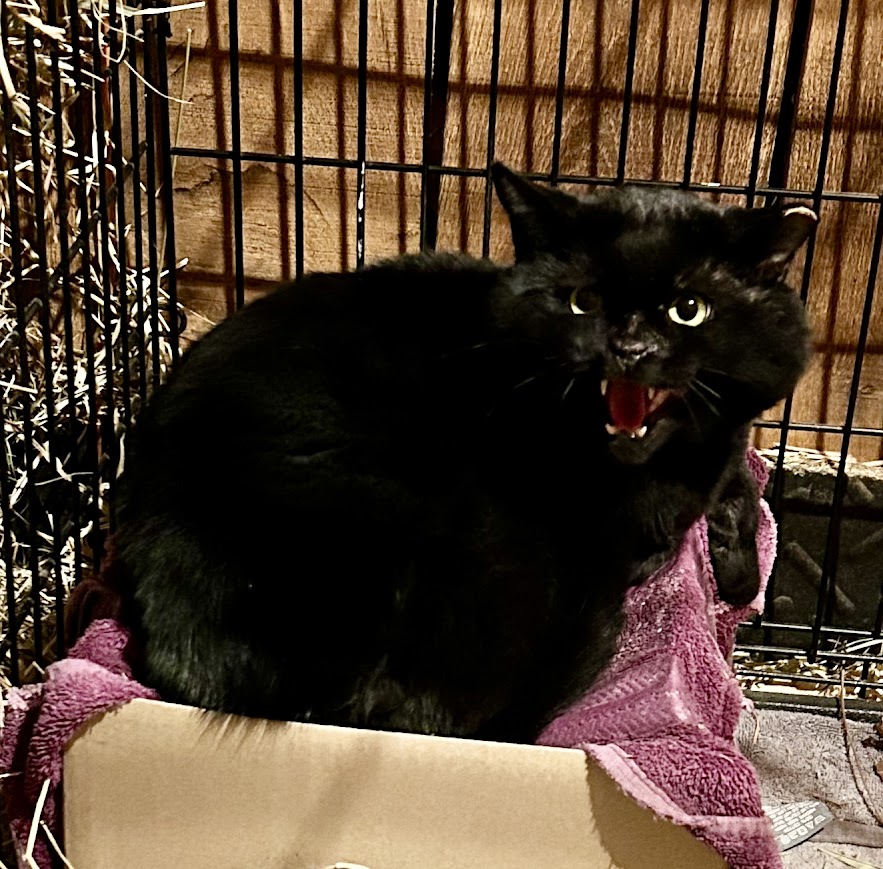
The grey tabby, Stickney (Sticks), became aggressive when indoors, and the black cat, Brocklebank (Brock), was removed from a feral colony to facilitate a trap-neuter-release program. Sticks is a doll - just don't corner him. Brock, on the other hand, has had no human contact in his life and will take a long time to warm up. We adore them both already.
All this to say, my vacation has been all about cats, and because I am who I am, as I sat on the barn floor whispering sweet nothings at Brock as he hissed and spat, I did a little research on the history of cats in our community.
| | |
It is, perhaps, unsurprising that the earliest mentions of cats in our local records are in witchcraft accusations. In 1645, Peter Pitford of Marblehead was heard to say that "Goodwife James was a witch, and that he saw her in a boat at sea in the likeness of a cat." How he identified this maritime feline as Jane James is not clear.
In a case closer to home, John Godfrey, a Newbury herdsman, and also a swindler, blackmailer, thief, and liar, seems to have wielded power over his neighbors in part by starting rumors that he was practicing witchcraft, and then suing people for slander when they repeated the rumors. The accusations against him make for some good reading, and often involve cats. In 1658, for example, Isabel Holdridge, then living in Haverhill, after quarreling with Godfrey, had "been troubled with a black cat sometimes appearing in the house and sometimes at night (coming) to bed and laying on her and sometimes stroking her face. The cat (was) thrice as big as an ordinary cat." In 1664, Jonathan Singletary, locked in the Ipswich Jail with Godfrey, testified that "between nine and ten o'clock at night, after the bell had rung, I being set in the corner of the prison (suddenly) heard a great noise as if a great many cats had been climbing up the prison walls and slipping into the house at the windows and jumping about the chamber..."
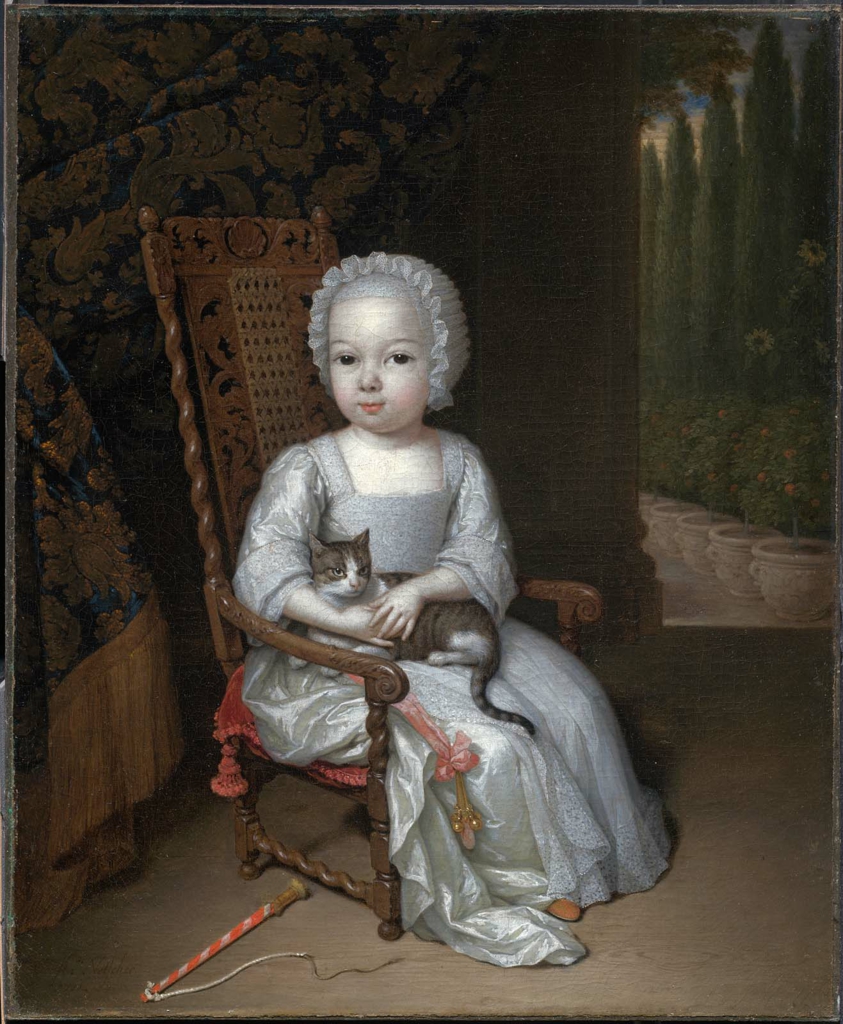
| | Portrait of a Young Girl Holding a Cat by Constantijn Netscher, 1711 | | |
Much has been made of how the Enlightenment transformed the cat from spirit familiar to cherished pet and the embodiment of such noble attributes as independence, dignity, and rationality. I think the relationship between cats and people has always been complex. Just as John Godfrey was terrifying the neighborhood by conjuring hoards of giant prison cats, there were plenty of 17th century households where cats were a welcome deterrent to rodents, and provided company and a bit of extra warmth as well.
Of course, cats have long played an important role aboard ships, and they flourished in port towns like ours. On farms and wharves alike, cats were useful so long as their population did not outstrip that of the rodents they were meant to control. In the days before the sterilization of pets was common, over-population was dealt with in a variety of horrifying ways. In 1797 the Newburyport newspaper carried a front-page plea to its citizens to stop throwing the carcasses of cats and other animals into the streets. The death of the cats was not the issue, but their corpses were believed to cause disease. The number of cats killed in Newburyport was included in standard public safety reports of the late 19th and early 20th century.
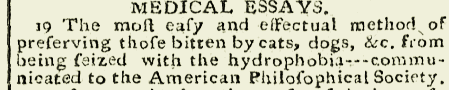
If the history of cats in Newburyport seems like grim fare, well, it is. Historically, most animals have had it rough. Ironically, through much of the town's history, however, cats escaped association with the dreaded hydrophobia, better known today as...rabies.
| | As early as 1787, the good citizens of Newburyport had access to literature that clearly identified cats as carriers of rabies. A "mad dog" as the cause (and the victim) of this fatal disease was more commonly reported, however. | |
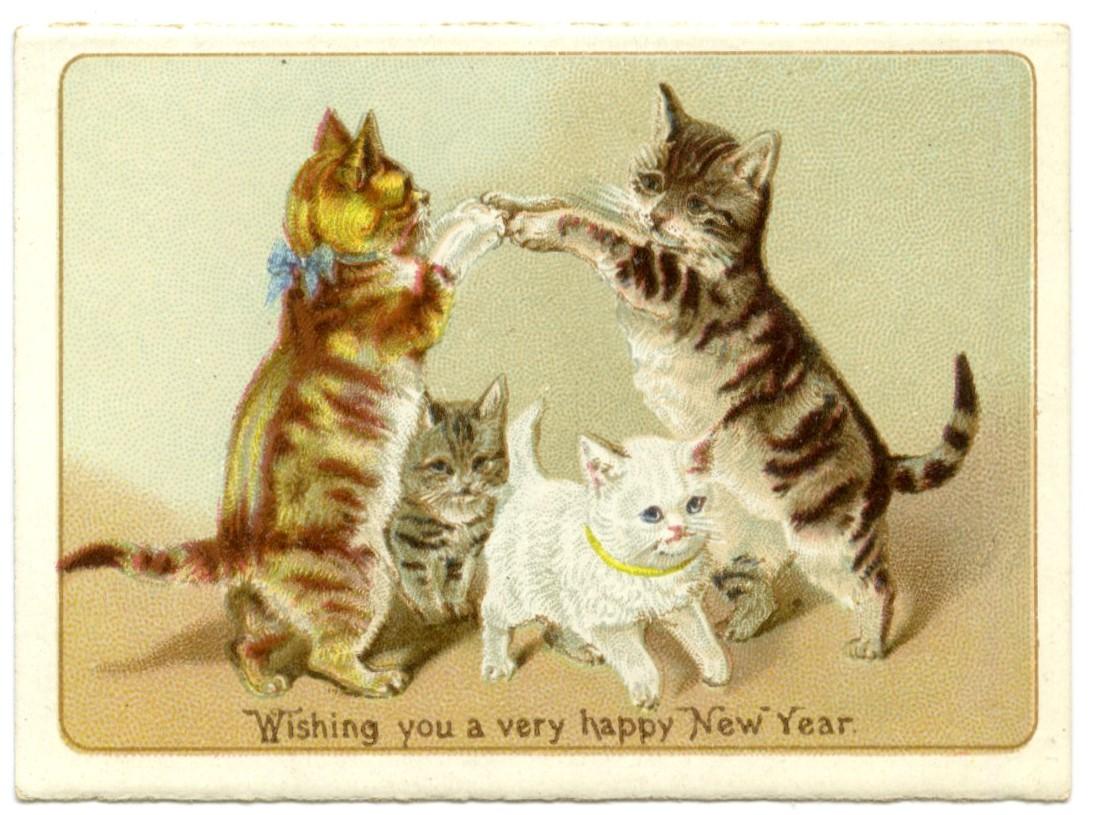
Well, friends, here I was, just popping in on a vacation day to share a cute picture of kittens and wish you a happy new year, and suddenly here I am going on about witchcraft and rabies and cat mortality. My sincere apologies - I just find it all so fascinating.
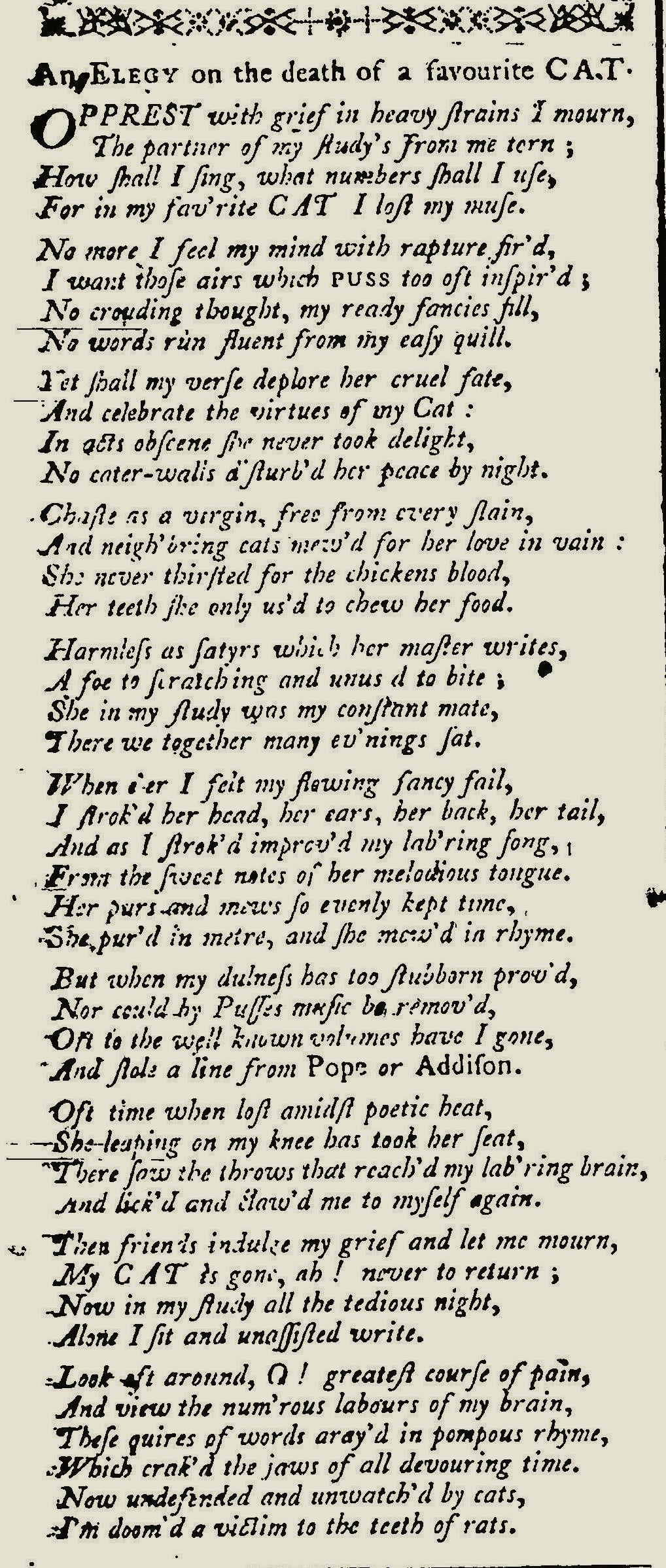
I will wrap this up, for now, on a positive note, though I suppose it is also a little dark. On October 25, 1776, as Bristol, Rhode Island lay in smoldering ruins from a British naval attack, and George Washington and the Continental Army retreated from New York (see, I can make ANYTHING about the Rev War - even a story about cats!), Newburyport's Essex Journal and New Hampshire Packet carried on its front page a lengthy poem dedicated to the memory of a beloved cat.
I include it here in its entirety, as it is, to me, one of the more compelling poems of its ilk, and I look to my new friends Stickney and Brocklebank to spare me the author's fate...
Now undefended and unwatch'd by cats,
I'm doom'd a victim to the teeth of rats.
| | We Put the "Fun" in Annual Fund! | | It's not too late - we have a few of these fun packets left and would be happy to send you one - just give us a call at 978-462-2681, or drop us a note at info@newburyhistory.org. Thank you so much if you have already donated. | | Something Is Always Cooking... | | |
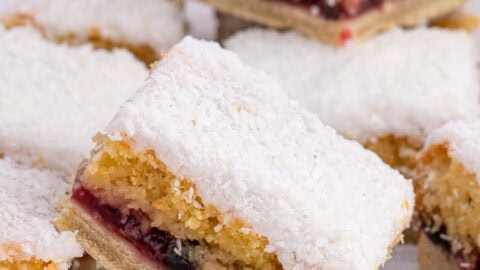
Scottish Snow Cake
I admit - this is not an easy recipe, and it's a bit aspirational for me. It is a short-crust pastry with jam and cake and icing and coconut flakes, and I had it years ago in Scotland and it was just gorgeous. This is a variation on a traditional recipe. Let me know what you think!
-Bethany
Ingredients
Short Crust Pastry
2 c all purpose flour
6 oz salted butter (1 ½ sticks), cold
¼ c sugar
1 egg yolk
8 oz raspberry jam (more if you're like me and in it for the jam).
Cake
6 oz salted butter at room temperature
⅔ c sugar
3 eggs beaten
1 ¼ c all purpose flour with 1 tsp baking powder, sifted together
Topping
1 c confectioner's/powdered sugar
1 tsp milk (add as needed)
½ c unsweetened shredded coconut
Instructions
Oven temp 375˚F
Make the Pastry Base
Using two knives (or a pastry cutter), cut the butter finely into the sugar, but do not cream.
Add the egg yolk and stir to combine.
Add the flour. Using your fingertips, rub the butter into the flour until it has a breadcrumb texture.
Press the mixture into the bottom of a 9"x13" greased pan, pressing firmly.
Bake for about 10 minutes. Don't let it start to brown. Remove from the oven and allow to cool, while making the cake batter.
Lower the oven temperature to 350° F
Make the Cake
In a stand mixer or using a handheld mixer, cream the butter and sugar until very light and fluffy. It will begin to pale in color.
Add about one third of the beaten eggs, and mix well at medium speed.
Then add about a third of the sifted flour. Repeat this step. Add the rest of the eggs and mix well, then turn the mixer to low and add the final flour and just mix until well combined.
Prepare the Cake for Baking
Spoon the jam evenly onto the pastry base, taking care not to let it reach the side of the pan.
Place dollops of cake batter all over the jam to make it easier to spread. (Try not to let the jam get mixed into the batter.)
Spread the batter evenly all over the jam and pastry.
Pop the cake into the oven for approximately 30 minutes. Do not open the oven until you start to smell the cake and it looks well risen (through the glass). Gently insert a cake tester or skewer into the center of the cake to check that it's completely cooked before removing from the oven. Allow to cool completely in the pan.
Decorate the Snow Cake
Run a knife around the cake, down to the pastry, then shake the pan. You should feel that the cake is loose in the pan before decorating it.
Put the confectioner's sugar in a bowl and slowly add the milk a little at a time (1/2 tsp) until a thick, but runny consistency is reached. Adjust with more sugar or liquid if you see the icing isn't spreading nicely. Cover the cake with this icing.
Before the icing begins to dry, sprinkle generously with finely shredded, unsweetened coconut.
Allow the icing to dry and set completely which will take a few hours. Cut into squares and serve! Store covered.
Enjoy!
| | |
Click the image to do the puzzle
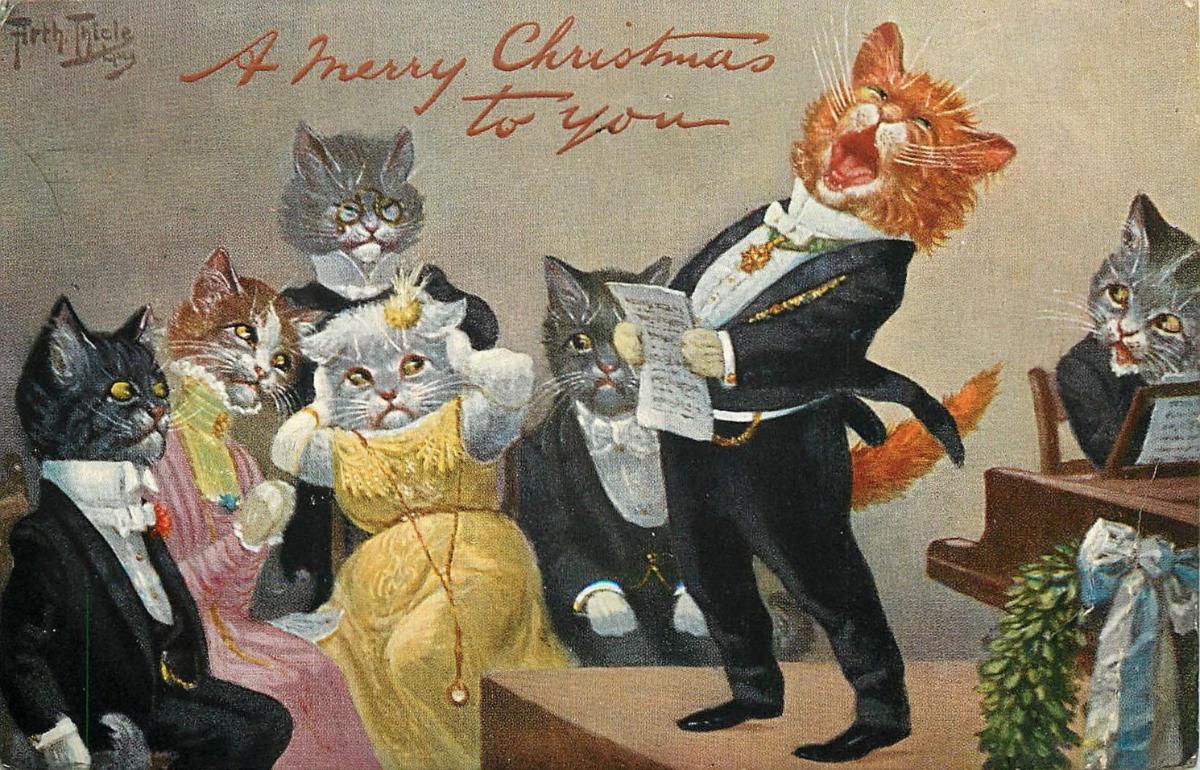
Cats are a very popular choice for New Year greetings, most often as kittens, as in the card at the top of this newsletter, symbolizing the new year, but also, as in the caterwauling feline here. Both cards are in the collection of the Museum of Old Newbury.
| | |
|
Museum e-Newsletter made possible through the generosity of our sponsors:
| | | | | |