Updated #ImmigrationSyllabus | |
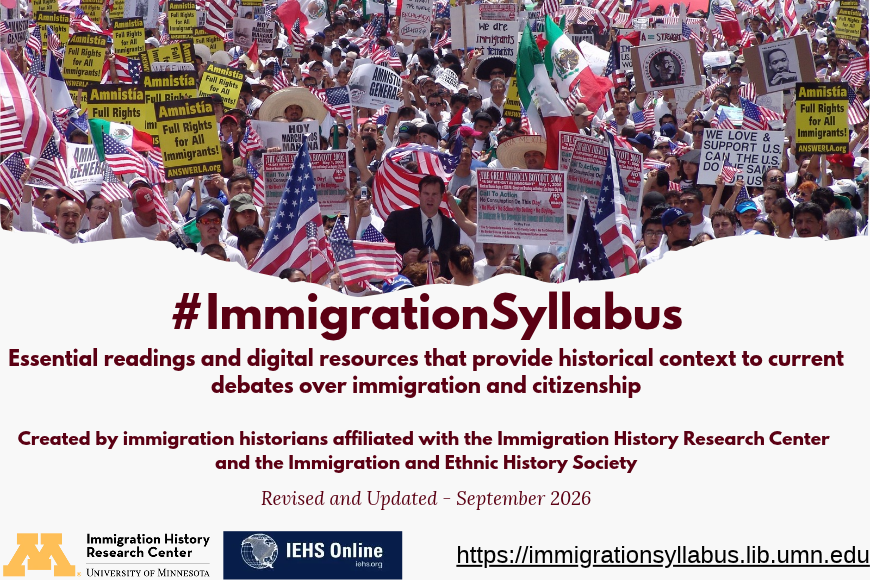
The Immigration History Research Center launched an updated #ImmigrationSyllabus, a website and educational resource to help the general public understand the deep historical roots of today’s immigration debates. The #ImmigrationSyllabus was created by immigration historians affiliated with the Immigration History Research Center and the Immigration and Ethnic History Society.
The original #ImmigrationSyllabus was created in response to the 2016 presidential election and the nativist rhetoric, harmful stereotypes, and disinformation about immigrants and immigration that became prevalent. In 2026, the heightened anti-immigrant discourse has been matched with extreme and harmful immigration policies, such as the surge we experienced here in Minneapolis. The Immigration History Research Center felt it important to update this resource and convened a new team of scholars, consulted with the original authors of the syllabus, and created a revised and updated #ImmigrationSyllabus that incorporates new scholarship and resources that have emerged since the original’s publication and to highlight works in United States migration history that speak to the exigencies of the current moment.
The revised and updated #ImmigrationSyllabus follows a loosely chronological overview of US immigration history, but with thematic emphases on issues like deportation and detention that transcend time periods. Each week of the syllabus provides a selection of relevant scholarship, as well as a list of resources that may be useful in a classroom or workshop setting.
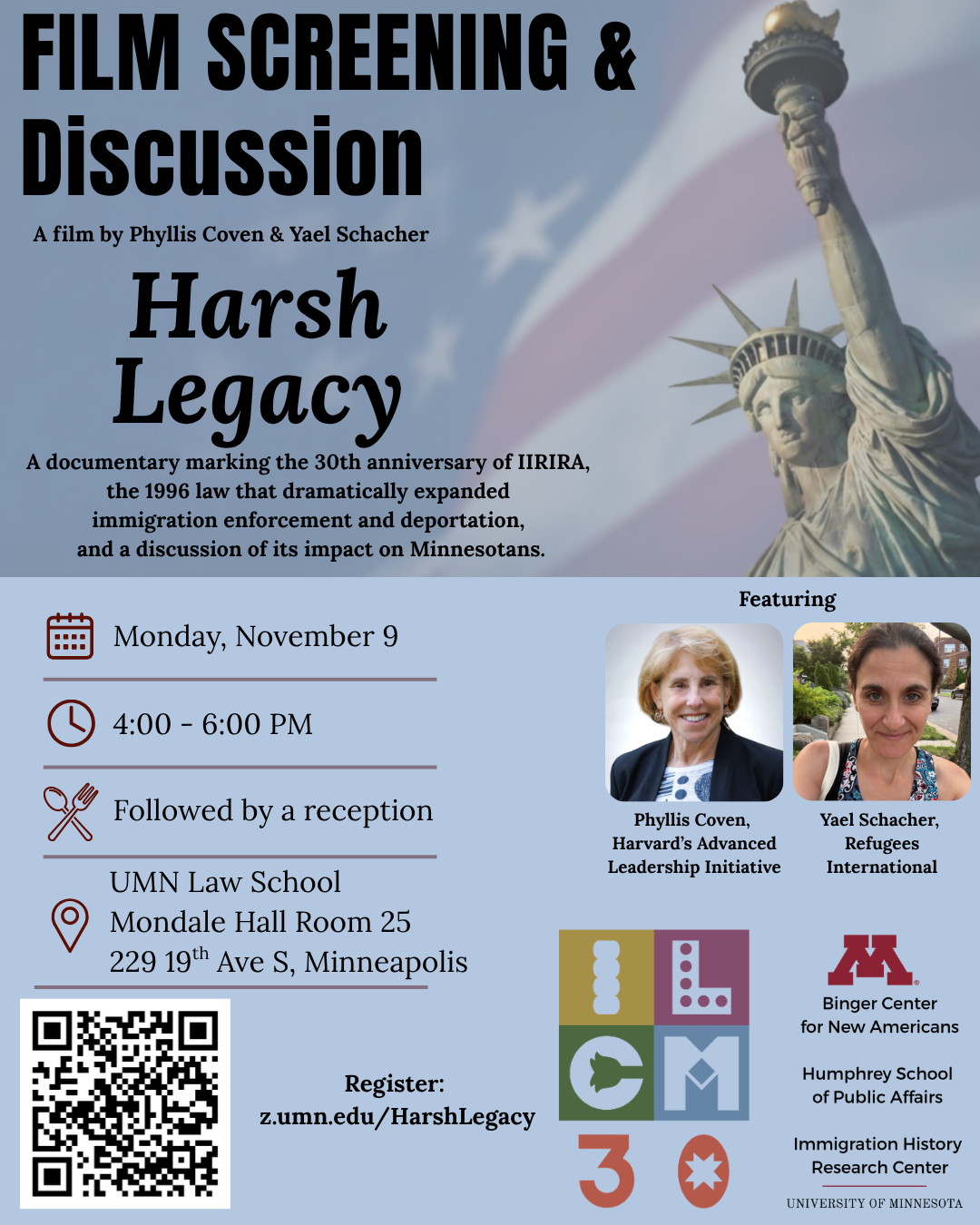
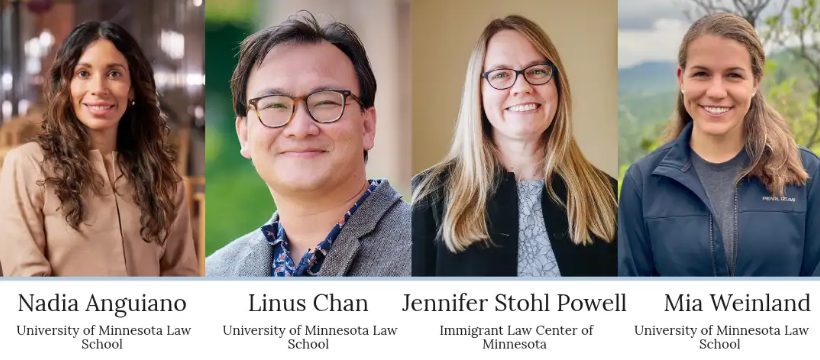
| The film screening will be followed by a discussion featuring: | Upcoming IHRC Sponsored Events | |
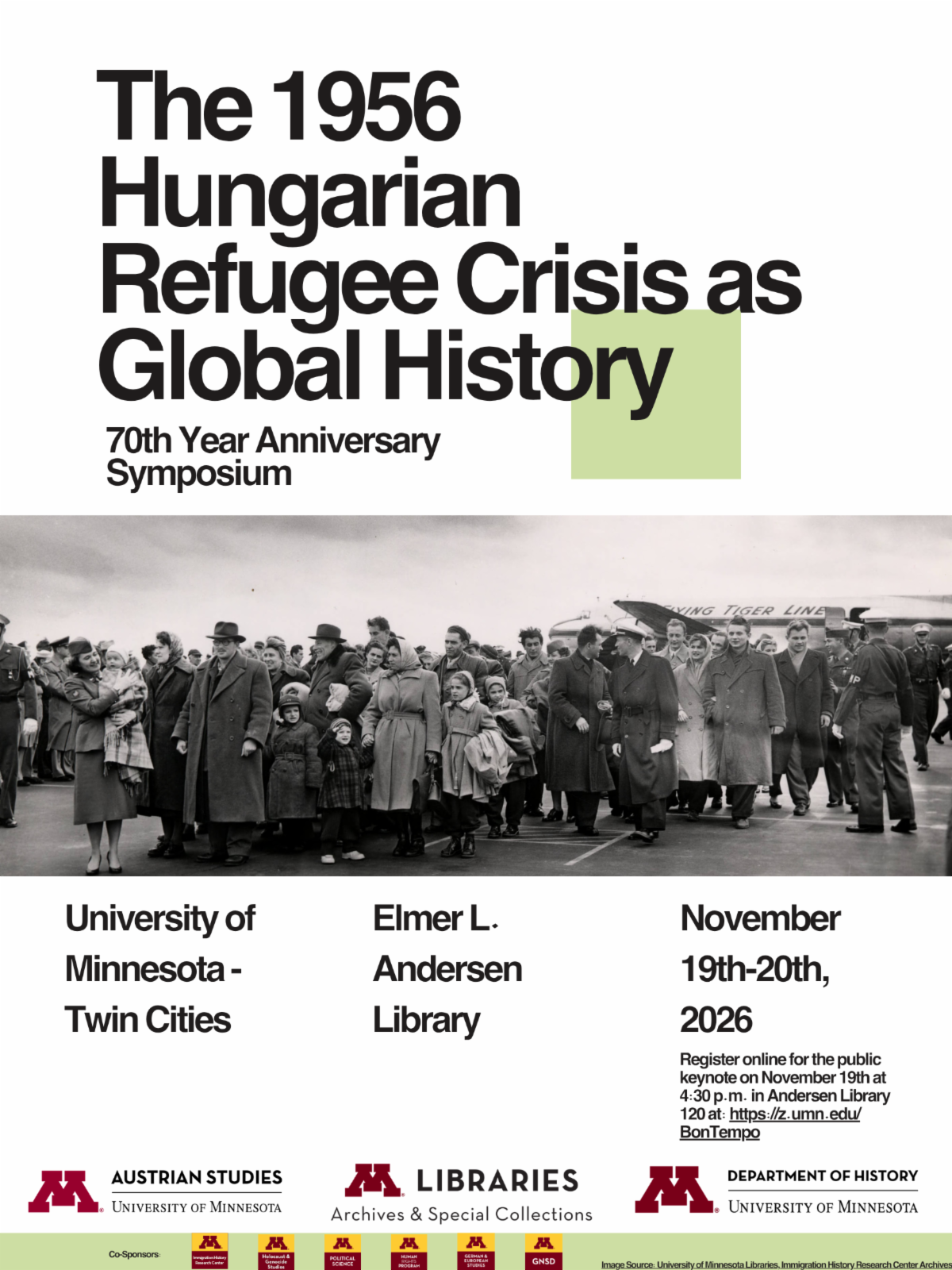
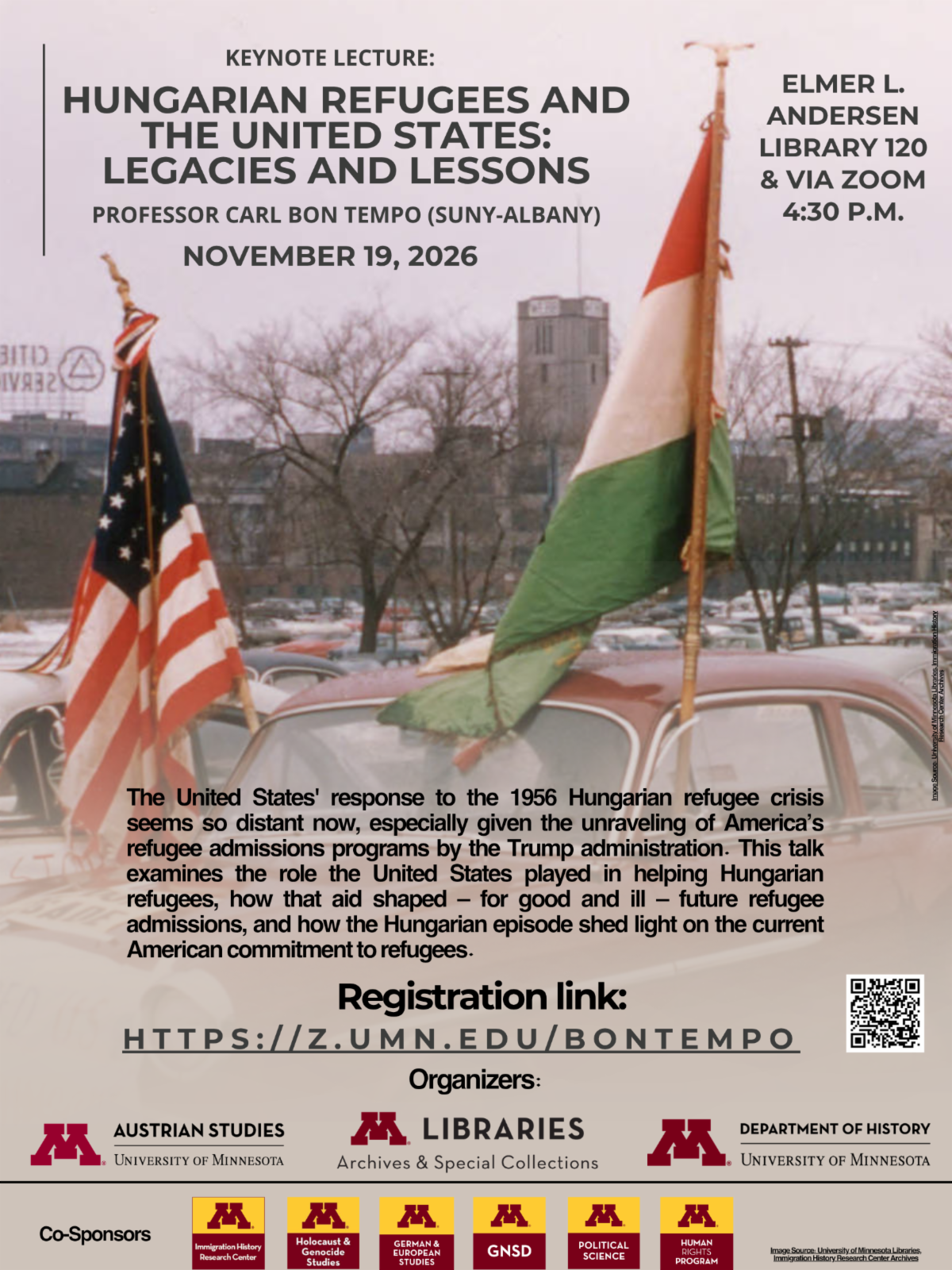
On November 19 and 20, the IHRC is co-sponsoring a symposium commemorating the 70th year anniversary of the 1956 Hungarian Refugee Crisis. The keynote address will be delivered by Dr. Carl Bon Tempo on Thursday, November 19 at 4:30pm.
For more details and full program, please email Dr. Sheer Ganor at sganor@umn.edu.
| | |
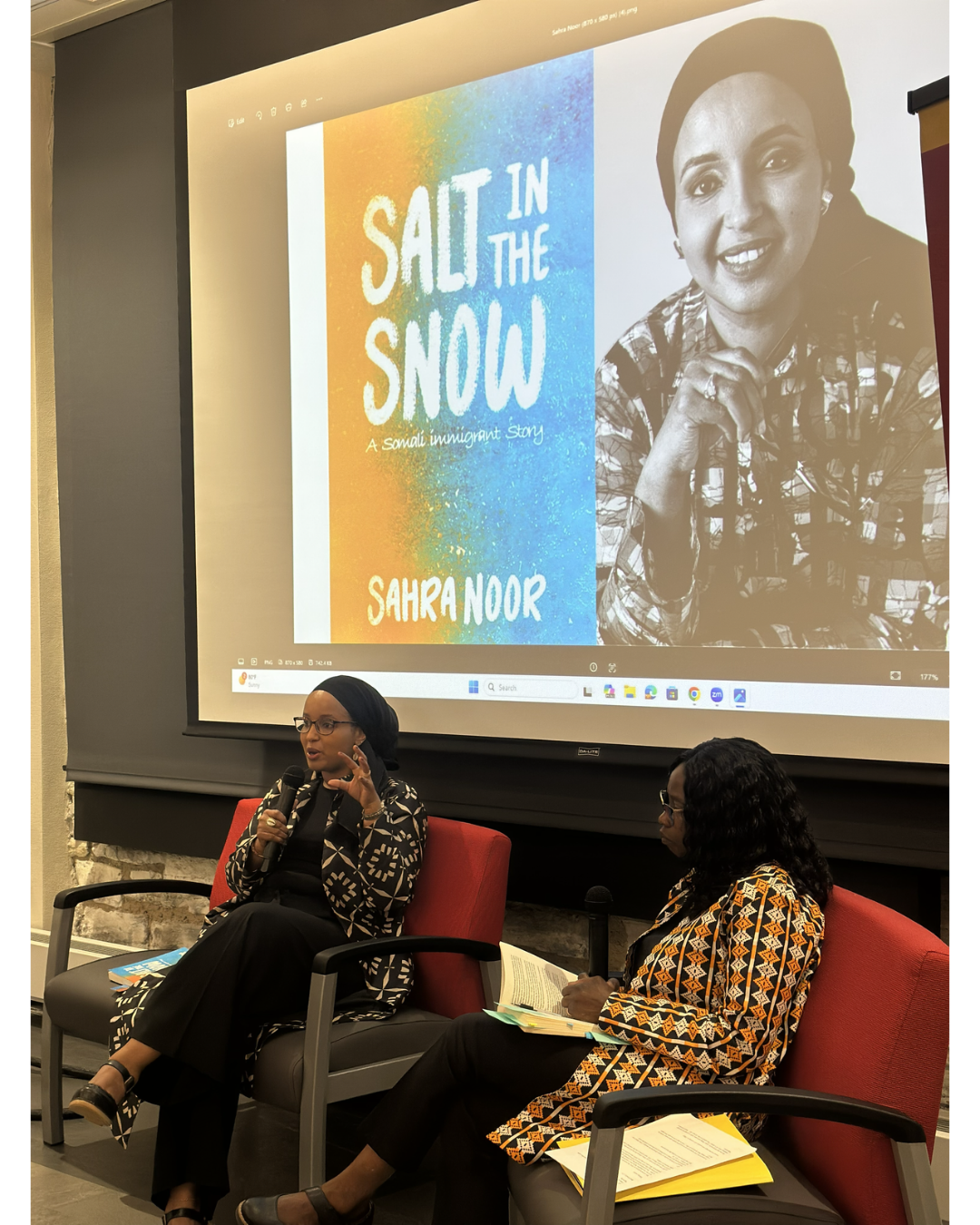
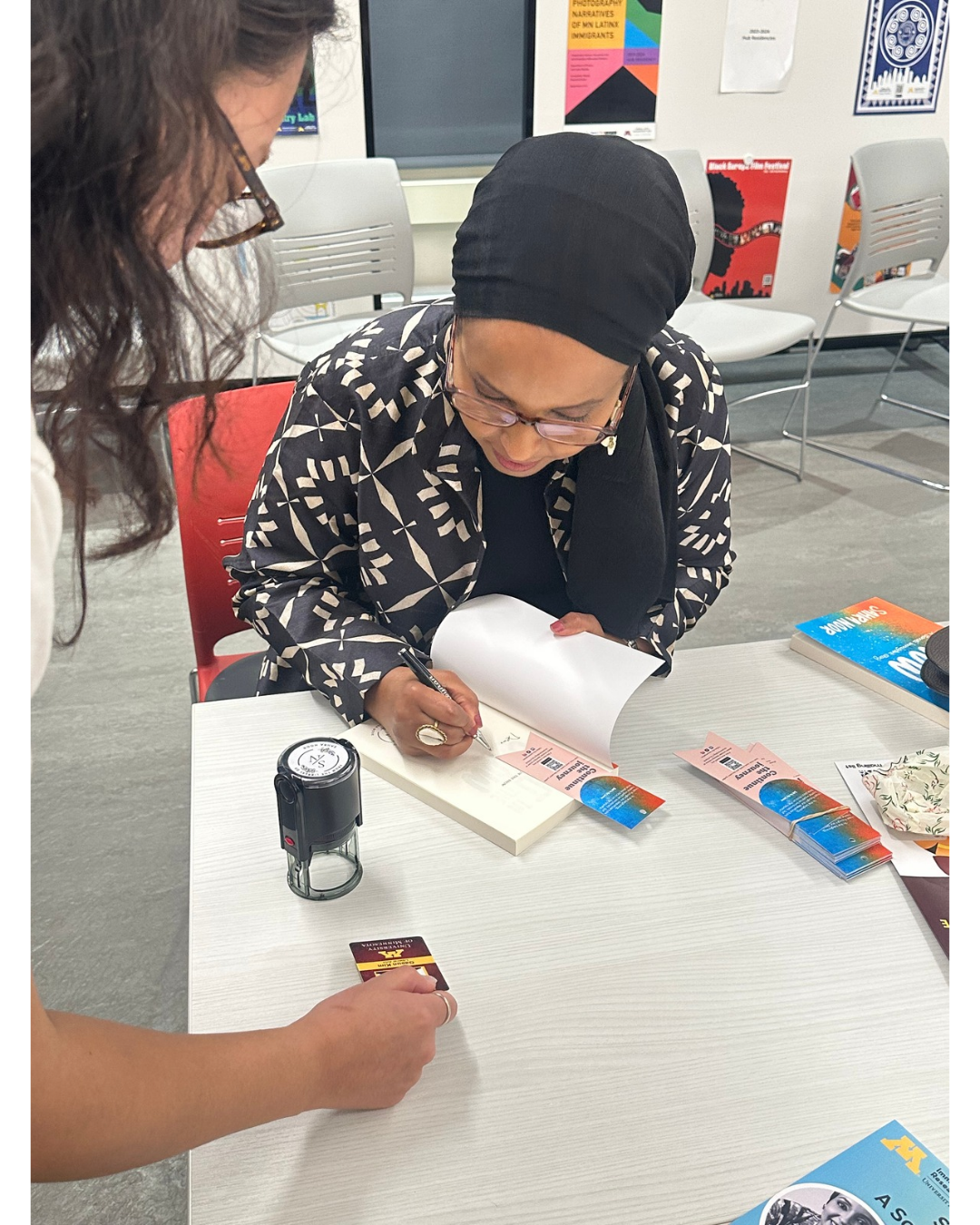
On October 6, 2026, the IHRC welcomed author Sahra Noor who spoke about her new memoir Salt in the Snow: A Somali Immigrant Story. The event was moderated by Awa Kebba Saidy, PhD, Interim Executive Director of the Center for Global Africa (formerly African Studies Initiative). Noor discussed her life in Somalia, her journey to the United States, and her process for writing a memoir. She also signed copies of her book.
Sahra Noor is a Somali-American health systems leader and an alum of the University of Minnesota. She is a contributing author to the forthcoming anthology "American Occupation: Dispatches from Minnesota’s Resistance to ICE," to be published by University of Minnesota Press in January 2027.
This event was co-sponsored by the Center for Global Africa, the Center for Race, Indigeneity, Disability, Gender & Sexuality Studies (RIDGS), the Immigration History Research Center Archives, and the School of Nursing at the University of Minnesota Twin Cities.
| |
IHRC at Graduate Programs Fair
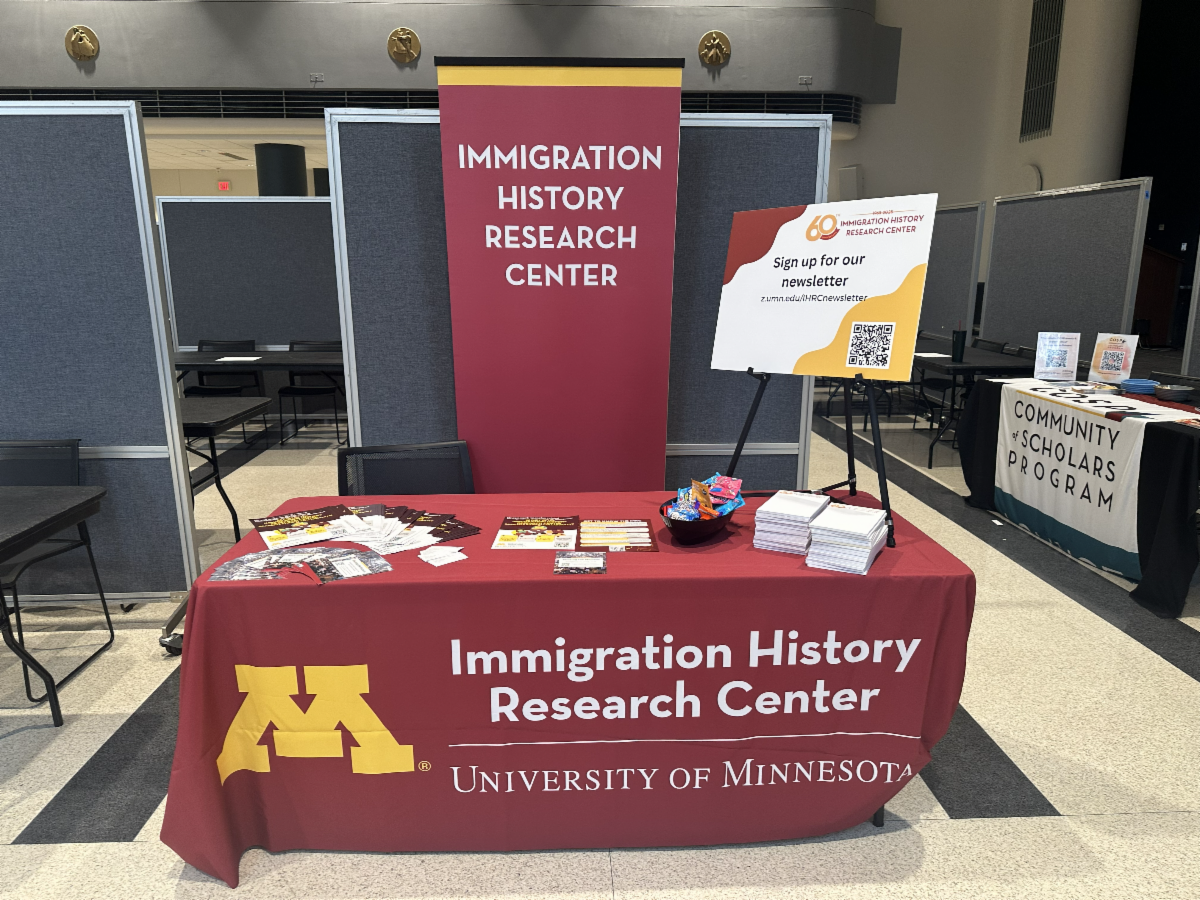
On October 13, the IHRC participated in the University of Minnesota Graduate Programs Fair. More than 350 prospective students registered for the event. IHRC graduate assistant Nada Mohamed shared information about IHRC events and opportunities.
| | | Liberal Arts Engagement Hub Residency | |
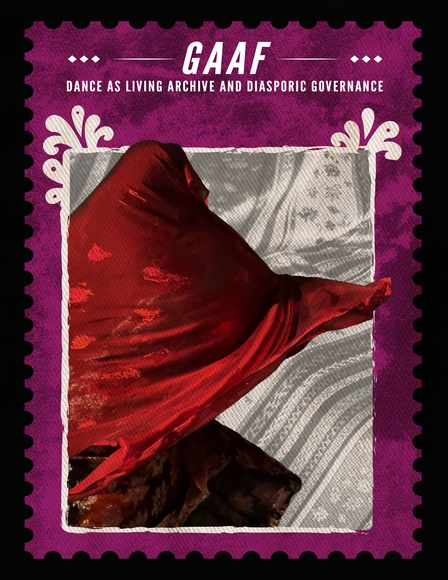
This year the IHRC is sponsoring an immigration-related Hub residency, GAAF: Dance as Living Archive and Diasporic Governance. This is a year-long public humanities residency led by Maryan Yusuf and Nadira Hussein (The Saanta Collective). The project centers the Somali dance community in Minnesota and examines how Somali dance functions as a living archive—carrying memory and authority through embodied practice. GAAF operates through intergenerational rehearsals, dance workshops, buraanbur circles, community circles, archival documentation, and performances at sites including the Barker Center for Dance. The residency will expand this work by consolidating a community-rooted archive of recorded movement, oral histories, and choreographic variations. The project will culminate in an iterative performance and cultural heritage showcase integrating live dance, archival materials, and structured conversation about migration and authority in diaspora.
Hub Residencies support community-based collaborative projects in the arts, humanities, and humanistic social sciences that engage a topic of important public interest. Learn more about all of the 2026-2027 Hub Residencies.
| Graduate Student Collaborative News | | |
This semester, the IHRC offered travel grants for graduate students presenting migration-related research at conferences. We received many good applications, and were happy to award 13 travel grants to students from ten departments. Grantees will be attending a wide array of conferences in locations as near as Chicago and as far as Bogotá, Colombia and Gwangju, Korea.
Grad students receiving travel grants are encouraged to present their work at an upcoming IHRC Work-In-Progress Workshop.
| |
IHRC Work-In-Progress Workshop
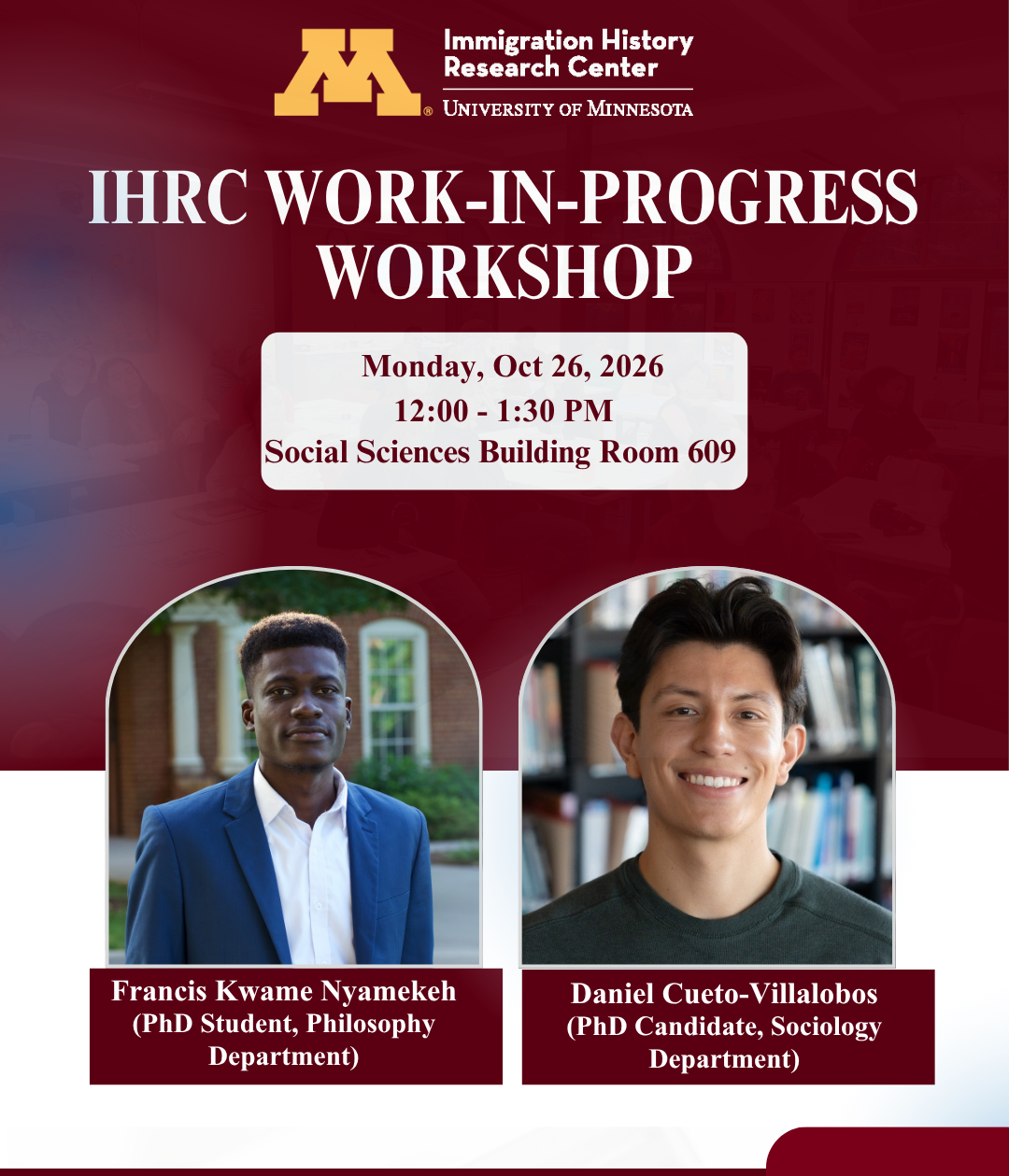
On October 26, 2026, IHRC held a Work-in-progress workshop featuring Francis Kwame Nyamekeh (PhD student, Philosophy Department) with a talk titled " Sovereignty, Economic Migration and the Limits of Justice" and Daniel Cueto-Villalobos (PhD candidate, Sociology Department) with a talk titled "The Long Reckoning: Progressive Religion, Reparations, and the Paradox of Racial Progress in “the State That Works.”"
Learn more about the featured talks
|
The Immigration History Research Center Archive Tour
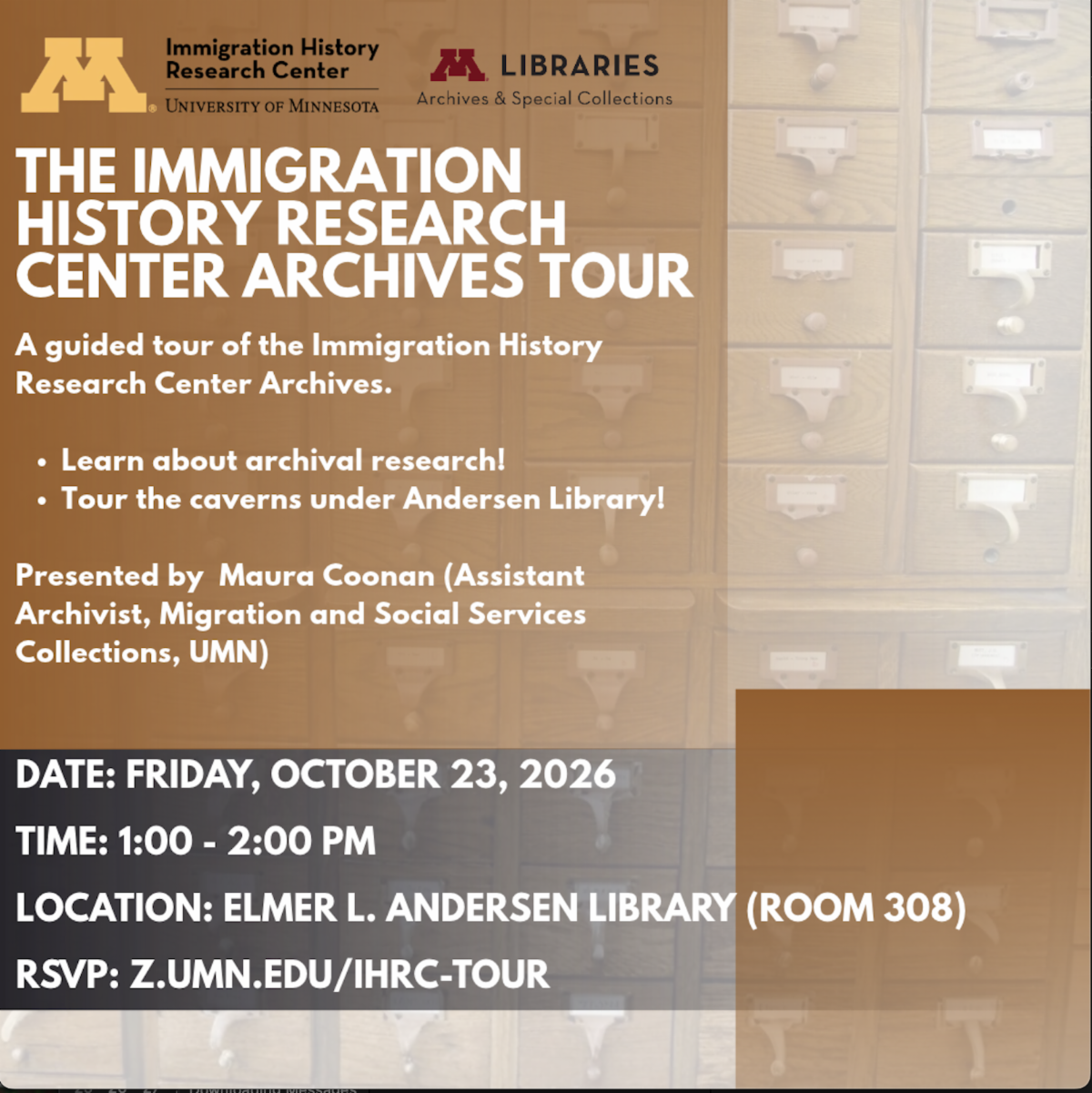
On October 23, 2026, the IHRC held a guided tour of the Immigration History Research Center Archives. Graduate students learned more about archival research and toured the caverns beneath Andersen Library. Maura Coonan, assistant archivist for the Migration and Social Services Collection, led the tour.
| | | | |