|
|
Wednesday | April 28, 2021
|
|
Allows for treating up to 30 opioid use disorder patients, includes non-physician practitioners
Primary care doctors and other health professionals will be able to more easily prescribe buprenorphine for opioid use disorder under guidelines released Tuesday by HHS.
"We are seeing a startling rise in opioid addiction and mental health issues during COVID-19, and addressing these underlying issues is critical to moving forward as a country," Assistant Secretary for Health Rachel Levine, MD, said on a phone call with reporters. "We want to incorporate this as a routine part of healthcare, so primary care physicians can more easily take care of a patient who presents in their office with opioid use disorder."
|
|
CMS released its annual Inpatient Prospective Payment System proposed rule April 27, which recommends removing some price transparency requirements.
Here are eight things to know about the proposal:
- Payment rate update.
- Price transparency requirements.
- Disproportionate share payments.
- Add-on payment for COVID-19 treatment.
- Value-based payment programs.
- Inpatient Quality Reporting Program.
- Graduate medical education slots.
- Comment period.
|
|
|
|
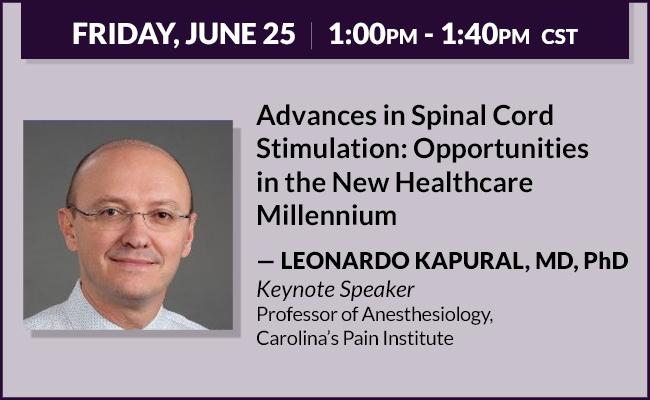
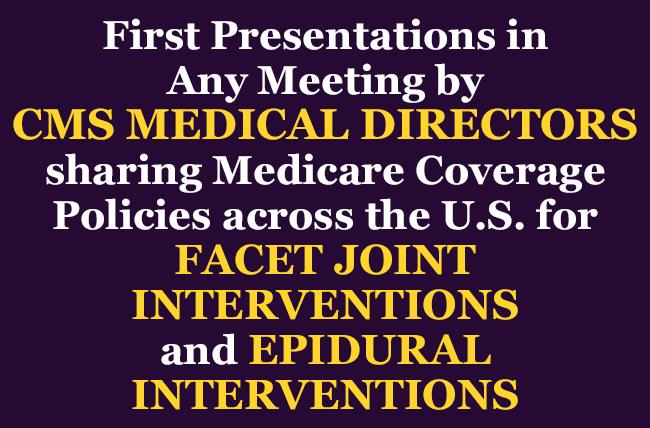
If you are registered to attend ASIPP's Annual Meeting, please send your questions in advance by clicking here.
Topics will include COVID-19, economics, burnout, social media, metabolic health, regulatory issues, scientific advances in IPM, and much more!
|
|
ASIPP President, Dr. Amol Soin, has a groundbreaking patent that was recently mentioned in the following Forbes article. It mentions Soin Neuroscience's patent(s) on their new spinal cord stimulator... human trial results should be available in 2021.
|
|
The question of how to stand out amongst competitors in a competitive market is the foremost question all entrepreneurs face. While many resort to building sticky brands and investing in clever advertising spend, there is one option that flies under the radar that can define a company at the forefront of their industry. This one consideration is patents. Having a patent on a groundbreaking technology is a surefire way for a company to dominate an industry, and do it quickly. The nature of a patent is in its exclusive use, which can make for what is called a ‘legal monopoly.’
Contrast this business model with the companies that are always sizing up against their competitors: there’s nothing tangible that can truly separate their core offerings. Any seven-figure marketing agencies can offer the exact same services without any legal repercussions. On the other hand, having a patent provides a reliable ‘barrier to entry’ against other competitors, meaning they’re not as easily able to compete in the exact market. Of course, you have to actually have a patent-worthy idea or technology to apply for a patent. These benefits will get you thinking.
|
|
The data aren't in yet, but it's likely, and researchers want to be prepared
When Pfizer CEO Albert Bourla said people will likely need a COVID vaccine booster in 6 to 12 months, and that annual vaccines were possible, public health and infectious disease experts were quick to put on the brakes.
There aren't enough data yet to make that call, said Paul Offit, MD, a vaccine expert at Children's Hospital of Philadelphia.
"We'll have a better idea in about 1 year," Offit told MedPage Today.
|
|
Neuropathic pain may be common, especially after a prolonged ICU stay
"A lot of these patients are going to need rehabilitation" or physical therapy, noted Natalie Strand, MD, of the Mayo Clinic in Scottsdale, Arizona, at the meeting. "There can be quite a bit of deconditioning that occurs, especially after a prolonged ICU stay. Neuropathic pain is also quite common."
Post-COVID neuropathy can be viral or may be related to positioning, including prone positioning in patients who need to improve oxygenation. Some patients "may need short-term opioids or gabapentinoids and they may experience aggravation of prior underlying pain, either due to direct physical causes or to the increase in anxiety and depression that can accompany a COVID infection," Strand said.
|
|
If you have a question, please email Savannah Gold at sgold@asipp.org or call 270.554.9412, ext 4219.
|
- Selected manuscripts will be presented in an Electronic Poster Presentation
- Top 25 will be published in the Pain Physician journal.
- Top 10 will be selected for the Abstract Presentation at the Annual Meeting
|
|
However, indoor masking still urged for all individuals in public
People vaccinated against COVID-19 are no longer required to wear masks outdoors in most settings, according to updated guidance released by the CDC on Tuesday.
Fully vaccinated people can now "gather or conduct activities outdoors without wearing a mask, except in certain crowded settings or venues." Safe activities include being outdoors with members of your household, attending small outdoor gatherings with vaccinated and unvaccinated people, and dining outdoors at a restaurant with friends from multiple households.
|
|
Yes, risk of breakthrough infection is small, but beware of variants
Real-world risks of developing COVID-19 infection and illness after full vaccination are coming into focus as more reports come in with hard numbers.
Just on Wednesday, three such publications appeared:
-
In the CDC's Morbidity and Mortality Weekly Report, health officials described 22 "breakthrough" infections diagnosed among nearly 15,000 Chicago-area nursing home residents and staff two weeks or more after they received a second mRNA COVID vaccine dose
-
At one Kentucky nursing home, 22 out of 127 residents and staff developed infections at least two weeks after their second mRNA vaccine dose, with virus sequencing indicating an unusual variant was responsible, according to a separate MMWR report
-
And among 417 employees and students at Rockefeller University in New York City receiving two mRNA vaccine doses, researchers identified two breakthrough infections -- notable mainly for the particular virus strains involved, as reported in the New England Journal of Medicine
|
|
Findings from CDC registries provide reassurance on side effects, adverse outcomes
COVID-19 vaccines appeared safe in pregnant women, with side effects that were consistent with those in non-pregnant people, researchers found.
In addition, though they were not directly comparable, incidence of reported adverse maternal and neonatal outcomes were similar to those reported prior to the pandemic, noted Tom Shimabukuro, MD, and colleagues from the CDC v-safe COVID-19 Pregnancy Registry Team in the New England Journal of Medicine.
|
|
Acting U.S. Attorney Mary Jane Stewart and Tennessee Attorney General Herbert H. Slatery III announced today that they have entered into agreements with Anesthesia Services Associates, PLLC d/b/a Comprehensive Pain Specialists (“CPS”), its four majority owners, Dr. Peter B. Kroll, Dr. Steven R. Dickerson, Dr. Gilberto A. Carrero, and Dr. Richard J. Muench (collectively, the “Owners”), and Russell S. Smith, D.C. – a former CPS executive – whereby they agreed to pay a total of $4,121,663.94 to settle all claims by the United States and Tennessee involving allegations of wrongdoing at CPS.
CPS, which was based in Brentwood, Tennessee, at one point operated over 40 pain clinics and had operations in 12 states, until it shut down in 2018. On July 22, 2019, the United States and Tennessee filed a Consolidated Complaint in Intervention in the United States District Court for the Middle District of Tennessee against CPS, its former CEO, John Davis, who was convicted in April 2019 of health care fraud, as well as three of the four principal Owners, Drs. Kroll, Dickerson, and Carrero, and, Dr. Smith, a former manager of certain CPS clinics in East Tennessee (the “Civil Action”). The Complaint alleged, among other things, that the defendants submitted false claims for medically unnecessary and/or non-reimbursable testing and acupuncture.
|
|
The Colorado Supreme Court will hear the appeal of a woman who was billed $229,112 by Westminster-based St. Anthony North Health Campus for a 2014 spine surgery, Colorado Politics reports.
An agreement Lisa Melody French signed prior to surgery outlined there was "no guarantee of reimbursement" from her insurer and that she would be liable for "all charges" if her insurer did not cover the bill, according to the April 20 report.
The hospital estimated that Ms. French would be responsible for $1,337, with insurance covering the rest.
|
|
Pain Medicine Case Reports (PMCR) and Editor-in-Chief Alaa Abd-Elsayed, MD, PhD would like to invite you to submit case reports and case series to the PMCR journal. Your article will be published free of charge.
Open access journals are freely available online for immediate worldwide open access to the full text of published articles. There is no subscription fee for open access journals. Open access journals are no different from traditional subscription-based journals: they undergo the same peer-review and quality control as any other scholarly journal.
Interested in becoming a member of the PMCR Editorial Board?
Editorial board members are asked to review 2-6 manuscripts per year. Please submit your most up-to-date CV to sgold@asipp.org for consideration.
For more information or to submit your articles, click here.
|
|
Matthew Chung, MD, Harold Ray, MD, Tsun Hsuan Chen, PhD, Yinan Chen, MD, PhD, George Ansoanuur, MD,
and Christina Le-Short, MD
Abstract
BACKGROUND: Postmastectomy pain syndrome (PMPS) is a chronic pain syndrome that can be refractory to treatment by pain specialists. Spinal cord stimulation is a technique that has been approved for neuropathic pain and shown promise as a modality for targeted treatment. In this study, we report the outcomes of spinal cord stimulation in patients with refractory PMPS.
CASE REPORT: A retrospective chart review was performed at The University of Texas MD Anderson Cancer Center to identify patients who underwent spinal cord stimulation during a 3-year period. Relevant outcomes for efficacy and safety were evaluated. The protocol was reviewed and approved by The University of Texas MD Anderson Cancer Center Institutional Review Board.
|
|
Several ASIPP Guidelines have been accepted by ECRI Guidelines Trust, an independent, nonprofit patient safety organization, that provides a portal to expertly vet evidence-based guideline briefs. The healthcare community has free access to the website.
ECRI is the only organization worldwide to conduct independent medical device evaluations, with labs located in North America and Asia Pacific. ECRI is designated an Evidence-based Practice Center by the U.S. Agency for Healthcare Research and Quality and a federally certified Patient Safety Organization by the U.S. Department of Health and Human Services. ECRI accepts only high-quality and trustworthy clinical guidelines.
Please access the following ASIPP Guideline topics that have been accepted by ECRI:
- Comprehensive evidence-based guidelines for facet joint interventions in the management of chronic spinal pain: American Society of Interventional Pain Physicians (ASIPP) guidelines facet joint interventions 2020 guidelines.
- Epidural interventions in the management of chronic spinal pain: American Society of Interventional Pain Physicians (ASIPP) comprehensive evidence-based guidelines.
- Responsible, safe, and effective use of biologics in the management of low back pain.
- Responsible, safe, and effective prescription of opioids for chronic non-cancer pain: American Society of Interventional Pain Physicians (ASIPP) guidelines.
- Responsible, safe, and effective use of antithrombotics and anticoagulants in patients undergoing interventional techniques: ASIPP guidelines.
|
|
| OBSERVATIONAL STUDY |
Miguel A. Pappolla, MD, PhD, Laxmaiah Manchikanti, MD, Kenneth D. Candido, MD, Nigel Grieg, PhD, Michael Seffinger, DO, Fauwad Ahmed, MD, Xiang Fang, MD, PhD, Clark Andersen, MS, and Andrea M. Trescot, MD
Abstract
BACKGROUND: Insulin resistance (IR) is a pathological condition in which cells fail to respond normally to insulin. IR has been associated with multiple conditions, including chronic pain. Fibromyalgia (FM) is one of the common generalized chronic painful conditions with an incidence rate affecting 3% to 6% of the population. Substantial interest and investigation into FM continue to generate many hypotheses.
The relationship between IR and FM has not been explored. IR is known to cause abnormalities in the cerebral microvasculature, leading to focal hypoperfusion. IR also has been shown to cause cognitive impairment in FM patients, as in parkinsonism. As demonstrated by advanced imaging methods, similar brain perfusion abnormalities occur in the brain of patients with FM as with IR.
OBJECTIVES: To determine the potential association between FM and IR.
|
|
| PROSPECTIVE RESEARCH STUDY |
Tomasz Bendinger, MD, PhD, and Joel Stephen Perfitt, MBChB
Abstract
BACKGROUND: Diagnostic injections (blocks) are a valuable tool in the management of chronic noncancer pain. By precise blockade of specific neural structures and observation of pain responses, pain mechanisms can be accurately defined. With such information, therapeutic procedures targeting neural structures are possible. Fibromyalgia is a disorder of pain processing with characteristic symptoms. The 2010 American College of Rheumatologists fibromyalgia diagnostic criteria evaluates these symptoms in a scoring system, allowing more objectivity in the diagnosis. We hypothesize that patients with fibromyalgia phenotype fulfilling the 2010 American College of Rheumatologists criteria may respond to diagnostic blocks differently when compared to patients without fibromyalgia phenotype.
Objectives: This study was designed to establish whether diagnosis or suspected diagnosis of fibromyalgia should influence the decision to perform diagnostic blocks for chronic non-cancer pain.
|
|
Since this malpractice insurance program officially launched in November 2018, ASIPP has signed up hundreds of providers with an average savings of 30%. This is professional liability insurance tailored to our specialty and will stand up for us and defend our practices.
Norcal Mutual is 'A' Rated by AM best and is license in all 50 states. To read a few important points to keep in mind about the program, including discounts, administrative defense, cyber coverage, aggressive claims handling, and complimentary award-winning risk management CME activities, click here.
|
|
ASIPP® is now offering our members the benefit of a unique revenue cycle management/ billing service. We have received a tremendous amount of interest in the ASIPP® billing and coding program.
Click here to learn more about the negotiated rate for practices and more!
|
ASIPP® has formed a partnership with Henry Schein and PedsPal, a national GPO that has a successful history of negotiating better prices on medical supplies and creating value-added services for the independent physician. Working with MedAssets, PedsPal provides excellent pricing on products like contrast media that alleviate some of the financial pressures you experience today.
|
|
up-to-date news related to you, your practice, and your patients!
|
|
Thank you to our sponsors! |
|
|
|
|
|
|
|