A Message from the Executive Director |
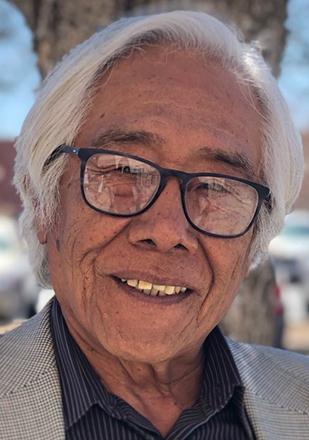
The National Indian Council on Aging (NICOA) is beginning its 47th year of advocating and fighting on behalf of this country’s American Indian and Alaskan Native elders. It was established as a nonprofit 501 (c)(3) organization in September 1976 in Phoenix, Arizona and incorporated in the District of Columbia with the creation of a Board of Directors. This action was taken at the conclusion of the 1976 National Indian Conference on Aging by a “National Task Force on American Indian Elders” composed of tribal leaders from across the across the country.
I know because I was present and subsequently elected as the first secretary of the Board. The establishment of NICOA, however, had its roots from the first Arizona Indian Aging Conference in 1975, when over 300 attendees requested a national Indian aging conference be held. Additionally, they requested an amendment to the Older Americans Act in juxtaposition to the recently passed “ P.L. 93-638, Indian Self-Determination and Education Assistance Act” which would provide funds directly to tribes rather than through the states .
The draft legislation was presented and supported by the attendees to the 1976 National Conference on Aging. In 1977, NICOA established a Washington, D.C. office that served as the “Indian Desk” in the Administration on Aging and served to advocate for the drafted amendment.
A year later, President Carter signed the amendments to the Older Americans Act, which included “ Title VI – Grants to Indian Tribes.” It was the first social service program that utilized P.L. 93-638 as its philosophical mooring. A few months later, the Indian Child Welfare Act was passed and signed into law.
The history of NICOA is shared with our constituents because it’s important we remember where the idea for our organization originated: From Indian elders living in communities across the country. They were ordinary people who wanted change and a way to maintain their culture, their language and their way of life.
We hear the word “colonization” and “Indigenous” today in Indian Country. Words that were not part of our lexicon are now commonplace as we hunt for federal funds with words like “evidence-based programs”, “social impact models”, “person-centered trauma care”, and “lived experience.” If we really are concerned about the effects of colonization, the use of these colonization concepts need to be replaced by our own words, otherwise we as Indian people will disappear and melt into these foreign concepts.
Our elders warned us that there would come a time when our own people would become our enemies. It sometimes feels like this is happening today. The jargon changes constantly, dragging us further into the abyss. Our perspective and our vision as Indian people are devoid of these concepts, and it is our elders who still have those pure perspectives.
That is where NICOA believes our “Indian-ness” lies. In the next two years, important events are on the horizon: the 2025 reauthorization of the Older Americans Act, the possible 2035 White House Conference on Aging, the changing demographics of Indian Country and the effects of the social and health disparities among the Indian population. The latter issues will affect tribal infrastructure and economic decisions regarding tribal fiscal equity and educational structures.
In September 2023, NICOA will be holding its 24th American Indian Elders Conference in Cherokee, North Carolina, with an eye on the important events of the coming years. NICOA is looking forward to these challenges with optimism, strength and a willingness to go “once more into the fray.”
We thank you for your support and prayers. The gifts and donations to this cause are appreciated; it gives us strength to know that Indian Country still values their elders.
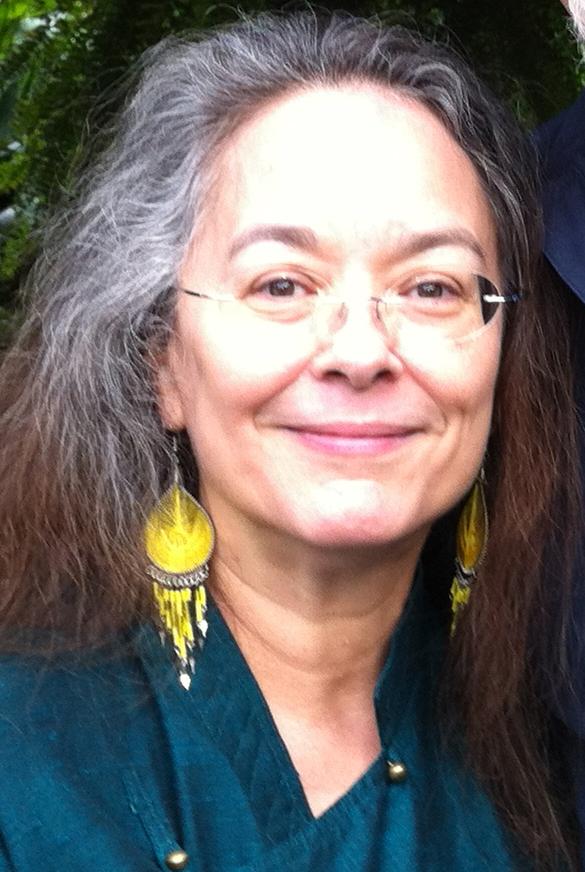
Larry Curley
Executive Director
|
|
|
|
NICOA Expands Elder Resources Section |
Use our Economic Security section to become financially empowered! Learn about scams, fraud and other forms of financial exploitation; watch financial management videos; and improve your income with our Senior Community Service Employment Program (SCSEP). Elder Health includes information and resources about subjects such as caregiving, culturally competent healthcare, elder abuse, fall prevention, and more. And in the Federal Resources section you can learn about Medicaid, Medicare, the Older Americans Act, the SCSEP, Social Security, the Veteran’s Administration, and more.
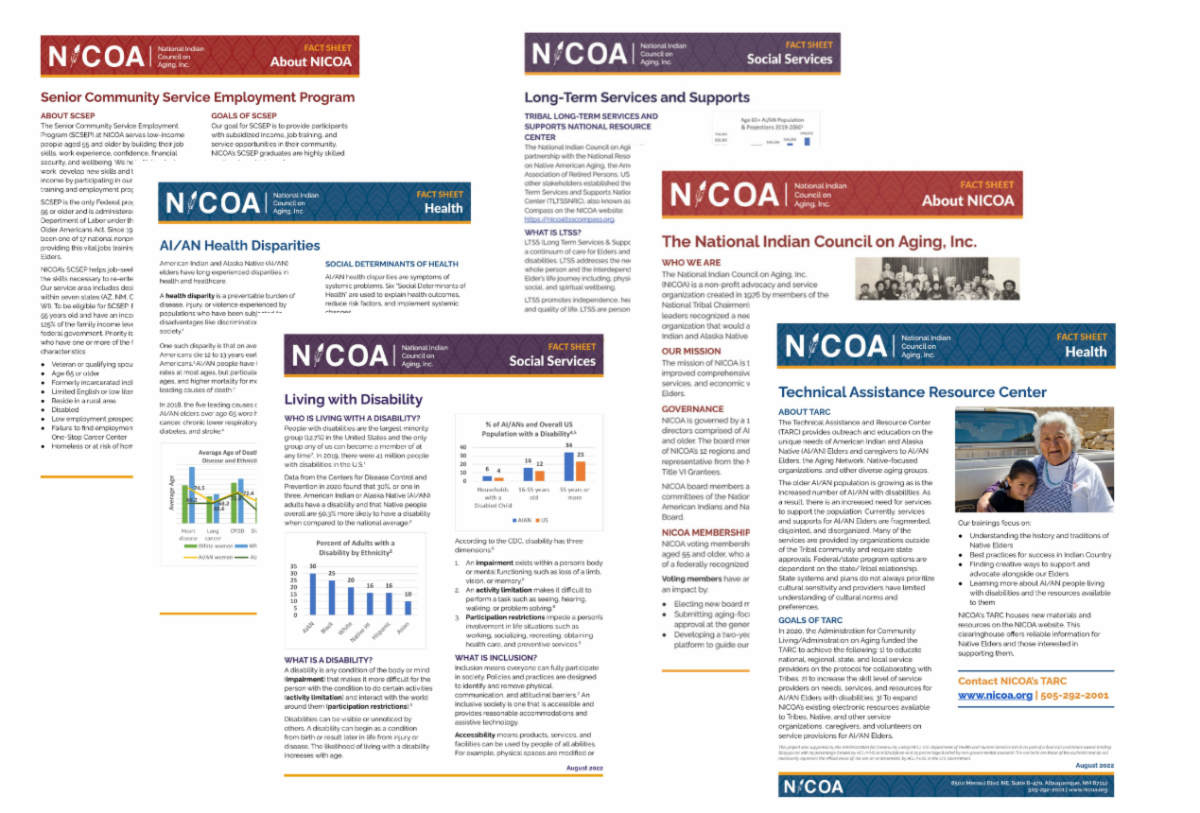
We have also updated and expanded our Fact Sheets to include 10 new fact sheets about NICOA, SCSEP, our Technical Assistance Resource Center, Long-Term Care, Native Health Disparities, Living with a Disability, Indigenous Foodways, COVID-19, and more. Download the printable PDFs here. |
|
|
|
Old NICOA PSAs Archived and Available |
Thousands of programs in the New Mexico Public Media Collection are now available to stream online for the first time since their initial broadcast. The series includes a collection of public service announcements in Navajo, Zuni, Lakota and other Native languages, created in 1993 by NICOA.
Some announcements focus on the importance of helping, respecting, and supporting Native elders and how that impacts the community and culture. Others cover elder abuse, Social Security Income, the Qualified Medicare Beneficiary program, and other forms of financial assistance and public benefits for Native elders.
|
|
|
|
Muscogee Elders Raise Money to Go to NICOA Conference |
Esther Gee says her favorite part of the conference trip is the camaraderie and sharing her Muscogee Creek culture. “There’s usually a style show, you wear your Native dress, and at times we’ve shared our Creek songs with a talent contest. It’s just a great gathering,” Gee said.
|
|
|
|
A Message from the Senior Community Service Employment Program |
Happy New Year!
NICOA’s Senior Community Service Employment Program is dedicated to our elders! During this very cold winter, our staff has maintained strong connections to our participants and continue to assist and advocate for their training and employment success. SCSEP relies on our partnerships, placing participants in training positions across seven states. Our staff builds strong partnerships within our communities to achieve a level of cohesiveness which in turn creates outstanding outcomes for our elders.
Partnerships are a very important part of SCSEP when it comes to assisting our participants as they achieve success and find employment. Within these partnerships, we are able to provide computer classes through community colleges to train our participants on basic computer skills, resume building, social media skills, email etiquette and so much more.
NICOA’s SCSEP was part of a pilot program with Job Service North Dakota in Grand Forks to provide a virtual job fair for our job ready participants. Tribal partnerships regarding minimum wage have been successful. This has helped us navigate through a low federal minimum wage to provide those training on reservations a higher minimum wage. Because the amazing opportunities our staff work diligently to maintain, participants in our training and employment program receive comprehensive training.
|
SCSEP is always looking for new partners to assist our efforts to train and help low-income individuals find employment. If you or someone you know could benefit from learning new work skills and get assistance finding a job, are 55+ and low income, visit our website, call 505-292-2001 or send an email. If you’re interested in participating in the program, fill out the pre-application form.
Our new year wish is to continue to reach individuals who need our assistance to maintain economic security, build self-confidence, improve comprehensive health and find employment that enriches the well-being of the individual.
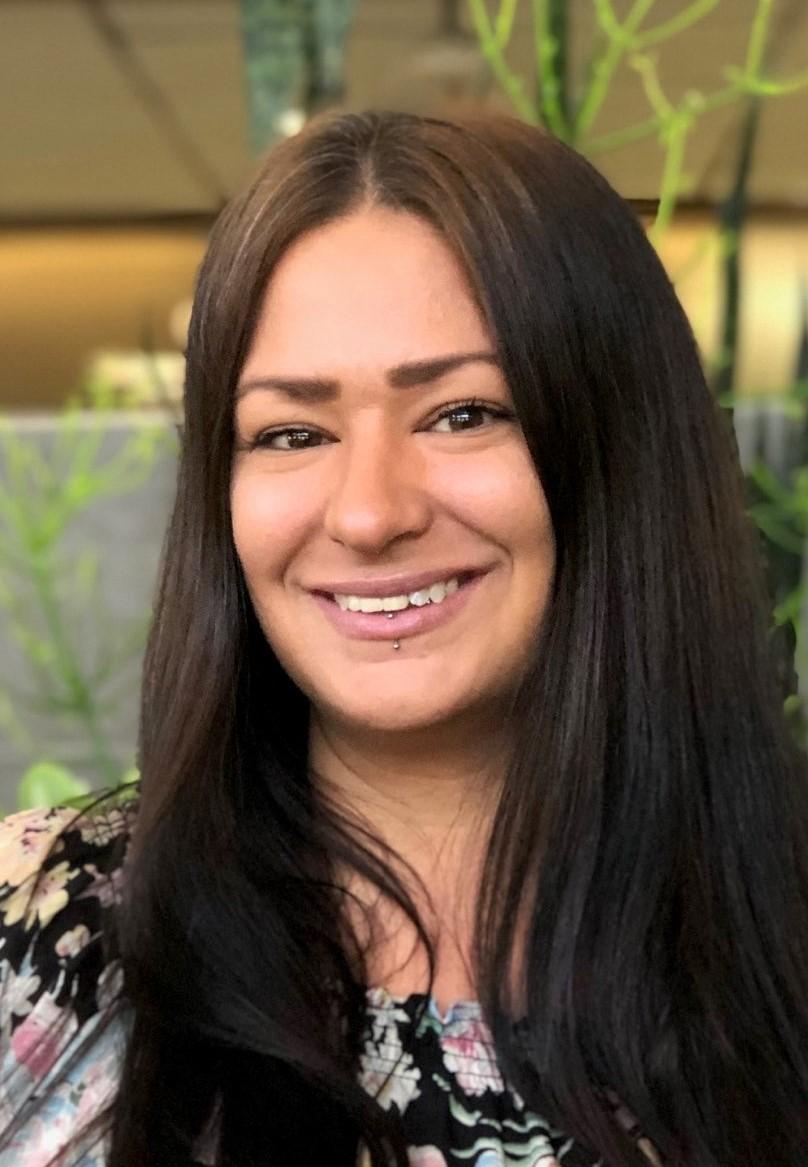
Leslie Maly
Senior Community Service Employment Program Director
|
|
|
|
Individuals Over 55 Have Help Finding Employment in North Dakota |
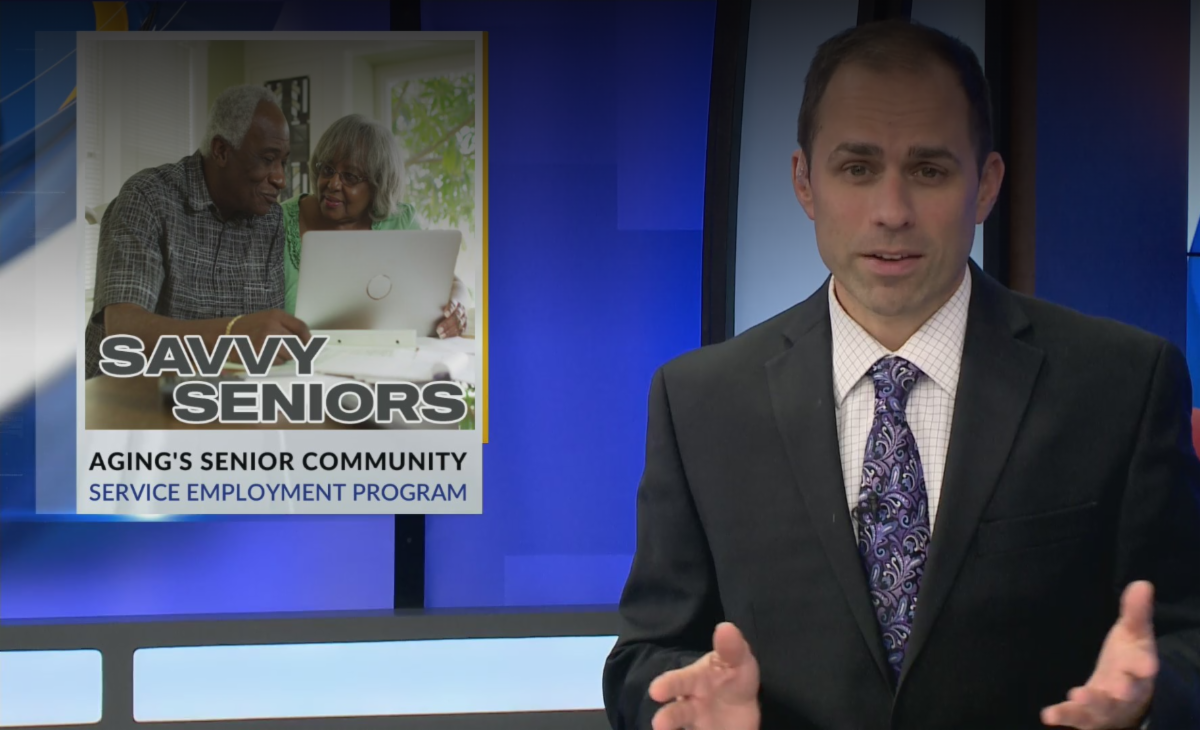
NICOA's SCSEP is getting participants job ready and in the workforce, reports North Dakota KX News. Lynn Wise, the North Dakota Program Manager for SCSEP, told KX News that poverty and loneliness are the two biggest challenges for many elder individuals right now.
“They’re home sitting there depressed, need money, don’t know what to do. We can come in and help them, and I’ve just seen personalities go from one end of the spectrum to the other, and it’s really fun to watch that,” said Wise. “There are so many people that are over 55 that cannot get jobs. And the knowledge that they have is just unbelievable, and it's basically just kind of going to waste.”
Wise says the barriers to finding employment vary from one individual to the next.
“There are just a lot of people who have disabilities, people who were formerly incarcerated, whose backgrounds prohibit them from getting jobs. Those are the type of people that the program helps the most. There are just people that are really struggling, and that need the money; they want to get back into the workforce,” Wise said.
The program is designed to help each participant gain the skills they need to work.
|
|
|
|
Older Adults Equity Collaborative |
|
A Message from the Older Adults Equity Collaborative |
Happy New Year!
A new year always holds the possibility of starting over and beginning again. While I hold that bright promise in my heart, I feel very heavy with sadness about the recent violent shooting of our Asian American/Pacific Islander brothers and sisters in Monterey Park, California.
Native people have long experienced racist behavior and have suffered similar crimes of hatred. We offer our compassion and grief at this senseless crime, especially during a typically joyous time, Lunar New Year. Together let’s continue to work towards changing people's hearts towards tolerance, acceptance, love and understanding.
We all can use some help in making positive changes. By February 8 most people have given up their resolutions. One researcher found that we start off well and can end well, but we have trouble sustaining our new habit in the middle of the process.
For most humans to reach their goals they need short term successes to keep going towards their long-term goals. If we chop up a goal into smaller, achievable steps we can build on those short-term rewards.
- Write out a list of concerns.
- Be a good historian. Track your medical history.
- Make a Communication Plan. Find out how to reach your doctor in an emergency. Makes sure someone else knows what your wishes are and is empowered to make decisions in your best interests.
- Consider second opinions. See if your hospital has a patient advocacy representative.
P.S. The Consumer Financial Protection Bureau has a useful new resource to help caregivers from becoming victims of illegal nursing home debt collection tactics.
Rebecca Owl Morgan
Eastern Band of Cherokee Indians
Older Adults Equity Collaborative Project Coordinator
|
|
|
|
Training Modules Available for Non-Native Service Providers |
NICOA's Technical Assistance and Resource Center provides outreach and education on the unique needs of American Indian and Alaska Native elders and caregivers to Native elders, the Aging Network, and Native focused organizations and other diverse aging groups. We offer electronic and direct contact training modules for non-Native service providers on working with tribes and Native elders.
Our trainings focus on:
- Understanding the history and traditions of American Indian and Alaska Native elders
- Best practices for success in Indian Country
- Finding creative ways to support and advocate alongside our elders
- Learning more about Native people living with disabilities and the resources available to them
If you are interested in receiving one of our trainings, please contact us to discuss your training needs.
“Caring for Our Wisdom-Keepers: Supporting Native Elders” lists the barriers to elder wellness and includes personal quotes from elders themselves. It discusses the importance of cultural competency and gives community and traditional solutions to advocate and support our elders. This training will deepen one’s understanding of the needs of our elders and help participants learn how to meet those needs and advocate by their side.
In “Caring for Native Elders: Best Practices,” participants will learn about the history of Native communities post-colonization and how it impacts health outcomes. In this training, participants will gain the skills to identify, affirm, and effectively serve Native elders with a focus on building long-term relationships. It offers the opportunity to review successful community models, role play and apply your learning through discussion.
In “Caring for Native Elders: History & Cultural Traditions,” participants will learn to identify Native cultural traditions, as well as how to utilize key resources to incorporate Native traditions into your practice or organizational approach. They will gain an understanding of the history of Native peoples of the North American continent.
|
|
|
|
Become a NICOA Member: New Forms Available! |
|
Do you want to improve aging services for American Indian and Alaska Native elders?
If so, become an advocate and learn more about supporting Native elders! NICOA is the premier organization on Native aging, and we invite you to become a member. Anyone can become a member, regardless of their age or tribal affiliation (or lack thereof).
All elders are encouraged to join and have their voices heard. Be an important part of a national membership network and become a NICOA member by applying online or by mail. Memberships are for two calendar years. |
|
|
|
Addressing Alzheimer’s in Indian Country |
Learn about the impact of Alzheimer’s on American Indian and Alaska Native populations and how we’re working together to address Alzheimer’s and other dementias in Indian Country.
The webinar features NICOA Executive Director Larry Curley (Navajo); Dr. Jolie Crowder, Indian Health Services; Mary Ann O’Meara, from the International Association for Indigenous Aging; and Eva Jackson and Edie Yau of the Alzheimer’s Association.
|
|
|
|
NICOA's Long-Term Care Website Adds Videos |
In addition to excellent resources and a service directory, NICOA’s Compass website holds a variety of educational and inspirational videos. Some feature the stories and experiences of Native elders, while other videos are informational webinars about assisted living, home health care, program management and exploring long-term services with a Native lens.
Find out how to best improve your program and serve your community! Sample some videos below.
|
|
|
|
Simeon Gipson, 75, of Tahlequah, Oklahoma, talks about participating in the National Senior Games and how his love of bicycling got him back on track after experiencing health issues. He encourages everyone to get outside, find a hobby and exercise. |
|
|
|
Laverne Wyaco (Navajo) of New Mexico talks about her upbringing, traditions, hobbies and family. She shares her story of being a caregiver to her mother, husband and son, her struggle to obtain health services and home care in a rural area, and her worries about their future as well as her own.
She wishes there was a daycare program for elders and disabled family members where caregivers could drop them off to socialize while they run errands.
|
|
|
|
The Native American Funding and Finance Atlas |
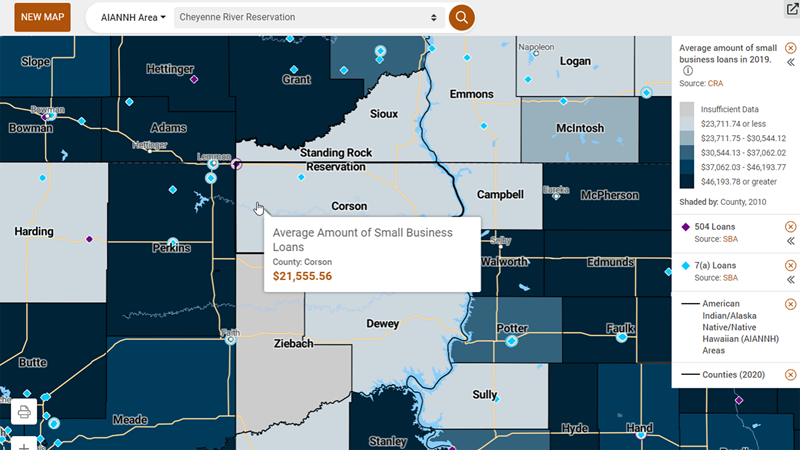
The Atlas aggregates up-to-date, publicly available U.S. data on the locations of commercial banks and credit unions, certified Community Development Financial Institutions, Small Business Development Centers, recipients of business loans issued by the U.S. Small Business Administration, and the geographic areas eligible for a wide variety of tax-incentive programs designed to spur economic development.
|
|
|
|
Users can zoom in on their communities to learn about opportunities to access capital and credit and to see examples of existing loans and investments. Resources are displayed on a map interface developed by PolicyMap. Data can be viewed by American Indian, Alaska Native, and Native Hawaiian Areas as defined by the U.S. Census Bureau, along with counties or census tracts.
Lack of access to credit and financial services has posed a barrier to economic development in Indian Country overall, and especially in Native communities with small populations. This new tool enables users to explore what economic development resources are available in their communities. |
|
|
|
Inflation Causes Major Financial Problems for Native Americans |
No other racial or ethnic group in the country is feeling as much financial strain right now as Native Americans. That’s according to a national poll from NPR, the Robert Wood Johnson Foundation and the Harvard T.H. Chan School of Public Health. It found that inflation has caused 69 percent of Native Americans significant financial problems.
According to census data, close to 27 percent of Native Americans live in poverty. That’s significantly more than the rest of the country, which averages close to 15 percent.
The poll’s findings include data from the five largest racial and ethnic groups in the U.S. Altogether, more than 4,100 adults were interviewed between mid-May and mid-June of 2022. The data underscores that racial and ethnic minorities are having a tough time compared to their white counterparts in some key spheres of life, particularly with finances, affordable housing, neighborhood safety, education and health care.
The poll revealed that more than 40 percent of Native American adults are having trouble making payments on credit cards or loans. A majority (58 percent) of Native American adults surveyed say they do not have enough emergency savings to cover at least one month of expenses.
|
|
|
|
NICOA Presents Webinar on Social Security Benefits - February 8 |
NICOA is partnering with the Social Security Administration to present a webinar about social security benefits at 2 p.m. EST on February 8. The webinar, “What You Should Know About Social Security Benefits” will also cover the new application for protective filing.
This webinar will take a brief look at all types of benefits available through the Social Security Administration, including Supplemental Security Income (SSI), disability, and survivor benefits. We want you to understand what Social Security can mean to you and your family’s financial future.
We will cover Medicare and other available health savings programs and discuss some commonly missed benefits and important factors to consider for eligibility. Outreach specialists and local managers will be available to answer your questions.
We will debut a new tool that the Social Security Administration has to establish when you are eligible for benefits. The SSI program provides monthly payments to adults 65 and older who meet the financial qualifications. Adults and children with a disability or blindness who have income and resources below specific financial limits are also eligible.
|
|
|
|
5 Recent Tribal Newsletters |
|
|
|
Profile: The Quinault Indian Nation |
The Quinault Indian Nation is a federally recognized tribe of Quinault and Queets tribes and the descendants of five other coastal tribes: Quileute, Hoh, Chehalis, Chinook, and Cowlitz. They are a Southwestern Coast Salish people of Indigenous peoples of the Pacific Northwest Coast.
The Quinault Indian Nation is located on the Pacific coast of the Olympic Peninsula in Washington state, and spans over 208,150 acres. It is bordered by the Olympic National Park to the northwest. The three largest rivers on the reservation are the Quinault, the Queets, and the Raft. The Quinault Indian Nation owns Lake Quinault.
The Quinault Indian Nation is headquartered in Taholah, Washington. The Quinault Reservation was founded in 1855 with the signing of the Treaty of Olympia (also known as the Quinault River Treaty) with the U.S. |
|
|
|
New Report Reveals High Incarceration for Native Americans |
A newly released report by the MacArthur Foundation shows that Native Americans are incarcerated at a rate 38 percent higher than the national average. The report also found that Native Americans were overrepresented in the prison population in 19 states compared to any other race and ethnicity.
The report is based on data from several surveys and sources, including the Indian Law and Order Commission, the Office of Juvenile Justice and Delinquency Prevention, and the Bureau of Justice Statistics. Authors examined the issue of Native American over-incarceration with a historical lens, citing federal oppression, codified efforts to eradicate Native culture, and poverty and substance abuse driven by generational trauma.
The 2020 Bureau of Justice Statistics report showed tribal jail incarceration rates have steadily increased by 60 percent since 2000. However, the most recent report from the Bureau of Justice Statistics showed a significant reduction of incarceration in tribal jails during the COVID-19 pandemic.
|
|
|
|
The Indian Child Welfare Act |
Brackeen v. Haaland, argued before the U.S. Supreme Court in November, focuses on the right of Native American families to have preference over non-Native families in the adoption placements of Native kids.
The plaintiffs in Brackeen v. Haaland claim the preference is based on race, rather than the political sovereignty of tribal nations. A ruling in their favor could fundamentally rewrite the way the U.S. government regards tribal nations, casting policies created by treaty or agreements between sovereign nations in doubt.
The plaintiffs are challenging the Indian Child Welfare Act (ICWA), a 1978 law that requires caseworkers to give preference to Native families in foster and adoption placements of children who are members of a federally recognized tribe. When Congress passed ICWA in 1978, studies showed that state child welfare agencies and private adoption companies were taking between 25 percent and 35 percent of Native kids from their families. And 85 percent of those children were placed with non-Native families.
|
|
|
|
The Indian Gaming Regulatory Act |
Maverick Gaming, which operates 19 card rooms in Washington and casinos in Nevada and Colorado, is challenging a 2020 law that allows sports betting only on tribal lands. The lawsuit, filed in federal court in Washington state, claims the law created a “discriminatory tribal gaming monopoly.”
The lawsuit is arguing that gaming contracts between Washington state and tribes are based on race and therefore discriminate unconstitutionally against people who run non-tribal casinos. The argument takes aim at the inherent right of tribal nations to govern themselves and at centuries of U.S. law that recognizes tribal governments’ political parity alongside their state and federal counterparts.
Maverick Gaming, LLC v. United States, et al., and other cases like it, threaten a return to the Termination Era policies of the 1950s, when the U.S. government sought to end the political status of Indigenous tribes forever. This lawsuit, and the case of Brackeen v Haaland, are part of a coordinated campaign that experts say is pushing once-fringe legal theories to the U.S. Supreme Court and represents the most serious challenge to tribal sovereignty in over 50 years.
|
|
|
|
|
|
The National Indian Council on Aging, Inc. is a 501(c)(3) nonprofit charitable organization. Please consider adding us to the charities you support.
NICOA needs your financial support as the advocacy and education we do for our elders is not free. Grants help fund NICOA are under threat in Washington, D.C., but you can help.
Your financial support will go directly to support our mission to improve health, social services and economic well-being for all Native elders. Donations are tax deductible.
|
|
|
The National Indian Council on Aging | 8500 Menaul Blvd. NE, Suite B-470, Albuquerque, NM 87112 | 505-292-2001 | www.nicoa.org | |
|
|
|
|
|
|