|
In This Issue:
- USRPA Board Meeting in Texas Welcomes LIRPA as New USRPA Members
- Market Update: Tropical Storm Beryl Hits Texas Rice Crop at Harvest Time
- Washington, D.C. Update
- RMTC 2024 Sponsors Shine Bright in Cancun
- Photo from Rice Country
| |
USRPA Board Meeting in Texas Welcomes LIRPA as New USRPA Members | |
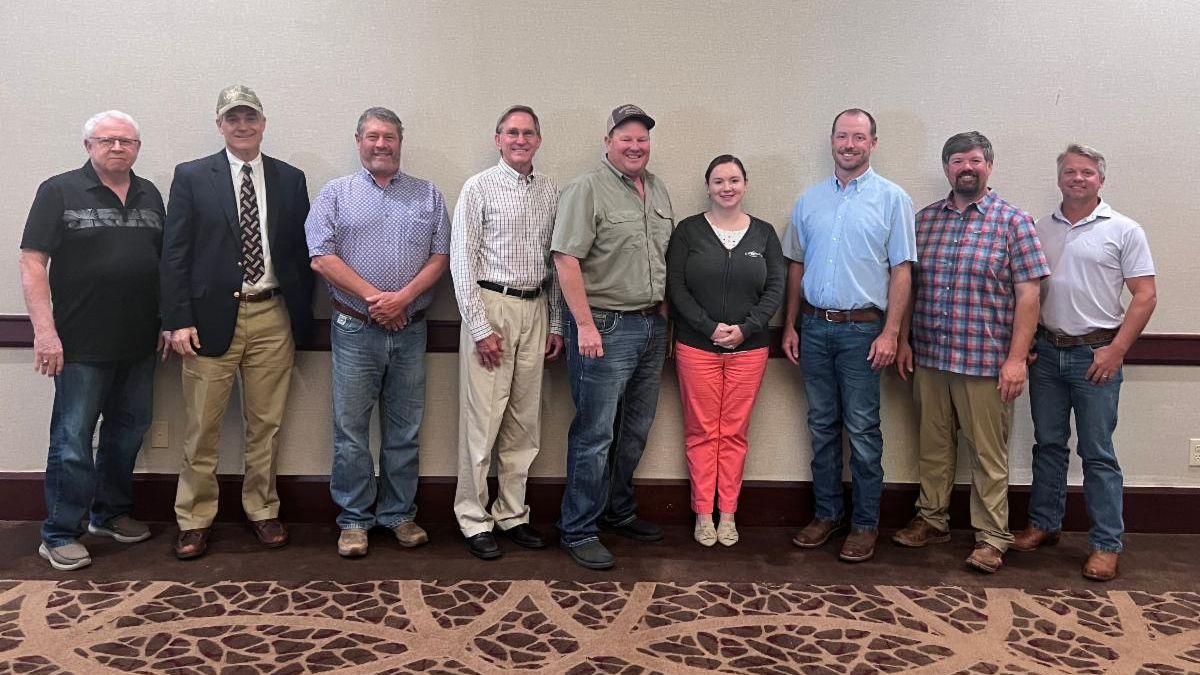
Left to right: Dennis DeLaughter, Texas, USRPA Board Member; Vernie Hubert, Cornerstone Government Affairs; Mark Pousson, Louisiana, USRPA Board Member; Tommy Turner, Texas, USRPA Board Member and President of the Texas Rice Council; Neil Stoesser, Texas, Chairman USRPA; Marcel Garcia, President & CEO USRPA; Alex Clark, Missouri, USRPA Board Member; Mitchell Thomas, Missouri, USRPA Board Member and Dusting Watkins, Louisiana, LIRPA President. | |
|
This week, Board members and staff braved the effects of Hurricane Beryl to conduct the summer board meeting of the US Rice Producers Association in Houston, Texas. State reports, DC updates, market commentaries, financials, program reviews, strategic planning, and bylaws discussions were all a part of the two-day meeting. Even when the power flickered, the commitment of those assembled never wavered. Along with being a meeting conducted, literally, within a hurricane, this meeting has historical context with the inclusion of the Louisiana Independent Rice Producers Association as an Association member. With LIRPA standing alongside the Missouri Rice Research and Merchandising Council, and Texas Rice Council, USRPA is as strong as ever in representing U.S. rice farmers.
"I am very excited and proud to welcome the Louisiana Independent Rice Producers Association (LIRPA) as a full association member of the USRPA. Having shown dedication and commitment as an associate member for years, it's wonderful to see the hard work of numerous producers recognized as we enter this new collaboration with Louisiana. The inclusion of LIRPA enhances the USRPA, and their joint leadership will play a vital role in steering our industry through research and promotion in the years ahead." Alex Clark, Missouri producer, and USRPA member.
"I am so pleased to welcome the Louisiana Independent Rice Producers Association (LIRPA) to USRPA. Their alignment with our organization is perfect, and they will be a valuable asset as we progress." Dennis DeLaughter, Texas USRPA member.
"For fifteen years now, we have watched a group of farmers from Southwest Louisiana strive to provide better prices for their farmers", stated Tommy Turner, President of the Texas Rice Council and USRPA Board Member. It has been amazing watching the Louisiana Independent Rice Producers Association start with only a dream and today have a rail facility, a port facility, and market millions of barrels of rice annually. USRPA is proud to have assisted them every step of the way. Their tenacity, perseverance, and grit exemplify the spirit of the US Rice Producers Association as they, and we, represent rice farmers in America.
"We are thrilled to announce our full membership with USRPA. This achievement has been a long time in the making, and USRPA has been a fantastic supporter throughout our journey. We are excited for what the future holds." Dustin Watkins, Louisiana Independent Rice Producers Association (LIRPA) President and Louisiana producer.
| |
Market Update: Tropical Storm Beryl Hits Texas Rice Crop at Harvest Time | |
|
A lot is happening in the global marketplace for rice on the geopolitical front, but perhaps none more powerful than the continued strength of the U.S. dollar against other major currencies. Despite what feels like domestic volatility and upheaval, the dollar has been extremely resilient and remains strong globally. While this is great for the travel budget when vacationing in other countries, it does not bode well for our exports. With the largest crop in recent years coming along nicely, the dollar's value could significantly impact our ability to access key export markets like Haiti, Iraq, and Mexico, even if the geopolitical tensions clear up in the coming days. Iraq, for example, is increasing its procurements from Thailand, which is taking the place of the MOU for U.S. rice that is now dead in the water because of banking restrictions. And even if Haiti can miraculously find peace and stability, a strong dollar may incent them to find rice alternative origins like Pakistan. And even Brazil to everyone’s surprise, in the face of catastrophic flooding and loss of rice, is exporting in the current market perhaps because of currency valuations although a limited volume. The case of Brazil continues to be an interesting case of rice politics as the government as well as the industry manage the supply/demand situation. New crop planting will begin in Mercosur in two months and a large crop is anticipated.
All this to say, it will be an interesting year navigating the global rice markets. We are thankful for a steady domestic market, and the strong relationships that USRPA has built over the years in the export market. Despite the challenges looking ahead, the price remains resilient, and we are optimistic about an updated Farm Bill that will reflect the current environment regarding the market, cost of inputs, etc. This may become an extremely key factor, as rumblings of India making some sort of announcement on their export ban are beginning to surface. Some reports say they will hold their ban into 2025, while others are saying the ban will be relaxed. We know that India's releasing their stocks will hurt global pricing, even if they put a minimum export price in place. This will impact Pakistan, Vietnam, and Thailand more than the U.S., but will nonetheless indirectly move the needle for the entire rice basket.
On the ground, old crops are extremely scarce, but for indicative purposes, it’s $19/cwt in Texas and $18.52/cwt in Louisiana. New crop is called at $16.50/cwt and $16.10/cwt, respectively. There is no price for the old crops in Mississippi, Arkansas, or Missouri, and the new crop is being called at $15.25/cwt. The damage along the Texas Gulf Coast this week from Hurricane Beryl resulted in 7 deaths, widespread power outages, and destruction of personal and commercial properties in some areas more than others. Damage to the rice crop is noted in El Campo and other areas west of Houston. Rice is flattened or leaning. Drained fields were hit the hardest and expected shattering will affect yields. East of Houston indicates a similar situation, but most are saying it could have been worse.
|  | Rice fields in Brazoria County south of Houston took a whipping from the winds of Beryl this week. | |
As we get deeper into the growing season, we continue to see positive trends with 17% of the overall crop holding steady in the excellent category, and 64% looking good. Last year only 61% of the crop was reported good at this time, and we all know how poor the milling quality was—let us hope this bump compared to last year translates into much better milling quality as well. Looking deeper, this year only 16% is rated fair, compared to last year at 20%, so overall good news is coming from the ground. All states, even Missouri at 3% now have rice headed. Texas is in the lead at 78%, followed by Louisiana at 60%, Mississippi at 40%, Arkansas at 22% and California at 15%.
The weekly USDA export sales report shows net sales of 27,900 MT this week, unchanged from last week but down 42% from the prior 4-week average. Total net sales of 29,300 MT were up 40% from the previous week and 13% from the prior 4-week average
| |
|
USDA Announces $100 Million Investment to Help Families Buy Food for Their Children During Summer Months:
The U.S. Department of Agriculture today announced it is providing $100 million in grants to help states, tribal nations, and U.S. territories implement SUN Bucks – a new, permanent program that helps families buy groceries for their children during the summer. SUN Bucks, also known as Summer EBT, is part of the SUN Programs: USDA’s Summer Nutrition Programs for Kids that lower costs for families and improve food and nutrition security during summer break when kids lose access to school meals. SUN Bucks provides families in participating states a $120 grocery benefit for each eligible school-aged child to buy food at grocery stores, farmer's markets, and other authorized retailers. USDA estimates that when SUN Bucks is fully implemented, it will reach more than 30 million children nationwide. “Thanks to President Biden’s leadership, USDA’s SUN programs are already helping children and teens get much-needed nutrition over the summer,” said Deputy Secretary Xochitl Torres Small. “When school is out, the new, permanent SUN Bucks program provides a lifeline to kids, and USDA wants to ensure as many families can access the benefits as possible. That's why USDA is providing grant funding to help states improve the technology systems that deliver SUN Bucks to families and ensure kids are fed.” Torres Small added that SUN programs also offer summer meals at no cost at eligible neighborhood locations (SUN Meals) and meals for pick-up or delivery in some rural communities (SUN Meals To-Go). The one-time grants will support the development and modifications to state technology systems that are needed to effectively run the program with proper controls and integrity. The funds are available to all agencies implementing SUN Bucks this year, as well as those planning to launch the program next summer. SUN Bucks advances the goals of the Biden-Harris Administration’s White House Conference on Hunger, Nutrition, and Health to enhance food and nutrition security and improve food access and affordability. Today’s announcement highlights one of many ways USDA continues to support states as they roll out the program. “One of USDA’s top priorities is helping more states offer SUN Bucks in future years,” said Cindy Long, administrator for the Food and Nutrition Service. “This funding will make it easier for states to get the program up and running and ensure it runs smoothly for participants.” The SUN programs work together to lower costs for families and tackle childhood hunger during the summer months. Families are encouraged to participate in all programs available to them and can visit USDA’s SUN programs website to learn more.
USDA Awards $10 Million to Spark Innovation in Regional School Food Systems:
USDA’s Food and Nutrition Service today awarded a total of $10 million in grants through its partners – Full Plates Full Potential and the Illinois Public Health Institute – as part of USDA’s $100 million Healthy Meals Incentives Initiative. The initiative empowers schools to continue serving delicious, healthy meals that give students nutrition to grow and thrive. The grants announced today are through the School Food System Transformation Challenge, which is one part of the Healthy Meals Incentives Initiative, also known as HMI. These funds support innovation in the school meals marketplace by incentivizing collaboration between schools, the food industry, and other stakeholders. HMI also awards grants to small and/or rural school districts to improve the nutritional quality of their meals and modernize their operations. To date, 264 HMI grants have been awarded to small and/or rural school districts ($30 million) and 43 grants have been awarded under the School Food System Transformation Challenge Sub-Grants ($16.5 million). “USDA is committed to strengthening the nutritional quality of school meals and it starts with strengthening the K-12 school food marketplace, which serves as an important source of nutrition for many children,” said Agriculture Secretary Tom Vilsack. “These grants will allow schools to purchase a wider variety of healthy, appealing products from local and regional producers while building a more resilient and equitable food system.” The Biden-Harris Administration is committed to ensuring America’s schools have the tools they need to provide quality meals to their students. To spur innovation in school cafeterias in the Northeast and Midwest, grant partners awarded funds to nearly two dozen grantees this year. Full Plates Full Potential, a non-profit dedicated to ending childhood food insecurity in Maine, awarded a total of $7.4 million in School Food System Innovation Grants to seven organizations. Their projects will help schools overcome the barriers to purchasing Maine-based foods for their school meal programs and establish long-term solutions and best practices that can be replicated in other regions. The Illinois Public Health Institute awarded a total of $2.7 million to 16 organizations for the Lake Michigan School Food System Innovation Hub’s Spark and Innovation Collaborative Awards. These grants will help fuel change throughout the Lake Michigan region’s school food system, which includes Illinois, Indiana, Michigan, and Wisconsin. Further, these projects will strengthen the K-12 food system by building regional partnerships, scaling programs, and introducing healthy, new products for the K-12 food marketplace. More information about the awardees is available on the FNS School Food System Transformation Challenge webpage. Earlier this spring, USDA announced nearly $6.5 million in School Food System Transformation Challenge Grants to support community Agriculture and Local Education Systems (Project SCALES) and the Partnership for Local Agriculture and Nutrition Transformation in Schools (PLANTS). Additional funding opportunities will be available through Project SCALES and the Lake Michigan School Food System Innovation Hub in the coming months. The School Food System Transformation Challenge Grants advance the goals of the White House Conference on Hunger, Nutrition, and Health to enhance food and nutrition security and improve food access and affordability. This announcement highlights how USDA continues to increase access to local foods to better connect children to nutritious foods.
USDA’s Food and Nutrition Service Releases Fiscal Year 2023 SNAP Payment Error Rates:
USDA’s Food and Nutrition Service today released the fiscal year 2023 Supplemental Nutrition Assistance Program Payment Error Rates, detailing high rates that demand urgent state actions to improve. SNAP payment errors occur when a state agency certifies a household to receive either too much or not enough SNAP benefits. For fiscal year 2023 (Oct. 1, 2022 – Sept. 30, 2023), the overpayment error rate for SNAP is 10.03%, with an underpayment error rate of 1.64%, in line with the previous year. Payment error rates are not synonymous with fraud but rather reflect how accurately states determine eligibility and benefit amounts. Payment errors are largely due to unintentional mistakes, either by the state agency or the household, that affect the accurate determination of eligibility or benefit amounts. “SNAP is a cornerstone of our nation’s safety net, and accurate benefits are crucial for families in need and for public trust,” said Administrator for the Food and Nutrition Service Cindy Long. “We cannot tolerate high error rates in a program that impacts millions of lives. States must take immediate action to improve the accuracy of SNAP payments—or they will face financial penalties.” While the administration of SNAP is a state responsibility, FNS has been actively engaged in supporting states in both decreasing payment errors and improving the timeliness of payments, another key measure of SNAP performance. To help states analyze the root causes of SNAP performance issues and identify responses, FNS has offered onsite visits, virtual training, and updated guidance and tools on effective practices. Additionally, FNS has awarded technology grants to state agencies to improve SNAP application and eligibility determination systems. USDA has also requested funds and additional proposals in the President’s FY25 Budget to improve payment accuracy and enhance program integrity, including funding for quality control and computer systems to support state access to SNAP integrity tools, and establishing a new Office of Training and Development to support states in resolving payment accuracy issues. States must address persistent post-pandemic error rates to avoid financial penalties. All states that performed poorly this year will be required to submit a corrective action plan addressing the root causes of errors to improve payment accuracy. In addition, states with high error rates for two consecutive years are assessed a financial penalty. These penalties can be paid immediately to USDA or settled by investing 50% of the amount in activities that are focused on improving the state’s administration of SNAP. The remaining 50% is held at risk for future payment to USDA if the state continues to have a high error rate. “We are sending a clear message to all states: accuracy in SNAP is non-negotiable,” Administrator Long emphasized. “We expect state leadership at all levels to be fully engaged in this effort to improve.” The state-by-state rates of payment errors can be accessed here.
USDA reports another year of high SNAP error rates:
New USDA data released Friday show many states continue to record high payment error rates under the Supplemental Nutrition Assistance Program, the country’s largest anti-hunger program, continuing a trend that began during the COVID-19 pandemic. Six states — Alaska, Delaware, Hawaii, Maryland, Oregon, and Pennsylvania — along with the District of Columbia have received notice of financial penalties for two years of poor performance. All recorded payment error rates of 15 percent or more in 2023, the new data shows. The U.S. spends more than $100 billion yearly on SNAP, which provides food benefits for more than 40 million low-income Americans. Error rates: The average increase in FY 2023 payments that states made in error isn’t indicative of fraud within SNAP, but they do indicate a high rate of inaccuracy of payments states are making to recipients since the pandemic. USDA officials have noted the strain of the pandemic played a part in the increase as the administration tried to keep millions of low-income families fed. A drastic jump in average over-payments reported last year drew bipartisan ire on Capitol Hill. USDA spokesperson Allan Rodriguez said Friday in a statement that “poorly performing states will be held accountable.” “USDA’s Food and Nutrition Service takes its oversight and monitoring role of state performance seriously, and will continue to provide robust assistance to ensure states are equipped to make improvements,” Rodriguez said. Republican response: The top Agriculture Committee Republicans on Capitol Hill on Friday sharply criticized the Biden administration for states’ continued struggles with SNAP over-payments. House Agriculture Chair G.T. Thompson (R-Pa.) and Senate Agriculture Committee ranking member John Boozman (R-Ark.) said the most recent data show the rate of payments made in error by states to SNAP recipients remain “shockingly high,” and urged USDA officials to “intensify their oversight” of states’ SNAP disbursements. “We are far removed from the pandemic, and it should no longer be used as a crutch,” the two Republicans said. “States must get a better handle on the administration of SNAP, but USDA is the ultimate arbiter of this program.” The pair added that this year’s report only increases the need for lawmakers to take action in the farm bill to tighten oversight of the federal program. Boozman’s farm bill framework, released earlier this month, includes tougher penalties for states with high SNAP payment error rates, including requiring them to repay money to the U.S. treasury. Stabenow weighs in: Senate Agriculture Committee Chair Debbie Stabenow (D-Mich.) and top House Agriculture Committee Democrat Rep. David Scott (Ga.) notably did not join Boozman and Thompson in issuing a joint response Friday, as they did last year. The two parties remain at loggerheads over SNAP policy, one of several core disagreements that have stalled the passage of the massive $1.5 trillion farm bill reauthorization for nearly a year. In a separate statement released Friday afternoon, Stabenow argued her farm bill plans would help improve data reporting and other facets of the program. But she did make clear that the high error rates were “unacceptable.” “While states faced many challenges ensuring access to SNAP during the pandemic and unwinding temporary pandemic benefits and flexibilities, the national error rate reported today is unacceptable,” Stabenow said.
| |
RMTC 2024 Sponsors Shine Bright in Cancun | The RMTC exhibits this year showcased numerous new technologies accessible to the rice industry. Additionally, ongoing research towards enhancing milling efficiency through technology was emphasized. A special thanks to the sponsors for fostering a fantastic networking environment for convention attendees. Some participants have already begun planning for the upcoming RMTC event on May 28-30, 2025, in Miami, Florida. Stay tuned for further details. | | |
|  |
Food & Agriculture
Regulatory & Policy Roundup
| | |
|
Grain: World Markets and Trade
| | |
World Agricultural Production
| | |
|
August 1, 2024
2024 Stuttgart Rice Field Day
Stuttgart, AR
More Details to Come
| |
|
|
August 20, 2024
Missouri Rice Research & Merchandising Council
Annual Field Day
Glennonville, Missouri
More Information
| |
|
August 22, 2024
Fisher Delta Research, Extension & Education Center Field Day
Portageville, Missouri
More Information
| |
|
|
September 10, 2024
2nd Annual Women in Ag Conference
Fort Worth, Texas
More Information
| | |
USRPA does not discriminate in its programs on the basis of race, color, national origin, gender identity, sexual orientation, religion, age, disability, political beliefs, or marital/family status. Persons who require alternative means for communication of information (such as Braille, large print, sign language interpreter or translation) should contact USRPA at 713-974-7423. |
| | | |