The latest news from AICU Mass and its member colleges and universities | |
From the desk of Rob McCarron
As all of us strive to move beyond both the physical and economic toll of the pandemic, the Massachusetts Legislature recently acted to boost recovery efforts by investing $4 billion to help those most impacted by the pandemic.
The final spending package, which draws upon $2.55 billion in ARPA funding and $1.45 billion in FY21 surplus revenue, provides critical funding across a wide array of policy areas, including economic development, education, healthcare, housing and infrastructure. The legislation also makes substantial investments in one-time premium pay awards for essential employees who bravely continued to work in-person while performing so many crucial functions throughout the early days of the pandemic.
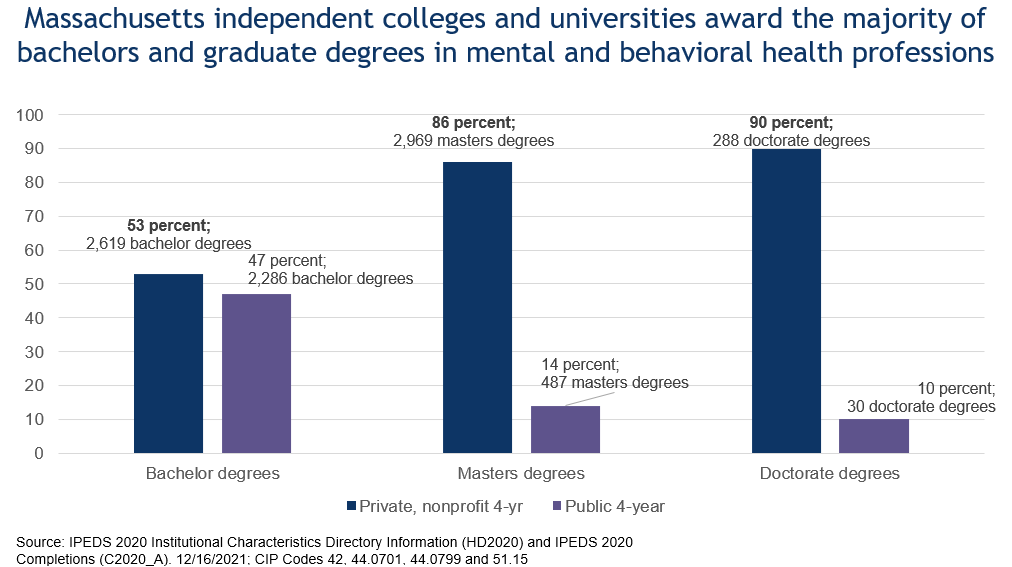
A critical component of the legislation directs funds towards behavioral health programs and addiction services. The past 20 months have been challenging for everyone – and there is little doubt that the disruptions and isolations caused by COVID have only served to exacerbate the mental health crisis that existed before the pandemic. On campuses across Massachusetts, more students are reporting mental health challenges and seeking treatment. However, this is not just a higher ed issue. It is a societal challenge that reaches far beyond our campuses, into our homes and workplaces. While it is refreshing to see significantly less stigma around seeking help for mental health, it is disheartening to see just how limited our resources and treatment options are for those reaching out.
The spending bill attacks this deficiency head on, and higher education is positioned to have an important role in making Massachusetts a leader in behavioral health services. Among the $400 million directed towards behavioral health, this legislation will:
- Establish a new Behavioral Health Trust Fund that aims to address barriers to the delivery of behavioral health care and services;
- Create a behavioral health commission to help the Trust Fund identify funding needs, including existing workforce challenges and emerging workforce needs, grants and scholarships to mitigate the financial burden of entering behavioral health professions and programs to ensure the retention of current behavioral health professionals;
- Fund a student loan repayment assistance program for behavioral health professionals who work in a community health center or other designated facilities with staffing needs;
- Invest in programs that promote primary care workforce development, recruitment and retention at community health centers; and
- Establish a behavioral health workforce development program focused on the development and retention of a culturally diverse, experienced workforce to care for underserved communities.
This funding is an important first step – and strong statement of values and priority – from the Legislature. These investments will achieve a number of important objectives in the coming years, including encouraging more talented individuals to pursue careers in behavioral health professions and identifying and removing obstacles that make it difficult to obtain professional degrees and thrive in these challenges times. While this funding is just the beginning of what is likely to be a long and complicated journey, it’s a tremendous start.
Working together to bring the necessary resources and support to these challenges also reminds us of our collective responsibilities to one another. Remember to reach out to your friends and family, offer support when needed, and encourage people to reach out to behavioral health professionals if they need assistance. We are all in this together.
From the entire AICU Mass team, we wish you and yours a healthy and happy holiday season.
| | | |
AICU Mass Fact of the Month | |
AICU Mass Member Spotlight and News from Our Members | |
|
Tufts University
COVID-19 Pooled Testing Partnership with Medford Public Schools
Tufts University is working with Medford Public Schools to operate a pooled testing program for monitoring COVID-19 spread in the city’s public schools. The novel partnership tests PK-12 students, teachers, and staff using a cost-effective protocol designed by President Anthony P. Monaco and senior Tufts staff.
The model, which has been adopted by school districts across Massachusetts, involves a pooled-testing methodology that combines nasal swab samples from up to 10 individuals into one group. Individual testing is done only if a sample pool has a positive result, keeping costs low. The methodology further reduces costs and environmental impact by requiring less equipment and fewer supplies and personnel. Somerville schools also used the system last spring.
“Getting K-12 schools back up and safely running has been critical for the education of our young people, their mental health, and their families’ peace of mind, as well as the health and safety of the larger community,” said Monaco.
“Our partnership brought peace of mind to students, staff, and families while there were still so many unknowns. I firmly believe that the success of last year’s collaboration has allowed us to start this school year off on a strong note with everyone’s health and safety as our continued highest priority,” said Dr. Marice Edouard-Vincent, superintendent of Medford Public Schools.
Combined with the school district’s other measures, such as masking, the pooled testing program has enabled Medford to identify carriers and take steps to stem the virus from spreading as broadly as it might otherwise.
The testing partnership is a prime example of how local institutions’ research and resources can benefit neighbors in host communities. For example, Tufts has provided free COVID-19 testing to neighbors, hosted emergency response and hospital personnel in dorms, provided use of refrigeration facilities to food rescue groups, made emergency grants available to local non-profits, and served as a regional vaccination site for Massachusetts residents.
| 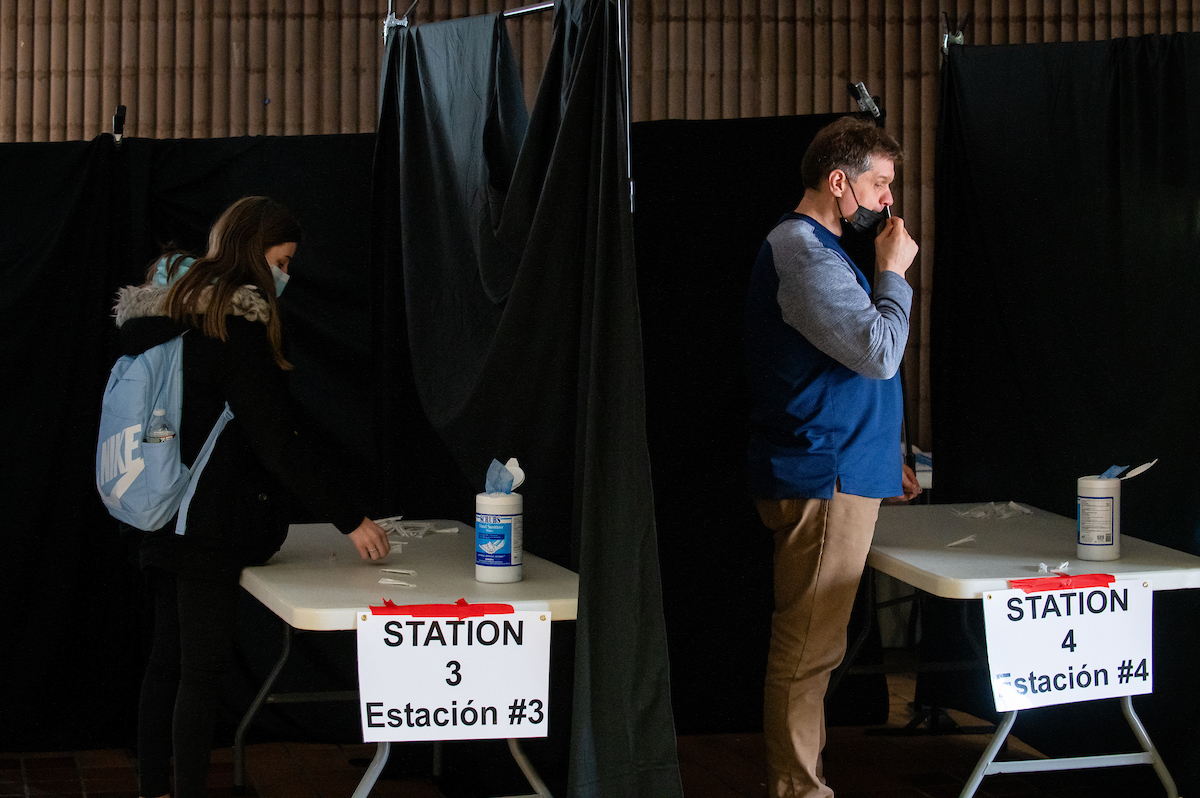 | Student Hana Raymond (left) and Peter J. Cushing, Ed.D., Assistant Superintendent at Medford Public Schools, administer their routine COVID-19 screening test at Medford High School. Tufts University has worked with Medford public schools to establish a pooled testing program for routine COVID-19 screening of faculty, staff and students. (Credit: Alonso Nichols/Tufts University) | |
|
Emmanuel College
Emmanuel College launches New Major in Biotechnology
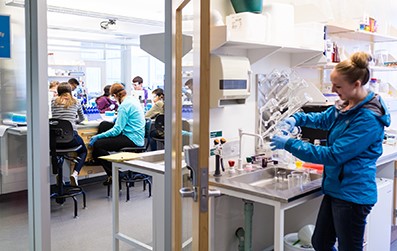
Beginning in fall 2022, Emmanuel College will offer a major in biotechnology within its School of Science & Health. In a city with a rapidly expanding biotech industry and a shortage in trained workforce, Emmanuel’s program has been designed to meet the evolving needs of both undergraduates and their intended professions.
Students in the new major will complete a rigorous biology curriculum, which includes a new course in biotechnology applications, and receive training in the laboratory methods required to carry out related research. Through courses within the School of Business & Management, students will understand basic principles of organizational behavior, management and business strategy—a component of Emmanuel’s biotechnology major that sets the program apart from its peer institutions.
“Our student scientists already have an excellent liberal arts and sciences education including training in research, scientific writing and communication. Now with the addition of biotech-focused courses and internships, as well several relevant management classes, we are positioning our biotechnology graduates to excel in careers full of purpose in the booming Boston biopharma sector,” said Dr. Padraig Deighan, an associate professor of biology and chair of the biology department.
The area is home to biotech and biopharma powerhouses such as Biogen, Genzyme, Moderna, and Merck Research Laboratories Boston, which is located on Emmanuel’s campus, as well as incubators such as LabCentral, a non-profit founded in 2013 for high-potential life sciences and biotech start-ups, which has since served as a launchpad for Emmanuel alumni careers in the field.
The College is taking steps to address the workforce challenge through a $50,000 grant from the Massachusetts Life Sciences Center (MLSC). With MLSC support, Emmanuel aims to develop a pathway to careers in the life sciences for underrepresented sophomores through the new Persons Excluded for Ethnicity or Race (PEER) Center of Excellence in Leadership and Life Sciences (CELL) program. The program will prepare students for a summer internship at a Boston-area life sciences company and offer laboratory time on Emmanuel’s campus, as well as assistance in finding an internship and a professional mentor in their field of study.
| |
Affiliate Member Insight
AICU Mass is pleased to partner with over 30 organizations in our affiliate program, where businesses and nonprofits offer industry expertise to our 60 member colleges and universities.
| |
|
The immigration law firm of Iandoli, Desai & Cronin, P.C. is pleased to be an Affiliate Member of AICUM and to provide this update on current trends in U.S. immigration law, particularly as they affect higher education.
There has been almost constant change in U.S. immigration laws, regulations and policy for over 20 years. Currently, the biggest changes are found in the immigration provisions contained in the House of Representatives’ recently passed Reconciliation Bill (HR 5376). This bill contains several significant changes in eligibility for Permanent Resident status, explained below. The bill is designed for inclusion in President Biden’s ‘Build Back Better’ plan. The effort is now at the U.S. Senate. These immigration provisions could be stripped from the bill unless the Senate Parliamentarian finds that the bill’s budgetary elements justify its inclusion in the reconciliation process. That process provides passage by a simple majority vote.
HR 5376 would provide substantial new fees for both the U.S. Citizenship and Immigration Services (USCIS) and the U.S. Treasury. These fees are based in part on applications for Permanent Resident status by newly eligible persons, among others: non-citizens with DACA (the Dreamers) or TPS (the persons covered by Temporary Protected Status) status; and the recapture of unused immigrant visa numbers from the 1992 to 2021 annual visa quotas in the family-based, employment-based and Diversity Visa categories. These are many thousands of numbers which went unused and permanently lost because the Government failed to issue immigrant visas before the close of a particular visa year. The bill also exempts tens of thousands of family-base and employment-based applicants from ‘country-based’ quotas and worldwide number limitations - effecting especially Indian and Chinese professionals. Many of these persons are currently employed in Higher Ed and at affiliated teaching hospitals and research laboratories. As an example, many Indian professionals currently face waits of over nine (9) years in the immigrant visa lines because of the country-based backlogs.
It is estimated that there are 427,000 undocumented students studying in American Higher Ed right now, of whom 181,000 are DACA eligible. This bill would increase the number of DACA eligible Dreamers substantially, thereby their becoming eligible both to study and to use the new pathways to Permanent Resident status.
Iandoli, Desai and Cronin, P.C. currently represents over 30 Massachusetts colleges and universities – including advising and representing your students, teaching staff, researchers, physicians, IT experts, and alumni. We also advise your international advisors on SEVP compliance issues, including the temporary COVID-19 Guidance, and your HR staff on I-9 issues and employment-based visa sponsorship options and processes. If you have questions, please feel free to contact us at: info@iandoli.com.
| |
Stay up to date with the latest AICUM Insight podcasts | | | | |