The American Society of Le Souvenir Français Inc.
Monthly Bulletin - Vol. III. No 9 - September 2023
|
|
The Duc de Lauzun and his Legion of Hussars |
|
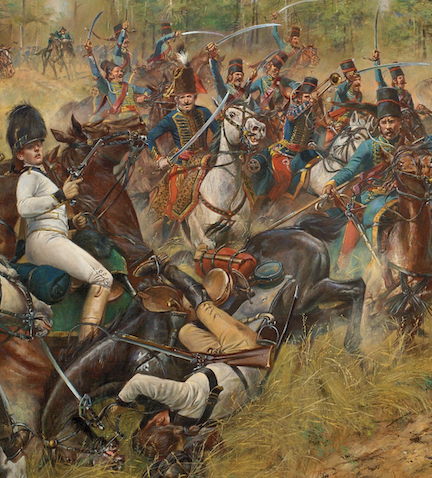
Cover illustration: Battle of the Hook by John Trumbull, Gloucester County, Virginia
|
|
EDITORIAL
Mrs. Catherine Colonna, French Minister of Foreign Affairs honored us with the unveiling of our sculpture of Le Petit Prince, on Wednesday, September 20, in the presence of Mr. Laurent Bili, Ambassador of France to the United States.
We are therefore publishing a separate Special Edition: "an evening with Le Petit Prince" with official photos of this long-awaited event!
In keeping with the editorial line followed by our Bulletins, we strive to present certain aspects, often ignored or unknown, of the long history of the French presence in America. This month, in anticipation to yet another major event for our Society, we are paying tribute to Armand-Louis de Gontaut Biron, Duc de Lauzun and his Legion of hussars who played such a critical role in the War for Independence.
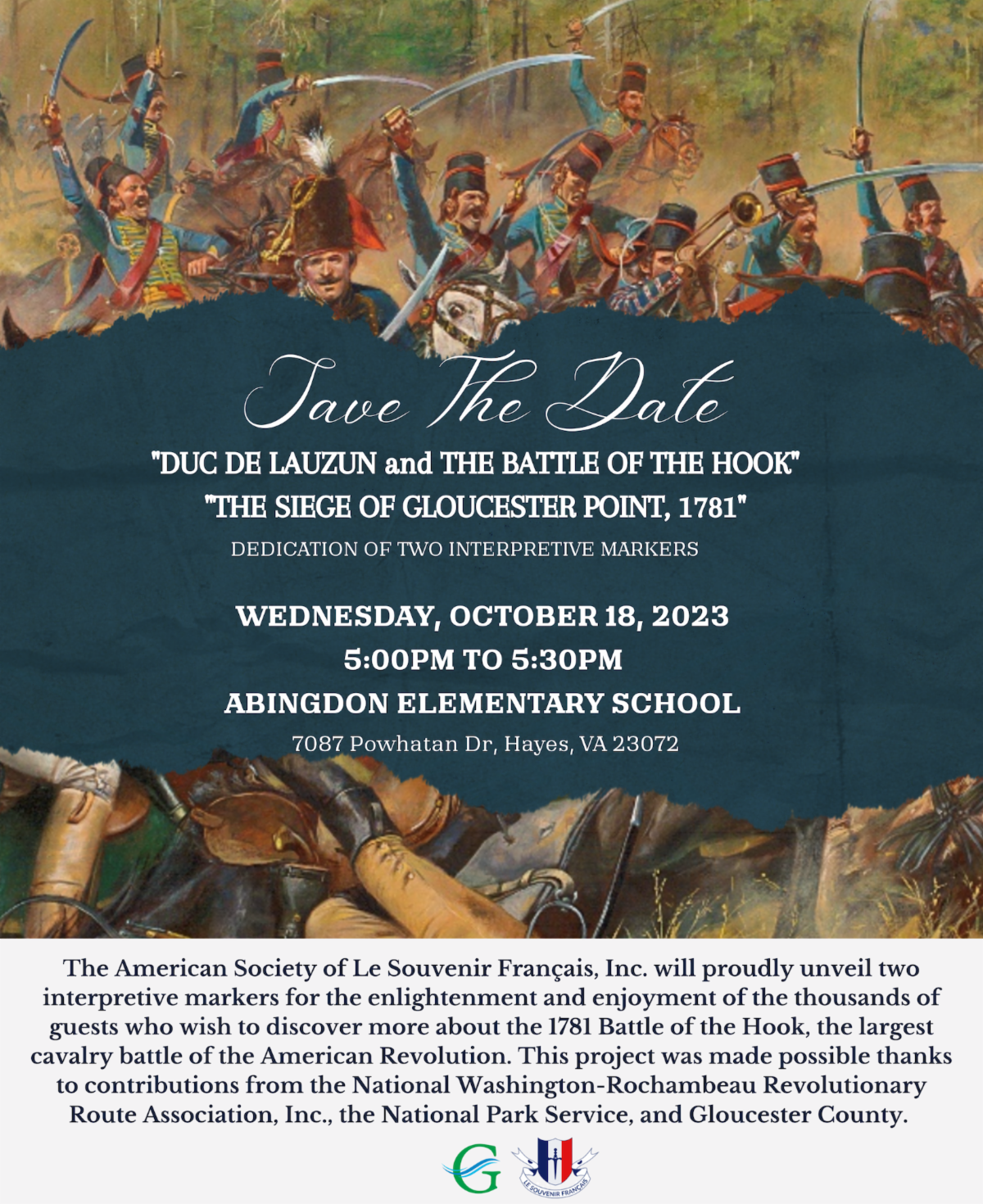
On October 18, we will proudly unveil two markers dedicated to the relatively unknown Battle of the Hook and the Siege of Gloucester, Virginia, which prevented the escape of Lord Cornwallis from Yorktown, and the site of the 2nd surrender of the British Army to the Marquis de Choisy, exactly one hour after the first surrender to George Washington and Count de Rochambeau.
One of these markers tell the significant action of the Duc de Lauzun and his Legion of hussars - - a major cavalry action of the Revolutionary War.
As usual, towards the end of this Bulletin we will announce several upcoming events and "Save the Dates" from like-minded organizations that should be of interest to our members and sympathizers.
We thank you for your continued support! As you can see, every donation, no matter how modest, goes a long way to realize actual concrete projets that are here to last, thus allowing to fulfill our mission to celebrate and perpetuate the historic long-standing ties of alliance and friendship between the United States and France.
On behalf of the Board of Directors,
Thierry Chaunu, President,
American Society of Le Souvenir Français, Inc.
|
|
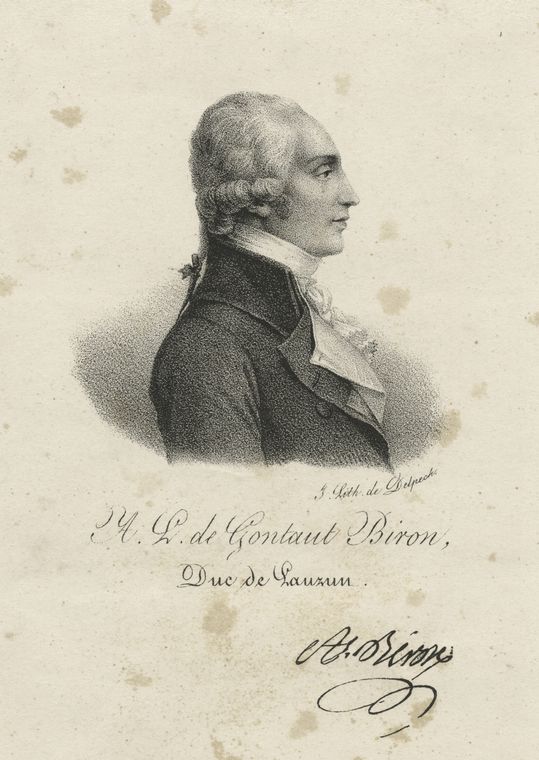
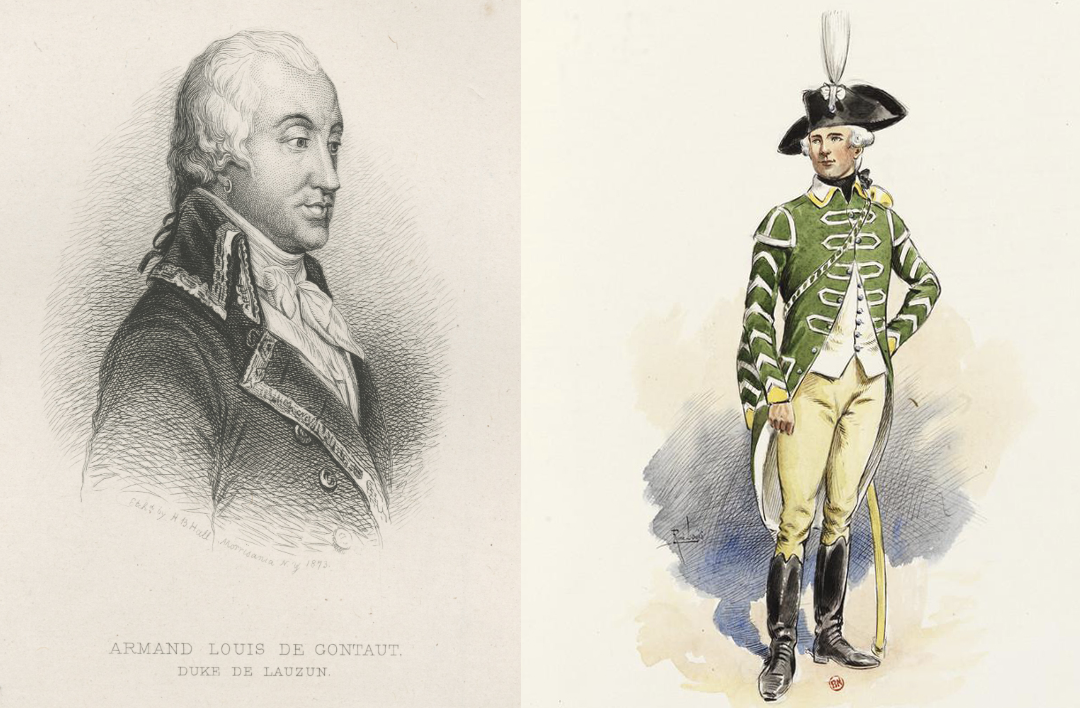
Armand Louis de Gontaut Biron, Duc de Lauzun |
|
Illustration:
By Joseph-Désiré Court - Public Domain,
Photo:
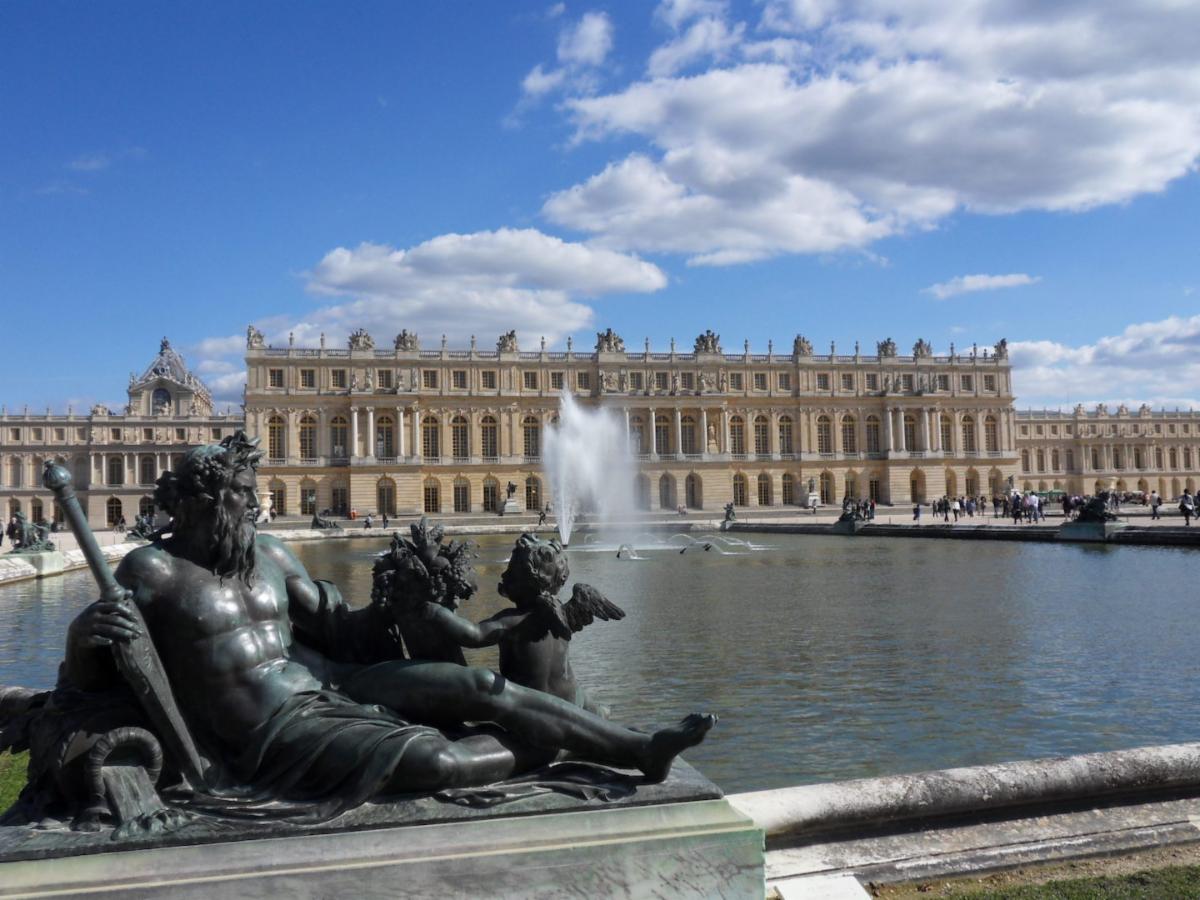
Parterre d'Eau in the gardens of Versailles, and west facade of the Château de Versailles
By G CHP - Own work, CC BY-SA 2.5,
|
|
• Armand Louis de Gontaut, duc de Lauzun, later duc de Biron, was born in Paris on April 13, 1747 to Charles Antoine Armand de Gontaut-Biron, Duke de Biron and de Gontaut, Marquis de Montferrand, and his wife Antoinette-Eustachie née Crozat du Châtel, daughter of Louis François Crozat and granddaughter of banker Antoine Crozat, the first proprietary owner of French Louisiana from 1712 to 1717. Armand Louis held the title of Duc de Lauzun, which had been passed down to him through his uncle's wife, the niece of Antoine Nompar de Caumont, Duc de Lauzun. It was rumored at the time that his actual father was Étienne François, Duc de Choiseul, his mother's lover and close friend of his father...
• A privileged youth in the entourage of the King...
He grew up at the Court of Versailles, his father being a close friend of King Louis XV, and was even on the King's knees when he was a young child, as the king was quite fond of him. He acquired all the aristocratic, sophisticated manners of the Court, and soon developed a taste for the other sex, becoming the "love boy" of more mature marquises. As he was at a ball waiting to be introduced to his chosen wife, aged 14, he engaged into a conversation with a more mature guest, fell immediately in love, only to find out a little while later that he was mistaken when his promised wife showed up.
• An early embrace of the military....
At age 14 in 1761, he commenced his service as an ensign in the French guards. He was promoted to lieutenant in 1764, then to captain in 1767. He took part in the campaign against Corsica in 1769 and was made a chevalier in the Order of St. Louis. He was promoted to colonel of the Royal Legion (1774), lieutenant mestre de camp of the Royal-Dragoons Regiment (1776), colonel of the Corps of Foreign Volunteers in the navy (1778), and brigadier of the Dragoons.
• And a precocious embrace of the other sexe....
On the 4th of February in 1766, the Duke married Amélie de Boufflers, who was born on the 5th of May in 1751. Amélie was the sole offspring of Charles-Joseph de Boufflers (1731-1751) and Mary Anne Philippine de Montmorency Logny (1732-1797). Despite being married, the Duke and his wife lived separately and did not bear any offspring that were recognized as legitimate. It is noteworthy that Amélie was regarded as a paragon of gentle, virginal shyness, possessing a combination of shrewdness and simplicity. The Duke, on the other hand, was a popular companion and frequently invited as a house guest by all the high society of the time.
• A dandy before the term was coined...
He traveled extensively throughout Europe, indulging in frivolous activities and, as per his Memoirs, engaging in various romantic affairs. Unfortunately, he squandered his wealth, which led him to transfer his estates to Henri Louis, Prince of Guéméné (grand chamberlain and captain lieutenant of the gendarmes of the king's ordinary guard) in 1777, in exchange for an annuity of 80,000 livres. However, the prince went bankrupt, and the annuity was reduced by more than half.
• A close friend of Queen Marie-Antoinette...
The Queen certainly enjoyed the company of dashing young men, such as Lauzun and the Swedish count Axel de Fersen (also an aide-de-camp to Rochambeau). Lauzun alluded to some romantic episode with the Queen, which most historians reject as being a bit self-promoting.
• But also a very competent military officer...
Around this time, he gained recognition for his essay on the military defenses of Great Britain and her colonies (État de défense d’Angleterre et de toutes ses possessions dans les quatres parties du monde), which resulted in his appointment to a command against the English in 1779, where he achieved some success. This led to his selection for an expedition to Senegal and other English coastal possessions, under the command of Louis-Philippe de Rigaud, Marquis de Vaudreuil, during which he recaptured the city of Saint-Louis in January 1779, shortly before sailing to North America to aid Rochambeau in 1780. Although the fortress at Cape Blanc, which he seized on 30 January 1779, was recaptured soon after his departure in the same year, de Vaudreuil was awarded the Grand Cross of St. Louis in 1789, while Lauzun received the title of colonel of hussars and became the proprietary colonel of a foreign regiment named after him.
• ...Let's fight in America!..
On 1 March 1780, Lauzun was appointed brigadier (General) and decided to participate in the War of American Independence.
|
|
Lauzun's Legion of Hussars:
the ancestor of the French Foreign Legion
|
|
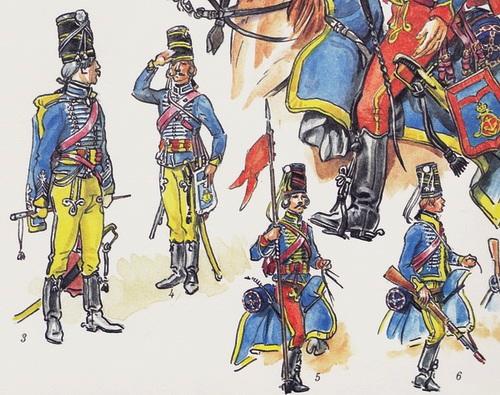
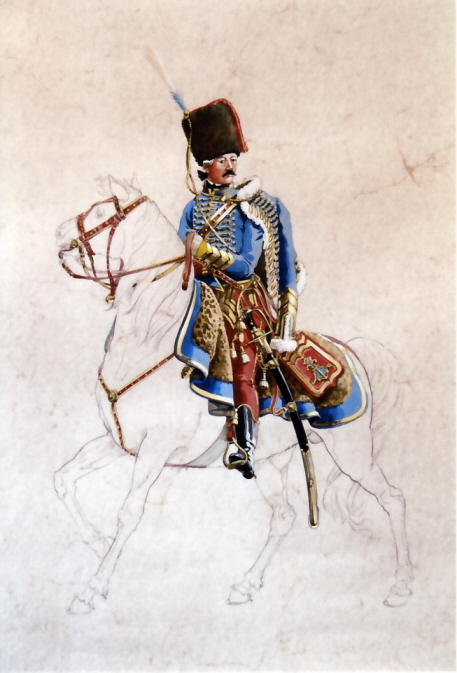
Eugene Leliepvre, Costume Militaire Ancien Regime, Plate 12, Hussard du Marais. |
|
An illustrious unit of the French Military,
and a precursor to the French Foreign Legion
• September 1, 1778 saw the creation of the Corps of Volunteers-Foreigners of the French Navy, assigned to the service of the Navy and the Colonies and composed of 3 legions. Created by the naval minister Gabriel de Sartine, this was the final fighting unit to be created under the monarchy was
• This corps, consisting of mixed legions, was composed of Hungarian, Polish, German, Russian, Danish, Italian, Swedish, and Irish soldiers mercenaries commanded by French officers and was intended to function as a highly mobile miniature army.
• The hussars were equestrian soldiers who were deployed in combat to disrupt the enemy's skirmishers, seize control of artillery positions, and pursue retreating troops.
• In 1779, Lauzun was appointed to a command against the British, leading the troops that successfully recaptured Fort St Louis in Senegal. Subsequently, he raised an army of volunteer hussars and infantry, in just a few months, a remarkable feast in itself, for service in America.
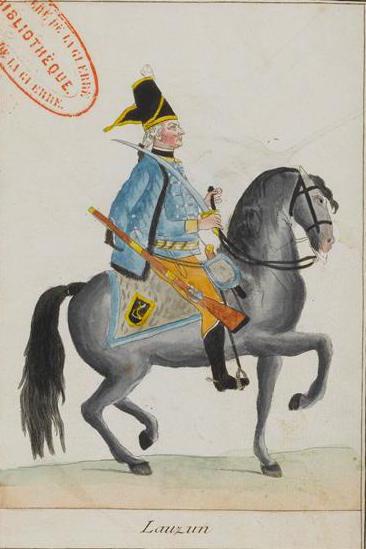
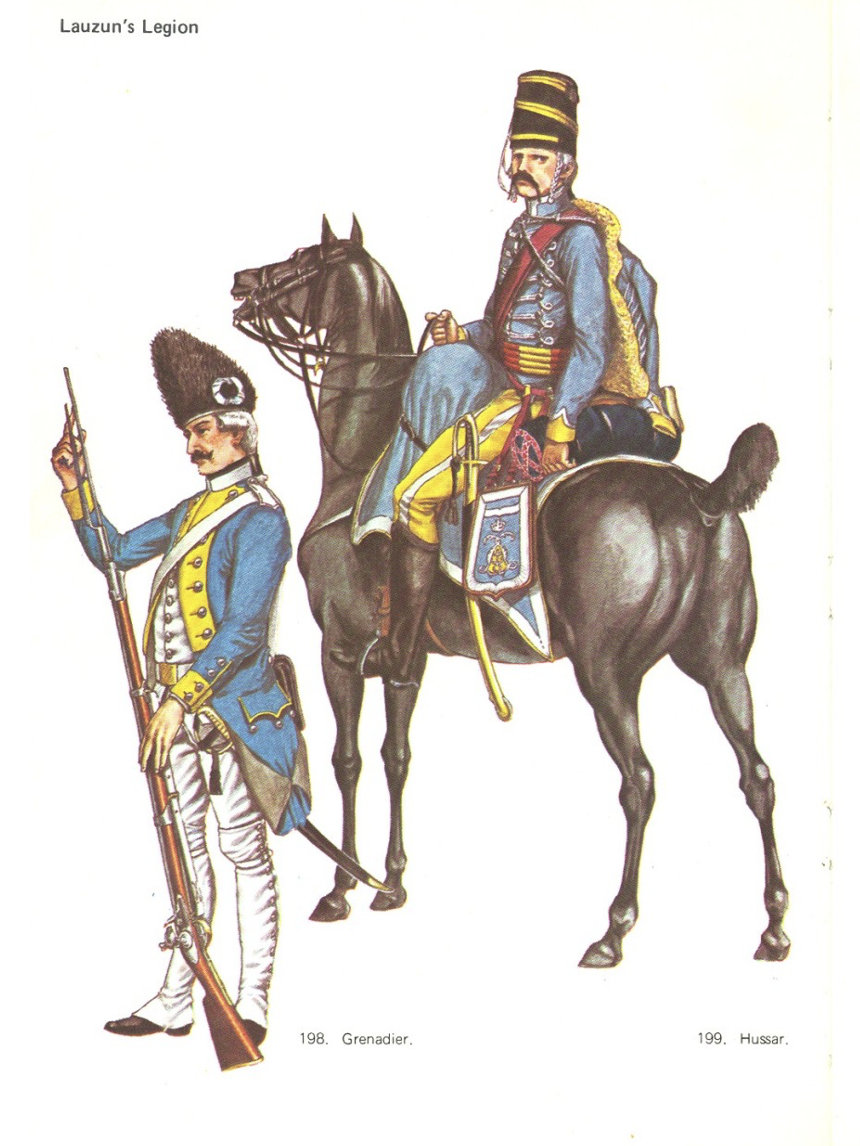
• On 5 March 1780, the 2e Légion des Volontaires Étrangers de la Marine was renamed the 2e Légion des Volontaires Étrangers de Lauzun as it was officially granted 'propriétaire' status and attributed to Armand Louis de Gontaut, duc de Lauzun - - hence its appellation Lauzun's Legion. It was made up of a company of grenadiers, a company of chasseurs, a company of fusiliers, two squadrons of hussars, a company of gunners, and pioneer detachments. This unit was present in the United States of America from July 1780 to May 1783.
• Upon arrival in Rhode Island, Lauzun brought with him 600 of his men, while the remainder were prevented from leaving France due to lack of transport ships. Despite having only a portion of his force, Lauzun played a significant role in the American War of Independence by leading the advance party of the main French army of Rochambeau. The two rifle companies that were left in France took part in February 1782, under the orders of Count Armand de Kersaint, in the operations to capture Dutch Guyana occupied by English troops.
• We will present in the pages below some of the most important episodes in which Lauzun's Legion participated, notably the reconnaissance at Fort Knyphausen (now part of the Bronx in New York City), the Battle of the Hook in Gloucester, Virginia, and the protection it provided to the fledgling nation while peace negotiations were underway in Paris after the victorious siege of Yorktown. Most of these sites and encampments, but not all, are memorialized with markers.
• Finally, on 14 September 1783, after its return to France, the unit was renamed the Régiment de Hussards de Lauzun. It pursued an illustrious career throughout the French Revolutions wars, the Empire War, in numerous battles, most notably: 1792: Valmy and Jemmapes.(As 6th Regiment of Hussars); 1800: Mosskirch, Biberach, Kirchberg and Hohenlinden; 1805: Austerlitz; 1806: Jena; 1807: Eylau and Konigsberg; 1809: Eckmuhl and Wagram; 1812: Borodino, Moskawa, and Berezina; 1813: Bautzen, Leipzig, and Hanau; 1814: Arcis-sur-Aube; 1815: Ligny, Waterloo, and Versailles, with Battle Honours for Jemmapes, Jena, Eckmuhl, Moskowa, and Hanau, throughout the 19th Century, and is still a unit of the French Army today.
|
|
The long ride to Yorktown |
|
First gallop in America:
Marker, "Duc de Lauzun" in Lebanon, Connecticut
|
|
Marker located at: 169 West Town Street, Lebanon CT 06249
|
|
Lauzun's Legion in Connecticut
• It is interesting to note that no horses were embarked on the ships of Admiral de Ternay. There simply was no room, with the troops, artillery and food taking all the space available; it was determined that horses would be acquired locally once in America!
• Upon landing in July in Newport, Lauzun's Legion established a camp situated one mile ahead of the remaining French army at Castle Hill, with the purpose of safeguarding the coastline. All the French troops had to repair after several weeks at sea.
Lauzun wrote: “a squadron of fourteen or fifteen men of war, commanded by Admiral Arbuthnot, come cruising in the Rhode Island channel. We were informed from New York that he had embarked a great part of the army; we expected to be attacked at any moment … Notwithstanding the bad condition of our troops, we toiled without ceasing at building redoubts and fortifying ourselves.”
• In the end, horses came mostly from Pennsylvania. Lauzun's Legion spent the rest of the year fixing buildings, training horses, and settling in. A visiting delegation of Indians from the Six Nations were delighted and impressed to see the hussars, among other parades offered by the French Army.
• Since the duc de Lauzun was fluent in English (he had stayed several months in London), he was tasked with many liaison missions and met regularly with George Washington, who appreciated the Duke's zeal and energy.
Rochambeau wrote: "(Lauzun) rendered himself very agreeable to the Americans by his prepossessing manners, and succeeded in every transaction which he had to conclude..."
• Eventually, Rochambeau directed Lauzun to establish his headquarters in the town of Lebanon, Connecticut, to secure access to ample foraging for the winter months. Lauzun very much regretted to have to leave Newport and wrote: “The scarcity of forage obliged [Rochambeau] to send me to the forests of Connecticut … As I spoke English I was charged with an infinite number of details, boring in the extreme, but necessary. I did not leave Newport without regrets; I had formed a very pleasant circle of acquaintances there.”
• After a long period of inacitvity and boredom throughout the winter, finally, on 9 June 1781 the Legion received orders to move south through Connecticut, following what is officially known today as the "Washington-Rochambeau Revolutionary Route". Their primary function was to serve as an advance party and to remain ten to fifteen miles south of the main army to protect the flank against any British forces located in the many Tory towns in lower Fairfield County.
• Inscription of marker (excerpts):
“...Rochambeau sent a cavalry unit to Connecticut because of the high cost of forage in Rhode Island. On November 20, 1780, Armand-Louis de Gontaut Biron, duc de Lauzun, rode into Lebanon with about 220 hussars or Hungarian-style light cavalry, and all of Rochambeau’s artillery horses. It was vivid proof of the French support that would come through Connecticut. Lauzun's Legion, as it is known, included a total of about 300 hussars plus an infantry component of another 300 men who were grenadiers and chasseurs, as well as a company of cannoniers..."
[...]
“In his posthumously published memoirs, Lauzun wrote “Siberia alone can furnish any idea of Lebanon." Compared to the royal courts of France, Lebanon may have seemed a backwater to the sophisticated Lauzun. Although known for his extravagance, gallantry and charm, Lauzun was a brilliant officer devoted to his troops. His earlier military exploits led to his appointment by the king as the proprietor of his own legion for the expedition to America. During the siege at Yorktown, Lauzun’s Legion led the charge that routed the British hussars at Gloucester, VA.”
|
|
Sign: Located on the Colchester Road (Route 207), Lebanon, CT, ¾ mile from First Congregational Church.
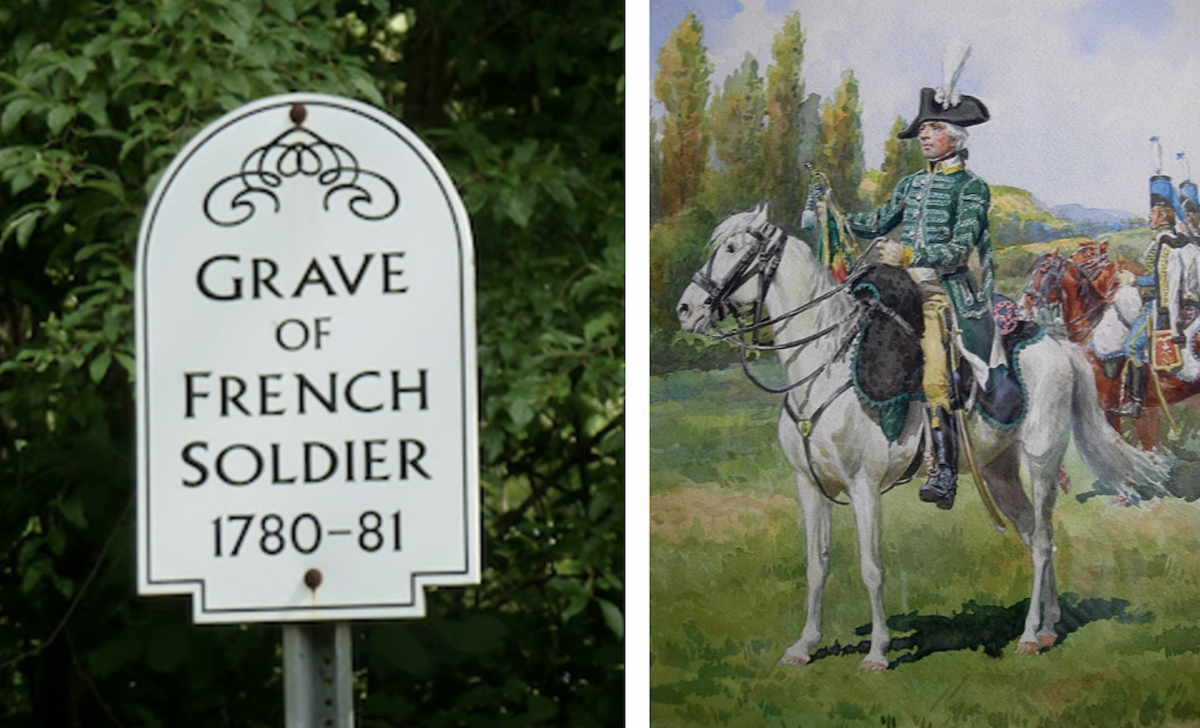
The story below originated in a New York Sun article published in 1879 and may be fictional to most historians, however the marker is real, and it is established that several French soldiers are buried along the 690-mile route.
|
|
• Compared to the rest of the French Army which unanimously impressed all contemporary observers by its strict discipline, Lauzun's Legion was composed of what we would call today some "wild characters", a fearsome military fighting unit, but also prone to mild marauding.
• "While Lauzun's legion of hussars were quartered in Lebanon, in the winter of 1781, some depredations by his troop were committed upon the poultry, pigs, and sheep of the inhabitants, one of the latter being taken from the fold of even good old Parson Williams. When these complaints reached the ears of the duke, in view of the fact that the people of the whole town had vied with each other in extending the most cordial hospitalities and furnishing the most abundant supplies to this whole corps, their chivalrous commander was deeply mortified, and resolved on its summary suppression...
A few of the suspected hussars, from fear of consequences, deserted from camp and fled into the country. One of the more prominent of these was soon after recaptured and brought into camp about nightfall. A court-martial was immediately ordered, by which the soldier was tried that same evening, convicted of desertion, and sentenced to be shot, and was shot at sun rise the next morning in the presence of the whole corps, who were ordered out to witness the execution. This summary example effectually ended all further depredations."
History of New London County, Connecticut: With Biographical Sketches of Many of its Pioneers and Prominent Men, Duane Hamilton Hurd, J.W. Lewis & Company, 1882, page 489.
• The difficulty in finding the exact place faced by historian can be best illustrated by this excerpt of a 2000 study by renowned historian Dr. Robert A. Selig, Ph.D.:
"A potential site for excavation might be in Lebanon on the site of the French Hospital mentioned by Mathieu Dumas in a letter to David Trumbull dated November 11, 1780, if it can be located.10 Dumas wrote that the hospital was located in the home of a Mr. Bushnell. In 1780 there were two Bushnells in Lebanon. One Ebenezer Bushnell (or Bushmal on 1770-72 ecclesiastical map of Lebanon) lived on what is today West Town Street on the boundary of Governor Trumbull's home farm adjacent to the barracks lot. The other, spelled Bushnal on the map, lived west of the meeting house on State Route 207 towards Colchester, about 3/4 of a mile from the church and just above the site where the historical marker indicating the grave of a French soldier is located. Both houses would have been convenient places for a hospital. "
Rochambeau's Cavalry: Lauzun's Legion in Connecticut 1780-1781 - The Winter Quarters of Lauzun's Legion in Lebanon and its March Through the State in 1781 - Rochambeau's Conferences in Hartford and Wethersfield Historical And Architectural Survey, Project Historian: Robert A. Selig, Ph.D.
|
|
Marker, “The Cavalry Comes to Connecticut” |
|
168-68 W Town St, Lebanon, CT 06249
|
|
• Excerpts from the marker:
“The French army went into winter quarters in Newport. Rochambeau sent a cavalry unit to Connecticut because of the high cost of forage in Rhode Island. On November 20, 1780, Armand-Louis de Gontaut Biron, duc de Lauzun, rode into Lebanon with about 220 hussars or Hungarian-style light cavalry, and all of Rochambeau’s artillery horses. It was vivid proof of the French support that would come through Connecticut. Lauzun's Legion, as it is known, included a total of about 300 hussars plus an infantry component of another 300 men who were grenadiers and chasseurs, as well as a company of cannoniers. Sone hussars and all of Lauzun's infantrymen remained in Newport. The Legionnaires were primarily subjects of King Louis XVI of France, while about one quarter were recruited from Ireland, Russia, Denmark, Hungary and the various states of the Holy Roman Empire.”
[...]
“The mile-long Lebanon Green was a hub of activity. The French soldiers built ovens to bake their bread and conducted daily drills. Lebanon-based hussars rode out on reconnaissance patrols and acted as messengers between Newport and Hartford. Some of the hussars stayed in Colchester where the artillery horses were stabled.”
|
|
Lauzun Encampment in New Haven, Connecticut |
|
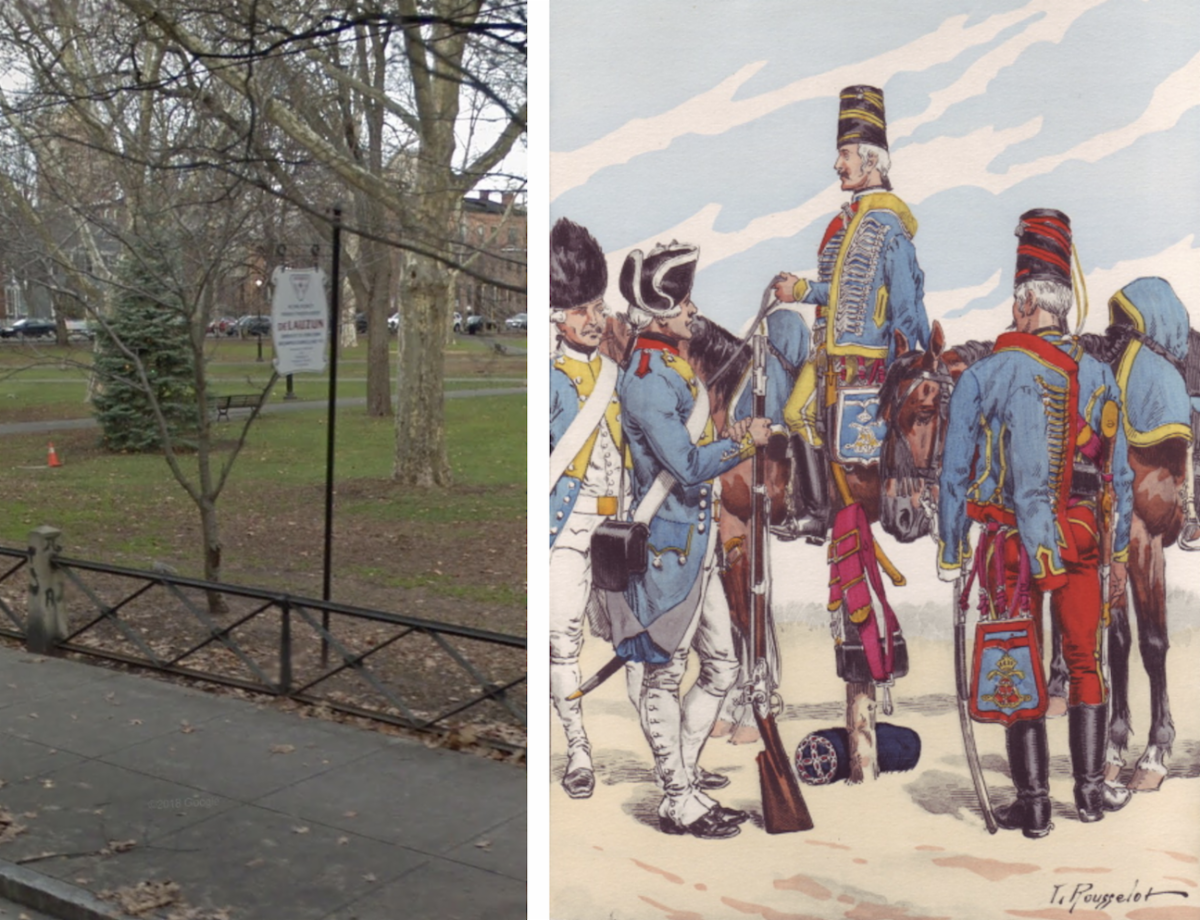
Photo: Along the park sidewalk, opposite 562 Chapel St, New Haven, CT 06511
|
|
• Inscription:
“Rochambeau Route 1781 – 82
In this vicinity
French Troops under
deLauzun
enroute to Yorktown
encamped during June 1781
Erected by the State
and
Wallingford Historical Society
Cooperating”
|
|
Lauzun encampment in Monroe, Connecticut |
|
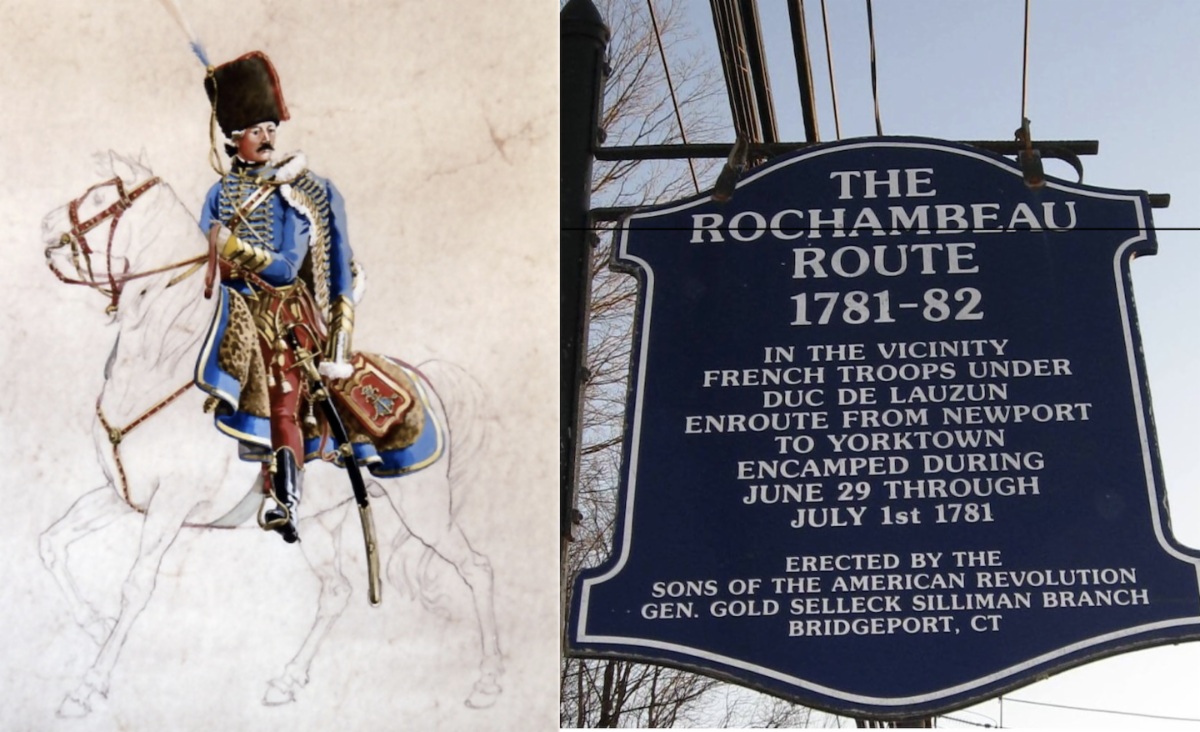
Marker, Lauzun’s Legion encampment in Monroe, CT, 27-28 June 1781
2 Fan Hill Rd, Monroe, CT 06468
|
|
• Lauzun’s Legion camped here on its way to Yorktown, from June 28 to June 30, 1781, on its way to White Plains.
• Inscription:
"The Rochambeau Route
1781 – 82
In the Vicinity
French Troops Under
Duc De Lauzun
Enroute From Newport To Yorktown
Encamped During
June 29 Through July 1st 1781
Erected by The Sons of the American Revolution
Gen. Gold Selleck Silliman Branc Bridgeport, CT"
• After leaving Monroe, CT, there is a touching anecdote that took place in Ridgebury, which was the next stop some 22 miles further south on the way to White Plains:
On July 1, 1781, Rochambeau and his officers stopped for water at the homestead of Stephen Norris, which still stands along the road linking Danbury and Ridgefield. That morning, Abigail Norris had delivered her sixth child. In honor of the French, the child was named after the Duc de Lauzun: Delazon. The grave marker of nine year-old Delazon Norris may still be found today in Ridgebury cemetery...
|
|
Lauzun's Legion in White Plains, NY |
|
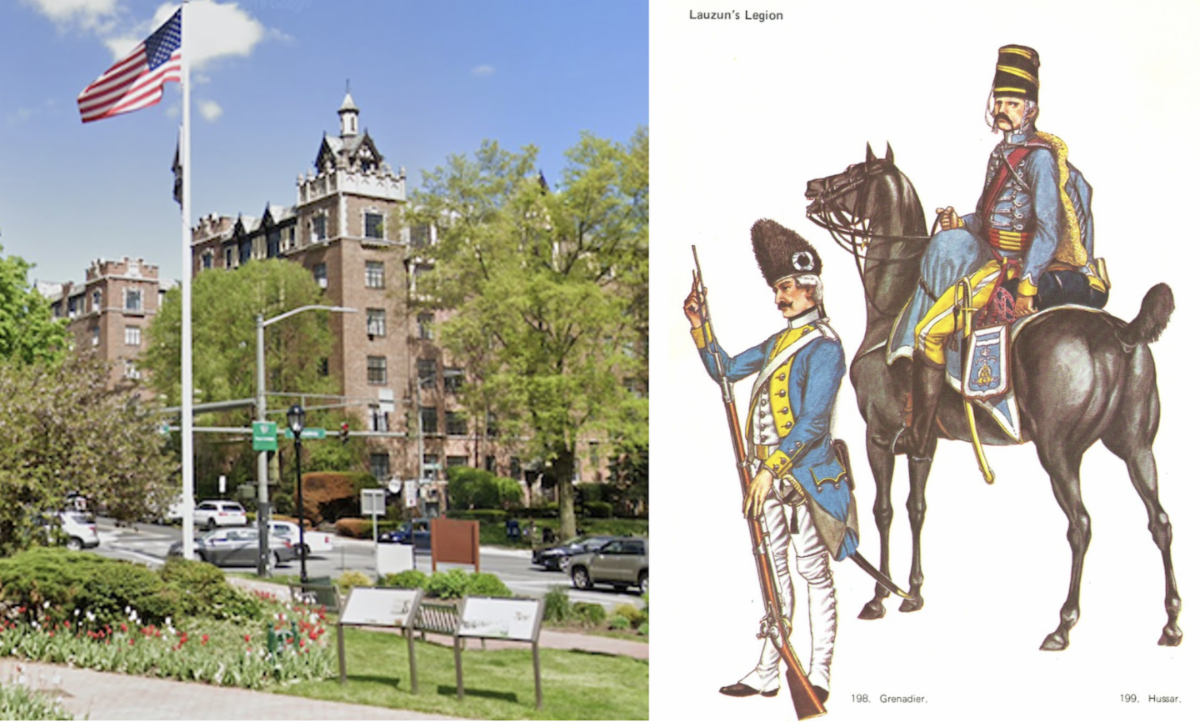
Marker, Lauzun’s Legion, “colorful characters” White Plains, NY July 3, 1781
Tibbits Park, North Broadway and Main Street, White Plains, NY 10601
|
|
• Inscription (excerpts):
“Lauzun’s Legion also provided colorful characters. Led by Armand-Louis de Gontaut, the duc de Lauzun, the Legion’s soldiers spoke eight different languages, but swore only in Hungarian.”
[...]
“All I recollect of the Duke de Lauzun consists in these particulars…that he was very polite, had a handsome person, wore moustaches, was liberal with money, and resided at a house (below) where John Norton now lives” (Zippora Davis, wife of Abraham Davis)
[...]
“The Legion’s commanding officer, the duc de Lauzun, chose the John Falconer House as his headquarters to be close to his men encamped on Chatterton Hill. The house was located on “the Village Street”, now North Broadway opposite today’s Main Street.”
|
|
Skirmish at Fort Washington, New York, NY |
|
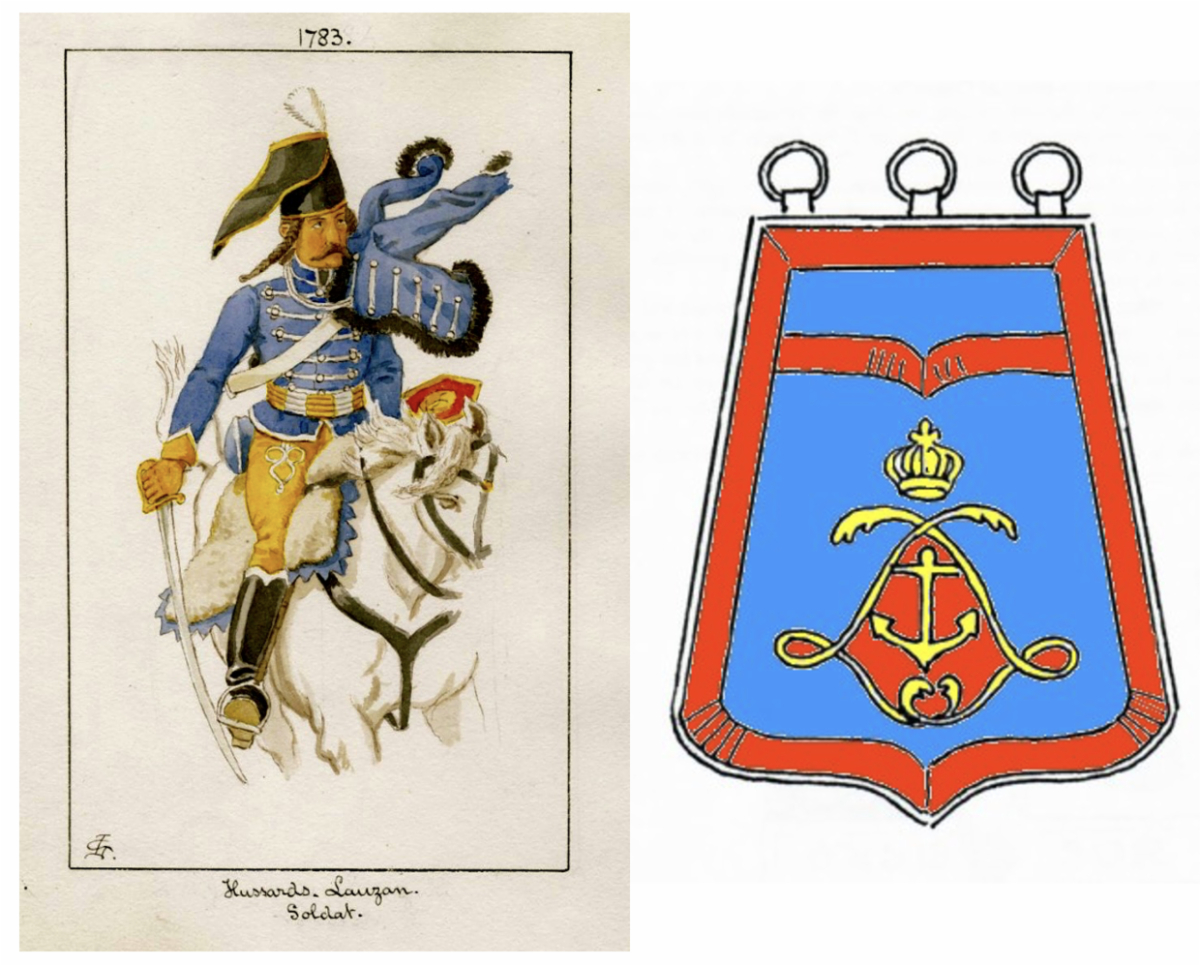
Sabretache ((a flat satchel on long straps worn by cavalry and horse artillery officers from the left of the waist-belt) of the Compagnie Générale des Volontaires Étrangers de la Marine and hussar squadrons of the Lauzun Legion. Note the “Ancre de Marine” as the unit was formally part of the “ Volontaires étrangers de la Marine”.
The action took place between West 179th and 180th Streets
|
|
"Coup-de-main" in the Bronx, New York
• The United States Department of Defense define a "coup-de-main" as "an offensive operation that capitalizes on surprise and simultaneous execution of supporting operations to achieve success in one swift stroke".
• On July 2, 1781, General Washington asked Rochambeau if Lauzun and his soldiers could help surprise the British at Fort Knyphausen, near Morrisania-Kingsbridge (now part of the Bronx). They would be joined by Colonel Sheldon and his troops who knew the area well. However, their plan failed because a deserter had warned the British about Lauzun's arrival.
• This action is described by Lauzun: "I should have to march all night, to attack them before daybreak; he (Washington) added to my regiment one of American dragoons (2nd Continental Dragoons), some companies of light horse, and some battalions of American light infantry. He had dispatched by another road, about 6 miles to our right, General Lincoln, with a corps of 3,000 men, to surprise Fort Kniphausen, from which I was to cut off all support. He was not to show himself until my attack was under way....He amused himself by firing at a little post which had not seen him, and roused the whole of the corps that I was to surprise. It retired into the fort, made a sortie against General Lincoln, who was beaten, and would have been cut off from the rest of the army, had I not come promptly to his rescue. Although my troops were thoroughly worn out, I advanced upon the English; I charged their cavalry, and my infantry exchanged fire with theirs. General Lincoln took the opportunity to beat a retreat in considerable disorder."
• After this action, Lauzun's Legion went into camp at Phillipsburg, NY, with the rest of the French army.
• A marker or a plaque to memorialize this action is in the planning stage as of Sept 2023.
|
|
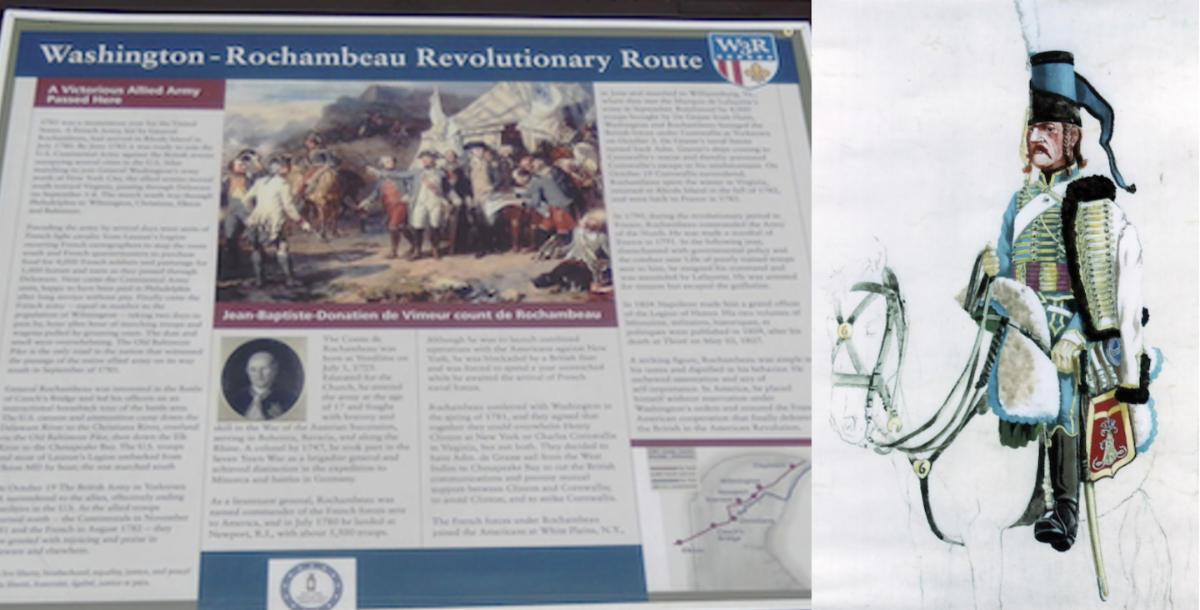
Marker, “A Victorious Army Passed Here”, Newark, Delaware
|
|
At Pencader Museum, 2029 Sunset Lake Road, Newark, DE 19702
|
|
• Inscription (excerpts):
“ 1781 was a momentous year for the United States. A French Army, led by General Rochambeau, had arrived in Rhode Island in July 1780...After marching to join General Washington’s army north of New York City, the allied armies moved south toward Virginia, passing through Delaware on September 1-8. The march south was through Philadelphia to Wilmington, Christiana, Elkton and Baltimore.”
“Preceding the army by several days were units of French light cavalry from Lauzun’s Legion escorting French cartographers to map the route south and French quartermasters to purchase food for 4,000 French soldiers and pasturage for 1,000 horses and oxen as they passed through Delaware...Finally came the French army—equal in number to the population of Wilmington—taking two days to pass by, hour after hour of marching troops and wagons pulled by groaning oxen. ”
“Long live liberty, brotherhood, equality, justice, and peace! Vive la liberté, fraternité, égalité, justice et paix.”
|
|
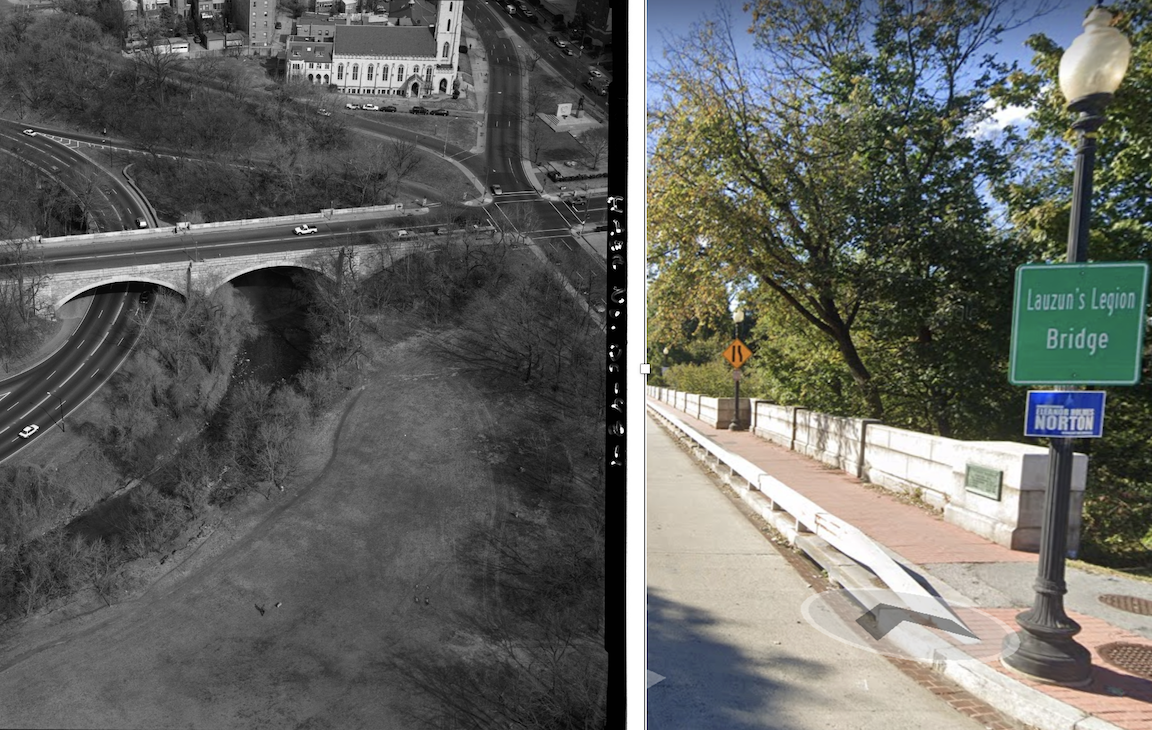
Lauzun Legion Bridge, Washington D.C. |
|
P Street NW, crossing Rock Creek into 23 Street NW, Washington DC 20503
P Street Bridge, with Dumbarton Bridge in the background
|
|
• The P Street Bridge, also known as Lauzun's Legion Bridge, is a concrete arch bridge spanning 336 feet (102 m) that facilitates the passage of P Street over Rock Creek and Rock Creek Park, connecting the Georgetown and Dupont Circle neighborhoods in Northwest Washington, D.C. The original bridge was built in 1855 and was subsequently replaced by the present structure in 1935. Following a year-long, $3.5-million renovation project, the bridge was reopened on July 15, 2004, marking the first major overhaul since its initial construction in 1935.
• In June of 2006, the Dupont Circle Advisory Neighborhood Commission (2B) convened to discuss a proposal regarding the ceremonial designation of a bridge in commemoration of the 225th anniversary of the end of the American Revolutionary War. On October 14th of the same year, the P Street Bridge was officially renamed Lauzun's Legion Bridge, in honor of Lauzun's Legion (French: Volontaires-etrangers de Lauzun), a specially constructed unit that was formed on March 5th, 1780, from various detachments of the French Army and Navy commanded by Armand Louis de Gontaut, Duc de Lauzun at the Siege of Yorktown. The renaming ceremony was attended by esteemed guests such as French Ambassador Jean-David Levitte, Rev. Jacques Bossiere, and representatives of the D.C. Daughters of the American Revolution and D.C. Children of the American Revolution.
|
|
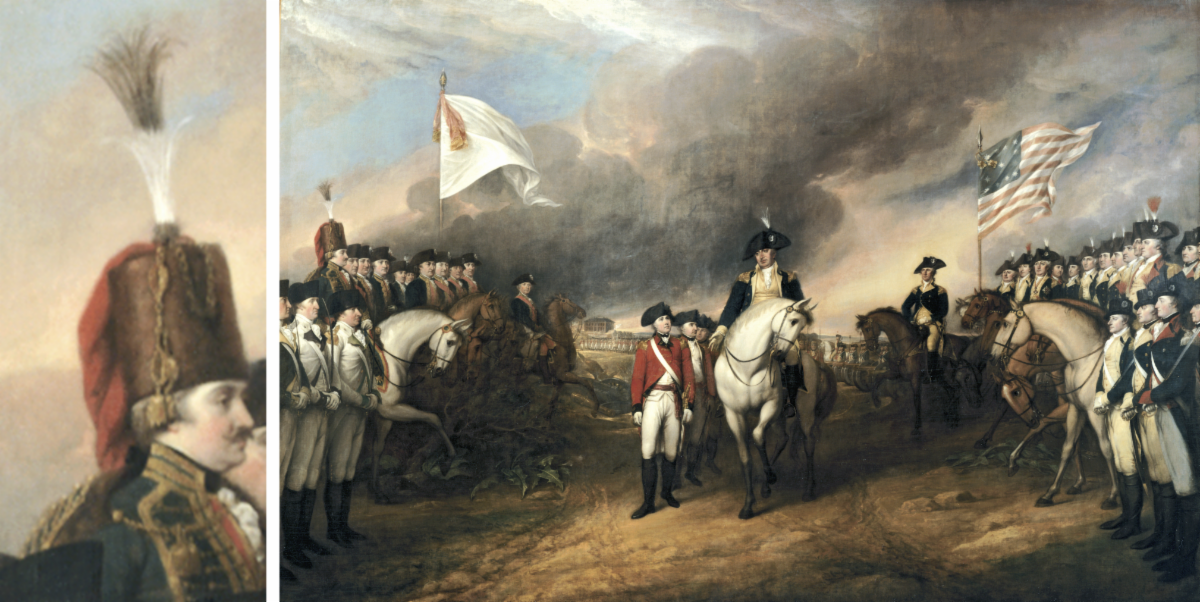
Illustration: In this painting depicting the surrender of Lord Cornwallis army to French and American forces after the Siege of Yorktown (September 28 – October 19, 1781) during the American Revolutionary War, the Duc de Lauzun is clearly recognizable (detail, inset). The United States government commissioned John Trumbull in 1817 to paint patriotic paintings. Public Domain, https://commons.wikimedia.org/w/index.php?curid=1379717
|
|
Excerpt from our marker (to be inaugurated October 18, 2023)
written by Dr. Robert A. Selig, Ph.D.:
[...] "On 18 August 1781, the allied armies set out from New York for Virginia. American and French infantry embarked at Plum Point near Elkton, in Baltimore, and in Annapolis and sailed down the Chesapeake Bay. On 14 September the hussars and the legion’s artillery left Baltimore for Virginia. South of Fredericksburg the hussars received orders on 18 September to ride to Gloucester Court House via King and Queen Court House.
Having covered about 210 miles since their departure from Baltimore, the hussars joined General Weedon’s militia at his camp at Ware Church on 24 September. Three days later, Lauzun’s infantry, which had sailed from Plum Point and debarked at College Creek, joined the hussars at Gloucester Court House.
Responding to Washington’s request of 23 September to show Lauzun “all Respect and Attention that his Character demands”, Weedon promised to "embrace every opportunity of improving his advice so far as related to the Service.”
Lauzun was to assist Weedon in his efforts curtailing British foraging, but in the same letter Washington had instructed him to “endeavour to perform, with all your Diligence, without precipitating your Troops into too great Danger.”
Combat and danger, however, was just what Lauzun was looking for." [...]
|
|
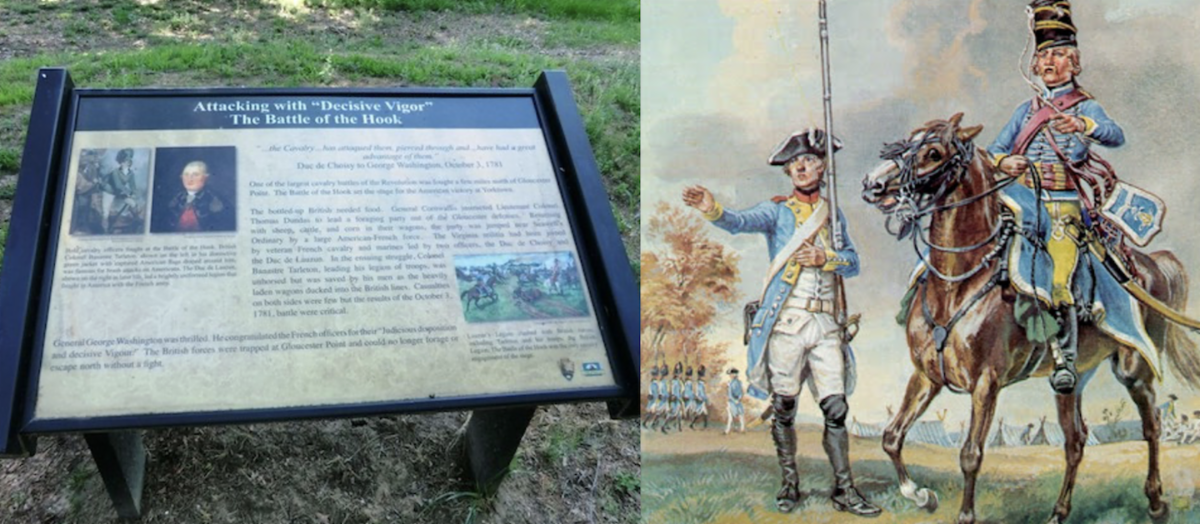
Marker, « Attacking with “Decisive Vigor” |
|
7418 Battery Dr, Gloucester Point, VA 23062
The marker is located at the entrance to Tyndall's Point Park
|
|
The Battle of the Hook:
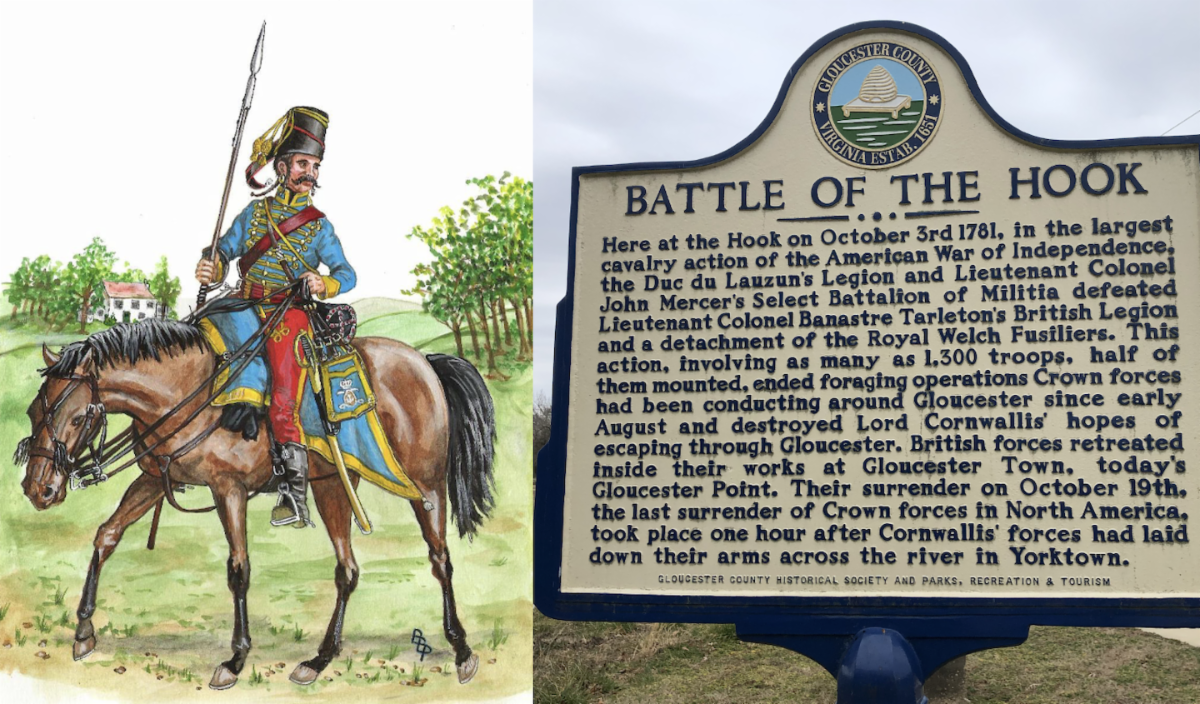
• On October 2, Continental Army General Weedon learned that a British foraging party would be out the next day and requested 150 of Lauzun’s hussars to spearhead each of the two allied columns advancing on the York and Severn River roads in the morning of October 3.
• After being told by a local farm girl that his English nemesis Colonel Balastre Tarleton had just passed by, Lauzun, upon hearing his soldiers exchanging fire with the British, galloped headlong into the fray. In the ensuing battle, Tarleton was dismounted by one of his own soldiers, prompting Lauzun to attempt to pursue him. However, Tarleton was rescued by a few of his dragoons. The skirmish involved three attempts by either side to break through the lines of the other, with one of these attempts proving successful. Both sides suffered a small number of casualties. Ultimately, Lauzun emerged victorious as he utilized the opportunity to push the American line forward, resulting in a distance of approximately a mile and a half from the British lines. In the following weeks, while Rochambeau and Washington were besieging Yorktown, Lauzun and the marquis de Choisy patrolled the lines at Gloucester Point, preventing Tarleton and his men from foraging for food. This contributed to the effectiveness of the siege of Yorktown.
• The Legion suffered three Hussars killed and two officers and eleven Hussars wounded. Fifty British were killed or wounded, including Tarleton.
• In his orders for 4 October, General George Washington congratulated “the Army upon the brilliant success of the Allied Troops near Gloucester.”
• Inscription:
“…the Cavalry…has attaqued them, pierced through and…have had a great advantage of them.” Duc de Choisy to George Washington, October 3, 1781
“One of the largest cavalry battles of the Revolution was fought a few miles north of Gloucester Point. The Battle of the Hook set the stage for the American victory at Yorktown.”
“The bottled-up British needed food. General Cornwallis instructed Lieutenant Colonel Thomas Dundas to lead a foraging party out of the Gloucester defenses. Returning with sheep, cattle, and corn in their wagons, the party was jumped near Seawell’s Ordinary by a large American-French force. The Virginia militia had been joined by veteran French cavalry and marines led by two officers, the Duc de Choisy and the Duc de Lauzun. In the ensuing struggle, Colonel BanastreTarleton, leading his legion of troops, was unhorsed but was saved by his men as the heavily laden wagons ducked into the British lines. Casualties on both sides were few but the results of the October 3, 1781, battle were critical. General George Washington was thrilled. He congratulated the French officers or their “Judicious disposition and decisive Vigour.” The British forces were trapped at Gloucester Point and could no longer forage or escape north without a fight.”
“Erected by National Park Service, Chesapeake Bay Gateways Network.”
|
|
Three Markers, « Battle of the Hook » |
|
2408 Hayes Rd, Hayes, VA 23072
2408 Hayes Rd, Hayes VA 23072
2377-2399 Hayes Rd, Hayes, VA 23072
|
|
“No regular corps could have maintained its ground more firmly”
• Sous-Lieutenant Joachim de Perron, despite not actively participating in that stage of the conflict, arrived at the battleground mere moments after Tarleton had retreated and wrote:
“M. de Lauzun, at the head of his avant-garde of 50 hussars had passed by the site of his camp to reconnoiter and position posts, he noticed the enemy, about 150 horses strong in battle order in front of the wood ... and had charged them at once though his force was inferior; and that when he had arrived almost within pistol shot of them, he had received a volley from a detachment of infantry lying in ambush in the wood ... that killed three hussars and wounded several horses, that he had in spite of the losses driven away the troops in front of him, and had routed them in the woods; after which he had retired in disorder to keep them [his own forces] from being surrounded” (Perron 1898:144).
• Lauzun’s casualties are found in the contrôle records of the Legion. Two hussars were killed in action and a third one died of his wounds almost three weeks later. The two are Jacob Colin of the First Squadron of Hussars, from Rémeldorf in Lorraine, 24 year-old and Pierre Didier of the Second Squadron of Hussars, 29 years old. Jean Scherrer of the Second Squadron from Waldighofen in southern Alsace, 26 years old who was thought dead actually died of his wounds received on October 3. The complete list of names of wounded are not known (in total there were 13 casualties) with the exception of two wounded officers, who were Jean-Batiste Nicolas Louis du Tertre* (1746-1796), capitaine en second of the First Squadron of Hussars and Billy Dillon (1760-1788), a brother of Colonel Robert Dillon, capitaine en second of the Second Squadron..
* Ancestor of our 1st Vice-President Patrick du Tertre, also president of the Association of French Reserve Officers in the United States, and co-founder of TheFrenchWillNeverForget.org
• George Washington repeated that information in General Orders of October 4, when he informed the army that “The Duke de Louzerns Legion had three Hussars killed, Captains Billy Dillon and Dutester with eleven Hussars Wounded (the Officers very slightly), three Horses killed and four wounded” (Fitzpatrick 1937a:172).
• Inscription marker #1:
“Here at the Hook on October 3rd, 1781, in the largest cavalry action of the American War of Independence, the Duc du Lauzun's Legion and Lieutenant Colonel John Mercer's Select Battalion of Militia defeated Lieutenant Colonel Banastre Tarleton's British Legion and a detachment of the Royal Welch Fusiliers. This action, involving as many as 1,300 troops, half of them mounted, ended foraging operations Crown forces had been conducting around Gloucester since early August and destroyed Lord Cornwallis' hopes of escaping through Gloucester. British forces retreated inside their works at Gloucester Town, today's Gloucester Point. Their surrender on October 19th, the last surrender of Crown forces in North America, took place one hour after Cornwallis' forces had laid down their arms across the river in Yorktown.
Erected by Gloucester County Historical Society and Parks, Recreation & Tourism 2016.”
• Inscription marker #2:
“At this point, known formally known as "The Hook", on the 3rd October 1781 a fierce engagement took place between the British Forces under the command of Tarleton, and the Continentals under command of Lauzun. This was the last engagement of the opposing forces before the surrender of General Cornwallis at Yorktown, on the 19th October 1781.”
Yet another marker, called "Tarleton's Last Fight" is located nearby:
• Inscription marker #3:
“Here, at the Hook, Tarleton, commanding the cavalry of Cornwallis's army, fought an action with Choisy's French force and Virginia militia, October 3, 1781. The Duke de Lauzun's cavalry charged Tarleton, who retired to Gloucester Point. There he was blockaded by the French and by Virginia militia.
Erected 1928 by Conservation Development Commission. (Marker Number 7-NA.)”
|
|
Lauzun returns to France to announce the victory at Yorktown |
|
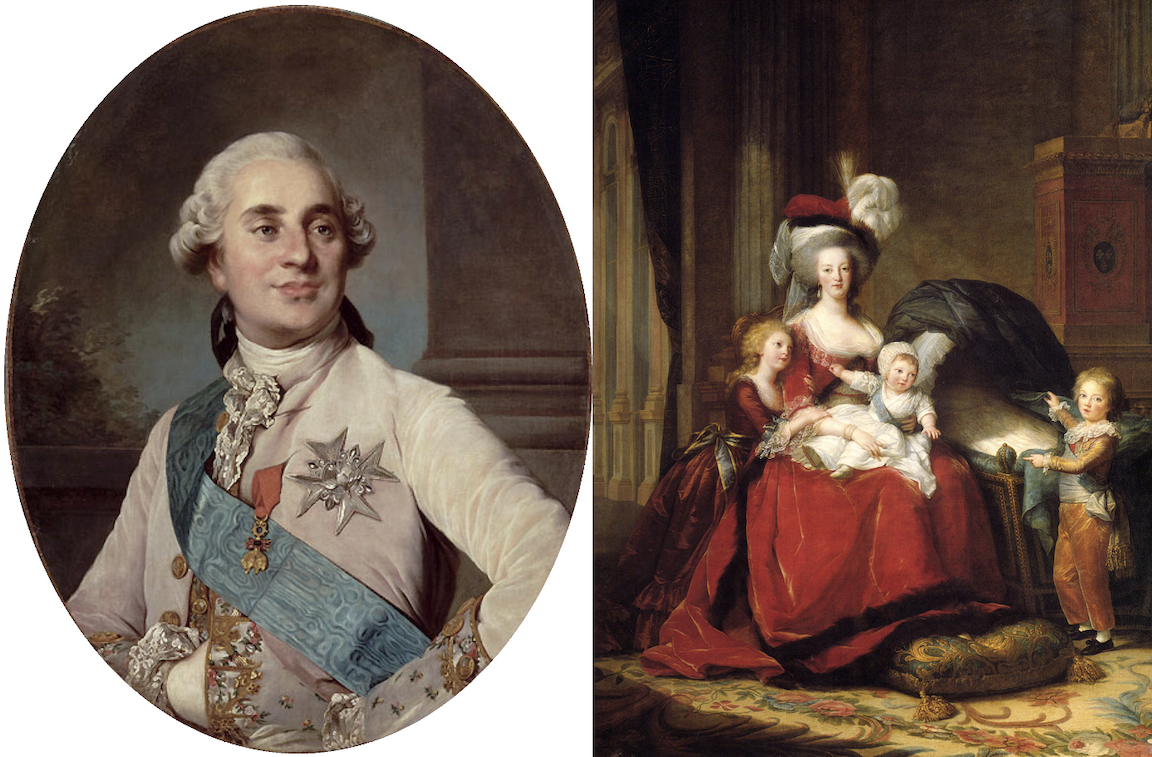
Left: Portrait of Louis XVI in adulthood, by Joseph-Siffred Duplessis, Public Domain
Right: Marie Antoinette and her surviving children, by Élisabeth Louise Vigée Le Brun - Public Domain
|
|
Lauzun is welcomed as a hero
• Rochambeau now selected Lauzun and Deux-Ponts to carry news of the capitulation to King Louis XVI. The duc de Lauzun was not too happy to leave his hussars, and wrote: “I advised him to send M. de Charlus. This would put him in the good books of M. de Castries and might perhaps secure better treatment for the army. I could not bring him to agree. He said to that I had been first in action and ought to carry the news, that M. le Comte William des Deux-Ponts had been the second, and should carry the details.”
• On his end, Rochambeau wrote to the Minister of War, the Comte de Ségur:
"Sir, I have the honor to send you the Duc de Lauzun who is bringing to the King the news of the capture of Lord Cornwallis and his corps of troops. Comte William de Deux-Ponts will bring the duplicate and the recommendation for Grâces. These are the two superior officers who have performed the two most distinguished feats, as you will see in the journal that will inform you of all the details"
• Upon his arrival at Brest, France, on the evening of November 19, Lauzun expeditiously made his way to Versailles. As documented in his memoirs, Lauzun reported that his news was received with great elation by the King, who proceeded to inquire about the details and express his gratitude. In light of this triumph, Louis XVI issued a decree for a Te Deum to be performed in Paris on November 27, and further directed all bourgeois and inhabitants of the city to illuminate the facades of their residences in commemoration of this momentous victory.
• The return trip to America was very difficult. After leaving La Rochelle on July 14, 1782, Lauzun fell sick with fever like most of the crew, there was a skirmish with a British frigate which caused many deaths among the sailors, and upon arriving at the Chesapeake the ship ran aground and Lauzun and other officers barely made it to the shore. Lauzun wrote about his experience:
"I was still in a fever, I could barely stand, and I should never have been able to reach a house [...] I made my way slowly towards Philadelphia … the French and American doctors were agreed in their opinion that I must die before the end of the autumn. The doctors had declared that it was impossible that I should think of joining the army, then M. de Rochambeau [...] wrote bidding me do everything in my power to come to camp [...] I made up my mind without consulting anyone. I mounted a horse and rode to camp, death being no worse on the road than in Philadelphia. The ride did me good. I was already much better when I arrived at Headquarters."
|
|
Marker, ”A French Legion Kept Watch Here”
Winter 1782-1783
|
|
818 N Market St, Wilmington, DE 19801
|
|
Safeguarding the young Republic
• While peace negotiations with the British were taking place in Paris, no one could say for sure if hostilities would not resume. To this end it was decided that Lauzun's Legion would stay behind a few more months, as an "insurance policy".
• Inscription of marker (excerpts):
“During the American Revolution Lauzun's Legion spent the winter and spring of 1782-1783 in Wilmington to help guard Philadelphia and Baltimore from British attack. The troops were housed in the Wilmington Academy, located where the Grand Opera House stands today. The Legion protected the region, enriched the town, and gave us many new citizens.”... “In August 1782 Rochambeau and his troops passed through Delaware going north to Boston. But in October of 1782 — a full year after the siege at Yorktown — the British army still occupied New York City and Charleston, South Carolina.”
[...]
Wilmington is Host to 600 French Soldiers
“Lauzun's Legion of Foreign Volunteers was sent to Wilmington, from where it could rapidly move to defend the U.S. capital city of Philadelphia or the French siege artillery, which had been left at Baltimore. From December 1782 to May 1783 some 280 hussars (mounted infantry — see figure at left) plus 100 grenadiers, 100 chasseurs (light infantry) and 100 artillerymen lived in Wilmington Academy and vacant houses in the city.”
[...]
The Legion's Economic and Social Legacy
“The French helped the local economy recover from war taxes by paying for their food and lodging using silver coins — "real money". The French paid local carpenters to build a stable for 280 horses behind the academy and held military drills several times a week. The officers stayed with local families and attended meetings of the local masonic lodge.”
Erected by Delaware State Society, Daughters of the American Revolution; National Society Sons of the American Revolution."
|
|
Lauzun's Legion leaves America
• On the 9th of May in the year 1783, the Legion commenced its journey from Wilmington, Delaware, aboard five vessels, namely la Gloire, la Danaë, l'Astrée, l'Active, and Le St. James, and eventually arrived at Brest, France, approximately a month later on the 11th of June. Subsequently, on the 5th of October in the same year, the Legion's two artillery companies departed from Baltimore, Maryland, on the Duc de Lauzun and the Pintade, and arrived at Brest on the 10th of November.
• The Legion left behind two of its fusilier companies, which were subsequently relocated to the West Indies. In January and February of 1782, these companies, under the leadership of French naval Captain Armand Guy Simon de Coëtnempren, Comte de Kersaint, accompanied his flagship Iphigénie and four other vessels to Demerara (now part of Guiana). The expedition encountered minimal resistance and the detachments from the Regiment Armagnac and the Legion launched an assault against the British garrison, ultimately compelling Governor Robert Kinston and his army detachment from the 28th Regiment of Foot to surrender. This victory resulted in the surrender of Essequebo and Berbice to the French on February 1st and 5th, respectively.
• On the 14th of September 1783, the Régiment des Hussards de Lauzun, number 6, a regiment of regular hussars, was formally established in Hennebont (near Lorient in Brittany) upon its homecoming. The proprietorship of the regiment was retained by Lauzun until the onset of the French Revolution.
|
|
The aftermath: The French Revolution |
|
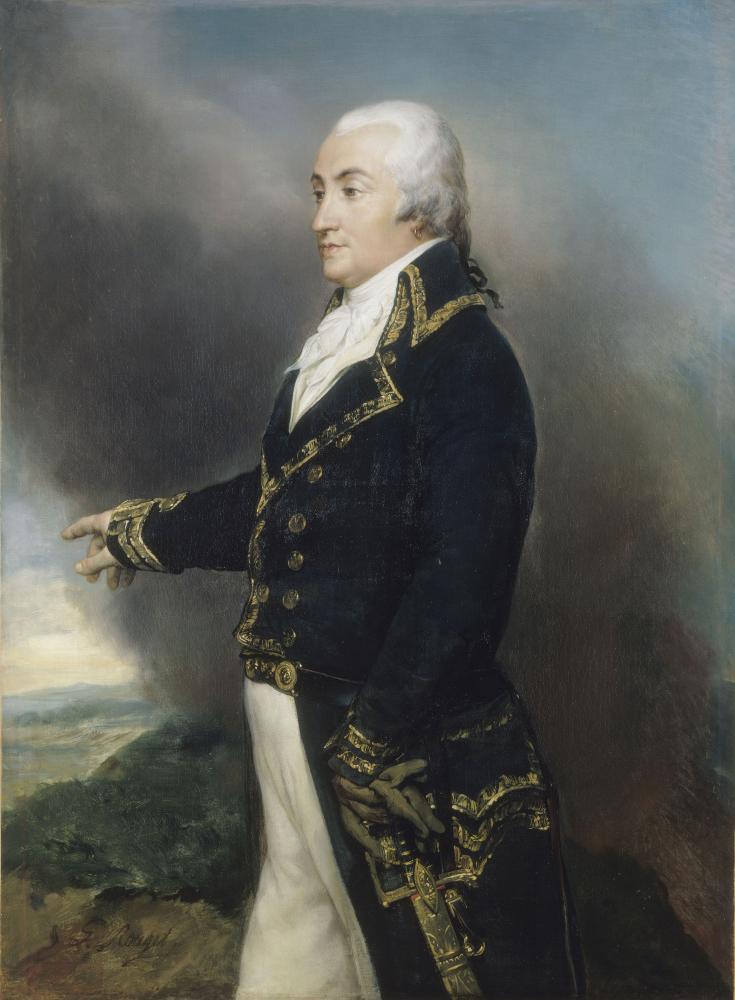
Portrait: Armand-Louis de Gontaut, duc de Biron, général en chef de l'armée du Rhin (1747-1793), Georges Rouget, 1834, Public Domain
|
|
The duc de Lauzun becomes the duc de Biron, and sides with the moderates during the French Revolution
• The duc could have stayed in America. General George Washington was impressed by the Duc de Lauzun's "politeness, zeal and attention" and complimented him repeatedly. In fact, Washington had hoped that Lauzun would serve in the American peacetime army after the war, but Lauzun received the order to sail for France on 11 March 1783 and was promoted to mestre de camp.
• In 1788 he became commander of a cavalry brigade. Also in 1788, upon the death of his uncle, Louis Antoine de Gontaut, he assumed the title of Duc de Biron.
• In 1789, the noblesse of the seneschalty of Quercy elected him as their deputy to the Estates-General, and he became affiliated with the Revolutionary cause. He joined the faction led by the duke Philippe d'Orléans and subsequently faced allegations of serving as the latter's confidant and covert operative. During the investigative proceedings of the Châtelet, which pertained to the crimes of "lèse-nation" committed on 5 and 6 October 1789, when the King and the royal family were forced to leave Versailles for Paris, he was accused of having been present alongside the revolutionary plotters.
• In 1791, he was appointed by the National Constituent Assembly to receive the oath of the army of Flanders, and subsequently assumed command of the army. On July 9, 1792, he was appointed as commander of the Army of the Rhine, tasked with monitoring the movements of the Habsburg monarchy troops, then the army of Italy (25 December), and the army of the Coasts of La Rochelle (15 May 1793).
• In May 1793, he was reassigned to the French Revolutionary Army of the Coasts of La Rochelle, which was engaged in combat against the Vendéan insurgency during the Reign of Terror. He achieved several notable victories, including the capture of Saumur and the triumph at battle of Parthenay. However, his troops' insubordination and the suspicions of his political superiors rendered his position untenable, and he submitted his resignation, thereby relinquishing his command on 16 July 1793.
• It was the height of the "Terror" and the fact that he was an aristocrat by birth was tantamount to a death warrant. He was accused of "incivisme", or a lack of civic virtue, which was considered equivalent to treason, by the infamous Jean-Baptiste Carrier. Additionally, he was accused of showing undue leniency towards the insurgents. The public prosecutor, the brutal and bloodthirsty Antoine Quentin Fouquier-Tinville, charged him with conspiring against the unity and indivisibility of the Republic, as well as the tranquility of the interior and exterior security of the French Empire, and betraying the interests of the Republic by abusing his position. As a result, he was imprisoned, sentenced to death by the Revolutionary Tribunal, and ultimately executed by guillotine the next day on December 31, 1793.
• When he came to get him at the prison, the executioner found him eating a dozen oysters and drinking white wine...
"Citizen," said he, " allow me to finish." Then, offering him a glass, he added: "Take this wine; you must need courage in your profession.''
And Lauzun went to his death with a smile on his lips.
A few months later, on June 27, 1794, his wife Amélie de Boufflers suffered the same fate.
|
|
Epilogue: A hero who deserves more recognition |
|
Illustration: Lt.Col.vel.1781, wikifort |
|
An endearing character
• The Duc de Lauzun, often called "handsome Lauzun", "divine Lauzun", "brave Lauzun" , "witty Lauzun", "mad Lauzun", signaled himself by his valor and his chivalrous conduct.
•The Duc de Lauzun has received greater recognition in the United States than in France. While he is but one of many aristocrats who met their demise during the French Revolution, he has left an indelible impression on this side of the Atlantic. Nevertheless, he remains a relatively overlooked figure in the context of the Revolutionary War, and we hope that his significant military contributions will receive greater acknowledgement in the future.
• His Memoirs , which chronicle events up until the year 1783, were officially released under his name in 1822. This publication was subsequently reissued in a revised edition in 1858. Additionally, a collection of letters purportedly authored by the same individual in 1789, detailing the proceedings of the Estates-General, were published in 1865.
• His name is inscribed on the south side of the Arc de Triomphe.
• An American warship was named after Armand Louis de Gontaut: The USS Duc de Lauzun was an armed transport vessel of 20 guns that served the Continental Navy for a brief period between 1782 and 1783. Before France purchased it, presumably to help replenish the coffers of the young republic, she had one more mission: to carry Benjamin Franklin to France carrying the news of Cornwallis's surrender. It also did a voyage to carry home some French troops. On 21 April 1783, Congress authorized Robert Morris to negotiate the sale of Duc De Lauzun when she arrived in France. She was sold there at the end of 1783.
Hopefully, there will be in the future a US Navy ship, perhaps a frigate or a submarine, named after this staunch defender of the fledgling nation!
• As pictured in the pages above, P Street Bridge, a bridge over Rock Creek Park in Washington, D.C., was renamed Lauzun's Legion Bridge in 2006.
• And a Marker, named "Duc de Lauzun" and dedicated to this great soldier of France will be unveiled by your Society on October 18, 2023 at 5:00PM on the grounds of Abingdon Elementary School in Gloucester County, Virginia.
• His name will always be associated with the beginnings of the French Foreign Legion, and with French support to the American Revolution against England.
• Lauzun is a remarkable figure in history who has been unjustly overlooked. He embodied the epitome of aristocracy, possessing impeccable manners and etiquette honed at the Court of Versailles. However, he was also a fearless and tenacious warrior, displaying a rare combination of refinement and ruggedness. He was a sincere friend of the United States and a champion of freedom and democratic values, wholeheartedly embracing the French Revolution from its inception. Unfortunately, he fell victim to the wrath of the most extreme revolutionaries, meeting an untimely demise at the mature age of 46.
One cannot help but wonder what he could have achieved on the battlefield during the Napoleonic Wars!...
|
|
The oldest officer in the entire history of the US Army:
...a Lauzun's Legion Veteran!
|
|
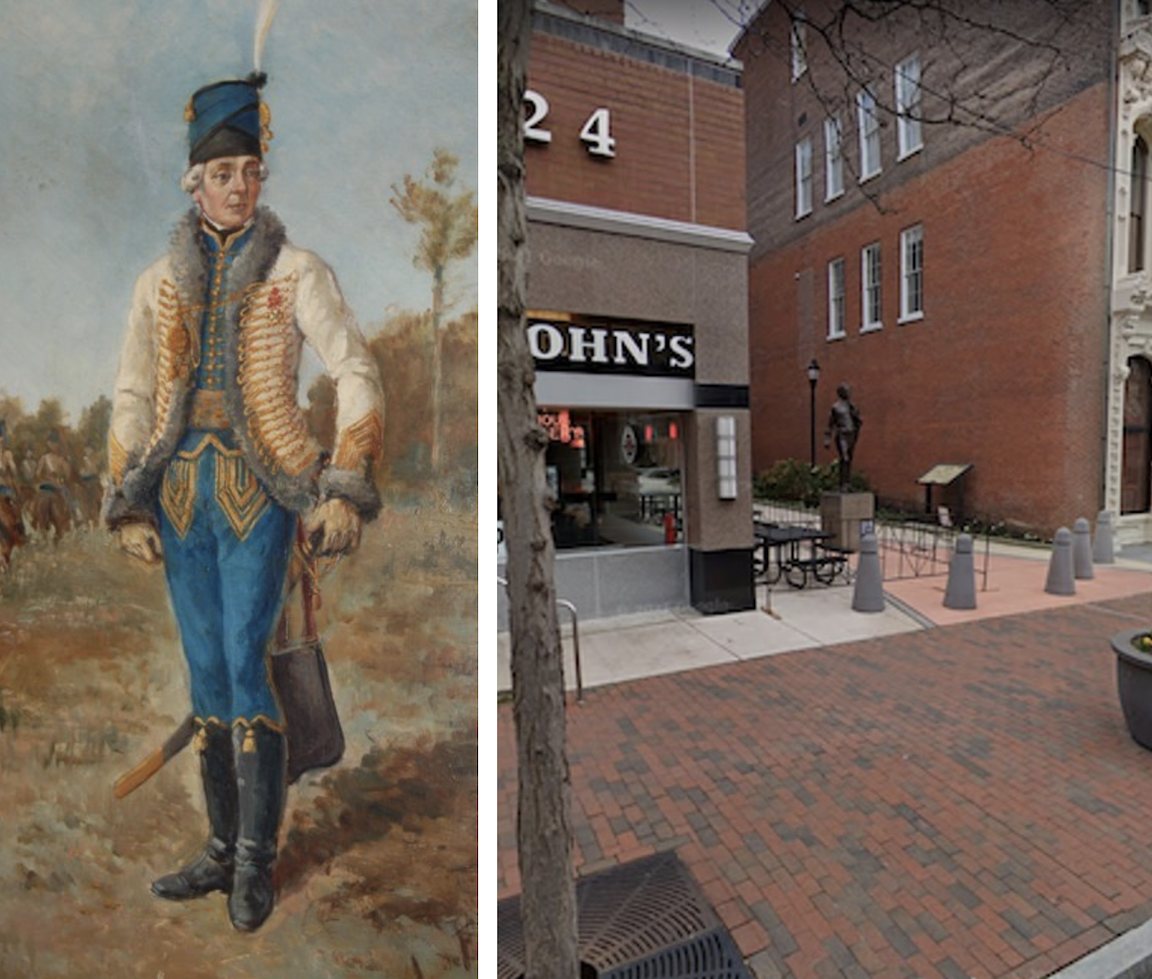
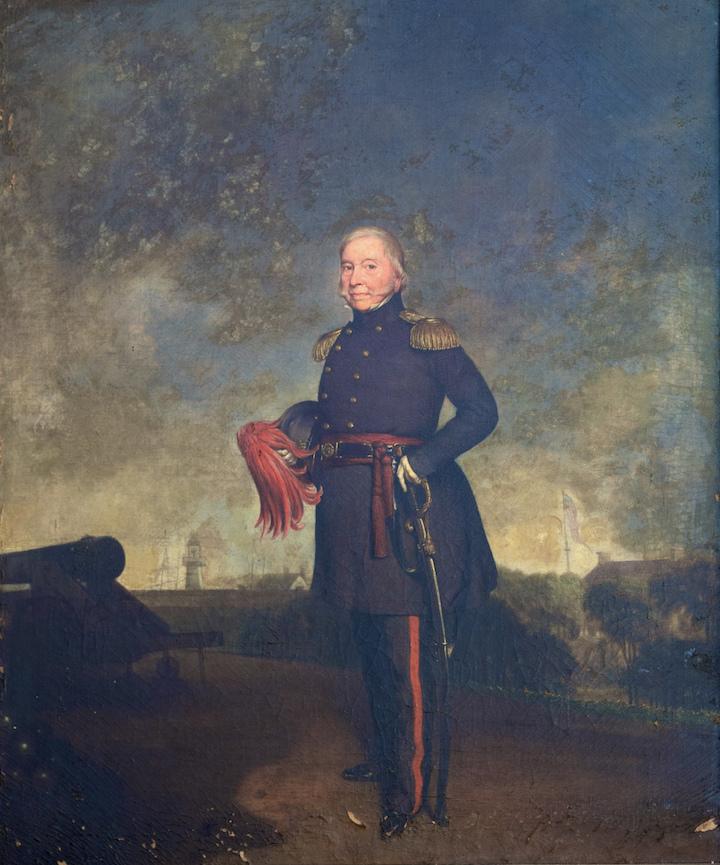
Painting of Gen. John de Barth Walbach, Fort Monroe, Old Point Comfort, VA, 1846
Photo by Bo Gardiner 1 - Own work, CC BY-SA 4.0
|
|
• Antoine Jean Baptiste de Barth, Baron de Walbach, later known as John Baptiste de Barth Walbach, was born on October 3, 1766 in Muenster, Haut-Rhin, France. Walbach received his military education at the military academy in Strasbourg, Alsace, France. He became an ensign in the Royal Alsace Regiment in 1782 and served in the Lauzun hussars of the French Royal Army from 1784 to 1789.
• When the French Revolution erupted, he fought on the side of the royalists and eventually immigrated to America, where his father had helped found the exile colony of Gallipolis in Ohio.
• Walbach decided to stay in the United States and had an illustrious career in the US Army. He achieved the rank of brevet brigadier general. There was no mandatory retirement age in the US Army at that time. As a result, Walbach remained on active duty until his death in Baltimore, Maryland on June 10, 1857, at the age of 90. He holds the distinction of being the oldest officer in the history of the US Army!
• To honor his legacy, several US Army installations bear his name.
|
|
PAST MONTHLY BULLETINS
OUR GOAL: turn the spotlight on a famous, or less famous, episode or historical figure during the long shared history between France and the United States, with illustrations and anecdotes.
You can have access to all our past Monthly Bulletin
since February 2021 by visiting our website:
You can click on the photos throughout our bulletins and also on the links indicated in blue for more information and direct access to sources.
|
|
In anticipation to the 105th anniversary of the Armistice of 1918 and the Veteran's Day parade in November, we will pay tribute next month to Norman Prince, a volunteer in the Escadrille Lafayette of WWI. His name is inscribed among the 463 conscripts and volunteers who left New York to fight in France and who died for France, listed on the wall of Eglise Notre Dame in Manhattan. |
|
ANNOUNCEMENTS & SAVE THE DATES |
|
A message from
the Washington-Rochambeau Revolutionary Route:
|
|
The French are coming!!
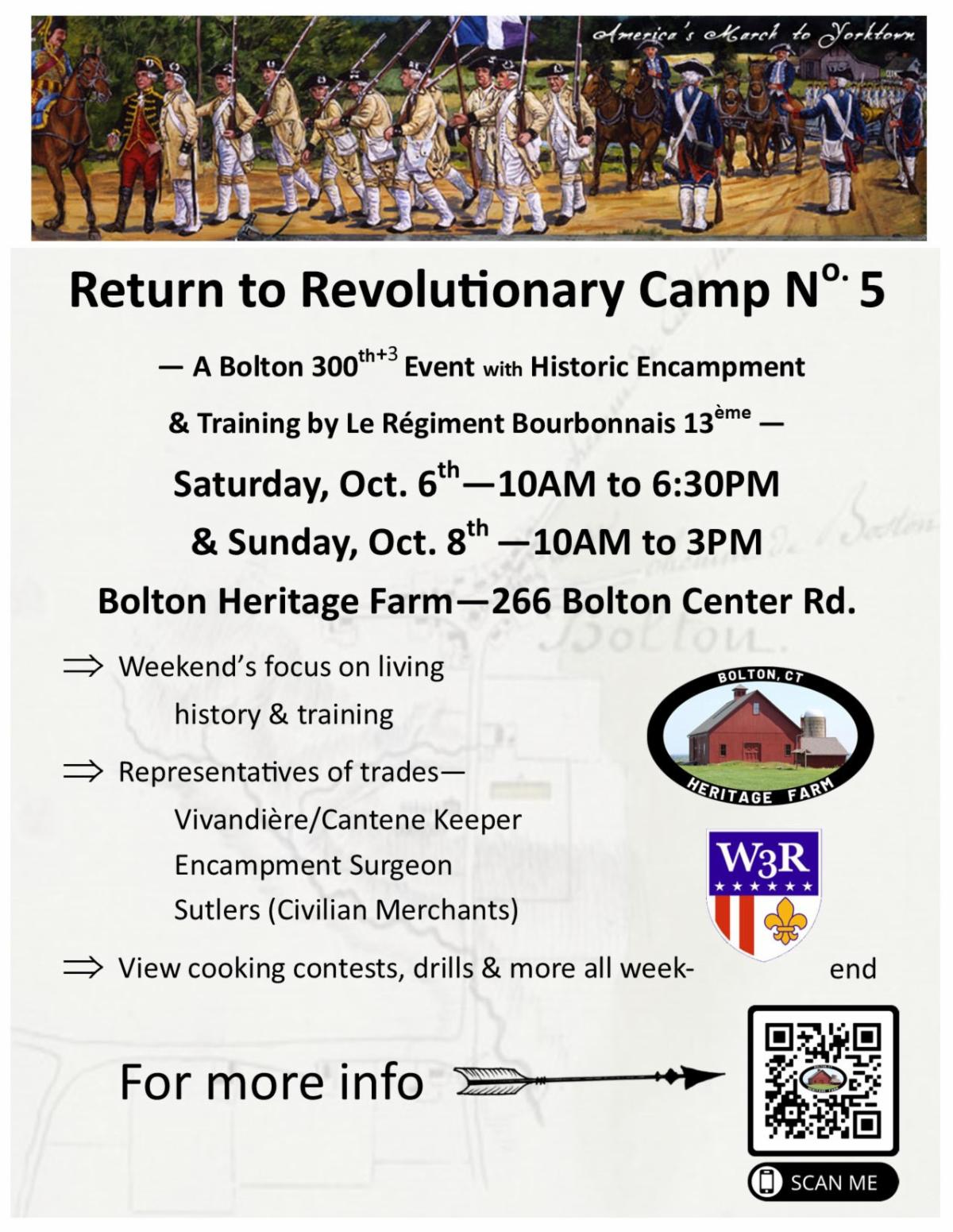
You are cordially invited to a Living History Weekend – a Bolton 300th+3 Event, hosted by the Bolton CT Heritage Farm Commission and featuring an encampment with training and drills, by Le Regiment Bourbonnais!
The encampment and training celebrates Camp Site No. 5, where Marshal Jean-Baptiste Donatien de Vimeur, comte de Rochambaeu and and his troops camped in Bolton on their way to meet General Washington in 1781.
The 2-day event on Saturday 10/7 and Sunday 10/8 is FREE to the public. Please kindly use the attached flier or forward this email to your distribution lists. Additional details will be available soon on the Town’s website – https://town.boltonct.org/bolton-living-history-weekend. We hope to see you there!
|
|
A message from
The Lafayette Trail, Inc.
|
|
Dear Member,
We are pleased to announce the release of episode 23 of Follow The Frenchmen, our Video Series about the Lafayette Trail! The episode takes place at the U.S. Military Academy at West Point, NY, which Lafayette visited on this day in 1824. Click on the video player at the top of this email to check it out now!
The tradition of military cooperation between France and the United States has been the bedrock of the bilateral relationship between our two nations for more than 240 years.
Lafayette, a French-born Revolutionary War hero, served as a major general in the Continental Army during the American War of Independence. In 1824, he effectuated a triumphal tour of the U.S. at the invitation of Congress. His final journey across the young republic lasted 13 months. He was welcomed as a veteran, witnessing throughout the country the ubiquitous affection of his fellow soldiers of the American Army, their families, and friends.
On September 15, 1824, Lafayette was welcomed at the United States Military Academy at West Point, NY. He returned on July 2, 1825, for a second visit to the academy.
What did the Frenchman's visits mean for the community? What was West Point like 200 years ago as opposed to what we can see now? How does the Army celebrate Lafayette and its historical friendship with France? Follow The Frenchmen and find out now!
You may also view episode 23 by visiting our official YouTube Channel.
We hope you will enjoy this episode and look forward to sharing our next installment with you soon!
|
|
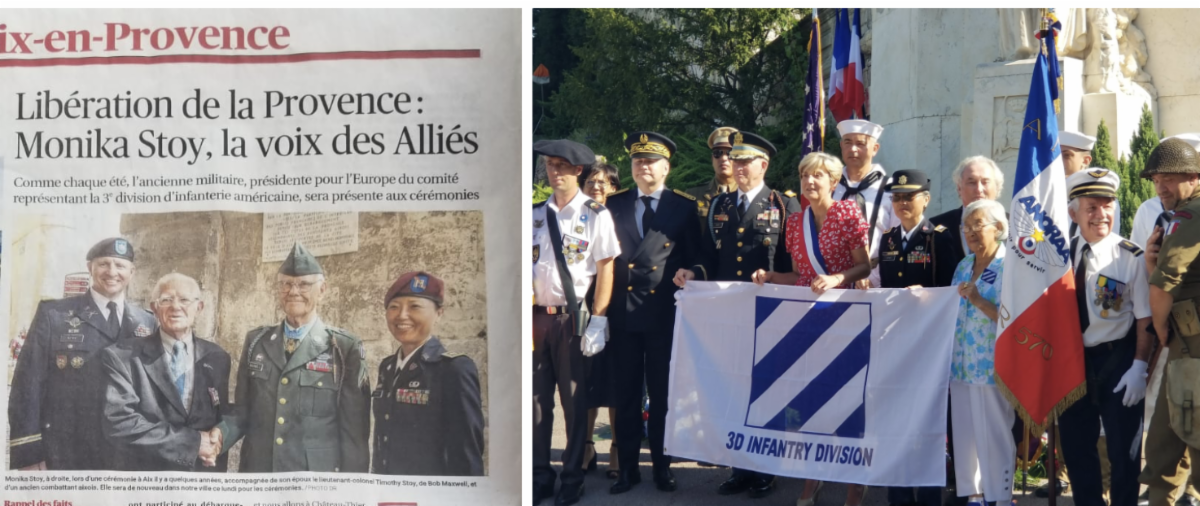
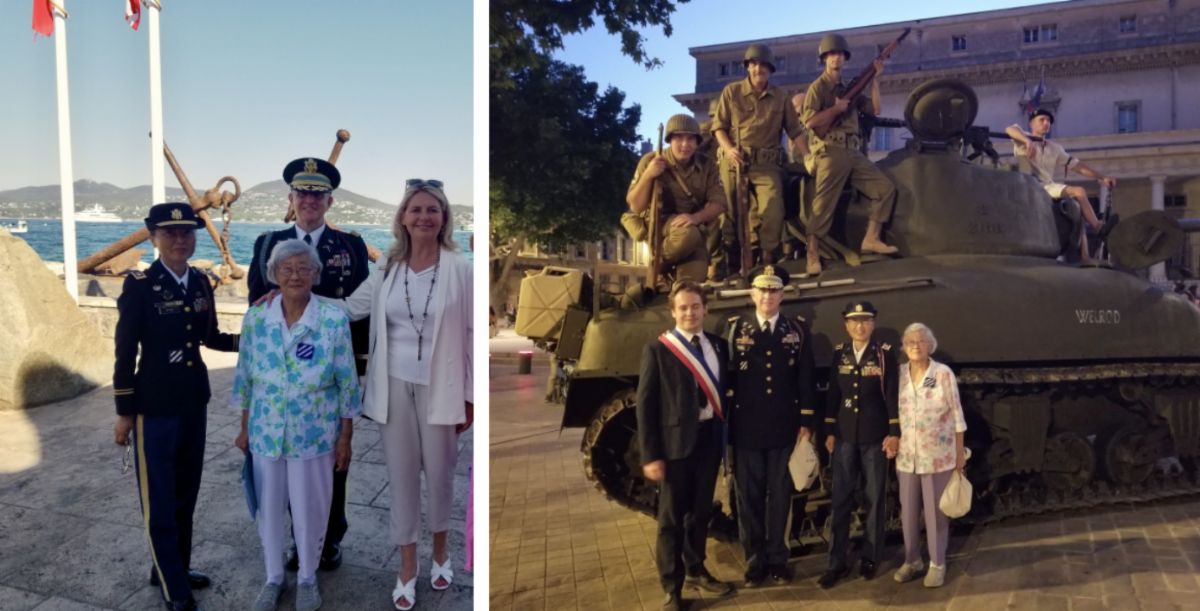
From the Society of the 3rd Infantry Division
Commemorations in France
79th Anniversary Operation Dragoon
Landing in Provence 1944
|
|
Pictured above: ceremonies in Aix-en-Provence Saint Tropez, Avignon, Draguignan, among many others.
Photos: courtesy of Monika stoy
Throughout the summer, Captain, U.S. Army, retired C. Monika Stoy, President, Outpost International, Society of the 3rd Infantry Division, her mother Mrs. Haesook Choi and her husband Lieutenant Colonel, U.S. Army, retired Timothy R. Stoy, to whom we express our gratitude and admiration, as they represented the Division to multiple ceremonies held throughout Provence for the 79th anniversary commemorations of Operation Dragoon, the 7th US Army's Landings in Southern France with attached French Army Group B.
Rock the Marne!
|
|
Touring Exhibition
Châlons-en-Champagne, September 1-11
Verdun Memorial Oct 1-7, Château de Castries, Oct 10-30, 2023
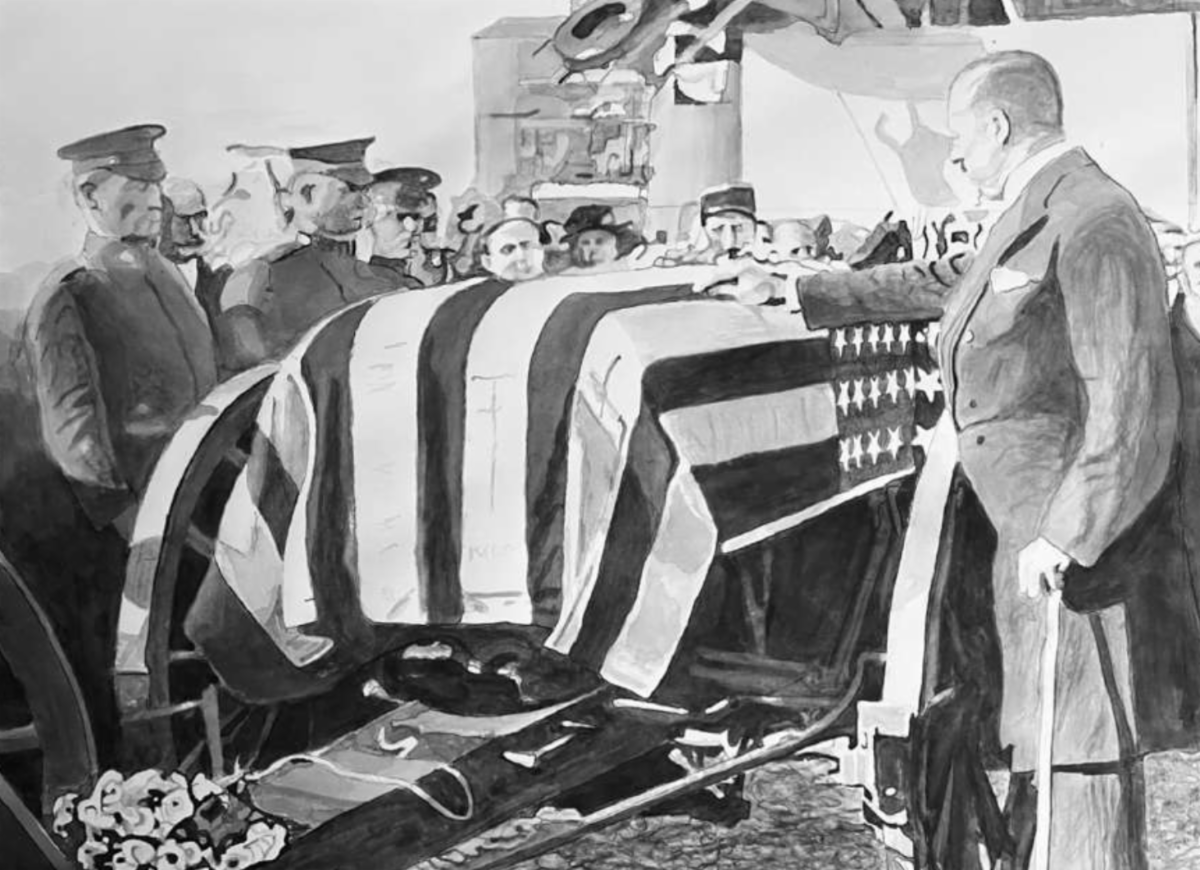
“ The US Unknown Soldier of WWI in France”
by
The Society of Honor Guard / Tomb of Unknown Soldier
Military Women’s Memorial, Arlington National Cemetery
and under the auspices of Le Souvenir Français
|
|
“The whole of France bows down with me before your coffin, brother from America, they can take you back to the great land from which you came, but your French family will always piously preserve your memory and the land of France will not forget that it was to it you entrusted your last dreams.”
- André Maginot, Minister of Pensions, Le Havre, Oct 25, 1921
Illustration above: One of 26 paintings by Dave Rappaport, artist
|
|
Above: click on the thumbnail to view a wonderful short movie has been created by Les Owen, using colorized archival clips from 1921, showing the journey of the Unknown Soldier from Châlons-en-Champagne to Le Havre, then on board the USS Olympia, to his final resting place at Arlington National Cemetery.
You can also access the version with French subtitles HERE
|
|
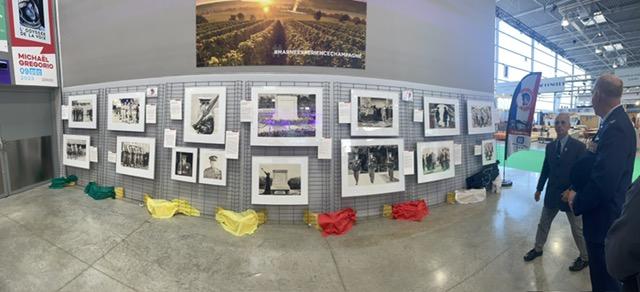
Photos above courtesy of Richard Azzaro, co-Founder and past President of the Society of Honor Guard, Tomb of the Unknown Soldier:
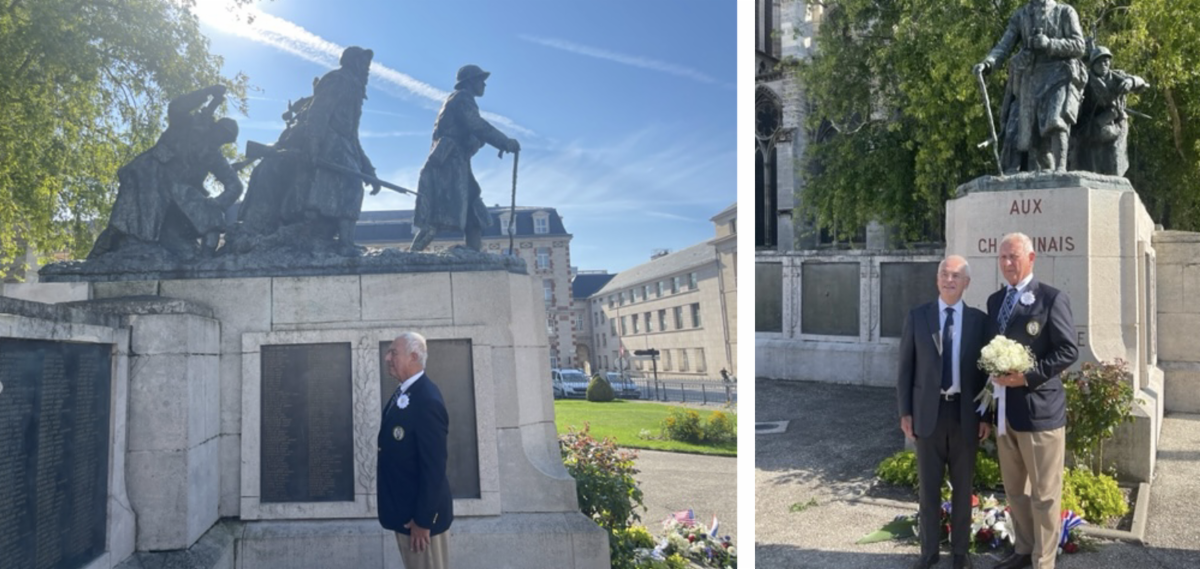
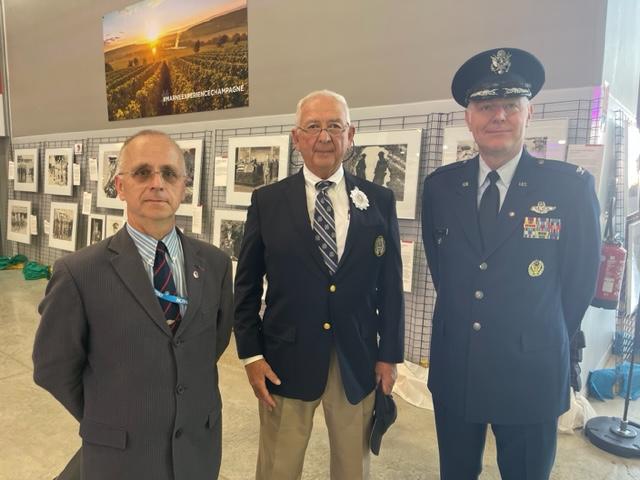
Top: a bird's eye view of the exhibition on display at the Souvenir Français stand, Foire de Châlons-en-Champagne, Richard Azzaro and Le Souvenir Français president general Serge Barcellini in front of the War Monument, and (bottom photo): Général Michel Billard, Deputy General Delegate of Le Souvenir Français for the Marne Region, Richard Azzaro, and COL US Air Force (Ret) Pierre Oury.
|
|
• On October 25, 1921, Minister André Maginot pinned the Legion of Honor on the coffin of the Unknown Soldier at the pier in Le Havre, moments before it was hoisted on board the USS Olympia for the voyage back home. This exhibit of 26 black & white paintings by artist Dave Rappaport retraces key moments of this poignant journey, from the battlefield of Eastern France and Châlons-sur-Marne, to Le Havre, with the people of France lining up to pay tribute to this American soldier who “Died for France” and for the cause of Freedom.
• Inspired by this exhibition that took place at the Military Women's Memorial at Arlington National Cemetery this past November, we worked hand-in-hand with Richard Azzaro, co-Founder and past President of the Society of Honor Guard, Tomb of the Unknown Soldier and Donna Houle, Senior Director of Memorial Engagement & Impact at the Military Women's Memorial to have this very moving and informative exhibition travel to France.
• Thanks to the support and patronage of Le Souvenir Français in Paris, its President-General, Contrôleur Général des Armées(2S) Serge Barcellini, and Mr. Pierre-Marie Delaborde, General Delegate, Souvenir Français Marne, this exhibition was unveiled at the Foire de Châlons-en-Champagne on September 1st and displayed until September 11. It will be displayed at the Verdun Memorial until October 8, and at the Château de Castries (residence of the marquis de Castries, Louis XVI's Minister of the Navy during the War of Independence) starting October 11.
• We express our gratitude to Général d'armée Elrick Irastorza, former Chief of Staff of the French Army, président of the Fondation du Souvenir de Verdun, to Mr. Nicolas Barret, Director, and Mme Amélie Delobel, responsable collections et expositions at the Mémorial de Verdun - Champ de Bataille, and Dr Patrick Bernier and Jacques Fournier of the Amis du Château de Castries for hosting this exhibition illustrating the enduring bonds of alliance and friendship between France and the United States.
• Our thanks go also to Col US Air Force (Ret) Pierre Oury, member of our Society, United 4 Veterans, and United Airlines for transporting the 26 paintings to France graciously across the Atlantic, and to Jean-François Millet, chairman of Logfret Logistics Group for graciously providing domestic transportation in France.
Mémorial de Verdun - Champ de Bataille
Address:
1 avenue du Corps Européen BP 60048
Fleury-devant-Douaumont 55101 Verdun Cedex
Château de Castries
Address:
Chateau de Castries
Rue du Château, 34160 Castries
|
|
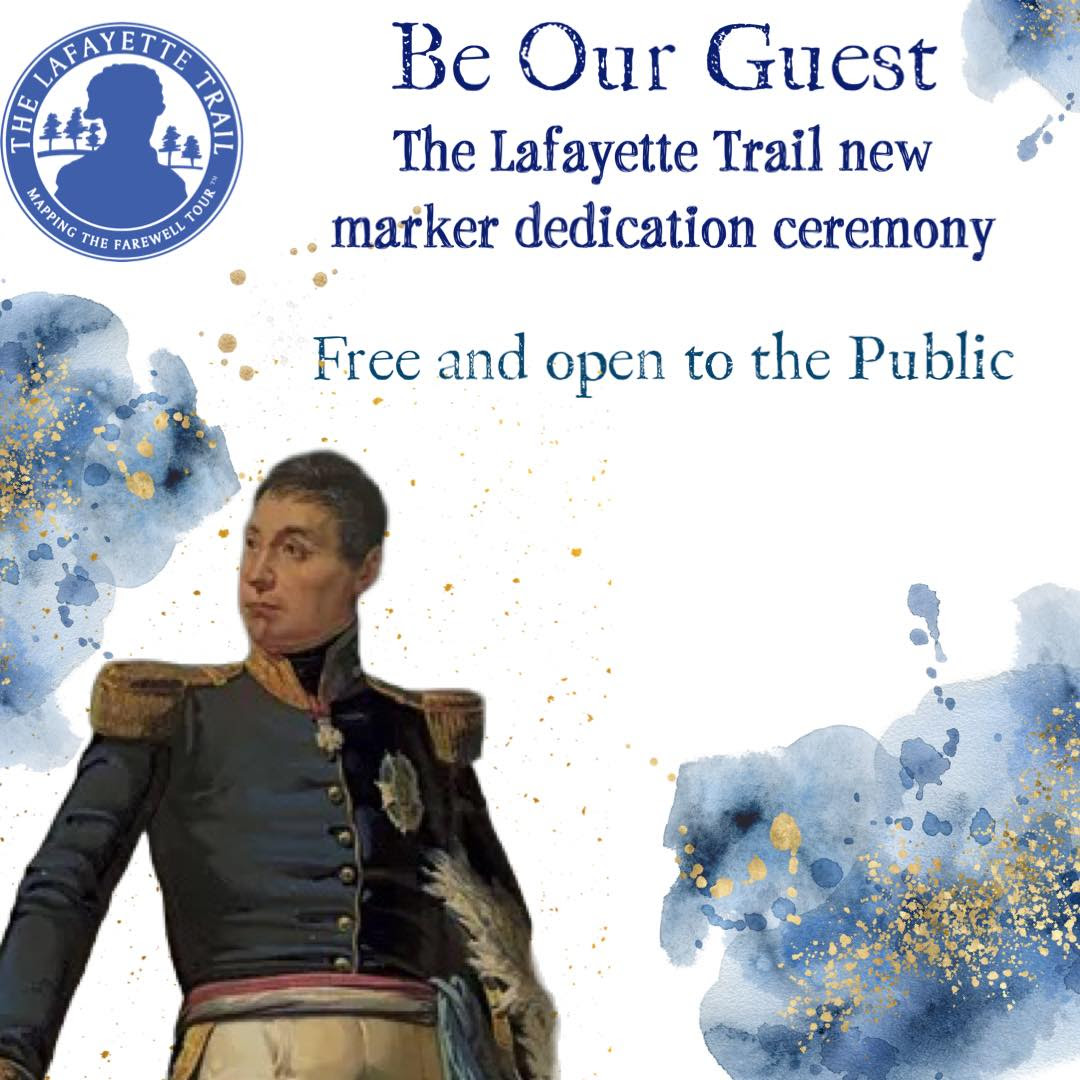
From the Lafayette Trail Inc.
Inaugurations of three Lafayette tour markers
September 27 & 28, 2023
|
|
We received these exciting announcements from Julien Icher, President:
Wednesday, September 27, 2023, at 10 am ET:
The Lafayette Trail, Inc. is pleased to announce the upcoming dedication of a new Lafayette Trail historic marker in Mendon, NY. The marker dedication ceremony will take place at 1371 Pittsford Mendon Rd, Mendon, NY 14506.
Plenty of off-street parking will be available for attendees near the marker location.
Wednesday, September 27, 2023, at 3:30 pm ET.
The Lafayette Trail, Inc. is pleased to announce the upcoming dedication of a new Lafayette Trail historic marker in Lockport, NY. The marker dedication ceremony will take place at 13 Park Ave, Lockport, NY 14094.
Limited street parking will be available for attendees near the unveiling site.
Thursday, September 28, 2023, at 10 am ET.
The Lafayette Trail, Inc. is pleased to announce the upcoming dedication of a new Lafayette Trail historic marker in Fredonia, NY. The marker dedication ceremony will take place at the Darwin R. Barker Museum located at 7 Day St, Fredonia, NY 14063.
.Limited street parking will be available for attendees near the unveiling site.
The 3 events will include formal remarks from all the stakeholders involved in the preparation of the marker, the actual unveiling, as well as photo opportunities with local officials. Each ceremony is expected to last 45 minutes.
|
|
From Odell House - Rochambeau Headquarters
Friday, September 29, 2023 from 5PM to 7PM
Saturday, September 30, 10AM to 4PM
|
|
You’re Invited to a Special Event!
September 29, 5 to 7 p.m.
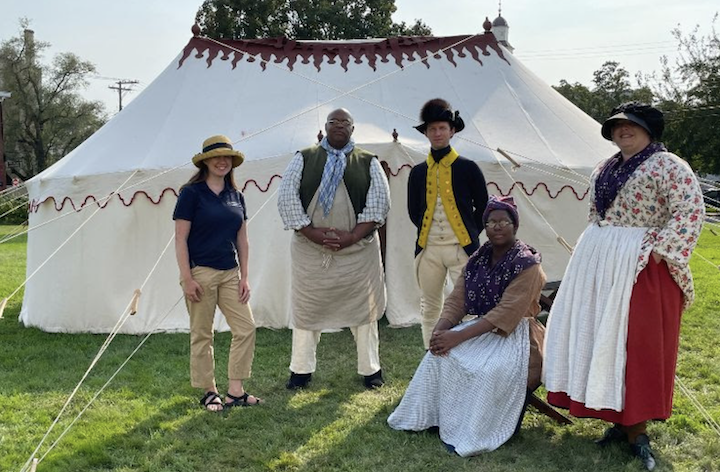
Please join us for a private tour of
George Washington’s Revolutionary War Pavilion and Tents,
guided by historic interpreters from Philadelphia’s
acclaimed Museum of the America Revolution.
Please join Friends of Odell House Rochambeau Headquarters for a private showing of General George Washington’s Revolutionary War Tent, coming to Hart’s Brook Park & Preserve from the Museum of the American Revolution (MAR) in Philadelphia. Reenactors from MAR, in period costumes, will take you through exact replicas of Washington’s personal tent, the baggage and dining tents and the soldiers’ quarters. When American troops camped in Ardsley in 1781, Washington’s tents were erected on Appleby Farm nearby, while General Rochambeau stayed at OHRH.
Our 2023 fundraising event will take place
Friday, September 29, 2023 from 5 to 7 p.m.
at Hart’s Brook Park & Preserve, 156 Ridge Road, Hartsdale N.Y.
Come for a fantastic evening and help us create exciting and unforgettable exhibits for the future museum at Odell House Rochambeau Headquarters.
Hors d’oeuvres and mocktails will be served in the historic Geisman Barn.
Dress code: Country causal. Handicap parking available.
Minimum donation is $75 per person. Please give generously!
Click below to donate online or by check.
Please RSVP by September 15, 2023
Space is limited, so please respond early.
The Next Day:
Friends of Odell House Rochambeau Headquarters Present
COLONIAL DAY
Saturday, September 30, 10 a.m. to 4 p.m.
Hart’s Brook Park & Preserve, 156 Ridge Road, Hartsdale, N.Y.
Featuring George Washington’s Revolutionary War Tents & Encampment, from Philadelphia’s Acclaimed Museum of the American Revolution
Come see what life was like during the 1781 Encampment of American and French troops in Greenburgh!
· Tour Washington’s Revolutionary War Tents and Encampment, guided by historic interpreters from the Museum of the American Revolution.
· Meet George Washington, Le Comte de Rochambeau, and Ben Franklin.
· See military marching and drills by re-enactors of the 5th New York Regiment and Hearts of Oak.
· Toys, games, and activities for kids; demonstrations of Colonial cooking, wool spinning, blacksmithing, and more!
· Learn about the role Odell House Rochambeau Headquarters played in the 1781 encampment and how this historic site is being restored.
Admission is $10 for ages 13+; $5 for ages 3-12 and active service members/veterans (with ID). Children under 3 are free. Pay when you park with cash, check or Visa, MasterCard and Discover cards. No electronic payments.
Parking at Ridge Road Park, 287 Ridge Road, Hartsdale, N.Y. Free shuttle bus service to the nearby event. Handicap parking available at the Hart’s Brook Park site.
This event is brought to you by Friends of Odell House Rochambeau Headquarters and the Town of Greenburgh. It is part of the Hudson River Valley Ramble, an event series that celebrates the history, culture, and natural resources of the Hudson River Valley.
Funding provided by Friends of Odell House Rochambeau Headquarters, Maurice D. Hinchey Hudson River Valley National Heritage Area, Town of Greenburgh and Westchester County.
|
|
REMINDER
YORKTOWN DAY REGISTRATION
|
|
We cordially invite you to attend the upcoming Yorktown Day event, which promises to be an exceptional Franco-American celebration. This occasion showcases the unwavering patriotism and national pride of both nations, providing a vivid display of their shared values. If you have yet to experience this remarkable event, we strongly encourage you to join us next month.
Wednesday October 18th - 5:00 PM – 5:30 PM
Battle of the Hook Interpretive Signage Dedication
Located at Abingdon Elementary School, 7087 Powhatan Drive Hayes, VA 23072
(12-minute drive from Yorktown)
The American Society of Le Souvenir Français, Inc. will proudly unveil two interpretive markers telling the important story of Gloucester County’s 1781 Battle of the Hook. The largest cavalry battle of the American Revolution, the Battle of the Hook has often been overlooked, yet it is one of the most important episodes of the siege of Yorktown, when the Duc de Lauzun's famous Legion of hussars with 300 troops of the "Infanterie de Marine,” and Lieutenant Colonel John Mercer's Select Battalion of Grenadiers, under the overall command of Brigadier General Claude de Choisy, defeated Lieutenant Colonel Banastre Tarleton's British Legion and a detachment of the Royal Welch Fusiliers.
Join us as we commemorate the October 3, 1781, Battle of the Hook by dedicating two historical markers. We expect many local dignitaries and representatives from the French government and military. The program will end promptly by 5:40, giving everyone time to travel to Yorktown for the annual dinner.
Event Open to the Public, no RSVP necessary
This marker is the work of a Committee consisting of :
Nicole Yancey • Admiral Frédéric de Rupilly
Colonel Aymeric Tardieu de Maleissye • Lt Colonel Mathieu Brulais
Johnny Carawan • Dr. Robert A. Selig, Ph.D. • P.J. Lambert •
Robert Kelly, Jr. • Warren Deal • Thierry Chaunu
Our special thanks to Dr. Robert A. Selig, Ph.D., who wrote the text of the markers, to Robert Kelly, Jr. Vice President, American Friends of Lafayette for his decisive role in the entire project and for the organization of this dedication, to Lawrence Abell and Ellen von Karajan, respectively Chairman and Executive Director of the Washington Rochambeau Revolutionary Route Association, who generously donated the markers' frames, to P.J. Lambert and Warren Deal for their extensive contacts and constant support, and to Nicole Yancey, former Consul of France in Virginia, and Regional Delegate of Le Souvenir Français in Virginia, who has helped organize the celebrations of Yorktown for decades.
Wednesday October 18th - 6:00pm "Yorktown Victory Dinner"...
The annual Yorktown Day Association dinner will be hosted by the Daughters of the American Revolution and held at the American Revolution Museum in Yorktown. The cost of this dinner is $75 per person. RSVP and payment details can be found: HERE
ALL DAY Thursday October 19th
"Yorktown Victory Celebration"...
On October 19, 2022, we will observe the 241st anniversary of the surrender at Yorktown. This momentous occasion will be celebrated with a series of parades, ceremonies, and patriotic exercises. As part of the day's events, we have prepared an itinerary for the morning, which includes...
8:30am – Commemorative Ceremony at the French Cemetery, Yorktown
Battlefield. This is where 50 French soldiers and sailors are buried in a mass grave, in a clearing along the Battlefield Road. The American Society of Le Souvenir Français, Inc. will honor them with a wreath, which will be laid by its president Thierry Chaunu and Admiral Frédéric de Rupilly.
9:10am – Commemorative Ceremony at the French Memorial honoring
the French and American Alliance. This event is organized by LCL Mathieu Brulais, French Army and the French military contingent at NATO in Norfolk, as well as the French War Veterans of Washington DC, led by its president Mr. Alain Leca, who is also the Souvenir Français' Regional Delegate for the District of Columbia. The American Society of Le Souvenir Français, Inc. will lay a wreath to honor the French Soldiers and Sailors who gave their lives for the Independence of the United States.
9:10am – Wreath-Laying Ceremony at the grave of Governor Thomas
Nelson, Jr., at Grace Episcopal Church, Yorktown, sponsored
by the Virginia Society, Sons of the American Revolution.
10:30am – Yorktown Day Parade. Please reply to this email if you would like to march in the parade with other AFL members.
11:15am – Patriotic Exercises and Memorial Wreath-Laying Ceremony at the Monument to Alliance and Victory, Yorktown.
An overview of the day can be found: HERE
|
|
SUPPORT US AND BUY (OR OFFER) OUR E-BOOK ON AMAZON! |
|
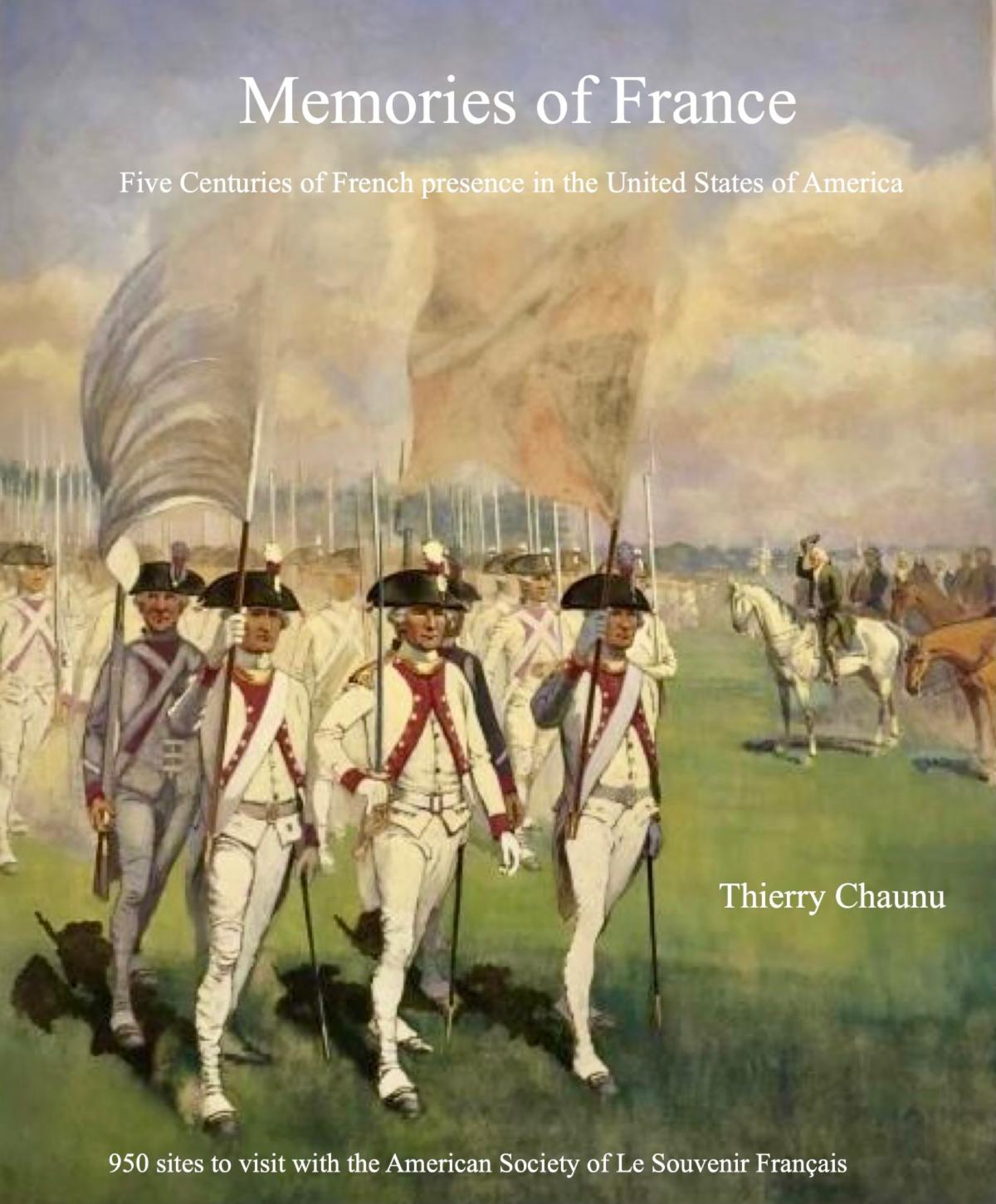
Book Cover : "Scenes from the American Revolution: The French "Soissonnais" Regiment Being Reviewed at Philadelphia by President Washington and Congress, 1781". By Charles MacKubin Lefferts (American, 1873 – 1923). Reproduced with permission of the New York Historical Society Museum. |
|
Support our organization! Purchase or offer this e-book which makes great reading for all ages. All royalties go to the American Society of Le Souvenir Français, Inc. Simply click on this link: Amazon.com
We are pleased to have given to the Consulate General of France several dozens of sites for the application mapstr. The complete and extensive descriptions are only available in our book, copyrighted by our organization.
MEMORIES OF FRANCE
950 sites of French presence in the United States over the past 5 centuries
Everyone knows that Lafayette, the Statue of Liberty, or New Orleans, were all French imports…
But did you know what the first protestant prayer in America, the first recorded birth of a European in North America, the first commercial artist, the first free school west of the Mississippi, the first discovery of Niagara Falls, the first grapefruit planter in Florida, the first discoverer of oil in America, the first Pulitzer Prize in history, the first archbishop of New Mexico, to name just a few, have in common? (Hint: they were all French)
CONTENTS:
Guide - historical directory of more than 950 sites where a French footprint has been left across the 50 states of the present United States, from 1524 to the turn of the 20th century.
It is written in two versions: in English and in French.
It is a tribute to explorers, missionaries, soldiers, adventurers, French, illustrious or unknown, who left their mark in the United States and are recognized, whose memory is honored by a monument, a statue, a stele, a panel, a billboard, a plaque...
Each page corresponds to one site and includes:
• Photo (with url link)
• Address with postal code
• Exact GPS coordinates
• A brief historical explanation
• The exact transcription of the inscription appearing on the pedestal or plaque
• One or more internet links directing the reader to more detailed information
• Some divider pages are dedicated to a brief biography of a related historical figure
This Guide can thus be compared to:
• An “Enthusiast’s dictionary” compiling the traces left by Frenchmen in the United States
• A collection of French postcards from the 50 States
• A tourist guide for all lovers of US history
Available in e-book
• E-book price: $19.50
• The book is copyrighted © American Society of Le Souvenir Français, Inc.
|
|
OUR MISSIONS:
• To preserve the memory of the French soldiers, sailors and airmen who gave their lives for freedom, and who are buried in the United States.
• To honor French Citizens who did great deeds in the United States, or with a strong connection with the United States,
• To promote the appreciation for French culture and heritage in the United States, and the ideals that unite our two nations, in order to pass the torch of memory to younger generations.
• To strengthen the long-standing traditional bonds of friendship between the American and French peoples, and to this end: erect or maintain memorials and monuments and encourage historical research, public presentations and publications in the media.
We are looking to complete our geographic coverage with Regional Delegates for the SouthWest in cities such as Austin, or Houston, and Louisiana, in cities such as New Orleans or Baton Rouge.
The American Society of Le Souvenir Français, Inc. is an independent American corporation, apolitical, established in 1993 in NY, with 501 (c) 3 non-profit status.
|
|
Board of Directors
American Society of Le Souvenir Français, Inc.
Members (2023):
Françoise Cestac, Honorary President • Thierry Chaunu, President, and General Delegate, Le Souvenir Français in the United States • Yves de Ternay, Treasurer • Patrick du Tertre, 1st Vice President • Henri Dubarry • Francis Dubois • Alain Dupuis, 2nd Vice President & Deputy General Delegate, Le Souvenir Français in the United States • Daniel Falgerho, General Secretary • Pierre Gervois • Caroline Lareuse • Clément Mbom, Education Advisor • Jean-Hugues Monier, Auditor • Harriet Saxon • Nicole Yancey
Regional Delegates:
Jacques Besnainou, Great Lakes and Midwest • Bruno Cateni, South
Prof. Norman Desmarais, New England • Alain Leca, Washington D.C. •
Marc Onetto, West Coast • Brigitte Van den Hove – Smith, Southeast • Nicole Yancey, Yorktown & Virginia, former Honorary Consul of France in Virginia
|
|
Help us implement several historic commemorative projects celebrating the 245-year-old Franco-American friendship and alliance! |
|
The American Society of Le Souvenir Français, Inc. is a registered NY State non-profit corporation and has full IRS tax exempt 501(c)3 status. All donations are tax deductible.
Copyright © 2023 The American Society of Le Souvenir Français, Inc.
All Rights Reserved
Merci de nous contacter si vous souhaitez recevoir ce bulletin dans sa version traduite en français.
Contact: Thierry Chaunu, President
697 Third Avenue #341 New York, NY 10017
|
|
|
|
|
|
|