Welcome to the NOSC Team! | | |
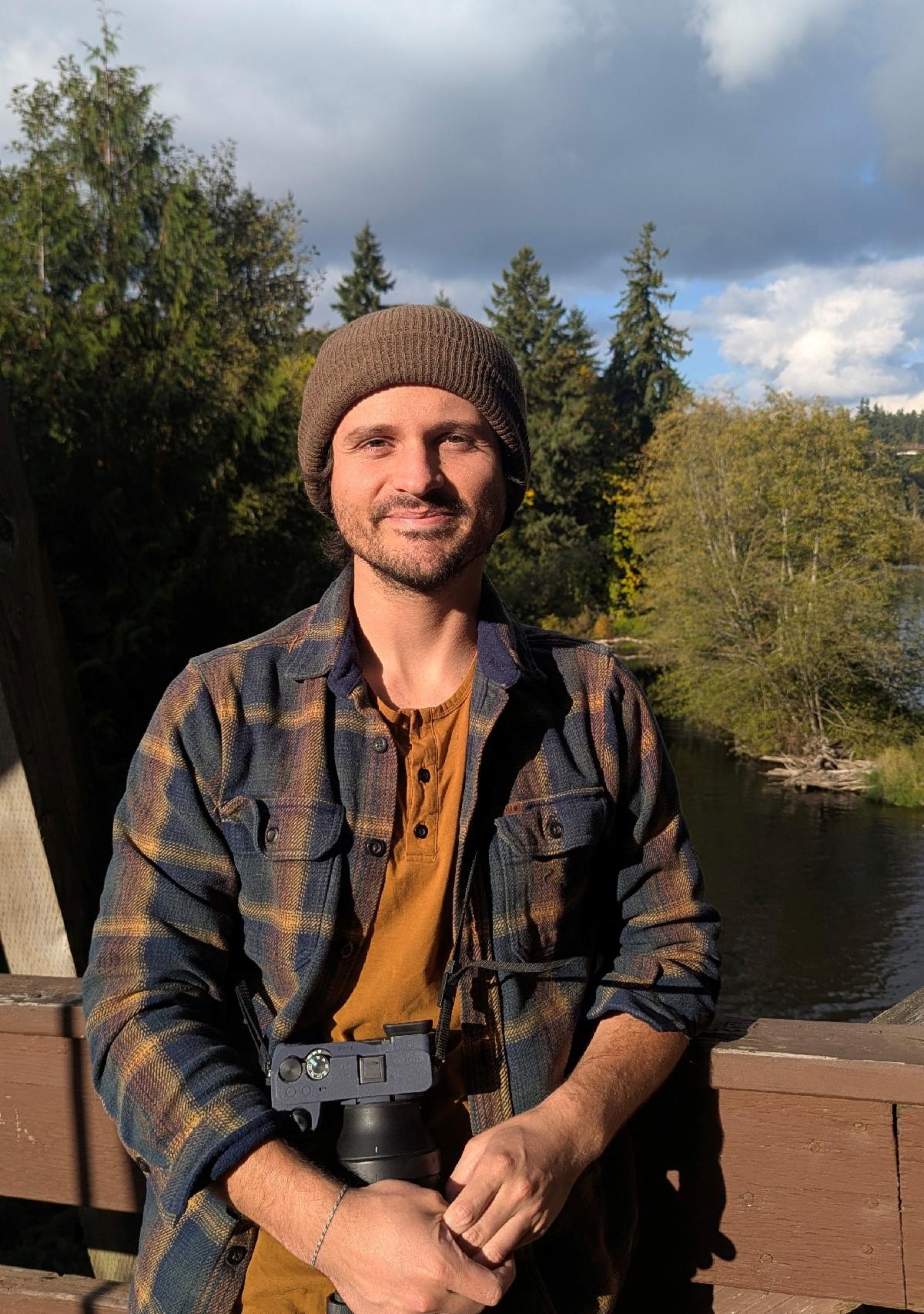
Adam High
Project Manager
| | |
Born and raised in the Ozarks (like the Netflix show) of southwest Missouri, Adam grew up fishing, foraging, and finding any other reason to be outside. After graduating college in New York with a B.S. in Environmental Science, he moved out to Washington to study and work in the field of fish ecology. His career with salmon started with a string of WDFW field tech jobs, which introduced him to the fishes that define the ecology of the West Coast. As the junior project manager at NOSC, Adam is responsible for engaging with communities and stakeholders to collaborate on solutions impacting the natural resources we all rely on. In his off time, he still enjoys all the same outdoor activities, but now also makes some indoor time to nap with his cat and try to make art.
| |
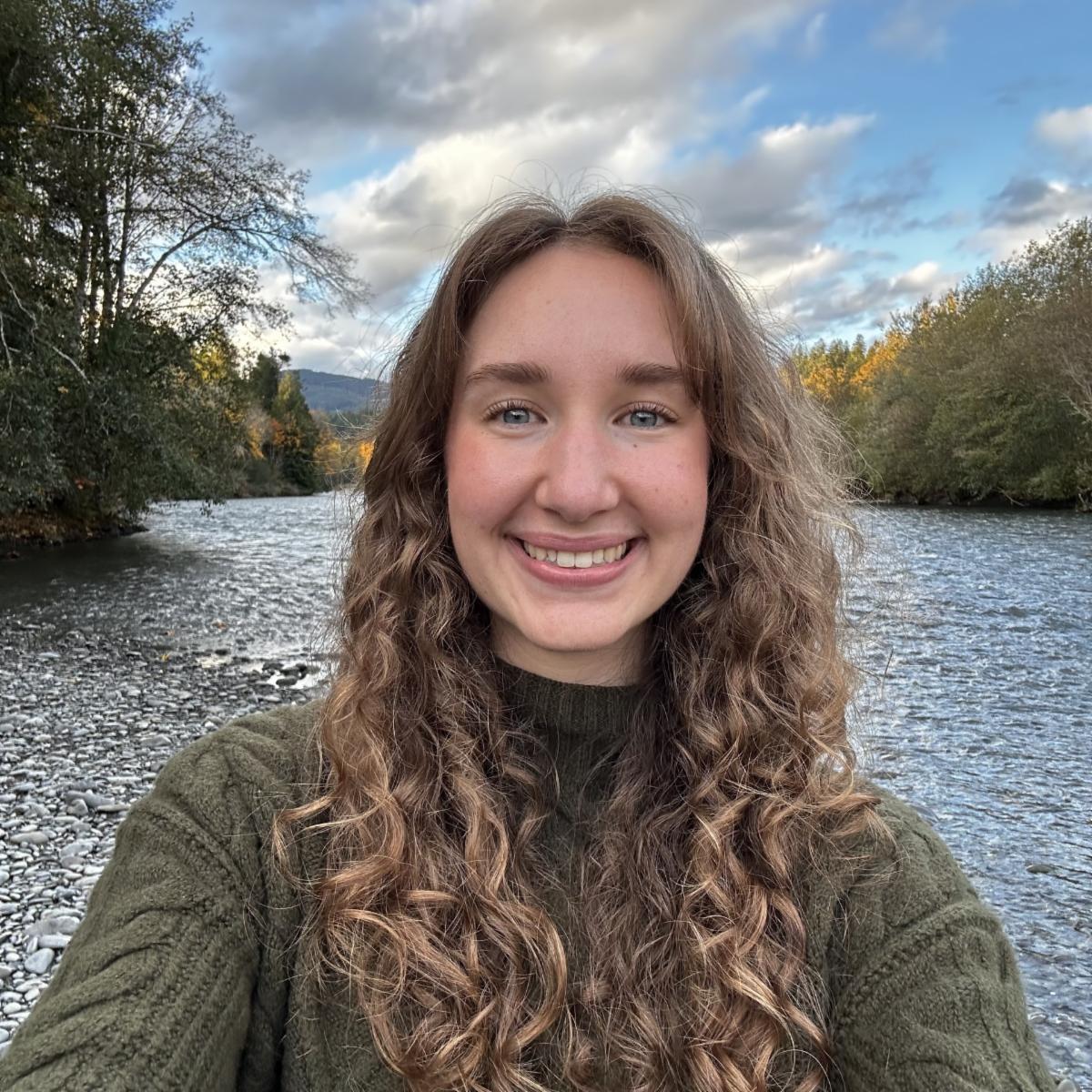
Emma Weaver
Washington Conservation Corps Education and Outreach Associate
|
 | | Emma grew up in Juarez, Mexico, and Cochabamba, Bolivia, before returning to the US to a farm along the Elwha River. Emma’s interest in working outdoors grew as she helped her family with their regenerative farm, built a riparian buffer along the newly unleashed river, and backpacked around the Olympic Mountains. After reading a book in high school about the impact feedback loops have on our climate, Emma decided to pursue a career in Environmental Science and help others appreciate the intricacies of the natural systems we are part of. Emma received her Bachelor of Science in Environmental Science from Seattle University, where she connected her lived experiences of river restoration projects to her lectures on engineered log jams and riparian zones. She worked with NOSC over the summer of 2023 to help with a restoration project on Snow Creek and is delighted to return to work with NOSC’s dedicated community. In her free time, Emma enjoys backpacking, cooking, knitting, and spending as much time as she can outdoors.
| | For All the Young Salmon Fry! | | |
With a 5-month-old at home, my reading list looks a little different these days! I’ve found so much joy in discovering children’s books that introduce salmon, rivers, and watershed stewardship in ways that are playful, colorful, and inspiring. Since NOSC is gearing up for another education season, and with the holidays just around the corner, I thought I’d share a few of my favorites. Many of you are parents, grandparents, or educators yourselves, and these books make wonderful gifts that spark curiosity and care for the natural world.
Together, they create a beautiful bookshelf of salmon wisdom-- connecting kids to rivers, forests, Indigenous teachings, and the joy of being stewards of our planet.
— Sarah Doyle, Executive Director
| |
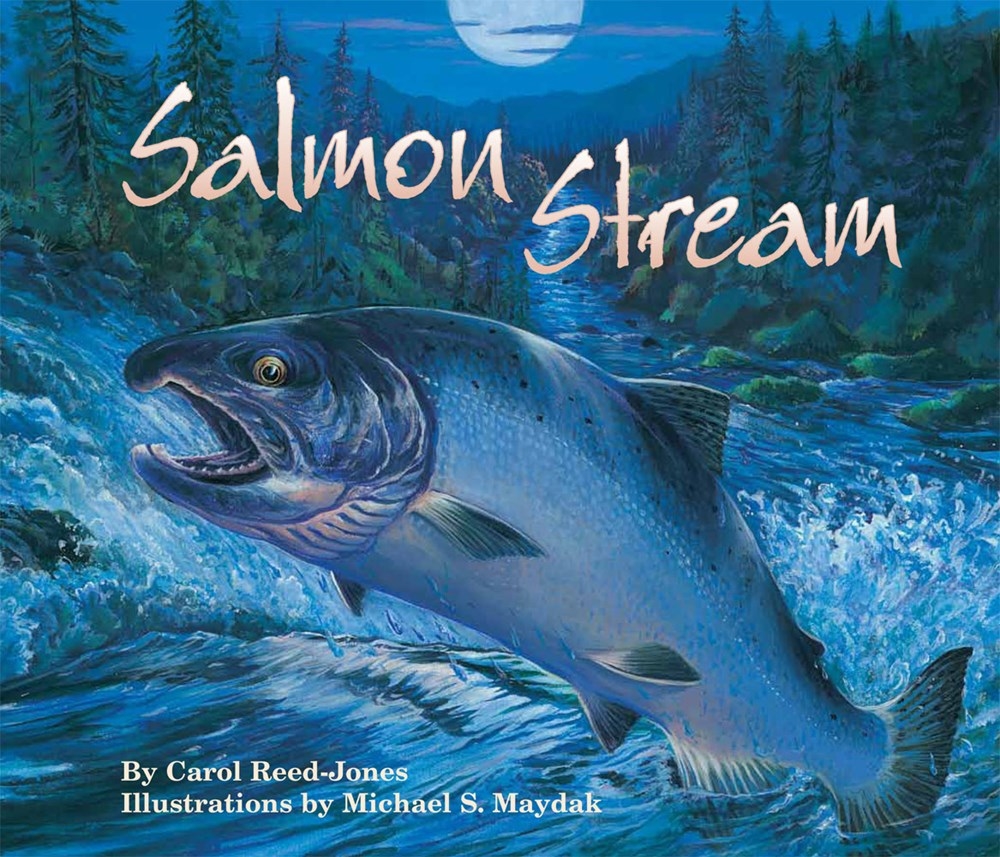
Salmon Stream (Carol Reed-Jones)
Take a swim through the life of a salmon! This lyrical story follows a salmon’s journey from the rushing river to the wide ocean and back again. With colorful illustrations and easy-to-understand language, it captures the wonder of the salmon life cycle and helps kids feel the excitement of nature’s rhythms. Perfect for curious young readers who love animals and the outdoors.
|
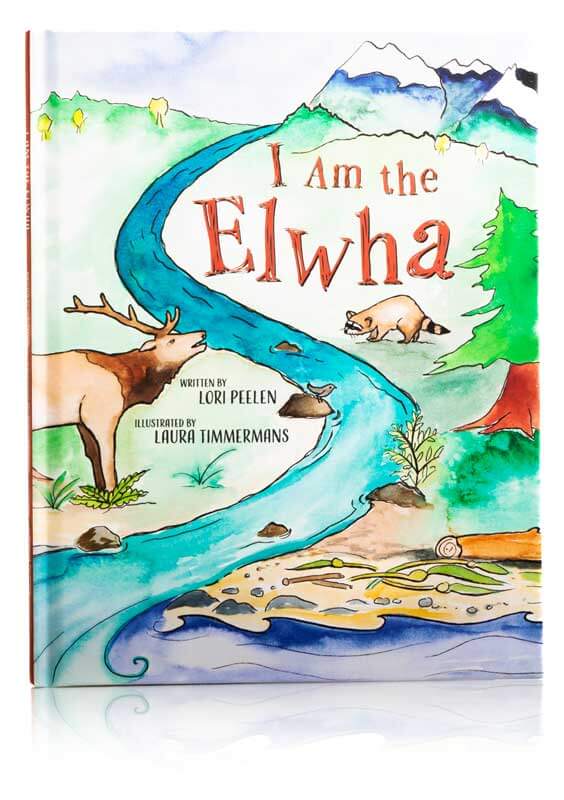
I am the Elwha (Robert Sullivan)
A river speaks! Told in the voice of the mighty Elwha River, this book brings to life the true story of one of the world’s greatest dam removals. Children will see how the river’s salmon, wildlife, and people are all connected, and how healing is possible when we care for the land and water. It’s a story of resilience and renewal, brimming with hope. Callum gave this one 5 stars!
|
Stand Like a Cedar (Nicola I. Campbell)
Through the seasons of the year, this poetic book celebrates Indigenous teachings about plants, animals, and the deep ties between people and the land. Young readers are invited to “stand like a cedar,” learning strength, respect, and gratitude from the natural world. The vibrant artwork and words spark pride and curiosity about the forests and waters of the Northwest.
| |
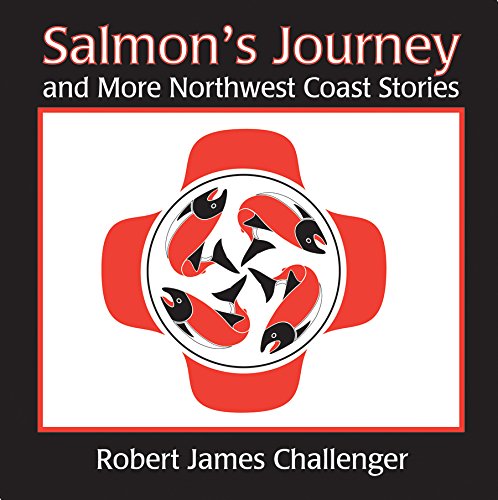
Salmon’s Journey and More Northwest Coast Stories (Selected tales)
A collection of traditional stories that carry the wisdom and humor of the Northwest Coast peoples. Salmon is at the heart of these tales—bringing lessons about sharing, respect, and the cycle of life. With lively storytelling and cultural richness, this book helps children see salmon not just as a fish, but as a beloved teacher and gift.
| |
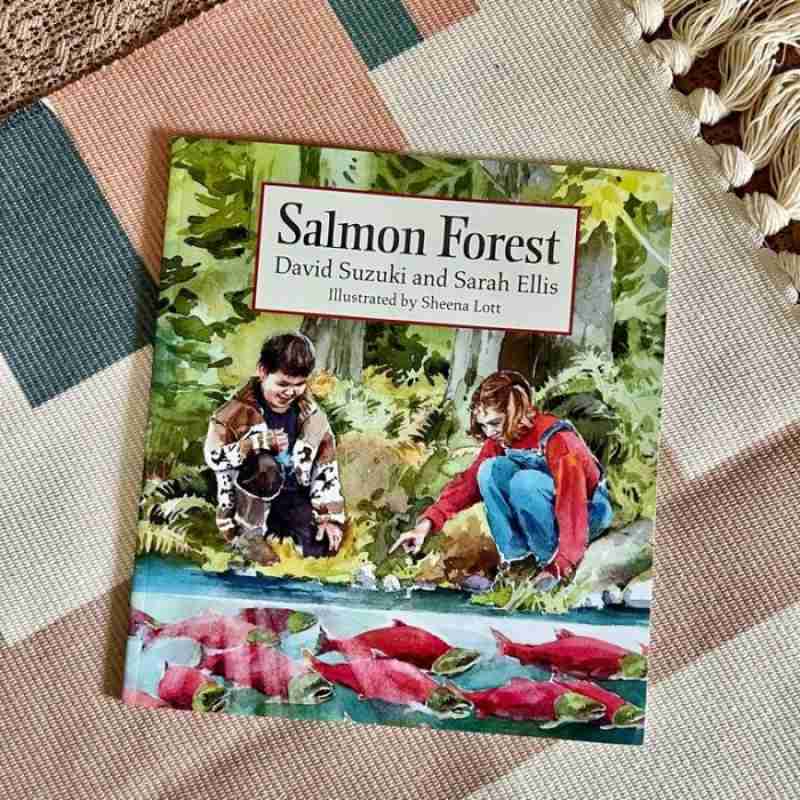
Salmon Forest (David Suzuki & Sarah Ellis)
Step into the magical forest where salmon feed the trees! This book shows how salmon, bears, rivers, and towering trees are all part of one amazing web of life. Children will discover that when salmon thrive, the whole forest thrives. With beautiful pictures and gentle storytelling, it’s an awe-inspiring invitation to see the hidden connections in nature. This was a gift from Kevin Long, our project manager, and it’s been a favorite.
| |
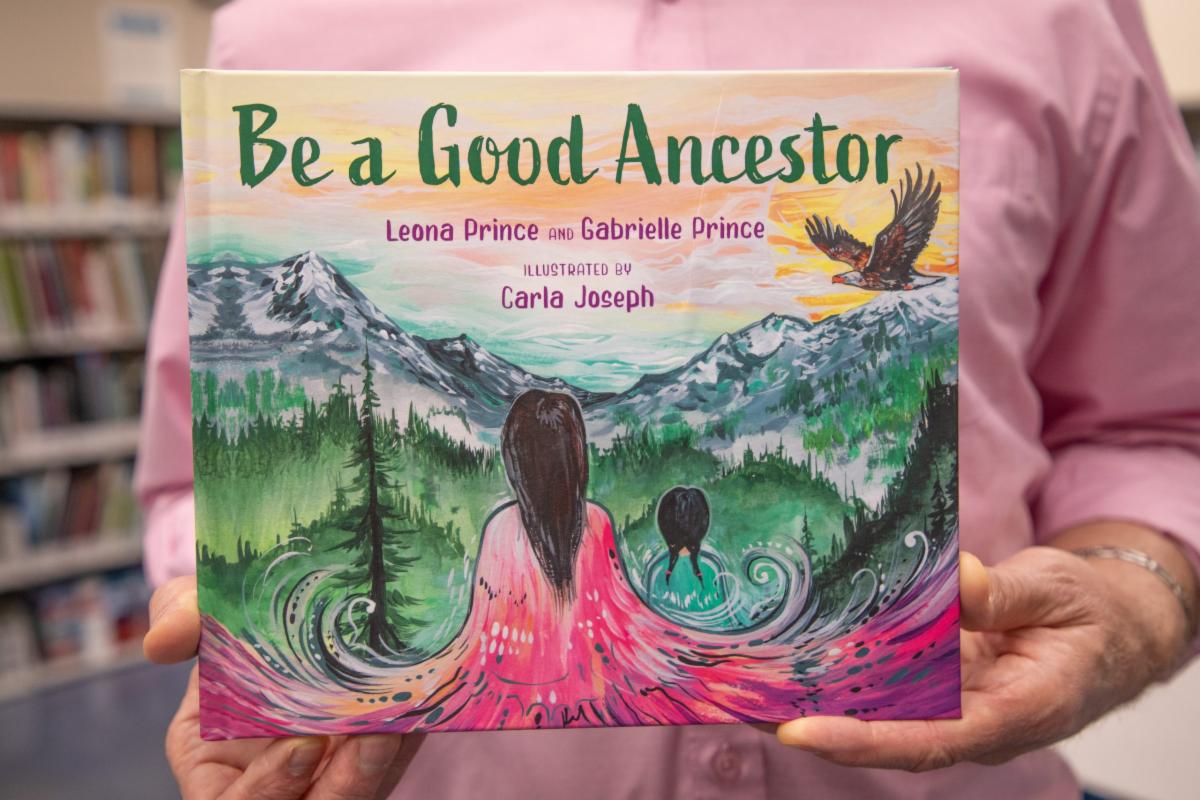
Be a Good Ancestor (Leona Prince & Gabrielle Prince)
This empowering book asks children to think beyond today: How can we care for the Earth so future generations will flourish? With poetic words and bold illustrations, it weaves Indigenous values of stewardship, love, and responsibility. Kids will feel inspired to take small actions—like planting trees, protecting rivers, or being kind—that ripple out for generations.
| | | | |
GIVE Salmon Stories to Local Students
Check out NOSC's Wishlist to send some of these stories into our local elementary schools through the Salmon in the Schools Program!
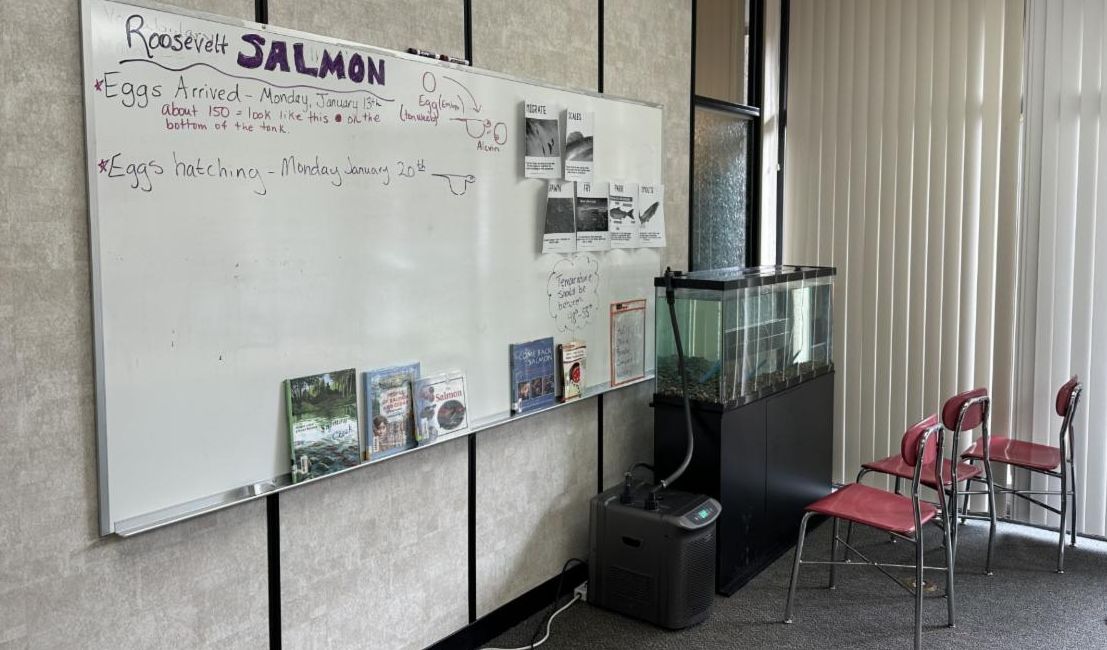
Each salmon tank is a hub for learning. At Roosevelt Elementary, the salmon reside in the library, where students practice reading aloud to the salmon eggs during their library time.
| | | Autumn—A Season of Change | | |
Science Corner
by Cheryl Lowe, NOSC Board
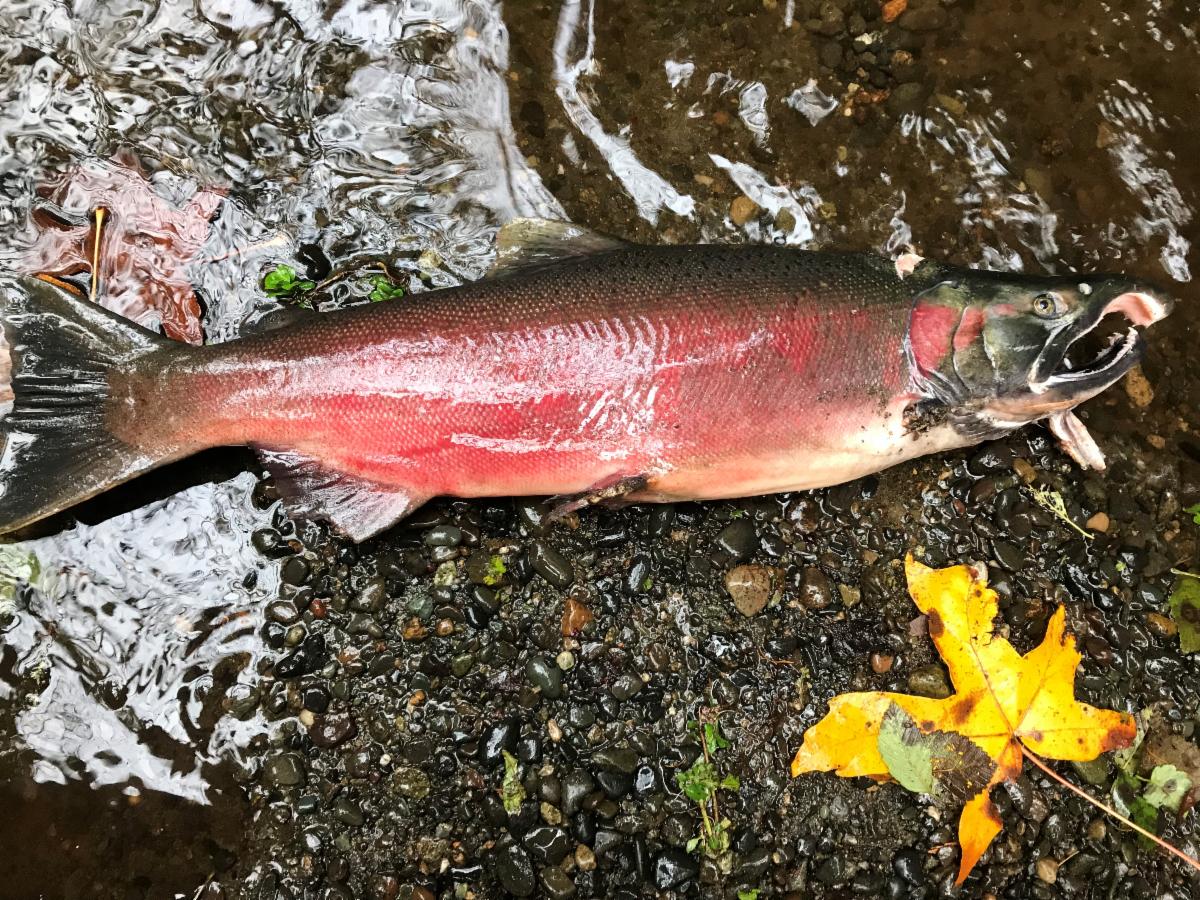
Autumn is one of my favorite seasons. It’s not just the brilliant reds and yellows of fall foliage, but the shifting quality and angles of the light, the cooler temperatures and the earthy smells. When I ask friends what they notice first, each describes a different moment that identifies the beginning of this seasonal change, whether it’s their kids heading back to school, turning the page on the calendar or the first chill in the air. As I write this in mid-October, summer chum salmon have been heading upstream to spawn in our area for over a month, another sign of changing seasons.
With this turn in the weather, we put on warmer clothes or turn up the heat. But how do animals know that fall is coming and they need to prepare for winter, even before temperatures change? And how do they prepare for it? I started exploring this topic by revisiting one of my favorite books, A Season of Change, by Peter Marchand.
| | |
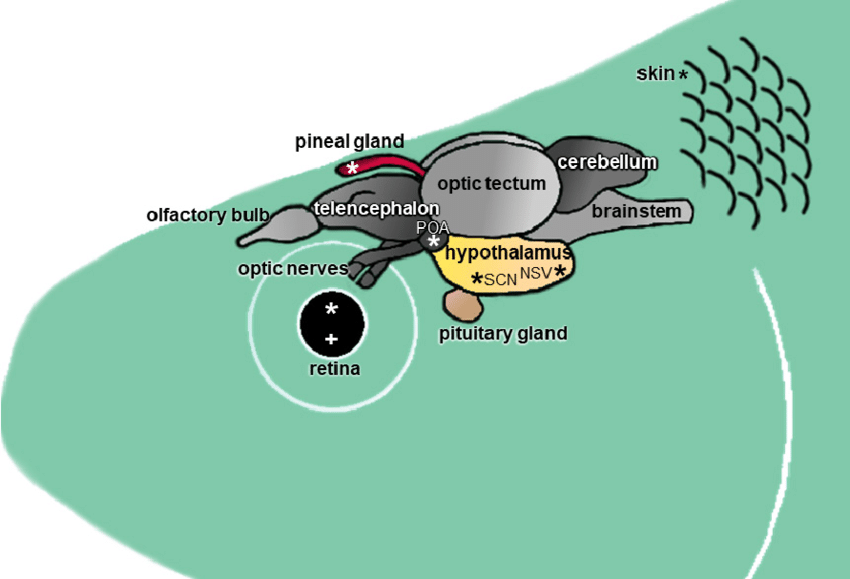
He writes that daylength changes are the likely trigger for physiological changes in mammals, birds and fish. The photoreceptive pineal gland, often called the “third eye”, is a small organ with the ability to perceive and interpret light signals from the environment, either via messages from the retina to the hypothalamus to the pineal gland in mammals, or by detecting light directly when the pineal gland is located just under the skull, for example in birds and fish. This gland produces and controls melatonin, a hormone that regulates a number of developmental, seasonal and reproductive processes in many species. Scientific studies show that increasing length of darkness rather than shorter periods of daylight stimulates these important increases in melatonin production.
| |
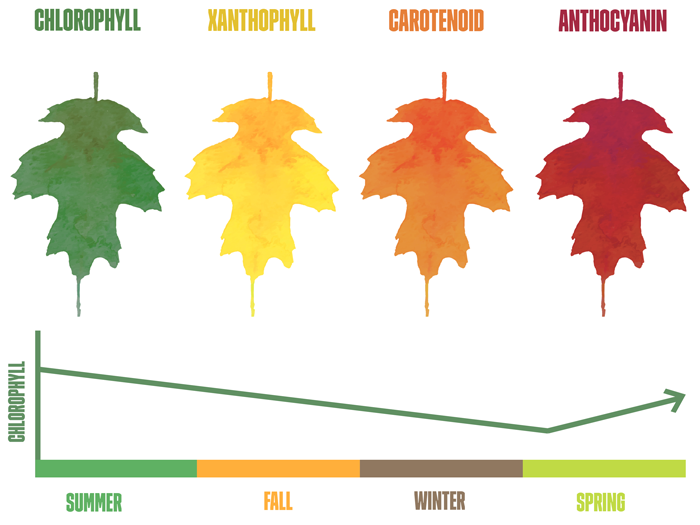
In plants (and bacteria and fungi), two forms of phytochrome (a light-sensitive photoreceptor protein) control responses to changing light. Plants use decreasing light as a signal to shift gears, reducing production of chlorophyll and moving extra sugars and minerals such as nitrogen and phosphorus into roots and stems for storage. Of particular interest is the fact that when some of these extra sugars in leaves attach themselves to a normally colorless flavonol pigment instead of moving into storage, the reflectivity of that pigment changes. As Marchand describes it, “suddenly transforming the colorless flavonols into brilliant anthocyanin pigments of flaming red or striking purplish hues, fanning the fires already fueled by the glowing orange and yellow carotenoids.” In other words, that extra glow that I think I see each fall is actually real, created by physical changes to pigments in the leaves as well as the disappearance of the green cloak of chlorophyll.
| |
In Autumn, A Season of Change Marchand explores many different aspects of seasonal change.
“Leaves are not all that turn in the autumn woods. Behind the flamboyant show of golds and reds, there is a quieter but no less important change occurring as virtually every resident bird and mammal of northern latitudes undergoes a molt. Many of the birds have already completed the process by fall, having begun shortly after brood rearing, but for others, as well as for the mammals, the shedding of old feathers and fur while growing out new winter covers coincides generally with leaf fall ...”
Whether it’s feathers or fur, replacement happens in a particular sequence, depending on the species. Mink, for example, start their annual molt in early September (in mid-latitudes) by growing new hairs first at their tail and gradually replace hairs from tail to head, ending with a thick, lustrous winter coat by early December. Molting for the snowshoe hare, on the other hand, begins at its head, but transitions in a more scattered pattern of brown and white that perhaps help camouflage it during the fall, eventually becoming mostly white as winter snows arrive.
| |
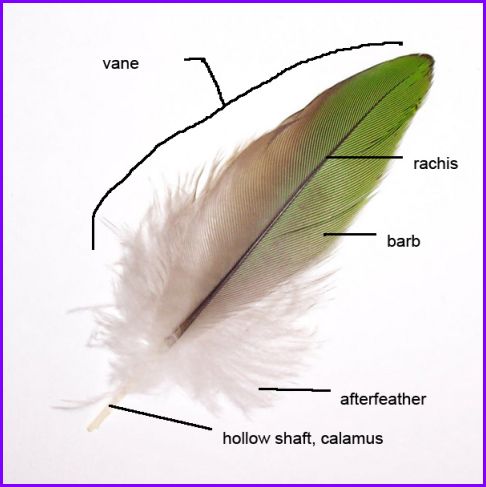
Molting at this time of year also provides an opportunity to increase insulation. In mammals, secondary hair follicles produce more underfur hairs per follicle than other times of the year, resulting in a denser winter coat. For many mammals, the coarse guard hairs (outer layer) that protect the fur year-round also increase in length for even more warmth. A bird molting in preparation for cooler weather replaces its summer plumage with up to 50% more feathers in the fall, which traps and holds more air close to its body. For many bird species, the added plumage is in the form of “afterfeathers”—auxiliary feathers that emerge from the inner shaft of the main feather and only grow to half the length of the main feather.
One of my favorite examples of creative adaptations for winter survival involves winter-resident black-capped chickadees. In addition to the molting described above and several other behavior changes, these songbirds add more neurons to the hippocampus regions of their brains, increasing volume by about 30% to help them remember where they have hidden all their winter food stashes. When spring arrives and food is more abundant, the chickadee’s brain shrinks back to normal size.
Whether you are volunteering for a NOSC work party, a coho salmon spawner survey, or just out for a walk on a lovely fall day, I wish you joy in this magical season of change. Stay warm!
References
A Change of Season by Peter J. Marchand. 2000. University Press of New England
https://www.birds.cornell.edu/k12/how-do-song-birds-survive-winter/
Image 1:
Effects of skyglow on the physiology of the Eurasian perch, Perca fluviatilis - Scientific Figure on ResearchGate. Available from: https://www.researchgate.net/figure/Fish-brain-and-neuroendocrinological-key-structures-for-the-action-of-ALAN-on-fish_fig2_360835903
Image 2:
https://news.northeastern.edu/2018/10/22/why-do-the-leaves-change-color-in-the-fall-and-what-do-i-do-with-this-feeling-of-existential-dread/
Image 3:
https://www.birdsoutsidemywindow.org/2010/07/02/anatomy-parts-of-a-feather/
| | |
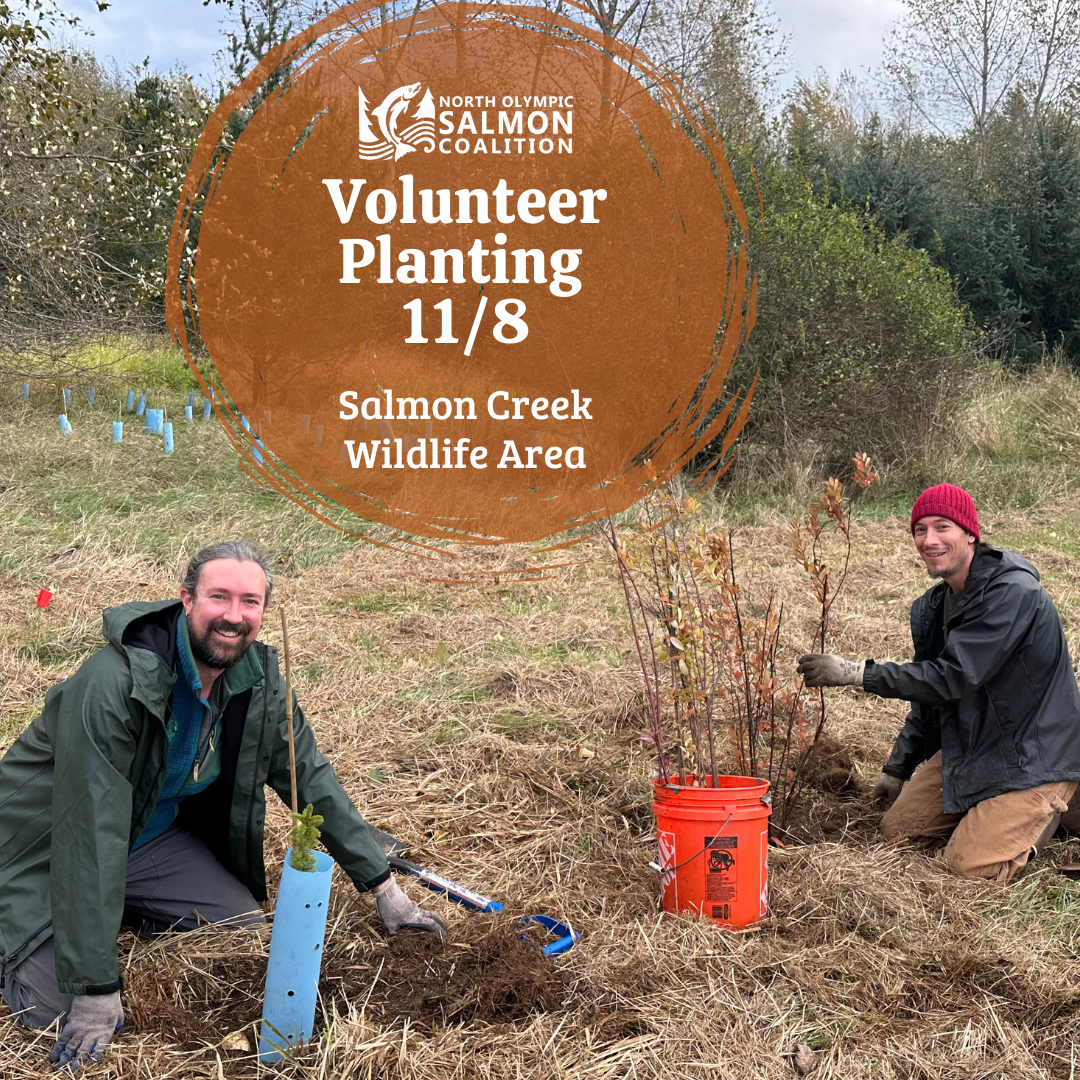
Volunteer with NOSC on November 8th to plant native trees and shrubs to expand the riparian buffer at Snow Creek! This winter we aim to extend the riparian buffer on the west side of Snow Creek which flows on the far side of the Salmon Creek Wildlife Area. Outside the 50 -foot current buffer, the floodplain is currently dominated by invasive Reed Canary Grass which provides little ecosystem services. Riparian buffers play crucial roles in controlling erosion, providing shade, filtering pollutants, slowing runoff, and are future sources of large woody debris. Dense plantings of native trees and shrubs has been quite effective at shading out invasive species at this site.
Please bring the following: Lunch, water bottle, snacks, layers for fall weather, and sturdy shoes!
Saturday, November 8th, 10am – 2pm.
321 West Uncas Road, Port Townsend, WA 98368
| |
This project is supported with funding from Washington’s Climate Commitment Act. The CCA supports Washington’s climate action efforts by putting cap-and- invest dollars to work reducing climate pollution, creating jobs, and improving public health. Information about the CCA is available at www.climate.wa.gov.
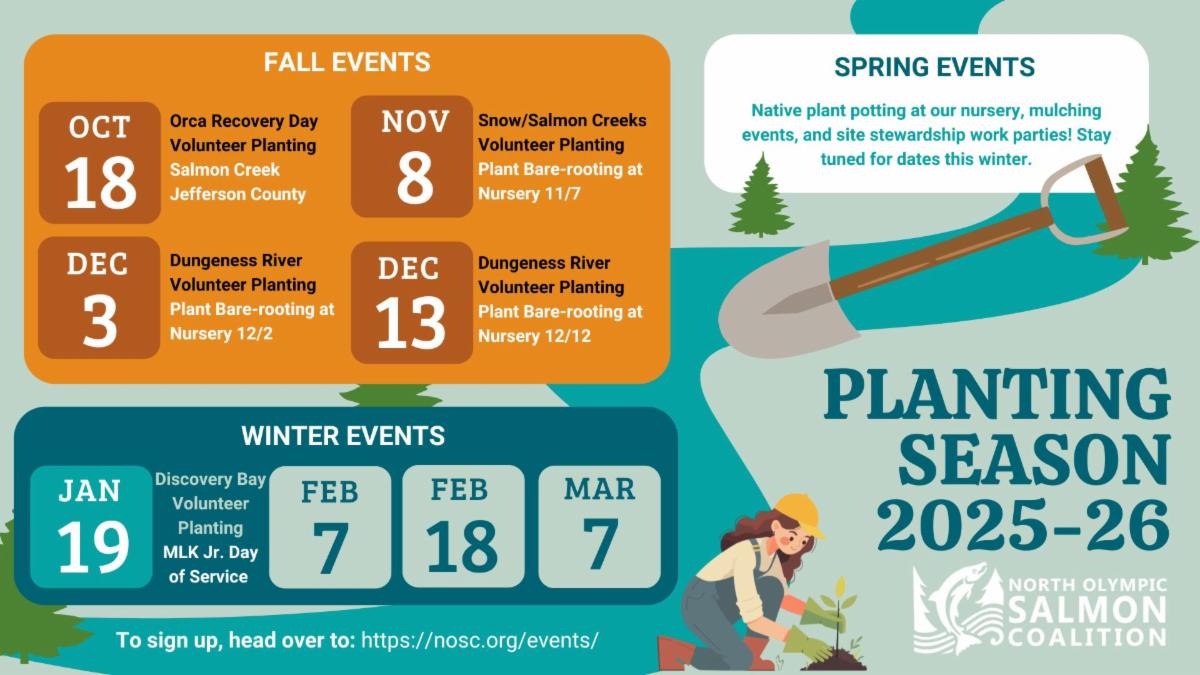
| Can't make it this time? Save the date for the rest of our planting season events! RSVPs will be coming soon. | | Reflecting on Another Successful Stream Stewards Course | | |
Notes from the Field
by Maude Richards, Admin Assistant
I love working behind the scenes at NOSC, but I always relish a chance to get out in the field for a planting or education event. That’s where the real magic happens— community building while planting a hillside, helping middle schoolers connect classroom concepts with the feel of native plants in their hands, and seeing adults stretch their minds and broaden their ecological knowledge. This fall, I had the opportunity to sit in on NOSC’s Stream Stewards course, which deepened my own understanding of local conservation efforts and techniques and quickly became a highlight of each week.
For five weeks, our group of about 20 students met on Wednesday mornings for classroom learning and field trips to various restoration sites. The collective knowledge of the instructors was incredible. Nate Roberts’ fact-filled Salmon 101 talk started us off, Sierra Young gave a great explanation of the Jefferson Conservation District’s role in local restoration on private land, and Kevin Long expertly explained Stage 8 Restoration, especially in relation to the recent Snow Creek Uncas project. Jill Silver’s presentation on the 10,000 Years Institute’s methodical and persistent efforts at invasive plant removal on the Hoh was awe-inspiring (biochar made with Scotch Broom—who knew?) Kim Sager-Fradkin, employee of the Lower Elwha Tribe, gave a fascinating lecture on marine derived nutrients and how the Elwha Dam removal allowed those nutrients to travel up into the watershed via the spawning salmon. Did you know American Dippers who have salmon roe in their diet are 20 times more likely to lay a second clutch of eggs each year? And would you believe that the Elwha’s bobcats are better at catching salmon than its black bears?
| |
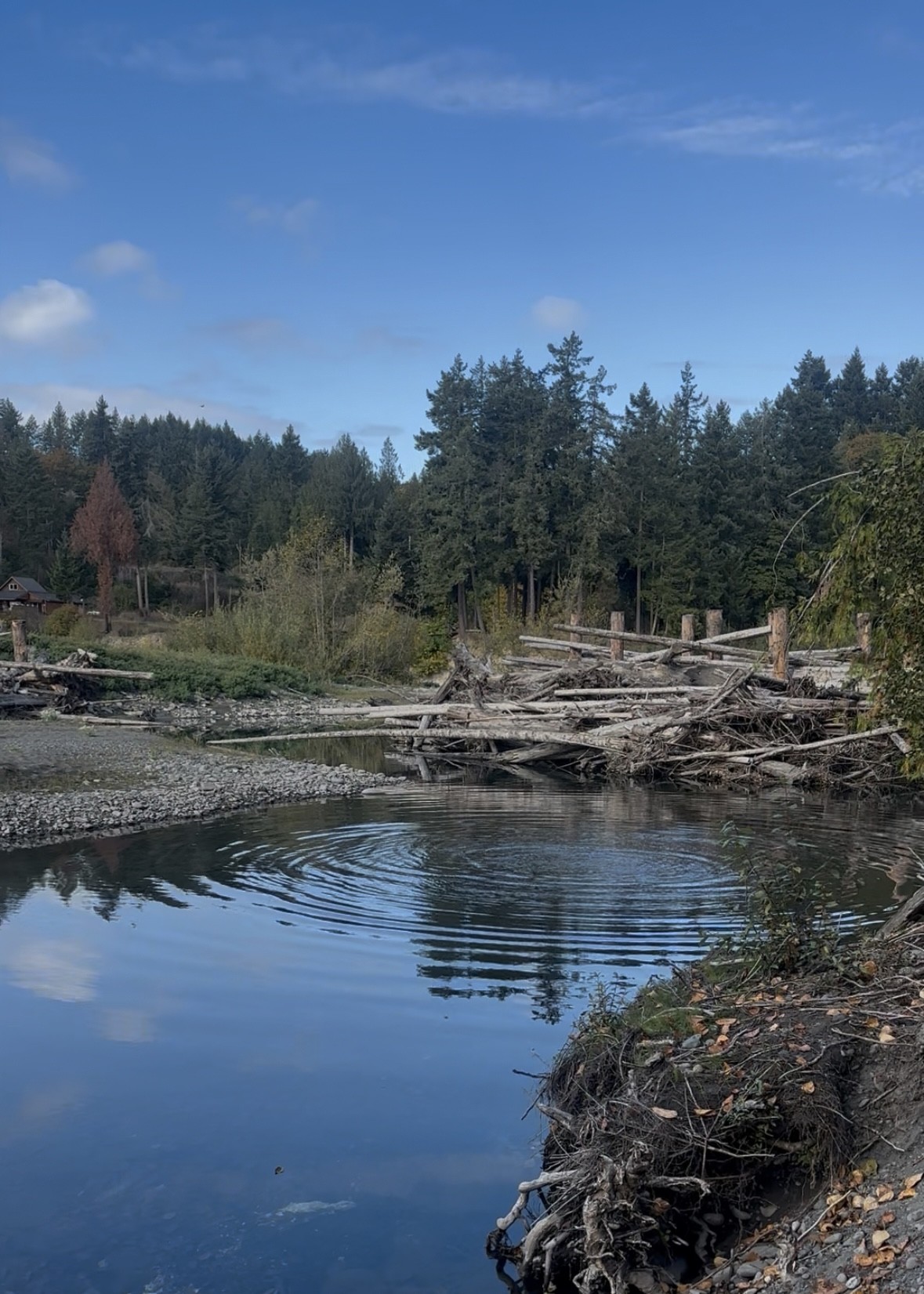
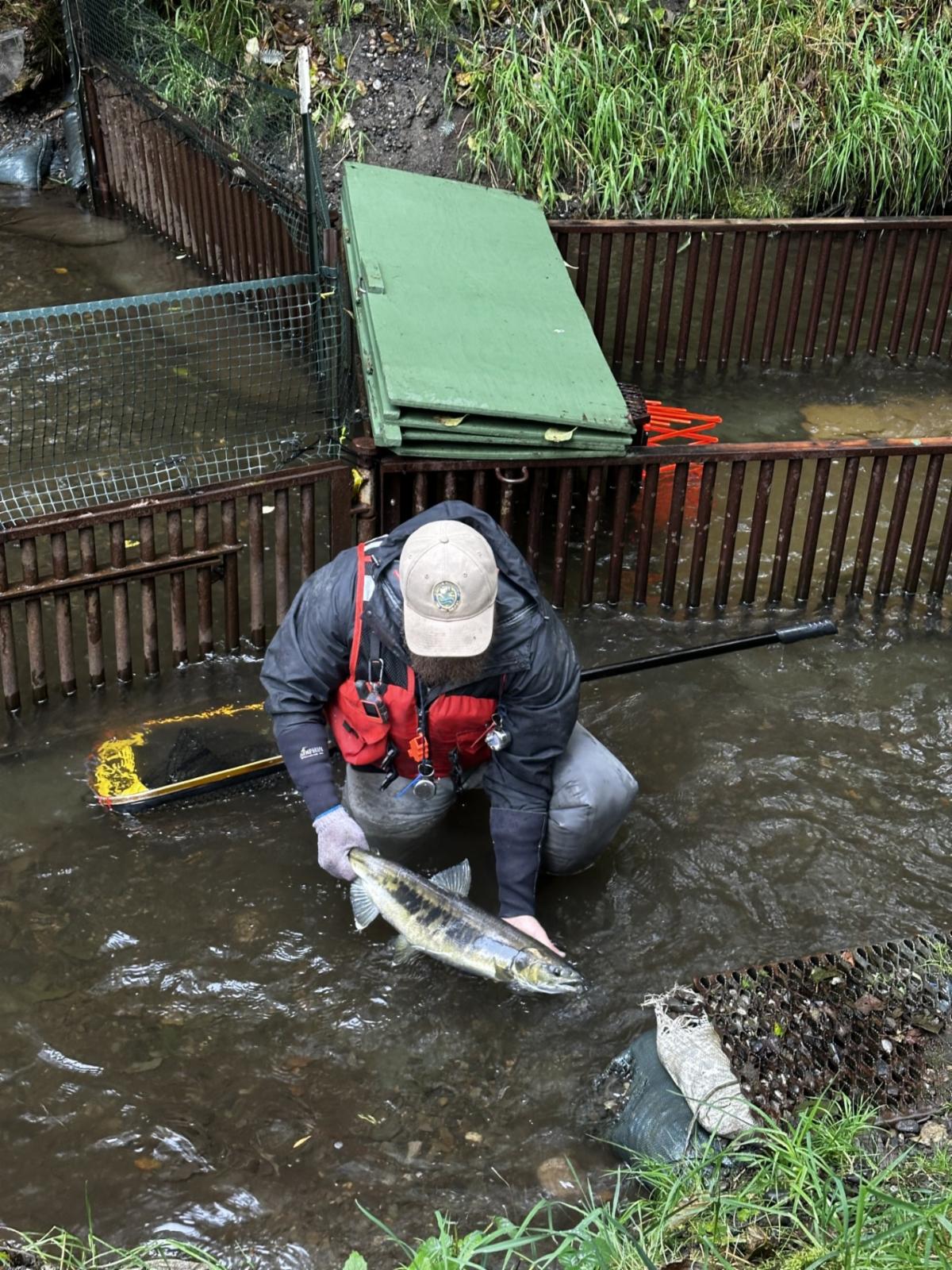
But my favorites were the field trips—Casey Sloth of WDFW showed us the fish trap in action at Salmon Creek by Discovery Bay, and was a wealth of local fish knowledge. Powell Jones, employee of the Jamestown S’Klallam Tribe, showed us around the successful (with some surprises!) River’s Edge planting outside of Sequim. After Kim Sager-Fradkin’s talk at the Lower Elwha Resource Center, and Justin Stapleton’s presentation on monitoring fish recovery since the dam removal, we walked down to the Elwha River to see some installed engineered log jams and their effects on that section of the watershed. The final day with Peter Bahls of the NW Watershed Institute was entirely in the field in Quilcene, with walks through multiple impressive restoration sites along beautiful Tarboo Creek, complete with great stories and old photos of local history.
We concluded the course at picturesque Tarboo Bay, where the fresh water meets the salt. It seemed that just like the salmon fry who head out to sea from there, we’d just begun our journey. Five weeks was barely enough to scratch the surface of all the stories surrounding our local salmon streams and those who have worked to project them, but it was sufficient to set us on track to investigate further. While each student arrived with a different degree of salmon knowledge, I think we all left with greater understanding of the interconnectedness of stream health and salmon, deeper appreciation for the good work that has been done so far, and inspiration to more intentionally tend and protect this incredible Peninsula we call home. If you haven’t taken part in Stream Stewards yet, I highly recommend putting it in your calendar for next fall.
| | Top right: engineered log jams at Ranney Reach restoration site on the Elwha River. Bottom left: Casey Sloth holding a female chum salmon at the Salmon Creek fish trap. | | Recapping the Annual Meeting | | |
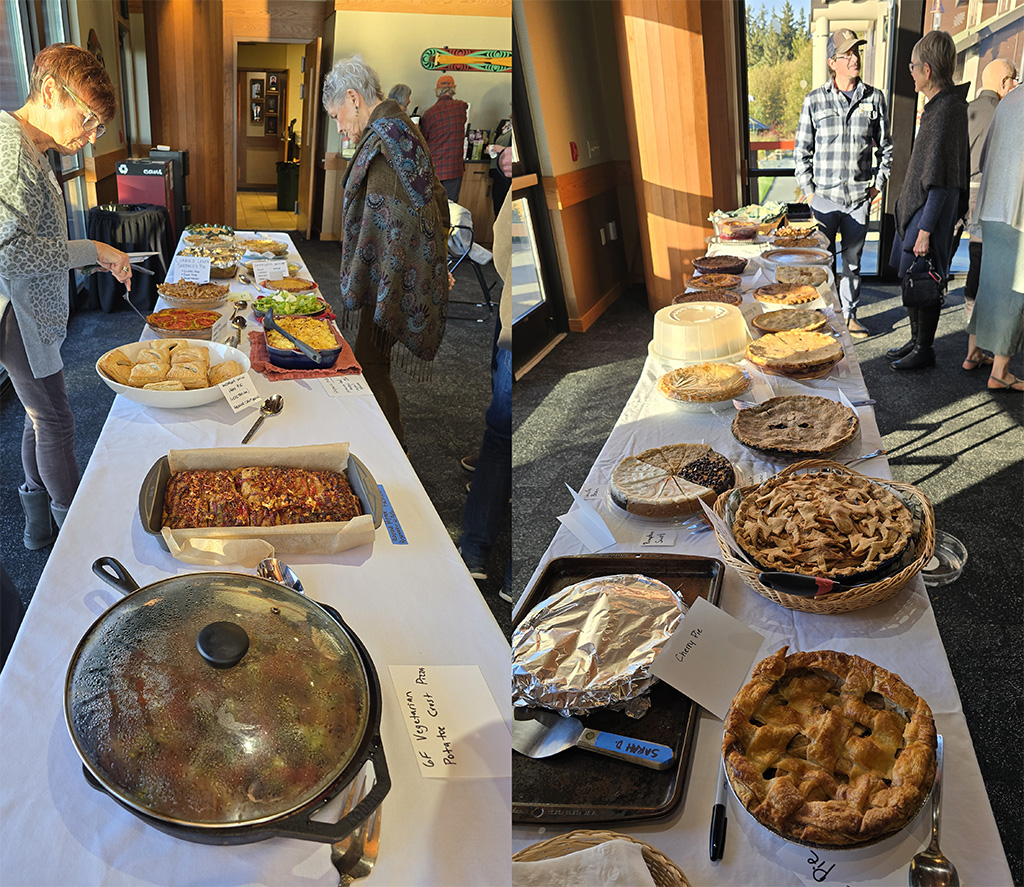
Thank you to all the friends, partners, and supporters who joined us Sunday evening for our Annual Meeting, celebrating community, salmon, and hope. Delicious pies were shared, conversations flowed, and we reflected on a year of restoring wild salmon populations and strengthening connections across the North Olympic Peninsula.
We also celebrated the 228 volunteers who planted trees and shrubs, taught kids, and supported salmon restoration and education efforts this past year. Four volunteers who logged more than 40 hours of service—Paula Walsh, Gabe Meyer, Connie Barron, and Cheryl Lowe—received the inaugural Joel Kawahara Memorial Golden Shovel Service Award in recognition of their extraordinary commitment.
| |
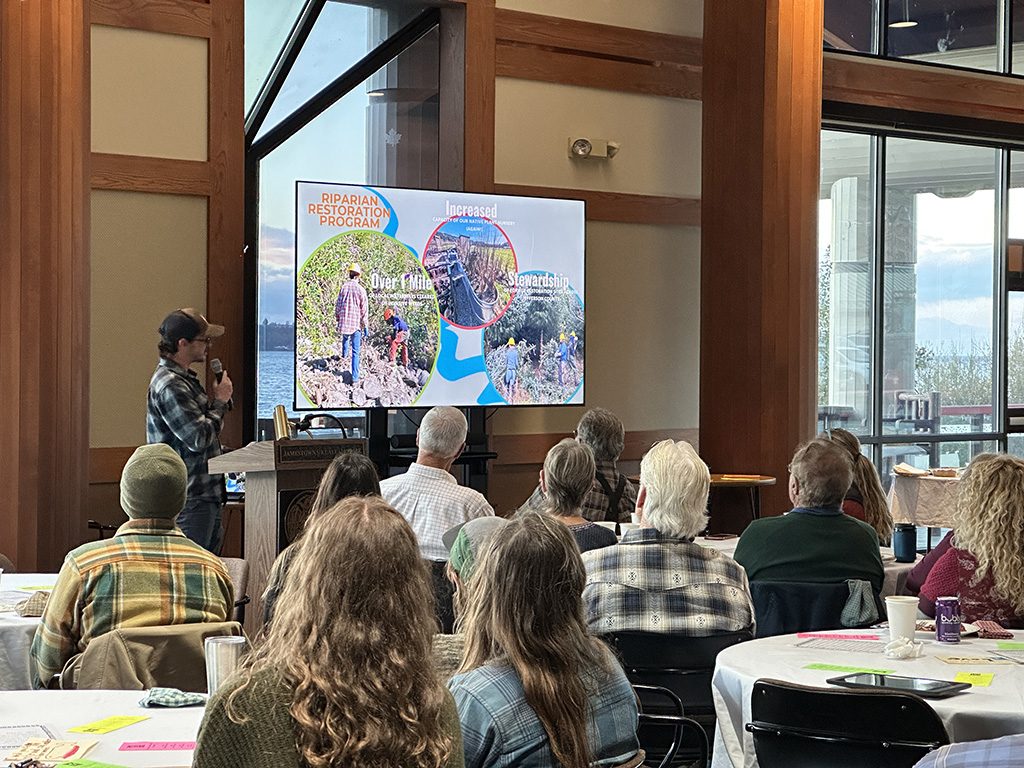
Filmmaker Jessica Plumb guided us through the three short films of Shared Waters of the Salish Sea, offering deeper insight into the link between conservation efforts for Northern Resident Orcas and the recovery of wild salmon.
Restoring salmon means restoring so much more—our waters, our wildlife, and our shared future. We’re grateful to have such a dedicated community walking this path with us as we continue this vital work together.
| |
|
Our partners at the Jefferson County Conservation District are recruiting for a full-time Conservation Planner. $25-35 per hour pay range plus generous benefits. Duties include providing technical assistance for natural resource conservation and habitat enhancement, and outreach and education.
Job description, application and instructions available at jeffersoncd.org or by email at info@jeffersoncd.org.
Initial application reviews begin October 27, 2025. Applications will be accepted on a rolling basis.
| | Nelda Swiggett Quintet - "For the Birds" | | |
Live music, images and poetry invite reflection on our changing climate.
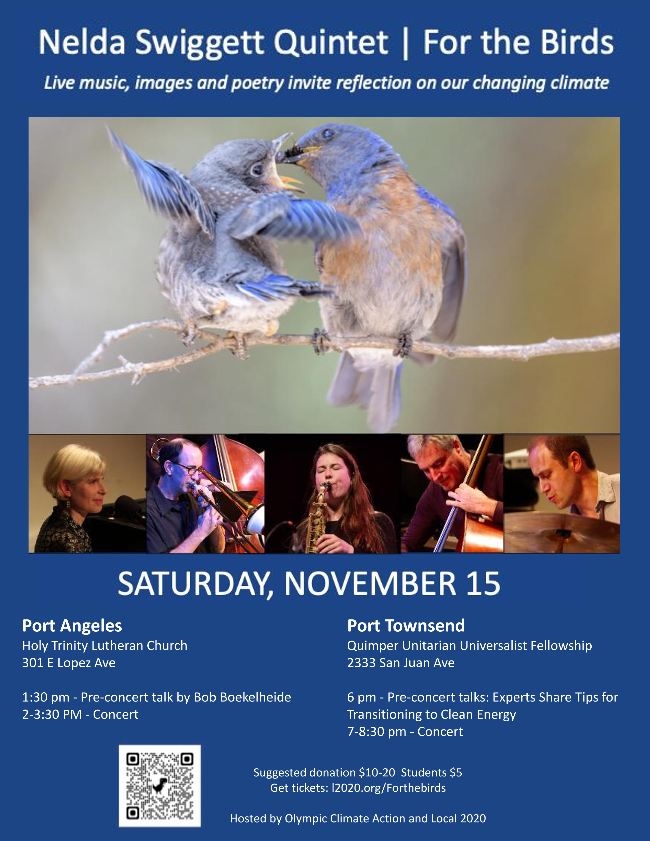
Local 20/20 is hosting For the Birds, a multimedia jazz performance that connects audiences emotionally to the realities of climate change and carries a message of hope. You may have attended “The Alaska Suite” in Port Townsend in 2023, performed by the Nelda Swiggett Quintet. Nelda and her quintet are back for a second tour with an all new concert! This performance tells the climate story through the lens of birds.
The concert will be preceded at 6 pm by talks on local renewable energy and greenhouse gas reduction opportunities, and tabling by local organizations, to give you the resources needed to take action.
In addition to the evening concert in Port Townsend, For the Birds will be performed at 2 pm that same day at Holy Trinity Lutheran Church in Port Angeles.
Get Port Angeles tickets.
Get Port Townsend tickets.
Pre-concert lecture @ 6 PM: Transitioning to Clean Energy.
Suggested Donation $10 - $20 / Students $5
**Pre-Concert Lecture @ 6 PM: Experts Share Tips for Transitioning to Clean Energy
| | Help the NOSCateers Find Their Next Home! | | |
We are seeking a Jefferson County office space suitable for a staff of eight people who will be in the office on a part-time basis (2–3 days per week). The space should include:
-
Work Area: Open workspace or desk area to accommodate 8 staff members, ideally with flexible seating or shared desk options since staff will not be in the office full-time.
-
Conference Space: A conference table or dedicated meeting room large enough for team meetings, collaborative work sessions, and hosting small groups.
-
Private Office/Phone Room: At least one enclosed office or quiet room for private phone calls and virtual meetings.
- Essential Amenities:
- A bathroom (required)
- A small kitchen or kitchenette area (preferred) with basic appliances (sink, refrigerator, microwave).
- General Considerations:
- Comfortable layout that supports collaboration as well as occasional private work.
- Access to reliable internet.
- Parking and accessibility considerations for staff and visitors.
If you have a space in mind, please contact our Executive Director, Sarah Doyle (sdoyle@nosc.org).
| | | |
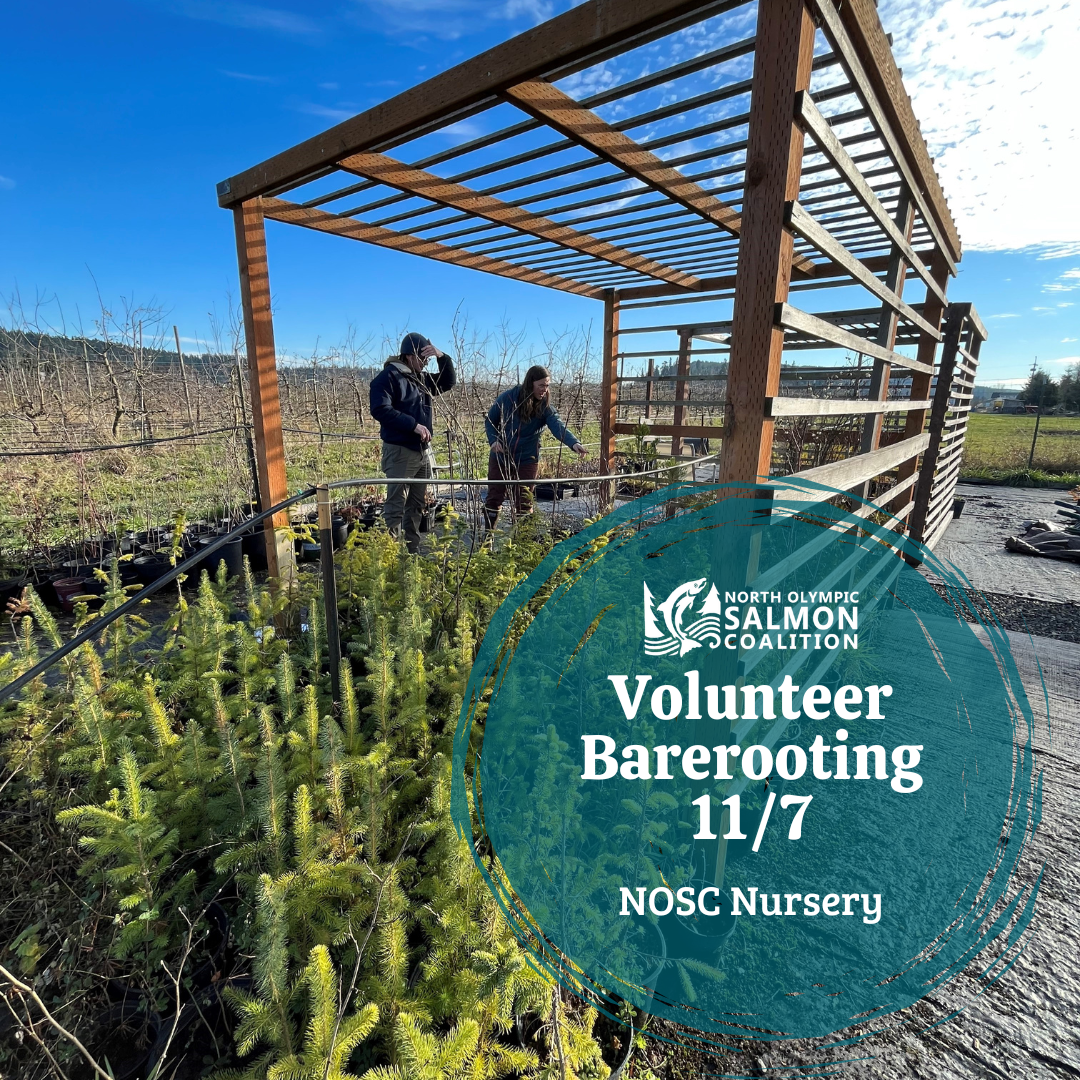
Barerooting Plants (FULL)
Friday November 7th, 10am - 12pm
Volunteer to help NOSC bareroot plants to prepare them for planting at the Salmon Creek Wildlife Area the next day.
| |
Volunteer Planting - Salmon Creek Wildlife Area
November 8th, 10am - 2pm
Volunteer with NOSC on November 8th to plant native trees and shrubs to expand the riparian buffer at Snow Creek!
| | | | |
Coho Spawner Survey Training
Wednesday, November 12th
Coho season is nearly upon us on Chimacum Creek and nearby watersheds. As such, the Salmon Coalition will be hosting its annual coho survey training at the WSU Classroom in Port Hadlock on Wednesday, November 12th from 10am to 12 pm.
| | Base funding for the RFEG program comes from a grant from the U.S. Fish & Wildlife Service's Partners for Fish and Wildlife Program, a portion of state commercial and recreational fishing license fees, and excess egg and carcass sales administered by the Washington Department of Fish & Wildlife. | | |
Give Us Your Feedback
Questions or Comments? Let us know what you think!
outreach@nosc.org
360-379-8051
www.nosc.org
| | | | |