One Cool Tip Newsletter

November 23, 2026

Your daily dose of tech-savvy brilliance!

😀 Greetings! Happy Monday, Cool Tipper!


Get ready to streamline your digital life with simple, actionable tips delivered straight to your inbox.


Cool Tip Theme: Five Microsoft Word Settings to Review


Microsoft Word works well out of the box, but a few default settings can create unnecessary frustration. Review these five options to make Word easier to manage, troubleshoot and tailor to the way you work.


New here? Subscribe to the One Cool Tip Newsletter for daily updates. It's FREE!

3️⃣

If you enjoy the One Cool Tip Newsletter, please forward this newsletter to THREE friends or colleagues or share it on social media using the links below.


Leave a $$$ Tip!


Share this One Cool Tip Newsletter!

X Share This Email
LinkedIn Share This Email
Pinterest Share This Email

🚨 The FCC Is Calling About Your Phone Number? Hang Up. 🚨


Scammers are impersonating FCC officials and claiming that a person’s phone number is under investigation for criminal activity.


They may use the names of real FCC employees to make the story seem legitimate and pressure you into providing money or personal information.


The FCC says it will never call or text and threaten you if you refuse to provide money or sensitive information.


It also will not ask over the phone for your Social Security number, bank account information, passwords, PINs or payment through gift cards, cryptocurrency or cash apps.


If you get one of these calls, hang up immediately and report the incident through the FCC’s complaint system.


The Cool Tip:


If someone claiming to be from the FCC threatens you or asks for money or personal information, hang up and independently verify the situation before taking any action.


And in Other News...


  • Old Word Documents Could Soon Look Different


Microsoft is retiring several legacy compatibility settings that help older Microsoft Word documents preserve their original layouts.


The change affects documents created or last saved in Word 2010 or earlier that use the affected settings.


After the change, some documents could experience text reflow, different spacing or page counts, or images and shapes moving to another page.


The rollout for Word on Windows begins in December 2026, with Word for Mac following in early 2027.


Microsoft says no action is required, but recommends reviewing important older documents when exact page layout matters and suggests exporting a PDF to preserve their current appearance.


The Cool Tip:


Open important older Word documents now and save a PDF copy if you need their current formatting preserved exactly.

Cool Tip Poll

🤔 Which Word setting would you change first?

Cool Deals of the Day

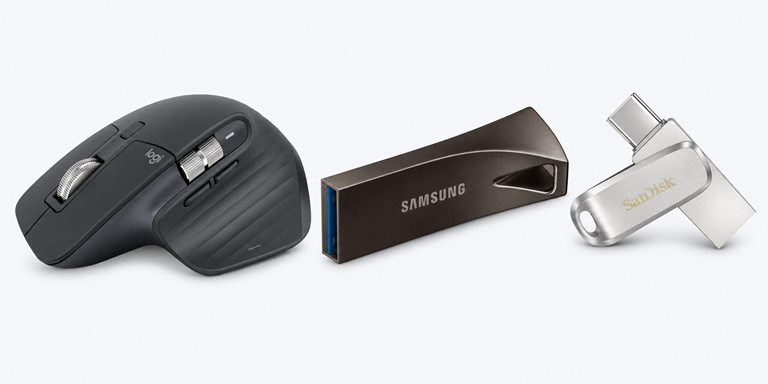
🛍️ Cool Deals for a Better Word Workspace


These practical accessories can make long Word sessions more comfortable or give you another way to carry documents between computers.


🖱️ Logitech MX Master 3S Wireless Mouse

A precision mouse can make selecting text and scrolling through long Word documents more comfortable.

$75.99 · Save 24% · ⭐ 4.6

Shop the Logitech MX Master 3S on Amazon


💾 Samsung BAR Plus 128GB USB Flash Drive

Keep a portable copy of documents handy when cloud storage isn't practical.

$39.99 · Overall Pick! · ⭐ 4.7

Shop the Samsung BAR Plus 128GB on Amazon


💾 SanDisk Ultra Dual Drive Luxe 128GB

USB-C and USB-A connections make this drive useful for transferring Word documents between compatible computers with different USB ports.

$31.99 · Overall Pick! · ⭐ 4.4

Shop the SanDisk Ultra Dual Drive Luxe on Amazon


*Prices accurate when originally published.

One Cool Tip may earn a commission from qualifying purchases.

Have you tried the Upside app? Everyday cash back on gas, groceries and dining.


Help Support One Cool Tip.


Use this Amazon link when you shop online.

Fuel Your Adventure

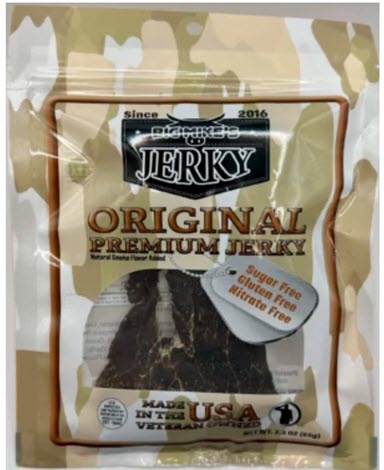
Try Big Mike's Jerky!


bigmikesjerky.com


Today's Cool Tip

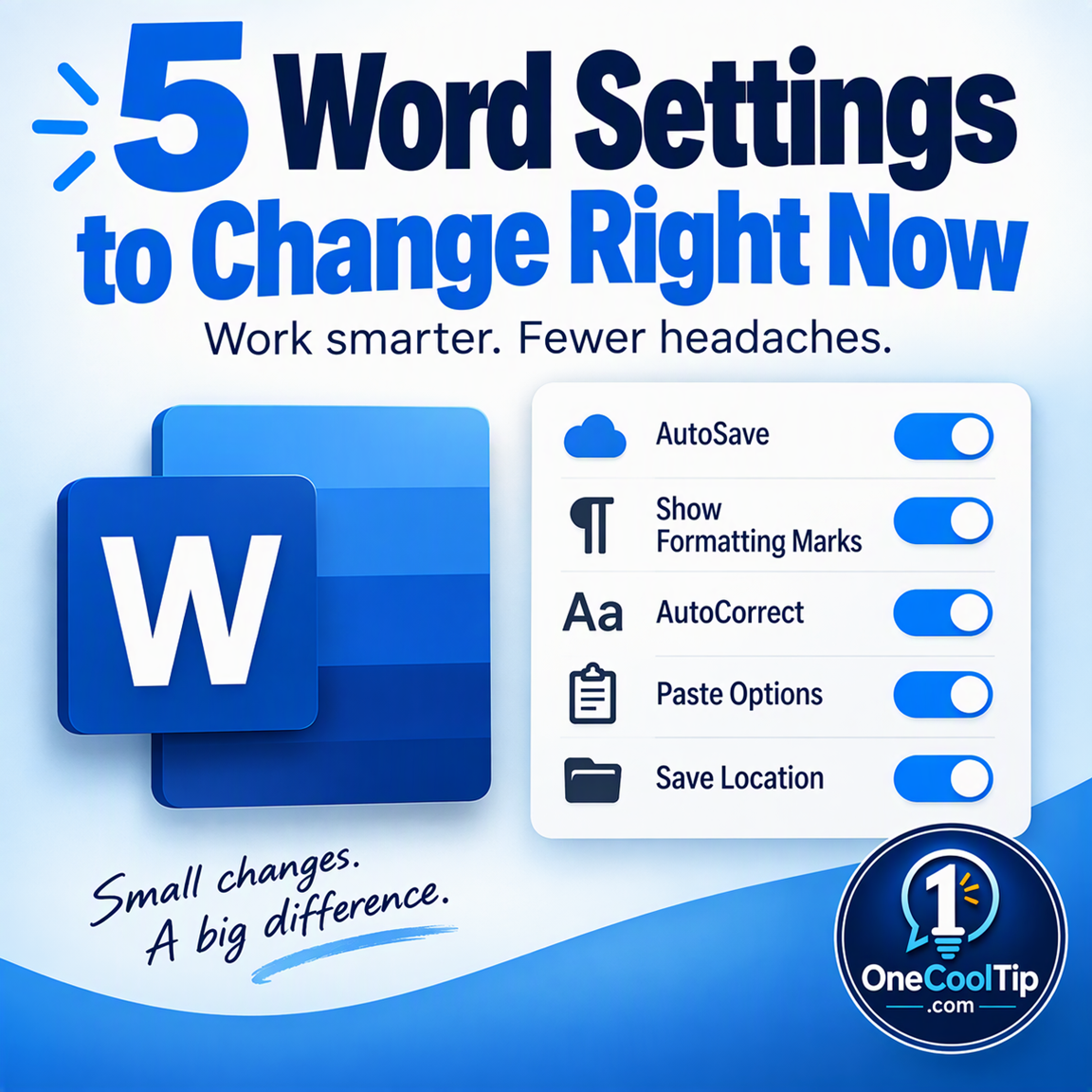
5 Microsoft Word Settings You Should Change Right Now

Microsoft Word works well out of the box, but a few default settings can create unnecessary frustration.


Review these five options to make Word easier to manage, troubleshoot and tailor to the way you work.

By Rodger Mansfield, Technology Editor

November 23, 2026

Subscribe


Ever paste a paragraph into Word and suddenly inherit someone else's font, spacing and colors? 


Or spend too much time trying to figure out why a document's spacing looks wrong?


A few changes to Word's settings can prevent those everyday annoyances.


You can control how Word saves certain files, displays hidden formatting, corrects your typing, handles pasted text and chooses local save locations. 


The trick is knowing where those controls are hiding.


Here’s a Cool Tip: Spend five minutes reviewing these Word settings now to save yourself frustration later.


Feature Explanation


These aren't flashy Word features. In fact, several have been around for years. That's one reason they're easy to overlook.


Start with AutoSave. 


When a supported document is stored in OneDrive or SharePoint, Word can automatically save your changes.


Word for Windows users can also change the default AutoSave setting for files stored online under File > Options > Save.


Next, turn your attention to formatting marks. 


These reveal normally invisible elements such as spaces, tabs and paragraph marks. 


When a document refuses to line up properly, those little symbols can help reveal what's happening behind the scenes. 


Microsoft places these controls under File > Options > Display in Word for Windows.


Then check AutoCorrect. 


Instead of simply accepting every automatic replacement Word makes, review the choices and decide which ones work for you. 


In Windows, you'll find AutoCorrect under File > Options > Proofing > AutoCorrect Options.


Word for the web also offers AutoCorrect controls, although its options are more limited than those in the desktop version.


The fourth setting is one of my favorites: default paste behavior. 


Word normally preserves the original formatting when you paste content, but you can tell it to merge formatting or keep just the text instead.


Finally, review where Word saves your files. 


Microsoft lets Windows users specify a default local folder and choose to save to the computer by default.


None of these changes will transform Word overnight. Together, though, they can make everyday writing and editing noticeably easier.


What You’ll Gain


  • Protect your work: AutoSave can automatically save changes to supported cloud documents.
  • Troubleshoot formatting: Reveal spaces, tabs and paragraph marks when a document looks wrong.
  • Clean up pasted text: Prevent unwanted fonts and formatting from taking over your document.
  • Customize Word: Decide how the program corrects text and where local files are stored.


Step-by-Step Instructions


Here's how to do it.


These instructions focus on Microsoft Word for Windows.


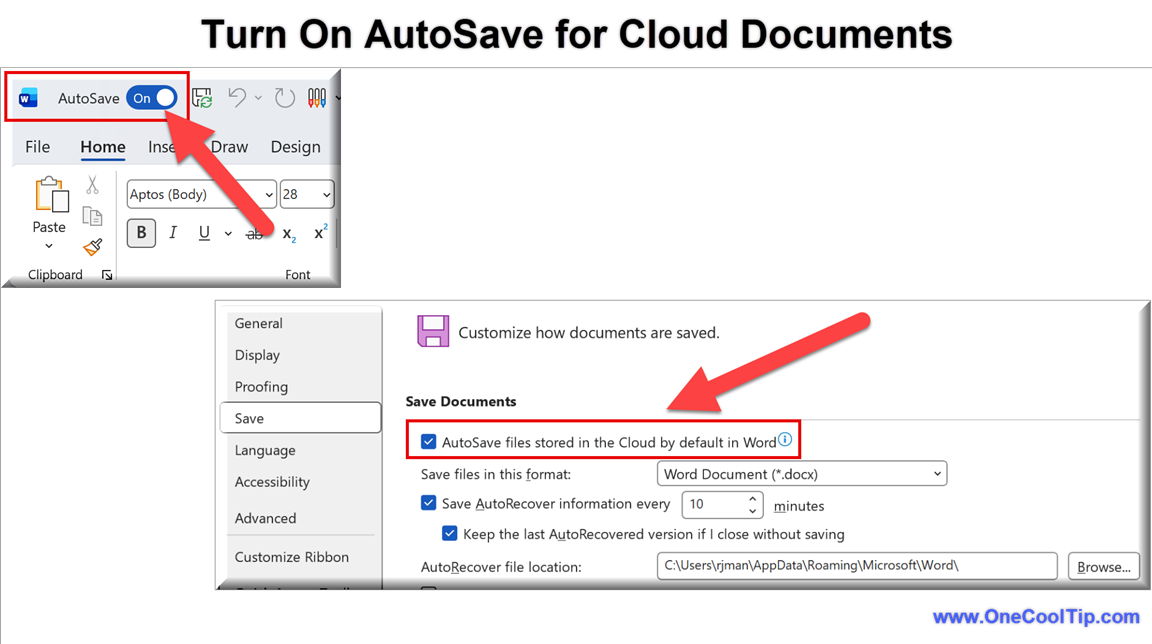
1. Turn On AutoSave for Cloud Documents


  1. Open a Word document stored in OneDrive or SharePoint.
  2. Look for the AutoSave switch on Word's title bar or Quick Access Toolbar.
  3. Turn AutoSave on.
  4. To review Word's related default, go to File > Options > Save.
  5. Look for AutoSave OneDrive and SharePoint Online files by default on Word and select it if you want that behavior.


fig. 1 - Turn On AutoSave for Cloud Documents

AutoSave applies to supported files stored in OneDrive or SharePoint libraries.


With AutoSave enabled for a supported cloud document, Word automatically saves changes as you work.


2. Show Formatting Marks


  1. Select File > Options > Display.
  2. Find Always show these formatting marks on the screen.
  3. Choose the marks you want Word to display, including paragraph marks, spaces or tab characters.
  4. Select OK.


Microsoft Word also lets you quickly show or hide formatting marks from Home > Paragraph > Show/Hide ¶.


What you'll see: Hidden document structure becomes visible, including the formatting marks you've chosen.


3. Review AutoCorrect


  1. Select File > Options > Proofing.
  2. Select AutoCorrect Options.
  3. Open the AutoCorrect tab.
  4. Review Replace text as you type and the available AutoCorrect choices.
  5. Keep the options that help you and disable those that get in your way.


Microsoft Word also lets you create your own AutoCorrect replacements, which can be handy for text you type repeatedly.


What you'll see: Word will use the AutoCorrect preferences you've chosen while you type.


4. Change Your Default Paste Behavior


  1. Select File > Options > Advanced.
  2. Scroll to Cut, copy, and paste.
  3. Locate Pasting from other programs.
  4. Open its drop-down menu.
  5. Choose Keep Source Formatting, Merge Formatting or Keep Text Only.
  6. Select OK.


Word normally preserves the original formatting when pasted content comes into a document. 


Its paste settings let you choose among source formatting, merged formatting and text-only behavior.


Try Keep Text Only for Pasting from other programs if you frequently copy material from websites and don't want their fonts, colors and formatting tagging along.


That is my recommendation, not Microsoft's required or preferred setting.


5. Choose Where Word Saves Files


  1. Select File > Options > Save.
  2. Decide whether you want Word to save files to your computer by default.
  3. If you prefer local storage, review Save to Computer by default.
  4. Set Default local file location to your preferred folder.
  5. Select OK.


You can still choose a different location when saving an individual file.


For regular modern Word documents, .docx is Word's XML-based document format.


A Realistic Example


Suppose you're writing a newsletter in Word and regularly copy research from webpages.


Ordinarily, pasted material can carry its original formatting into the document. 


Setting Pasting from other programs to Keep Text Only lets Word discard that source formatting so you can apply your document's own formatting instead.


That's a small change that can eliminate a surprisingly repetitive cleanup job.


Pros and Cons


Pros:


  • AutoSave can protect recent changes in supported documents stored online.
  • Formatting marks make invisible document structure easier to diagnose.
  • Custom paste settings can reduce unwanted formatting.
  • AutoCorrect can better match your writing habits.
  • Save preferences give you more control over where locally saved documents go.


Cons:


  • AutoSave requires a supported online storage location such as OneDrive or SharePoint for the scenario described here.
  • Displaying every formatting mark can make a document look busy.
  • Keep Text Only deliberately discards source formatting.
  • Settings and menu paths can differ among Windows, Mac and Word for the web.


Who Should Skip This


Don't change a setting simply because somebody says you should.


If you routinely need to preserve formatting from other documents, Keep Source Formatting may make more sense than Keep Text Only.


Likewise, if you don't use OneDrive or SharePoint, cloud-based AutoSave won't provide the same benefit.


And if your computer is managed by a business or school, follow your organization's policies before changing storage-related settings.


Troubleshooting and Limitations


Problem: AutoSave Isn't Available


  • Why it happens: Microsoft's AutoSave instructions apply to supported documents stored in OneDrive or SharePoint libraries.
  • Fix or workaround: Save the document to a supported OneDrive or SharePoint location and check AutoSave again.


Problem: Formatting Marks Won't Go Away


  • Why it happens: Individual marks may be selected under Always show these formatting marks on the screen.
  • Fix or workaround: Return to File > Options > Display and clear the marks you don't want displayed all the time.


Problem: Pasted Text Loses Too Much Formatting


  • Why it happens: Keep Text Only is designed to discard source formatting.
  • Fix or workaround: Try Merge Formatting or Keep Source Formatting instead.


Problem: You Can't Find the Same Settings in Word for the Web


  • Why it happens: Not every desktop setting has an identical web counterpart. Word for the web has a more limited set of AutoCorrect options.
  • Fix or workaround: Use desktop Word when you need a setting that Microsoft doesn't provide in the web version.


Privacy and Data Notes


The main data consideration in this tip involves where you keep your documents.


When you choose OneDrive, its Windows app can synchronize files between the computer and OneDrive, making the files accessible on other devices.


If you'd rather save a document locally, Word for Windows provides options for using your computer as the default save destination and specifying a default local folder.


Choose the storage option that fits your needs and, on a managed work or school computer, your organization's requirements.


Feature Access


AutoSave is available on Word for Microsoft 365 (Windows and macOS) for users with an active Microsoft 365 personal, family, business or education subscription who store files in OneDrive or SharePoint. 


Formatting marks, AutoCorrect options, default paste behavior and default save settings are available across Microsoft 365 and standalone desktop versions of Word (including Word 2021 and Word 2024) on Windows and macOS. 


Availability of specific cloud or policy-managed options may vary by organization or IT administrator settings. AutoCorrect.


Score

Criterion |  Score (0–10) |  Justification
Value |  9
The settings address common saving, pasting and formatting frustrations.
Usability |  8
Most require only a one-time visit to Word Options.
Wow Factor |  6
They're not flashy, but several are surprisingly useful.
Total: 23/30 | 👍 Good
These aren't exciting new Word features, but reviewing them can make everyday writing and editing noticeably easier.
Unlike an add-in or separate productivity tool, these controls are already built into Word.


Key Takeaways


A few minutes spent reviewing Word's settings can prevent countless little annoyances later. 


Pay particular attention to AutoSave and paste behavior, then remember formatting marks the next time a stubborn document doesn't behave as expected.


Cool Tip Snapshot


  • Feature Name: Five Microsoft Word Settings to Review
  • Platform(s): Primarily Microsoft Word for Windows; selected settings are also available on Mac or the web
  • Quick Benefit: Better saving, cleaner pasting and easier formatting
  • Best For: Home, business, education and productivity users
  • Access Type: Included with supported versions of Microsoft Word
  • Difficulty: Easy


Learn More


Microsoft's official Word documentation explains how to control pasted formatting, including changing the default behavior for text copied from another program.


Try It Yourself


Open Word and spend five minutes reviewing these settings before you start your next document. 


Then tell us which setting you changed, subscribe to the FREE One Cool Tip Newsletter, and share this Cool Tip with family, friends and coworkers who spend their days working in Word.


READ MORE


Read the Full Cool Tip!

Check Out These Cool Tips & Tricks


  • Show Marks: Turn on Show/Hide ¶ when spacing or paragraphs aren't behaving as expected. Find it under Home > Paragraph > Show/Hide ¶.


  • Clean Paste: Use Keep Text Only when you want the words you've copied without their original source formatting. Change the default under File > Options > Advanced > Cut, copy, and paste.


  • Merge It: Merge Formatting offers a middle ground when you don't want to keep all the source formatting. Choose it from Word's paste options.


  • Paste Control: Keep the Paste Options button enabled if you like choosing how individual items are pasted. Find the option under File > Options > Advanced > Cut, copy, and paste.


  • Text Shortcuts: AutoCorrect can turn a short sequence of characters into reusable text. Configure entries under File > Options > Proofing > AutoCorrect Options.


  • Local Default: Prefer saving files on your PC? Review Save to Computer by default under File > Options > Save.


  • Favorite Folder: If your Word files usually go into the same local folder, set it as the Default local file location under File > Options > Save.


  • Cloud Save: Store supported documents in OneDrive or SharePoint when you want to take advantage of Word's AutoSave capability.


  • AutoCorrect Check: If Word keeps changing something you don't want changed, review Replace text as you type under File > Options > Proofing > AutoCorrect Options.


  • Quick Toggle: You don't have to display formatting marks constantly. Use Home > Paragraph > Show/Hide ¶ when you're troubleshooting a document, then switch them off again when you're finished.

ICYMI - In Case You Missed It ...

Play 200+ Free Online Games


Looking for a fun break without downloading another app? Arkadium offers more than 200 online games, including Solitaire, Mahjong, crosswords, Sudoku and arcade favorites, that you can play directly in your web browser.


Read the Full Version.


Read the Newsletter Version.

Looking for your next adventure?


Call Denise at Travel For You.

314.660.3039


Sign Up for the Monthly Newsletter


http://www.travelforyouvacations.com/


https://www.facebook.com/TRAVEL.FOR.U/


See You Tomorrow

Tomorrow's Cool Tip is waiting to amaze you.


Until then, go forth and conquer the tech world with your newfound knowledge!


Be sure to visit www.OneCoolTip.com for Cool Tech Tips for a Cooler Life!


And if you like One Cool Tip, please support us with TipJar!


Enjoy!


Rodger

Chief Cool Tipper

onecooltip.com@gmail.com


What Do You Think?

What do you think of today's One Cool Tip Newsletter?
Positive        Neutral        Negative
X Share This Email
LinkedIn Share This Email

Connect with One Cool Tip!

Facebook  X  Instagram  Web  Pinterest  YouTube  LinkedIn
 

As an Amazon Associate, One Cool Tip may earn a small commission from qualifying purchases.


Our media content is intended solely for informational purposes. Please do not construe anything here as legal, tax, investment, financial, marital or other advice.


Copyright © 2026 | www.OneCoolTip.com | All Rights Reserved