Thank you for your partnership this year. |
|
Dear Colleagues,
In spite of all the challenges this past year, PIPE had many successes and I want to thank all of you for continuing to support the program's mission to advance interprofessional education and practice at UCSF. We couldn’t do the work we do without your efforts!
- Despite our hopes of returning to in person learning this year, we continued to hold curricular sessions remotely due to COVID-19.
- We had close to 1200 students participate in our Core Principles of Interprofessional Practice sessions this past year and 100 faculty facilitators.
- Our interprofessional standardized patient exercise included over 500 learners from seven health professions and 93 faculty facilitators.
- We funded the development of two new interprofessional clinical electives and recognized fifteen teachers for Excellence in Interprofessional Teaching.
- We partnered with the UC Center for Climate Health Equity on an interprofessional session on the impact of climate on health and sponsored an interprofessional student team for the national Clarion Case competition.
As we look to the future, I am excited about new partnerships with UCSF Health and the promise that these partnerships hold for advancing interprofessional education in clinical settings. I look forward to continuing this work together.
With gratitude,
Maria Wamsley
|
|
How Climate Impacts Health |
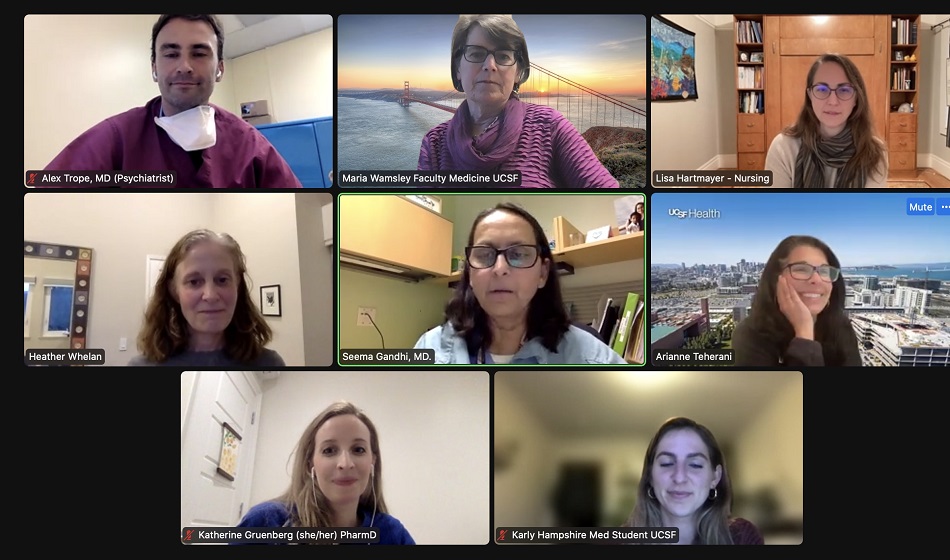
The PIPE program recently partnered with the UC Center for Climate Health and Equity to develop a session on “The Growing Impact of Climate on Health: An Interprofessional Panel and Case Discussion” that was held in February. Panelists included Seema Gandhi, MD; Katherine Gruenberg, PharmD, MEd; Alex Trope MD, MS; and Lisa Hartmeyer, NP, MSN.
All health professional students from UCSF and UC Davis were invited to participate in the virtual session, which focused on how current patterns of population growth, resource use, and pollution are not sustainable; how the environment, especially climate change, impacts health; how the health care system impacts the environment; and what health professionals and the interprofessional team can do to mitigate these impacts. Students had the opportunity to work in interprofessional teams on a case analysis.
A special thank you to Karly Hampshire, MS4, Arianne Teherani, PhD, and Heather Whelan, MD who helped to organize this session. PIPE plans to sponsor future sessions on timely topics that necessitate an interprofessional approach in the upcoming year.
|
|
An Interprofessional Approach to Managing the Dizzy Patient |
|
|
|
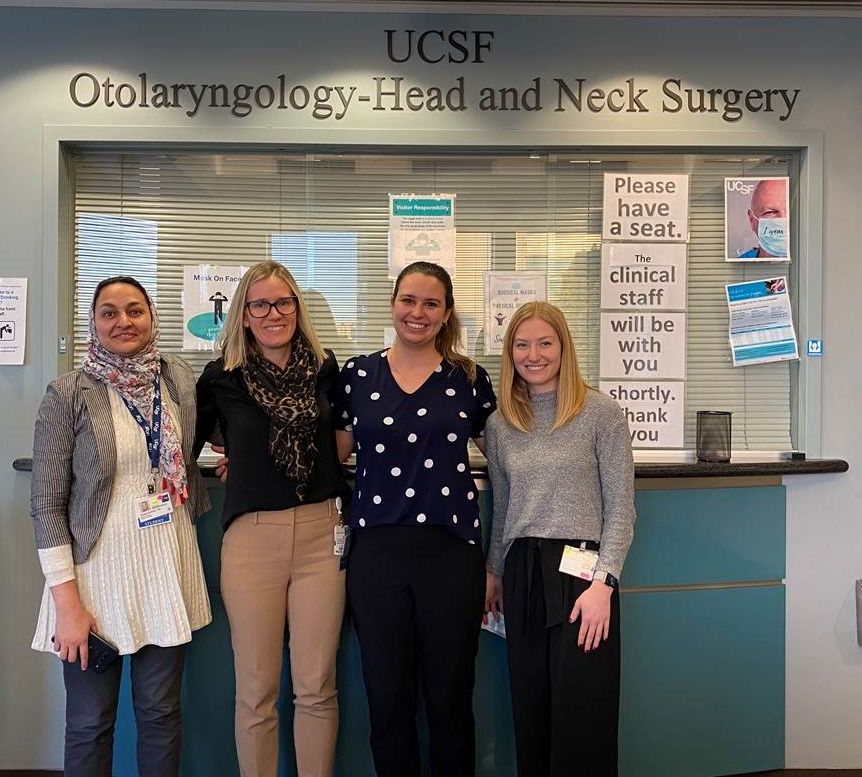
These days, finding balance is especially important, on all levels. But addressing dizziness is particularly important to prevent falling and serious injury.
Funded by a PIPE Interprofessional Clinical Opportunities grant, Roseanne Krauter, BSN, MSN, NP led a pilot rotation on managing dizzy patients in a two-week intensive.
|
|
ISPE: Still Pivoting to Zoom |
|
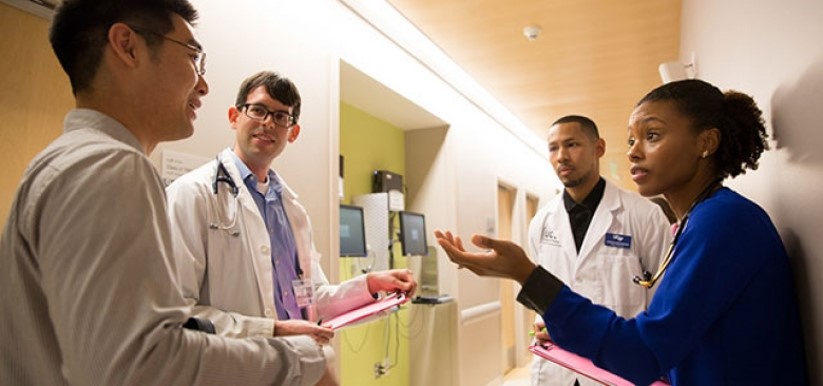
Every April, more than 500 learners from seven health professional schools (Chaplaincy, Dentistry, Dietetics, Nursing, Medicine, Pharmacy, and Physical Therapy) unite to participate in the UCSF Interprofessional Standardized Patient Exercise (IPSE), an immersive experience that gives learners the chance to collaborate in interprofessional teams in an engaging, clinically relevant simulation. Learners work in interprofessional teams of four to evaluate a standardized patient with multiple chronic conditions, develop an interprofessional care plan, and debrief the experience.
This year, 543 learners, 93 faculty facilitators, and twelve professional standardized patient actors participated in the ISPE. Typically held in the UCSF Kanbar Simulation Center, the exercise has been successfully adapted for Zoom since the pandemic. In feedback surveys, learners reflected that the Zoom format gave them valuable practice with telehealth encounters (a skill set rarely discussed in their core curricula), while still providing ample opportunity to explore interprofessional teamwork and communication. At the most recent NEXUS Summit, representatives from the PIPE discussed their experience converting the ISPE to a virtual platform, in hopes of encouraging other healthcare training programs to consider similar opportunities for their learners.
|
|
Read past PIPELine issues.
ideas of interest to our community.
|
|
|
|
|
|
|