Colored Transparent.png

Monthly news & updates

August | Issue 8

covid.jpg

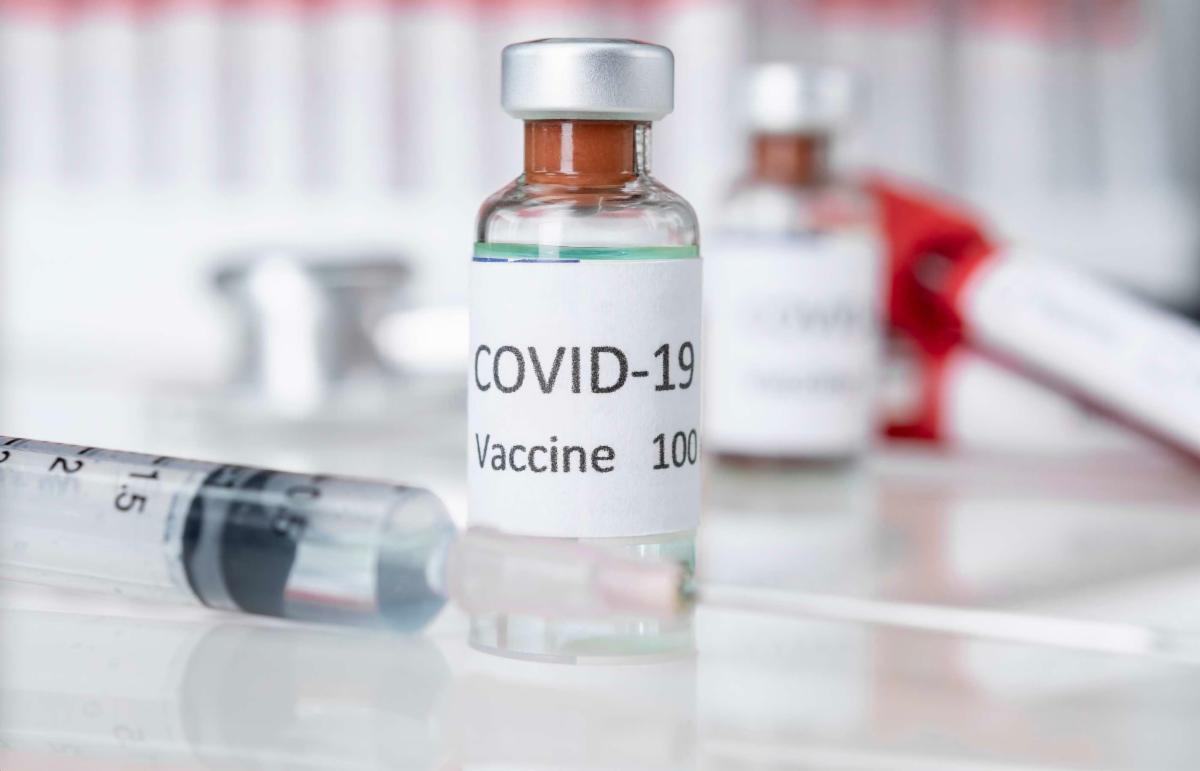
Three Questions About COVID Vaccinations 


Can we ask for proof of vaccination? Isn’t this a HIPAA violation or an illegal inquiry under the ADA or somehow confidential information?


Employers can ask for proof of vaccination unless there is a state or local law or order to the contrary.*


When an employer is requesting or reviewing medical information in its capacity as an employer, as it would be when asking about an employee’s vaccination status, it is considered to be an employment record. In such cases, HIPAA would not apply to the employer. The Americans with Disabilities Act (ADA) will govern the collection and storage of this information.


The Equal Employment Opportunity Commission (EEOC), which enforces the ADA, has stated that asking about vaccination is not a disability-related inquiry, though it could turn into one if you ask follow-up questions about why the employee is not vaccinated. Asking a yes or no question, or requesting to see the employee’s vaccination card, does not violate any federal laws or require proof that the inquiry is job-related. 


Finally, just because employees think that something is or should be private or confidential doesn’t mean they can’t be required to share it with their employer. Social Security numbers, birth dates, and home addresses are all pieces of information an employee may not want to advertise, but sharing is necessary and required for work. Vaccination status is similar. However, all of this information, once gathered, should not be shared by the employer with third parties, except on a need-to-know basis.  


*It appears that some governors may attempt to prevent certain entities from requiring “immunity passports” (e.g., proof of vaccination) through an executive order (EO), though as of July 31, none of the EOs already issued appear to apply to private businesses and their employees. Also note that if there is a law in place that prevents treating vaccinated and unvaccinated employees differently (like in Montana), you may be able to ask, but not take any action based on the response.


Should we keep a record of who is vaccinated or make copies of vaccination cards? If we do, how long should we keep that information?


If you’re asking about vaccination status, you’ll want to keep some kind of record (so you don’t have to ask multiple times), but how you do this is up to you, unless state or local law has imposed specific recordkeeping requirements. You may want to keep something simple like a spreadsheet with the employee’s name and a simple “yes” or “no” in the vaccination column. If you’d prefer to make a copy of their vaccination card, that should be kept with other employee medical information, separate from their personnel file. Per OSHA, these records should be kept for 30 years.


If we keep a record of who is vaccinated, can we share it with managers who will be required to enforce policies based on that information, such as masking and social distancing?


Yes. We recommend not sharing this information any more widely than necessary. While anonymized information is okay to share (e.g., “80% of our employees are vaccinated”), each employee’s vaccination status should be treated as confidential, even if the fact that they are wearing a mask to work seems to reveal their status publicly. Obviously, managers will need this information if they are expected to enforce vaccination-dependent policies, and employers should train them on how they should be enforcing the policies and how and when to escalate issues to HR or a higher level of management.

Screen Shot 2021-08-06 at 10.37.57 AM.png

SVO COVID-19 Business Resources:

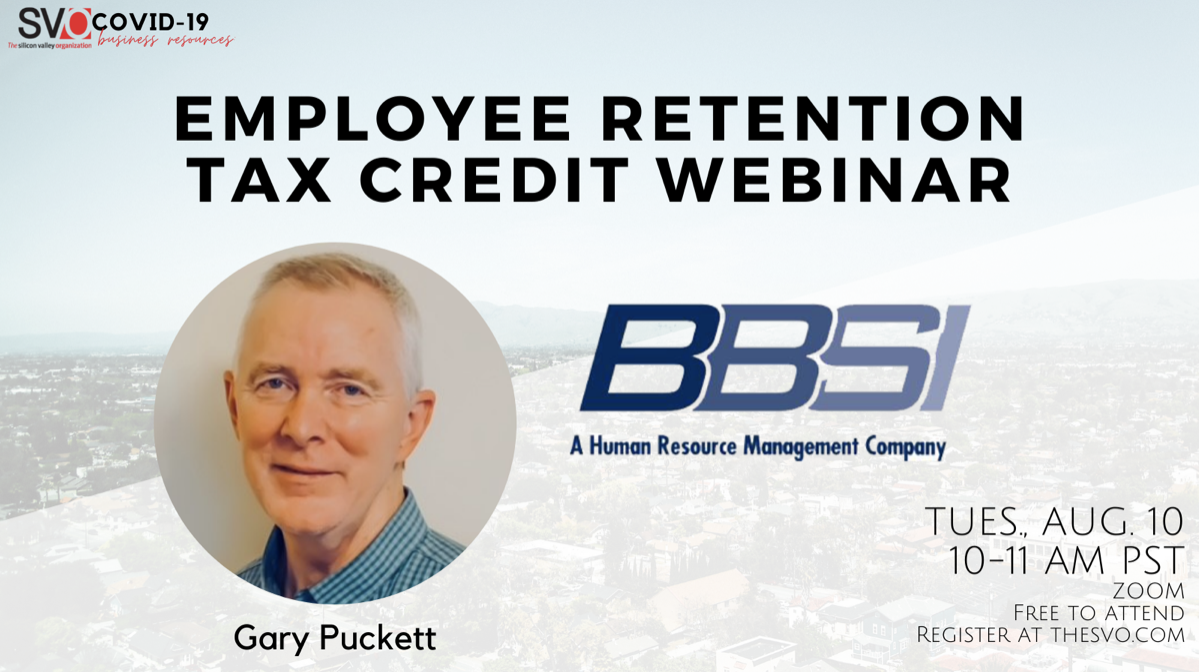
Employee Retention Tax Credit Webinar with BBSI

Tuesday, August 10, 2021 (10am-11am PST)

You may be able to recoup a significant amount of money back on wages paid through the government's Employee Retention Tax Credit (ERTC).


Gary Puckett of BBSI will review recent updates to the ERTC and discuss how employers can qualify and secure this tax credit.

REGISTER HERE
Screen Shot 2021-08-06 at 10.19.47 AM.png

Voluntary Benefits


With health benefits rates always increasing, small employers need to get creative and flexible with finding solutions that don't hurt their bottom line.


Open Enrollment for many are quickly approaching and Supplemental|Voluntary benefits are a great way to add to your existing benefit package.


Advantages to offering Voluntary Benefits:


  1. Costs you little to nothing to offer voluntary benefits.
  2. Helps employees creatively control their potential health costs.
  3. Boost retention and productivity.
  4. Group rates and favorable underwriting when offered through an employer.
  5. Highly desired benefits like Dental, Disability, Accident, Critical Illness and additional Life are often requested.
  6. Enrollment Support- ColonialLife, our preferred vendor, does all the heavy lifting. Benefit counselors are available to assist with core enrollment in person 1-on-1 or virtually using telephone call centers and co-browsing. Self-Enroll is also available via our ben-admin platform, Ease making new hire and open enrollments easier than ever!


Are your employees concerned about enough coverage for COVID?


ColonialLife's Short Term Disability, Hospital, Critical Illness and Life products can all play important factors and give great peace of mind for anyone that may be concerned and/or diagnosed with Covid in the future. These products can protect employees from time missed from work, hospitalizations and other more severe conditions caused by Covid.


Please let me know if you'd like to find out more information on how to add this to your current benefit package!

Screen Shot 2021-08-06 at 11.27.20 AM.png

IRS Releases New COBRA Premium Assistance Guidance

In May, the IRS released Notice 2021-31, which answered 86 specific questions related to the COBRA subsidy provided by the American Rescue Plan, addressing many, though not all, of the outstanding COBRA subsidy application quandaries. Earlier this week, the IRS released Notice 2021-46, providing an additional 11 questions and answers for employers, health insurers and plan administrators.

Read More

We love your referrals!

referrals.jpg

Thank you for the continued referrals! 


Do you know someone that could utilize our services...


  • COVID resources (mandatory notices, FAQ, updates in laws & compliance for small businesses, etc).
  • Cost Savings - we make sure your with the most competitive carrier and on a plan that makes sense for you and your staff.
  • Open Enrollment Analysis (& meeting/full support) for health, dental, vision, life & disability insurance. 
  • Benefit Administration - full administrative support to answer questions regarding benefit plans, claims inquiries, enrollment and more.
  • AB1343 Training  - Harassment Training law for ALL employees (must comply by January 2021) with employers with 5+ employees (not just managers!)
  • Compliance Posters (Federal & State) for CA and out of state offices - NEW updates occurred January 1, 2021
  • Supplemental Insurance including wellness, mental health, life, medical bridges and more.
  • Payroll Service Partnership - Rippling is a newer, innovative company that ensures your onboarding, payroll and benefits are all-in-one simple portal (and are broker friendly!)
  • PEO resources - we partner with vendors that allow clients to utilize a traditional broker while obtaining services through a PEO platform.
  • Experienced guidance with over 23 years of HR and benefit experience.


We'd love to help!

Facebook  Twitter  Instagram