|
Pivoting pastures for fall and winter
Dr. Jonathan O.C. Kubesch, Harley D. Warren, and Kenny J. Simon
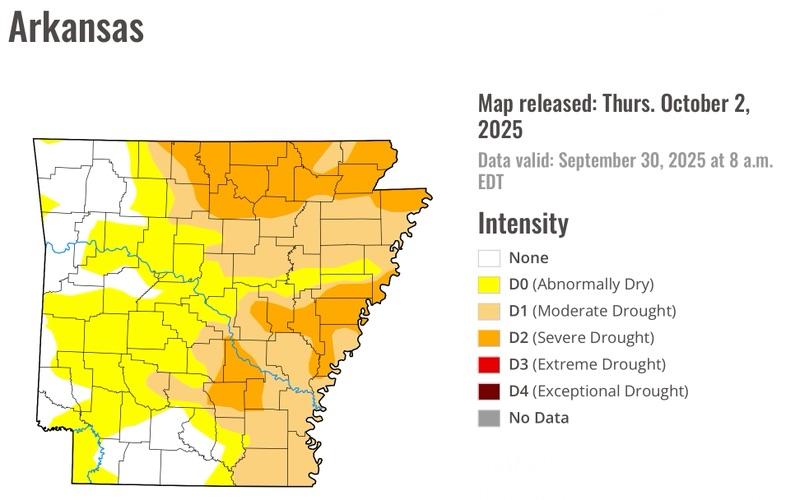
The forage programs have been monitoring drought conditions across much of the state, armyworm outbreaks, and some well-timed rains for the past month. This fall appears more promising for late summer annual plantings than conditions for the last three to four years. Planning should now pivot to get pastures ready for winter, overseeding for late winter and spring grazing, effective use of stockpiled fields, and planning out hayfeeding areas. Some fundamental plans should be made regarding grazing, planting, and feeding over the next month.
Determine the last dates to graze warm-season pastures
Warm-season grass pastures should be the priority grazing between now and the first killing frost. Crabgrass will become mushy and get animal refusal. As freeze-thaw cycles begin the quality of bermudagrass and bahiagrass will decline quickly. Ideally fields can be prioritized in terms of their botanical composition. Graze crabgrass-heavy fields, then warm-season perennial fields, and then pivot grazing to late summer annuals or stockpiled f ields. Leaving a 2-3” stubble behind on bermudagrass and bahiagrass as nighttime temperatures drop below 60 °F will help those stands prepare for winter while also making the most of end-of-season growth.
Cool-season perennials such as tall fescue and orchardgrass will be ready to graze at 6-8” tall. A 3-4” stubble will be ideal in this cool time of year as the plants will regrow more quickly than they did over the summer months. Similar turn-in and turn-out guidelines will work well for overseeded annuals further into winter.
Overseed warm-season pastures for late winter and spring grazing
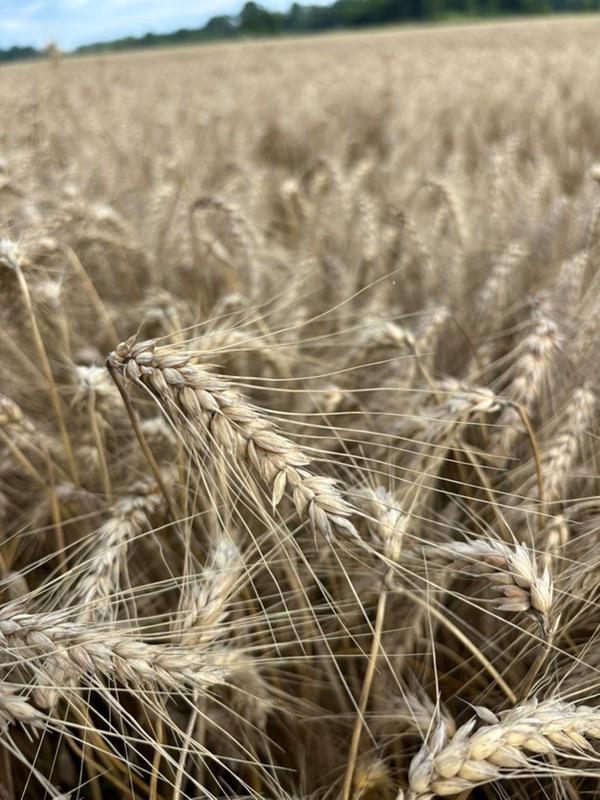
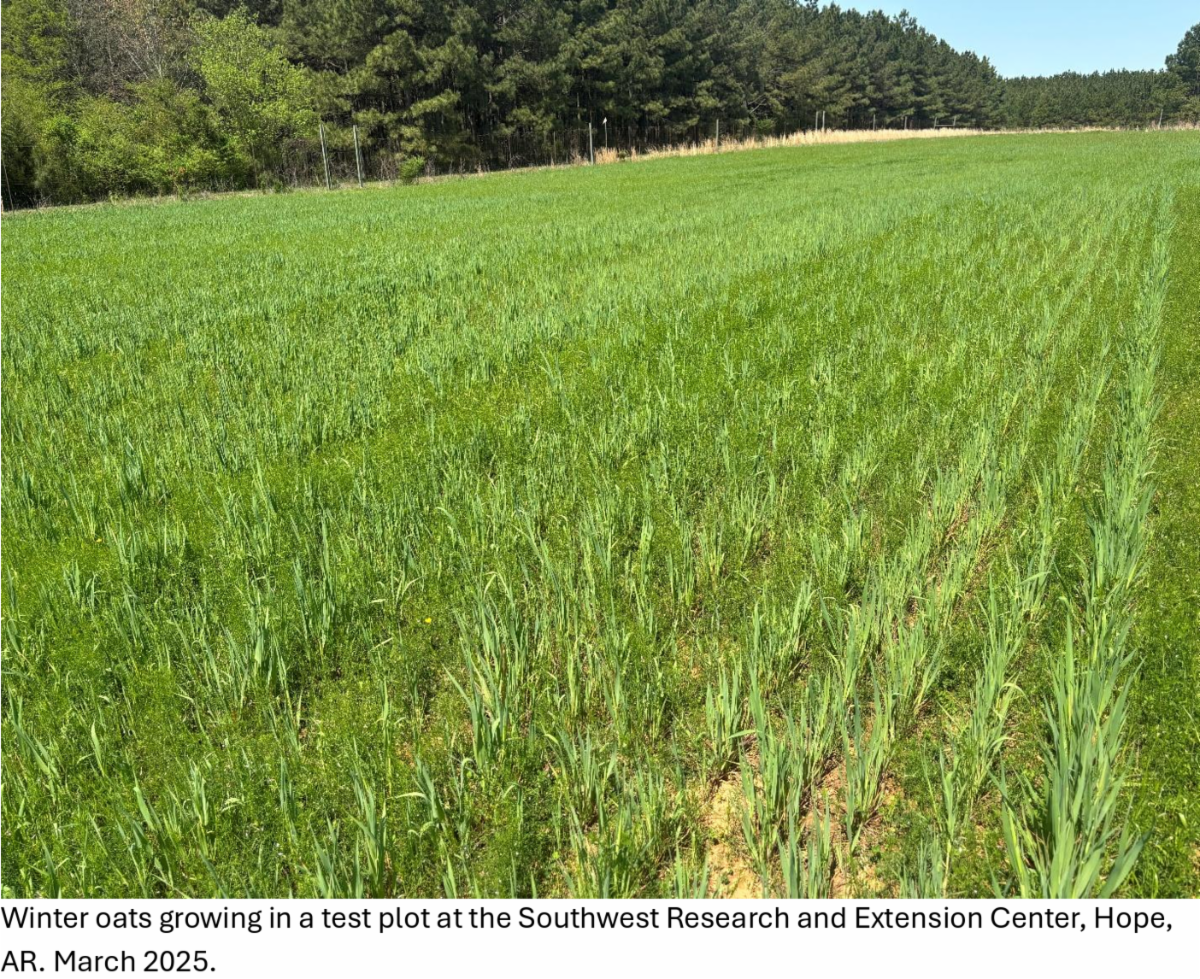
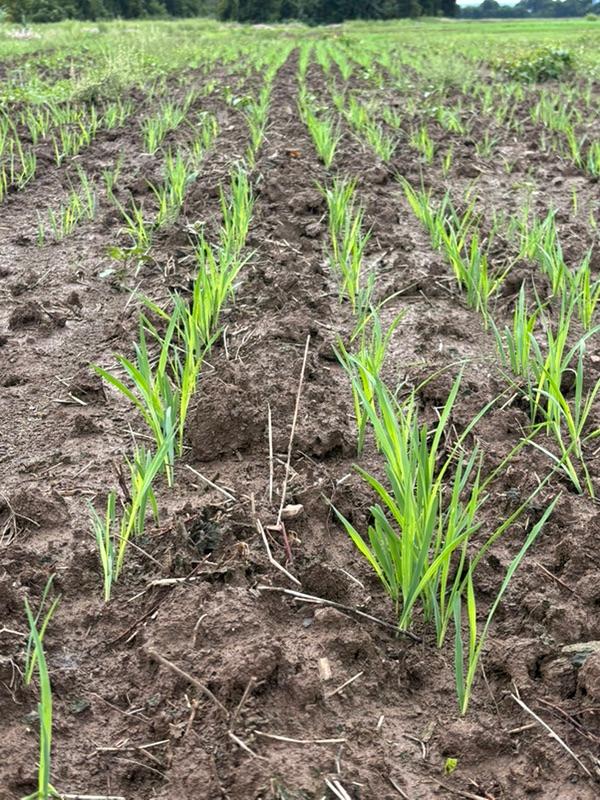
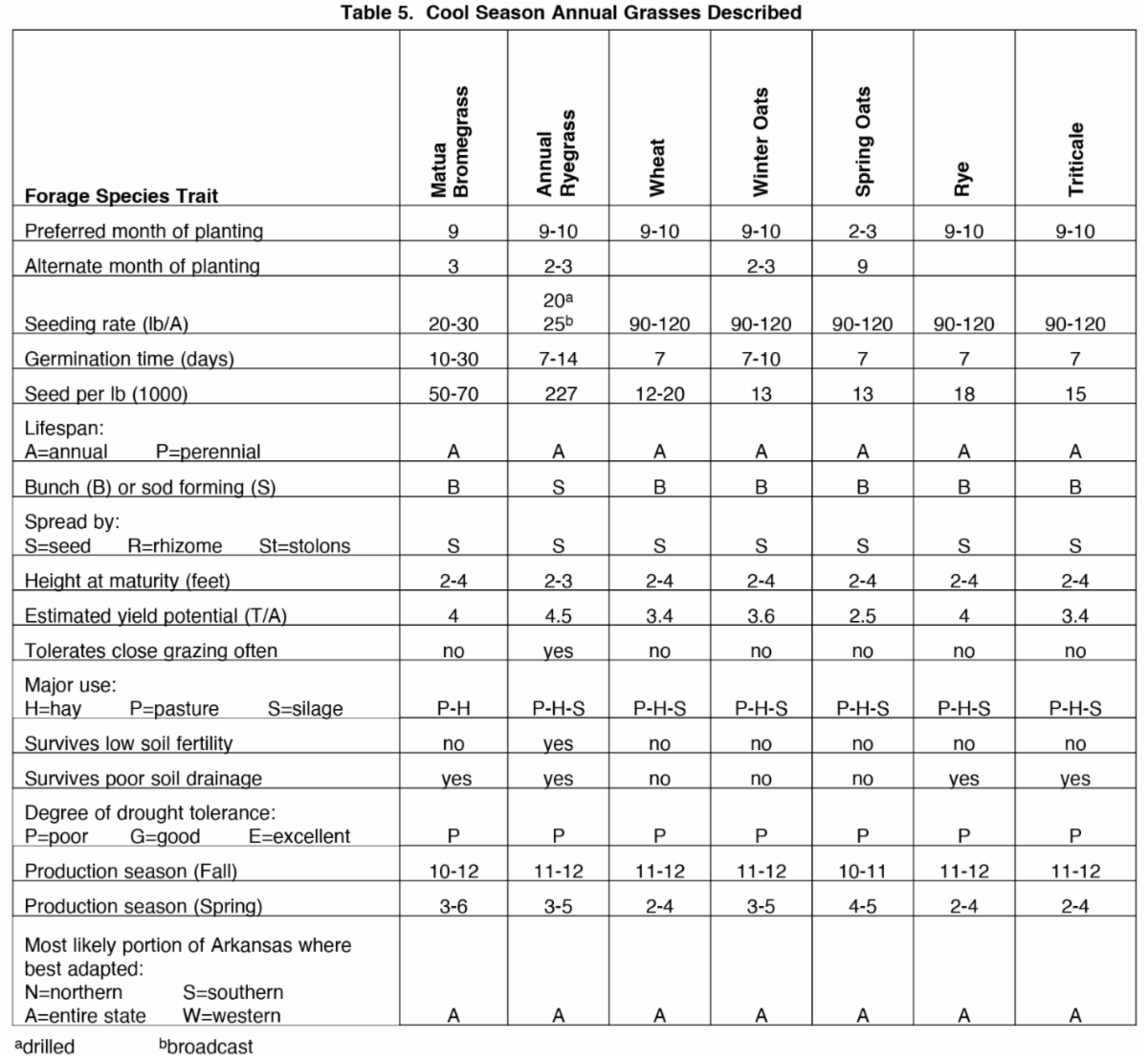
Late summer annual plantings aim for late fall and winter grazing. October overseeding will need to aim for late winter and spring grazing. At this time of year options will include winter wheat, cereal rye, annual ryegrass, and for some winter oats. Wheat (100 lb acre-1) and annual ryegrass (25 lb acre-1) can be an extremely effective winter and spring grazing program. Winter oats have a risk of winterkilling in colder portions of the state. Seed should be of reasonable quality which can be determined by looking at the seed tag. Varietal preferences should be communicated to the seed dealer early and frequently. ‘Marshall’ ryegrass has become a generic term like ‘Gulf’; genuine ‘Marshall’ from the Wax Seed Company will come in a brown paper bag.
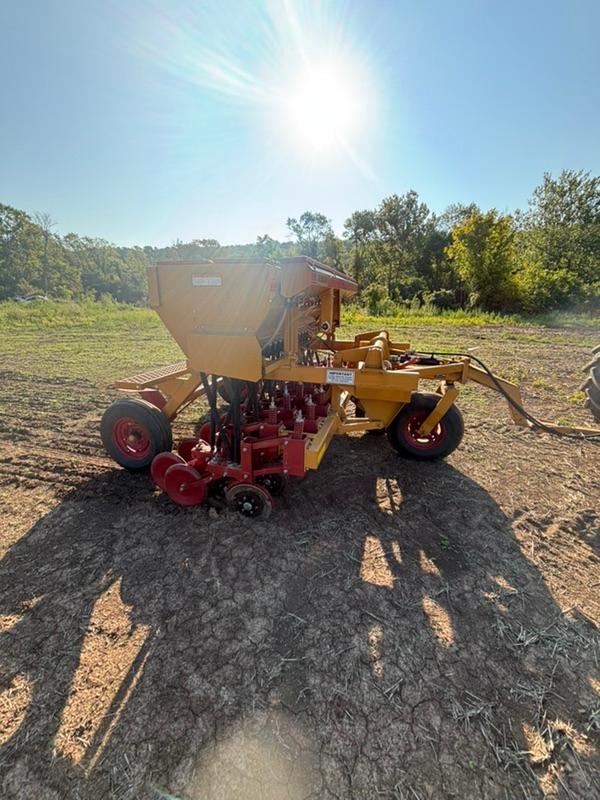
Sod suppression by means of a light rate of glyphosate is less important for October overseeding. Some farmers will ask about broadcasting seed onto the ground as opposed to drilling or tillage. Critically, seed-soil contact will determine the success of October overseeding. A wiser turf agronomist once said, “There is a special name for seed sprinkled on the ground –bird food!” Seed-soil contact can be improved by drilling seed into the existing sod, dragging seed in using a harrow, or in desperate circumstances by letting the livestock walk the seed in. Seeding rates should be increased when broadcasting to account for imprecise seed placement.
Utilize and stretch stockpiled fields
Fields that have been stockpiled for fall and winter grazing need to be allocated effectively. Timing turn-in is a critical factor for making the most of this deferred growth. Bermudagrass and bahiagrass fields will generally be ready by mid- or late October. These fields can be grazed until December or further depending on field conditions. Tall fescue stockpiles will be ready in November. These fields can be grazed close to the start of new growth in late winter.
Once the herd or flock is ready to start grazing the stockpile, an effective stocking method is going to determine how far that stockpile can be stretched. Temporary electric fencing can be set up to allocate strips of the stockpile for 3-4 days of grazing. This approach helps to ration the grass. Economic work from the University of Kentucky has found that the additional labor of strip grazing a stockpile is cost-effective instead of turning the animals into the whole field.
Plan out hay-feeding areas and renovation
The dry fall has been conducive towards moving livestock into portions of the farm that may be too wet later in the fall and winter. Now is the time to plan out where animals will need to go for fall and winter hay-feeding periods. Well-drained ground is preferred in the cold and wet of winter, but dry areas in the fall are great places to feed hay. Most farms have a holding or sacrifice lot where animals can be pulled out of the pasture, but alternatively hay can be fed on weak pastures as part of future pasture renovation or as a means of redistributing soil fertility over long time periods.
In addition to the nutritional concerns and feeding methods inherent to this period, a renovation plan following hay-feeding will determine the next growing season. If an area will annually be used for hay-feeding, an annual rotation of crabgrass and annual ryegrass might work for both soil conservation and modest forage contribution.
If hay-feeding moves around the farm, then a renovation plan for the appropriate forage crop is needed. Tall fescue will be planted in the fall after hay-feeding. A smother crop of sorghum-sudangrass or pearl millet would be ideal between hay-feeding and cool-season planting. Bermudagrass and bahiagrass might be planted in the spring after hay-feeding. A smother crop of late winter planted oats would be ideal between hay-feeding and warm season planting.
|