October 2026

Any comments/suggestions please email the editor at editor@redrockrx.com

Edited by Malcolm Fraser MD, CMD


Antidepressants and Drug Interactions: 
What We Look For

One thing that our pharmacists at Red Rock are constantly monitoring is potential drug-drug interactions.


A study recently published in JAMA reviewed over 4,500 people aged 62–85 and showed that a potentially underrecognized major drug-drug interaction involves antidepressants (7.2%) in general.


This is especially important in the population that we serve, since antidepressant use is much higher than in the geriatric population in general. I suspect that antidepressants are potentially involved in a much higher number of possible drug-drug interactions.


Because of the common use of this group of medicines in the populations that we serve, our pharmacists are especially vigilant in monitoring antidepressants. One important aspect of antidepressant use that we monitor is its association with an increased risk of serotonin syndrome and/or arrhythmias and QT prolongation on an EKG.


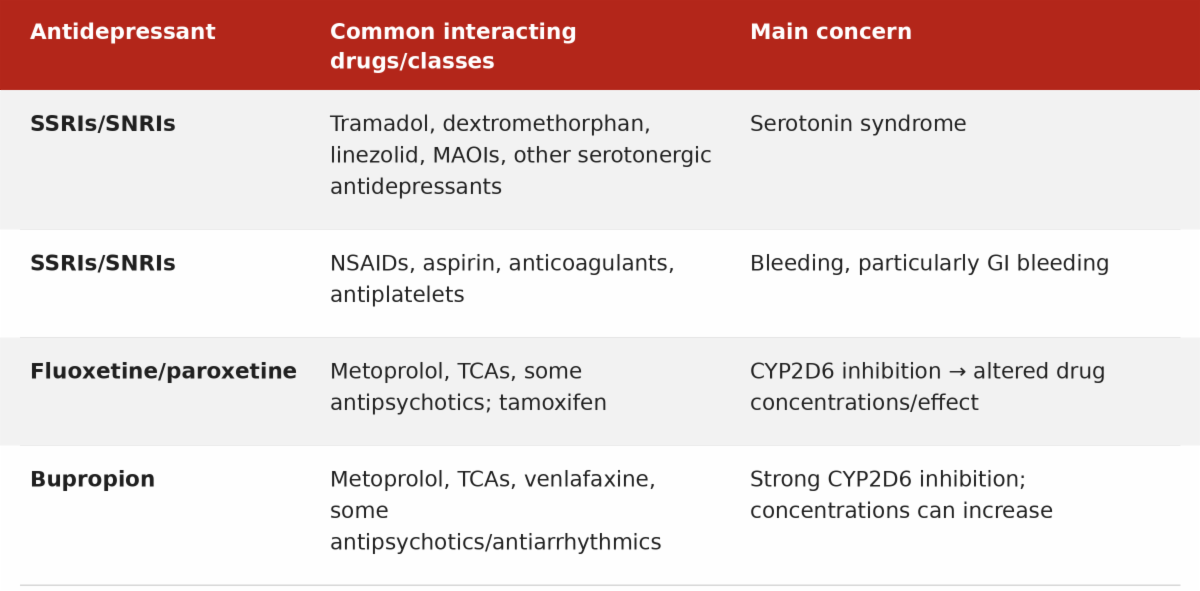
Here is a chart summarizing the most common antidepressant drug-drug interactions that we see:

As always, if you have any questions, please reach out to your Red Rock pharmacist.

Shixian Wang

Director of Operations


Nursing Home Survey Update: Risk-Based Surveys, F602/F605, and Psychotropic Medications


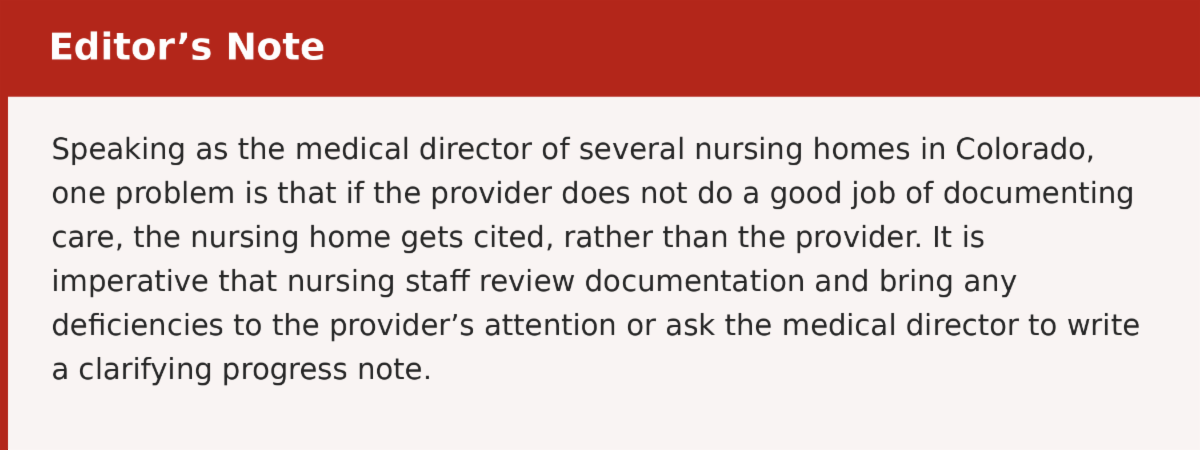
There is no easy way to write this, but it is very important. So here goes:


CMS nursing home survey activity this fall deserves particular attention. One of the most significant developments is the implementation of the Risk-Based Survey (RBS) approach. Higher-performing nursing homes that meet CMS criteria may receive a more focused standard survey, although surveyors can expand the investigation whenever findings indicate potential resident safety or compliance problems.


Facilities should also make sure they are using the most recent Long-Term Care Survey Process (LTCSP) materials. CMS updated survey documents in September, including the Initial Pool and Entrance Conference materials. Survey preparation based on older forms may therefore overlook information surveyors now request or review.


Two F-tags remain particularly important for clinical practice:


F602—Free From Misappropriation/Exploitation requires facilities to protect residents’ property and finances from misappropriation and exploitation and to respond appropriately to allegations. Staff education should include recognizing financial exploitation as well as more obvious theft of resident property.


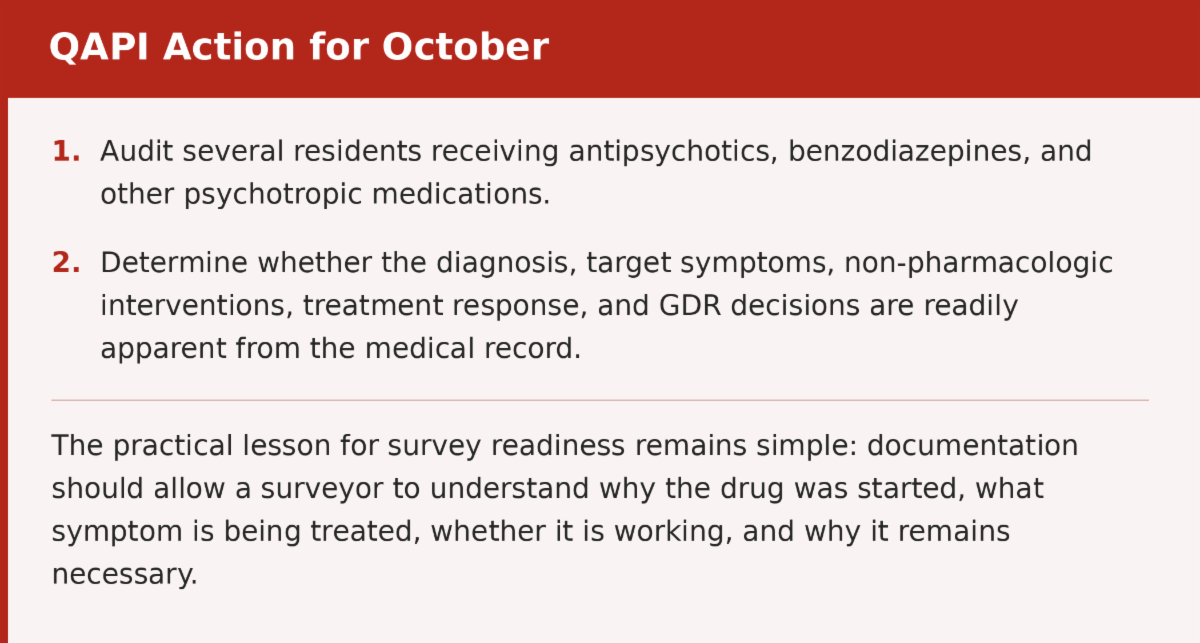
F605—Right to Be Free From Chemical Restraints/Unnecessary Psychotropic Medications remains especially relevant to physicians and advanced practice clinicians. A psychotropic medication should have a documented clinical indication rather than being used primarily for staff convenience or behavioral control. The record should clearly establish the target symptoms, rationale for treatment, response, adverse effects, and ongoing need for therapy.


For medications subject to CMS requirements concerning gradual dose reduction (GDR) and behavioral interventions, simply documenting “GDR contraindicated” is unlikely to constitute strong clinical documentation by itself. The prescriber should explain why dose reduction would be clinically inappropriate—for example, previous recurrence of specific symptoms following a reduction—and document continued reassessment.


Relationships Beyond the Pharmacy Counter: 
Red Rock at CHCA


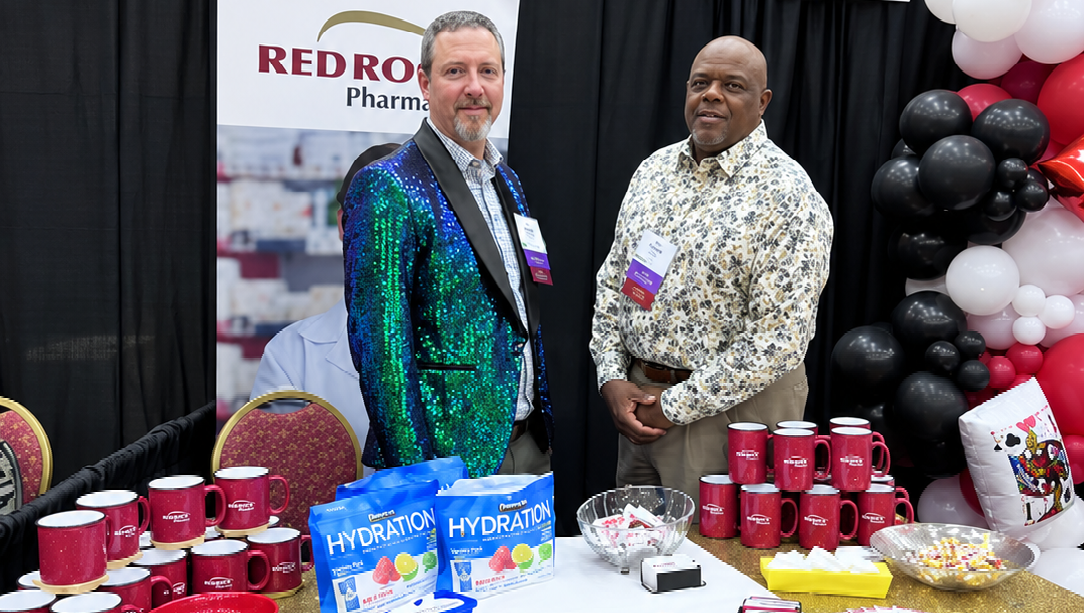
Last week, Red Rock Pharmacy was proud to attend the CHCA Conference, represented by Regional Director of Marketing David Rimlinger and Marketer Brian Martin. While conferences are always an opportunity to talk about pharmacy services, for us, the most valuable conversations weren’t simply about what Red Rock does; they were about who we do it with.


The conference gave us an opportunity to meet new prospective partners, learn more about their organizations, and hear firsthand about the challenges they face when navigating pharmacy processes. Those conversations are important because a successful pharmacy relationship shouldn’t begin with a sales pitch. It begins with listening, understanding an organization’s needs, and determining how we can work together to make pharmacy easier for staff and, ultimately, better for the people they serve.


Just as meaningful was the time we spent with our current clients. CHCA gave us a chance to step away from the day-to-day phone calls, emails, medication questions, and operational details and simply enjoy some time together.


Celebrating with the people we work with is a great reminder that our strongest partnerships are built on more than a contract or a service agreement.


At Red Rock, we believe the best pharmacy relationships require shared investment and shared success. Pharmacy is complex, and no process is perfect. Challenges will arise. What matters is having partners who are willing to communicate openly, work through those challenges together, and continually look for ways to improve.


That investment goes both ways. We want to understand our clients’ operations, priorities, and pain points. We want them to know they have a pharmacy partner invested in their success. When both sides approach the relationship that way, pharmacy stops being simply a vendor service and becomes a true partnership.


We left CHCA grateful for the relationships we’ve already built, excited about the new ones that began with a conversation last week, and reminded of something we believe strongly at Red Rock: Our success is tied to the success of the communities we serve, and the best results happen when we invest in each other.


Dave Rimlinger,

Director of Marketing


Wegovy Shows Potential Benefits 
in Adults With Frailty


A secondary analysis of SELECT trial data found that semaglutide’s reduction in the primary outcome—a composite of cardiovascular death, nonfatal myocardial infarction, and nonfatal stroke—was consistent across frailty categories, with no detectable differences in treatment effect.


Although participants with greater frailty had higher cardiovascular risk, they still appeared to benefit from treatment. At two years, participants receiving semaglutide were also more likely to improve and less likely to worsen in their frailty category compared with those receiving placebo.


These findings may be relevant to nursing home care, where treatment decisions should reflect each resident’s comprehensive assessment, goals, and plan of care.


Semaglutide also reduced a composite heart failure outcome (P = 0.82 for interaction), all-cause hospitalization (P = 0.71 for interaction), and all-cause mortality (P = 0.28 for interaction), regardless of frailty category.


This analysis suggests that semaglutide’s benefit-risk balance may be favorable even in people with frailty. However, the trial studied adults with established cardiovascular disease and overweight or obesity, without diabetes; it was not specifically a study of nursing home residents.


Source: JAMA Cardiology.


Should Reading Be Added as a 
Non-Pharmacological Intervention for Residents With Dementia?

A review by University of Cambridge researchers suggests that reading and other cognitively stimulating activities are associated with better brain health, mental health, and well-being.


A study involving almost 5,500 adults aged 55 and older found that those who frequently engaged in cognitive activities, such as reading, were significantly less likely to develop cognitive impairment over a five-year period.


In 801 adults aged 65 and older, cognitively stimulating activities, including reading, were associated with approximately a 33% lower risk of Alzheimer’s disease.


In 469 adults aged 75 and older, reading was associated with approximately a 35% lower risk of dementia.


A 14-year study of 1,962 adults older than 64 found that reading at least once a week was associated with a lower risk of cognitive decline across educational levels.


Source: Cambridge.com


Does COVID-19 Vaccination Status Have to Be Reported on the MDS?


Reporting requirements have changed. The MDS records an individual resident’s vaccination status, rather than the facility’s vaccination rate.


  • Through September 30, 2026: MDS item O0350, “Resident’s COVID-19 Vaccination Is Up to Date,” was required when it appeared on the required assessment.
  • For residents discharged on or after October 1, 2026: Reporting O0350 is voluntary for Skilled Nursing Facility Quality Reporting Program (SNF QRP) purposes.
  • Until October 1, 2027: The item will remain visible on the MDS, when CMS plans to remove it.
    

Separately, nursing homes must continue reporting aggregate resident COVID-19 vaccination data weekly through CDC’s National Healthcare Safety Network (NHSN) Respiratory Pathogens and Vaccination module. Facility vaccination rates are reported through NHSN.


Sources: CMS SNF Quality Reporting Program, CDC/NHSN reporting FAQs.


If you have any questions, ask your Red Rock Consultant Pharmacist